Nissan Navara Review (2014-2022)
Nissan Navara cars for sale
4.0
Expert review
Pros
Large load bed and generous payload
More car-like to drive than most pick-ups
Punchy and fuel-efficient diesel engine
Cons
Apple CarPlay and Android Auto weren't available before 2019 facelift
The SsangYong Musso has a longer warranty
Not as wieldy as a conventional SUV
The CarGurus verdict
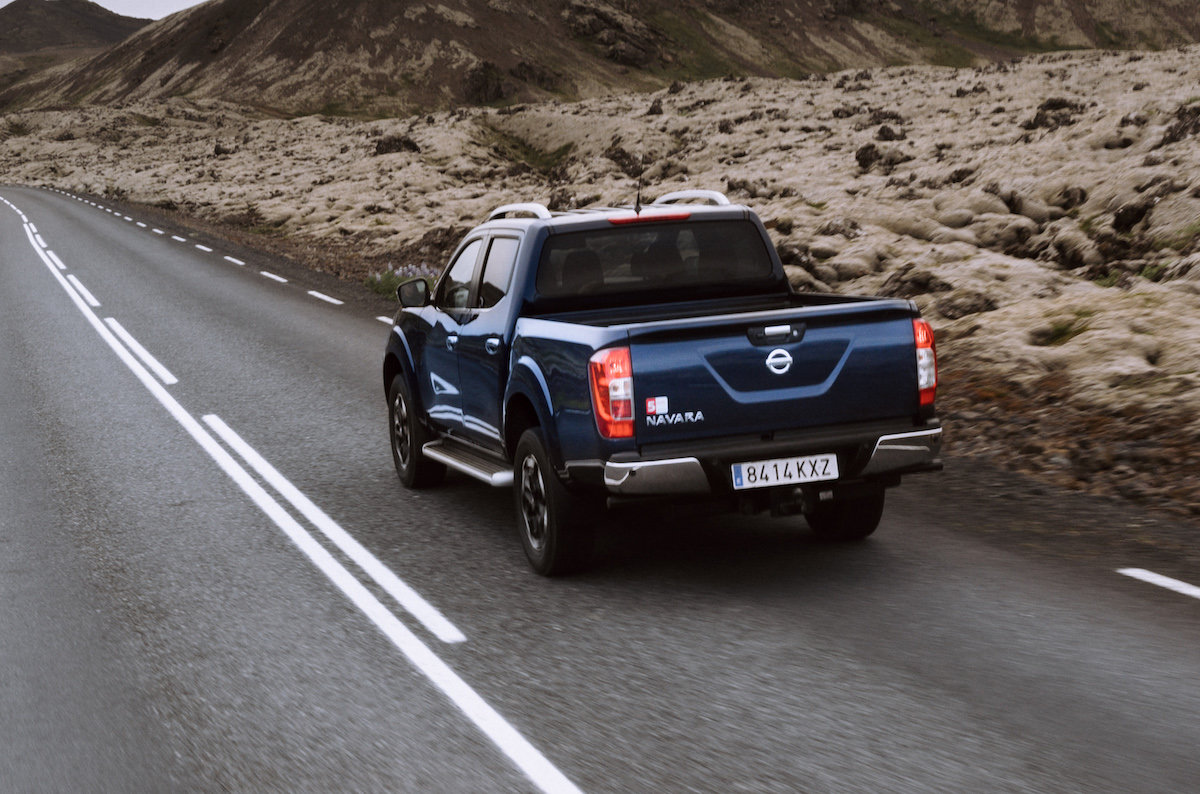
You can buy cheaper pickups, or more powerful pickups. Some rivals have longer warranties. As an all-rounder, though, the Nissan Navara is hard to beat. Running costs are very low, helped by a diesel engine that's among the most efficient you'll find in a commercial vehicle like this. Lengthy service intervals also play a part in making the Navara a sensible choice if you have a close eye on what you are spending.
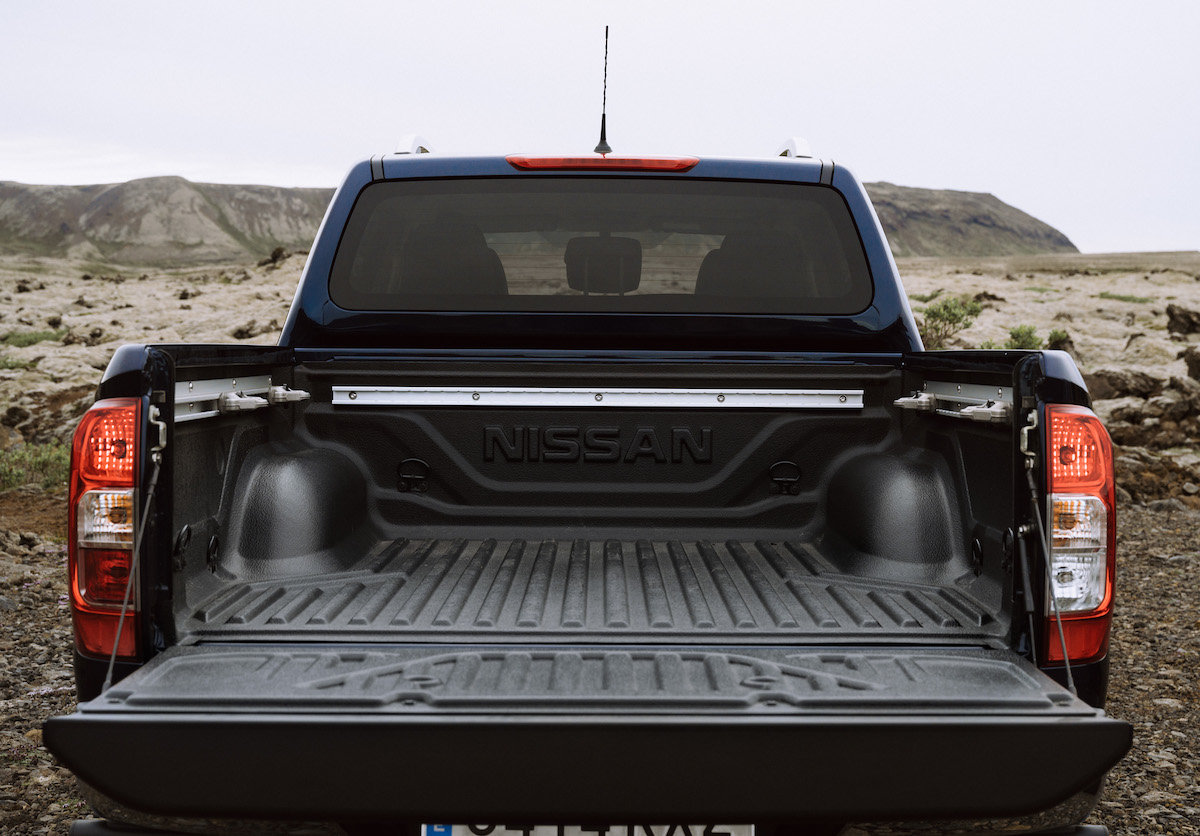
It's not as wieldy to drive as a conventional SUV, but it is more car-like than most pick-ups. Having conventional coil springs at the back definitely helps. The load bed is large, whether you choose a double-cab or a king-cab, and payloads are among the most generous of any pick-up. Nissan has succeeded in building engines that are punchy as well as fuel-efficient, and if you choose a high-spec model like an N-Connecta or Tekna, you get lots of toys at a reasonable price.
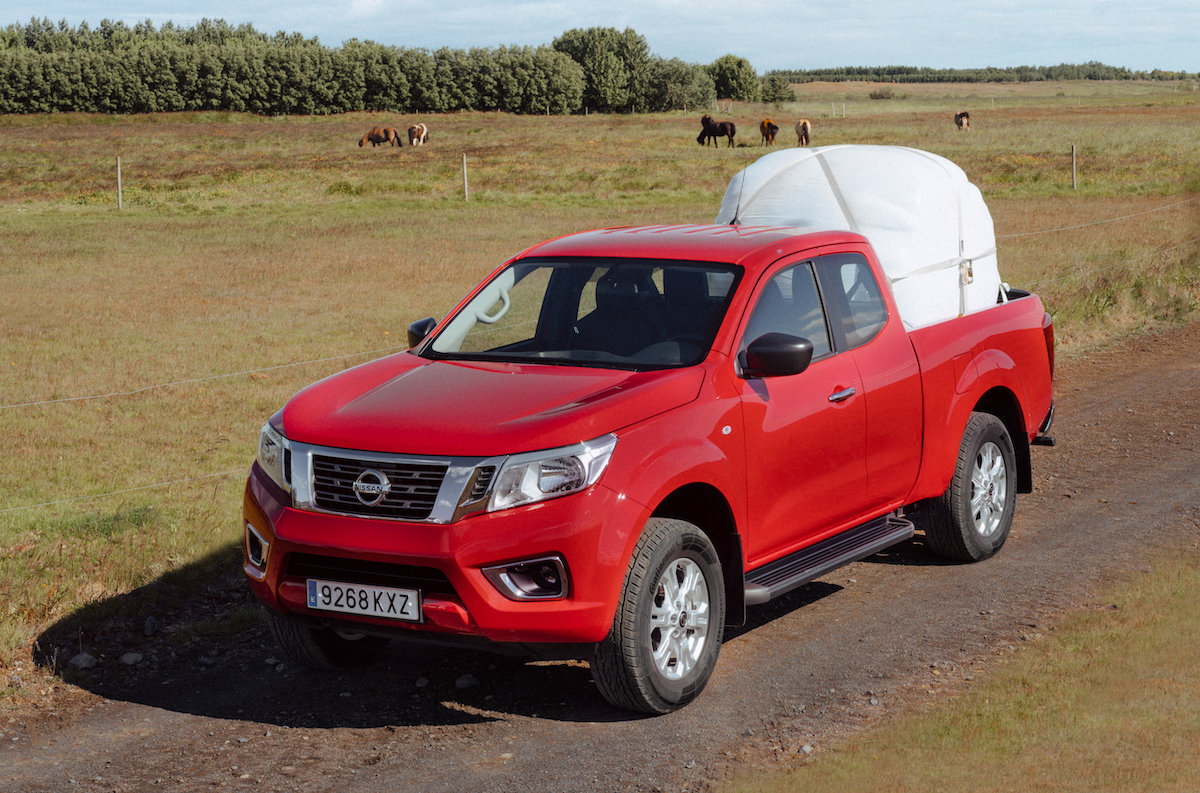
The Navara can be had in both double-cab and king-cab body styles. The double-cabs with four doors and decent rear-seat space, are more popular. The king-cab has shorter rear doors and occasional-use rear seats, but a longer load bed than the double-cab. It's the workhorse of the range.
The Navara is also close to the top of the pick-up truck class in terms of payload. It varies from model to model, but the double-cab chassis (which is sold without a loadbed so the rear bodywork can be fitted by a third-party converter) has a payload of 1,315kg.
Choose a complete Navara double-cab with Nissan load bed fitted, and the payload of the 2019 facelift version varies from 1,115kg to 1,180kg. Those figures improve on earlier examples of the NP300 by 54-114kg. That compares with the Mitsubishi L200 Series 6 double-cab, which has payloads from 1,045kg to 1,080kg.
If that's not enough capacity, the Navara can tow trailers weighing up to 3,500kg. The same limit applies to both body styles and all transmission types. Whichever exact model you choose, practicality is a strong point.

The Navara achieves these high payloads and towing limits despite its most controversial feature: coil-spring rear suspension. Most pickups come with super-tough leaf springs, which can handle heavy loads but lead to a rough-and-ready ride. Nissan claims the Navara's coil springs deliver more car-like comfort, but can still cope with a tonne of cement in the load bed. In practice, the Navara is comfortable for a pickup, but doesn't ride with the same finesse as a conventional passenger car.
Elsewhere, though, the Navara is a big improvement on the second-generation model. That's partly due to the punchy and efficient 2.3-litre diesel engine. Available with either 161bhp or 187bhp, it makes the Navara more powerful than many rivals while still delivering strong fuel economy.
It's torque that matters more than peak power when hauling heavy loads, and either engine is up to the job, thanks to 313lb ft of torque for the less powerful version, and 332lb ft for the beefier range-topping 2.3. That's more pulling power than most pickup trucks are packing, with the notable exception of the Mercedes X-Class and the Volkswagen Amarok, with their V6 diesel engines.
Every Navara came with part-time 4WD for most of its life, although a 2WD version of the king-cab was briefly sold when the Navara was first introduced. The off-roading system allows the truck to run as a rear-wheel-drive vehicle for better fuel economy, then switch to four-wheel drive when the going gets slippery.
Most models have a six-speed manual gearbox, but a seven-speed automatic gearbox is fitted to high-spec double-cabs with the more powerful of the two engines.
Safety standards used to be a weakness for most pickups. The Navara is better than most, with a Euro NCAP score of four out of five when tested in 2015. Autonomous emergency braking is standard on Acenta spec and above in the current range.
The 2.3-litre diesel is fuel efficient, and economy and emissions improved following the 2019 facelift.
Early NP300 Navaras with the lower powered engine and a manual gearbox achieved 44.9mpg on the combined cycle and emitted 167g/km of carbon dioxide. Models fitted with the seven-speed automatic gearbox were less efficient, returning 40.3mpg and emitting 183g/km.
In 2016, the Navara's engines were tweaked to achieve the Euro 6 emissions standard. Fuel economy improved to 46.3mpg with emissions as low as 159g/km.
The 2019 model improved further, although the change from the NEDC to the WLTP test protocol disguises the true benefit of the upgrades. 160bhp manual double-cabs now achieve 40.4mpg, and emit 184g/km of CO2. The 187bhp seven-speed automatic returns 38.2mpg and puts out 194g/km of CO2. The WLTP tests are a lot more realistic, so expect to get reasonably close to the these figures in everyday driving.
Throughout its life, the Navara has been at - or close to - the top of the pickup class for economy. By way of comparison, the contemporary Mitsubishi L200 achieved 32.1mpg as a manual, or 29.1mpg as an auto. The powerful VW Amarok returned 25.9-28.2mpg. So fuel bills should be lower if you choose a Navara over many of its competitors.
Servicing costs are also competitive. The later examples need attention every 12,500 miles or two years, whichever comes first. Pre-facelift cars have 18,000-mile/two-year intervals, considerably longer than some rivals.
Be wary of any vehicle which hasn't been serviced on time. Commercial vehicles tend to lead a tougher life than regular cars, and it's not a good sign if the owner has skimped on servicing and maintenance.
It's also worth checking under the vehicle for signs of over-enthusiastic off-roading.

The Navara came with a five-year/100,000-mile warranty when new, which is transferable to second and third owners. That matches the cover you get with a Toyota Hilux. An Isuzu D-Max warranty also lasts for five years, but the maximum mileage is 125,000. SsangYong offers an even longer warranty for the Musso and Rhino pickups, lasting seven years/150,000 miles.
The question is, will you need to claim on that warranty? If you ran a second-generation Navara, there was a good chance you would. This D40 model had a weak reputation for reliability, and was notorious for chassis corrosion. In some cases, the chassis would snap completely.
But in this Nissan Navara review, our focus is on the third-generation vehicle. So far, the signs are that the NP300 is a much more reliable and durable vehicle. The 2.3-litre diesel has been around in one form or another for a decade or so, so Nissan has had plenty of time to sort out any niggles.
The widespread chassis troubles with the D40 haven't manifested themselves with the NP300, but some owners have expressed concern over the suitability of coil-spring suspension for heavy-duty use. Perhaps with these doubting customers in mind, Nissan upgraded the rear suspension in 2019, adding dual-rate springs and a slightly higher ride height to prevent the Navara sitting too low at the back when heavily loaded.
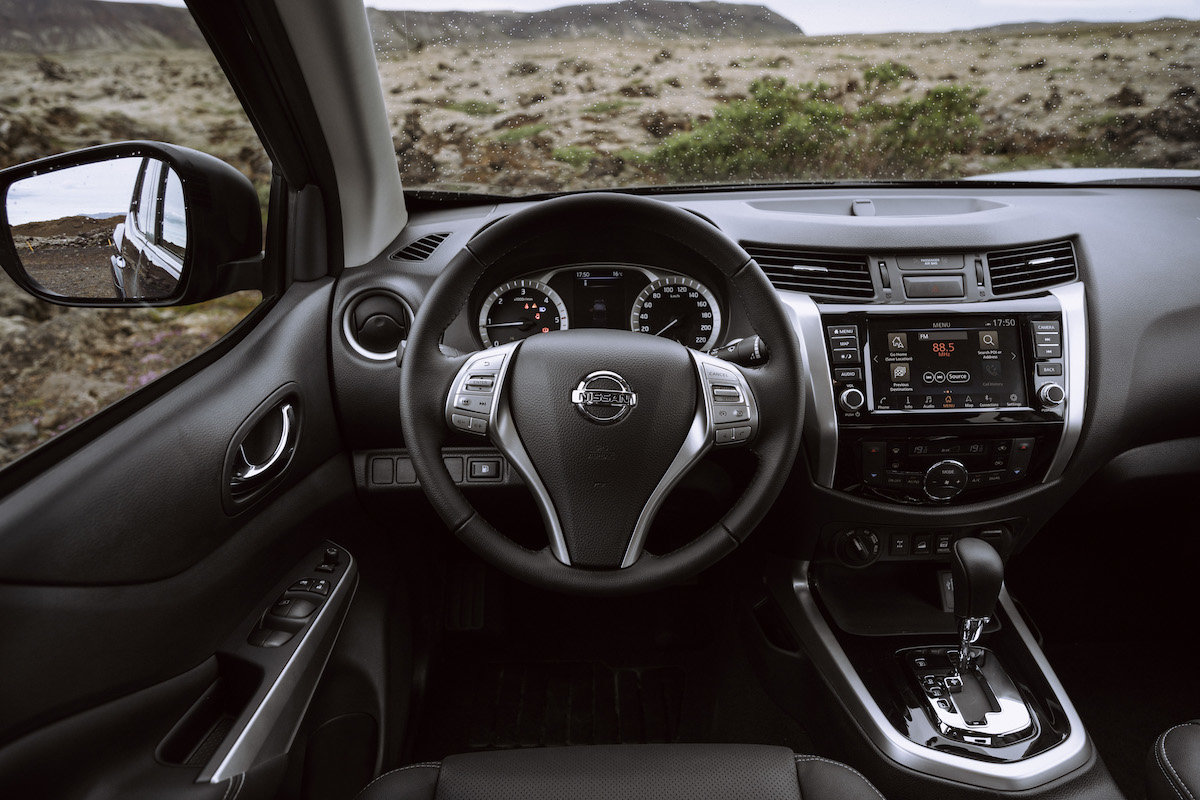
- The Navara was updated in 2019. For a mid-life facelift, the changes were quite comprehensive with revised front and rear suspension, stronger brakes, a new six-speed manual gearbox, an improved payload and a new infotainment system. This added compatibility with Android Auto and Apple CarPlay. The new gearbox has a more pleasant shift action and longer ratios to improve fuel economy, while there are now disc brakes at the rear rather than drums. For those who tow a caravan or trailer, it's worth knowing that the facelifted Navara has Trailer Sway Assist for more stable towing fitted as standard on all trim levels, including the entry-level Visia.
- The Navara double-cab's load bed measures 1,545mm long at floor level, 1,560mm wide at its broadest point, and 498mm high. That makes it larger than the Mitsubishi L200 in every direction (1,520mm x 1,470mm x 475mm). However, it's a slightly smaller space than the Volkswagen Amarok's load bed (1,555mm x 1,620mm x 508mm). Although the double-cab is the more popular body style, the king cab offers more space for long loads, increasing the load bed length to 1,800mm at floor height.
- Lots of systems are fitted to make the Navara very capable off-road. As well as a 4x4 high-ratio mode, the 4WD system has a low-ratio setting for steep slopes and more serious off-roading. Other helpful systems include Hill Start Assist to stop the vehicle rolling backwards when pulling away on a slope, and Hill Descent Control to maintain a consistent speed when descending a steep slope. An electronic limited slip differential can sense if a wheel is slipping, and automatically brakes that wheel and sends power to the wheels with the most traction.
- If you want all the toys: go for the Tekna. It comes with LED headlights and daytime running lights, silver side steps and roof rails, and 18-inch alloys. Inside, the Tekna has leather upholstery, dual-zone climate control, an eight-inch touchscreen satellite navigation system with Apple CarPlay and Android Auto, and eight-way electric adjustment for the driver's seat. It also has an around view monitor camera system, giving a plan view around the vehicle while manoeuvring.
- If you want the meanest looking Navara: it has to be the N-Guard. This comes with similar toys to the Tekna, but a much meaner look. Instead of the silver side steps and roof rails of the Tekna, the N-Guard has gloss black items. The 18-inch alloy wheels are black, the door mirrors are black, the door handles are black – you get the idea. The closest you get to a splash of colour is the blue stitching in the cabin.
- If you want to go off-road: pick the AT32. This hardcore 4x4 version of the Navara was developed with Arctic Trucks, and features extra large tyres, a raised ride height, and an improved wading depth of 800mm. The suspension was redesigned and a front differential lock was available as an option.
- If you want the biggest load bed: choose the king-cab. You have to make do with occasional rear seats with very little legroom, but the advantage is an extra 255mm of load bed length. The king-cab comes with the lower-powered engine, but that's no real hardship with so much pulling power.

