Nissan Qashqai Review 2025 | A different kind of hybrid
Nissan Qashqai cars for sale
4.0
Expert review
Pros
Lots of clever tech
Roomy and practical cabin
Stylish looks
Cons
No plug-in hybrid
Underwhelming performance of 1.3 mild hybrid
High-spec cars are very pricey
The CarGurus verdict
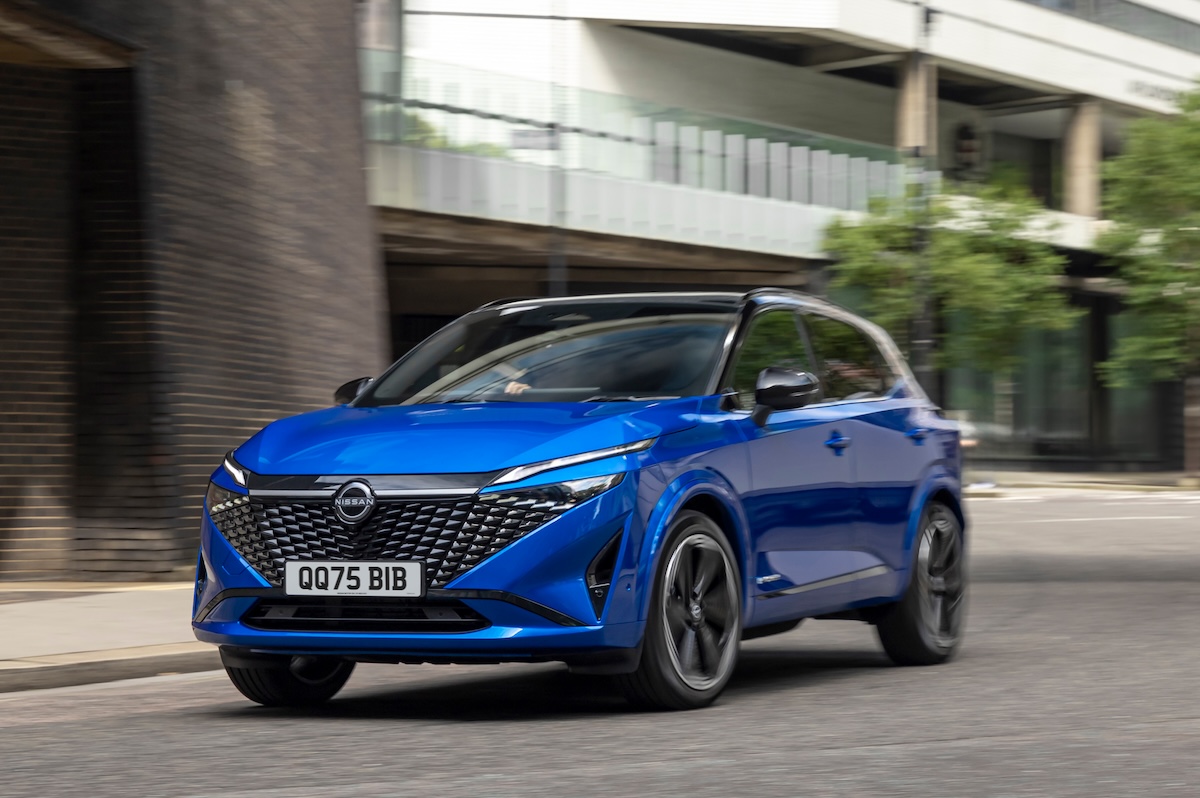
The Nissan Qashqai has been one of the UK’s best-selling cars for a number of years, and this third-generation model lays a more worthy claim to that status than ever before. It’s a big step up over the versions that have gone before, with significant improvements in dynamic ability, interior quality, style and technology.
Importantly, it’s maintained the appeal that has traditionally made the Qashqai so popular, with strong practicality, comfort, ease-of-use and value for money. While there is no diesel option these days, the mild hybrid petrols and E-Power full hybrid certainly have their appeal. Overall, we think this is an excellent all-rounder in the family SUV class.
What is the Nissan Qashqai?
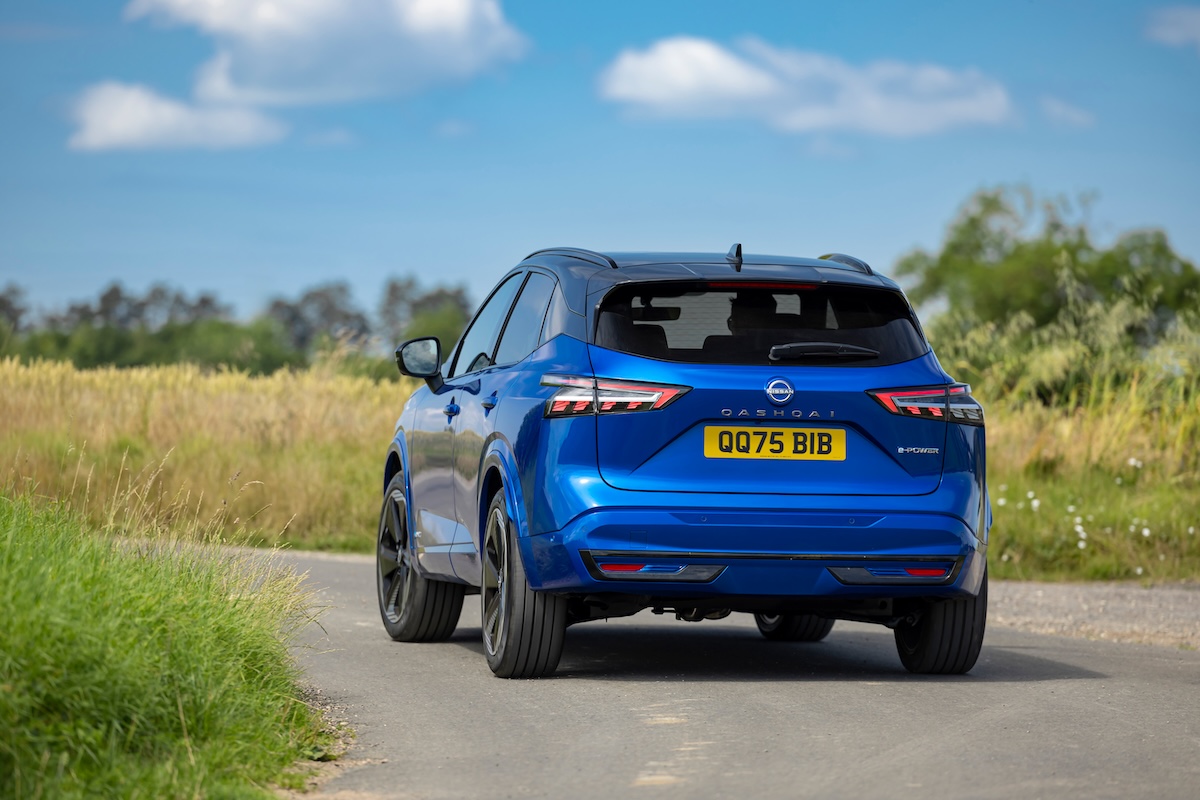
The Nissan Qashqai is a mid-sized family SUV. But you probably didn’t need us to tell you that, as it’s been hugely popular in the family car market for many years already. The original Nissan Qashqai first arrived in 2006 and is credited with starting the ‘crossover’ genre, which blends the convenience and low running costs of a regular family hatchback with the chunky styling and raised ride height of an SUV. Over the years, the Qashqai has grown bigger and more off-roader-like, but the range is still dominated by front-wheel-drive models with efficient engines.
The third-generation Qashqai reviewed here was launched in 2001 and has a much edgier look that its predecessors, while being similarly practical inside. It is offered with mild hybrid petrol engines that can be paired with manual or automatic gearboxes, or as a full hybrid. The latter features a somewhat unusual drivetrain where the petrol engine only acts a generator, leaving the electric motor to drive the wheels at all times.
An extensive facelift in 2024 introduced a new front end design and updates to interior equipment. Then, in 2025 the hybrid model was updated to offer more power and improved efficiency. It's good, but it needs to be, because the Qashqai has more rivals than ever, from expected models like the Kia Sportage, Peugeot 3008 and Ford Kuga, to newer entrants from the Chinese market, many of which offer more equipment and lower prices.

How practical is it?
Practicality is strong in the latest Nissan Qashqai. There’s loads of legroom and headroom for rear passengers, although there are no sliding seats for extra versatility, like you get in a Skoda Karoq. The seats do fold flat in a 60/40 split, though. At up to 504 litres, the boot is competitive for the class, although some versions get less outright capacity depending on whether they have four-wheel drive, or a stereo subwoofer, or both. In all, however, a split, variable-height boot floor makes for convenient hidden storage, and the clever design means that the two pieces can be slotted into the floor to divide up the space in different ways.
The driving position has a good range of adjustment, and you sit fairly high so you get that imposing SUV loftiness. Visibility is another strongpoint, although we'd still like it if the over-the-shoulder view was a bit more generous. Thankfully all Qashqais come with parking aids to help you avoid car park scrapes.
There’s no seven-seat option for the Qashqai. For that sort of space and versatility, you’ll have to look to the bigger Nissan X-Trail, or rivals like the Skoda Kodiaq and Kia Sorento.
What's it like to drive?
What you won’t find in the Qashqai line-up is a diesel engine. The Japanese manufacturer has chosen to shun diesel altogether with the third-generation Qashqai, and instead offers it with a 1.3-litre mild-hybrid petrol engine, available with 138bhp or 156bhp.
Both mild hybrid engines get front-wheel drive and a six-speed manual gearbox as standard. Four-wheel drive and a CVT ‘Xtronic’ automatic are available on the higher-powered DIG-T 158 engine.
The mild-hybrid tech is essentially a very small battery and electric motor that also doubles up as the starter motor. This gives the turbocharged 1.3-litre petrol engine a performance boost when you accelerate, and so helps to improve your fuel economy, although it never drives on electricity alone.
So, what are the mild hybrid powertrains like for performance? Well, the higher-powered version is punchy enough to make easy work of a fast motorway merge or snappy getaway into a roundabout. It does need working fairly hard to get the best from it, though, so don’t expect diesel-like urgency from low revs.
We’ve never had the chance to try the lower-powered version, but on paper at least, there’s not a huge deficit on torque or acceleration figures, so we wouldn’t anticipate a huge drop-off in performance overall.
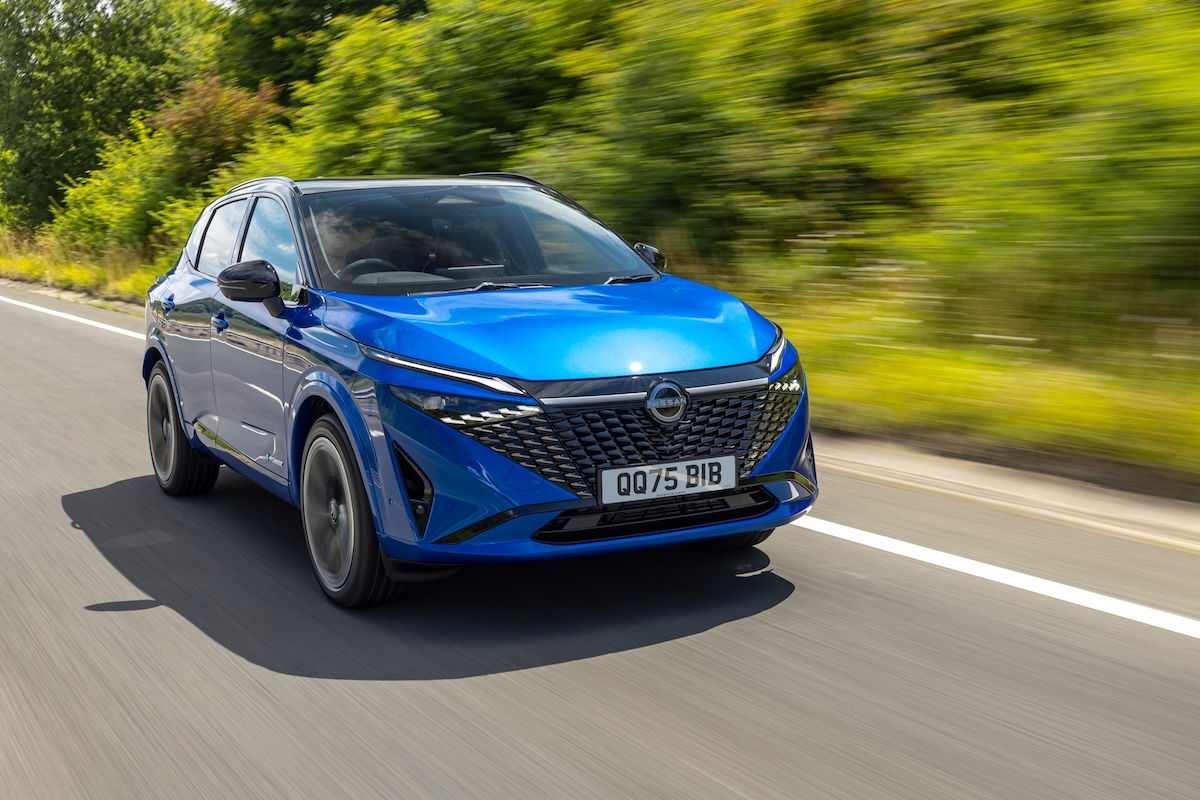
In 2022, Nissan added the E-Power model to the range, which is the first full-hybrid version of the Qashqai. This was updated in 2025 to offer more power and improved efficiency. It goes about things in a rather unusual way, because even though there is a three-cylinder 1.5-litre petrol engine, it never actually drives the wheels, acting instead like a generator for a 201bhp electric motor.
As a result, the E-Power actually feels more like an electric car than a hybrid to drive, with the immediate urge of the electric motor giving a muscular-but-measured take-off, and building speed in a smooth linear manner that remains unbroken by gearchanges. Granted, it’s not ultimately all that quick (expect 0-62mph in 7.6 seconds), and you’re certainly not pinned back in your seat like you might be in some fully electric alternatives, but that’s absolutely appropriate in a car like the Qashqai, as is the relaxed and effortless way that the E-Power system goes about its work.
The E-Power is refined, too. The generator engine stays impressively hushed, partly because Nissan has set the car up so that the petrol engine only works harder at high speeds, when wind- and road noise (of which there are moderate amounts) helps mask the work the petrol engine is doing. And it works, because the revving of the engine is never intrusive and always distant.
Overall, the Qashqai generally feels pretty effortless to drive. The pliant suspension means ride comfort is pretty good, although we’d avoid buying a car fitted with the larger wheel choices, as these can make the ride feel a little more jumpy on some surfaces, and it can crash through potholes.
The Qashqai certainly isn’t a car that enjoys fast direction changes, but there’s enough body control that it feels tidy and stable in most situations, and the steering is responsive, direct and nicely weighted at speed, but light enough at low-speeds to make manoeuvres easy. Pretty much everything about the way the car drives just gels nicely to make the Nissan Qashqai a reassuringly easy and confident companion.
Technology, equipment & infotainment
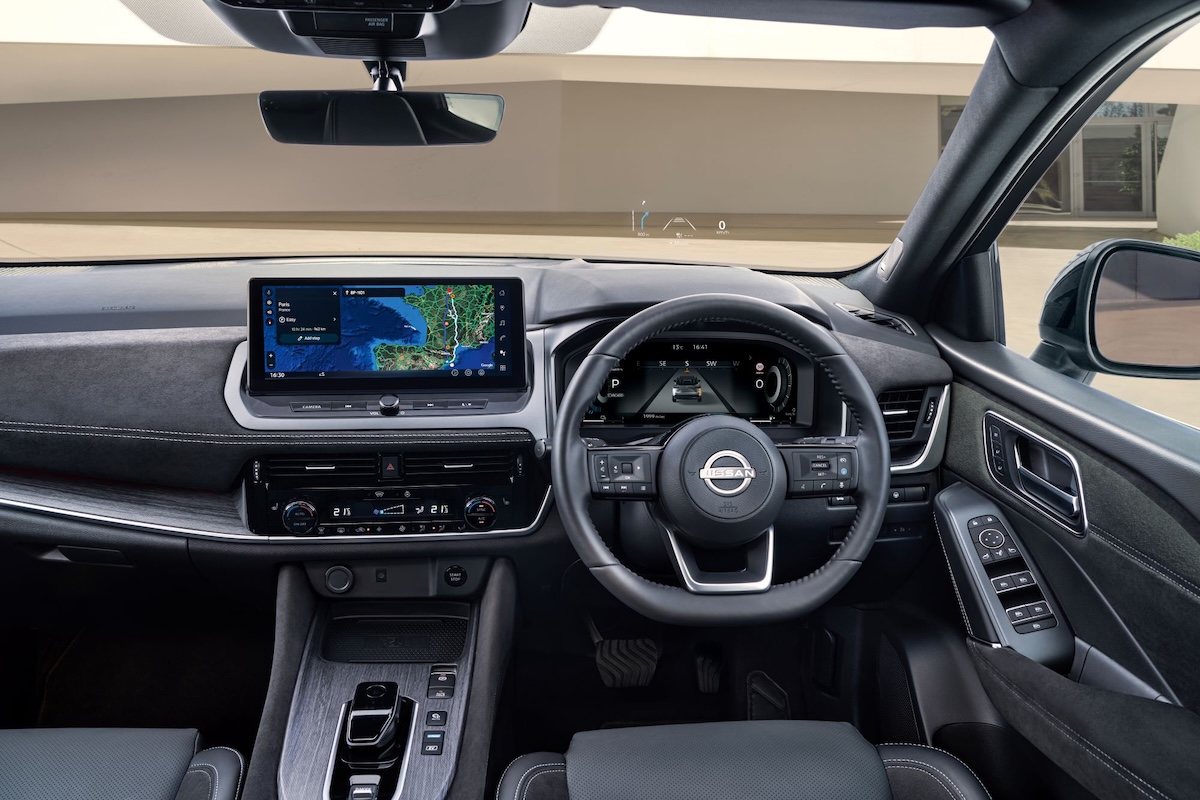
Equipment levels are very respectable in the Nissan Qashqai. The entry-level Acenta Premium includes 17-inch alloy wheels, dual-zone climate control, a rear-view camera and rear parking sensors, and a 12.3-inch touchscreen infotainment system. This looks very smart, with sharp graphics, and includes Apple CarPlay and Android Auto, but we have found some of the menus can be a bit fiddly to navigate.
Upgrading to N-Connecta adds Google integration for the touchscreen (we'd argue these should really be on the entry-level model, too), a second 12.3-inch screen for digital dials, 18-inch wheels, and a 3D parking camera.
The N Design adds a more sophisticated rear suspension setup for improved ride quality, as well as a panoramic glass roof (although it doesn't open), adaptive LED headlights, two-tone paint and 20-inch wheels.
Above this, Tekna trim rides on 19-inch wheels and includes heated (and powered for the driver) front seats, a heated steering wheel, a head up display and a powered tailgate.
The flagship Tekna+ has 20-inch wheels, two-tone pain, a 10-speaker Bose sound system and even a massage function for the front seats. If you think that sounds like it'd be expensive, then you're right. In fact, it pushes the Qashqai over £40,000, meaning you'll need to factor the premium rate of luxury car tax into your running cost calculations.

Nissan Qashqai running costs
The Nissan Qashqai is competitively priced when new, especially given its generous equipment levels. It’s expected to be worth more than most of its rivals if you choose to sell it on after a few years, too. Monthly finance costs are in line with the competition, although these will vary according to what offers are available at any given time, so it is worth shopping around.
Unless you can find a great deal, we'd suggest people avoid the high-spec Nissan Qashqai Tekna and Tekna+ trims, as they're seriously expensive and you can easily get a well-equipped, bigger family SUV such as the seven-seat Skoda Kodiaq for the same money.
Fuel economy on the Nissan Qashqai is also acceptable, if not exceptional. Most models achieve official figures of around 44mpg but, on our test drive we struggled to improve on 35mpg despite a useful amount of relaxed motorway driving. The E-Power fares better, though we couldn't match its claimed economy of more than 60mpg. Instead, we saw around 50mpg in our tests.
A service is due every 18,000 miles on hybrid versions, or 12,000 miles on the E-Power hybrid.

Nissan Qashqai reliability
Nissan's reliability record is a bit mixed. It ranked 29th out of 30 manufacturers in the latest What Car? Reliability Survey, which is poor by any measure.
Reliability data for the current generation of Qashqai is a bit more promising, because the petrol model placed it 17th out of the 76 models in the family SUV class of the same What Car? survey, with the E-Power hybrid in 26th place.
We'd also prefer to see Nissan extend its standard warranty from the bog-standard three years and 60,000 miles to something that is more of a match for Hyundai, Kia, or MG.
- The Nissan Qashqai might be from a Japanese manufacturer but it’s built in the UK, at the company’s Sunderland factory. It’s the most successful model to be built in Britain; several million have been produced in Sunderland since the original Nissan Qashqai first started production in December 2006.
- Standard safety kit includes autonomous emergency braking around town, traffic sign recognition and adaptive cruise control. Standard safety kit was improved during the 2024 facelift, when things like intelligent speed assist and emergency brake signalling were added to the standard roster. When it was crash tested by Euro NCAP in 2021, the Qashqai earned the full five-star rating.
- Every third-generation Nissan Qashqai gets a colour touchscreen perched high in the centre of the dashboard. On early versions, the lower two trims got an 8.0-inch screen, while N-Connecta and above got a 9.0-inch version. Even at the time, the graphics looked a little grainy compared to the screens in rivals like the Kia Sportage, but the system is easy to use and has the key features that you’d want. That said, you didn’t get Apple CarPlay and Android Auto in entry-level Visia trim, so that one’s best avoided. These phone-mirroring apps let you use your phone’s functions easily on the car’s screen. They only work when the phone is plugged into the USB input on lower spec Acenta models, but N-Connecta and up gets wireless Apple CarPlay. When the E-Power was introduced in 2022, it got its own reworked infotainment system with a bigger 12.3-inch screen. With much sharper graphics and less lag, it’s a real step up from the original system, but the user interface can be a little bit bamboozling at times due to complex menu layouts and ambiguously designed on-screen icons. During the extensive facelift that took place in 2024, this higher-grade infotainment system was rolled out across the entire Qashqai range.
- If you want to keep it affordable: Go for the Nissan Qashqai Acenta Premium, with the lower powered DIG-T 140 engine and manual gearbox. We haven’t driven this engine yet, but it has a similar amount of torque to the more powerful version and is likely to feel fairly similar in real-world use, yet costs quite a lot less. You also get a reversing camera, Apple CarPlay and Android Auto, dual-zone climate control and 17-inch alloy wheels with the well-priced Acenta Premium trim level.
- If you want to look really sharp: The Nissan Qashqai is a seriously smart-looking car as it is, with styling reminiscent of the Nissan Juke. The angular lines, and particularly the bold headlight design, help it to stand out from the rest of the class. If you want to make a big style statement, go for N Design as it gets two-tone paintwork and 20-inch wheels as standard. The black roof with Magnetic Blue paint looks really great.
- If you want the best fuel economy: Go for the Qasqhai E-Power with its clever hybrid system, which has an offical Combined fuel economy of more than 60mpg. We've generally seen around 50mpg from this drivetrain in our tests, which is not at all bad for a car of this size and performance.
- If you want the best company car: Honestly, as a company car driver we'd steer you towards a fully electric or plug-in hybrid vehicle, which are substantially cheaper to run. Given that the Qashqai range offers neither, we'd likely look elsewhere, whether it's another Nissan in the form of the fully electric Leaf or Ariya, or a PHEV like the Kia Sportage or Hyundai Tucson.


