Porsche 911 992 Review (2019-present)


Pros and cons
What we like
Hugely enjoyable to drive
Easy to live with everyday
Breadth of choice that rivals can't match
What to consider
Expensive to fuel
High insurance costs
Some purists complain that most of the engine range is now turbocharged
The CarGurus verdict
There’s a reason that the Porsche 911 Carrera is such an iconic, successful sports car, and that’s simply because it’s so good. It’s not so singular in its focus that it’s not able to be used as a daily driver, and the spacious cabin – for a sports car at least – makes it a practical choice. Plus there's a model line-up that’s all-encompassing, from the effortless but engaging Carreras, through to the even more driver-focused GTS and the supercar capability and pace of the Turbo and Turbo S. What’s more, most are available in a variety of open-topped or coupe guises.
The hardcore GT department cars bring track-like capability to the road, too, meaning the 911 really can be everything to everyone. The 911 might have an unusual technical specification with its ‘flat-six’ engine slung out back, but Porsche’s engineering stubbornness and expertise has honed it brilliantly, making the 911 the car by which all other sports and supercars are judged, and for good reason, too.
out of 5 expert review
What is the Porsche 911 992?
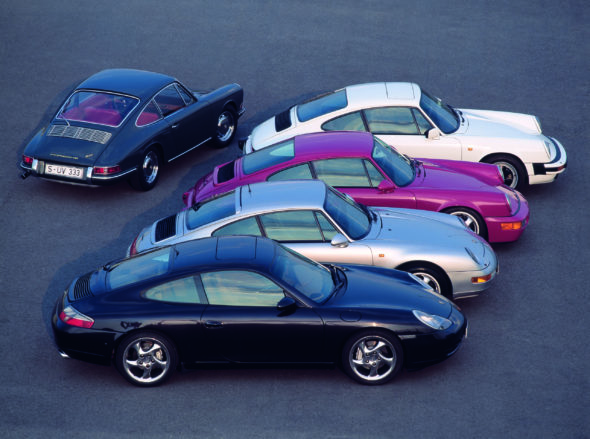
Porsche introduced the 911 way back in 1963, and the model and badge has endured to become iconic, on both road and track. The current eighth-generation 911 Carrera was introduced in 2019, it being referred to in Porsche circles as the 992, with the car it replaced being the 991. You could find yourself falling into a wormhole of previous 911 nomenclature, with the 997, 996, 993, 964, G-Series and more besides, with dedicated fans of each obviously arguing theirs is the best 911 ever.
Whatever your viewpoint on the old ones, the new one is very difficult to argue against as the finest. As with its predecessors Porsche offers plenty of choice, the 911 Carrera really can be everything to everyone, with a breadth of model choice possible that no rivals can hope to match.
There’s the standard 911 Carrera, the 911 Carrera S, both available in four-wheel drive instead of the standard rear-wheel drive, these called 911 Carrera 4 and 911 Carrera 4S, respectively. Any of those can be had in coupe, or cabriolet guise. There’s also the 911 T, which is coupe and rear-wheel drive only, and is a bit of an enthusiast’s twist on the basic Carrera, taking the same engine but a manual gearbox, a bit less weight and some slightly sportier handling and suspension tweaks.
There’s the Targa, too, which is sort of a halfway house with its cool hardtop and part fabric roof; whole rear deck of the car lifts to allow the section above the driver and passenger to stow under the back window. It’s only offered in four-wheel-drive form, so as a Targa 4, or Targa 4S.
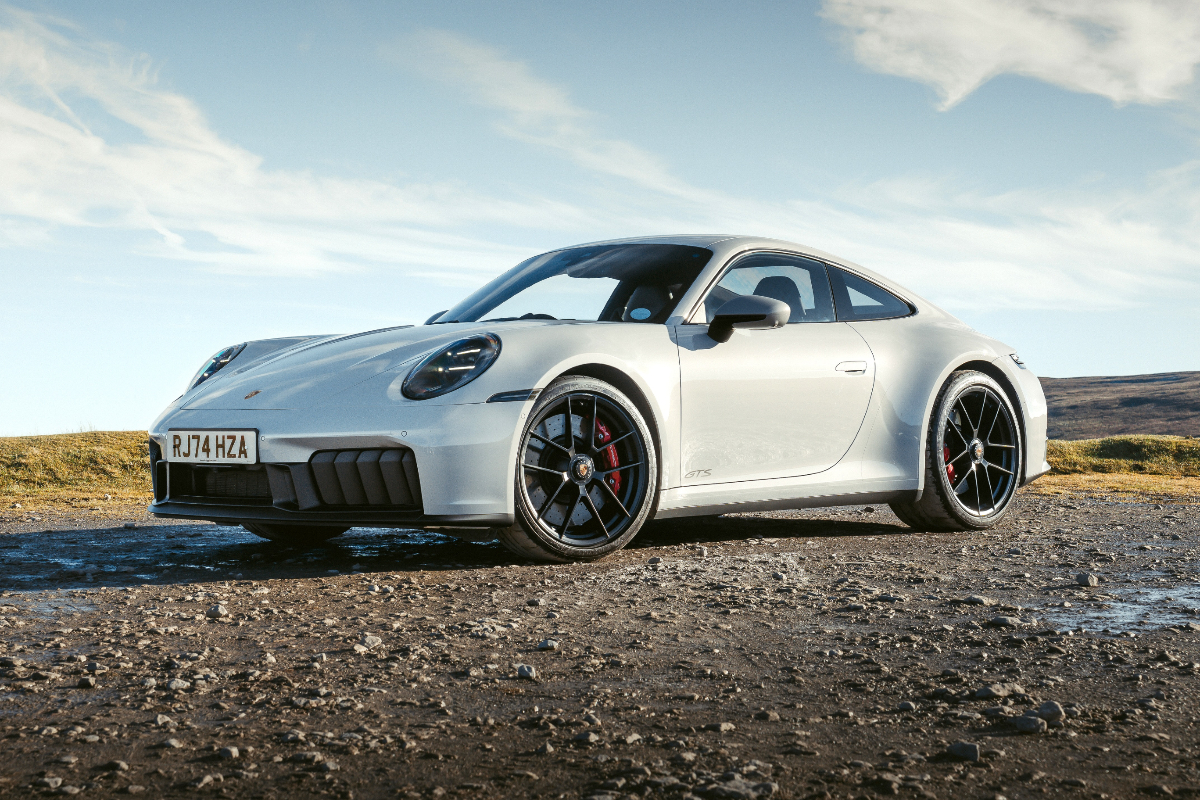
Confused? Well we’re not finished yet, because the 911 can also be had in GTS, Turbo, Turbo S and GT3 and various other forms. The Turbo and Turbo S in coupe and cabriolet guises offer the sort of pace that was once the preserve of hypercars, yet, they retain all the civility and usability of a standard Carrera.
The GT models, hailing from Porsche’s motorsport department, are a bit more singular in their focus. They lose their rear seats to become strict two-seaters, but add bigger everything – wings, brakes, bodywork, wheels and tyres – and more power from their motorsport-derived 4.0-litre naturally-aspirated flat-six engines, too. The GTS and GT3 models appeal to owners who seek out racing tracks in their spare time.
Practicality
How practical is it?
You probably think that there’s no such thing as a practical sports car, and in almost all respects you’d be right. These sorts of cars have been designed to put the driver front and centre, to eliminate rational and sensible thoughts of versatility in the pursuit of high octane thrills and excitement. Yet there always has to be an exception to prove the rule - and that’s where the 911 comes in.
Now, we’re not going to pretend that the Porsche can rival large estate cars or boxy MPVs for family-friendly appeal, yet as dedicated driver’s machines go, the 911 is rather usable. Yes it’s grown over the years, but it’s still more compact than many rivals, while visibility from the driver’s seat is excellent, making it easy to see out of and park.
Then there’s the space on offer, witn the driver and front passenger getting generous amounts of head, shoulder and legroom. There’s also a wide range of seat and wheel adjustment, with few cars offering such a perfect, low slung driving position as the Porsche. Ahead of the driver there’s also the traditional Porsche dials with the rev counter front and centre, but here they appear in a cool digital TFT cluster.
You also benefit from a decent array of storage, including a large glovebox, a lidded cubby between the front seats and some slim door bins.
But the 911’s party trick is the fact that it’s a 2+2, with a pair of small rear seats. These are only really suitable for children, but that’s more than any other rival offers. What’s more, they can be folded flat in seconds to create a useful extra space for luggage, offering overflow for the 132-litre boot that’s mounted in the nose. If you need more space, then you can even fit the 911 with a roof rack and roof box.

Driving
What's it like to drive?
There’s a reason the 911 has been such a success story over the last six decades, and that’s the way it drives. With its unique rear-engined layout and howling flat-six motors, the Porsche goes like nothing else on the road. In the early days the car demanded real respect and skill to get the best out of it, but continuous development means this iconic machine is safe and secure as any rival, yet it still retains its trademark feel.
Even a standard, entry-level 911 Carrera today offers supercar pace and agility, with every model adding more power as you climb up the price ladder – or just a bit more handling fizz and involvement, in the case of the 911 T. The quick and precise steering is full of feedback, while the car always feels poised and balanced through corners, encouraging you to make the most of its considerable grip and traction. Few cars are as engaging and rewarding when driven down a twisting back road, and taking the long way home will become a force of habit.
Of course there are many different models to choose from (see below), but all are exciting and invigorating to drive. The majority of 911s feature Porsche's PDK paddle-shifted, eight-speed, automatic transmission, some models only being available with this, but as a nod to its most committed enthusiast customers there is a seven-speed manual gearbox offered with some versions.
You’ll also have to navigate Porsche’s bewildering array of chassis and dynamic upgrade options, from torque vectoring limited slip differentials through to active anti-roll bars and four-wheel drive. None is particularly cheap, and while they do make the 911 even more capable, the standard set-up is so well sorted that it’s difficult to justify the extra costs.
That said, for ultimate high adrenaline driving thrills, the GT3 is in a class of its own. With its razor sharp track-honed responses, sensational naturally aspirated 4.0-litre engine and incredible driver feedback, this stripped out special is a true racer for the road.
In terms of comfort and refinement, the 911 has the measure of many rivals too. As we’ve mentioned, visibility is better than most, while the ride is firm but never uncomfortable and on a long journey the Porsche is surprisingly relaxing. Only the booming tyre roar on course surfaces upsets the calm of the cabin.
Tech and equipment
Technology, equipment & infotainment
Unlike the smaller Cayman and Boxster models, Porsche hasn’t scrimped so much on the standard kit list of the 911. There’s still an options list as long as both your arms, and the arms of the person sitting next to you, but you don’t have to spend big to get all the bits and bobs you need.
For instance, dual zone climate control is standard, as are front and rear parking sensors, cruise control, leather trim and heated seats. You also benefit from alloy wheels and automatic LED headlamps. The top spec Turbo and GT3 models also get hi-tech additions, such as four-wheel steering and carbon ceramic brakes.
All cars get the firm’s touchscreen infotainment system that’s straightforward to use and packed with features, including Bluetooth, DAB radio and Apple CarPlay. It’s also connected to a powerful 150 Watt eight-speaker hif-fi system, although (as you’d expect) you can upgrade this further if your pockets are deep enough. Safety kit runs on autonomous emergency braking and numerous airbags, while adaptive cruise control and lane keep assist can be added at extra cost.

Running costs
Porsche 911 992 running costs
No sports car is ever going to be inexpensive to run, and the 911’s no exception, Porsche being a premium manufacturer, with prices to match. That said, given the 911’s breadth of ability it could conceivably take the place of two cars, being both your daily driver and weekend toy – or at least that’s an argument you can try with your significant other if they need convincing.
The switch to turbocharged engines with the 992’s predecessor was dressed up as a means to fulfil ever tougher emissions and fuel economy goals - that it also brought more flexibility at lower revs being a happy by-product of that. The cheapest to run will be that entry-level Carrera, at least in relation to fuel consumption, returning as much as 27.4 mpg on the WLTP tested combined consumption cycle.
The rest of the Carrera line-up achieves in the region of 25 mpg up to that Carrera figure, with slight variances depending on specification, be it Coupe, Cabriolet, rear-wheel drive, four-wheel drive or with a manual or automatic gearbox. The Targa is a bit higher thanks to its increased weight, while you pay for the Turbo and Turbo S’s performance at the pumps, these being quoted at around 23 mpg.
All those fuel consumption figures are genuinely achievable, and can be surpassed on a long cruise, but think in the region of 10-20% less if you’re using your 911 as intended, or significantly less if you’re really enjoying it. The GT department cars are thirstier still, but if you’re driving one you simply won’t care.
All 911s sit in the highest insurance groups, while servicing from your Porsche dealer won’t be cheap, but you’ll have the assurance of that important dealer stamp in your service book – for the first five years or so at least. Buy tyres from specialists, though, as they’ll be cheaper, as will servicing, in time, there being a huge number of Porsche specialists that’ll be only too happy to maintain your pride and joy for you, for less than Porsche’s OPC (Official Porsche Centre) network.
A sizeable number of the Carreras dodge the very highest VED tax rate, but after your first year’s payment you’ll pay the full over £40,000 surcharge on VED (road tax) for the first five years of ownership. All Porsche purchases come with a chance to take part in a Porsche Experience Centre day, which allows you track time and some driver training with Porsche’s expert drivers. This is a great way to get to know what you and your car are capable of.

Porsche 911 992 reliability
In its current 992 guise the 911 Carrera hasn’t been around long enough to have suffered any reported mechanical maladies, and Porsche’s reputation for reliability is fairly impressive. Yes, there have been hiccups with previous models (the internet is awash with pages dedicated to things like IMS bearings on older 996 models), but the reality isn’t as bad as you’d think.
There have been a few instances of cars with poorly operating sunroofs, and electrical gremlins on some of the driver aid and security systems, but all these are not uncommon teething issues with new cars and will be sorted under the warranty.
The 911 comes with a full three-year unlimited mileage warranty, after which Porsche offers the ability to extend for extra cost. As part of its approved used scheme, 911 buyers can have a warranty on cars as old as 15 years, or as much as 125,000 miles.
Outside Porsche’s official network of dealers there are countless specialists that can look after your Porsche as it gets older, too, though Porsche also offers servicing and care for older cars, via its Porsche Classic service. Porsche has sold more than a million examples of the 911 over its various iterations, and it's said that well over two thirds of those built are still on the road today. That, more than anything, underlines this model's longevity and reliability.


What owners say
Had my GTS for a couple of days now and love it. As advertised its the perfect mix of classic sports car with everyday usability. The petrol gauge drops at an alarming rate but thats on me. Its a determinedly analogue beast. Minimal beeping or "assistance", no cruise control and solid early 2000's tech. From the outside it is a beauty to look at from every angle. I'm sure in days to come I will find its foibles & shortcomings - no doubt when I visit the petrol pump or its first service, but for now its just love.
16 July 2025I love 911 and specially red colour and the only missing part in this car the small spoiler in the back .
21 July 2025Great features,and reasonable value! Not a great price,could be cheaper!
16 April 2025What owners say
Had my GTS for a couple of days now and love it. As advertised its the perfect mix of classic sports car with everyday usability. The petrol gauge drops at an alarming rate but thats on me. Its a determinedly analogue beast. Minimal beeping or "assistance", no cruise control and solid early 2000's tech. From the outside it is a beauty to look at from every angle. I'm sure in days to come I will find its foibles & shortcomings - no doubt when I visit the petrol pump or its first service, but for now its just love.
16 July 2025I love 911 and specially red colour and the only missing part in this car the small spoiler in the back .
21 July 2025Great features,and reasonable value! Not a great price,could be cheaper!
16 April 2025Great car reliable great service from Porsche great image and residual values
26 December 2020Best porsche there is and good price!! I love the 911s
22 March 2023All-round excellent car. Might be old (7 years) but in pristine condition and low mileage. 2-year manufacturers warranty provides extra peace of mind, but I expect it will be in good shape for many years to come.
27 January 2023Nothing quite as satisfying as a 911. The 991 even in base 3.4 is sublime to drive and own. Nothing else holds its value as well too. At the moment nice mileage , expensive to get hold of
13 May 2021Classic looks, classic driving experience and great fun. Fairly basic by modern standards but thats what makes it classic and authentic. Value is what ever you are prepared to pay to grab a bit of history.
14 August 2021Lovely cars but early ones had trickier gearbox which is an acquired taste ... later ones had G50 which was an ‘easier’ box, though some prefer the skill required in the earlier 915 box ... you’ve got to drive both before buying one !
19 February 2021Lots of power. Very quick acceleration. Nicely finished. Great drivers car
6 October 2023Three things to know
- The 911 is so adept as an all-rounder thanks in no small part to its unusual position and type of engine. It features a flat-six engine, which some refer to as a 'boxer'. This engine is slung low and behind the rear-axle. It might seem daft putting all that weight back so far back in the car, but years of honing by Porsche’s determined (some might say stubborn) engineers has resulted in them conquering physics with the 911. Earlier cars had a reputation for being tricky to drive, but the current 911 is easy, yet still hugely rewarding, that engine placement allows for not just excellent traction, but also the 911's spacious – for a sports car at least – cabin.
- The current 992-series 911 Carrera has been engineered to be future-proof, as there’s space within the drivetrain to fit an electric motor for an eventual hybrid model. Not only that, but there’s places within the bodywork where batteries could be housed to power it. Porsche’s engineers aren’t happy with how it all works yet, specifically relating to the weight it adds, so if you like the idea of a hybrid 911 from Porsche then you’ll be in for a long wait. But it will happen, one day.
- The 911 uses staggered wheel sizes front and rear, with larger rear wheels. With so much tyre on the road, Porsche has fitted an additional setting to the drive modes within its electronics for driving in the rain. The 911’s Wet Mode actually has sensors within the wheel housings that listen for wet roads. When it detects them, the car automatically primes itself for the conditions, imperceptibly pulsing the brakes to keep the discs dry, changing the mapping of the throttle pedal, gearbox shifts and altering the stability and traction control settings to suit. It even adjusts the attitude of the automatic rear wing, to make the 911 as safe as possible on wet roads.
Which one to buy
- A daily driver: There are faster, more focussed 911s in the line-up, but it’s genuinely difficult to find fault with the entry-level 911 Carrera coupe. It’s hugely quick, thanks to a 380bhp turbocharged 3.0-litre flat-six engine, reaching 62mph in just 4.2 seconds – it possible to shave 0.2 seconds off that with the optional Porsche Sport Chrono Package – is easy, as the Carrera is PDK automatic only, and hugely entertaining to drive. Indeed, it’s very much a case of ‘why would you need any more?’. If you love its accessible on-road pace and comparably low list price, but you fancy a manual gearbox and a touch more zing to the handling, the 911 T will scratch that itch perfectly.
- The traditionalist’s choice: As compelling as an entry, base specification 911 Carrera is, the 911 Carrera S adds the ability to option a seven-speed manual transmission into the mix. No, it’s not as easy as that paddle-shifted eight-speed PDK, but that’s kind of the point. It’s not as quick, either, but you’ll be having too much fun dancing on the pedals and palming the crisp-shifting gear stick through its ratios to care about a tenth or two to 62mph. Please buy one, so we can have it second-hand in a few years time.
- The fast one: The 911 Turbo (and its Turbo S spin-off) has long been a byword for fearsome performance, and with the range-topping twin-turbo 641bhp Turbo S you get that. Less of the fear, perhaps, because the 911 Turbo S’s pace might have the capacity to shock, it’s managed by a chassis and drive systems that make it exploitable. Porsche quotes a 0-62mph time of 2.7 seconds and a 205mph top speed, and Porsche is known to be somewhat conservative with its performance claims…
- For the track fiends: The GT3 is the model used by Porsche to homologate the 911 for racing. The result is a road-going car with a racers heart and agility, it having a high-revving naturally-aspirated 4.0-litre flat-six engine (all other 911 derivatives being turbocharged), the GT3 being offered in both manual and PDK guises, with the RS in PDK only. Overtly styled and shaped by their track focus, what they lose in practicality and day-to-day civility they gain in intensity and engagement, both being cars that appeal to drivers who’ll think nothing of driving their GT3 to a favourite track, hammering around all day, before driving it home.


Pricing trends
Starting RRP
£86,417
Current avg. market price
£132,884
Trending up by 4.2% this month
May 2026 - October 2026
More on the 992 Porsche 911 (2020 - 2026)


Compare 2026 Porsche 911 Trims
The 2026 Porsche 911 lineup offers a range of trims from the value-focused 2dr Pdk to the performance-oriented GT3, catering to diverse preferences and budgets.
- Starting at £111,603
- Most Popular: S 2dr Pdk
Trim Overview
Prices updated weekly from CarGurus listings.
| 2dr Pdk | S 2dr Pdk (Most Popular) | Gts T-hybrid 2dr Pdk | Gt3 2dr Pdk | Gt3 2dr | |
|---|---|---|---|---|---|
| Starting MSRP | £105,200 | £138,500 | £155,900 | £159,700 | £159,700 |
| Avg. Market Price | £111,603 | £132,305 | £144,821 | £199,970 | £160,649 |
| Positioning | Best value | Standard | AWD for less | Standard | Fully loaded |
| Standout Features | Heated seats, Navigation system, Alloy wheels | Navigation system, Heated seats, Alloy wheels | Privacy glass, Adaptive cruise control, Panoramic roof | Navigation system, Keyless entry, Alloy wheels | Privacy glass, Android Auto, Alloy wheels |
| Drivetrain | RWD | RWD | AWD | RWD | RWD |
| Listings Available | 92 | 159 | 24 | 23 | 12 |
Quick Compare Table
Listing prices sourced from CarGurus — updated weekly. OEM specs from manufacturer data.
| 2dr Pdk | S 2dr Pdk | Gts T-hybrid 2dr Pdk | Gt3 2dr Pdk | Gt3 2dr | |
|---|---|---|---|---|---|
| AI Summary | Best value entry into the 911 lineup | Most popular choice with solid features | AWD performance at a premium | High-performance trim for enthusiasts | Fully loaded with luxury features |
| Avg. Market Price | £111,603 | £132,305 | £144,821 | £199,970 | £160,649 |
| MSRP | £105,200 | £138,500 | £155,900 | £159,700 | £159,700 |
| Engine | 3.0l Petrol | 3.0l Petrol | 3.6l Petrol/electric Hybrid | 4.0l F6 Petrol | 4.0l F6 Petrol |
| Drivetrain | RWD | RWD | AWD | RWD | RWD |
| Heated Seats | ✓ | ✓ | ✓ | — | — |
| Navigation System | ✓ | ✓ | — | ✓ | ✓ |
| Cruise Control | ✓ | ✓ | ✓ | ✓ | ✓ |
| Climate control | ✓ | ✓ | ✓ | ✓ | ✓ |
| isofix | ✓ | ✓ | — | — | — |
| Leather Seats | ✓ | ✓ | — | — | ✓ |
| Alarm/Immobiliser | ✓ | ✓ | — | ✓ | ✓ |
| Backup Camera | ✓ | ✓ | ✓ | ✓ | ✓ |
| Apple CarPlay | ✓ | — | ✓ | ✓ | ✓ |
| Parking Assist | ✓ | ✓ | — | — | — |
| Privacy glass/Tinted windows | — | — | ✓ | ✓ | ✓ |
| Adaptive Cruise Control | — | — | ✓ | — | — |
| Keyless Entry/Start system | — | — | — | ✓ | ✓ |
| AUX/USB connectivity | — | — | — | ✓ | ✓ |
| Android Auto | — | — | — | — | ✓ |
| Active Listings | 92 | 159 | 24 | 23 | 12 |
Missing data displayed as "—".
Trim Deep Dives
2dr Pdk — "Who It's For"
The 2dr Pdk is the pick for shoppers who want a well-equipped sports car without the higher price of the S trim. It's the most accessible entry point into the 911 lineup.
- Avg. market price: £111,603 (updated weekly)
- Inventory: 92 listings — lower availability; may limit negotiating room
- View 2dr Pdk listings
S 2dr Pdk — "Who It's For"
The S 2dr Pdk is the pick for shoppers who want a blend of performance and luxury without stepping up to the GTS. It's also the most popular trim in the lineup.
- Avg. market price: £132,305 (updated weekly)
- Inventory: 159 listings — lower availability; may limit negotiating room
- View S 2dr Pdk listings
Gts T-hybrid 2dr Pdk — "Who It's For"
The Gts T-hybrid 2dr Pdk is the pick for shoppers who want hybrid efficiency and all-wheel drive without the higher cost of the GT3.
- Avg. market price: £144,821 (updated weekly)
- Inventory: 24 listings — lower availability; may limit negotiating room
- View Gts T-hybrid 2dr Pdk listings
Gt3 2dr Pdk — "Who It's For"
The Gt3 2dr Pdk is the pick for shoppers who want a track-ready performance car without going for the fully loaded Gt3.
- Avg. market price: £199,970 (updated weekly)
- Inventory: 23 listings — lower availability; may limit negotiating room
- View Gt3 2dr Pdk listings
Gt3 2dr — "Who It's For"
The Gt3 2dr is the pick for shoppers who want the ultimate in performance and luxury features without compromise.
- Avg. market price: £160,649 (updated weekly)
- Inventory: 12 listings — lower availability; may limit negotiating room
- View Gt3 2dr listings
Trim Recommendations
Most Popular — S 2dr Pdk
With 159 active listings, the S 2dr Pdk is the clear volume leader in the lineup.
Best Budget Option — 2dr Pdk
At £111,603 avg market price — below the lineup median of £144,821 — it's the most accessible entry point.
These recommendations are based on CarGurus' proprietary market data from October 22, 2026, CarGurus experts' opinions, and generative AI.

