Mercedes-Benz GLE-Class 2026 review | Still a front-running luxury SUV
Mercedes-Benz GLE Class cars for sale
4.0
Expert review
Pros
Luxurious cabin
Models with air suspension are supremely comfortable
The plug-in hybrid is tax-efficient for company car drivers
Cons
Not as sporty as a BMW X5
A Land Rover Discovery is roomier
Mercedes performs poorly in reliability surveys

The CarGurus verdict
A BMW will feel more sporty and an Audi marginally more robust, but what the Mercedes GLE excels at is delivering a sense of occasion and genuine luxury. It looks great both inside and out, there’s a wide range of models to choose from and it will easily accommodate a big family. If you want a refined cruiser then it has you covered, or if you yearn for a supercar-rivalling super-SUV, there’s also a GLE for you. Plug-in hybrid petrol and diesel models have only broadened the range of the GLE’s abilities. For anyone looking at large, premium SUVs, the GLE should at the very least be on your list.
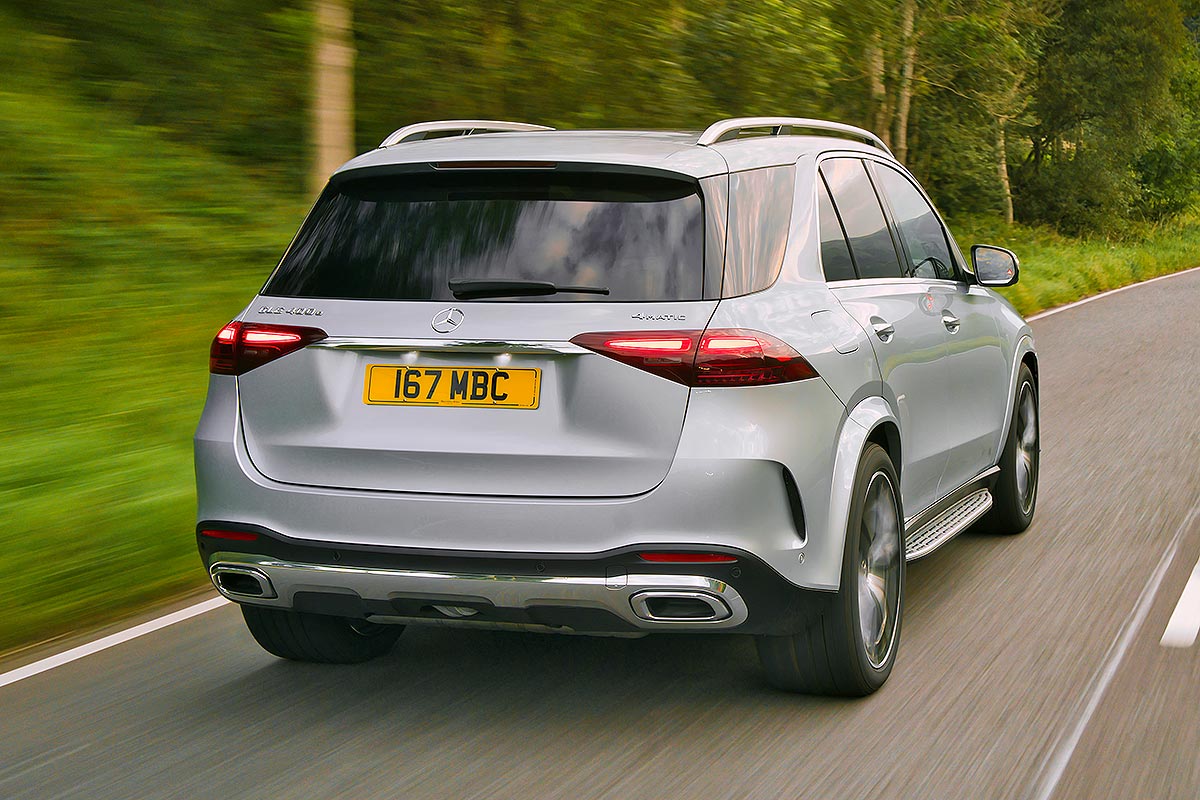
What is the Mercedes-Benz GLE Class?
The Mercedes-Benz GLE is one of the German company’s larger SUVs. Just as Mercedes has the C-Class, E-Class and S-Class saloons, each growing in size, luxury and price, so too there is the GLA, GLC, this GLE and the leviathan that is the GLS (plus plenty of other SUVs nowadays, too).
This is the second-generation GLE, introduced in 2018 to challenge rivals such as the Audi Q7, BMW X5, Land Rover Discovery and Volvo XC90. The previous GLE was actually known as the M-Class, until it changed its name in 2015 (it was the third-generation M-Class, at that). All rather complicated, but it’s information that could be useful in a pub quiz one day.
The current GLE was given a mid-life facelift in 2023, then had another refresh in 2026, keeping it alive for a little longer – bringing its looks into line with Mercedes’ latest design language.
You can buy either the GLE SUV or the GLE Coupe. The SUV can be had as a five- or seven-seater, but the GLE sacrifices an optional third row of seats in favour of a lower roofline, giving it a sportier look to rival the likes of the BMW X6 and Audi Q8. Available in petrol, diesel and plug-in hybrid forms, there’s a range of trims from plush to sporty.
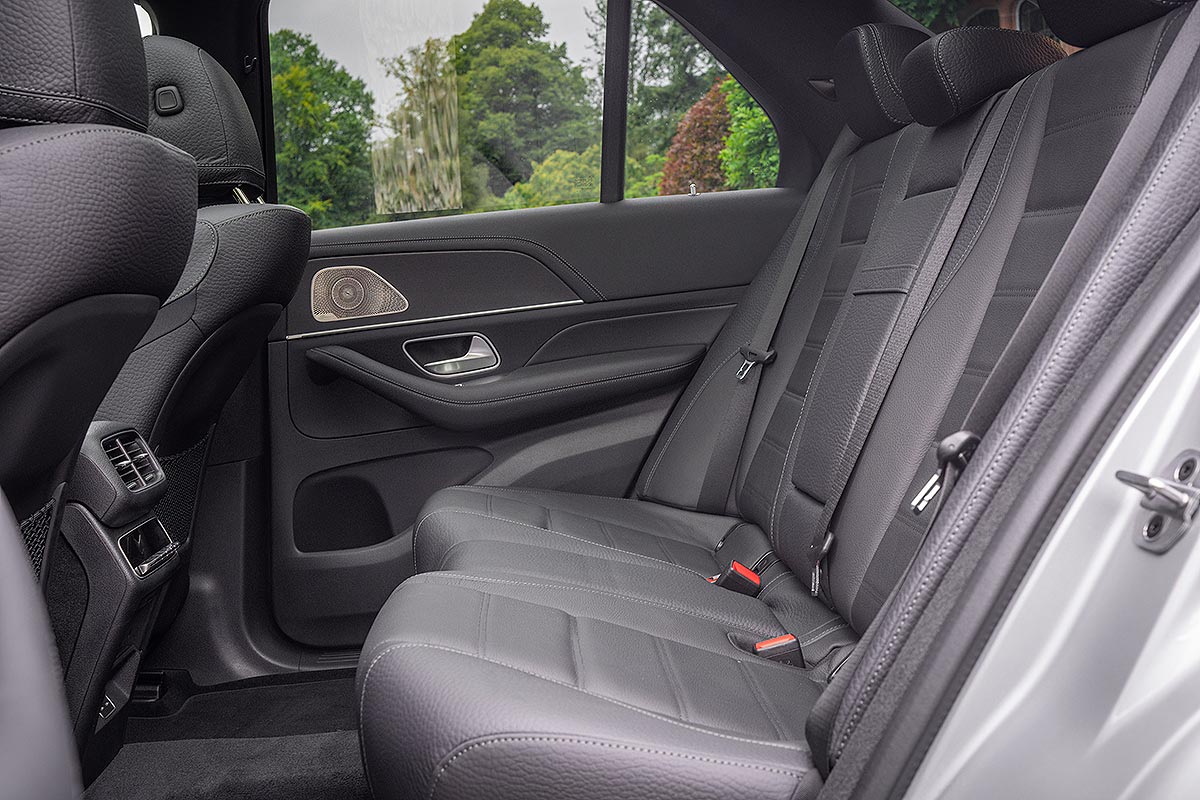
How practical is it?
With the exception of the high-performance AMG models, what the Mercedes GLE isn’t trying to be is overly sporty. Unlike a BMW X5 or X6, Mercedes generally leans more towards comfort than dynamics, so the idea is that anyone travelling in a GLE will be quietly wafted along with very little fuss. Accordingly, it has a beautifully designed and well-finished interior, full of expensive-feeling materials. Is it as rock solid as an Audi Q7? Perhaps not, but you’re unlikely to feel short-changed.
Space is abundant in the GLE SUV, and second-row passengers have plenty of legroom and headroom – the latter even in cars fitted with a panoramic sunroof. There are some five-seat models out there (all plug-in hybrid versions do without a third row) but most versions of the standard car provide space for seven. Just keep in mind the rearmost seats aren't quite as spacious as those in the second row.
As for the GLE Coupe, its swooping roofline means less space for all. There’s around 50mm less headroom for the driver and front-seat passenger, and nearly 70mm less for those sitting behind. It’s enough for taller humans to feel the squeeze.
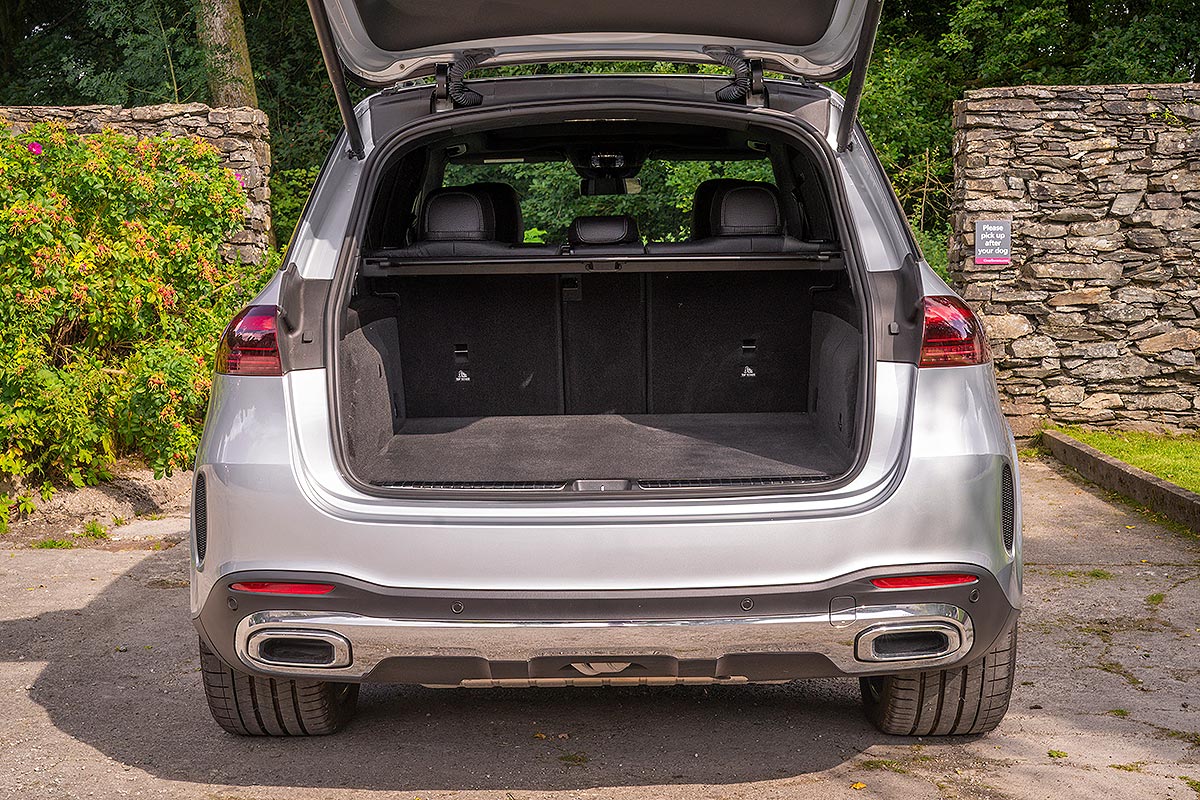
Boot space is very good. There’s some variation by model year, trim level and powertrains, but a seven-seat model with the two rearmost chairs folded offers 630 litres of storage. Fold the middle row down and you’ll be left with a whopping 2,055 litres, or approximately the same capacity as Wembley Stadium. Hybrid models offer less luggage space – 490 and 1,915 litres respectively, thanks to their battery packs – while Coupes provide more as standard (655 litres to be precise), but don’t have the folding third row. Fold the second row down, however, and there is just 1,790 litres, due to that lower roofline.
Towing capacities vary, again by model year, trim level and engine spec, but the unbraked capability is generally 750kg while the unbraked maximum ranges between 2,700kg and 3,500kg. Just be sure to specify a tow bar if you plan to haul a trailer or caravan. It isn’t standard fitment across the board.
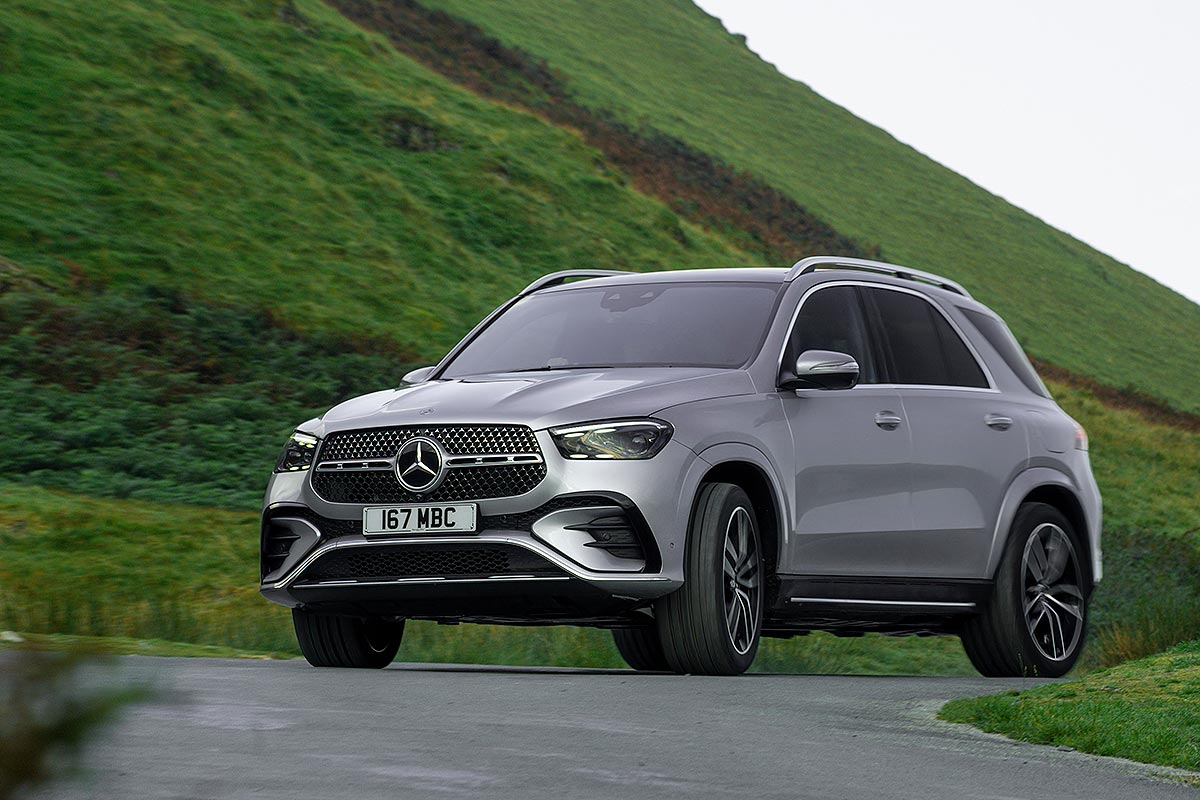
What's it like to drive?
As you’d expect, there is tremendous variation here. However, aside from the AMG models, Mercedes offers an overriding push towards comfort in comparison to a similar-on-paper BMW. Different versions of the GLE come with one of two suspension set-ups, the standard being a conventional steel spring affair, while more expensive models get air suspension.
Riding on air is supremely comfortable on long motorway journeys, made better in combination with the smaller alloy wheels. That said, the GLE isn’t quite as wafty as an Audi Q7.
With the exception of AMG versions again, whether you go for regular steel springs or air suspension, the GLE can feel rather heavy and ponderous on twisty country roads, especially so with the heavy plug-in hybrid drivetrain. It is a big car, after all, so this isn’t a huge criticism. But not feeling particularly nimble compared to a BMW or a Porsche Cayenne is something to be mindful of before you settle on one as your new set of wheels.
Where the GLE excels is how it insulates you from the world outside, with little road or wind noise. Furthermore, light steering may not inspire confidence on a challenging rural road, but it does make the GLE remarkably easy to pilot around town.
Engines in the non-AMG models come in a range of outputs. The diesel range starts with the 2.0-litre 300d – now a mild-hybrid where once it was a regular diesel – which makes 265bhp and, for plenty of people, will prove perfectly sufficient. For a bit more poke, there’s the six-cylinder 450d with 362bhp, which offers lots of grunt while maintaining a smooth demeanour. These engines will propel you to 62mph in 6.9 and 5.6 seconds respectively.
You can also buy a GLE 350de diesel plug-in hybrid. It delivers an impressive 328bhp, allowing a 0-62mph time of 6.9 seconds, the same as the 300d. The benefit is an all-electric range of 58 to 67 miles, so you can have a battery and motor drive you silently around town, then the diesel (and motor) propel you at a gentle cruise on the motorway.
There’s only one non-AMG petrol option: the GLE 400e plug-in hybrid with 376bhp. You’ll dash to 62mph in 6.1 seconds if you mash your foot to the floor, but Mercedes-Benz also claims an electric driving range of 60-67 miles – provided you are gentle on the accelerator.
AMG cars are as raucous as you’d expect. The AMG 53, with a turbocharged V6, is available as a ‘standard’ AMG 53 or AMG 53 Hybrid, with 429bhp or 443bhp respectively. The former will hit 62mph in 5.0 seconds, the latter in 4.7, but there’s something comical about the hybrid being able to drive on electric power alone for 53-55 miles. The flagship AMG 63 S SUV and Coupe do not have the option of hybrid power: just a lovely 4.0-litre turbocharged V8 with 604bhp, enough to send you to 62mph in a mere 3.9 seconds. Supercar owners in the 1990s would likely have laughed if you’d told them an SUV could be so rapid, but that’s the magic of modern technology.

Technology, equipment & infotainment
All GLE models feature Mercedes’ 4Matic all-wheel-drive system, whether you’re buying a used version or a fresh-out-of-the-factory example. All also feature a nine-speed automatic gearbox. The tech on offer from pre-owned examples is understandably slightly less comprehensive, but the current interior feels as fresh as you’d expect. All trim levels feature dual-12.3-inch displays that stretch across the dashboard, one taking the place of the conventional instrument cluster, the other in the centre. In-built navigation is standard, including an augmented reality system that the driver sees in the central display, combining the view ahead from onboard cameras overlaid with various arrows and prompts.
Also included are Apple CarPlay and Android Auto smartphone connectivity, a DAB radio, a Burmester surround-sound audio system, Bluetooth, voice control, wireless phone charging, a 360-degree parking camera, adaptive cruise control, keyless entry and start, front and rear LED lights, and electric-folding and heated door mirrors. As for safety technology, systems such as active lane-keep assist, attention assist and blind-spot assist are part of the package, too.
Whether you get heated or full-on climate controlled seats varies depending on trim level, as does whether you have a regular two-zone climate control system or a four-zone setup. There’s even a climate controlled cup holder, if you go for the fully loaded AMG Line Premium Plus model. If you’re purchasing an AMG 63, you might also be tempted to spend £3,500 on carbon-ceramic brakes.
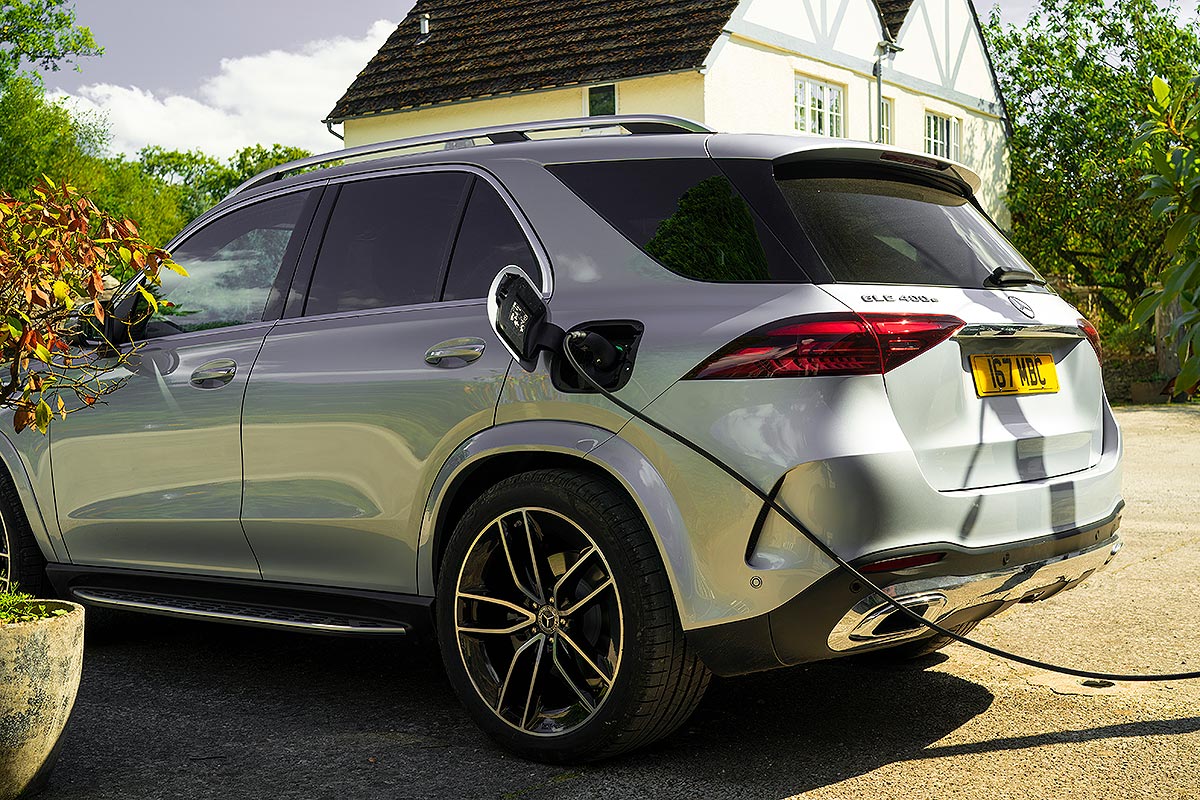
Mercedes-Benz GLE Class running costs
The GLE is a high-end car, and as such brand-new examples will cost £78,000 and upwards. Even ‘old’ GLEs are still fairly new, so there’s no escaping a significant outlay.
Running costs will vary depending on which model you go for, as you’d expect. A plug-in hybrid is more expensive to buy, but it has the potential to be very cheap to fuel, so before you make a decision on the model you’re going for, you have to think about how you’d use your GLE. If you spend a lot of time in town, a plug-in hybrid – if charged regularly – will be ideal, while regular motorway miles will be better spent in a traditional diesel model. Mercedes claims 37-41mpg for the 300d, 33-36mpg for the 450d, then 74-94mpg for the petrol 400e and 100-128mpg for the 350de plug-in hybrids respectively. Those PHEV figures are on-paper numbers, of course, and depend on you charging the car regularly and driving carefully. Both should deliver better efficiency than either of the conventional diesels, though.
Insurance costs won’t be particularly low, with even the most affordable model starting at group 44 (out of 50). The AMG versions all sit in the most expensive group, so be sure to budget accordingly.
Mercedes offers a range of service plans, the cheapest being £18 per month. These vary depending on the model, trim, engine and so on, so expect to pay more if you’re buying a used GLE.
Mercedes-Benz GLE Class reliability
If you’re read one of our other Mercedes-Benz reviews then you’ll know what we’re about to say. Namely, Mercedes doesn’t have the finest reliability record in the world. As a brand, it claimed joint 22nd spot in the most recent What Car? Reliability Survey, tied with Audi and 16 places behind BMW, but four ahead of Land Rover, which encompasses the Range Rover, Defender and Discovery brands. The GLE itself secured 14th place in the luxury car class, and that’s out of only 16 vehicles…
New examples will be covered by Mercedes’ three-year, unlimited mileage warranty, which is fairly standard for this end of the market, and comparable to its rivals. It also comes with three years of roadside assistance.
Several recalls have been made so far. Issues have included problematic welds underneath the car and on the fuel system, while another was to reroute some wiring, then another to fix some trim on the rear windows. There have also been issues with incorrectly fitted air conditioning drain hoses. None are particularly serious, and all should have been remedied by a Mercedes-Benz dealer. Nonetheless, it’s worth checking before you buy if you decide to take the used route.
- The infotainment system is excellent, with two 12.3-inch displays that stretch across the dashboard. The system features an unusually competent voice control system, much like Siri or Alexa, that can take care of plenty of commands. Or you can use a touchpad between the front seats to adjust settings.
- Although the GLE is available in three trim levels – currently Urban Edition, AMG Line Premium and AMG Line Premium Plus – there’s still some wriggle room in terms of buying a model with additional features. With AMG Line Premium and AMG Line Premium Plus cars, for example, you could additionally specify the Rear Seat Comfort Package, which adds electric rear-seat sun blinds, electric and heated rear seats, plush headrests and more, all for £2,995. Other packs are available, so study the options list or the online configurator carefully.
- Metallic paint is standard, but you can treat yourself to a Mercedes ‘Manufaktur’ paint if you’re keen to own something a little less commonplace (if that’s the right word to use with a car such as the GLE). There’s an Opalite White Metallic, for example, or an Alpine Grey Solid, both listed for £695.
- If you want the best all-rounder: It has to be the GLE 300d AMG Line Premium. It’s the entry-level engine and the middle-spec trim, which means more than enough performance and all of the tech you’re likely to need.
- If you want the best fuel economy: If you have the ability to use it in the most efficient way, the 350de plug-in hybrid will use far less fuel than any other model. But if you don’t charge it, you’re just hauling an electric motor around with a diesel engine, so make sure it fits your driving profile.
- If you want the most fun: Either of the AMG cars will be a hoot to drive, but the 63 S model really is a riot. It’s better in the bends, a rocketship in a straight line and sounds fantastic. V8 power for the win.


