Renault Kadjar Review (2015-present)
Renault Kadjar cars for sale
3.0
Expert review
Pros
Keenly priced as a used car
Spacious and practical interior
Excellent fuel economy
Cons
Dull to drive
Bland interior design
Infotainment system is too fiddly

The CarGurus verdict
If you’re looking for a spacious, functional and – for the most part – reliable family car that shouldn’t cost the earth to run, the Kadjar is a sensible choice. True, its slightly dour interior won’t lift your spirits, and neither will the driving experience. But given the Kadjar’s tempting value, you might just be willing to live with those downsides.
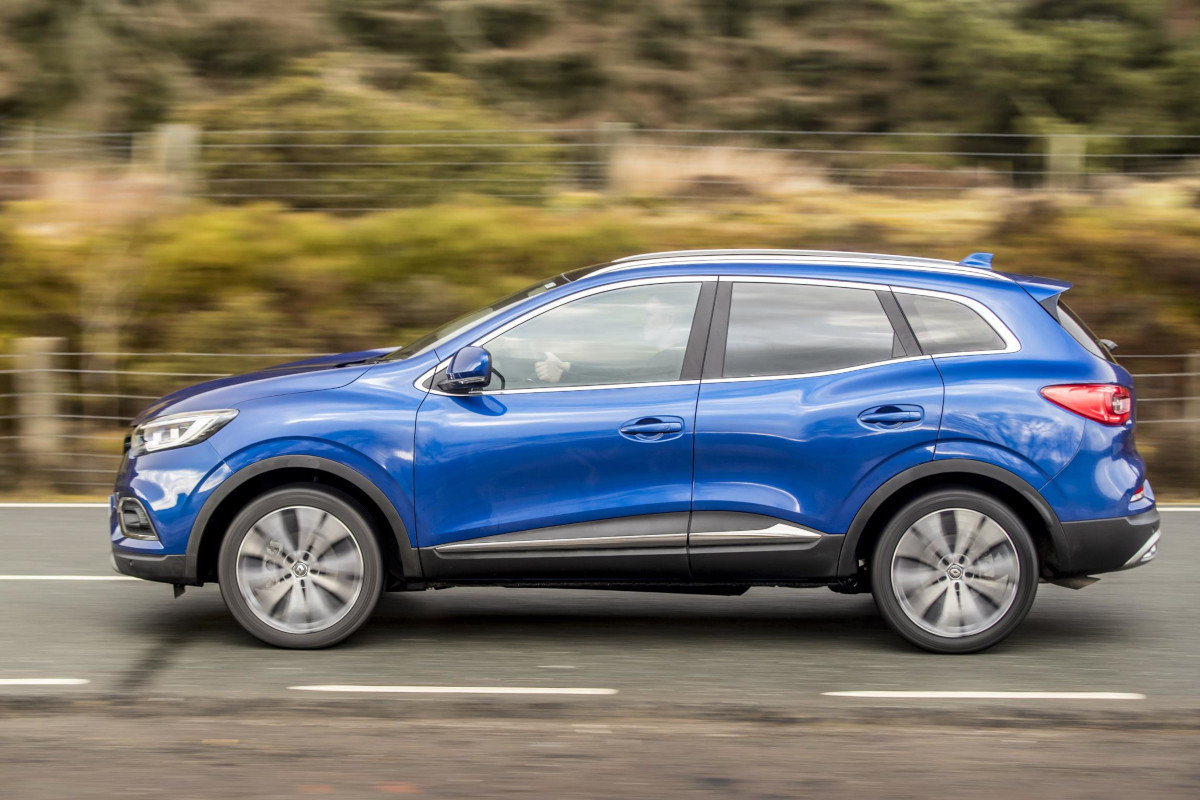
When is a Nissan Qashqai not a Nissan Qashqai? When it’s a Renault Kadjar, is the answer. The Kadjar is Renault’s entrant in the small, family-friendly SUV market, and was developed in conjunction with the second-generation Qashqai, which means it shares the same basic underpinnings, as well as the same engine range, though with a different body and interior plonked on top.
As a family-sized crossover it has countless rivals, including the Qashqai, Ford Kuga, Seat Ateca, and Mazda CX-5.
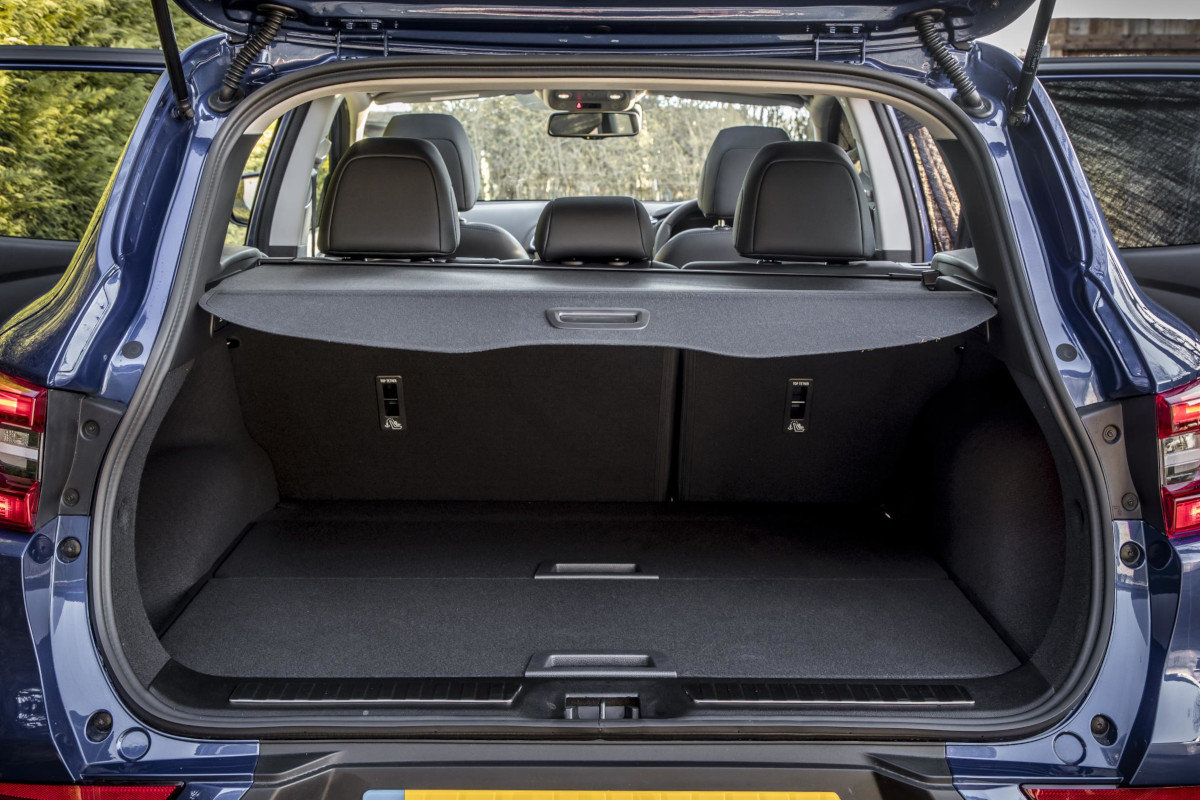
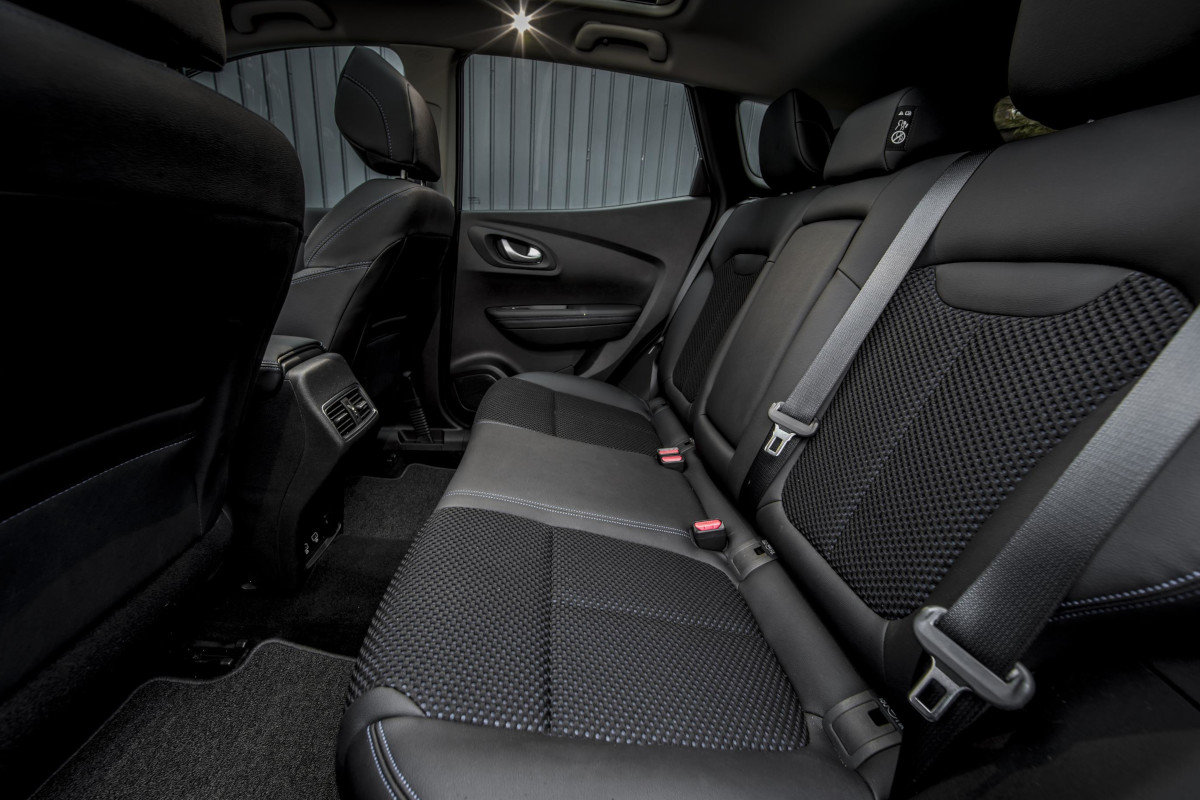
Every Kadjar is spacious and well thought-out inside, with a big boot (up to 527 lires), and enough room in the back seats for two adults to sit comfortably, or three at a push. What you don’t get is the same sort of versatility you’ll find in a Skoda Karoq or Citroen C5 Aircross with their rear seats that slide backwards and forwards individually; instead, the Kadjar is much more like a normal hatchback inside, with rear seats that split and fold, but don’t do much else.
Up front both driver and passenger will find themselves with plenty of room to spare, as well as a useful array of storage options.

The Kadjar feels a little soulless to drive, which isn’t such a big deal in a family car, though the slightly bouncy ride quality on earlier cars is more of a concern. For that reason, smaller-wheeled Kadjars with their squidgier tyres are more desirable.
At launch, you had the choice of two turbocharged diesels in 108bhp 1.5-litre and 128bhp 1.6-litre forms, as well as a turbocharged 1.2-litre petrol which also kicks out 128bhp. In 2017, a 1.6-litre petrol turbo with 163bhp was added to the range, before in 2018, the entire engine range was revamped, with a touch more power for the diesels and the 1.2-litre and 1.6-litre engines replaced by two 1.3-litre petrols, of 138bhp and 158bhp respectively.
The model range was originally slightly bewildering, with each version given a name that offered little indication of its position in the Kadjar hierarchy. The range kicked off with the Expression-, then moved up through Dynamique, Dynamique S and Signature to the top-of-the-range Signature S. This all changed in 2018, when Play became the entry-level version, with Iconic, S-Edition and GT-Line then the next rungs up the ladder.
Which to choose, though? Well, we’d ignore the Expression-, which is rather stingy; however, both earlier Dynamique and later Play models are keenly priced, and should be well enough equipped that life with either will be pleasant and hassle-free.
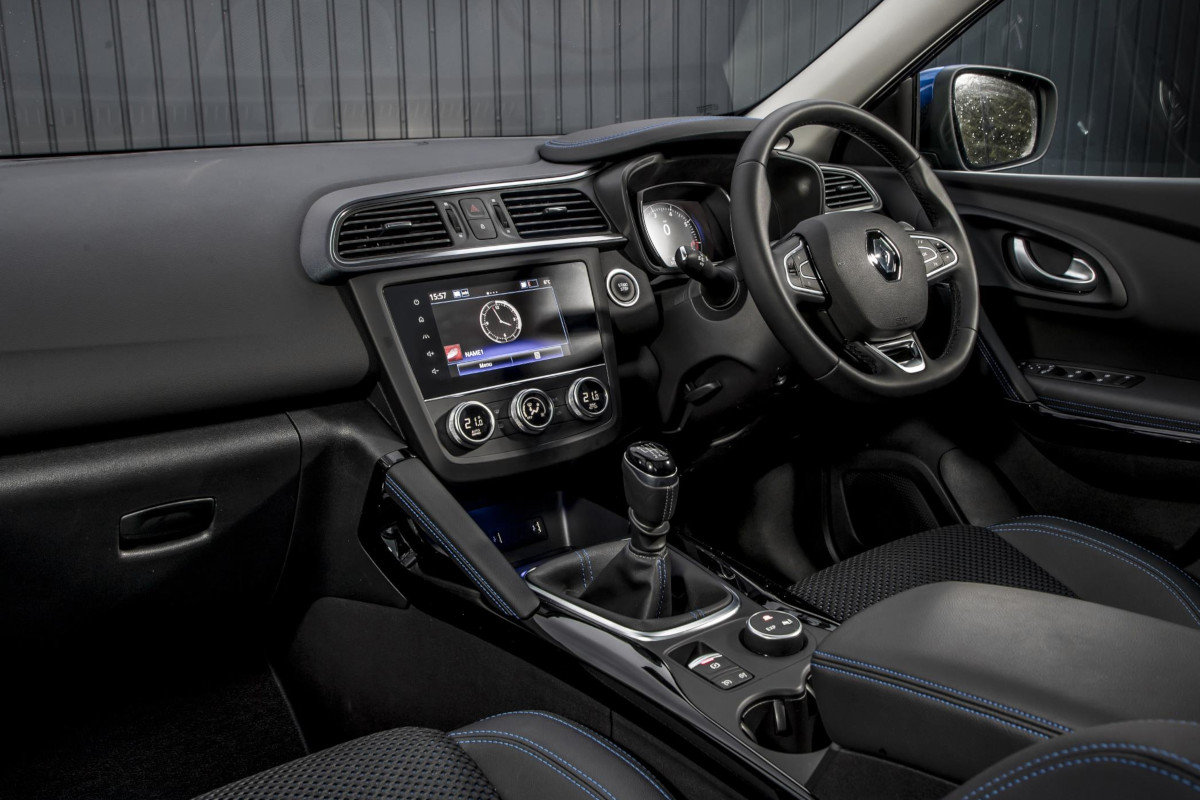
Downsides include a central infotainment screen that isn’t the best, with slightly juddery, complicated software, and a few rather suspect plastics that don’t feel as upmarket as those you’ll find in the Kadjar’s best rivals.
Also in its favour is that the Kadjar is cheaper to buy on the used market than most cars of its type, and with all that space on offer, that makes it a tempting choice if value is a priority.
Fuel economy is one of the Kadjar’s strong suits. The most efficient 1.5-litre diesel versions should achieve around 60mpg out on the road, driven sensibly, while even our preferred petrol-powered models should get around 40-45mpg. Even four-wheel-drive examples are pretty efficient, with a real-world 50mpg relatively easily achievable.
Thanks to those impressive fuel economy figures, and correspondingly low CO2 outputs, the Kadjar is also cheap to tax. Models registered under the old tax regime – i.e. before 1 April 2017 – will cost as little as £20 a year to tax, if you choose the 1.5-litre diesel; the 1.6-litre diesel will cost you £30 a year, meanwhile, and the 1.2-litre petrol £125 a year. Of course, if you’re buying a car registered after 1 April 2017, all Kadjars are taxed at the flat rate – so if you care about car tax, choosing an older model makes sense.
Renault offers a fixed-price servicing menu for cars more than three years old. For £169 you get a minor service, while a full service will cost you a very reasonable £269. The frequency with which you’ll need to service your Kadjar varies depending on which engine is fitted, but as a guideline, bank on getting it serviced every year, or sooner if you cover high mileages.
Most Kadjar engines are fitted with a timing chain, which shouldn’t need replacing, but the 1.5-litre diesel has a timing belt, which should be replaced every four years or 48,000 miles. This should cost around £500-600 if you change the water pump at the same time, which is recommended.
Reliability survey results suggest that the Kadjar is a pretty reliable choice, with relatively few complaints from owners and no serious mechanical flaws to its name.
Where the Kadjar does fall down is on its electrical systems, which have proven glitchy for plenty of owners. Many report problems with that infotainment system, with issues ranging from stalling and freezing, to certain functions becoming unavailable or even the satnav system defaulting to some European settings.
Apart from that, Kadjar owners have relatively few concerns, though given its position as a popular family car and those slightly brittle-feeling interior materials, it’s worth checking any prospective purchase over carefully to make sure there’s no evidence of cracked or scuffed plastics, stained upholstery, or any other damage.
- The Kadjar was available with four-wheel drive, but only with a manual gearbox and the most potent diesel engine. As a result, you’ll have to search high and low if you want a four-wheel-drive Kadjar; only around three per cent of the Kadjars you’ll find for sale on CarGurus are so-equipped. That’s no bad thing, though, because we reckon improved fuel consumption and better handling mean the Kadjar is best served as a two-wheel drive car.
- There are two types of optional automatic transmission available on the Qashqai. The ‘X-Tronic’ gearbox fitted to the 1.6-litre 128bhp diesel and 158bhp petrol engines is a CVT type gearbox, which is less pleasant to drive and has been associated with a few reliability issues, so it’s best avoided. Instead, if you want an automatic, look for the ‘EDC’ gearbox, which you could get with both of the 1.3-litre petrol and the 1.5-litre diesel engines; it’s suffered from fewer reliability complaints, and because it changes gear quickly and doesn’t cause the engine to sit noisily at higher revs when you’re accelerating, it’s much nicer to drive.
- The Kadjar was available with a snazzy boot floor that was height-adjustable, and could be rotated to act as a divider – very useful if you had smaller items to transport in the boot. The trouble is, you only get this neat addition if you opt for a higher-spec model – Dynamique S or above.
- The best all-rounders: Look at a 1.2 TCe 130 Dynamique (2015-2018), which then became the 1.3 TCe 140 Play (2018-on), for the Kadjar that does it all without costing a fortune. Adequate performance, decent spec and low running costs make it a great all-round package.
- If you’re buying on a budget: Renault’s 1.5 dCi 110 engine is incredibly frugal for those who do a lot of motorway miles. Combined with Dynamique trim it makes for a solid family car.
- If you need a diesel: If your budget will stretch, the 1.5 dCi 115 in Play specification is the newer and slightly more powerful version of the above.
- If you need an automatic: 1.3 TCe 140 EDC Play. The EDC gearbox is preferable to the X-Tronic CVT for those who want a Kadjar automatic; it’s more pleasant to drive and has a better reliability record, too.
- If you want all the toys: A 1.3 TCe 160 in GT-Line specification has bigger alloys, heated seats, active safety systems, and a generally more upmarket feel than other Kadjars.

