Seat Ibiza Review (2002-2008)
Seat Ibiza cars for sale
4.0
Expert review
Pros
Sporty driving experience
Sharp styling
Impressively fuel-efficient diesels
Cons
Interior build quality not sparkling
Petrol FR and Cupra models expensive to run
All Ibizas are quite firm-riding.

The CarGurus verdict
The Seat Ibiza mk3 makes a good used car. There are a handful of reliability issues to be aware of, but otherwise, there's a lot to like.
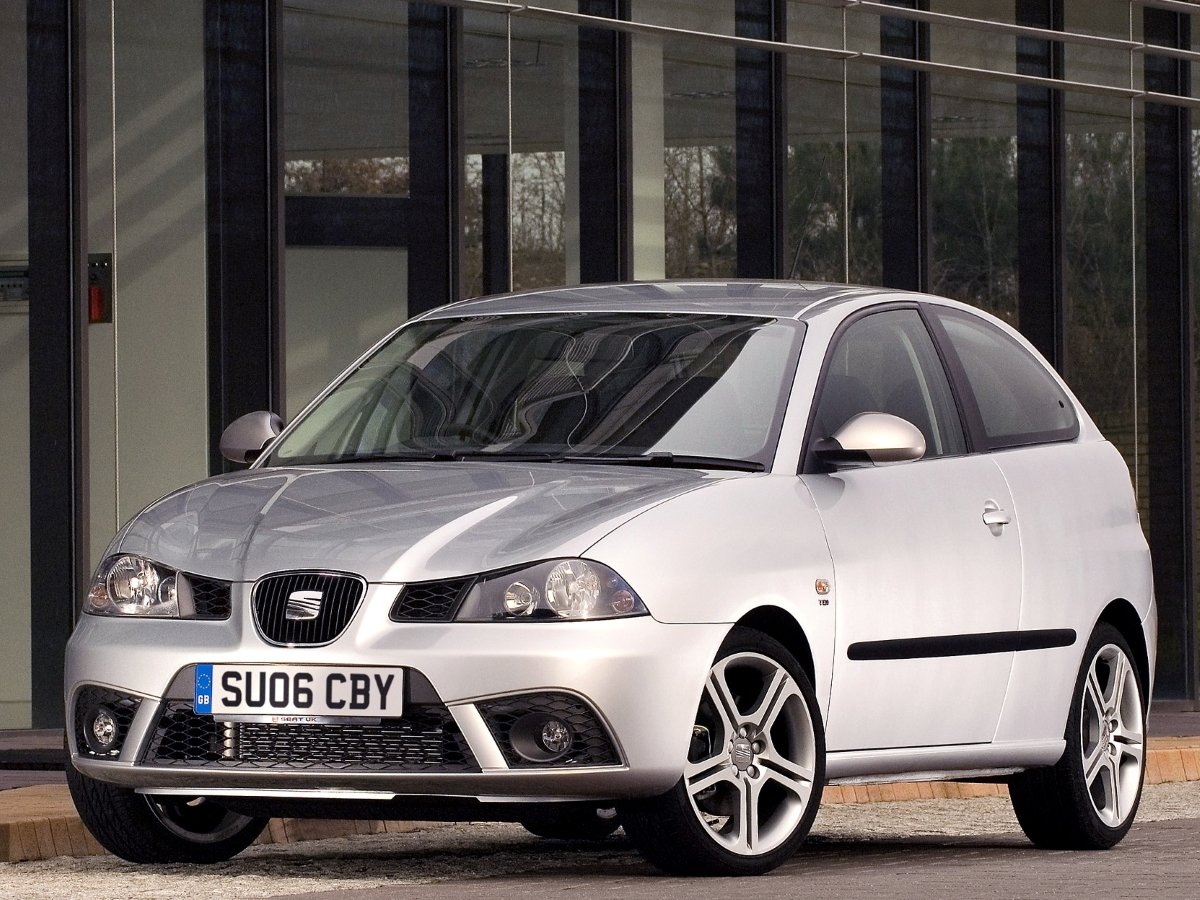
The car's smart styling has aged well, and so has the driving experience. The ride may be on the firm side, but the Ibiza is fun to drive, and the interior is reasonably roomy for such a small car.
There's a wide choice of engines, from cheap and cheerful petrols to high-performance diesels. After so long on the road, any mk3 Ibiza will be cheap to buy. Choosing between the different petrol and diesel Ibiza models really comes down to running costs and how you weigh up performance against fuel economy.
The FR and Cupra hot hatches are very appealing, if you can find a car that's been properly serviced and has never been through a hedge backwards. But we particularly admire the diesels, which are cheap used cars with extremely low running costs.

What is the Seat Ibiza?
When the third-generation Seat Ibiza arrived in 2002, it marked a big step forward over the two earlier versions. Here was a supermini that could stand comparison with any of its contemporaries. Indeed, some Seat Ibiza reviews at the time rated the Seat as the best supermini on sale, thanks to its blend of sharp styling, good value and practicality.
Cheaper than a Polo, sharper to drive than a Fabia, and better looking than either, the Ibiza ticked a lot of boxes and continues to do so as a used car. It was superceded by the fourth-generation Ibiza in 2008.

How practical is it?
There's plenty of space in the front seats, and in the rear seats, head- and legroom are acceptable, although not class-leading. The quality of finish stepped up after the 2006 facelift. Earlier cars feel a little bit cheap, and the interior design doesn't live up to the handsome exterior.
The boot is a decent size for a supermini of the time, too. At 267 litres, there's enough room to swallow a couple of sizeable suitcases.
By the standards of the day, the third-gen Ibiza is a safe car. It scored four stars out of five for adult occupant protection when tested by Euro NCAP in 2002. It picked up a two-out-of-four rating for pedestrian protection.

What's it like to drive?
There's a broad choice of engines to pick from, and three- and five-door body styles. The range of petrol engines kicks off with the 63bhp 1.2-litre. Granted, that's not a lot of power, but the willing three-cylinder engine makes the most of what it's got and has a pleasant off-beat thrum. For town driving with occasional longer trips, it's all the engine you really need.
For regular motorway work, the 74bhp and 99bhp 1.4-litre engines have more performance. Both engines need to be revved, but have noticeably greater top-end punch than the 1.2. If you want an automatic gearbox, the 1.4 petrol is your only choice. It's a torque converter automatic rather than the DSG fitted to later Ibiza autos.
Alongside the petrol engines sit a number of diesel alternatives, for drivers more concerned with mpg than mph. The 74bhp 1.4-litre (later 79bhp) and 99bhp 1.9-litre diesels are the most fuel-efficient models in the range, especially if you choose the Ecomotive version.
Whichever engine is under the bonnet, the Ibiza drives well. The FR and Cupra models do most to please keen drivers, but even the cooking models handle neatly. However, the ride is quite firm; you feel bumps in the road more sharply than you would in a Skoda Fabia.

Technology, equipment & infotainment
These days, you'd expect a new car to come with a DAB radio. Back in 2008, Seat decided that fitting a DAB radio to the Ibiza was exciting enough to warrant a special edition.
The 1.9 TDI DAB was fitted with a Blaupunkt Nashville DAB radio with a 4x50W amplifier. The sound system also included a CD player and the facility to record radio broadcasts to an MMC or SD-type flash memory card.
You'll need to look hard to find a DAB special edition today, as just 300 were made.
Seat Ibiza running costs
The third-generation Seat Ibiza is a budget car to buy and run. Used values are rock-bottom, and if you find a good example, you can pick up a real bargain.
The exceptions to the rule are the high-performance FR and Cupra hot hatchbacks. The 1.8-litre turbocharged engines are thirsty, with an official combined figure of 35.3mpg. Make full use of the 178bhp, and you can expect your mpg to dip into the 20s. It's not just fuel bills that will be high if you choose the Ibiza Cupra petrol, either. It sits in insurance group 30, making the most expensive Ibiza mk3 to insure by some margin. It's also expensive to tax, with an annual cost of £305 (at the time of writing).
The Ibiza FR won't be a lot cheaper. With the same engine but in a lower state of tune, it returns 35.8mpg on the combined cycle and only emits a few grammes less of CO2. Owners must find the same £305 to pay the FR's Vehicle Excise Duty (VED).
For rapid performance but more palatable fuel bills, the FR and Cupra diesels make more sensible buys. Although they trade some top-end punch compared with the petrols, strong mid-range pulling power means they are hardly any slower in real-world driving. The 1.9 TDI Cupra should return around 51mpg, based on the old NEDC test standard. That will be difficult to match in practice, but even a lead-foot should see better than 40mpg. The one running cost that won't be cheaper with the diesel is insurance, as it matches the petrol's group 30 rating.
Other diesel models trade straight-line zest for long-legged economy. As we've mentioned, the Ecomotive is the most economical of all, and even if the official figure is a stretch, owners report that mid-60s mpg is achievable. The regular 1.4 TDI should return 55-60mpg in everyday driving, while the 128bhp 1.9 TDI can manage around 50mpg.
The petrols can't match those figures, and aren't as economical as the 1.0-litre TSI petrol engines in more recent Ibiza models. Even so, an Ibiza mk3 petrol should still be cheap to run. The 1.2 has an official combined figure of 47.9mpg, and 40mpg or so is realistic. The more powerful 1.4 models have worse official economy, but in reality can return similar economy. However, if you choose a 1.4 with an automatic gearbox, expect mpg in the mid 30s.
For the lowest insurance costs, the 1.2 model sits in group 5 to 7, depending on specification.

Seat Ibiza reliability
There are more reliable used superminis than the third-generation Seat Ibiza, and some are much less dependable. The Seat sits somewhere in the middle. Later cars are better than the early models, so ideally go for a car built towards the end of the Ibiza mk3's life.
Some owners report problems with the suspension, so listen out for any clonking noises when taking a test drive.
The timing belt pulleys on the petrol engines can fail. It's important that they are changed regularly in accordance with the servicing schedule. When the time comes to have this work done, a Seat dealership is likely to be more expensive than an independent. However, the five-year warranty on the official Seat belt kit means it could be worth paying the extra.
If you are looking at the 1.2 petrol, be aware of a problem with the exhaust valves. If the car seems sluggish on the test drive, this could be the reason. Look out for a warning light on the dashboard as well.
Electrical gremlins can also crop up, including central locking faults.
For better reliability, consider a Honda Jazz, Hyundai i20, or a Toyota Yaris. But don't rule out a well cared for example of the Ibiza.
- Remember when diesel was thought of as the 'green' choice? Well, the 'greenest' Seat Ibiza was a diesel: the Ecomotive. First shown at the Frankfurt motor show in 2007, the Ecomotive sipped fuel and emitted very little carbon dioxide. According to the official figures, it was capable of 74.3mpg and put out just 99g/km of carbon dioxide, even with air conditioning fitted. The Ecomotive's engine management software was recalibrated compared with the standard 1.4 diesel's, and a diesel particulate filter was fitted. In addition, the Ecomotive had longer gearing and low rolling resistance tyres.
- The third-generation Seat Ibiza was designed under the leadership of Italian designer, Walter de Silva. Brought to Seat in 1999 with a brief to bring more flair and emotion to the Spanish brand, de Silva and his team were responsible for many handsome cars, winning international awards for their work on the Altea MPV. From Seat, de Silva moved to the Audi brand group, then to the VW Group. Although he only spent a few years at Seat, the design language he established helped cement a much stronger identity for the brand, and the third-gen Ibiza was one of his most important designs.
- Being the Volkswagen Group's sporty brand, Seat offered the Ibiza as a hot hatch in a couple of different temperatures. The 148bhp 1.8-litre turbo petrol in the FR can shift at a respectable pace, but the 178bhp Cupra is the one to choose if you are looking for a high-performance hatch with a budget price tag. And there are quick diesels as well as rapid petrols. The 1.9 TDI version of the Cupra put out 158bhp. Although that's some way short of the petrol version, this is still a very quick car, and just a few tenths slower from 0-60mph than the petrol. Likewise the 128bhp 1.9-litre diesel FR shouldn't be dismissed in favour of the petrol model, especially for a buyer who covers a lot of miles.
- If you mostly drive in town: stick with the entry-level 63bhp 1.2-litre petrol. It's livelier than its modest power output suggests, and makes an affordable used buy. The 1.2 is cheap to fuel and insure, too. While the more powerful petrol engines are quicker, there's little benefit if you rarely make long trips.
- If your priority is fuel economy: choose the 1.4 TDI. The Ecomotive was the most economical version with the 1.4 engine, achieving 74.3mpg on the combined cycle. But even the regular 1.4 TDI achieved a respectable 61mpg according to the official figures. In real-world driving we doubt the difference in economy will be as great. Either way, a third-gen Ibiza 1.4 TDI will be very cheap to buy and run.
- If you want a hot hatch: pick the 1.8 turbo Cupra. The 1.8T engine produces 178bhp, and delivers a 0-62mph time of 7.1 seconds. Firmer suspension and larger alloy wheels than the standard Ibiza make for a rather stiff ride, but the Cupra is great fun. The biggest challenge will be finding one that's been well looked after.
- If you want performance and economy: choose the 1.9 TDI FR. While the Cupra may be quicker, the FR is almost as much fun; 128bhp is plenty in a car this small and light. It's economical, too, so will be far cheaper to run the petrol FR and Cupra models.

