Skoda Superb Review (2008-2015)
Skoda Superb cars for sale
4.0
Expert review
Pros
Limo-like cabin space
Broad choice of efficient engines
The estate has loads of luggage room
Cons
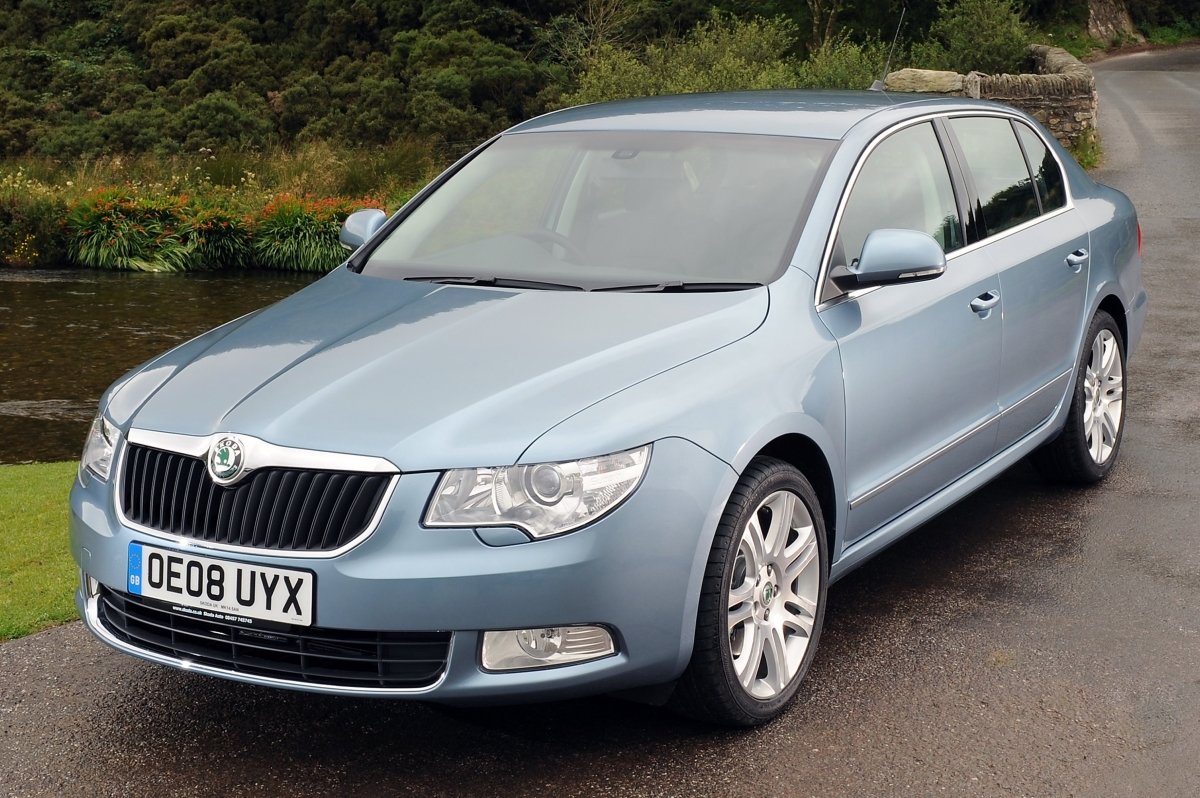
Bland to look at
Not very exciting to drive
The 3.6-litre 4x4 is very thirsty
The CarGurus verdict
It's not the most exciting car to drive and the styling is bland, but otherwise we're struggling to find major fault with the Skoda Superb. If you are looking for a family car, and value practicality and value over badge-appeal and striking design, the Superb is for you.
There's a broad choice of engines, the best of which combine strong acceleration with long-legged economy. Either of the 2.0-litre diesels would be our pick, with enough muscle to handle a fully loaded car and refreshingly low fuel bills.
For ultimate luggage space, the Skoda Superb Estate rivals even the capacious Mercedes E-Class. And in terms of passenger space, the Superb is like a cut-price limo.
Perhaps the VW Passat has a classier interior, and a Ford Mondeo has more driver appeal. But in most respects, a used Skoda Superb hatch or estate is as good as a secondhand family car gets.
What is the Skoda Superb?
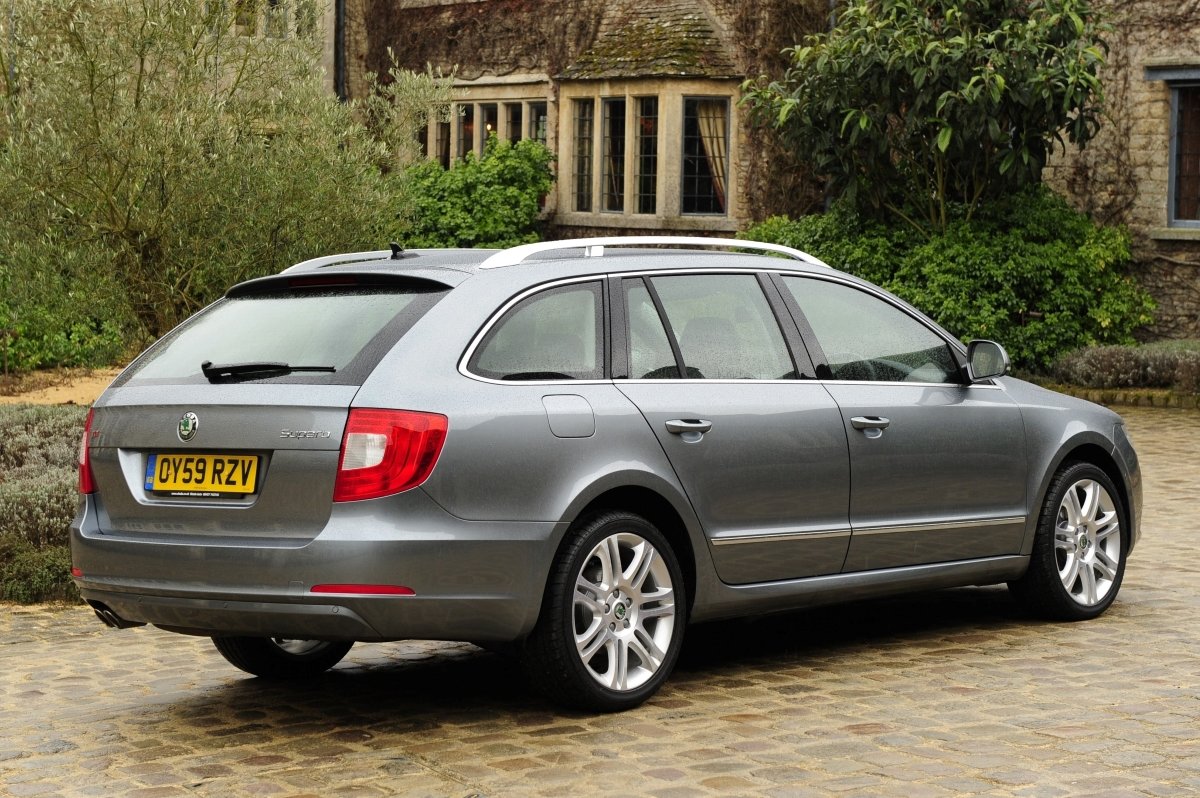
The second-generation Skoda Superb arrived in 2008, building on the strengths of the first Superb. Keenly priced and extremely roomy, as a new car the second-gen Superb was good value and that's just as true of a used Superb today.
Owners and reviewers alike rate the Superb for its incredibly spacious rear seats and generous boot space – it's no wonder it's a popular choice with taxi drivers, too. It was replaced by the third-generation Superb in 2015.
How practical is it?
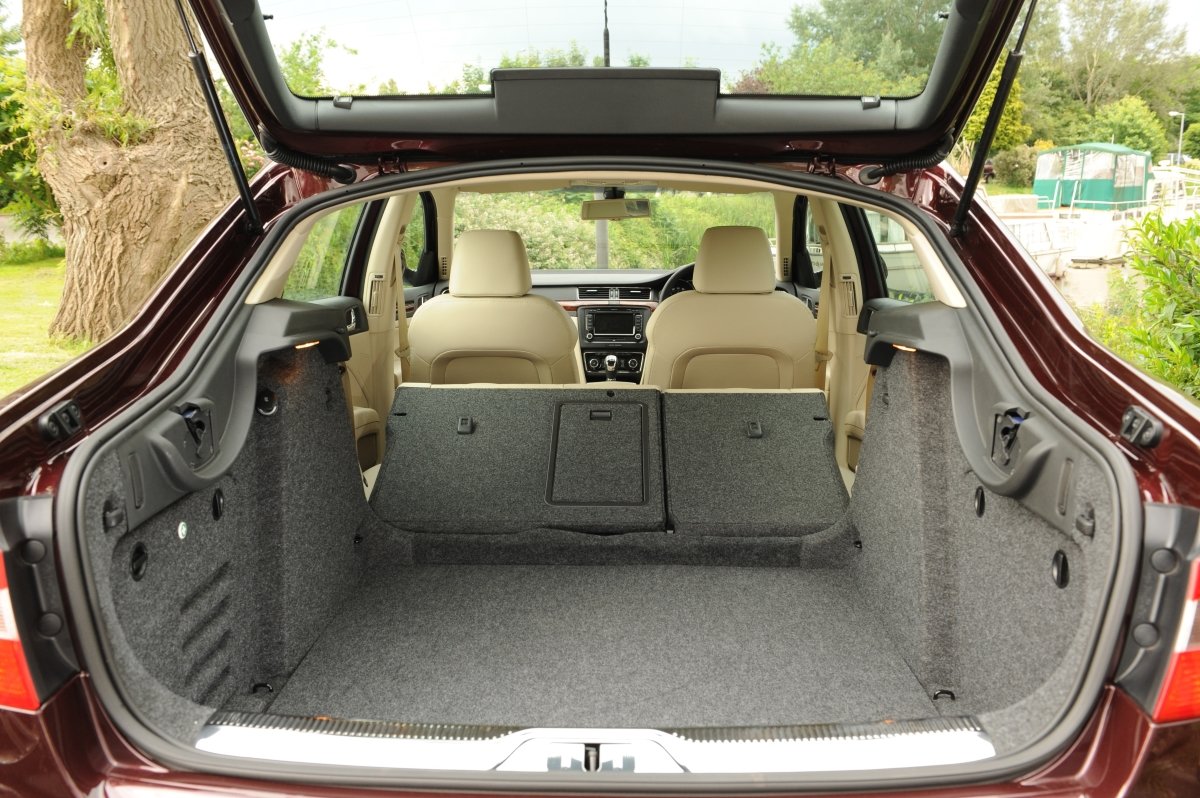
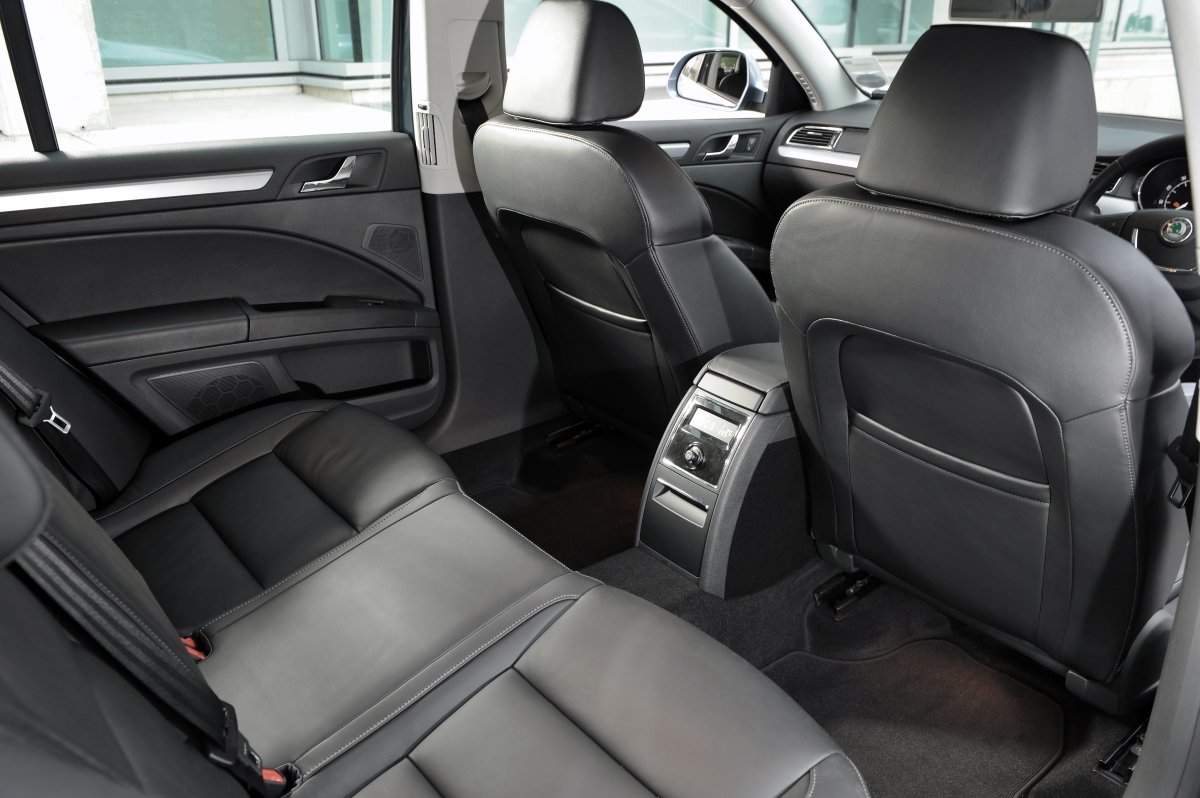
Interior space is the Superb's stand-out feature rather than the way it drives. The Superb is roomier than any rival, including the spacious VW Passat. What's more, although the standard of finish is not up to Audi standards, it's very good for a mainstream car. Rear legroom in particular is huge, and means rear-seat passengers of well over six-feet tall can sit behind an equally lanky driver with space to spare.
Skoda offered the B6 Superb in two body styles, a five-door hatchback and a five-door estate, which joined the range in February 2010. As you'd expect, the estate car has more luggage space – a whopping 633 litres with the rear seats in place and 1,865 litres when they're folded flat – but the hatchback also offers buyers a large and practical boot (565 litres rear seats up/1,670 litres seats down). There's no need to travel light, whichever version you choose.

What's it like to drive?
Both the hatch and estate were offered with a broad choice of engines. Petrol buyers had the choice of a 123bhp 1.4 TSI, a 158bhp 1.8 TSI, and the 256bhp 3.6-litre VR6. The range-topping petrol delivered serious performance, but had a shocking thirst for unleaded. The two TSI units sold in much greater numbers and make more sensible buys.
After a facelift in 2010, a 197bhp 2.0-litre petrol was added. While not as punchy as the 3.6, it's a better choice if you want a subtle but swift performance and reasonable fuel bills.
Diesel buyers could choose between a 138bhp 2.0 TDI , and a 168bhp 2.0 TDI with common-rail injection. For lower emissions, Skoda offered a 1.9-litre Greenline model with a 103bhp.
The 2010 changes saw revisions to the diesels, with the Greenline ditching the 1.9-litre unit in favour of a 1.6-litre with common-rail injection, but the same power output. The less powerful of the 2.0-litre diesels was also switched to a common-rail unit.
Further changes in 2013 saw efficiency improvements to the engine line-up, with the addition of stop-start technology among the measures to reduce fuel consumption.
The Superb isn't as good to drive as a contemporary BMW 3 Series or Ford Mondeo, but it handles neatly and rides well. It's competent and easy to live with rather than exciting. Even the 3.6 is more a long-distance express rather than a car for B-road fun.
Technology, equipment & infotainment
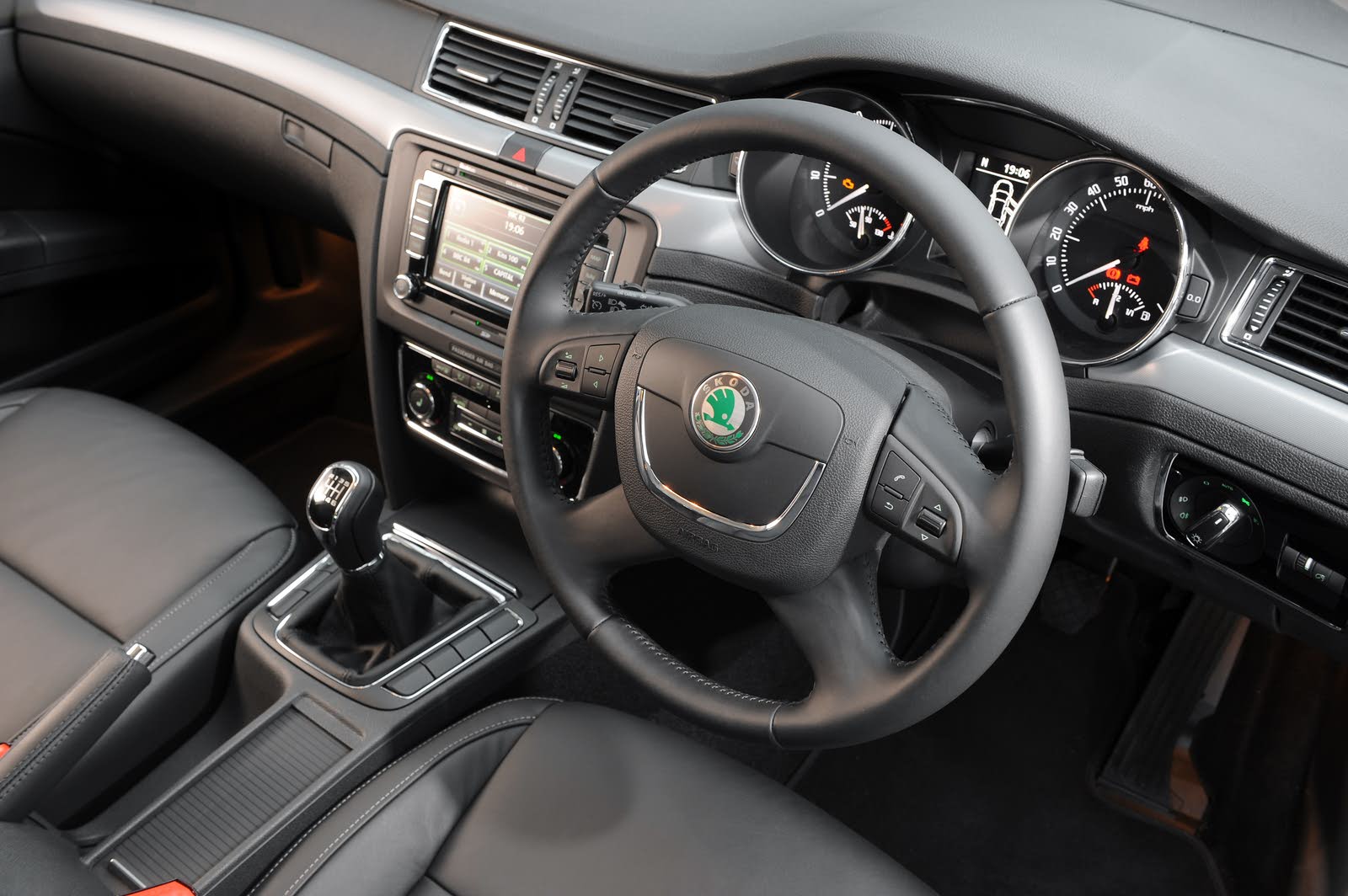
Specification levels include S, SE, SE Business, SE Plus, Elegance, and Laurin & Klement.
The top two specs came loaded with kit, but SE trim has enough equipment to keep most used car buyers happy.
Safety standards are good. The Superb scored the maximum five stars when tested by Euro NCAP in 2009, including a very strong score of 90% for adult occupant protection.
Skoda Superb running costs
For low running costs, pick one of the diesels. The sluggish Greenline is a bit of a hairshirt, but close to 60mpg is possible. It's cheap to tax, too, with a Vehicle Excise Duty cost of just £30 per year (2020 rate).
The other diesels are also economical but have stronger acceleration. While the official combined figures are a bit optimistic, the 138bhp 2.0-litre is nonetheless capable of mpg in the low 50s. Go for the more powerful 168bhp 2.0-litre TDI and the penalty at the pumps is a small one; high 40s should be achievable without trying too hard. These cars will be more costly to tax than the Greenline, however. The 138bhp 2.0 TDI hatchback emits 155g/km of CO2, which means annual car tax of £205.
Although they drive well, the petrol models will be a lot more costly to fuel. The 1.4-litre is a rather steady performer, but can achieve 40mpg or so. Expect mid 30s from the 1.8, perhaps a little less for the 2.0-litre.
In terms of real-world fuel economy, there's little to choose between the manual cars and those with a DSG auto. However, the heavier 4x4 models are thirstier, stretching each gallon around five miles less than the front-wheel drive Superb.
The least efficient version is the 3.6-litre 4x4. Expect just under 30mpg, or considerably less if you make full use of all the performance. With emissions of 238g/km, it has a VED bill of £565. It will be relatively expensive to insure, too, sitting in group 30 of 50.
For cheaper premiums, the entry-level 1.4 TSI S sits in group 15. The most affordable diesel to insure is the 138bhp 2.0 TDI S, which is in group 18. These rates compare well with the Superb's rivals, and contribute to low overall running costs.
Skoda offers fixed price servicing, as well as service plans. These spread the cost of servicing across monthly instalments, and are available for cars up to 15 years old. However, servicing outside of the franchised network is likely to be cheaper.

Skoda Superb reliability
For low running costs, pick one of the diesels. The sluggish Greenline is a bit of a hairshirt, but close to 60mpg is possible. It's cheap to tax, too, with a Vehicle Excise Duty cost of just £30 per year (2020 rate).
The other diesels are also economical but have stronger acceleration. While the official combined figures are a bit optimistic, the 138bhp 2.0-litre is nonetheless capable of mpg in the low 50s. Go for the more powerful 168bhp 2.0-litre TDI and the penalty at the pumps is a small one; high 40s should be achievable without trying too hard. These cars will be more costly to tax than the Greenline, however. The 138bhp 2.0 TDI hatchback emits 155g/km of CO2, which means annual car tax of £205.
Although they drive well, the petrol models will be a lot more costly to fuel. The 1.4-litre is a rather steady performer, but can achieve 40mpg or so. Expect mid 30s from the 1.8, perhaps a little less for the 2.0-litre.
In terms of real-world fuel economy, there's little to choose between the manual cars and those with a DSG auto. However, the heavier 4x4 models are thirstier, stretching each gallon around five miles less than the front-wheel drive Superb.
The least efficient version is the 3.6-litre 4x4. Expect just under 30mpg, or considerably less if you make full use of all the performance. With emissions of 238g/km, it has a VED bill of £565. It will be relatively expensive to insure, too, sitting in group 30 of 50.
For cheaper premiums, the entry-level 1.4 TSI S sits in group 15. The most affordable diesel to insure is the 138bhp 2.0 TDI S, which is in group 18. These rates compare well with the Superb's rivals, and contribute to low overall running costs.
Skoda offers fixed price servicing, as well as service plans. These spread the cost of servicing across monthly instalments, and are available for cars up to 15 years old. However, servicing outside of the franchised network is likely to be cheaper.
- The 3.6-litre petrol engine's considerable power would have been a struggle for the front wheels to put to the road cleanly. Sensibly, Skoda opted to make this model four-wheel drive rather than front-wheel drive. The weight of the big engine and 4x4 drivetrain makes the 3.6 a capable but thirsty tow car for pulling a trailer or caravan. If you want the benefits of four-wheel drive but without the 3.6's fuel bills, the 1.8-litre petrol and 2.0-litre diesels were also offered with four-wheel drive.
- The hatchback has a neat trick, known as the Twindoor. This allowed the boot to open with or without raising the rear glass, effectively making the Skoda a saloon as well as a hatchback. It works by using two release buttons. Press the centre one, and the boot opens like a saloon's. It's useful on a wet and cold day if you want to load the boot without exposing passengers to the elements. Press the button to the right, and the rear glass lifts as well, giving a much bigger opening. Clever stuff, but the Twindoor idea was dropped when the Superb mk2 was replaced by the mk3.
- Most Skoda Superb models were offered with a choice of a manual gearbox or a Direct Shift Gearbox (DSG). The exceptions were the entry-level 1.4 petrol and the 1.9 diesel, which were only offered with a manual gearbox, and the 3.6 came which came with a conventional automatic rather than the twin-clutch DSG auto. Should you go for a manual or a DSG? Well, the DSG has more reliability problems, although it has steadily improved in this respect over the years. But on balance we'd choose a manual for no-nonsense durability.
- If you want fuel economy above all else: choose the Greenline. The later 1.6-litre models are more refined than the gruff 1.9-litre ones, and achieve 64.2mpg while emitting CO2 at a rate of just 114g/km. Just keep in mind that whether you choose the original 1.9 or the later 1.6, these are slow cars. Try to make up for the modest performance with a heavy right foot, and economy will suffer.
- If you plan to cover a high mileage: pick the 168bhp 2.0-litre TDI. Unlike the Greenline, this version offers plenty of performance, and easily copes with a car full of people and luggage. It's economical as well as reasonably quick, making this our first choice for long motorway drives.
- If you want a petrol Superb: go for the 1.8 TSI. With 158bhp, it's a much livelier engine than the less powerful 1.4. It's smooth and willing, much quieter than the diesels, but still reasonably economical for the performance it offers.
- If you want luxury on a budget: buy the Laurin & Klement. Named after the two founders of Skoda Auto, Laurin & Klement models come fully loaded with every toy you can think of and some you probably can't. In the case of of the Superb mk2, the range-topper has cruise control, leather upholstery, heated and electrically adjustable seats, satellite navigation, Bluetooth, dual-zone climate control, 18-inch alloy wheels, and lots more.

