Subaru Outback Review (2015-2019)
Subaru Outback cars for sale
3.0
Expert review
Pros
Copes well with bad weather thanks to permanent four-wheel drive
Plenty of room for people and luggage
The diesel delivers respectable economy
Cons
Doesn't have much appeal for fashion-conscious buyers
Very limited choice of engines
Not the sharpest estate to drive on tarmac
The CarGurus verdict
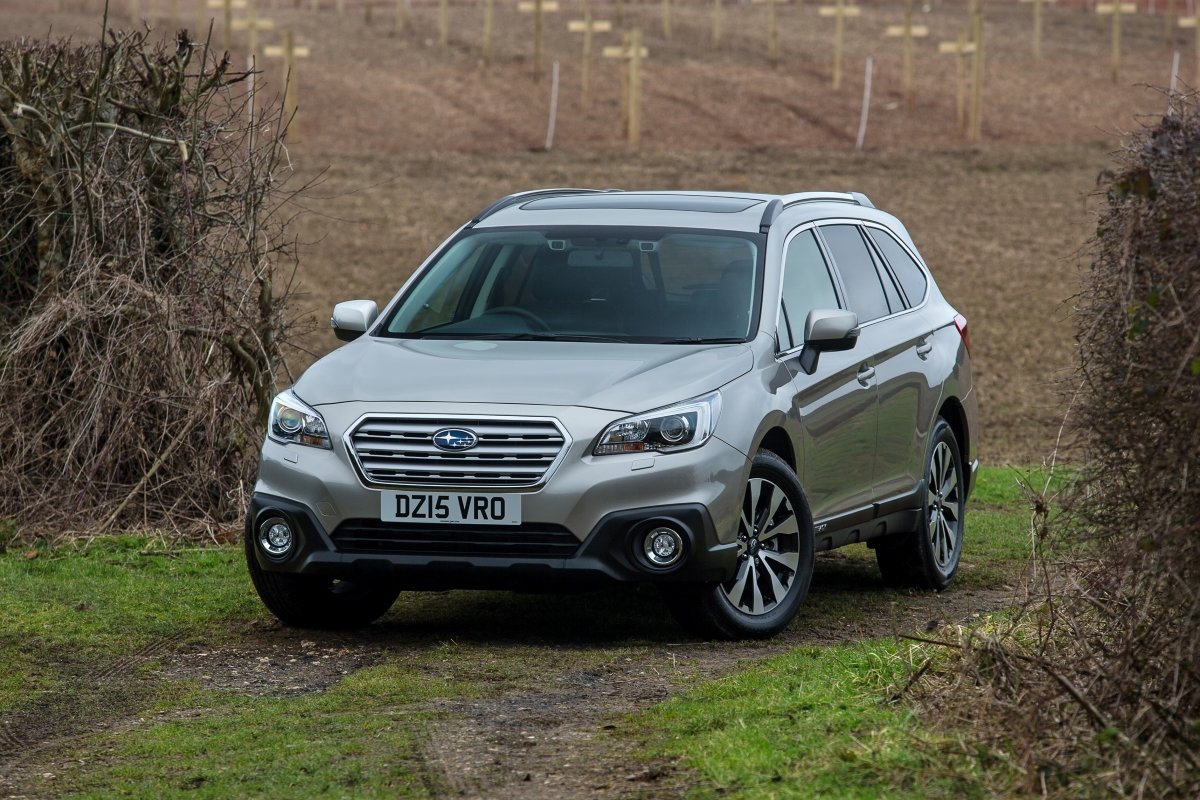
If you want a 4x4 estate with low running costs, try the Skoda Octavia Scout. If a prestige badge is important, consider the Audi A6 Allroad. But if straightforward, all-weather dependability is what you crave, the Subaru Outback delivers.
It's a shame the engines aren't more punchy, and that there are only two of them. But otherwise the Outback drives well enough on Tarmac, and it's very capable off road. The cabin may not show the design flair or upmarket finish of an Audi or Volvo, but it's solidly built and there's plenty of room for people and their luggage.

What is the Subaru Outback?
There's something pleasingly rational about the Subaru Outback. Forget your fashion-conscious SUVs; a four-wheel drive estate car will do 99% of what an SUV can do, but with a bigger boot. This no-nonsense approach appeals to no-nonsense people who value ability over image.
The Outback has been ploughing this particular furrow since the first generation was launched in 1995. In this Subaru Outback review we're dealing with the fifth-generation car, sold from 2015 to 2019, which was replaced by the sixth-generation model in 2020.
How practical is it?
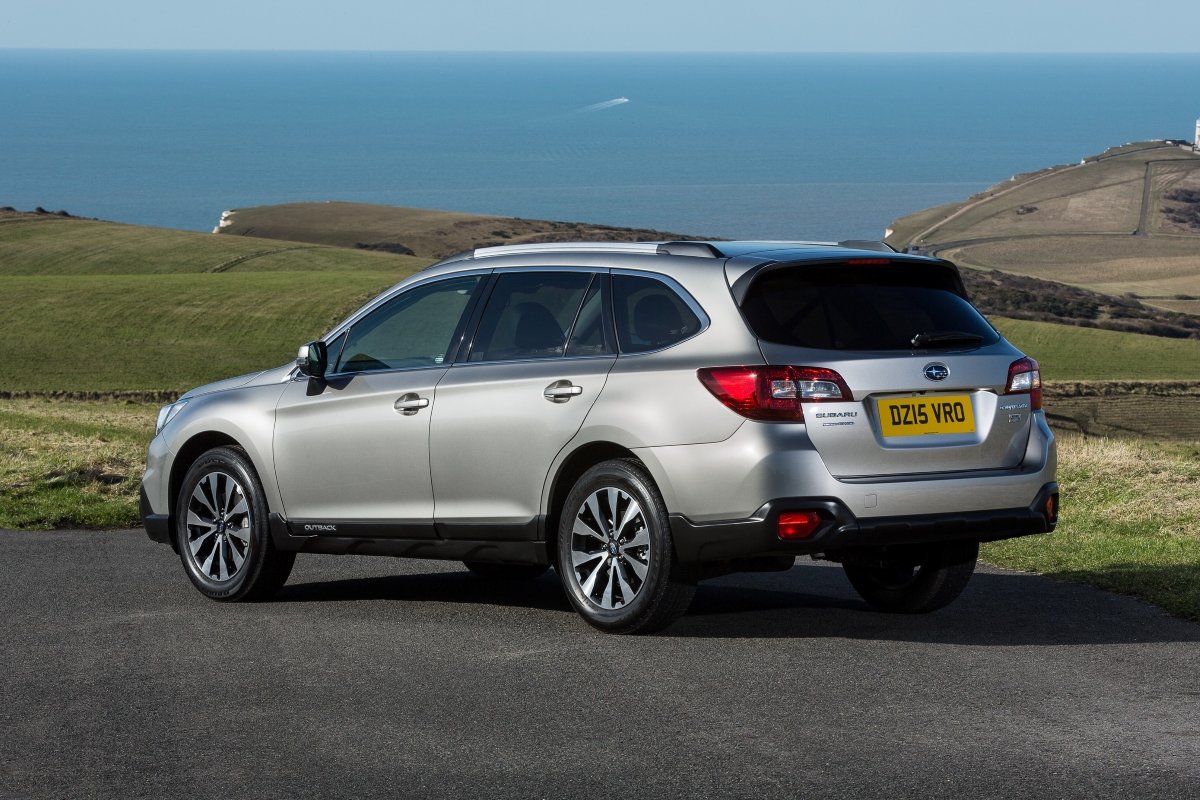
From the outside, the styling of the Outback was an evolution of the previous model. In fact from the side it's not easy to tell the two cars apart. However, the improvements Subaru made are more obvious on the inside.
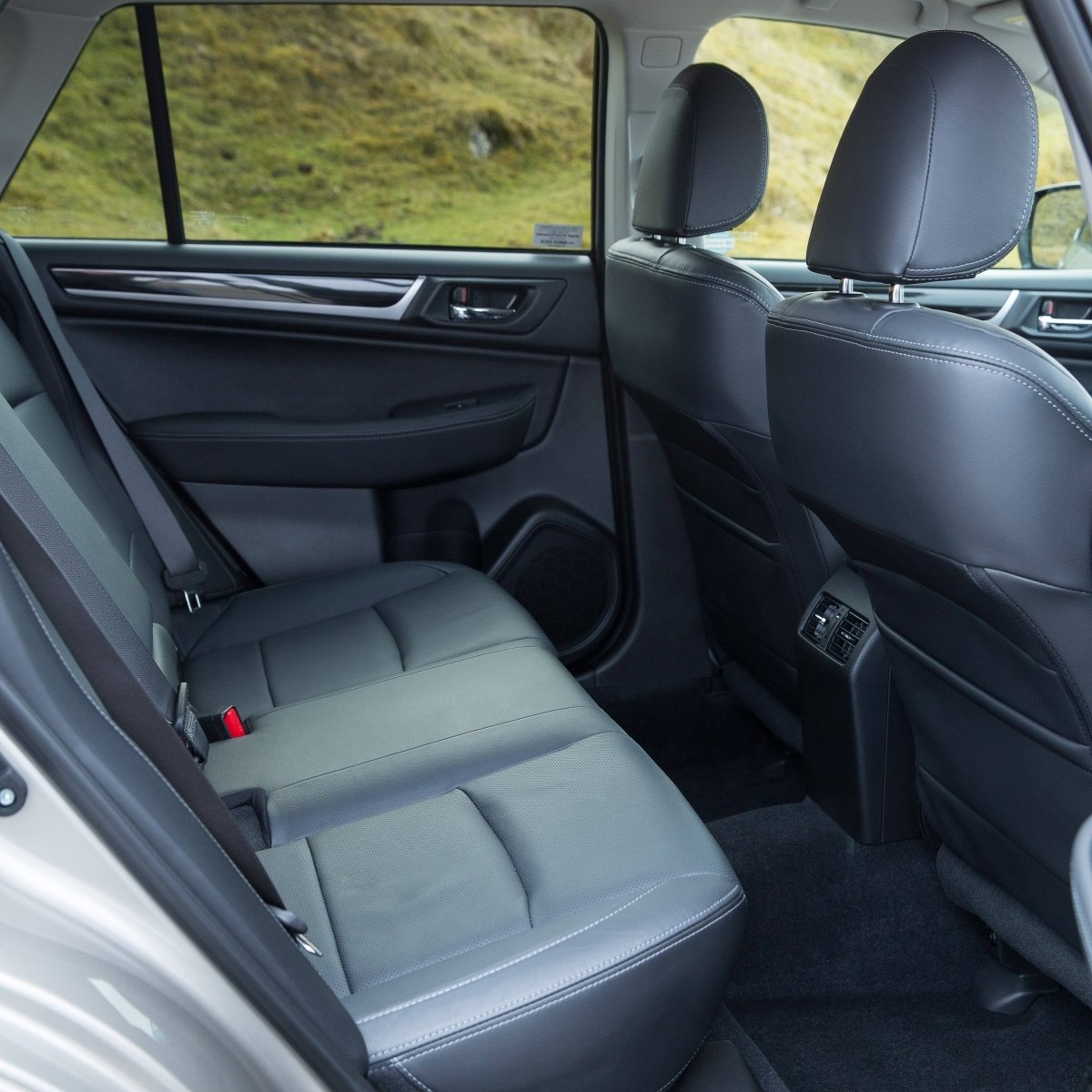
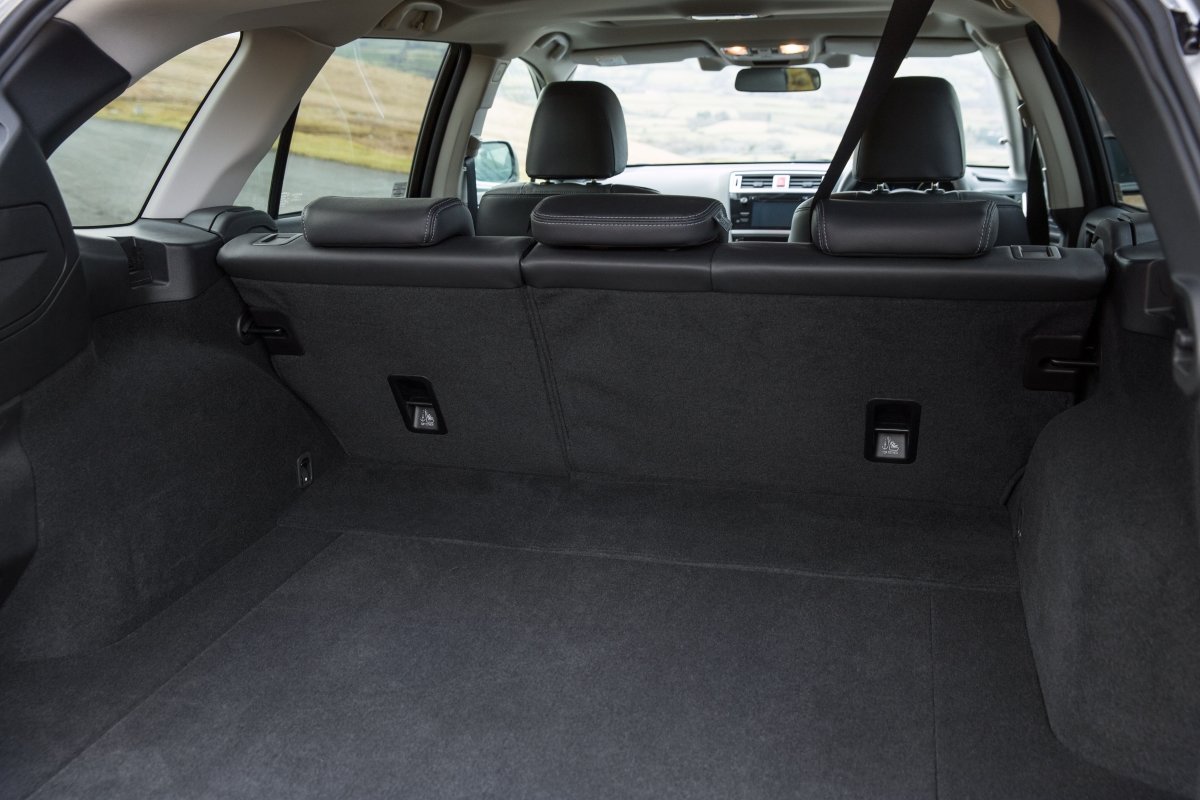
Although not as classy as an Audi A4 Allroad, the cabin was better finished and less workmanlike than before. More importantly for the Outback's practical and sensible customer-base, the new Outback also offered more cabin space than the old model, plus a hefty 559-litre boot, itself 4.5% bigger than its predecessor's.

What's it like to drive?
Back in 2015 Subaru wasn't as averse to diesel power as it is now, and the car launched with a choice of a 2.0-litre diesel engine or a 2.5-litre petrol. The 148bhp diesel was offered with either a manual or a continuously variable transmission (CVT), which Subaru called 'Lineartronic'. The 163bhp 2.5 petrol was only available with the Lineartronic CVT.
From the driver's seat, the Outback is a bit underwhelming. Whether you choose the diesel or the petrol, the Subaru is not especially quick, although the diesel's superior mid-range pull makes it a better choice for towing a caravan, horsebox, or trailer.
Although the steering is well weighted, there's lots of lean when cornering. But if that makes you think the Outback's suspension is soft and comfy, you're mistaken. It's quite harsh at low speeds, and unsettled on A-roads and motorways.
Turn off the tarmac, and the Outback is more impressive. It's no Land Rover Defender, but it will go further into the wilds than most 4x4 estate cars. As well as having a sophisticated all-wheel-drive system, the Outback has better ground clearance than a typical estate car, so it's less likely to ground its underside on uneven ground. It's almost as good off road as Subaru's proper SUV, the Forester.
Technology, equipment & infotainment
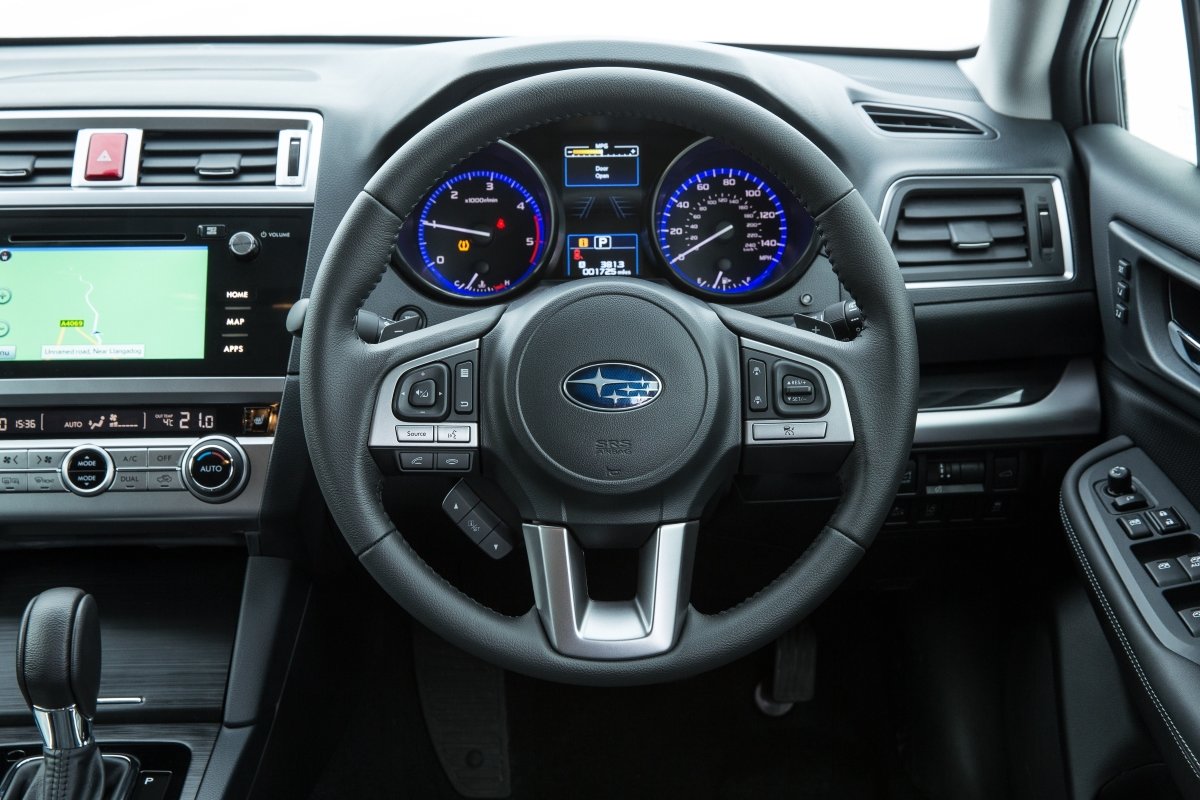
In-car infotainment was improved over the older Outback with this generation, with a seven-inch touchscreen satellite navigation system for both entry-level SE and SE Premium models.
Safety is another strength. The Eyesight suite of safety aids (more on that shortly) was standard on the SE Premium from launch, and fitted to both trim levels from the 2018 facelift onwards.
Pre or post-facelift, the Outback has a long list of safety kit and performed well in crash tests.
Subaru Outback running costs
Running costs differ considerably depending on whether you choose the petrol or the diesel. Those of a miserly disposition should avoid the Outland petrol, because it's an expensive car to fuel. The official combined figure suggests 38.7mpg is achievable, but expect fuel economy in the mid-30s at best. Fill the boot and work the engine hard and that will drop further.
The diesel may be noisier, but it's more efficient. Go for a diesel with a manual gearbox, and the official combined figure is 47.8mpg. Reckon on MPG in the mid-to-low 40s. Choose the Lineatronic diesel instead, and the MPG figure will worsen by 2-3mpg.
If you want to keep your annual car tax bill down, consider an Outback registered before April 2017, when the Vehicle Excise Duty rates changed. An Outback petrol registered before this date will cost £205 a year. The same model registered from April 2017 will cost £530 per year.
Taxing the diesel will also put a different dent in your bank balance depending on when it was registered. An early manual car will cost the owner £210 in VED. Cars registered from April 2017 cost £540. It's a big difference, and worth keeping in mind if you are looking at cars registered either side of this date.
In terms of insurance, the entry-level diesel manual is in group 22 (of 50). That compares with group 20 for the equivalent Skoda Octavia Scout. The petrol is cheaper to insure than the diesel, sitting in group 20, dropping to 18 after the 2018 facelift.
Like other Subarus, the Outback will need servicing annually, whereas some rivals have two-year service intervals. Subaru recently stopped offering a five-year warranty, reducing the length of cover to three years and 60,000 miles. So check if any cover remains on any used Outback you are thinking of buying.
Subaru Outback reliability
Running costs may be a weakness, especially if you choose a petrol model, but there's no arguing with the Outback's reliability. It rides high in customer satisfaction surveys too, giving other Japanese brands like Lexus and Toyota a run for their money.
Little goes wrong with the Subaru Outback, although if the car does break it can be quite expensive to fix.
We've heard some owners have reported oil leaks, and the diesel manual's clutch can be prone to wear, especially if the car is frequently used to tow a caravan or trailer. It's also worth taking a look underneath the car for signs of damage from off-roading. Although the Outback can handle itself in the mud and dirt it's best to be sure the previous owner hasn't gotten carried away.
Subaru has an approved used scheme called Subaru Proven. Cars go through a pre-sale inspection, and the bodywork is refinished. The cars are sold with at least one year's warranty cover, and 12 months' home and roadside assistance.
But whether you buy within or outside the Subaru franchised dealer network, any Outback that's been well cared for should give years of trouble-free motoring. If an Outback is in good condition and has a full service history, you can buy with confidence.
- The 2015 Outback was the first Subaru to be equipped with the 'Eyesight' safety package. This uses stereo camera technology to act as a second pair of eyes for the driver, monitoring traffic up ahead and warning of hazards as they develop. As well as autonomous emergency braking, Eyesight included adaptive cruise control, a lane-departure warning system, and sway warning. It was standard on cars fitted with the Lineartronic gearbox. This technology contributed to the Outback's five-star rating from the safety experts at Euro NCAP.
- Both the Outback's engines are 'boxers', which means that the engines are positioned horizontally in two banks of two, punching towards each other like a boxer. It's something of a Subaru trademark, although largely out of favour with other car makers. Subaru argues that the boxer configuration keeps the weight of the engine low, for improved handling. On the other hand, the boxer layout takes up more space than if all the cylinders were in one bank of four, and makes the engine a little more complicated for a mechanic to work on.
- Subaru facelifted the Outback in the spring of 2018. Exterior changes included a new grille, bumper, door mirrors and headlights. Inside, the trim materials were improved and the infotainment system updated. The eight-inch system on the high-spec SE Premium was made compatible with Apple CarPlay and Android Auto, while Subaru fitted a new 6.5-inch screen to the SE model. The Eyesight safety package was updated with the addition of a lane-keeping function to steer the car back towards the centre of the lane.
- If you want a manual gearbox: You'll need to choose the diesel, as this generation Subaru Outback never combined a petrol engine with a manual 'box. Even if you are happy to be flexible as to whether you buy a manual or an auto, the diesel manual is a good choice. The 2.0-litre turbodiesel has a stronger mid-range than the petrol and this engine and gearbox combination is the most economical in the range.
- If you're on a tight budget: Stick with one of the early SE models. These are cheaper to buy than the plusher SE Premium, but still come well kitted out. From launch, SE models were fitted with automatic LED headlamps and headlamp washers, cruise control, 17-inch alloy wheels, heated front seats, sat nav, and a rear view parking camera.
- If you want all the toys: Pick the SE Premium, ideally a post-facelift car. From 2018 the Outback gained steering responsive headlights, a DAB radio, and an uprated colour touchscreen. All SE Premium cars have a sunroof, keyless entry and a push-button start, 18-inch alloy wheels, leather upholstery and a powered tailgate.
- If you prefer petrol: There's just once choice, the 163bhp 2.5-litre boxer engine. Although big on capacity, it's not especially powerful. At times it seems hampered by the Lineartronic gearbox. On the plus side, the petrol engine is smoother and quieter than the diesel, which can be rather noisy when accelerating.


