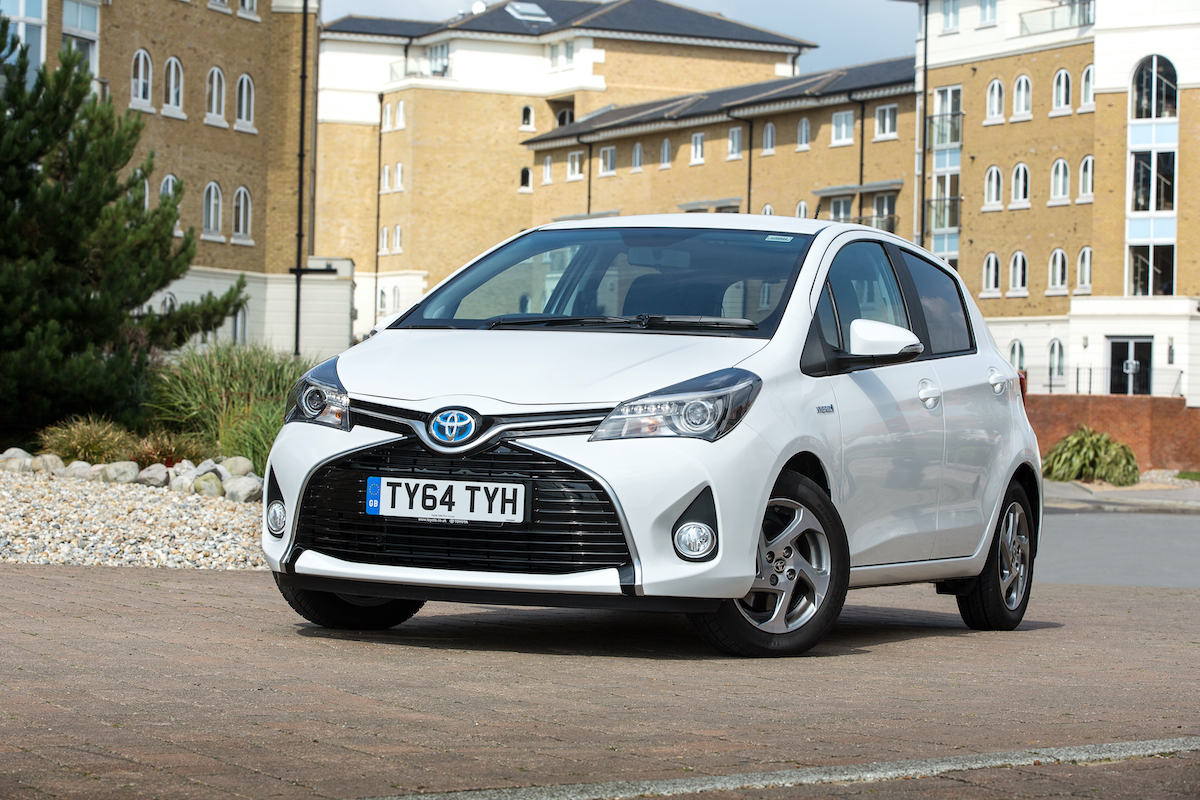
Toyota Auris Review (2007-2012)

Pros and cons
What we like
A sensible, reliable buy
Economical 1.4-litre diesel
The hybrid works well around town
What to consider
Dull driving experience
Lots of hard and scratchy plastics in the cabin
Anonymous looks, especially before the 2010 facelift
The CarGurus verdict
The Auris isn’t a bad used car. If you’re looking for simple family car transport, at a very reasonable price and with a choice of trims and engines, then it’ll tick all the necessary boxes. But beyond that, there’s not a massive amount to recommend it. Sure, it does the job, but there are plenty of other cars that do that and much more, that’ll please you with inspired design or put a smile on your face with an engaging driving experience.
If you don’t care about that, then you’re unlikely to feel shortchanged by a used Toyota Auris, but if you do, then you may find yourself wishing you’d bought a Ford Focus. Or a Volkswagen Golf. Or a Vauxhall Astra. Or a Renault Megane. Or a Peugeot 308. Or a Honda Civic. Or a Mazda3. Or...
out of 5 expert review
What is the Toyota Auris?
The Toyota Corolla was a monumental success for the Japanese firm, and to this day it’s been the biggest selling car of all time. So when the company brought out a replacement for it in 2006, eyebrows were raised, and big shoes needed to be filled.
This is what was revealed, and went on sale early in 2007 (the second-generation model arrived in 2012). The Auris is a family hatchback designed to compete with very popular cars like the Ford Focus, Vauxhall Astra and Volkswagen Golf. It was available with a range of petrol and diesel engines, and later a petrol-electric hybrid. The car was marketed as a sensible, head-based decision, with emotional appeal rather put to one side. This was a car, Toyota said, that would do the job you needed it to do, with minimal fuss or marketing silliness.

Practicality
How practical is it?
In fairness to the PR team, that’s pretty much what the Auris delivers. It’s a hatchback, with reasonable space inside, inoffensive looks, acceptable levels of equipment and some engines that will propel the car forward. But that’s about it.
Inside, you’ll find little in the way of premium appeal, but the hard, scratchy plastics are at least well screwed together and build quality is generally very solid. All the controls are easy to find and use, although some of the practicalities aren’t quite so well thought through, with a disappointingly small number of places to store odds and ends and front seats that could really use some more lateral support.
That said, there’s a lot of space in the double glove box and the space for people is very decent; four adults are contained in comfort and five will squeeze in on shorter journeys, thanks to impressively spacious rear seats. The boot space, at 354 litres, is a good size too, although there’s a bit of a lip to lift stuff over.

Driving
What's it like to drive?
If you’re looking for fun behind the wheel, then this might not be the car for you. If, however, you choose your car in a similar way to how you choose white goods such as a dishwasher or a fridge-freezer - you just want something that'll do the job of getting you about, and do it reliably - then it'll be just the job.
On the road, the high centre of gravity and relatively soft suspension makes things a bit roly poly through the corners, but that does at least make for a reasonable ride quality. Not brilliant, but fine. You may also find that its high stance means crosswinds affect it more than you’d experience in rivals; it’s prone to drifting about in lane when things get gusty. None of this is too serious; for most people, it’ll be fine. It’s just that plenty of rivals are better.
The line-up in the early days of the Auris started with a 1.4-litre petrol engine producing 96bhp. There’s also a 1.6-litre with 122bhp, which is the most common engine on the market. In 2008 the 1.4-litre was replaced by a 1.3-litre engine with 100bhp and stop/start tech, which pauses the engine while stationary to save fuel. The 1.3 is worth having over the 1.4, but the 1.6 is still the one we’d recommend you go for.
On the diesel side, the range started with a 90bhp 1.4-litre, then moved up to a 124bhp 2.0-litre unit. If you’re after a sporty Auris, then you may be surprised to know that the most powerful option is also a diesel, a 2.2-litre with 175bhp.
All models used a manual gearbox as standard (five-speed on the 1.4-litre and 1.6-litre petrols, and on the 89bhp diesel, with six-speeders on the rest), but you could opt for an automatic on the 1.6-litre petrol and the 1.4-litre diesel, and all the Auris hybrid models were autos, too, those using a continuously variable transmission (CVT). Not many were sold, though, so they’re hard to find and more expensive as well.
Tech and equipment
Technology, equipment & infotainment
When it comes to trim levels, the range starts with the T2, which includes 15-inch steel wheels, a CD player, air-conditioning and remote locking. The T3 adds 16-inch alloy wheels, heated mirrors and front fog lamps. If you want Bluetooth, you’ll need a TR model, which also features a CD multichanger, and the SR (introduced in 2010) is the sporty-influenced model, with 17-inch alloys, lowered sports suspension and a rear spoiler.
The top-spec model is the T-Spirit, which adds automatic lights and wipers, cruise control and dual-zone climate control air-con.
The Auris range was given a facelift at the start of 2010, which saw some styling tweaks on the outside and a few suspension and steering adjustments to improve handling and ride. The SR trim was added to the range, and the number of models slimmed to just that, T2 and TR. The exception was for the newly-introduced Toyota Auris hybrid model, which was offered in T4 and T Spirit trims. The T4 had climate control, a USB slot for phone connection and a push-button start, while the T Spirit had leather and Alcantara synthetic suede upholstery, Bluetooth and a reversing camera display built into the rear-view mirror.
Both five-door and three-door models of the Auris were sold from new, but the five-door version sold in much bigger numbers, and will be easier to find. Unlike the later version of the Auris, there was no estate version (named Auris Touring Sports) offered on this iteration of the car.

Running costs
Toyota Auris running costs
By modern standards, the Auris isn’t the most economical car despite its diminutive size, as engine technology has come a long way over the past decade or so. The older 1.4-litre petrol engine has an official mpg figure of 40.9mpg, while the newer 1.3-litre can return 48.7mpg. The more popular 1.6-litre petrol has an official mpg of 39.8. Remember, though, that these are figures measured in a laboratory test - and the older-style NEDC test at that, which is far more optimistic than the later WLTP one - so you’ll be extremely lucky to match those in the real world.
If you want the best fuel economy in a diesel, go for the 89bhp 1.4-litre version, which has an official economy of 56.4mpg. The 2.0-litre will return up to 52.3mpg, while the T180 will give you a theoretical 45.6mpg.
The hybrid has an official fuel economy of 74mpg for models with 15-inch alloys, and 70.6mpg on 17-inch wheels, which were optional on the T4 and standard on the T Spirit.
The Auris requires servicing every year or 10,000 miles, alternating between minor, intermediate and major services in that order. Services are more expensive on the hybrid model. Toyota offers a special deal for owners of cars older than five years, which will get you a service at a dealership for (at the time of writing) around £150 (intermediate) to £270 (full). For older cars, however, you may want to go to an independent garage for a better deal. We found Toyota specialists quoting £115 or £225 for the same services.

Toyota Auris reliability
Historically, Toyota as a brand overall has an excellent reputation for reliability, so it’s slightly disconcerting to find quite a few reports of issues with the Auris, and not just because it’s starting to show its age. Contemporary independent owner satisfaction surveys didn’t flatter it, either.
Common issues include problems with squealing front brakes, many of which were tackled under warranty, but those will have run out by now on even the newest cars. The squeals can be caused by a build-up of brake dust, so changing the brake pads could fix them.
There are also reports of hesitant or jerky gear changes on automatic gearboxes. In manual cars, clutches can fail rather early and handbrakes can slip. Owners have also experienced noisy gearboxes while driving, leading to some being changed under warranty. Watch out for water in the spare wheel well, which could indicate a leak from the rear lights.
Recalls for the Auris include one for the risk of a sticking accelerator, another to fix the risk of detached brake calipers and another due to the potential for rear suspension issues. Another recall was to fix a risk of an electrical fire caused by the electric window wiring. All of these issues should have been sorted now, but it’s still worth checking with a Toyota dealer that the car you’re looking at has had any necessary work carried out.


What owners say
Reliable car that feels safe and secure. Very spacious for a hatchback and a large boot.
25 November 2025It’s a nice looking car. But there are some annoying things about the Auris 1- the Arm rest in back seats is not that strong.2- it is just ok when driving it; it will get you from Point A to B but zero fun. However the Auris is the best hatchback car for me. And it is very reliable car.
27 June 2021Great size for small family & very reliable Good price
17 July 2022What owners say
Reliable car that feels safe and secure. Very spacious for a hatchback and a large boot.
25 November 2025It’s a nice looking car. But there are some annoying things about the Auris 1- the Arm rest in back seats is not that strong.2- it is just ok when driving it; it will get you from Point A to B but zero fun. However the Auris is the best hatchback car for me. And it is very reliable car.
27 June 2021Great size for small family & very reliable Good price
17 July 2022Toyota Auris is a great looking ,reliable car , but the prices are very high.
30 January 2023Very reliable and spacious inside.performs really perfectly. Nice one please
21 December 2022Smart, economical and as tough as old boots, whats not to like.
7 January 2022Great car but not Heated windscreen. And the rest bumper is very big.
9 April 2021Three things to know
- Unlike lots of rivals, Toyota offered a hybrid version of the Auris from 2010, with a 1.8-litre petrol engine attached to an electric motor, giving a combined 134bhp. This was the same Hybrid Synergy Drive - or HSD - powertrain used in the Toyota Prius. It’s probably best avoided, though, as the fuel savings are relatively minimal compared to the diesel models, has a smaller boot and will cost more, too.
- Cars sold after May 2011 had extra equipment; a final hurrah if you like, before the second-generation Auris was launched in 2012. The additions included Bluetooth as standard on TR and SR models, and a new entry-level trim called Edition, which rides on 16-inch alloy wheels and was otherwise pretty similar to the earlier T2 model.
- The T180 model is based on the T-Spirit, in terms of equipment. It rides on 17-inch alloy wheels, has more sophisticated multi-link suspension than the rest of the range, and includes keyless entry and start and an electric sunroof. In 2008, it was rebranded as the SR180, with the same mechanical bits and a big spoiler at the back. It’s sportier than the rest of the range, but not really that sporty in the grand scheme of things. That said, it does ride and handle reasonably well.
Which one to buy
- If you’re set on a hybrid: Well, the hybrid model is for you, then. It should give you pretty good running costs, but good examples will be harder to find than other models, and you’ll pay more for them. It’ll work best on around-town journeys, as fuel economy on country roads and motorways will drop considerably.
- If you want the best fuel economy: The hybrid is best on paper, but finding a decent diesel model is likely to be much easier. The 89bhp 1.4-litre model will get the best fuel economy of those.
- If you want the most fun: Should you be after a sporty drive, there are far better options than the Toyota Auris hatchback, but if you must have one then the SR180 or T180 are the ones to look at. Both are very similar to each other save for a few minor cosmetic differences, and they’ll give you a diesel-powered warm hatch that’s much more involving than the standard car. True, they’re not a patch on a Ford Focus ST, Golf GTI or Vauxhall Astra VXR, but they’ll be much cheaper.
- If you’re on a budget: Look for one of the 1.6-litre petrol cars, as they’re the most common and often the cheapest to buy. Lots of the used examples will have high mileage, so keep an eye out for a full service history and evidence that it’s been looked after. Find a good one, though, and you can be confident that it'll provide years and years of faithful, fault-free motoring, such is Toyota's reputation for reliability.


Pricing trends
Starting RRP
£11,649
Current avg. market price
£3,385
Trending down by 26.9% this month
April 2026 - October 2026