Toyota Mirai Review (2021-present)
Toyota Mirai cars for sale
3.0
Expert review
Pros
Long range between fill-ups
Much quicker to refuel than a battery electric vehicle
Comfortable and quiet
Cons
Surprisingly small cabin and boot for such a large car
Very sparse refuelling infrastructure
Cumbersome to drive on a twisty road
The CarGurus verdict
It’s easy to understand why there is so much environmental and political pressure being applied to develop and promote alternative fuel vehicles. While China owns 80% of the world’s rare earth metal stocks, which are essential to large battery production, this uneasy monopoly and the high levels of CO2 emissions associated with converting these commodities into battery power are sure to become more divisive issues going forwards. As long as hydrogen remains so expensive and so difficult to source, however, a long-range traditional EV will make far more sense for UK buyers.
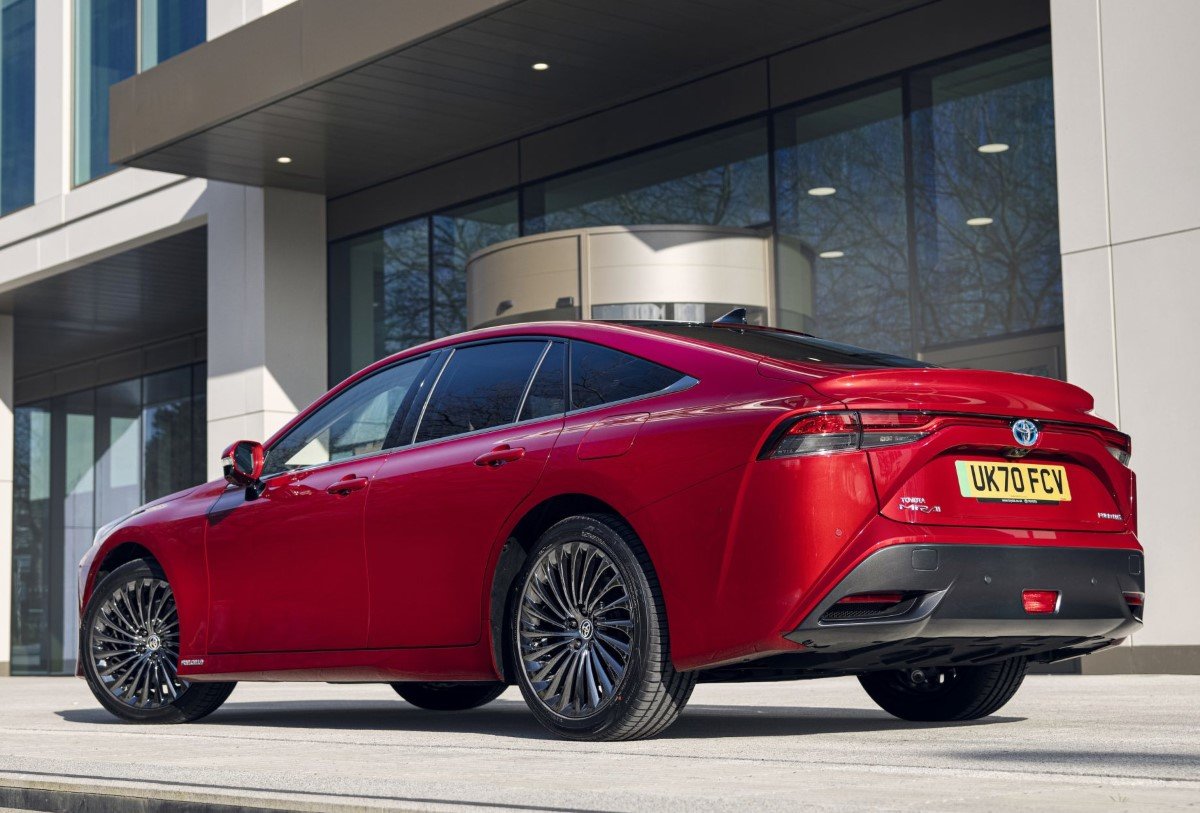
That said, viewed in isolation, the Mirai is a striking looking and truly fascinating vehicle. As well as being extremely cultured and comfortable, many early adopters will no doubt be willing to accept the high running cost, compromised interior space, lack of boot capacity and so-so driving elements, just to own such a unique machine.
What is the Toyota Mirai?
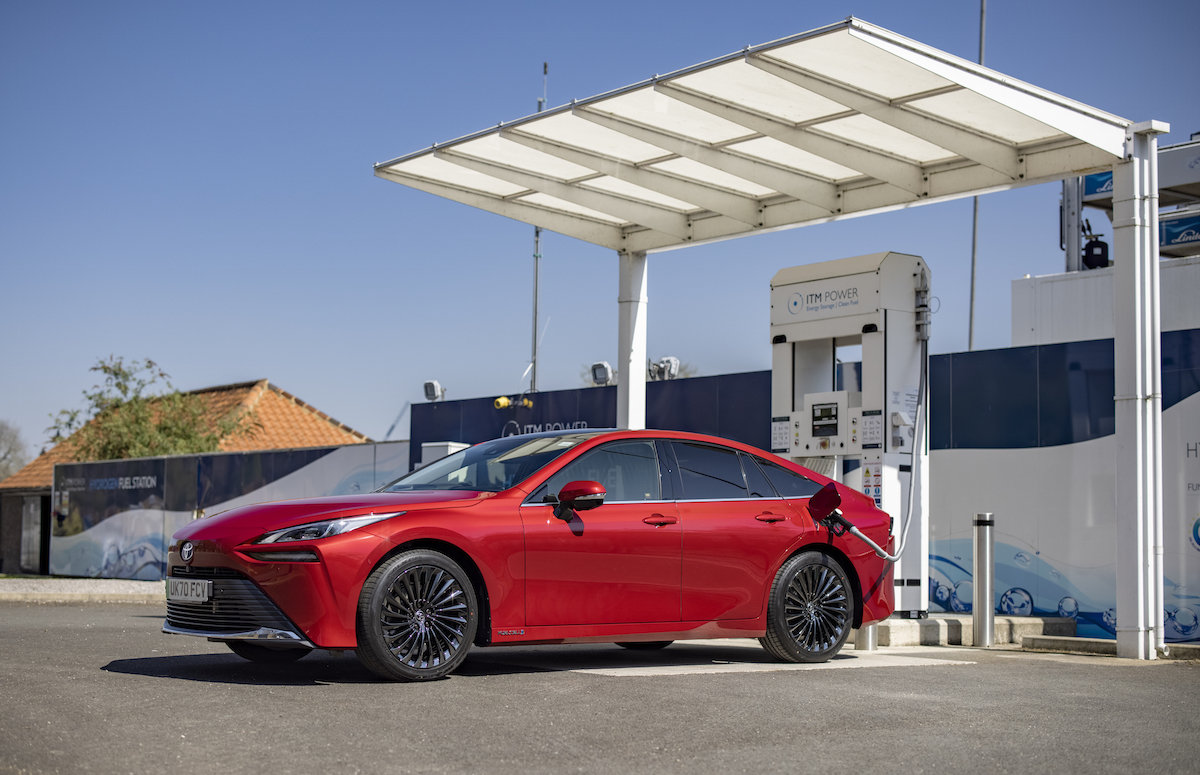
Born into a world of fossil fuel establishment and a burgeoning electric car industry, the second-generation Toyota Mirai's fuel cell technology is ‘alternative’ to say the least.
It mixes air with pressurised hydrogen gas, then splits this heady mix into protons and electrons to create an electric charge, which then powers an electric motor to drive the rear wheels.
At the end of the process, the electrons are reunited with their proton buddies and exit as a stream of pure water. Because the only thing excreted via the tailpipe is H2O, what comes out is actually cleaner than what went in.
One of the biggest advantages, Toyota claims, the Mirai has over a more traditional battery-powered EV is that only takes around five minutes to fill the hydrogen tanks, and it can travel up to 400 miles between top-ups. However, the Mirai's pit-stop time advantage is only viable if you can find a fuel station that stocks hydrogen. These are few and far between, and those that do stock it aren’t exactly giving the stuff away. More of how much this all costs later.
How practical is it?
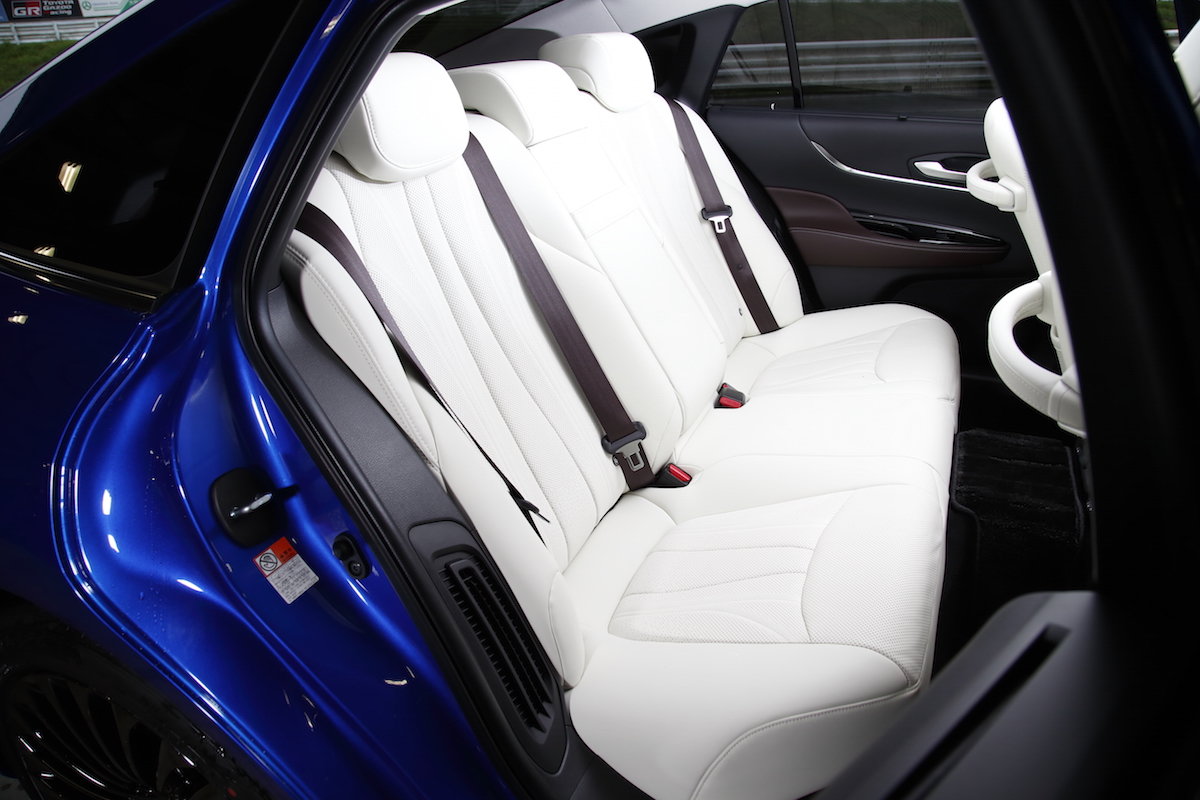
Given it rides like a luxury car and it is almost five meters long, the interior accommodation is disappointingly modest. Legroom in the rear seats is tight and the enormous central tunnel running down the middle of the car is high, wide and not very handsome. Consequently, you’ll feel like you’re riding a horse if you get saddled with the middle pew.
The various drive components also mean that, at 321 litres, boot space is extremely limited for a car of this size and class. Meanwhile, the back seats don't fold flat, and so overall, luggage space is actually smaller than that of a VW Polo.
What's it like to drive?
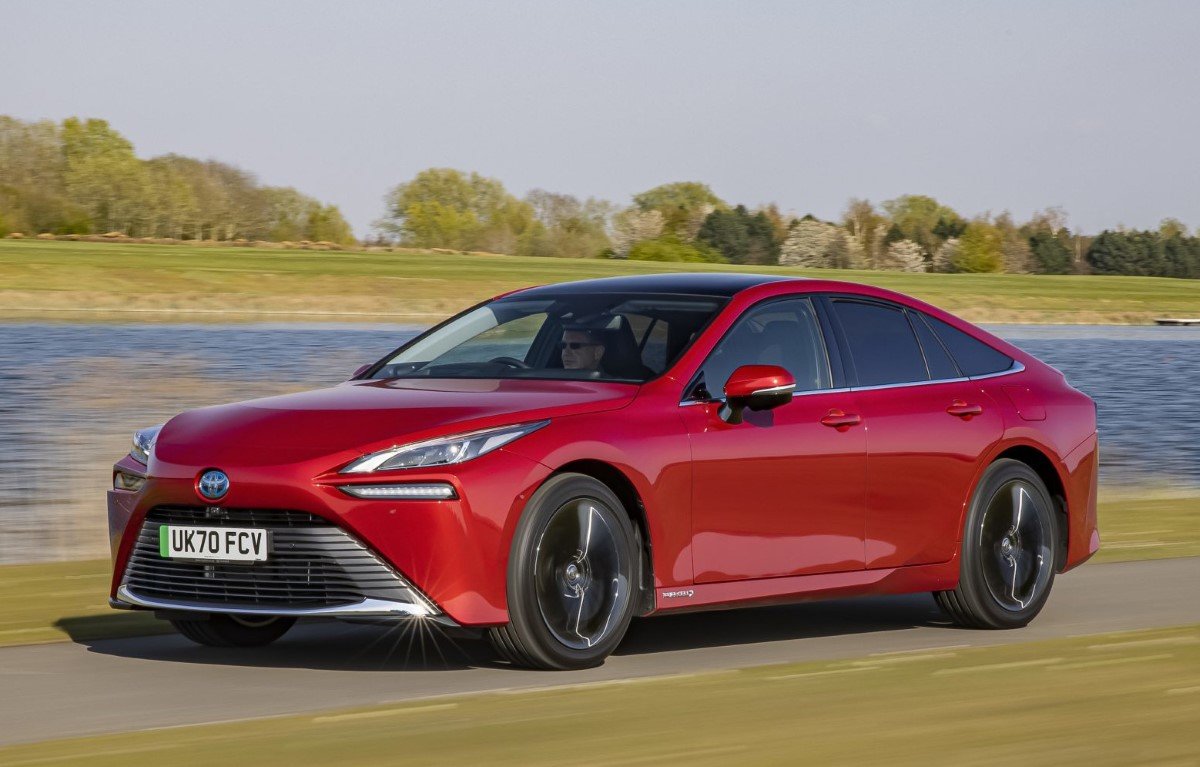
From a refinement perspective, the Mirai is difficult to fault. It emits a typical electric motor whirr as it lollops down the road, with a negligible amount of road- and wind noise and a ride quality cushier than many luxury cars.
Although the overall performance feel isn’t in the same league as many EVs, the 172bhp produced by the single-speed motor will at least eliminate any overtaking stress, while progress at motorway speeds is simply effortless.
The biggest hindrance to the Mirai’s driving enjoyment is the substantial amount of mass it has to haul around. At a smidgen under two tonnes, elevated levels of inertia are more than obvious when trying to persuade the Mirai to turn into bends. This lethargy isn’t helped by the slow response of the steering, and when it comes to braking, it can feel like you’re being egged on by a strong tailwind.
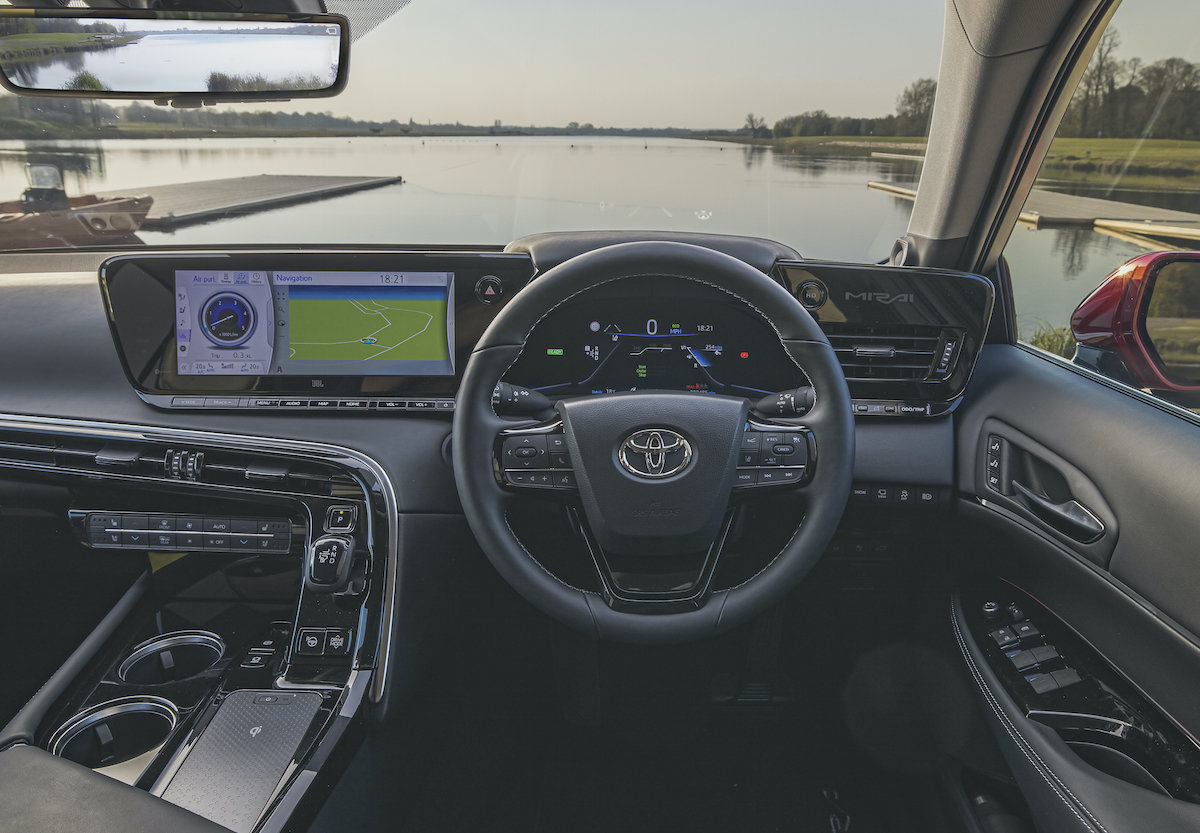
There’s nothing wrong with the bold instrumentation and the large central infotainment touchscreen, which looks very techy, and the quality and overall finish of the materials is better than anything you’ll find in a Tesla.
Technology, equipment & infotainment
The Mirai is pitched as an executive saloon, so it’s no surprise to find that it’s well equipped. Even the entry-level Design trim level gets dual-zone climate control, adaptive cruise control and a JBL sound system, while upgrading to the mid-spec Design Plus gets you heated front seats, satellite navigation and a reversing camera.
Move up to the top of the range Design Premium, and you can enjoy ventilated seats in the front, a panoramic roof, a head-up display and a heated steering wheel.
Toyota Mirai running costs
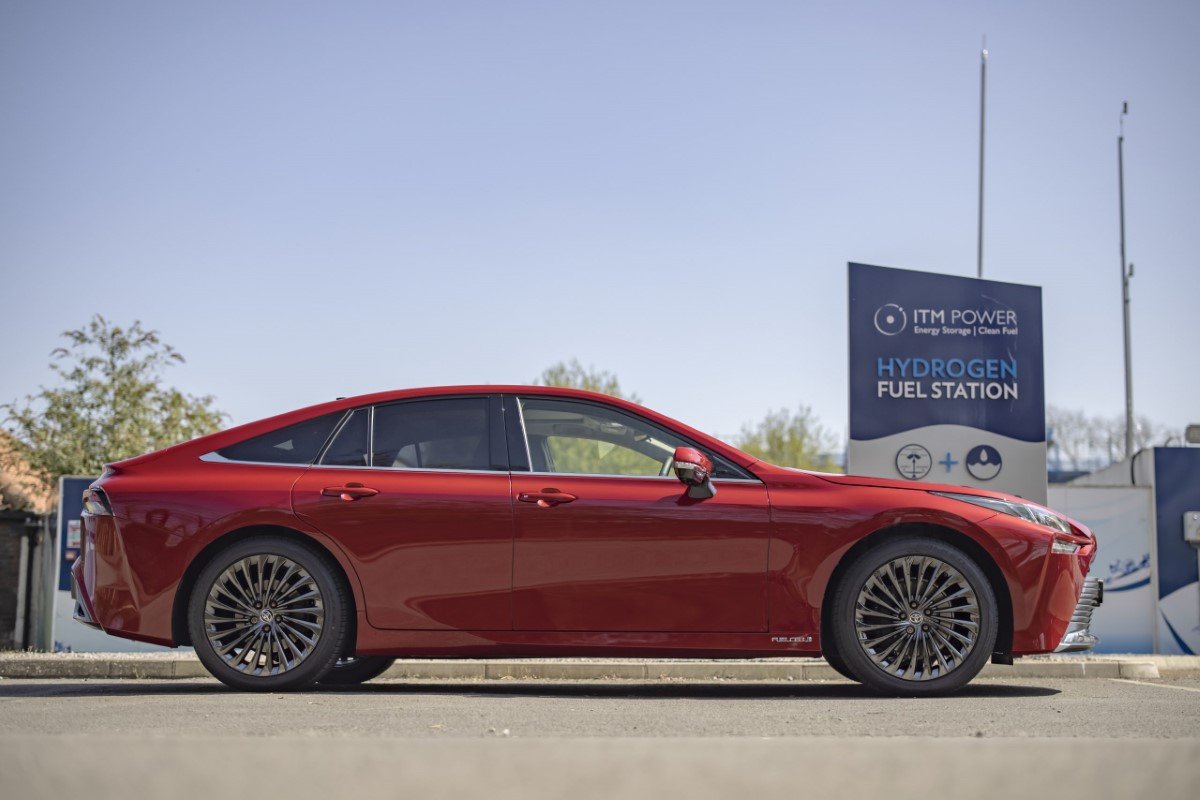
Hydrogen is measured in kilograms, rather than litres, and the typical cost of hydrogen in the UK is around £12 per kg. It takes 5kg of the stuff to refuel the Mirai’s three storage tanks.
The hope is that with the expansion of the hydrogen station network, the fuel will become more affordable. But as things stand, it is all a bit of a monopoly, as there are only 14 such filling stations located in the UK, predominately in the South East.
If you do the maths, with an official average consumption of 0.79kg the Marai will cost about £9.48p for every 62 miles covered. To put that in context, an equivalent diesel capable of 50mpg will cost in the region of £6.50. If you’re a company car driver then you’ll obviously need to factor in the Mirai's 1% benefit-in-kind company car tax implication versus the diesel’s much higher rate of taxation.
Of course, all of this is ignoring the sizeable elephant in the room; a Tesla Model 3 Long Range will not only be cheaper to buy or lease, but it will also give you a 360-mile range for about the same price as a single kg of hydrogen. What’s more, the 3 is so much faster than the Mirai, provides much greater interior and luggage space and it can be topped up from one of Tesla’s ubiquitous chargers in around 30 mins. Sounds worth the wait to us.
Despite the current infrastructure's shortcomings, Toyota is sure the Mirai will have its day. In order to boost sales in the United States, where there are only 45 hydrogen stations, predominately in California, buyers of previous-generation cars were given $15,000 worth of fuel credits. Although there are no plans to offer similar incentives here, launch leasing rates of £434 per month (ex-VAT) for the entry model, including maintenance, will help sweeten the deal to some extent.
Toyota Mirai reliability
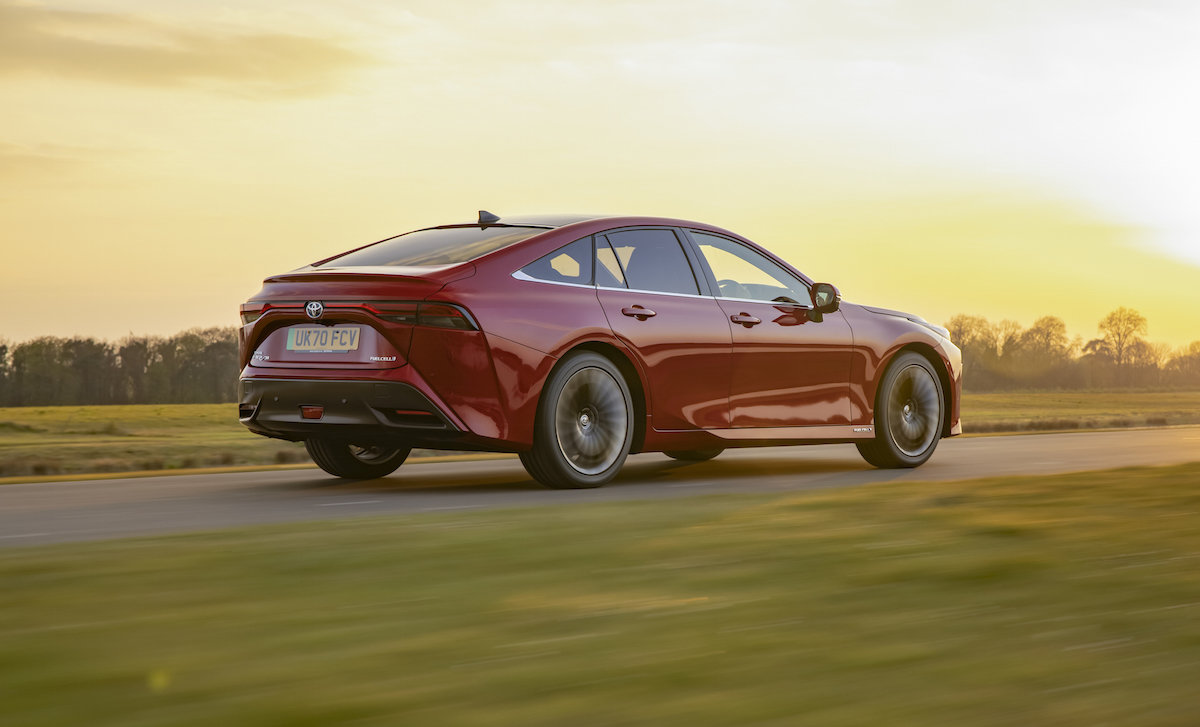
Clearly, you can’t just nip down to your nearest breaker's yard for a replacement if anything goes wrong with your Mirai’s fuel cell. It hasn’t even got anything in common with the first-generation car's powertrain, as the latest fuel cell is smaller, lighter and much more efficient. What's more, other than the name tag, there is zero mechanical commonality between the previous-gen Mirai and this model.
While the original Mirai used a front-wheel-drive layout and employed pretty basic suspension architecture, the second-generation car is built on much newer mechanical underpinnings, uses far more sophisticated multi-link suspension, and sends its power to the road via rear-wheel drive.
So much is unknown, but if you were to bet the house on any car being reliable, it would be a Toyota. While sister brand Lexus finished top of the manufacturer's table in the most recent What Car? customer reliability survey, Toyota as a brand finished a highly commendable third out of 31 manufacturers.
Although the prospect of hydrogen fuel-cell may seem like a bit of a scary step into the unknown, the technology has been tried and tested by Toyota in commercial applications for at least a couple of decades. Therefore, there’s no reason to suspect the Mirai should be any less reliable than a Prius or one of Toyota's petrol- or diesel-engined models. This is something that is backed up by Toyota giving the Mirai the same warranty it provides with all its new cars. This is the same three-year, 60,000-mile arrangement you get with most new cars, but the difference is that if you get your car serviced at a Toyota main dealer according to the schedule, your warranty automatically get topped up by 12 months each year, lasting up to 10 years.
Servicing intervals are just as straightforward, too, as the Mirai needs to go into a Toyota dealership to be fettled every 12 months or 10,000 miles.
Despite the fact there are far fewer moving parts in the Mirai’s drivetrain than a fossil fuel car, we’d play safe and stick with a Toyota main dealer, as they are the only ones who have the expertise to properly maintain it, especially given the warranty benefits.
- Although there is nothing new about vehicles being powered by hydrogen - many combustion engines used it during the war when petrol was scarce - the Mirai uses a completely different process to generate power. Instead of burning hydrogen, it passes it through a fuel cell stack, which creates a chemical reaction and generates high-voltage electricity. This energy powers a rear axle-mounted electric motor. The generation stack itself is made up of small fuel cells, each containing a polymer membrane that separates catalyst-coated anodes and cathodes. Hydrogen flows through the cathode side of the stack and air through the anode side. The protons in the hydrogen atoms are attracted through the membrane to combine with oxygen in the air to make water; hence the exhaust output being made up solely of H2O. The electrons left behind in the process produce an electrical current between the anode and cathode, which is used to power the electric motor. The system is supplemented by a small lithium-ion battery, which helps provide additional power for acceleration and storage of any energy returned through regenerative braking. And there you were thinking those boring chemistry lessons were a complete waste of time.
- There’s no more risk attached to using hydrogen than petrol, and to reassure you of this, Toyota has subjected the car's three hydrogen storage tanks to extreme testing, even going so far as to fire bullets at them. Beyond the tanks, the fuel cell delivery system has leakage sensors to mitigate against any remaining combustion risk, and left to its own devices, hydrogen will disperse harmlessly into the atmosphere.
- At the time of writing, there are only two hydrogen fuel cell cars on sale in the UK: the Hyundai Nexus SUV and the Mirai. Honda has abandoned plans to bring its Clarity hatchback to the UK, although Mercedes and BMW, the latter working in conjunction with Toyota, are both looking to bring fuel cell SUVs to the UK in the near future.
- If you want the cheapest way into the hydrogen hierarchy: The entry model Mirai is the Design, which, at around £50,000 when new, is not exactly cheap. However, when you consider the technology involved and the small numbers of cars likely to be sold, it begins to look like a bit of a loss leader. It’s not short on goodies, either. Standard kit includes 19-inch alloy wheels, LED lights, dual-zone climate control, keyless entry, heated front seats, a 12.3-inch colour display touchscreen, and a JBL premium sound system. Satnav, Apple Carplay, Android Auto, an electronic parking brake and a reversing camera are also included. Toyota’s Safety Sense system includes seven airbags, emergency steering assist, intelligent adaptive cruise control, lane departure alert, lane centering assist, road sign recognition, and automatic high beam activation.
- If you want a few more toys: Although it’ll add a chunk of cash to the sticker price, if you intend to lease a Mirai, the cost of the extra equipment in the Design Plus model will only set you back a few pounds per month. On top of the stuff already mentioned, you’ll get front parking sensors and intelligent rear parking sensors with rear cross-traffic alert and auto braking, a trick panoramic view rear mirror, synthetic leather seats, and door mirrors with reverse-tilt function and memory setting.
- If you want the fully loaded model: The top-end science project is the Design Premium but it is around £15K more than the entry-level car when new. Given the Design model is so well specced, we’d struggle to see why you would splash the extra cash. For the record, the Premium pack adds triple-zone climate control, a panoramic roof with power sunshade, 20-inch black alloy wheels, a wireless phone charger, ambient lighting on the dashboard, a heated steering wheel, leather upholstery, ventilated front seats with power recline, cushion tilt and height and lumbar adjustment on the driver’s side.


