Volvo V60 2026 review | A comfortable and stylish estate car
Volvo V60 cars for sale
4.0
Expert review
Pros
Crisp styling inside and out
Supreme long-distance comfort
An interesting alternative to a BMW or Mercedes
Cons
VW Passat and Skoda Superb offer bigger boots
A 3 Series is more exciting to drive
Interior quality good rather than sparkling
The CarGurus verdict
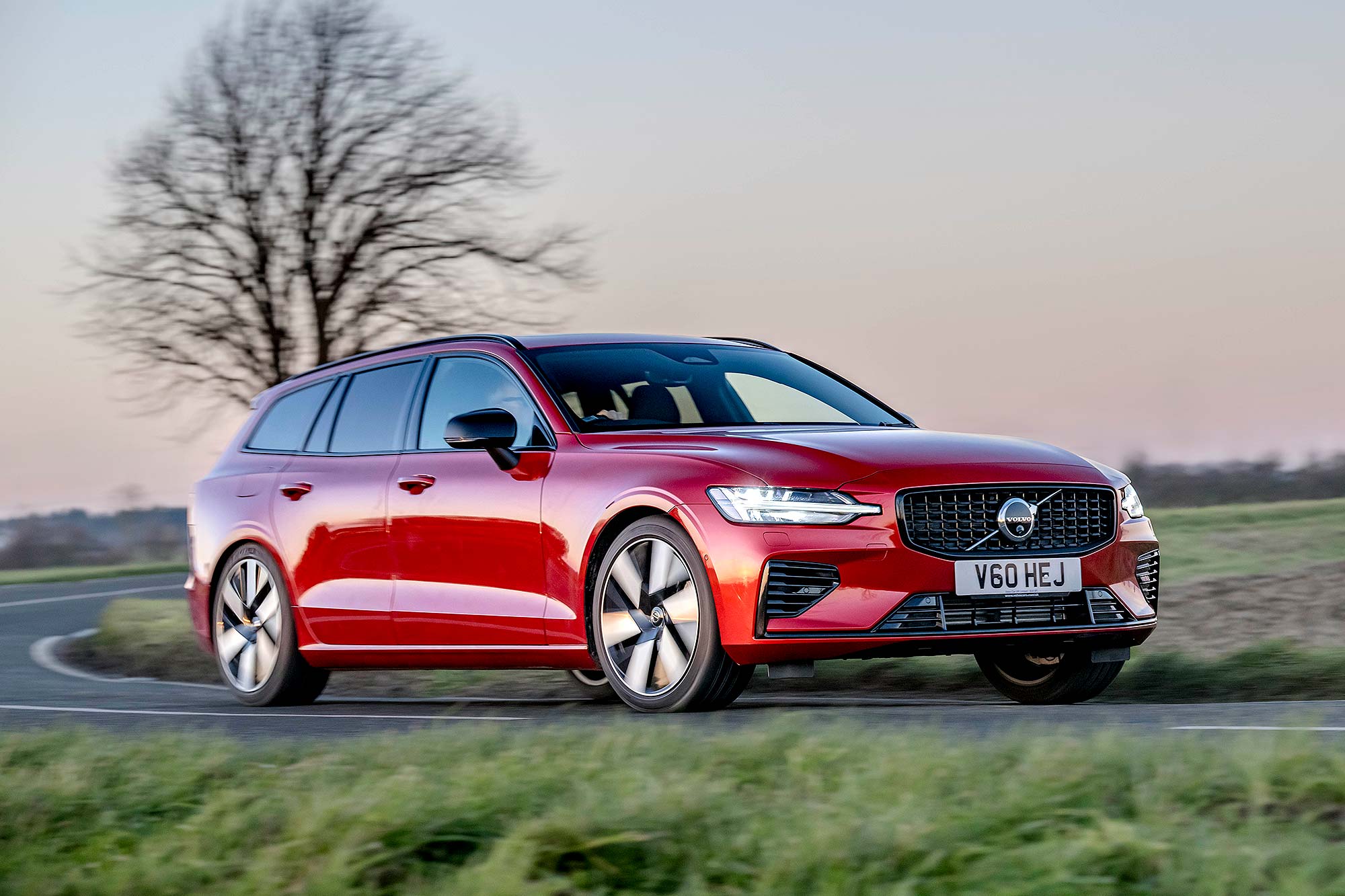
Volvos have been highly desirable ever since the latest XC90 and XC60 SUVs arrived on the scene. The V60 adds much of that same desirability in Volvo’s traditional, sensible heartland of estate cars. It is a vehicle with all the style, plentiful equipment, comfort and class that you’ll find elsewhere in the Volvo range, only this time in the body of a conventional estate car.
It might not be a sporty or particularly engaging car to drive (if that’s your thing, try a BMW 3 Series Touring), but if you value space, sophisticated design and the ability to effortlessly waft away miles then the Volvo V60 is well worth considering. Just remember, this is a car that has been on sale for eight years (at the time of writing in 2026), so it isn’t at the cutting edge of estate cars, however comfortable and appealing it may be.
What is the Volvo V60?
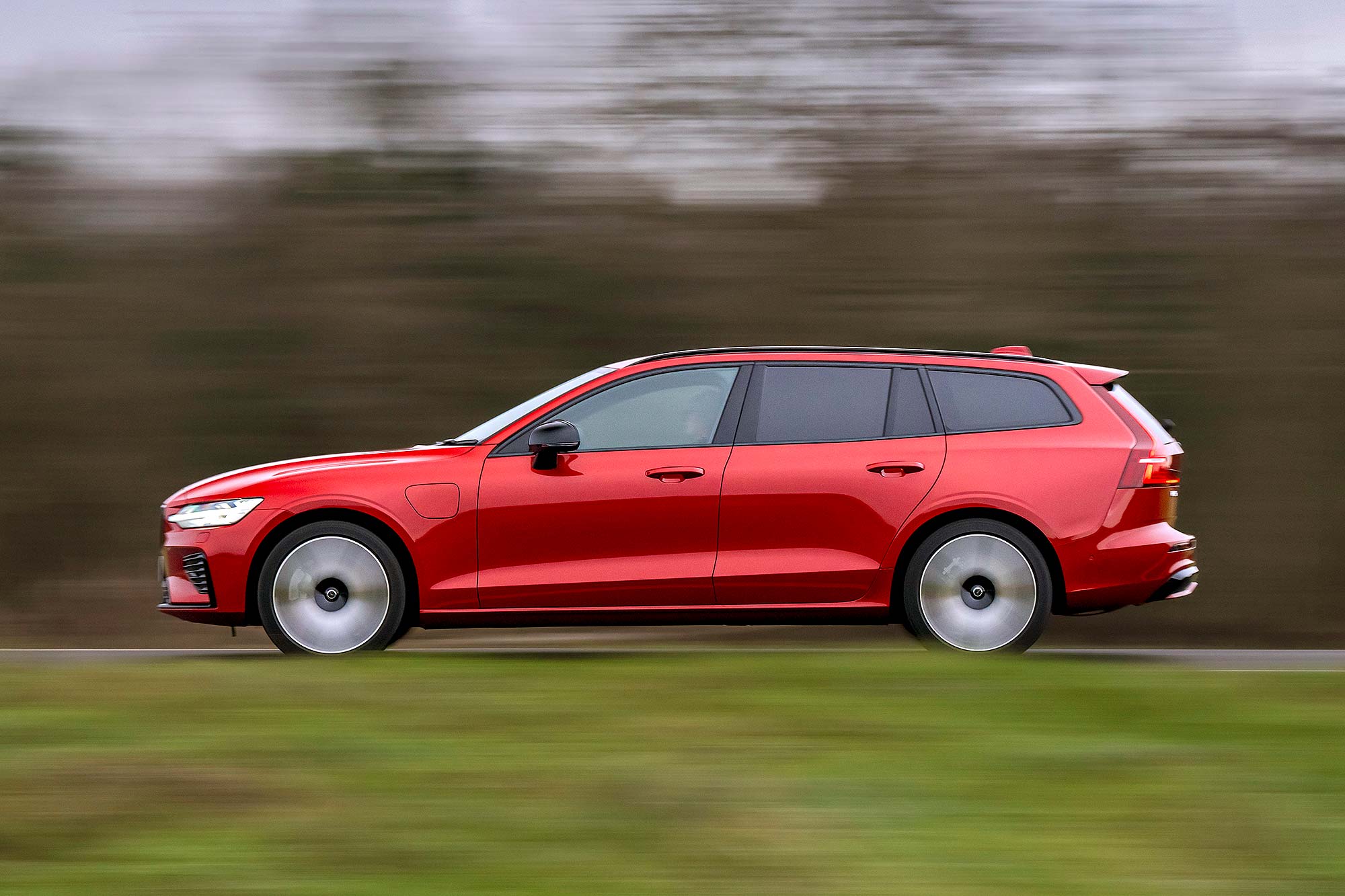
Volvo is a brand that’s inextricably linked to estate cars, even if the bulk of its sales these days come from SUVs. The V60 is one of two Volvo estates that remain on sale, the other being the larger V90. As with other Volvos, the V60 boasts smartly understated styling inside and out, useful technology and the Volvo hallmarks of practicality and safety.
The V60 is priced to take on the German trio that comprises the BMW 3 Series Touring, Audi A5 Avant (yes, you read that correctly, the former A4 Avant is now replaced by the A5 Avant) and Mercedes-Benz C-Class Estate. It also battles for sales with some spacious estate cars from the less premium car brands. Models such as the Volkswagen Passat Estate and the Skoda Superb Estate both fall into this category.
Today, the V60 feels like it’s getting on a bit, having launched back in 2018. It’s still going strong, but all of the aforementioned rivals have been replaced by new versions during that timeframe, while the V60 has only been treated to some relatively small tweaks since it first went on sale. Is this Swedish stalwart, built by the folk who perhaps know estate cars better than anyone else, still worthy of your consideration?
How practical is it?
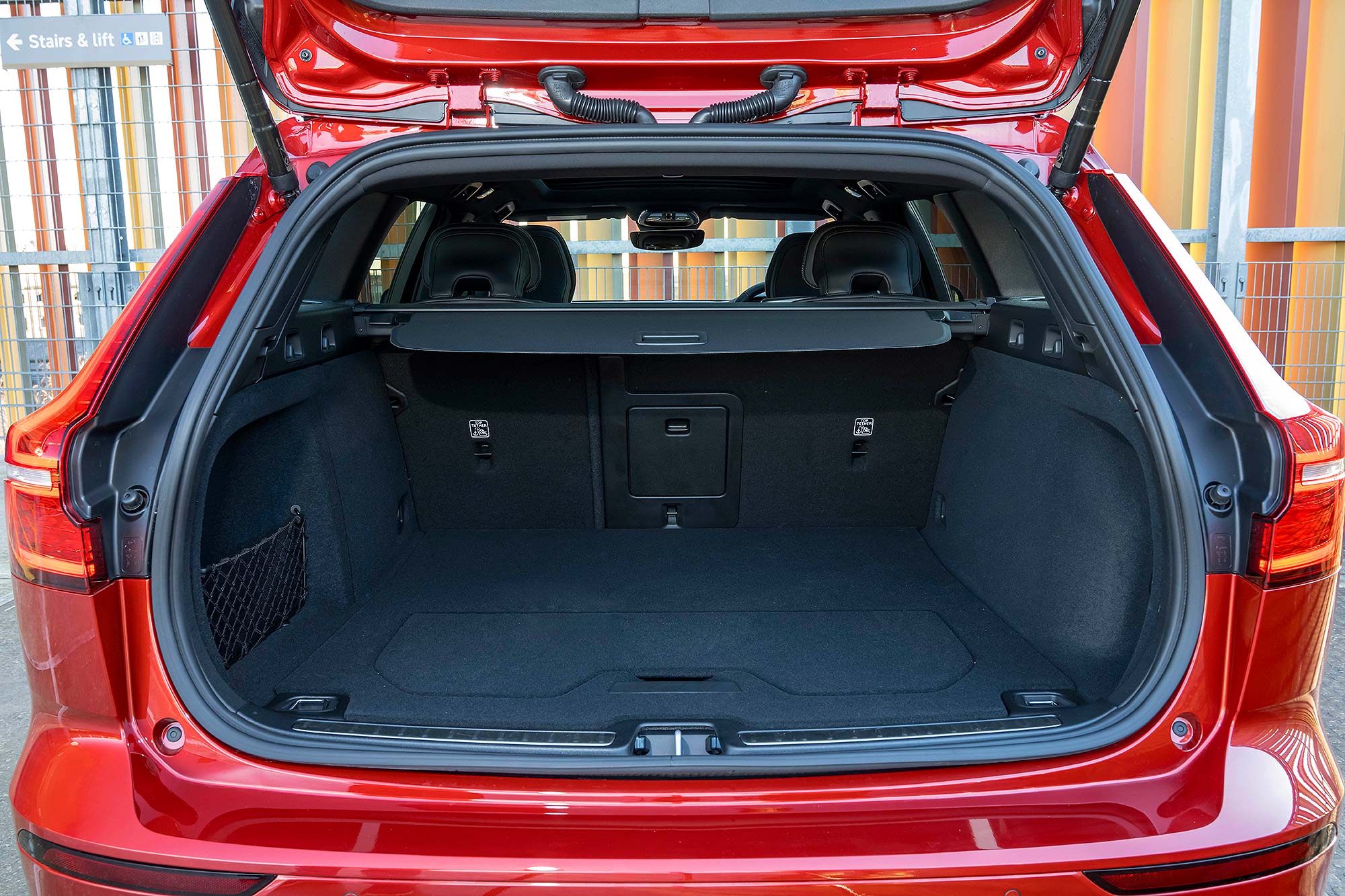
While the V60 can’t match the incredibly commodious rear of a Skoda Superb, it should provide ample luggage space for all but the most ambitious of packers. All V60s come with an electrically operated hatch at the rear to make loading easier, while 60:40 split-fold seats make for a hugely practical space when laid flat. There are some clever touches in the boot, too, such as a fold-up luggage divider and a 12-volt power socket (to plug in a camping fridge, for instance)
The actual boot space of the V60 is 529 litres with the rear seats in position, or 1,441 litres with them folded. For reference, the Superb measures 690 and 1,920 litres respectively, while an Audi A5 Avant can accommodate 476 or 1,424 litres.
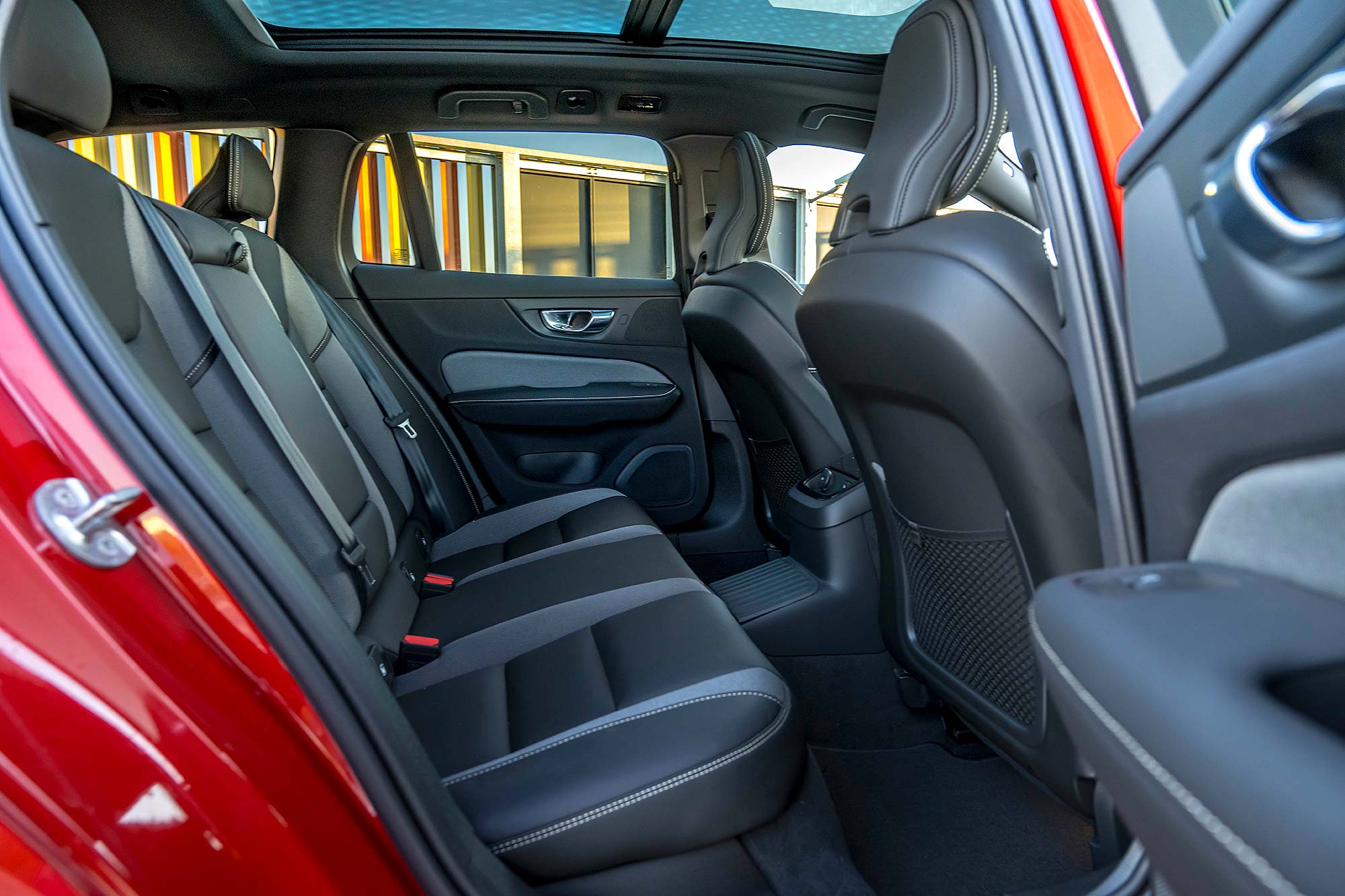
Usefully, passenger space for anyone in the back seats is better than rivals, with the V60 offering more headroom and legroom than the Audi, BMW or Mercedes-Benz.
There are a handful of options that can further improve the V60’s practicality, including a retractable tow bar, rubber mats for the floor and boot, luggage nets, roof- or rear-mounted bicycle racks and a 500-litre roof box. For £52 you can even have a ‘spectacles holder’ inside the car. How very sophisticated.
What's it like to drive?
The powertrain line-up in the V60 has changed quite a bit since the car was first launched in 2018. Back then, there were no hybrid powertrains, but now there are. And in 2018, there was a good selection of diesel engines, which now there isn’t (in fact, Volvo dropped diesel engines entirely in 2024 – coincidentally, a V60 was the last diesel car it produced). As it stands, with the V60 nearing the end of its life, there’s only one powertrain option remaining: the B4 petrol mild-hybrid. Even the plug-in hybrid options were dropped from the UK V60 line-up in 2025.
The one-size-fits-all B4 engine is a 2.0-litre turbocharged four-cylinder petrol unit, which is combined with a 48-volt mild-hybrid system. Together, they generate a total of 194bhp and 300Nm of torque. Only available with front-wheel drive and an eight-speed automatic gearbox, the Volvo V60 B4 will hit 62mph in 8.0 seconds and keep going to a (limited) top speed of 112mph. If you really want more performance, you’ll need to head the way of the used car classifieds. Here, there is everything from standalone petrol or diesel engines to mild and plug-in hybrids, with power outputs of up to 402bhp.
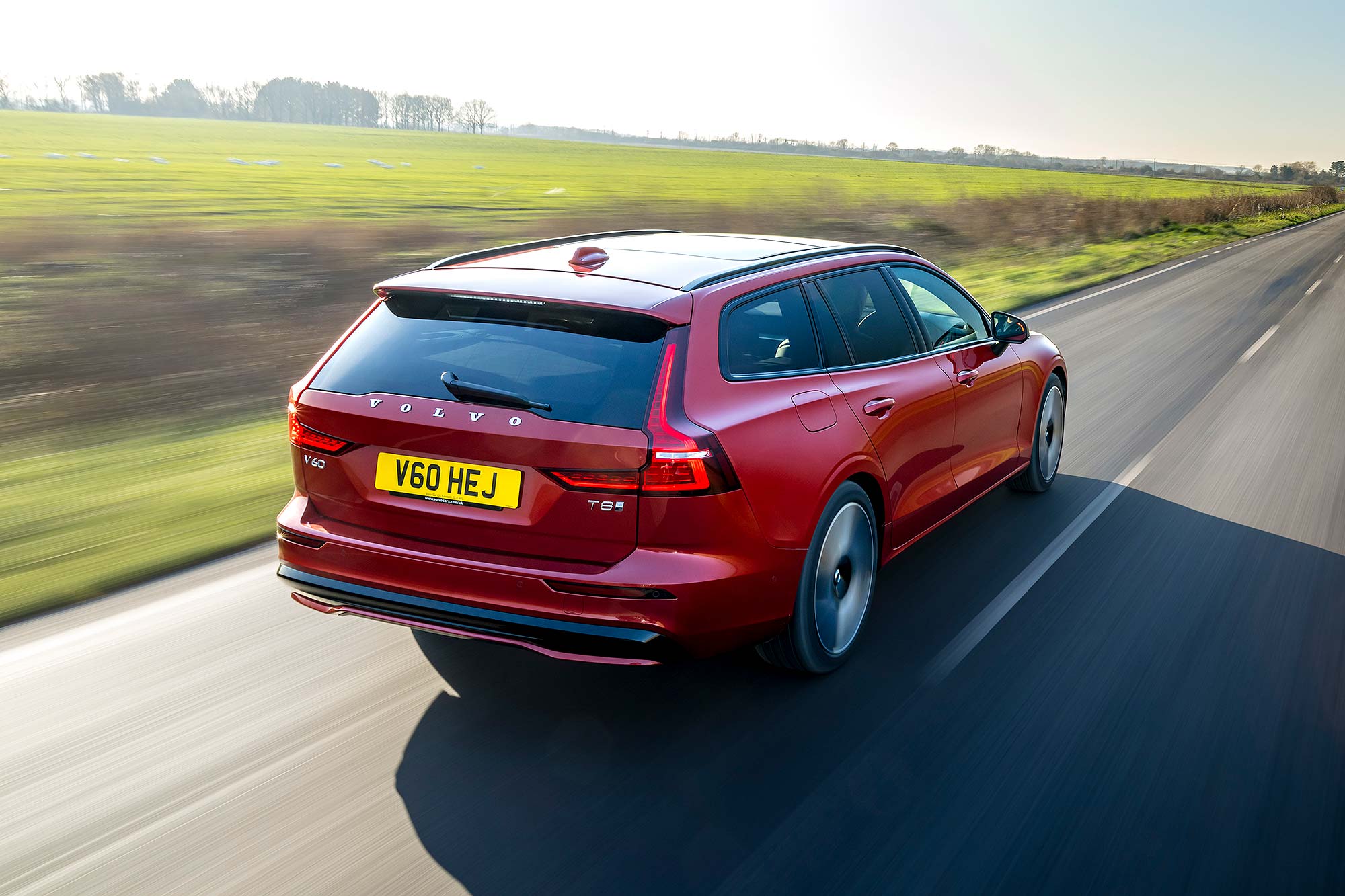
From behind the wheel, the V60 goes about its job with little fuss. Ride quality and refinement are good, its steering is accurate and the engine performs in an unstressed fashion. The V60 is not as engaging to drive as some of its rivals, but for those who prefer a more laid-back approach that can actually be quite appealing. Why does a family estate car need to be about performance, so long as it controls itself well and doesn’t get flustered by a normal UK road?
Technology, equipment & infotainment
Safety remains a huge part of Volvo’s brand’s identity, and the V60 comes fully loaded with all the latest active and passive safety equipment. As standard, you get the City Safety pack with full automatic braking; a blind-spot information system, pedestrian, cyclist and large animal detection; oncoming lane mitigation, a driver alertness monitor, lane-keeping assist, Isofix child seat mounting points and a road sign information display, not to mention a full suite of front, side and curtain airbags. There are also four cameras to provide you a 360-degree view when making your way into a parking space, plus a cross-traffic alert system to stop you reversing out of said space and into the path of an oncoming car.
The V60 also benefits from software over-the-air updates, meaning tweaks to your infotainment system, for example, are sent to the car via the cloud instead of you needing to visit a dealership and have your car plugged into a computer.
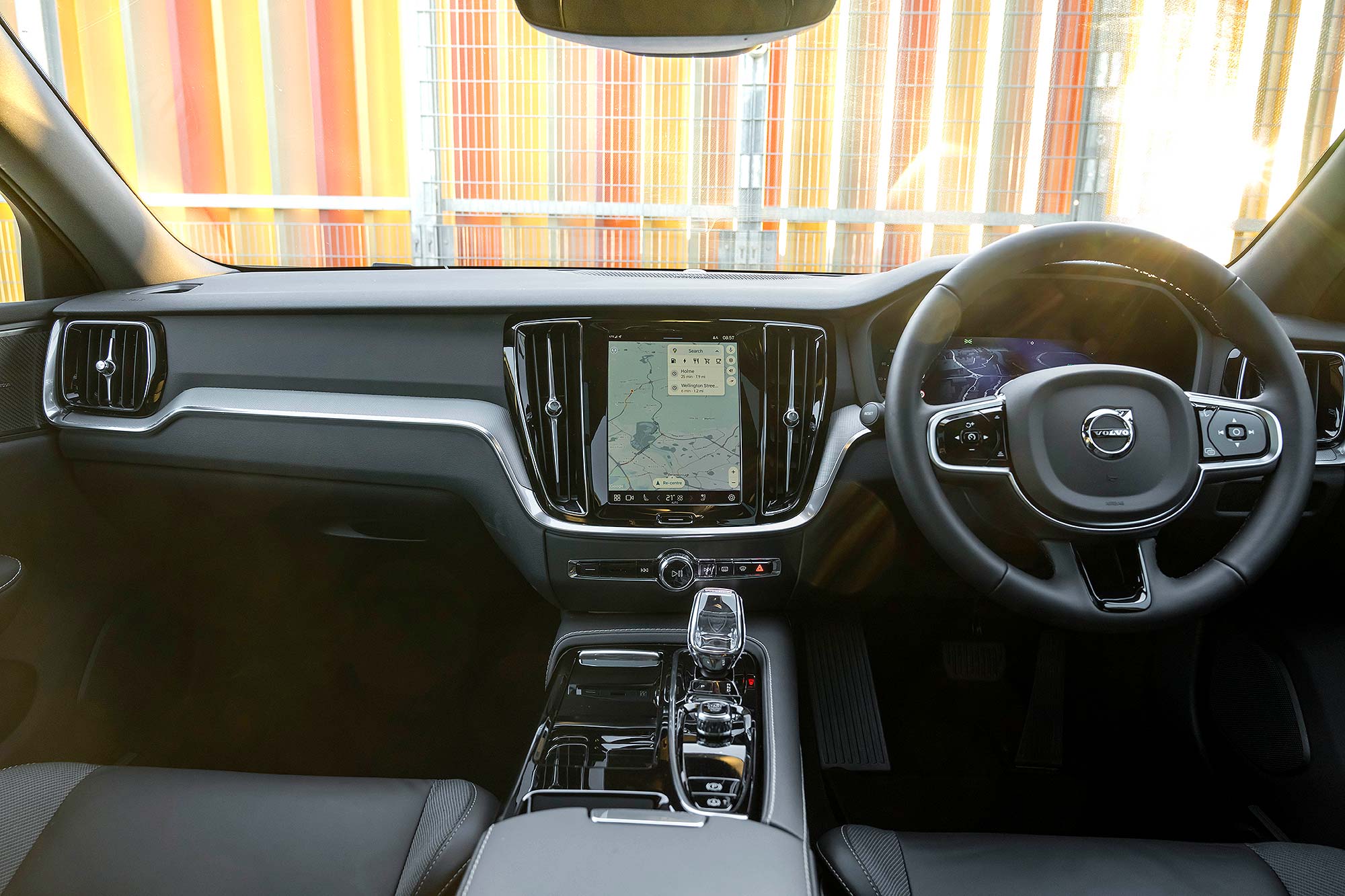
The standard infotainment set-up in the V60 comprises a central, portrait-orientated 9.0-inch touchscreen, as well as a 12.3-inch digital instrument display. It’s nothing to write home about, and it all works fine once you’re familiar with it. That said, there can be a fair amount of sub-menu navigation required to perform what should be fairly simple tasks.
There are only two trim levels for the Volvo V60, Plus and Ultra, and there’s not an awful lot to distinguish between the two. Both use a Google operating system, and include Android Auto and Apple CarPlay integration, wireless phone charging, a DAB radio and heating for the front and rear seats, windscreen and steering wheel. The Ultra gets Volvo’s full LED matrix headlights as opposed to the simpler LED set-up in the Plus (the matrix system can keep high beam switched on but actively block out dazzling light out around an approaching car in front, improving your view ahead and even that of the other car), as well as a nicer 600W, 14-speaker Harmon Kardon sound system. There’s around a £4,000 price difference between the two V60 trim levels, so study the features carefully to work out if the more expensive Ultra is worth it for you.
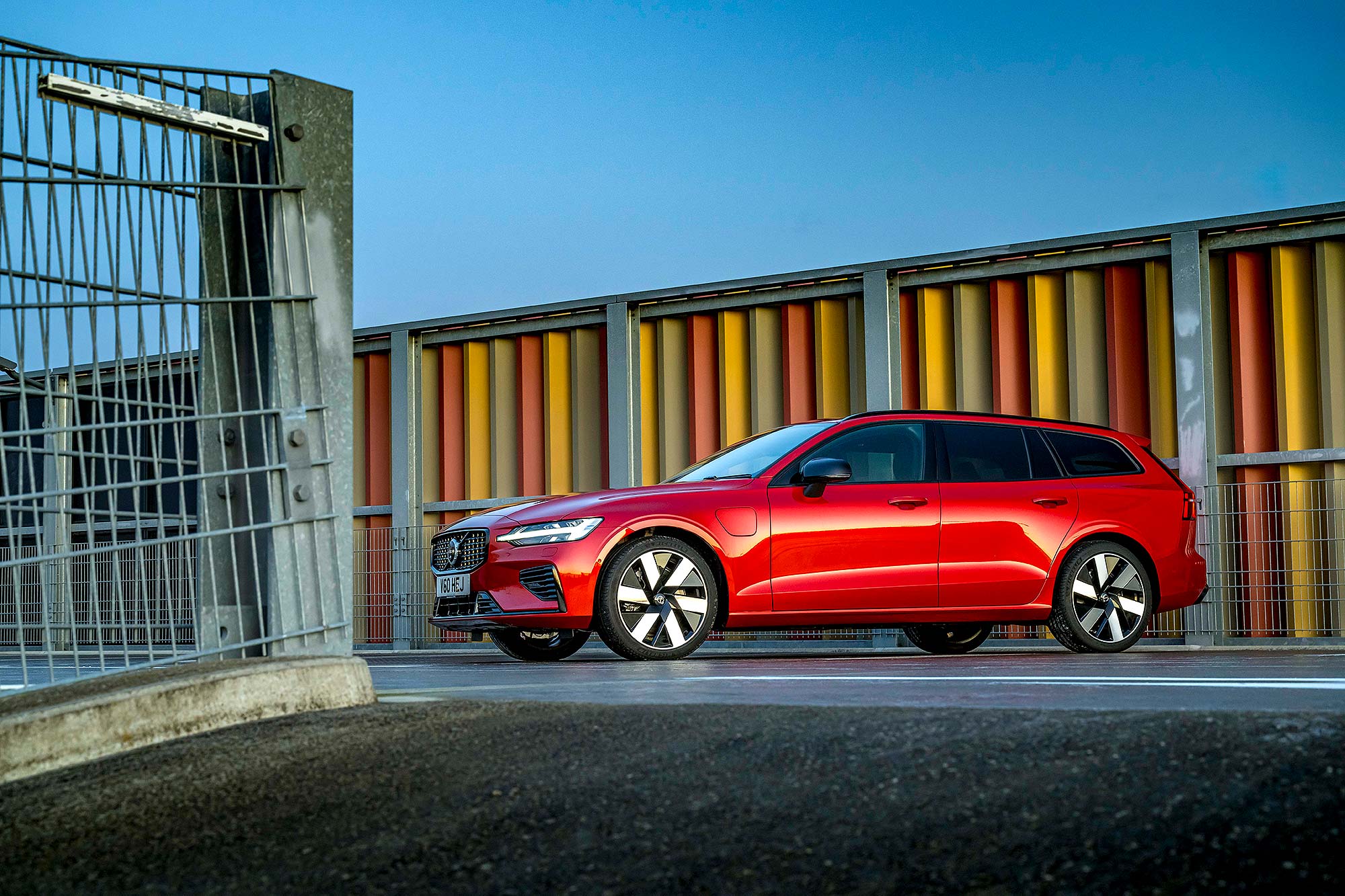
In terms of exterior styling, the V60 is a paragon of restraint and simple elegance. That’s true inside as well, with the interior being particularly fine in its detailing, comfort and ease of use.
Volvo V60 running costs
Older petrol plug-in hybrid and diesel models will deliver better fuel economy than the current B4 mild-hybrid, which is the only powertrain on offer at the time of writing. But the B4 is hardly a gas-guzzling brute, as Volvo quotes between 37.6mpg and 44.1mpg in the official test, which isn’t to be sniffed at. The 60-litre fuel tank, while it’ll sting to fill up from empty, is large enough to see you cover many hundreds of miles before needing to stop for a top-up.
With CO2 emissions of 144-164g/km, you’ll be straight into a tax rate of at least £540. As every V60 is priced above the £40,000 ‘luxury car tax’ threshold for higher-rate VED, that means paying a further £325 a year above the standard VED charge for the first five years of ownership. As it stands, the V60 B4 Plus will set you back £43,190, while the Ultra starts from £47,290.
A service from Volvo should cost in the region of £290, with the servicing schedule worked out by the car’s on-board computer – depending on usage. Also bear in mind that, depending on how you’ve paid for your V60, you might have inclusive servicing as part of the deal. Insurance for a V60, meanwhile, shouldn’t be any pricier than for any of its rivals, particularly given the amount of standard safety equipment on board. The B4 Plus is in insurance group 29 (out of 50), with the Ultra one band higher in group 30.
Volvo V60 reliability
It would be fair to say that Volvo’s reputation for reliability has taken a knock in recent years. To its credit, the company has tried to address this, and has moved steadily up the reliability charts with its newer models. As a brand overall, the most recent What Car? Reliability Survey put Volvo in 21st position out of 30 car manufacturers, one spot above Audi and Mercedes, albeit miles behind BMW in sixth overall. Ranking cars up to five years old, in the same survey but in the executive car class, the V60 and S60 finished 20th out of 23. That’s two spots above the V90 and S90, and one ahead of the previous generation petrol Skoda Superb, but behind rivals from BMW, Mercedes-Benz, Audi, Volkswagen, and even Jaguar and Alfa Romeo.
Part of this could be down to the fact the V60 had some software teething issues early on, with Volvo recalling it a few times to address these. If you do buy a V60, whenever you get it serviced it’s worth asking if there are any outstanding recall bulletins.
It's worth knowing that all Volvos come with three years of Volvo Assistance European breakdown recovery, which can be extended annually for £99 if you service your car at a Volvo dealership. If you’re really concerned about reliability, look at a rival or just opt for the assistance package.
Furthermore, if you’re buying a new V60 you’ll have the peace of mind of a three-year, 60,000-mile warranty. Buyers of used V60s will have the balance of any warranty (assuming the car has been maintained to Volvo's standards), and if it’s from a Volvo main dealer it will be offered with the company’s Selekt approved used warranty as well.
- One brilliant feature of the V60 is its air filtration system. Volvo introduced the ‘Advanced Air Cleaner’ across its model portfolio in 2020. It uses a synthetic fibre-based filter and ionisation to remove up to 95% of all so-called ‘PM 2.5’ particles. These measure less than 2.5 micrometers in diameter i.e. fumes from fuel or pollen.
- If you ever look for a used V60 rather than a new one, don’t be confused by the lack of cars from late 2023 and early 2024. Volvo stopped selling the V60 and larger V90 in August 2023, saying customer demand had shrunk while the popularity of equivalent SUVs had grown. In July 2024, though, both cars were back thanks to ‘renewed interest in the bodystyle’. The V60 returned with the T6 and T8 plug-in hybrid powertrains, alongside the 194bhp mild-hybrid B4 you can still buy today.
- Volvo uses professional sniffers to make sure a cabin smells good. No, really. A ‘special team’ of ‘odour assessors’ known within Volvo as ‘The Noses’ test a car’s interior as a whole, as well as individual components to ensure nothing gives off an unpleasant smell. Volvo says this team is invaluable, as no machine would be able to do the same job.
- If you need a V60 with an engine: Look no further than the mild-hybrid B4. Unless you’re considering Fred Flintstone-style human power for your new V60, your only option if buying new is the 194bhp petrol mild-hybrid. That’s no bad thing, though, as it’s powerful enough for a family estate. It’s also economical, the mild-hybrid system easing the strain put on the engine when pulling away and reducing fuel consumption as a result.
- If you want the fastest V60: That’ll be the B4 mild hybrid again. Sadly there’s no flagship, all-wheel-drive T8 Polestar Engineered version of the V60 anymore. This had the same 112mph top speed restrictor as other Volvos, but it could hit 62mph in a brisk 4.6 seconds. Yet the B4 isn’t a total slouch, hitting 62mph in 8.0 seconds exactly. We’d go for Forest Blue paint, a £745 option, as it’s the fastest-looking colour of the lot.
- If you want all the kit: Go for the V60 B4… in Ultra trim! There isn’t much you get a say in when buying a new V60, because, quite simply, the car is in its final throes of life. Still, with two trim levels available, namely Pure and Ultra, it’s the latter that gives you all the toys.


