Lightweight sports cars have traditionally been about seeking performance from a low kerb weight rather than super-high horsepower. As a result, engines have tended to be small and simple, and generally without the use of forced induction – turbochargers or superchargers – relying instead on naturally aspirated power units.
In the 2000s, however, that began to change as Lotus started to experiment with supercharging its lightweight Elise and Exige models. And the more modern Alpine A110, introduced in 2019, later took up the baton of lightweight forced induction with much enthusiasm.
Automotive Reincarnations: Lotus Elise SC and Alpine A110
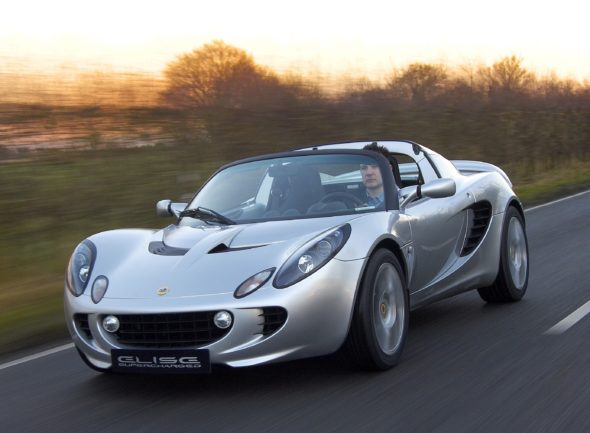
Is Supercharging a Lotus Elise Sacrilege?
Enthusiasts were wary when the Elise SC arrived in 2008. After all, the svelte Lotus had always been about lightness, purity and immediate response, yet the SC variant, for the first time in the Elise’s history, eschewed natural aspiration for supercharging. There were numerous benefits; firstly, the 1.8-litre engine’s power rose from 189bhp to 217bhp. It also produced additional torque across a wider rev range, which further helped cut the Elise’s 0-60mph time from 4.9 seconds to just 4.4 seconds.
More prominently, the engine’s improved flexibility made the Lotus Elise SC less frenetic and easier to drive. It was subsequently capable of appealing to a wider audience, such as buyers who might have otherwise considered a more refined Porsche Boxster.
As time marched inexorably onwards, forced induction – predominantly the more efficient method of turbocharging – would become commonplace. Potential performance benefits aside, modern turbocharged engines could also more easily meet increasingly stringent emissions regulations, and in tandem, use less fuel.
The concept of force-fed sports cars still makes many keen drivers twitch, though. Case in point: when the oft-forgotten Alpine brand was revived, and it was announced that its first car would be turbocharged, concerns began spreading: which was somewhat ironic, given that the brand had a long history with turbocharging.
Not that anyone needed to have worried, mind; the turbocharged A110, like the supercharged Elise SC that preceded it, transpired to be an exciting, accessible and gratifying car. That, however, is just the tip of the iceberg with regards to what both cars have in common.
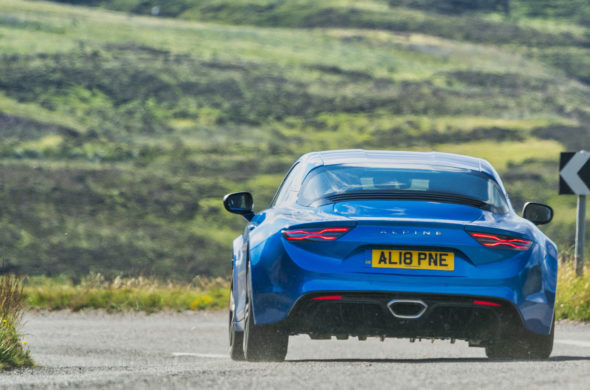
More Similarities Under the Skin
For starters, the Elise SC and A110 are both two-door, mid-engined, rear-wheel-drive sports cars that have a similar footprint: although the A110 is admittedly a little longer.
Both make concessions to everyday use, too. Although the Elise interior shouted ‘bare-bones racer’, many SCs were fitted with air conditioning, extra sound deadening and other creature comforts, much like entry-level A110s. They share parts-bin quirks, too; the Lotus has its Opel-sourced column stalks, while you can’t miss the Alpine’s unsubtle column-mounted stereo controls from Renault.
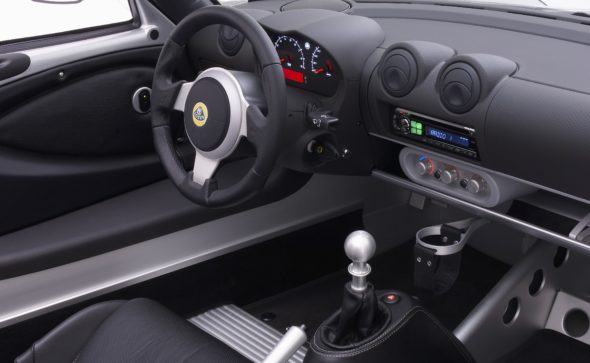
Modern safety requirements and equipment expectations mean the Alpine has a heftier kerb weight of 1,103kg, though, but ever-advancing technology means that its performance still measures up. Its SC-matching 1.8-litre engine, which instead relies on a single turbocharger rather than a supercharger, produces a higher 248bhp and more torque. Consequently, it sprints from 0-60mph in an almost-identical 4.3 seconds.
Strip both to the bare bones, and you’ll find more Lotus echoes. Unlike the carbon-tubbed Alfa Romeo 4C, another similar competitor, the Alpine uses a bonded and riveted aluminium chassis with double-wishbone suspension all round. The Elise? A bonded and riveted chassis with double-wishbone suspension all round.
Coincidentally, when Renault Sport had previously launched its Elise-rivalling Spider in 1996, its spot-welded chassis was criticised for being inferior to the Lotus offering, so perhaps someone at Renault was listening. In an alternate timeline, it may have even been Lotus that ended up building the A110; prior to Alpine production commencing in Dieppe, Lotus was reportedly earmarked as a potential manufacturer of the new Alpine sports car.
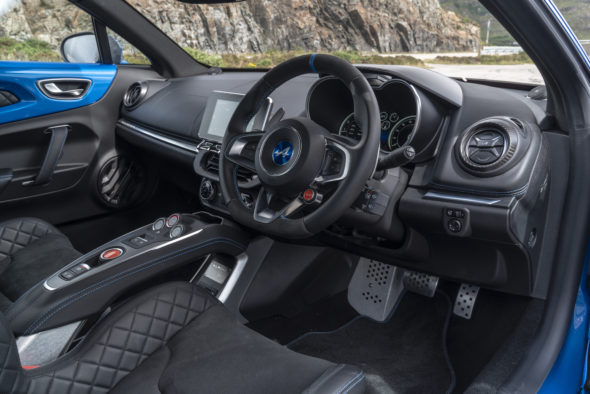
A Major Shift in Transmissions
That said, besides induction methods, there is one other major difference between the two. The Lotus, to the delight of many, features a six-speed manual gearbox. The Alpine, on the other hand, uses a seven-speed dual-clutch transmission. Like the Elise’s adoption of supercharging to improve performance and driveability, there are myriad advantages to this; for example, the DCT is lighter and easier to package.
Related Topics


