Fuel economy is one of the most important considerations when buying a new car. Choosing a fuel-efficient car that delivers more miles per gallon (mpg) in the real world can save you a lot of money, and the correspondingly low CO2 emissions are better for the environment.
In this guide we’ve listed the most fuel-efficient cars you can buy brand new, according to their official combined WLTP (Worldwide Harmonised Light Vehicle Test Procedure) fuel economy figures, in three different categories: petrol cars, diesel cars, and hybrid cars.
Two things to note with that last category, both of which centre around the fact that not all hybrids are made equal. Firstly, we’ve not counted mild hybrids in the hybrid category, as these only have a very small amount of electrical assistance for their internal combustion engine. As such, we have instead included mild hybrids in the corresponding petrol or diesel category.
Conversely, at the other end of the scale, we’ve also taken the conscious decision to omit plug-in hybrids (PHEVs) from our list. This is because the vast battery packs they carry make for implausibly inflated fuel economy figures in the laboratory tests, which are often impossible to replicate in the real world. And, of course, electric cars (EVs) aren’t included, because these don’t have an MPG figure at all. This all means that all the hybrids on our list are of the self-charging variety.
Do bear in mind that whatever fuel type you choose, these official figures merely serve as a guide for comparison purposes, and that the actual fuel economy you achieve in any car will be dependent on several factors, including driving style and the types of journeys you undertake.
Best Petrol Cars for MPG:
Best Diesel Cars for MPG:
Best Hybrid Cars for MPG:
Best Petrol Cars for MPG
1. Suzuki Swift
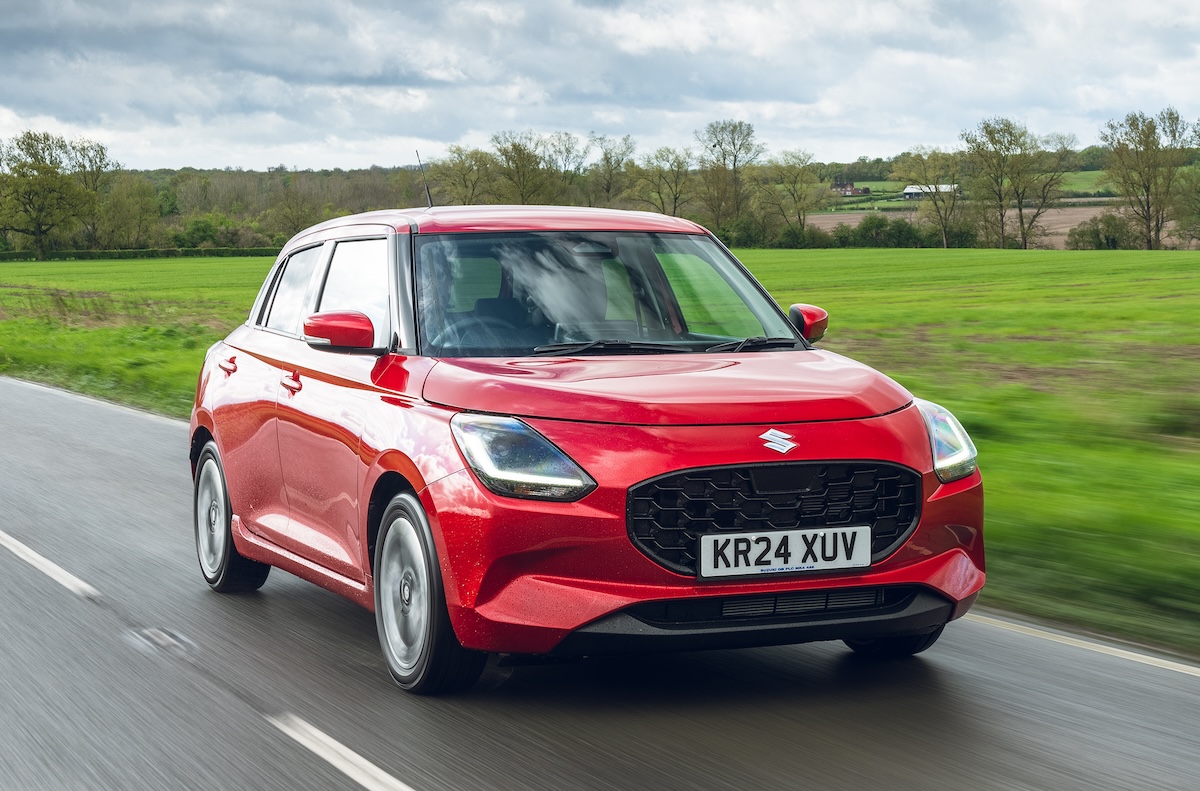
Most efficient variant - 1.2 5MT 2WD Motion
Combined WLTP figure - 64.2mpg
Our list kicks off with the UK’s most frugal petrol car, the Suzuki Swift. Its dinky 1.2-litre three-cylinder petrol engine uses mild-hybrid technology to give it a similarly dinky amount of electrical assistance, allowing the car to eke out an official WLTP fuel economy figure of 64.2mpg, making it our petrol-powered champion. But fuel economy isn’t all the Swift has to offer: not at all. Despite its diminutive dimensions, this is a surprisingly roomy car inside, and it’s great fun to drive, with a snicky gearchange and agile handling that’ll have you grinning every time you bung it into a series of bends. Not only that, it’s affordable to buy and well-equipped, too. Combined with its impressive fuel economy, all this means that the Swift is a car that pleases the heart as well as the head.
Read our full Suzuki Swift review
2. Vauxhall Corsa
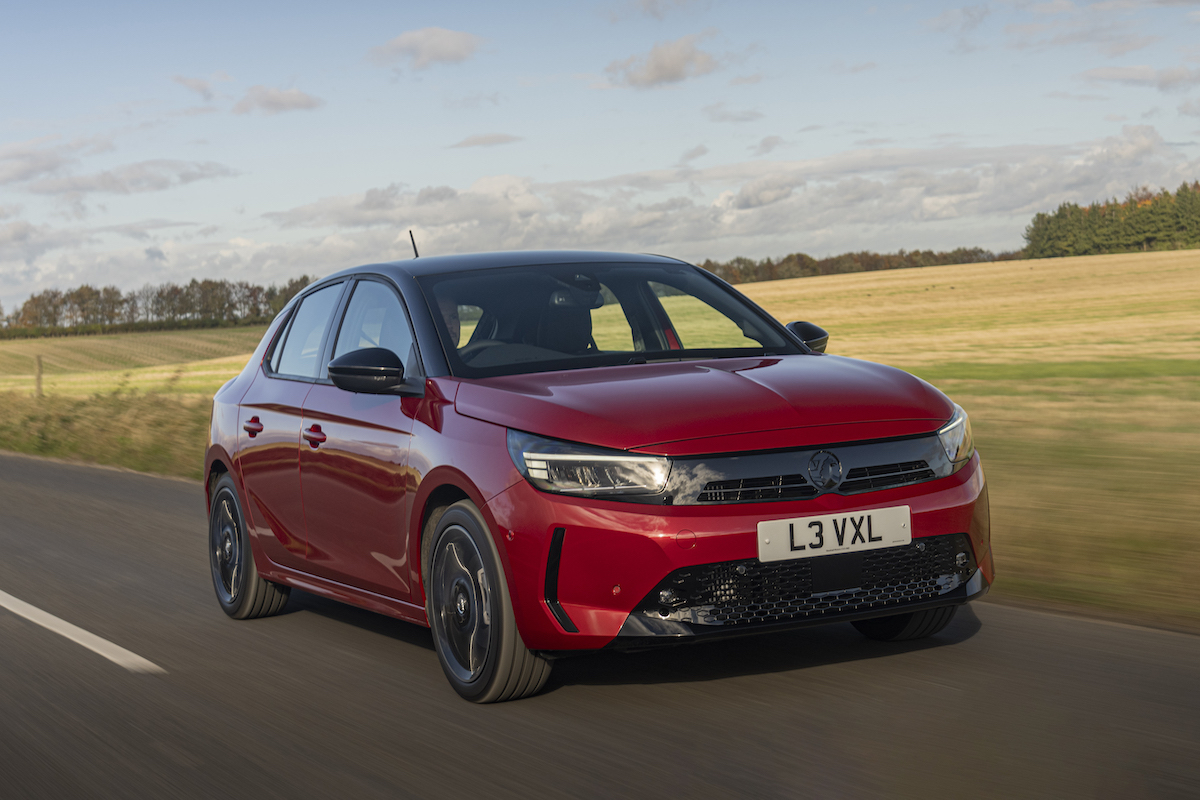
Most efficient variant - Vauxhall Corsa Hybrid 110 Yes
Combined WLTP figure - 62.8mpg
“Hang about”, you might be thinking, “that heading immediately above says that the most efficient variant of the Corsa is the Hybrid 110, and I thought we had a separate section for hybrids”. And you’d be absolutely spot-on. However, regardless of what Vauxhall’s marketing department claims, the Corsa’s hybrid system is merely a mild-hybrid one, and as we’ve said, we don’t recognise those as proper hybrids, because the amount of electrical assistance they have is too minimal. And so, the car resides in our petrol category. Regardless of what it's called, however, the existence of this kit helps the Corsa towards an extremely impressive official figure of 62.8mpg, putting it second on our list of petrol cars. And there’s more to like about the Corsa than just good fuel returns. It looks smart, it drives well, and it has a grown-up feeling interior with a decent amount of standard equipment, all for a reasonably affordable price.
Read our full Vauxhall Corsa review
3. Peugeot 208
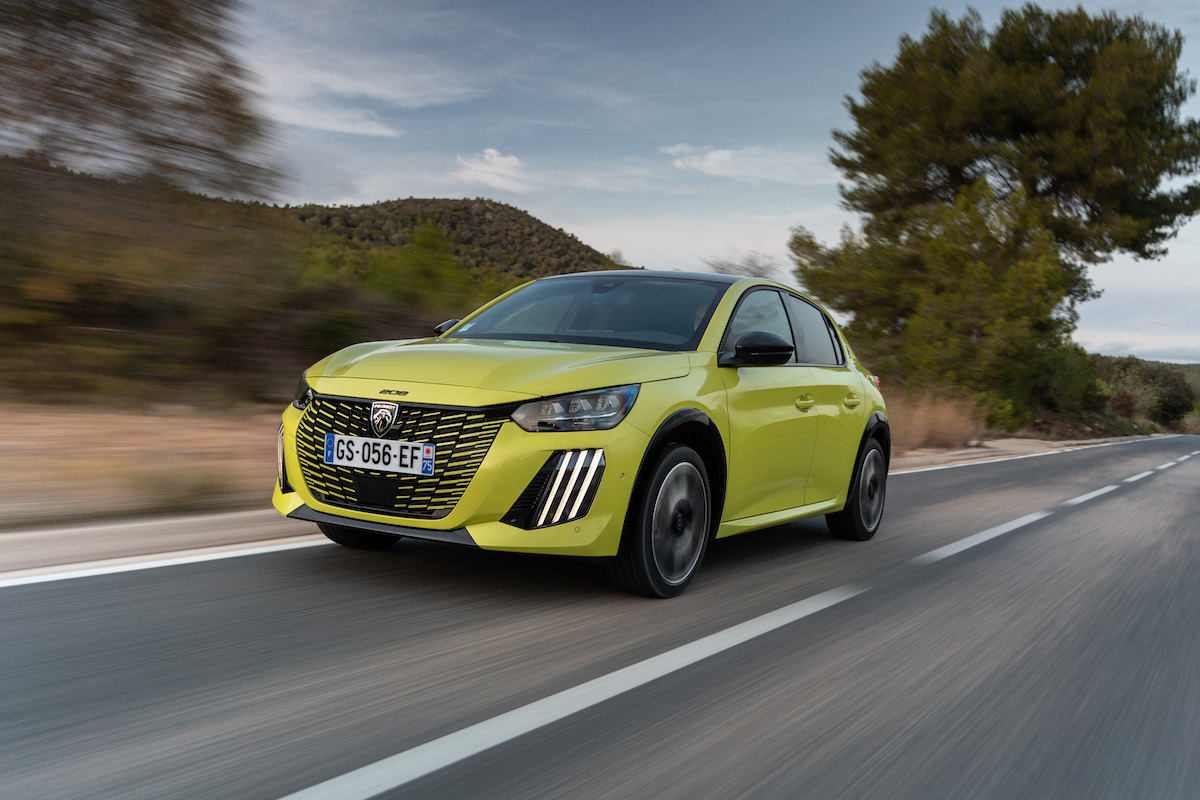
Most efficient variant - Peugeot 208 Hybrid 110 Allure
Combined WLTP figure - 62.7mpg
“Hang about”, you might be thinking, “Peugeot are at it with the spurious hybrid claims as well?”. Well, yes, and that’s because both Vauxhall and Peugeot are both part of the same stable of car brands that fall under the sprawling Stellantis umbrella, and so have the same attitude to what can be got away with in terms of marketing claims. And being from the same core company, it’s no surprise that the powertrain in this 208 is exactly the same one that’s used in the Corsa above, and one that you’ll be hearing rather a lot about for the remainder of this section of our list. It’s the same basic 1.2-litre three-cylinder petrol engine that’s been around in Peugeots for donkey’s years, but it’s been tweaked and refined constantly over that time, and the addition of mild hybrid technology sees its official fuel economy figure raised to more than 62mpg. What’s more, the 208 has flamboyant looks inside and out, is pleasant and enjoyable to drive, and comes with most of the goodies you expect.
Read our full Peugeot 208 review
= 4. Vauxhall Mokka
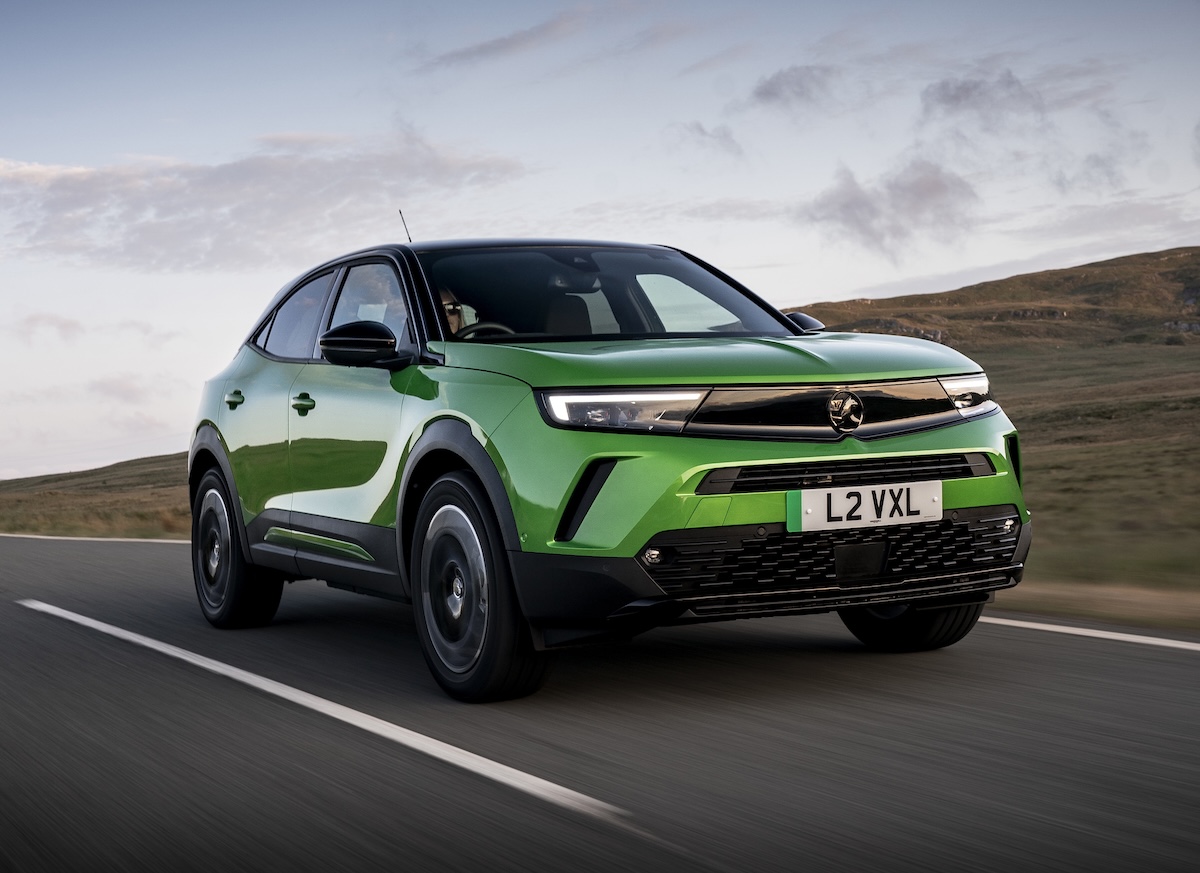
Most efficient variant - Vauxhall Mokka 1.2 Hybrid 145 Griffin
Combined WLTP figure - 58.9mpg
Yet another showing on this list for Stellantis’ mild-hybrid powertrain - yet again with its misleading moniker - although this time, the system sits within the Mokka SUV. The system also happens to be ever-so-slightly different to the one mentioned previously. It uses most of the same hardware, including the 1.2-litre petrol engine, but this time, the wick has been turned up so that the powertrain delivers a total of 143bhp (this more powerful version of the powertrain is also offered in the Corsa and 208 we’ve already talked about, but the lower-powered version isn’t offered in the Mokka). And thus-specced, the Mokka is capable of 58.9mpg according to official WLTP figures. Even bearing in mind this impressive efficiency, though, the Mokka’s main appeal has to be its dramatic appearance, with its angular bodywork and muscular haunches cutting a real dash in a class of car where conservatism reigns supreme. It might not be the most practical car of its type, nor the best to drive, but by crikey does it stand out.
Read our full Vauxhall Mokka review
=4. Alfa Romeo Junior Ibrida
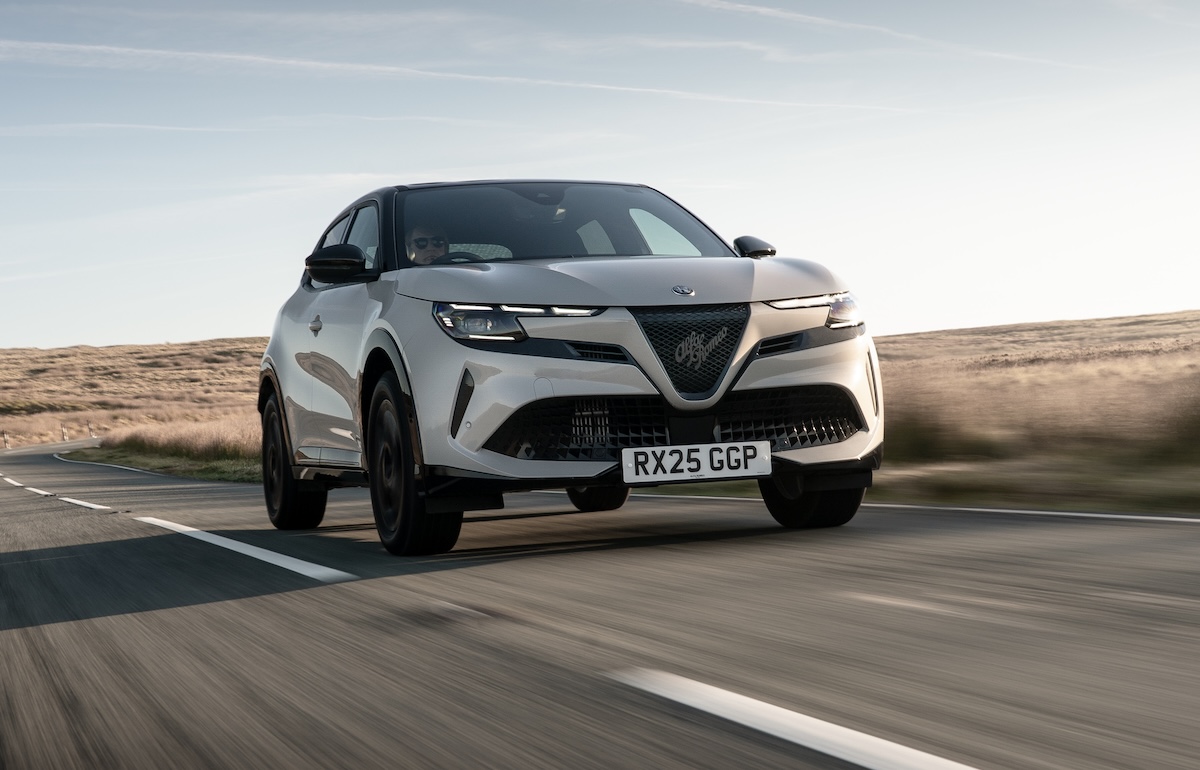
Most efficient variant - Alfa Romeo Junior Ibrida 145
Combined WLTP figure - 58.9mpg
The ‘Ibrida’ part of the Alfa Romeo Junior’s name may sound all Italian and romantic to the English-speaking ear, but its direct translation from the firm’s native language is ‘hybrid’: it’s nothing more romantic than that, we’re afraid. And yet again, that word is rather misleading, because again, we’re talking about a mild hybrid system, the same 143bhp one as you’ll find in the Vauxhall Mokka we were just talking about. The Alfa has its Vauxhall counterpart matched for miles-per-gallon, and if anything, it has even more arresting looks, just as you’d expect from an Alfa Romeo, and the interior has its fair share of design flair, too. It’s just a shame that the hybrid version of the Junior isn’t all that engaging to drive, but if you’ve fallen for those dramatic Italian looks, then you probably won’t care.
Read our full Alfa Romeo Junior review
Search for Alfa-Romeo Junior
See all
=4. Fiat 600
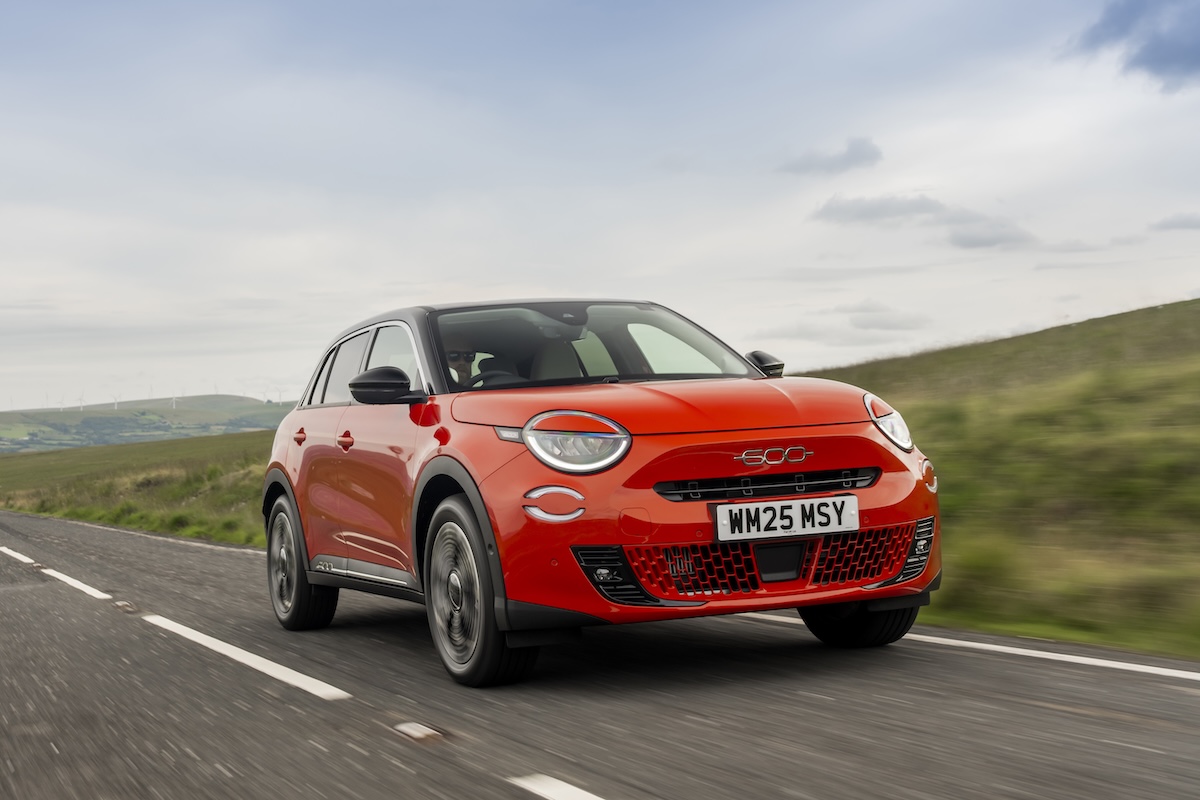
Most efficient variant - Fiat 600 1.2 Hybrid 48V 110PS Automatic Pop
Combined WLTP figure - 58.9mpg
The Fiat 600 SUV is yet another Stellantis car that's heavily related to those we've been talking about, so it's no surprise that it joins this stablemates on this list. It's offered with both the 108bhp- and 143bhp versions of the 1.2-litre 'hybrid' (not hybrid) powertrain, and interestingly, the official figures say that both versions achieve the same figure of 58.9mpg. It has more cutesey styling than the Mokka and Junior to which its most closely related, but otherwise, it's a very similar prospect in the majority of ways.
Read our full Fiat 600 review
Best Diesel Cars for MPG
1. Skoda Octavia Hatchback
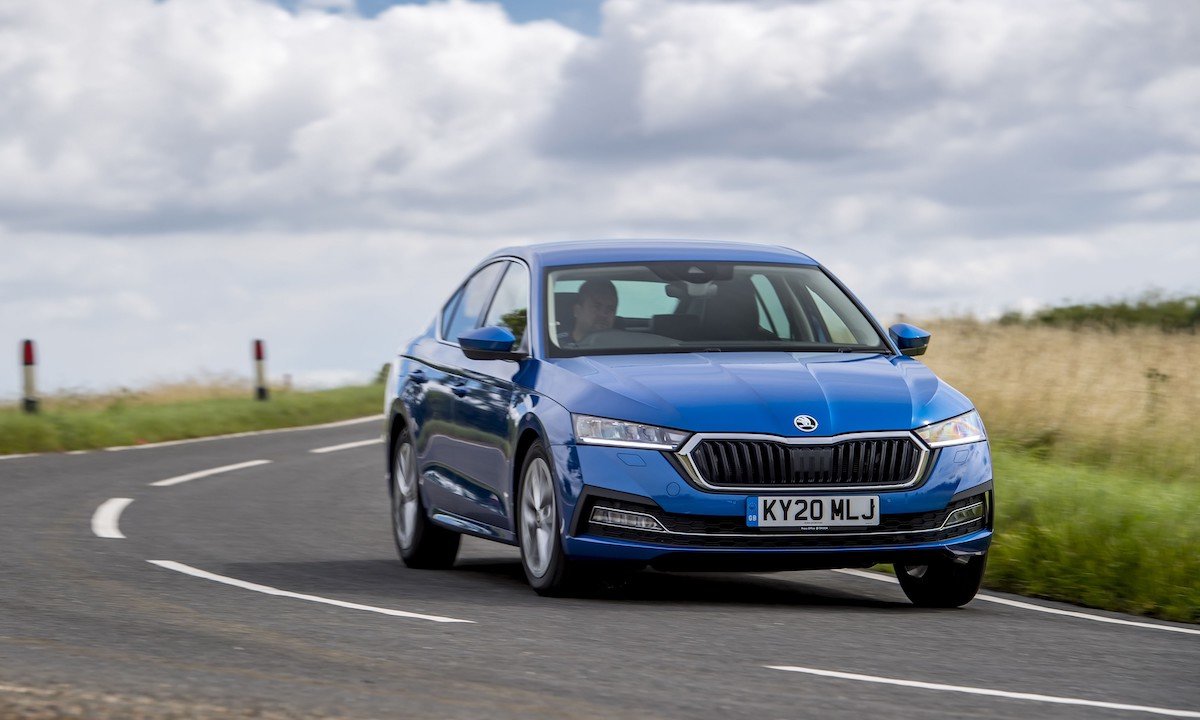
Most efficient variant - Skoda Octavia Hatch 2.0 TDI 116 SE Technology
Combined WLTP figure - 65.8mpg
Once upon a time, if you were buying a car the size of the Skoda Octavia, there was a 50/50 chance you were buying one with a diesel engine. These days, though, demand for diesel has dwindled to the point that practically none of them can be bought with a diesel engine. However, a few hold-outs remain, and as we’ll discover, they tend to have a lot in common, given most of them are based around the same platform. The first of them is the brilliant Octavia. The 2.0-litre diesel engine beneath its bonnet has a relatively slight 114bhp, but that means it’ll go almost 66 miles on a gallon, according to official figures. The Skoda is an effortless car to live with, too, with acres of space for people and their stuff, a smart and solidly built cabin, and a relaxed and easy-going driving experience. As such, it’s a tremendous family car. The fact that it’s well equipped and affordable to buy and run merely tops off the package.
Read our full Skoda Octavia review
2. Volkswagen Golf Hatchback
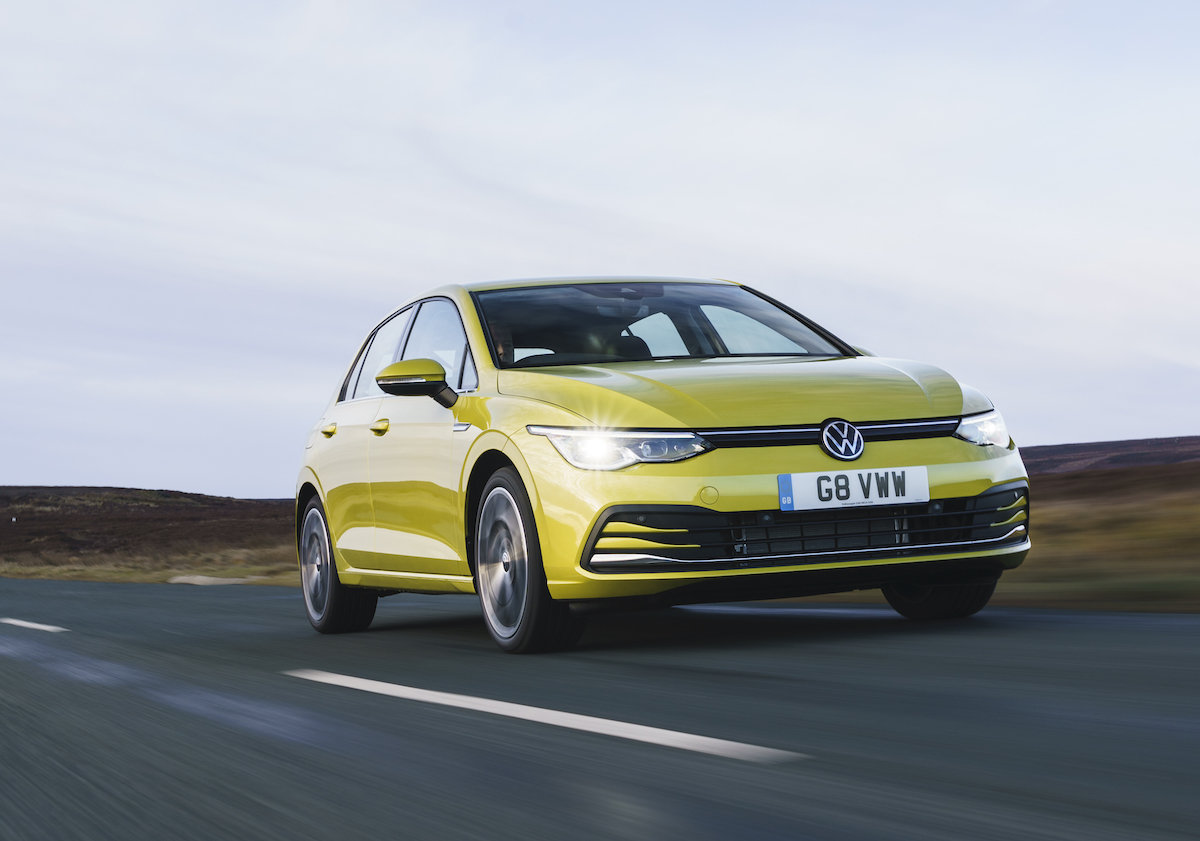
Most efficient variant - Volkswagen Golf Hatchback 2.0 TDI 115 Match
Combined WLTP figure - 64.2mpg
The Volkswagen Golf is second in our rundown of the most efficient diesel cars, and it also happens to be the second of the platform-sharing Volkswagen Group cars in this category. It’s packing the same 114bhp diesel engine as its Skoda-badged stablemates, but the Volkswagen is marginally less economical according to the official figures, despite being slightly smaller. However, the Golf is still a brilliant car. It’s one of the best cars in its class to drive, with soothing ride comfort combined with sharp, alert handling. The high-MPG diesel engine also makes this car perfectly suited to those who regularly bang in huge motorway mileages. The smart interior is packed with lots of tech including a pair of digital screens and various connected functions. No wonder Volkswagen calls this car ‘the digital Golf’.
Read our full Volkswagen Golf review
3. Mercedes-Benz C-Class Saloon
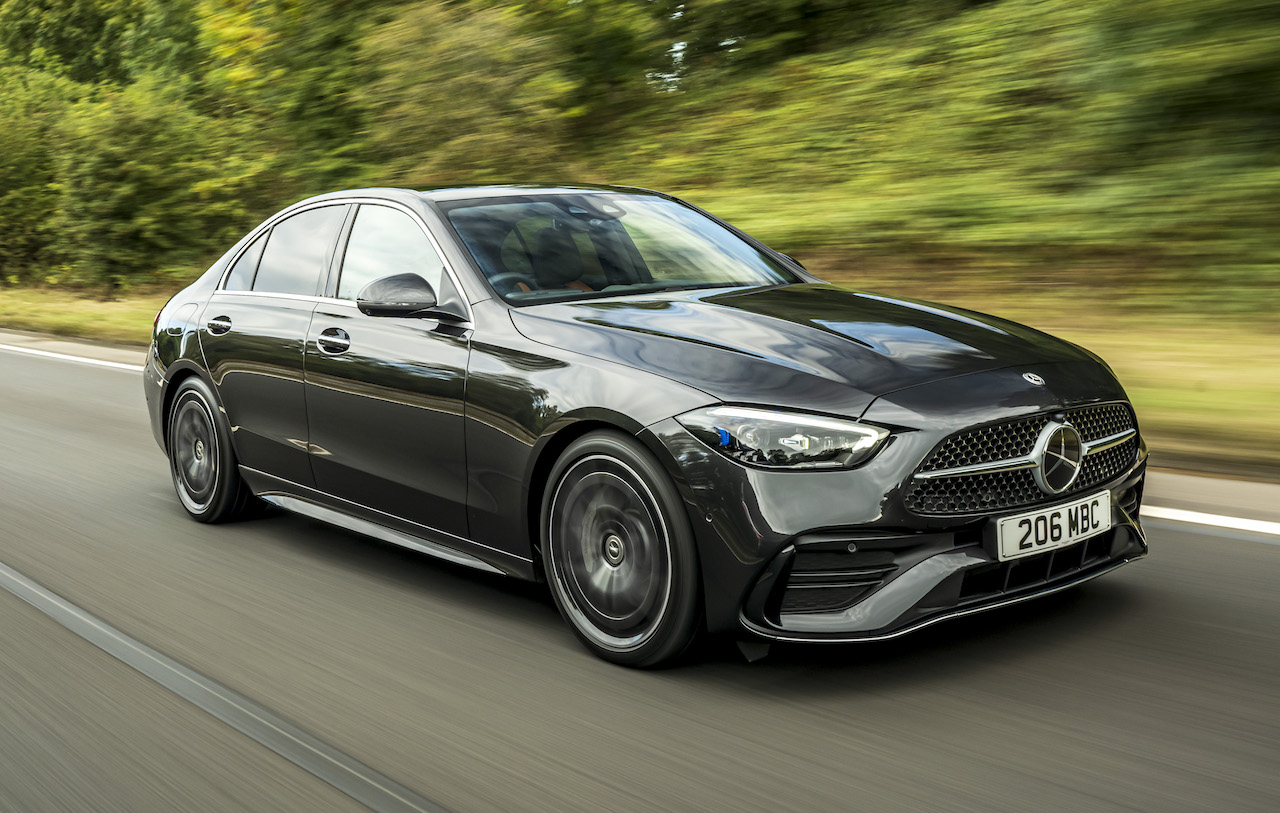
Most efficient variant - Mercedes-Benz C220d 2.0 mild hybrid 9AT AMG Line
Combined WLTP figure - 62.8mpg
When most manufacturers gave up on diesel engines, Mercedes didn’t. In fact, it kept on developing its line of diesels, adding mild hybrid tech to boost their fuel economy even further. That’s why you can now buy a C-Class saloon capable of an extraordinary 62.8mpg on average. That’s right, a car the size of the BMW 3 Series that gets better fuel economy than most of the petrol superminis in the list above. And this is not some stripped-out, bare-bones basic version, either; the AMG Line C-Class comes with a glut of toys, and an engine that kicks out a not-inconsiderable 194bhp. It’s a smooth and refined car to drive, as you’d expect from a Mercedes, and the interior feels every bit as lustrous and as practical as you’d hope, too.
Read our full Mercedes-Benz C-Class review
Search for Mercedes-Benz C-Class
See all
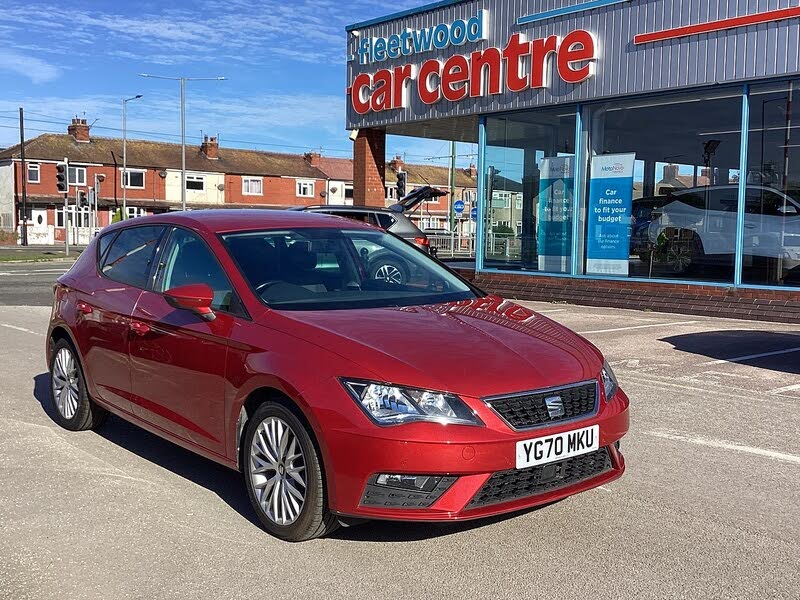
4. Seat Leon Hatchback
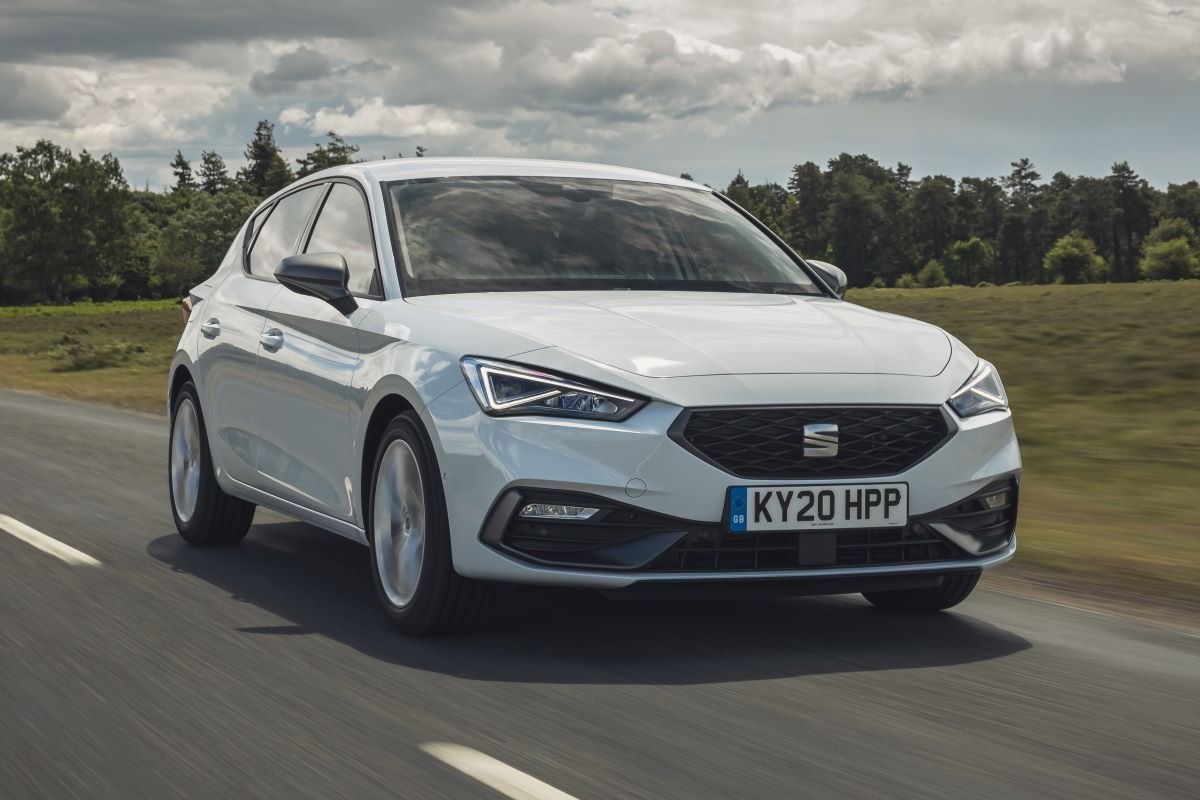
Most efficient variant - Seat Leon Hatchback 2.0 TDI 115 SE
Combined WLTP figure - 62.3mpg
The third car in our platform-sharing pack, alongside the Skoda Octavia and Volkswagen Golf we’ve already mentioned, the Seat Leon also shares the same 114bhp 2.0-litre diesel engine that manages to eke out so many miles to the gallon, although not quite as many, with an official figure of 62.3mpg. However, it’s the Leon’s Iberian flair that might well make you choose it over its more conservative cousins. To our eye, it has sharper, more aggressive styling, while a tauter chassis setup also makes the Leon a little more involving to drive than either of its stablemates, with neater handling and an edgier ride. The interior is good for both quality and space, too (although not as good on either as the Octavia, it has to be said), and with lots of toys and a very reasonable price, it even manages to be quite good value for money.
Read our full Seat Leon review
5. Audi A3 Saloon

Most efficient variant - Audi A3 Saloon 2.0TDI 150 Sport
Combined WLTP figure - 59.4mpg
The final member of our platform-sharing Volkswagen Group quartet is the Audi A3, but although it shares its underpinnings with its sister cars, it’s a little different on the engine front. Audi doesn’t offer the same 114bhp 2.0-litre engine as those cars, so the A3 that makes this list uses the brawnier 148bhp version of the same unit. This means appreciably stronger performance, yet it’s only marginally behind on fuel economy, with an official figure of almost 60mpg. And while its sister cars are all hatchbacks (estates are also available, but they’re slightly less efficient), the A3 that makes this list is the saloon version, which has a slightly more aerodynamic shape than the A3 hatchback, making it marginally better on fuel. Practicality is slightly compromised as a result, but you still have a big boot, ample space for four adults, a premium cabin with lots of toys, and a pleasant, grown-up driving experience.
Read our full Audi A3 review
Best Hybrid Cars for MPG
1. Mazda 2 Hybrid
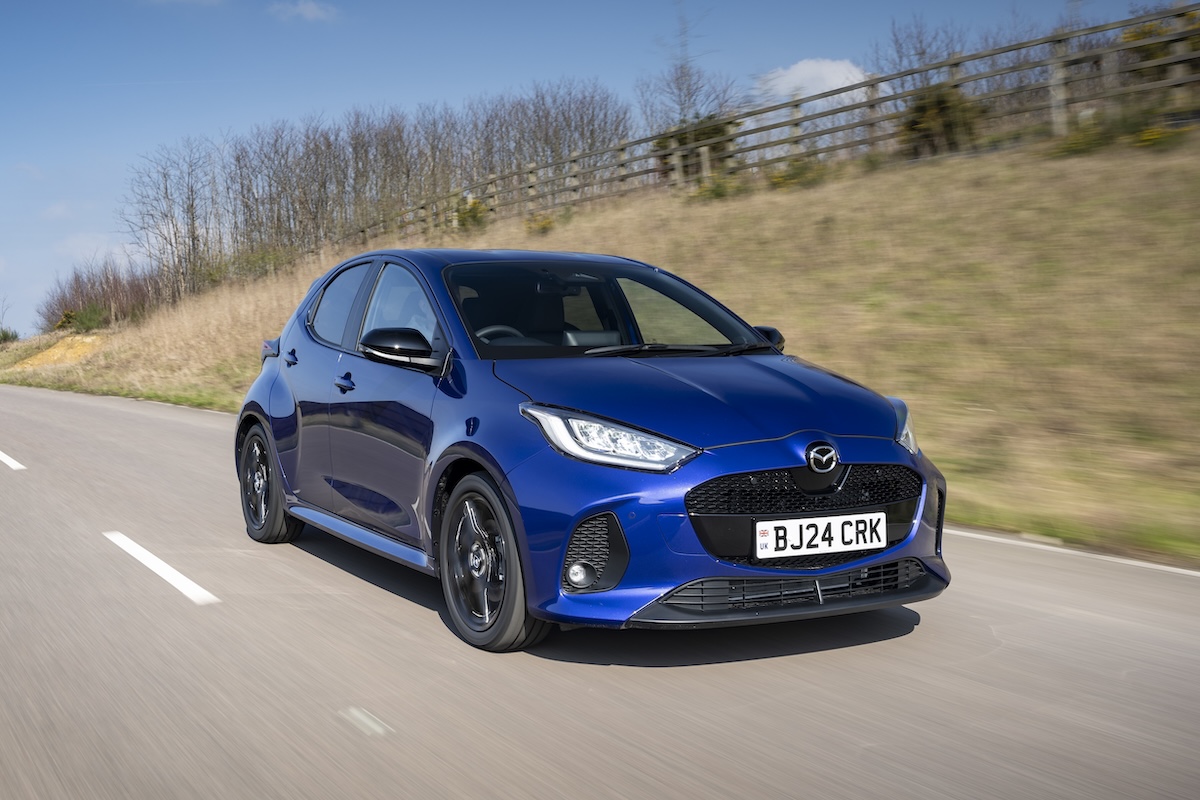
Most efficient variant - Mazda 2 1.5 Hybrid 2WD 116PS Automatic Centre-Line
Combined WLTP figure - 76.3mpg
For many years, the Mazda 2 Hybrid was sold alongside the regular combustion-engined Mazda 2, and although they shared a name, they were completely different cars, confusingly. The old combustion-engined 2 has now been withdrawn from sale, though, leaving the 2 Hybrid as the only supermini in Mazda’s range, which has made things a bit less confusing. However, things remain a little bit confusing still, because the Mazda 2 Hybrid technically isn’t a Mazda at all. It’s a rebadged and lightly revised version of the Toyota Yaris Hybrid that features a little further down this list, and it’s built by Toyota on Mazda’s behalf. And when we say lightly revised, we mean VERY lightly revised, as most people would struggle to tell the two cars apart. However small the revisions, though, they’ve made a big impact, because according to official WLTP figures, the Mazda 2 Hybrid is somehow even more efficient than the Toyota with which it shares its mechanicals, with a return of 76.3mpg. It’s just as well built and good to drive, too. It is, however, a fraction more expensive than the Toyota, and only comes with a six-year warranty (although this is still much better than the three-year warranty you got until September 2025), compared to a potential ten years worth of cover on the Toyota.
Read our full Mazda 2 Hybrid review
2. Toyota Aygo X
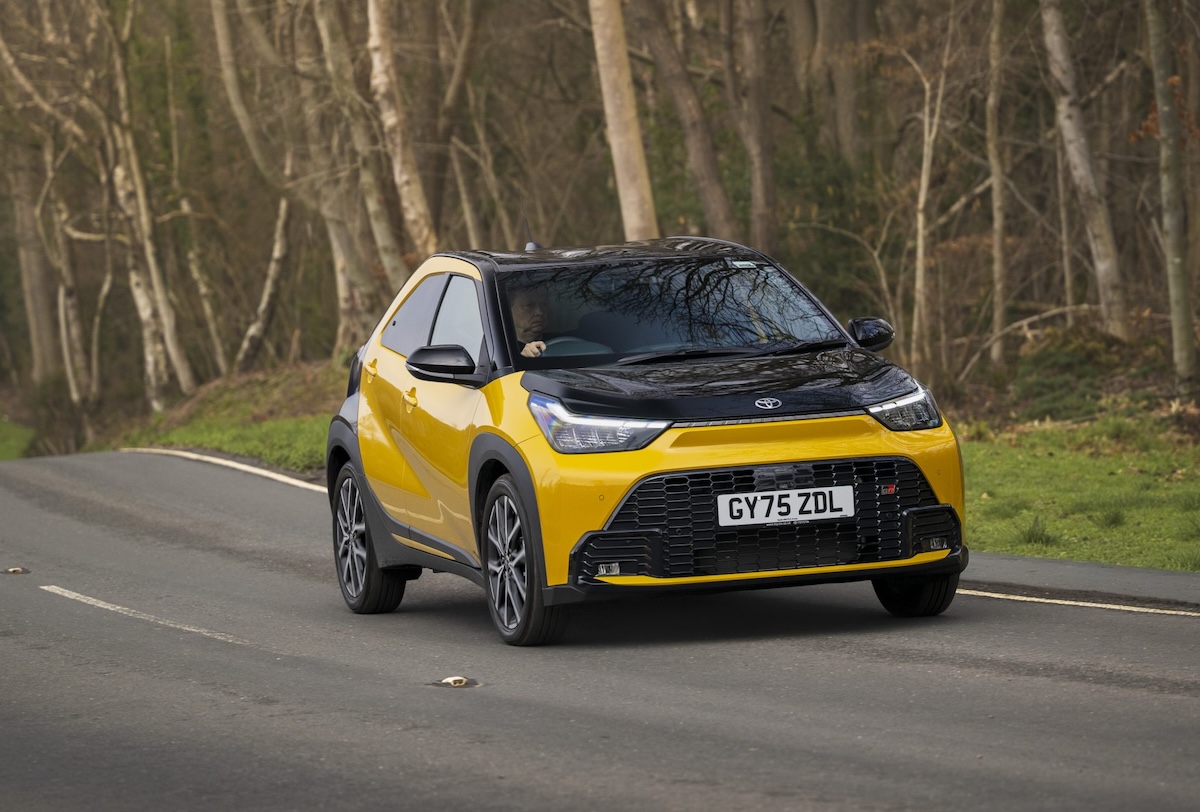
Most efficient variant - Toyota Aygo X 1.5 Hybrid 2WD 116PS Icon
Combined WLTP figure - 72.4mpg
Not so long ago, the Toyota Aygo X sat in the petrol-only category on this list, but that changed in late 2025 when the previous 1.0-litre petrol engine was replaced with the same self-charging hybrid system found in Toyota’s other small hybrid cars, the Yaris and Yaris Cross. This move boosted the car’s power output up from to 72bhp to 114bhp, while at the same time boosting fuel economy up from 58.9mpg to 72.4mpg. What’s not to like? Well, it also pushed the price up by a couple of grand, which means it now looks distinctly expensive for a car so small. We suppose you can’t have everything. There is other stuff to like, though. It’s a car that’s brimming with character, it’s surprisingly spacious for such a weeny little thing, and it’s built really solidly. You also get the promise of faultless reliability thanks to Toyota’s legendary reputation in this regard, along with the peace-of-mind that comes from one of the car industry’s most generous warranty agreements. You start with a bog-standard three-year, 60,00-mile agreement, but when you get the car serviced at a main dealer according to schedule, your cover is automatically topped up by a year or 10,000 miles, up to a maximum of 10 years or 100,000 miles.
Read our full Toyota Aygo X review
3. Toyota Yaris
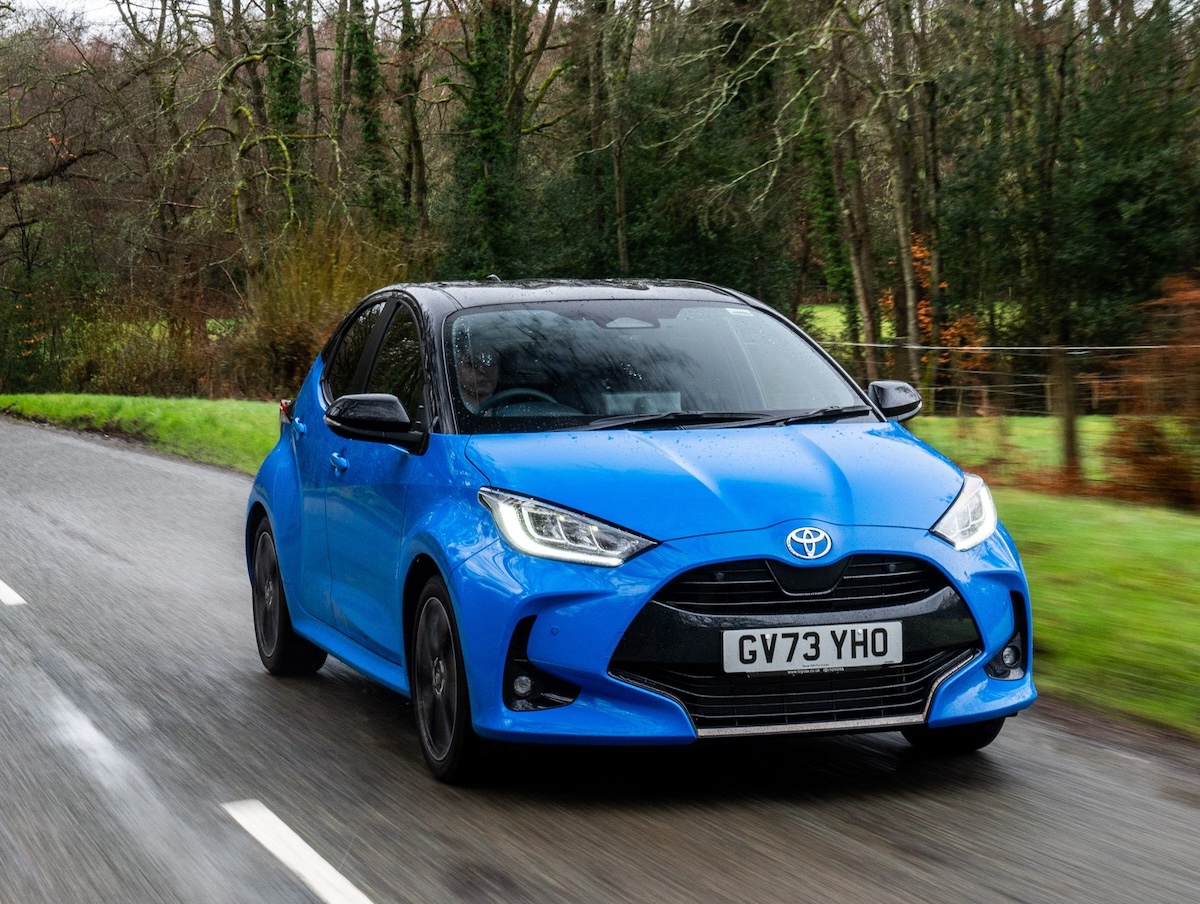
Most efficient variant - Toyota Yaris 1.5 Hybrid 2WD 116PS Icon
Combined WLTP figure - 67.2mpg
It’s no surprise to find the Toyota Yaris on this list, given that it’s pretty much mechanically identical to the car at the top of our list, and has an identical powertrain to the (smaller and lighter) car that’s second on our list. The only surprise is that it doesn’t feature higher up. For the best fuel economy, you’ll want the basic Icon version, which has 16-inch wheels that are smaller than the 17s and 18s you get on the other versions in the range, boosting its efficiency a smidge. But whichever Yaris you choose, you’ll get the same sharp looks (not traditionally a Yaris strong point), smart interior (ditto) and sharp driving experience (double-ditto). The ride could be more forgiving, but it’s comfortable enough, and it’s a similar story with practicality: it’s not class-leading in that area, but it’s fine. But as we said when talking about the Aygo X, Toyota has a reputation for reliability that is the envy of the motor industry, bringing owners massive peace-of-mind, and you simply can’t ignore the appeal of that service-activated warranty that could last for up to 10 years.
Read our full Toyota Yaris review
=4. Renault Clio
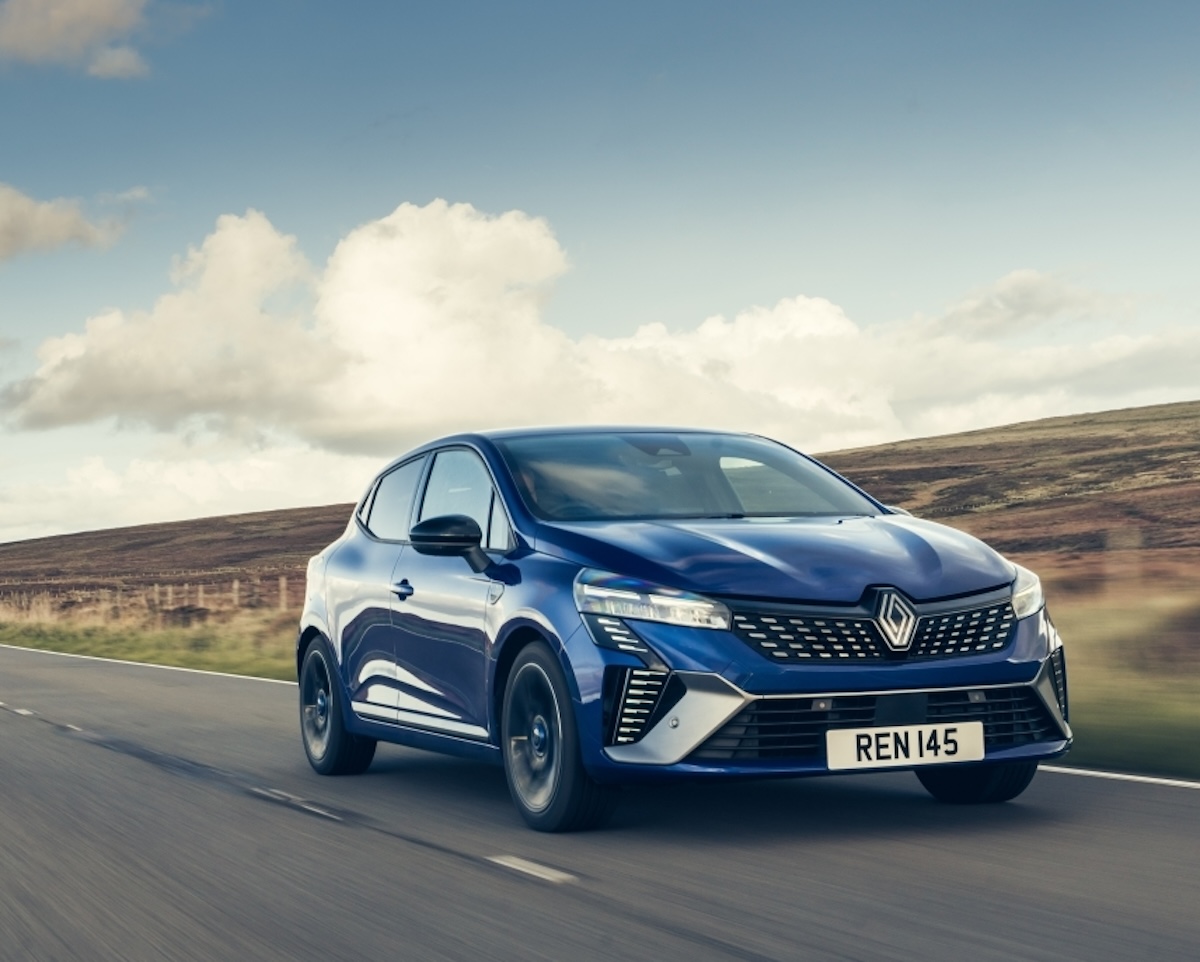
Most efficient variant - Renault Clio E-Tech 1.6 Hybrid 145 Techno+
Combined WLTP figure - 65.7mpg
The Renault Clio has been around for decades now, and it's always been very popular, partly because it’s a very affordable car to buy and run. And that remains true today. You’ll pay a bit more to buy the hybrid version of the Clio than you will for the entry-level 1.0-litre petrol (which is very cheap, by the way), but it’s still very affordable by hybrid standards, and as its inclusion here shows, it’s very cheap to run, with a combined WLTP fuel return of 65.7mpg. That’s thanks to the electric motor that’s on hand to help out its 1.6-litre petrol engine, giving a total power output of 143bhp. The Clio has plenty of talent in other areas, too. It has chic Gallic stylish, making it look good inside and out, while the interior quality is better than that of most rivals, too. It comes with all the tech you want, and it’s a comfortable and pleasant car to drive. All in all, it’s a brilliant all-rounder that stands to save you money at every step.
Read our full Renault Clio review
=4. Renault Captur
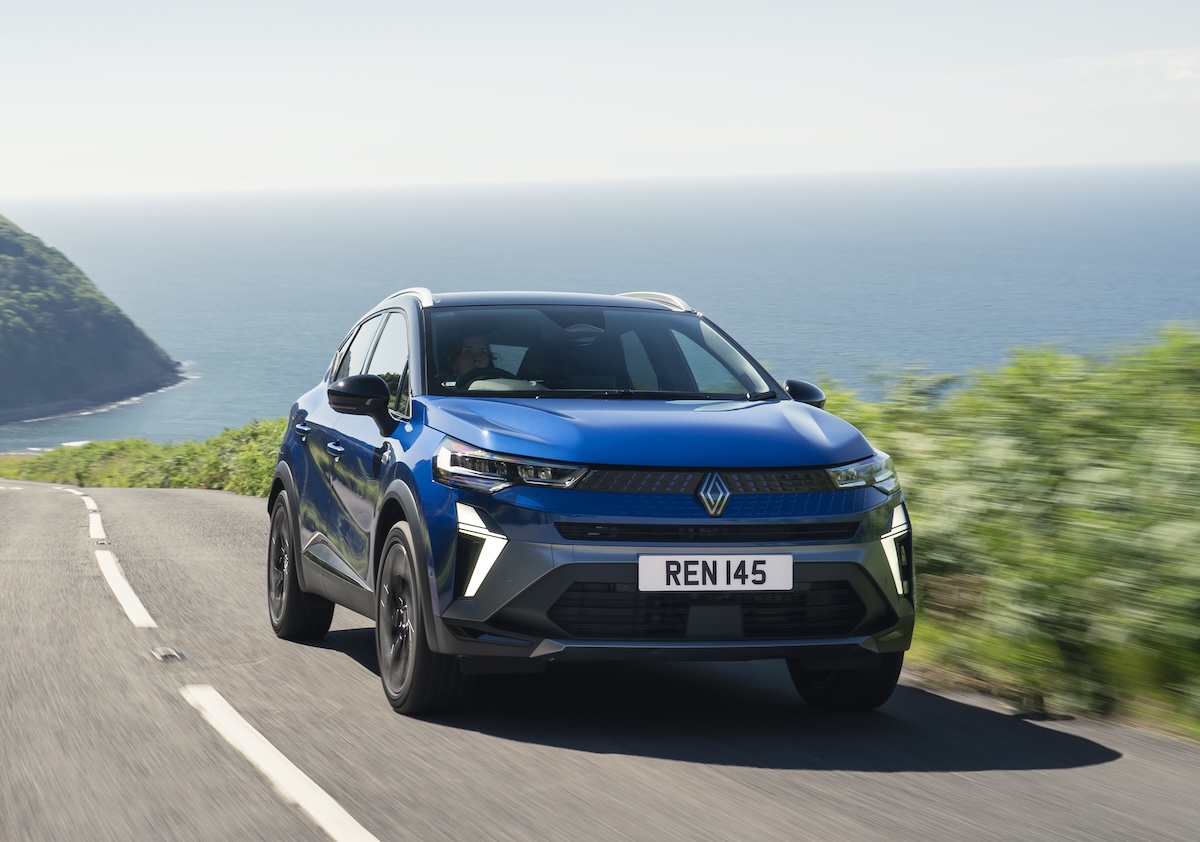
Most efficient variant - Renault Captur E-Tech 1.8 Hybrid 160 Evolution
Combined WLTP figure - 65.7mpg
Hot on the heels of the Clio - or rather, neck and neck with it - is the Renault Captur SUV. This may be a bigger, taller, heavier car than the Clio, which usually puts a considerable dent in fuel economy, but nevertheless, the Captur actually manages to equal the 65.7mpg figure of its hatchback sibling. That’s because, unusually, the Captur has a different hybrid system to the Clio. Rather than a 143bhp 1.6-litre powertrain, the Captur Hybrid uses a system based around a larger 1.8-litre petrol engine, developing a total of 158bhp. This makes the Captur a little quicker despite its more bloated dimensions. These bloated dimensions help make the Captur an impressively practical car, with plenty of passenger space, very decent boot space, and a sliding rear bench that lets you trade a little of the former for a bit more of the latter, and vice-versa. It’s a smart-looking car inside and out, too, and it’s comfortable on the road.
Read our full Renault Captur review