As of April 2026, further changes were made to the way that VED tax is charged in the UK, on top of the major overhaul introduced in April 2025. These have had a significant effect on the amount of road tax owners of electric cars pay, and also buyers of most brand new cars, but owners of most types of car will be affected in some way or another.
In this guide, we explain precisely what these changes are and how they will affect you, as well as exactly what VED road tax is, why it exists, how it works, and how it has changed over the years. Which it has. A lot.
UK Road Tax Explained
- What is VED?
- VED Rates from April 2026
- VED Rates for Cars Registered After April 2017
- Expensive Car Supplement for Cars Costing Over £40,000
- VED Rates for Cars registered between March 2001 and April 2017
- VED Rates for Cars Registered Before March 2001
- How Do I Buy VED?
- Historic Vehicle Tax Exemption
- What Does SORN Mean?
- Whatever Happened to the Tax Disc?
What is VED?
VED stands for Vehicle Excise Duty, and is the term used to describe the tax you must pay the treasury if you own a car in the UK that is driven – or even parked – on a public road. VED is often referred to as road tax, car tax, or the road fund licence, and the amount you'll have to pay will depend on the car you drive.
The way VED is calculated and the tax rate car owners must pay is based on a number of factors, including the age of your car. These are worth understanding, especially if you're about to buy a used car, because the tax costs could vary, even between two identical cars, depending on the precise date they were registered.
VED Rates from April 2026
On April 1st 2026, at the beginning of the 2026/2027 tax year, the standard annual rate and expensive car supplement rose again, in line with the usual inflation-linked uplift.
The flat rate for petrol and diesel cars rose by £5 to £200 per year. AFVs (alternative fuel vehicles) remain liable for the same £200 flat rate, following the removal of their discount in 2025. The expensive car supplement for cars costing over £40,000 was also raised, this time from £425 to £440. This takes the VED up to £640 for qualifying cars, for the first five years of the car's life.
First-year rates, based on a vehicle's CO2 emissions, also rose across the board for 2026/27. Broadly speaking, first-year VED for higher-emission cars has increased sharply, with the top band now standing at £5,690.
Electric cars continue to pay a nominal first-year sum of £10, and from the second year onwards are liable for the same flat rate of VED tax (£200 per year) as drivers of all other types of car. However, from April 2026 the expensive car supplement threshold for electric cars specifically rose to £50,000 (up from £40,000), while petrol, diesel and hybrid cars remain on the £40,000 threshold. This means EVs priced between £40,000 and £50,000 now escape the supplement altogether. Electric cars registered before 1 April 2025 remain permanently exempt from the supplement, regardless of price.
Whatever type of car you're planning to buy, the table immediately below shows the 2026/27 VED costs.
| CO₂ Emissions (g/km) | 2026-2027 First Year Rate (Petrol, RDE2 Diesel, AFVs, EV) |
|---|---|
| 0g/km | £10 |
| 1–50g/km | £115 |
| 51–75g/km | £135 |
| 76–90g/km | £280 |
| 91–100g/km | £365 |
| 101–110g/km | £405 |
| 111–130g/km | £455 |
| 131–150g/km | £560 |
| 151–170g/km | £1,410 |
| 171–190g/km | £2,270 |
| 191–225g/km | £3,420 |
| 226–255g/km | £4,850 |
| 255+g/km | £5,690 |
Second-year onwards flat rate (all fuel types): £200
Expensive car supplement (petrol, diesel, hybrid): £440, threshold £40,000
Expensive car supplement (electric, registered from 1 April 2026): £440, threshold £50,000
Note: non-RDE2-compliant diesel cars pay one band higher than the rates shown above.
VED Rates for Cars Registered between 1 April 2017 and 1 April 2026
The exchequer introduced new tax changes in 2017, which broadly form the system that is still used today. And so, any car registered after 1 April 2017, including new vehicles, falls under a scheme of VED bands where there was a one-off first-year rate linked to CO2 emissions.
Then, from the second year onwards, a car's annual VED rate is no longer based on CO2 emissions, but fuel type. So, regardless of whether you owned a petrol car or diesel car, you'll pay the same flat rate of tax. When introduced, this flat rate stood at £180 per year. If you owned an alternative fuel vehicle (or AFV - that's hybrids, including 48-volt mild hybrids, Bioethanol cars, Liquid Petroleum Gas - or LPG - cars), you got a discount of £10 per year, leaving you with £170 to pay. That discount was scrapped in April 2025. If you had a pure electric car with zero emissions, you remained exempt from paying VED until April 2025, although you did still need to apply for it on an annual basis.
To further complicate matters, in April 2018 a new rule was introduced that bumped up by one band any diesel car not conforming to Real Driving Emissions 2 (RDE2) standards, although even at that time, the majority of new diesel cars did. Are you keeping up?
Expensive Car Supplement for Cars Costing Over £40,000
As if things weren't already complicated enough, along came the Expensive Car Supplement. This stated that any car registered from April 2017 onwards with a list price of more than £40,000 when brand new (that included any optional extras you added at the time of purchase) was also liable for an additional expensive car supplement (sometimes also known as the 'luxury car surcharge') on top of the flat rate of VED, for a five-year period between years two and six of the car's life. At the time these rules were introduced, this surcharge stood at £390 per year. At the end of that period, you reverted back to paying just the flat rate.
At the time of writing, that has risen to £440 per year. From 1 April 2026, the threshold for pure electric cars has been raised to £50,000, exempting many more models from the surcharge than before. Petrol, diesel and hybrid cars remain on the £40,000 threshold.
VED Rates for Cars Registered Between March 2001 and April 2017
Under the previous-previous system of VED - which still applies to a lot of used cars - the rate you'll pay is determined by its carbon dioxide (CO2) emissions. The more polluting the car, the more you pay.
To find out car costs when it comes to tax, you need to know which car tax band a particular vehicle falls into, ranging from A to M. This is listed on the car's V5C. If you need to ascertain how much VED you'll pay for a car you don't yet own, use the search function on the Department for Transport's VCA website. The current rates, updated for April 2026, are outlined in this table:
| VED Band | CO₂ Emissions (g/km) | Petrol & Diesel Standard Rate (per year) |
|---|---|---|
| A | 0–100 | £20 |
| B | 101–110 | £20 |
| C | 111–120 | £35 |
| D | 121–130 | £165 |
| E | 131–140 | £195 |
| F | 141–150 | £215 |
| G | 151–165 | £265 |
| H | 166–175 | £315 |
| I | 176–185 | £345 |
| J | 186–200 | £395 |
| K* | 201–225 | £430 |
| L | 226–255 | £735 |
| M | Over 255 | £760 |
Note:
*If your car was registered before 23 March 2006, this is the most you'll be required to pay in VED.
VED Rates for Cars Registered Before March 2001
If you own a car registered for the first time as a new car prior to March 2001, calculating how much VED to pay is even easier, as the tax system is based purely on engine size and there are only two standard rates.
If the engine's capacity is less than 1,549cc, you'll pay £220 per year.
If the engine's capacity is more than 1,549cc you'll pay £360 per year.
If you're not sure of your car's engine capacity, it is listed on the V5C registration certificate, also known as the logbook. For more details visit our guide to finding out what engine is in your car.
How Do I Buy VED?
You can apply for VED online, by phone (0300 123 4321), or in person at a Post Office. Payment can be made up front for 12 months, 6 months, or monthly via direct debit, although be aware that the latter two options incur a surcharge per year.
VED cannot be transferred when you buy or sell a car. If there is more than a month of VED left to run on a car you're selling, you will automatically be issued a refund from the Driver & Vehicle Licensing Agency (DVLA), triggered when the new owner registers the car.
Historic Vehicle Tax Exemption
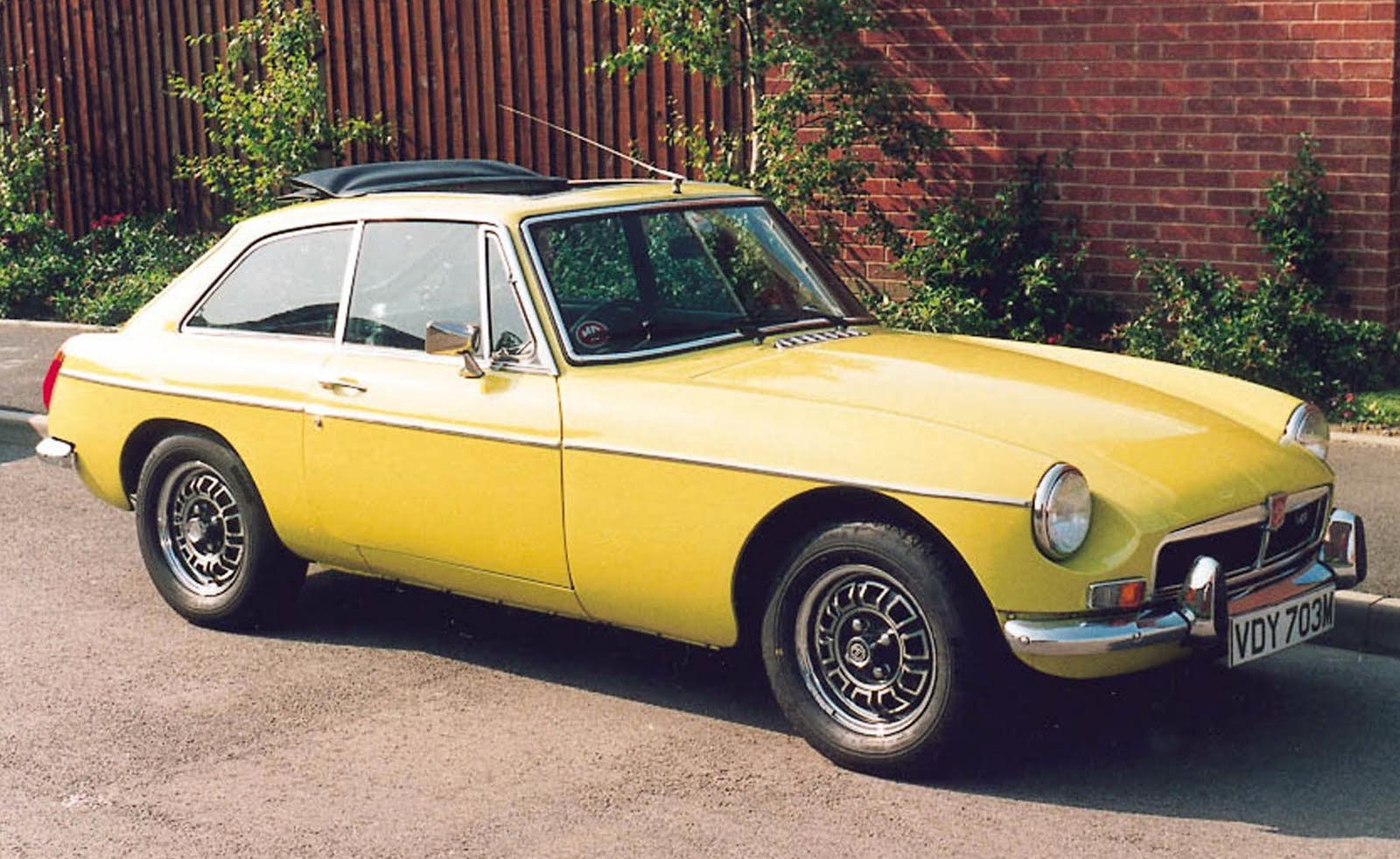
There is a 40-year rolling exemption from vehicle tax on cars that can be classified as historic. If you own a car built prior to 1 January 40 years prior to the current year (i.e. 1st January 1986 in 2026), you can apply for exemption from paying VED. To do this, complete the relevant section of the car's V5C registration form (this form is like your car's birth certificate, so hopefully you've filed it somewhere safe) and take it, an MoT certificate, and a V10 tax application form to a Post Office. A member of the staff will be able to initiate the process of reclassifying your car as historic.
What Does SORN Mean?
SORN stands for Statutory Off-Road Notification and means your car is not subject to tax because it is not used on the road. It only applies if you own a car that is not driven or parked on the road (if, for example, it is kept on private land). You must notify the DVLA that the vehicle isn't used by completing a Statutory Off-Road Notification (SORN), which can be done online, by phone (using the number listed earlier in this article), or by filling out the relevant form (V890) at a post office.
Whatever Happened to the Tax Disc?
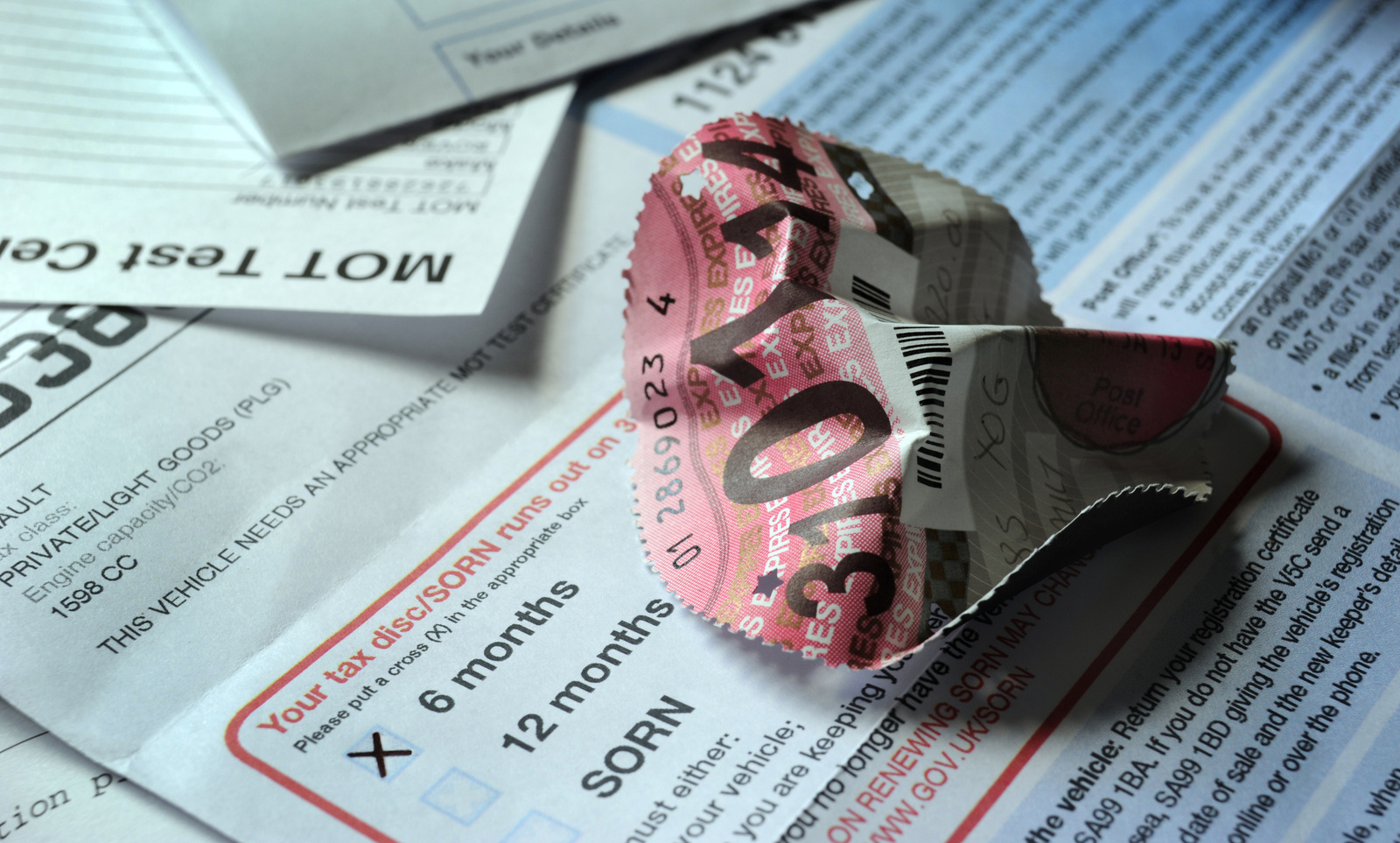
You used to be able to tell if a car was taxed simply by looking at the little round disc displayed in its windscreen. Introduced in 1921, the tax-disc system remained in place until 2014, at which time the DVLA and the police deemed that their increasing reliance on an electronic register of car details had made these familiar paper discs superfluous.


