Peugeot 207 Review (2006-2014)
Peugeot 207 cars for sale
3.0
Expert review
Pros
Distinctive good looks
Economical petrol and diesel engines
Excellent safety standards for a car of this age
Cons
Not as good to drive as a Ford Fiesta
Early models lack Bluetooth
If the 207 CC's folding roof fails it's expensive to fix

The CarGurus verdict
Good looks and low running costs are the Peugeot 207’s biggest calling cards as a used car. In most other respects the Peugeot is good rather than great.
It drives well enough, although it's not as much fun as a Ford Fiesta. Just be sure to avoid the gutless early petrol-engined cars. The diesels have a lot more poke, as well as better fuel economy.
Inside, the 207 is reasonably comfortable for the driver and front-seat passenger, but the back of the car is cramped. Boot space is also nothing to write home about. If that's a concern, take a look at the SW estate, which has lots more room for bags.
Safety is a strong point, with an excellent rating from Euro NCAP and a long list of safety kit by the standards of the time.
The trouble is, a Fiesta is better to drive, a Skoda Fabia is roomier and a Honda Jazz is more reliable. You need to really like the 207's looks to put it at the top of your shortlist.

What is the Peugeot 207?
Peugeot has a long history of serving up excellent small cars, with its 205 from the Eighties being the most famous and well-loved. In fact, the French firm has arguably been trying to repeat the success of this pert Pininfarina designed supermini ever since.
The 207 replaced the 205’s successor, the 206, in 2006 (that’s quite a lot of numbers) and followed the trend for small cars steadily getting bigger, helping make it an even more practical choice. Three-door and five-door hatchbacks were the first versions of the 207 to arrive in showrooms, while a more practical estate, badged SW, arrived the following year.
While the SW majors on practicality, the Peugeot 207 CC is all about style. With its folding metal hard-top, the 207 CC will appeal to drivers wanting a drop-top that's well suited to year-round motoring. Even today it's a handsome-looking car, although the back seats are almost useless and the folding roof mechanism compromises boot space.
In 2009, the 207 was treated to a subtle facelift that added reprofiled bumpers front and rear, plus some redesigned tail lamps. The Peugeot 208 replaced the 207 in 2012, although not before 2.5 million cars had been produced. Although it's been off sale as a new car for close to a decade, there are still plenty to choose from on the used market.
How practical is it?
By increasing in size over the older 206, the 207 delivered a welcome upgrade in space and practicality. It’s still a small car, but the Peugeot will make a decent fist of accommodating a young family and all their clobber, especially if you plump for the SW estate version.
That said, while there’s plenty of room in the back for kids, adults will find conditions a little claustrophobic on anything other than the shortest journeys, with those around six-foot tall struggling for head and legroom. And if you do plan to carry passengers in the rear on a regular basis, then the five-door version is a better bet. The three-door features long and wide-opening doors plus front seats that slide and recline to aid access, but it’s still a struggle to clamber into the back.
Matters improve up front, where there’s more room to stretch out in, while the driver gets a decent array of seat and wheel adjustment. The 207 is also one of the last Peugeot’s not to be saddled with the firm’s current, and slightly controversial i-Cockpit that features high-seat dials that are often obscured by the steering wheel rim.
In terms of storage, there’s are handy door bins and a deep trinket tray ahead of the dashboard, but like many French cars of the era the glovebox is rendered almost useless by the large fuse box - Peugeot decided not to relocate it for right hand drive cars, meaning you’re left with a fairly useless cubby space.
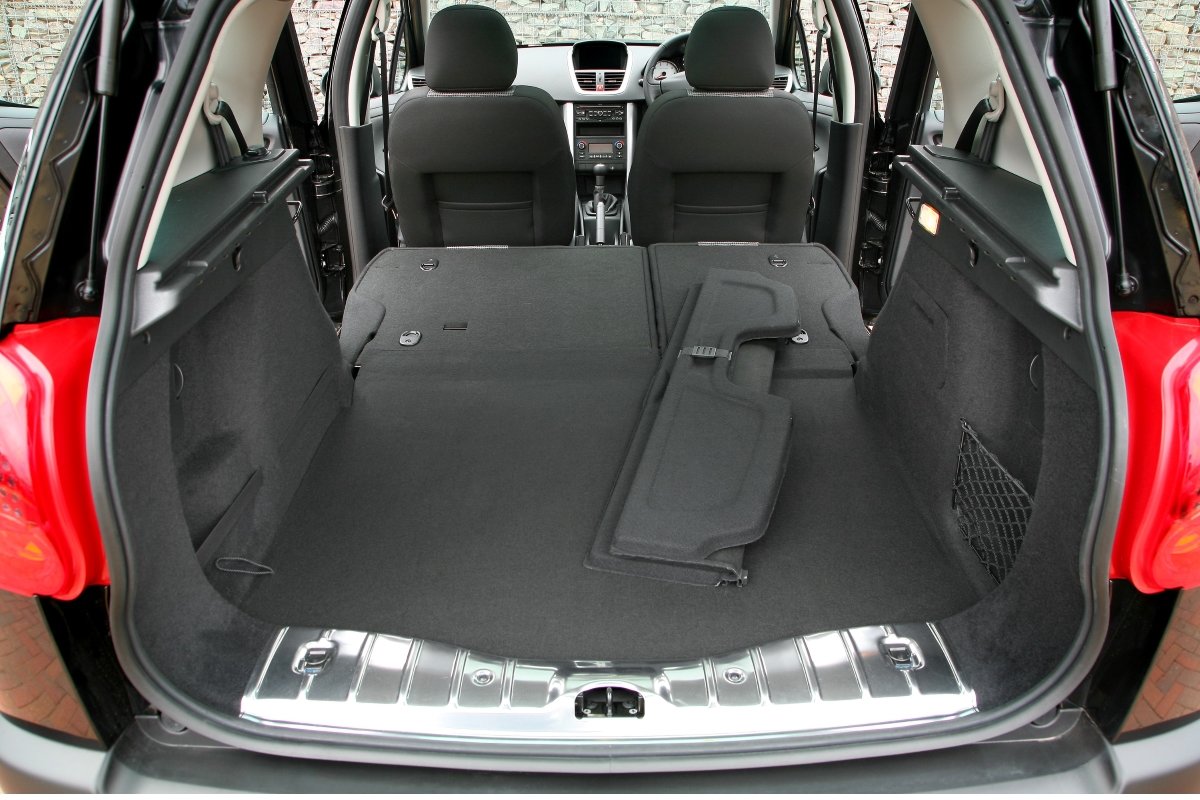
The Peugeot also trails contemporary rivals such as the Ford Fiesta for luggage space, its 270-litre boot being barely any larger than current city cars. At least the loading lip is low and the rear seats can be folded quickly and easily.
And if you really need more carrying capacity, then the SW estate will happily oblige with a decent 428-litres. Lowering the rear bench and neat mechanism leaves a completely flat load area and a very useful 1,344-litres of space. The SW was also available in rugged-looking Outdoor guise, which added chunky plastic bodywork cladding and a raised ride height for extra ground clearance.
At the other end of the practicality spectrum is the drop top CC model, which sacrifices space for style. Its folding metal roof can be opened in a matter of seconds to make the most of any sunshine, while when closed it offers coupe-like refinement and security.
There’s also a decent 449-litres of boot space when the roof is up, but the chunky panels and mechanism means this figure shrinks to 189-litres when it's stowed and you’re soaking up the rays. Oh, and regardless of whether you’re open to the elements or sealed off from the outside world, the Peugeot’s tiny rear seats are effectively useless, even for kids.
What's it like to drive?
The 207 family was available with a choice of petrol and diesel engines. Diesel may have fallen out of favour these days, but these HDi engines make excellent used buys because of their mid-range pulling power and low fuel consumption. Provided you don’t live in an Ultra Low Emissions Zone that is, as none of these units meet the Euro 6 standard needed to escape being charged for entering.
From launch back in 2006, the hatchback was offered with three diesels, a 70bhp 1.4-litre HDi, a 90bhp 1.6-litre HDi, and 110bhp 1.6 HDi. Performance is pretty sedate if you go for a 1.4, but the more powerful 1.6 diesel is quite lively.
The petrol line-up consisted of an eight-valve 1.4-litre with 75bhp, a 16-valve 1.4-litre with 90bhp and a 1.6-litre with 110bhp. All these engines need to be revved hard for meaningful acceleration, as they can be a bit gutless at low revs. However, they are smooth and refined enough, so your ears won’t be too badly assaulted when you need to make progress.
At the top of the performance tree are the GT and GTi, which shares the 175bhp turbocharged 1.6-litre as the second generation MINI Cooper S. In the former it’s rated at 148bhp, while the later delivers a decent 175bhp, which is enough for a 0-62mph time of just 7.1 seconds.
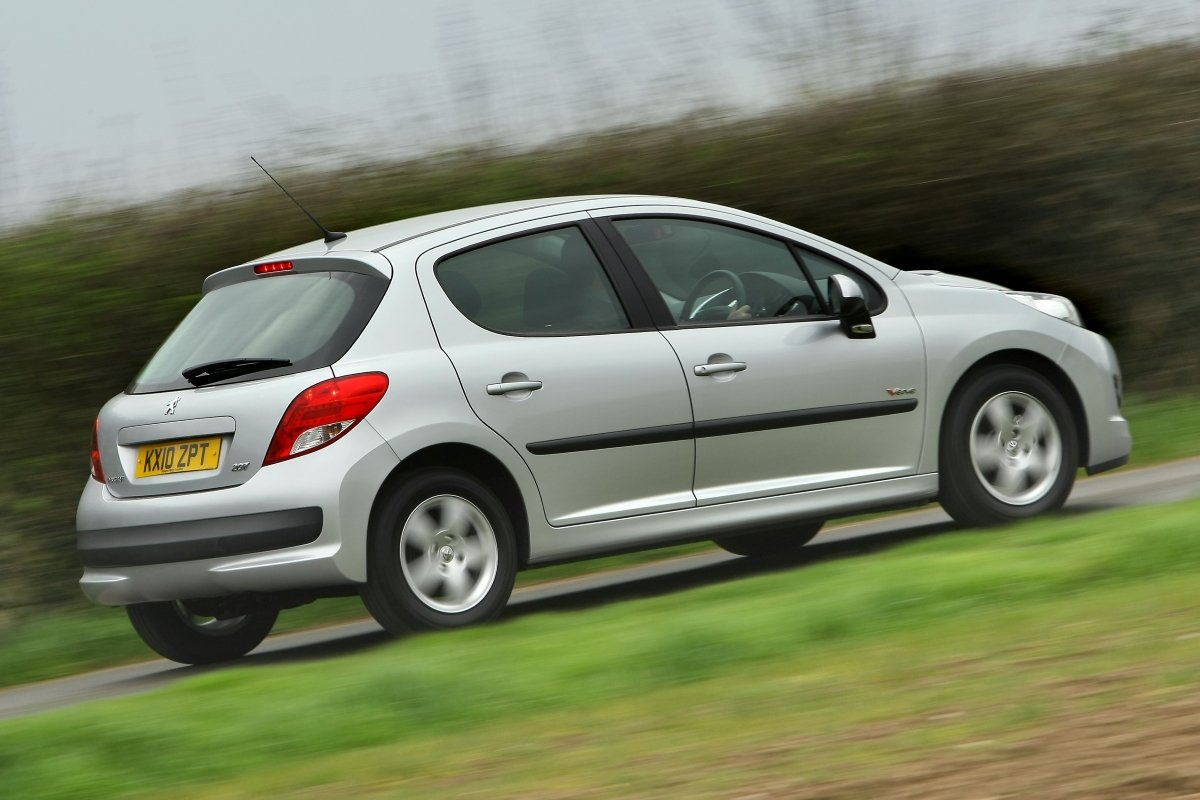
Aside from differences in performance, all versions of the 207 drive as well as small Peugeot models. It doesn't match a contemporary Ford Fiesta for nimble handling, but the Peugeot 207 corners neatly and benefits from sharp steering. It's certainly a more engaging drive than a noughties VW Polo. Like many of the brand’s cars, the 207 also has a supple ride that means it’s one of the more comfortable supermini contenders.
However, that’s not the case for the GTi, which has a stiffer suspension set-up that’s particularly noticeable around town, where it’s best to steer around potholes. The upshot, of course, is more engaging and entertaining handling on twisting back roads, the 207 delivering strong agility and tenacious grip.
Regardless of which version you choose, you’ll be frustrated by the five-speed manual gearbox’s loose and vague action. There is an automatic option, but it’s a sluggish performer and only available with the 1.6-litre VTi petrol.

Technology and equipment
Over the years, the 207 was available in bewildering array of trim levels, including Access, Active, Allure, S, SE, SE Premium, Sport, Urban and Verve, plus special editions such as the Biarritz, Cielo, Envy, m play, Millesim and Sportium. This list just scratches the surface, so it’s best to take every potential purchase on face value and make sure that it’s got all the kit you need.
As a rough guide, the entry-level Access and S models are best avoided unless they’re dirt cheap as they miss out on desirable additions such as air-con. Mid-ranking Active and SE models feature this kit, plus also get electric windows, remote central locking and powered door mirrors. Keep heading up the range and you’ll discover big car features such as climate control, leather seat trim and cruise control.
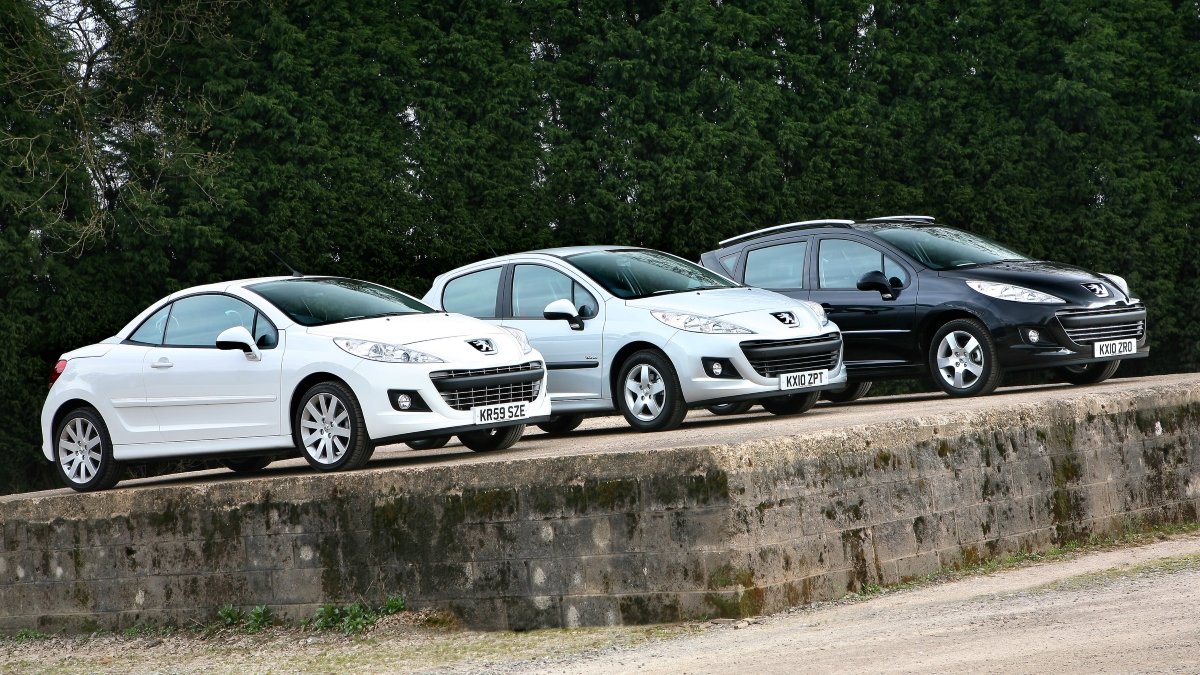
It’s certainly worth keeping an eye out for post 2009 facelift cars (you can identify these by their redesigned front end, with chrome detailing and body coloured bumpers), as they benefit from Bluetooth connectivity that allow you to connect your phone for wireless calls and music streaming, plus a USB socket. In all other respects the 207’s infotainment is fairly basic, running to a radio and CD player. Search hard enough, though, and you will find models fitted with the rare optional sat-nav, but be aware that the system looks and feels dated compared to modern set-ups.
For its time, the 207’s haul of six airbags earned it a five-star rating for adult occupant protection by Euro NCAP. However, the test has moved on a lot since the car was tested back in 2006, so while the Peugeot is a safe choice by the standards of the time, it trails even the most modest new city car for advanced safety tech, with electronic stability control only being added as standard across the range fairly late in its life.
How much does it cost to run?
For rock-bottom running costs, go for one of the diesels. Any of Peugeot's diesel-engined cars should deliver fuel-sipping economy.
If you really want to squeeze every last mile from each gallon, track down a 207 Economique or Economique -. These cars emit just 99g/km of CO2 according to the official figures, and return 74.3mpg.
Both those figures are derived from the old NEDC test standard, which was notorious for making cars seem more economical than they really were. You can expect 60mpg in real-world driving, helped by the car’s lowered ride height, altered gear ratios and subtle aerodynamic tweaks.
You'll have more choice if you also consider some of the other diesel models. With official combined MPG figures in the 60s, you can expect 55-60mpg in everyday driving.
The petrol models are a bit thirstier, but should still prove reasonably affordable to run. Avoid the short-lived engines from the early days of the 207, and buy one of the VTi engines that replaced them in late 2006. The 1.4 should be good for around 45mpg. Bank on nearer 40mpg from the 1.6, or a bit less if you choose one with an automatic gearbox rather than a manual.
Unsurprisingly, the 207 GTi is likely to prove the most expensive model to run. Reckon on MPG in the mid 30s if you drive with a light right foot, or less if you make full use of all 175bhp. Quality rubber for the GTi's 17-inch alloy wheels will also work out more expensive than tyres for the more pedestrian models in the 207 range.
The GTi will also be pricey to insure, sitting in group 26 of 50. More modest versions attract lower premiums, with the 1.4 S in group 10.
Thanks to relatively low emissions, car tax bills are reasonably low. Pick the Economique, Economique-, or the later Oxygo -, and there's no tax to pay because of the sub-100g/km emissions rating. Owners of the regular 1.4 HDi only pay £30 per year. The GTi has the steepest Vehicle Excise Duty payment, setting owners back £275 every 12 months.
Is it reliable?
In recent times, Peugeot has improved its showing in reliability and customer satisfaction surveys. However, go back to the 207's era and the brand struggled to get out of the bottom half of such studies.
While the 207 is far from a hopeless case, don't be surprised if the odd unexpected bill crops up from time to time. Some owners report electrical problems, and we've also heard of some 1.6-litre diesel engines suffering from power loss. This can be due to a crack in the suction pipe, which is relatively straightforward to fix. Turbo failures can afflict the same engine.
The 207 CC's complex folding metal roof is potentially expensive to put right, so if you are thinking of buying the cabrio, make sure the roof raises and lowers as it should.
Over the years, the 207 has been subject to a number of recalls, which should already have been attended to, but it's worth using the recall checker on the gov.uk website to find out if your potential buy has slipped through the net. Keep in mind that even the last 207 off the line is several years old, so buy a car in good condition that's been well cared for by its previous owners. And if you want an utterly dependable supermini of this age, you're better off with a Honda Jazz or Toyota Yaris.
- If you hanker after a BMW but really need a cheap and cheerful hatchback, you're in luck. With the Peugeot 207 you can have both. Okay, perhaps that's a bit of stretch, but the 207 was the first Peugeot to use engines jointly developed with the BMW Group. Arriving at the end of 2006 were the 95bhp 1.4 VTi and the 120bhp 1.6 VTi, replacing the earlier petrol engines. Both these engines were a considerable improvement on the lacklustre petrol engines the 207 started out with.
- Safety standards have moved on considerably since 2006, but in its day the 207 was one of the safest small cars on sale. We've already mentioned the five-star Euro NCAP rating for adult occupant protection. The 207 also scored four out of five for child occupant protection and three out of four for pedestrian protection. Every version of the 207 has anti-lock brakes, while Electronic Stability Control (ESC) was standard across the range from 2009. The car was also fitted with pre-tensioning seatbelts and Isofix child-seat mounts for the two outer rear seats.
- The 207 CC's electric folding roof was designed in-house by Peugeot. Unlike the earlier 206 CC, the 207 CC has no manual catches that must be undone before the roof can be lowered; it's all done at the press of a button. Peugeot claimed that the roof can raise or lower in just 25 seconds. To improve safety with the roof down, every 207 CC was fitted with an active roll-over protection system, with roll bars working to protect driver and passenger along with strengthened windscreen pillars.
- If you want an affordable hot hatch: Go for the 207 GTi. Launched in June 2007, the 207 GTi was powered by a 175bhp THP petrol engine. Peugeot claimed a 0-62mph time of 7.1 seconds for this feisty hatchback. It's good value as a used car, but you may have to look hard to find one, as it was removed from pricelests in 2009, meaning it’s a rare beast.
- If you want a small car that's good on the motorway: Choose the 1.6 HDi. This engine has enough performance to easily cope with the ebb and flow of motorway traffic, but returns impressive MPG figures. It's a little noisy when accelerating but settles down once cruising. If you cover a lot of miles, this is the 207 to choose.
- If you want a town runabout: Pick the 95bhp 1.4 VTi. There are quicker versions of the 207, but the VTi petrol is lively enough for nipping into gaps in traffic. It's cheap to buy, affordable to fuel, and emits fewer local pollutants than a 207 with a diesel engine.
- If you want a small car with a big boot: Look for a 207 SW. With 428-litres for bags, the SW improves on the hatchback's boot capacity by 118 litres, just the job for taking a couple of terriers out for a walk. Fold the back seats down and there's a useful 1,433-litres.


