Subaru XV Review (2018-2023)
Subaru XV cars for sale
3.0
Expert review
Pros
Much tougher and more able off road than most rivals
Comprehensive safety equipment
No-nonsense reliability
Cons
Limited choice of engines
Not as good to drive as a Seat Ateca
Pricey to buy as a new car
The CarGurus verdict
For most SUV buyers, there are better choices than the Subaru XV. The Seat Ateca is better to drive on Tarmac, the Skoda Karoq is more comfortable. Most rivals are more practical and cheaper to buy.
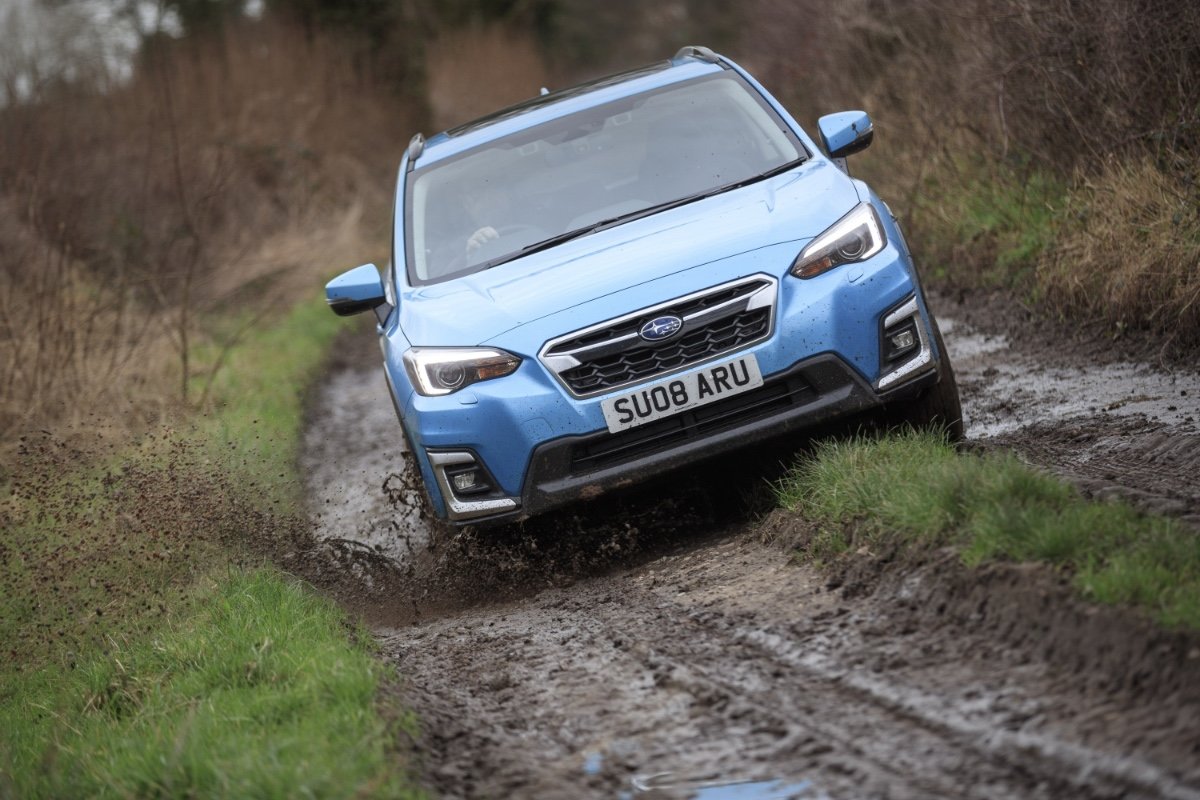
Yet it would be wrong to dismiss the XV too quickly. It really suits a rural driver, the more remote the better, who wants all-weather capability and no-nonsense reliability.
It's a shame the engine line-up is so limited, particularly the absence of a diesel. And not everyone will get along with the Lineartronic gearbox.
On the other hand, even the more basic SE model comes with a generous helping of tasty toys, and SE Premium cars are fully loaded with kit. And if you need a car that will go off road, rather than look like it could, the XV could be the compact SUV for you.

What is the Subaru XV?
The first Subaru XV was a crossover-style hatchback and a rival to the Nissan Qashqai and Volkswagen T-Roc. It went on sale in 2012, and was replaced by this second-generation XV back in 2018.
Visually both models appear rather similar, but the latest version represents an improvement in almost every area. It might not be an obvious choice of small crossover, but the XV has some key advantages over other models that ensure it has its own niche in the market.
The XV's final year of production was 2023, and it was replaced by the Crosstrek (which was the name for the XV in some other countries from the very beginning) in 2024.
How practical is it?
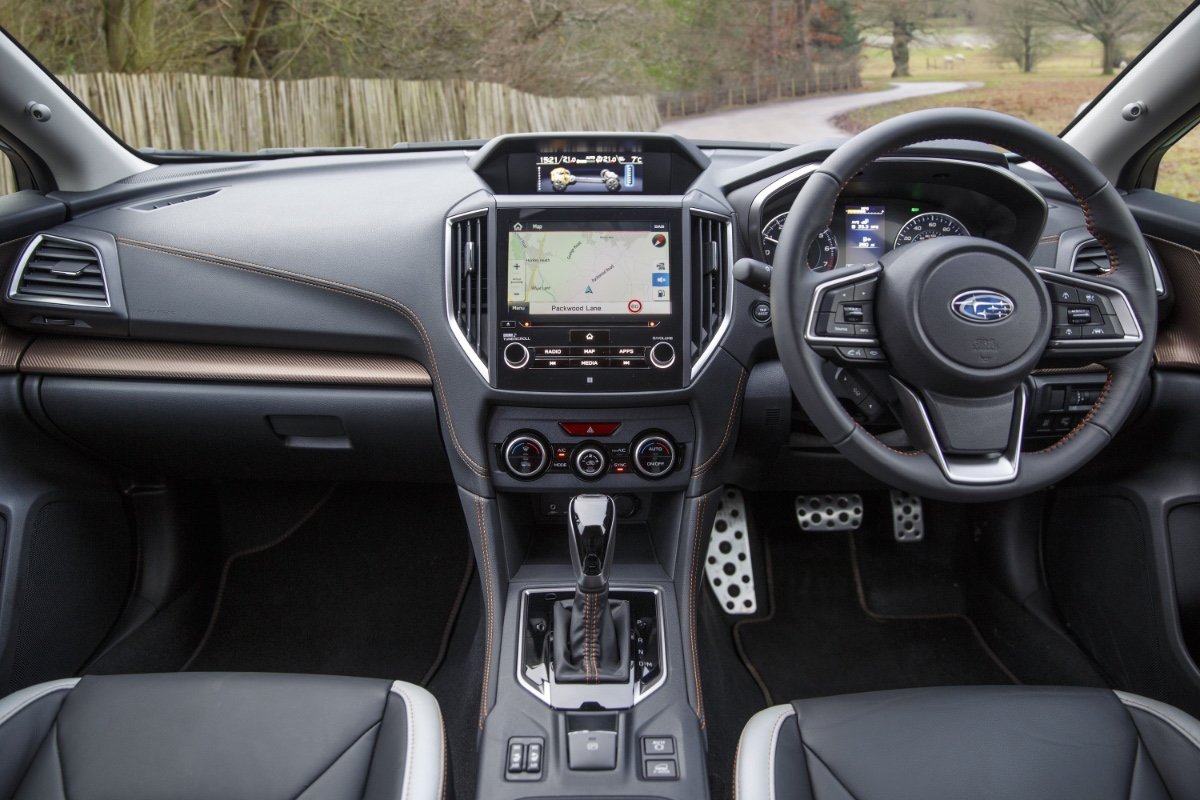
Inside, the XV's chunky three-spoke steering wheel and drilled metal pedals give a rally-car vibe that harks back to the rallying Impreza WRC cars. Given the XV's stiff pricing as a new car, the look and feel of the cabin materials isn't especially upmarket. That said, the cabin feels solidly screwed together and made to last.
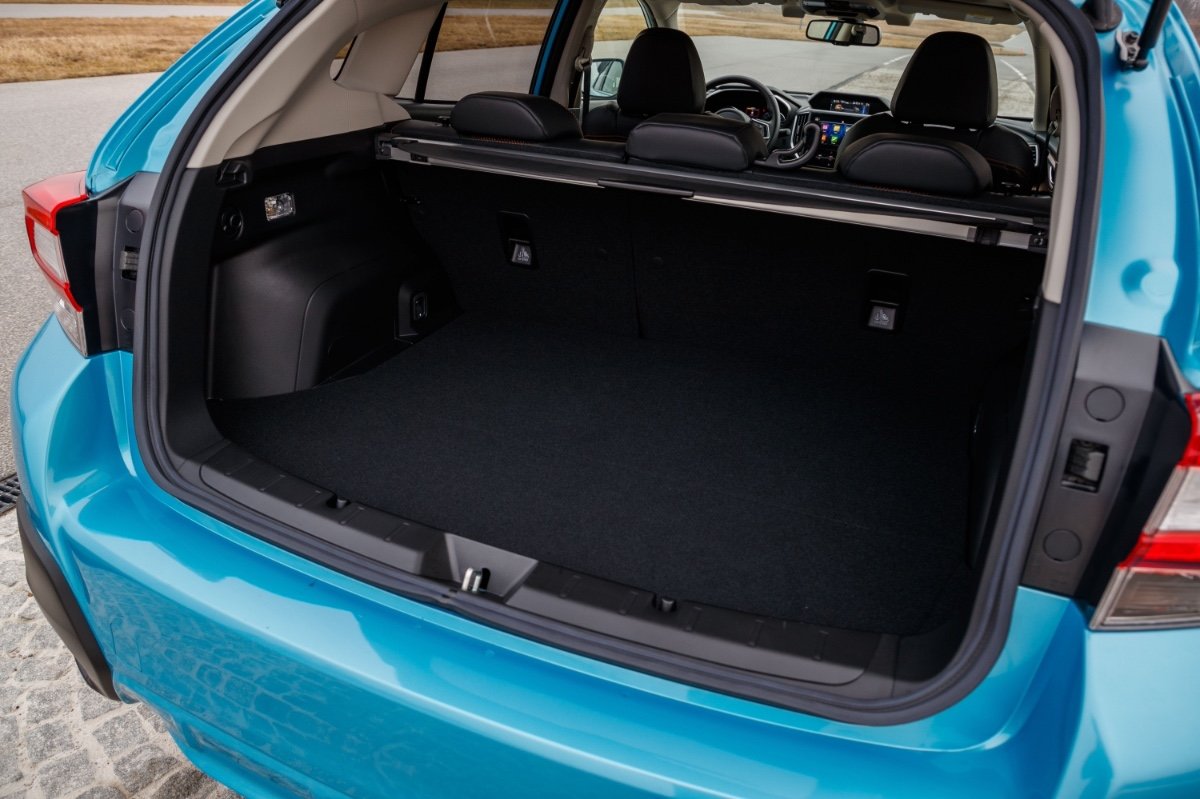
The driving position is comfortable, and there's plenty of head and legroom in the front of the car. Rear-seat space isn't quite so generous, and the boot is relatively small. The 340-litre capacity is well down on the Kia Sportage's 491 litres, or the Skoda Karoq's 521 litres.
What's it like to drive?
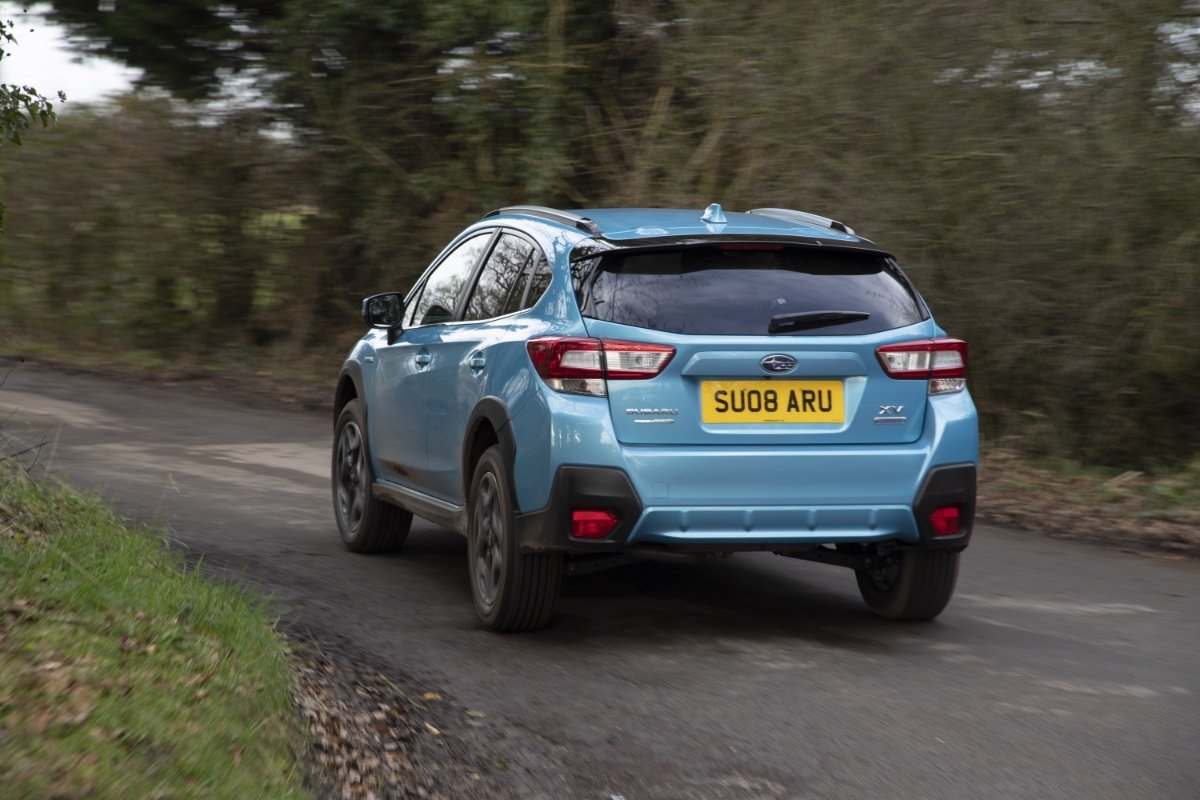
Whether you go for one of the early cars, or the later hybrid, the driving experience is mostly enjoyable. As we've mentioned, every XV is capable of heading further into the wilderness than SUV-lookalikes such as the Nissan Qashqai. This off-road prowess hasn't compromised the XV on tarmac, with direct steering and neat handling showing off the Subaru's fun side.
However, the ride is rather firm, and whichever engine variant you go for the XV doesn't have the performance to go with its nimble handling. The 1.6-litre cars are plain slow, while even the 2.0-litre and 2.0-litre e-Boxer aren't especially quick. Top-end versions of the Seat Ateca are a lot sportier to drive, and the XV’s anaemic acceleration is in contrast to the rally-inspired feel of its interior.
Technology, equipment & infotainment
Like the original XV, today's model brings some authenticity to the compact SUV market, with Subaru's excellent four-wheel-drive system and the X-Mode traction control system. However, the original engine range was limited to a pair of petrol engines, a 112bhp 1.6-litre and a 154bhp 2.0-litre. No manual gearbox has been offered with the second-gen XV, and there's no manual gearbox either. Just like the XV's big brother, the Forester, all cars come with Subaru's Lineartronic Continuously Variable Transmission.
While you might expect new engine options to be added to a range in the months and years after its launch, Subaru has retained a very limited line-up with the XV. From 2020 the 2.0 petrol was replaced with a 2.0-litre hybrid, called the e-Boxer. The electric motor is strong enough to allow electric-only driving at speeds of up to 25mph. At least, that's the theory. In practice you will need a very light right foot to drive on electric power at speeds much over walking pace.
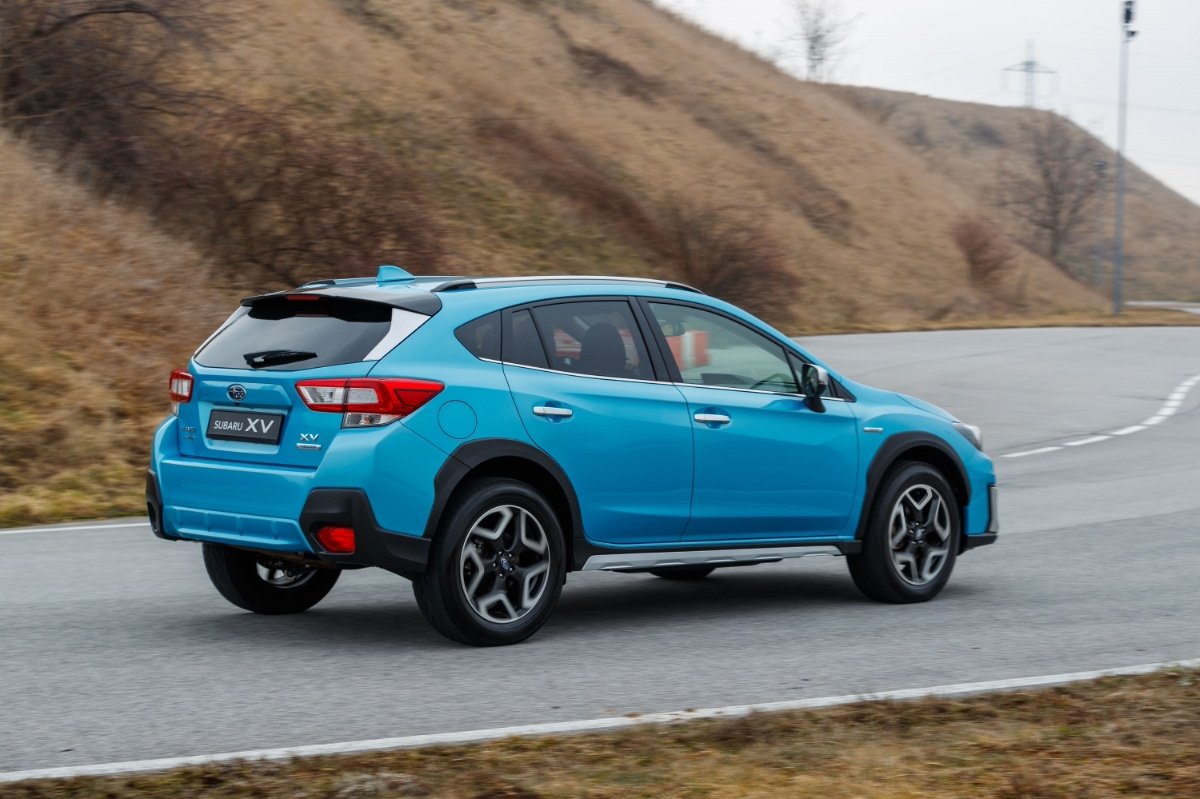
More changes came in March of 2021. Subaru stuck with the petrol-electric hybrid powertrain, but made some exterior design tweaks, a new alloy wheel design, and two new exterior colours. There are some enhancements to the package of driver assistance systems, but it's a nip and tuck rather than a substantial set of revisions.
Subaru XV running costs
As a new car, the XV is hamstrung by its high price. At the time of writing (spring 2021) the XV starts from £31,655, rising to £33,655 for a top-spec. It doesn't help that the entry-level 1.6 is no longer available. Even allowing for the long list of standard kit and four-wheel drive, that's stiff pricing for a relatively small car, and pushes the XV towards territory occupied by Audi's small SUVs.
On the other hand, the XV loses value more quickly than some rivals. That means there's less of a price premium for the Subaru as a secondhand buy. In fact, we think the Subaru XV makes most sense if you let the first owner take the early hit of depreciation.
Whether you buy new or used, there's no getting away from the XV's thirst for fuel. The 2.0 e-Boxer should cost least at the pumps, with an official combined figure of 35.7mpg. That's barely any different from the less powerful 1.6, with its official combined figure of 35.3mpg. Fuel economy in the 30-35mpg range is what you can expect in real-world conditions.
The non-hybrid 2.0-litre is the thirstiest model, although there won't be a night and day difference between this car's mpg and that of the rest of the range.
For high-mileage drivers in particular, the XV range suffers from not having a diesel. A Skoda Karoq diesel will return around 50mpg or better. The most efficient XV uses more fuel and emits more carbon dioxide than the least efficient version of many rivals.
Insurance costs are more reasonable, though. A 1.6 SE sits in insurance group 10E. That exactly matches the insurance grouping of the entry-level Skoda Karoq.
Choose a high-spec XV 2.0-litre instead, and the insurance group climbs to 16E.
Servicing is due every 12 months or 12,000 miles, whichever comes first. Some rivals will go two years between services. It's also worth noting that Subaru's dealer network is relatively small, so you may have to travel some distance to have your car serviced by a Subaru franchised dealer.

Subaru XV reliability
If the XV's running costs are among its weakest points, reliability should be one of its strengths. Subaru is up with the likes of Mazda and Toyota as a builder of reliable cars.
Although the XV has sold in quite low numbers, and so doesn't meet the minimum sample size for a number of surveys, Subaru as a brand usually performs very well in reliability studies. High scores in owner satisfaction surveys are also common – Subaru owners tend to be loyal to the brand, appreciating the cars' durability and rugged capabilities.
So, touch wood, an XV won't go wrong. But if it does, every Subaru comes with the reassurance of a three-year, 60,000-mile warranty. That's pretty much the industry standard, but shorter than the cover for the Hyundai Tucson and Kia Sportage. If you buy an e-Boxer, the battery is covered by an eight-year, 100,000-mile warranty.
Buy an approved used Subaru, and it will come with a minimum 12-month warranty, as well as a year's breakdown cover.
It's worth knowing that some examples of the XV were recalled for a fault with the positive crankcase ventilation valves. These can break, allowing oil to enter the combustion chamber, leading to a loss of power. Cars with this manufacturing fault were built before 6 August 2018.
- The XV is fitted with Subaru’s EyeSight driver assistance technology, which uses a pair of cameras mounted on either side of the rear-view mirror to monitor the road ahead (for up to 10 metres) in order to supply information to a range of safety features, including Adaptive Cruise Control, Pre-Collision Braking, Lane Sway and Departure Warning and Lane Keep Assist. There’s also a Rear Vehicle Detection system that can identify vehicles approaching from behind and uses the information for three more safety features – Blind Spot Monitoring, Lane Change Assist and Rear Cross Traffic Alert. EyeSight is part of the reason the XV received a five-star rating from EuroNCAP, along with a commendable 94% for adult occupant protection, 89% for child occupant protection, 84% for pedestrian safety, and 68% for its on-board safety assistance systems.
- Subaru introduced a hybrid engine system to the XV range in 2020, called e-Boxer, referencing Subaru's long-established Boxer engine, to give consumers the opportunity of buying a version with better efficiency. The e-Boxer combines a 2.0-litre petrol engine with a lithium-ion battery and electric motor, to offer emissions-free motoring at speeds of up to 25mph. As ever, Subaru has done things its own way and placed the heavy motor near the vehicle's centre of gravity and the battery above the rear axle, in order to improve the XV’s handling. It's also worth noting that every XV comes with the Lineartronic CVT automatic transmission.
- If you live out in the sticks and need a car you can rely on in all weathers, the XV is a good choice. There's 220mm of ground clearance – more generous than most rivals offer – and all-wheel drive is standard. There's also a sophisticated traction control system called X-Mode that adjusts the car's systems to better suit the terrain. For the 2021 facelift, X-Mode has a dual-function button with a choice of snow/dirt and snow/mud settings. Whichever model you choose, the XV is very capable off road, although the 1.6 would benefit from more pulling power to cope better with steep slopes.
- If you are buying used and on a tight budget: Stick with the XV 1.6. So long as you can live with fairly sluggish performance, the 1.6 is a more affordable used buy than the 2.0. You might have to look a little harder to find one in the specification and colour you want, though, as Subaru sold fewer of the 1.6.
- If you want the best all-round used SUV: Go for the XV 2.0. The pre-hybrid models are around in greater numbers on the used market. Although a bit more expensive to buy and fuel than the 1.6, the 2.0-litre boxer engine's power hike is worth it. Acceleration is noticeably stronger with this engine.
- If you want a good value new crossover: Pick the XV 2.0 e-Boxer SE. It may be the lower of the two available specifications, but SE still comes with 18-inch alloy wheels, heated front seats, remote central locking, an electronic parking brake, dual-zone climate control, a DB radio, and a touchscreen infotainment system that's compatible with Apple CarPlay and Android Auto.
- If you want all the toys: Upgrade to SE Premium. The entry-level spec covers all the essentials, but stepping up to SE Premium adds a powered sunroof, powered adjustment to the driver's seat, leather upholstery, and satellite navigation. It's a very well kitted out car, although it should be for the price.


