The Audi Q5 is one of Audi’s best-selling models of recent years. It was introduced in 2009 as Audi’s second SUV, three years after the arrival of its first, the Q7. The Q5 is much smaller than the Q7 and only available with five seats (rather than with the option of seven). It’s a (very) close match for its key rival - the BMW X3 - in size. Although every Q5 has good ground clearance and 'quattro' four-wheel drive, the Q5’s appeal lies in its roomy and luxurious interior, prestige image and on-road refinement, rather than its off-road ability.
The first-generation Q5 offered a huge range of engine options over its eight years on sale. There are petrol and diesel options, with four-cylinder and V6 examples of each and a wealth of different power outputs. Many are quite quick, but the quickest of all is the high-performance SQ5 model. Whereas the related Audi A4/A5 models and the smaller Q3 SUV offer super-fast RS models, there’s no equivalent for the Q5.
Audi refined rather than reinvented the recipe for the second-generation Q5, which was introduced in 2017. A fraction larger, with a sharper exterior and much more modern interior, it has a very similar character overall. The addition of a plug-in hybrid model in 2020 was a sign of a changing market (and a need to keep up with electrified rivals), but the biggest change was the introduction of the Audi Q5 Sportback as part of the Q5’s mid-life facelift in 2021. While it’s identical to the standard Q5 from the front doors forwards, the Q5 Sportback has a more sloping roofline that creates an ‘SUV coupe’ look.
Audi released the third-generation Audi Q5 in 2025: it's available with a limited range of petrol or diesel engines, or with a plug-in-hybrid powertrain. There isn’t a pure-electric model since Audi has this covered off with the similarly sized Q6 e-tron.
Our guide to the Audi Q5 looks at the model’s history over its three generations, covering how it has changed over time, and what to look out for if you’re considering buying one.
Audi Q5 Models Over the Years
Frequently Asked Questions
Which Audi Q5 years are the best?
The mk3 hasn't been on sale long enough for meaningful reliability data to be available, so it might be more dependable than earlier versions, but we simply don't know yet. Of the other generations, go for the mk2 for the best reliability in your Audi Q5. It’ll cost more than the mk1, but it’s a better car overall, giving you a smoother drive and more up-to-date features.
Which Audi Q5 years are the worst?
The Audi Q5 doesn’t have an especially stellar reliability record, but the worst years are between 2012 and 2014. Excessive oil consumption and timing chain issues are some of the most common issues, especially with 2.0-litre petrol models.
Is a used Audi Q5 a good deal?
The Audi Q5 is a good deal if you can find a well-looked-after model for the right price. It’s one of the best mid-size premium SUVs around, especially in second-generation guise, and it's even reasonably affordable in that form, too.
Audi Q5 Pros and Cons
Pros:
- Standard four-wheel drive
- Spacious, high-quality interior
- Most versions are well-equipped
Cons:
- Not as good to drive as some rivals
- High-performance versions are expensive
- Unadventurous design
Audi Q5 Generations
Audi Q5 Mk3 (2025-)
Bodystyles:
- Five-door SUV
- Five-door coupe-SUV
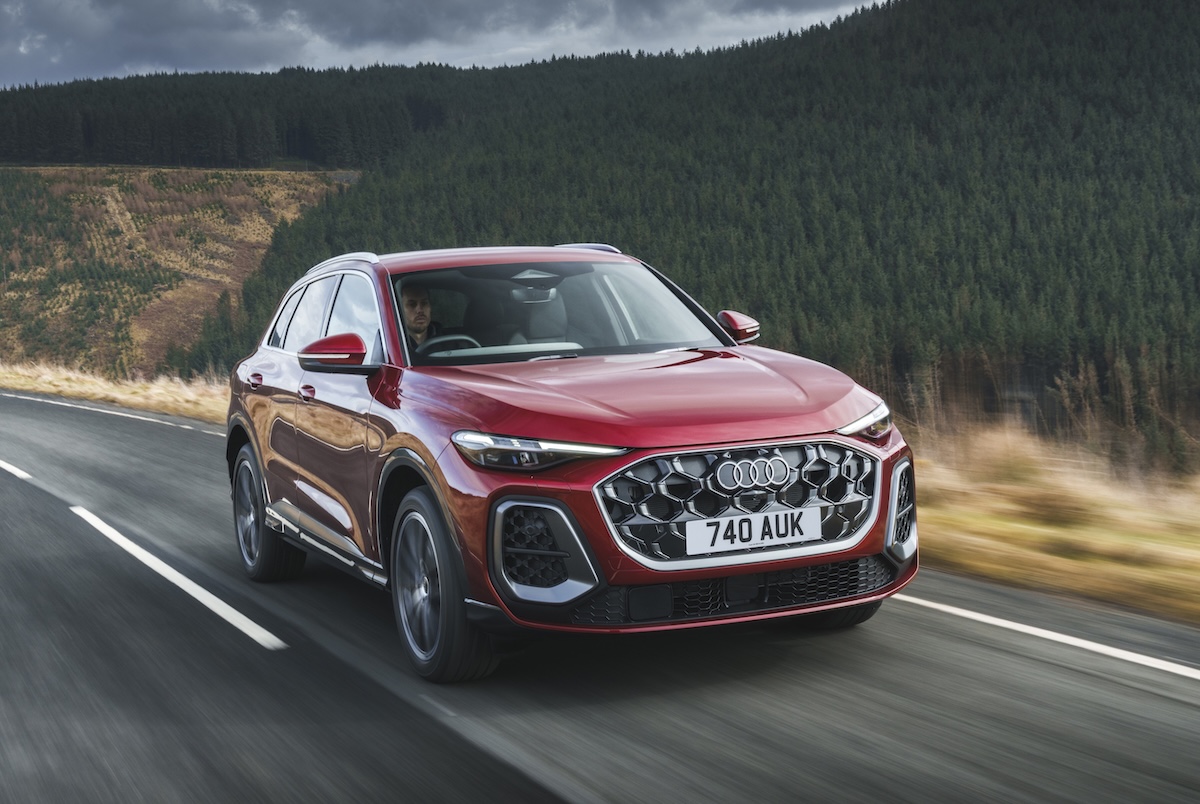
Come the 2025 model year, it was time for a new Audi Q5 SUV. The new car is very much an evolution of what went before, with a very similar overall appeal: posh image, polished driving experience, and family-friendly practicality.
That’s not to say there haven’t been improvements, though, even within the areas already mentioned. For instance, the latest Q5 is a bigger car before, with a longer wheelbase, meaning more generous rear legroom. Select S line trim and upwards, and you also get sliding rear seats that allow you to prioritise either kneeroom or boot space.
The engine range is a little limited these days, though. You choose from 2.0-litre petrol and diesel engines, both with 201bhp and mild hybrid assistance. There’s also a 295bhp plug-in hybrid model with an electric-only range of 60-odd miles, or a sporty SQ5 model with 362bhp.
Sport is the entry-level trim, yet it still comes well equipped, with heated front seats, alloy wheels, LED headlight with high-beam assist, powered tailgate, climate control, sports seats with leather upholstery, adaptive cruise control, park assist with 360-degree cameras, and an infotainment system that brings together an eight-speaker sound system with a 14.9-inch OLED central touchscreen and an 11.9-inch Audi Virtual Cockpit driver display. The system looks good, but is rather complicated to use.
S line trim adds various sporty styling upgrades, revised suspension, and a flat-bottomed steering wheel. Edition 1 trim adds matrix LED headlights, even more styling enhancements, a digital key, a couple of extra safety systems, and an additional dashboard touchscreen for the front passenger.
Audi Q5 Mk3 Review
Search for an Audi Q5 Mk3 on CarGurus
Audi Q5 Mk2 (2017-2024)
Bodystyles:
- Five-door SUV
- Five-door coupe-SUV
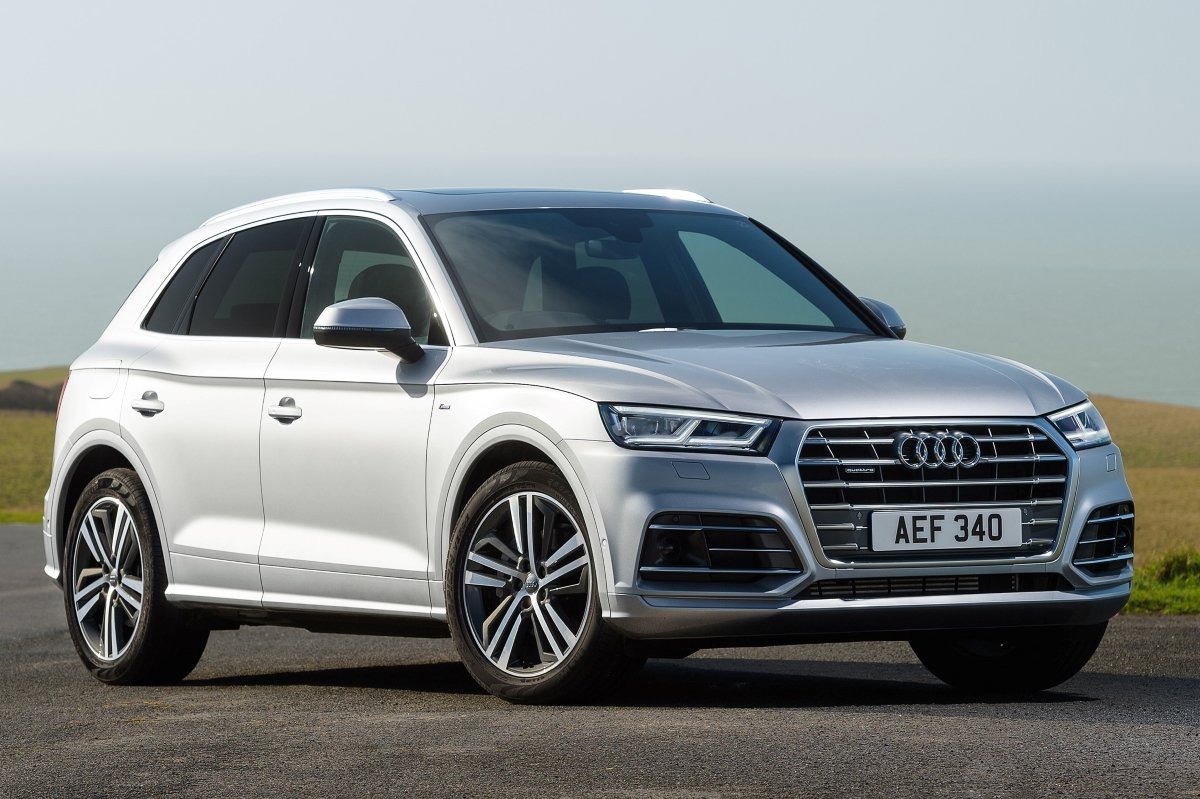
The second-generation Audi Q5 went on sale in 2017, picking up the baton from the first-generation car with a similar blend of restrained style, generous equipment levels and a focus on comfort and practicality. Only millimeters larger than before, the Q5 remains a close match for rivals such as the BMW X3 and Mercedes-Benz GLC in size. And, as before, every version has quattro all-wheel drive.
The range of engines is also fairly familiar from the first car. Entry point to the petrol versions is a 2.0-litre four-cylinder unit (badged 2.0 TFSI) with 249bhp, while the diesel range kicks off with a four-cylinder 2.0-litre unit (badged 2.0 TDI) with 187bhp. A 3.0-litre diesel with 282bhp (badged 3.0 TDI) was added shortly after launch. The high-performance SQ5 arrived early in the model run, switching to a petrol rather than diesel engine, with a turbocharged 3.0-litre V6 pumping out 349bhp. In late 2017, Audi adopted a new naming strategy for its engines, replacing the engine size with a two-digit number based on a range of power outputs. The 2.0 TFSI quattro became the 45 TFSI quattro, for example, while the 2.0 TDI quattro became the 45 TDI quattro. In early 2019, a diesel SQ5 model replaced the petrol version: its 342bhp 3.0-litre twin-turbo diesel engine uses mild-hybrid technology to give impressive fuel economy (around 34 mpg) for such a fast car. New plug-in hybrid (PHEV) models were introduced in 2019: these combine a 2.0-litre petrol engine with an electric motor for a total output of 294bhp in the 50 TFSI e, and 362bhp in the 55 TFSI e.
An update in 2020 brought the usual range of cosmetic and equipment upgrades, as well as more powerful – yet more fuel-efficient – engines. In early 2021, the Q5 range expanded with the addition of the Q5 Sportback, a five-door ‘coupe’ version of the standard car. Despite its sleeker rear section, the Q5 Sportback has only a fraction less boot space than the standard car, so it’s still very practical. Over time, there have been many trim levels available. The main ones are SE, Sport, S line, Black Edition and Vorsprung, with the SQ5 being a high-spec standalone model. Every version of the second-generation Q5 has, from the start, come loaded with kit. Even the earliest SE models have xenon headlights, three-zone climate control, power-operated tailgate, DAB radio, voice control, front- and rear parking sensors and an automatic braking system. S line models had LED headlights from the start, and all versions have had LED headlights since the model’s 2020 update.
While it has a premium look and feel, the second-generation Audi Q5 doesn’t do anything to bolster Audi’s middling reputation for reliability. It’s likely to be more dependable than the older, first-generation car, but owners have noted glitches with the car's ‘MMI’ infotainment system, along with various brake-related issues.
Audi Q5 Mk2 Review
Search for an Audi Q5 Mk2 on CarGurus
Audi Q5 Mk1 (2009-2017)
Bodystyles:
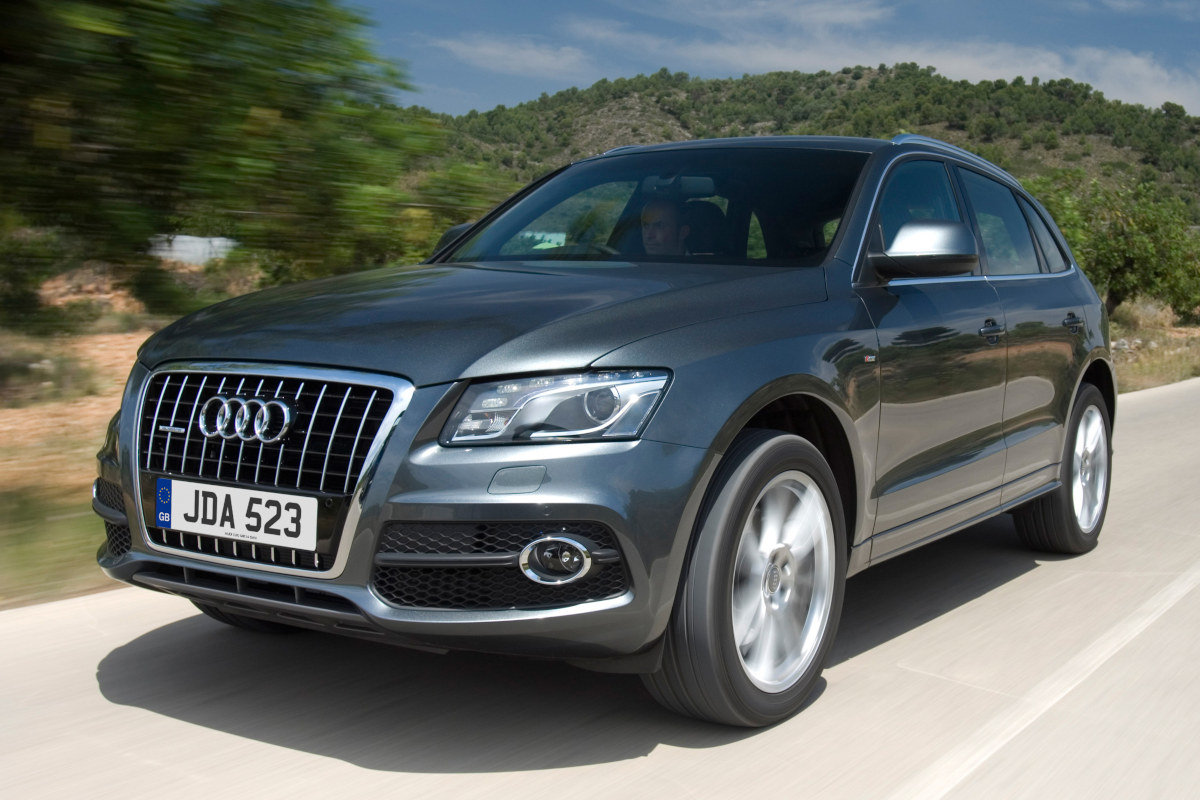
The first-generation Audi Q5 was introduced in 2009 as Audi’s second SUV model, tapping into the huge demand for premium SUVs that continues to this day. It uses the same basic platform, engines and tech as the Audi A4/A5 models of the time, wrapped in a body that has almost identical dimensions to the BMW X3 that was introduced in 2010.
From the start, every Q5 has had Audi’s ‘quattro’ four-wheel drive system as standard: unlike some rivals, it doesn’t offer any two-wheel-drive versions designed to give lower ownership costs. A huge array of engines were available over the course of the first-generation model’s eight-year run. The vast majority were sold with ‘TDI’ diesel engines, of which there are many variants. Most popular were the four-cylinder 2.0-litre units, which offered a range of outputs between 141bhp and 187bhp. Each one is usefully powerful, but for even more performance, there are 3.0-litre V6 diesel engines with 242bhp or 254bhp, with the more powerful version arriving later in the model run. The petrol lineup incorporates 2.0-litre four-cylinder TFSI engines with 178bhp, 222bhp or 227bhp. The initial range-topping petrol engine was a naturally aspirated 3.2-litre V6 with 266bhp, but this was replaced by a supercharged 3.0-litre V6 with 272bhp in 2012. Standing apart from the rest of the range is the SQ5 TDI, a high-performance model with a range of upgrades and a 309bhp version of the 3.0 TDI diesel engine. A limited-edition SQ5 TDI plus version with 335bhp was also available. While the lower-powered versions are available with a six-speed manual gearbox, many were specified with the optional automatic gearbox. Higher-powered versions are auto-only, using either an ‘S tronic’ dual-clutch automatic transmission, or a ‘Tiptronic’ conventional automatic gearbox.
The range of trim levels is surprisingly small, with SE, S line or S line Plus versions, along with the limited-run S line Special Edition and the standalone SQ5. The good news is that each is very well-equipped. Even entry-level SE cars have three-zone climate control, cruise control, leather upholstery and rear parking sensors. S line adds larger alloy wheels, xenon headlights and a range of sporty cosmetic upgrades, while S line Plus adds sat-nav, front parking sensors and an electric tailgate. SQ5 models have all this plus more. Audi didn’t mess with a winning formula when it came to updating the Q5: there were minimal changes over the model’s lifespan, with the main update in mid-2012 bringing very minor design tweaks, along with the introduction the SQ5 and some of the higher-powered engines.
While the Q5’s interior feels plush and well built, it’s not a car that has a great reputation for reliability. Independent reliability and owner satisfaction surveys don’t paint a terribly flattering picture, with 2.0 TFSI models prone to excessive oil consumption and failing timing chains. Other common issues, regardless of engine, include rattling or leaking panoramic sunroofs, noisy suspension caused by failing control arms, and even bodywork rust, especially around the wheel arches.
Audi Q5 Mk1 Review
Search for an Audi Q5 Mk1 on CarGurus
Related Topics: