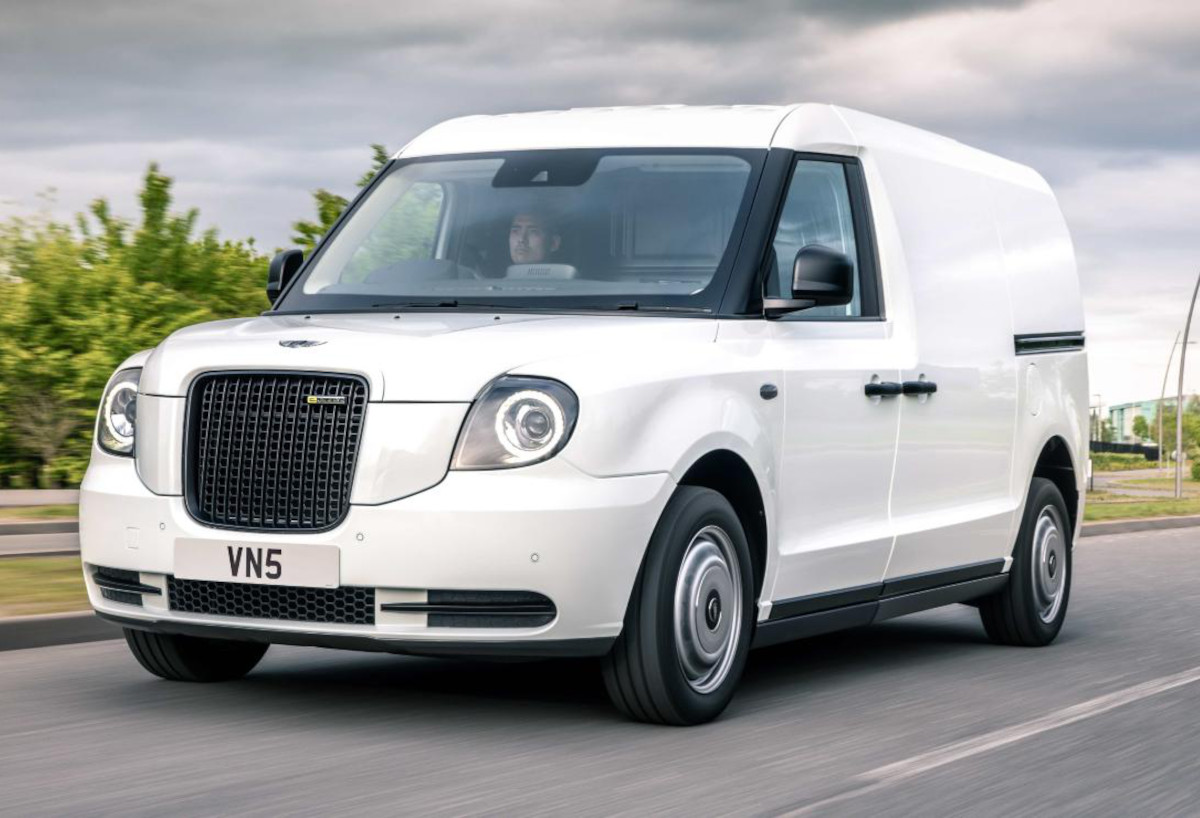
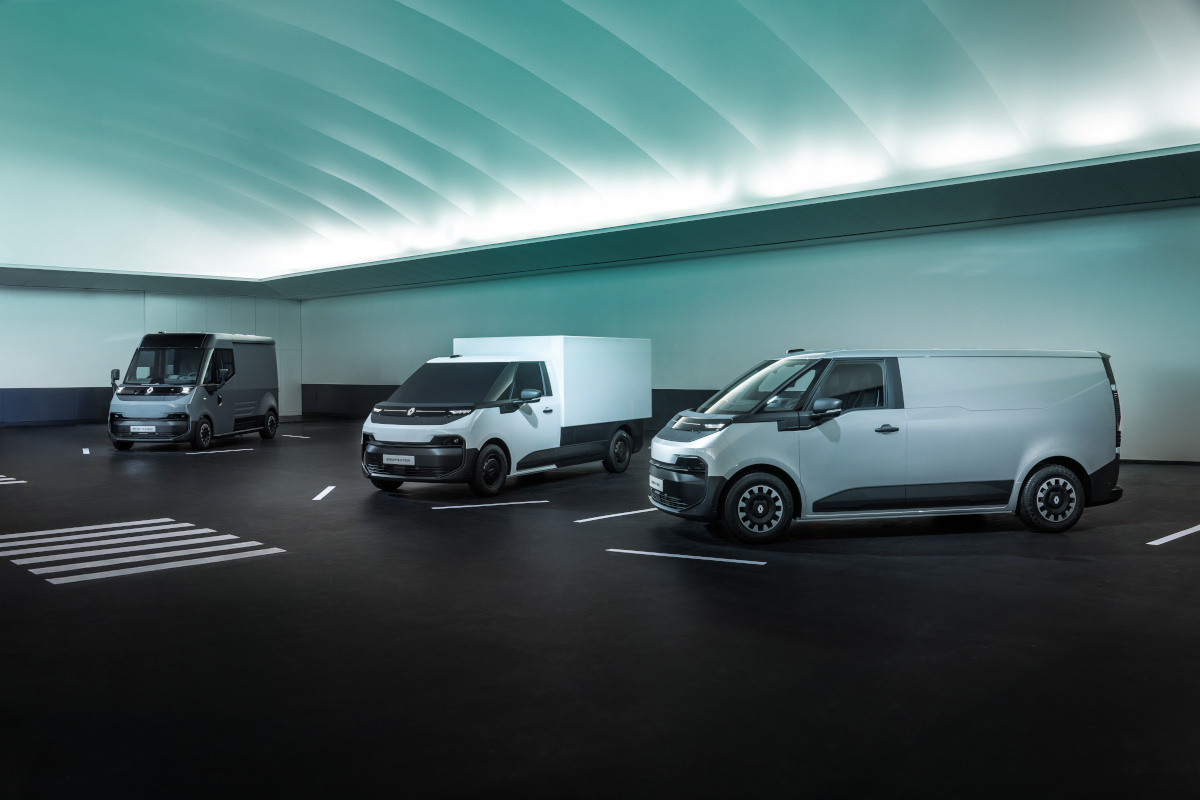
Whether you need a big payload or long driving range, electric vans are becoming more popular, and the electric van market is becoming more and more competitive. Combined with increasing numbers of public chargers that are able to deliver faster charging speeds, a van with an electric powertrain is an increasingly viable option for more and more commercial use cases – even with the caveat that, as with electric cars, the official range doesn’t tend to quite stand up to real-word use...
Electric power might not get you quite as far as a full tank in a diesel van, but in recent years the driving range of electric vans has increased immensely in all body styles. And that’s true whether you’re talking about a large electric van such as the Mercedes eSprinter, a medium van like the Volkswagen ID Buzz Cargo or a nippy city runabout such as the Vauxhall Combo Electric.
What’s more, the practicality of a van coupled to zero emissions and rapid charging make them ideal for all sorts of commercial needs. There’s a wide selection to choose from when buying on the new and used van market, so here are the best electric vans for your business.
Best Electric Vans 2025
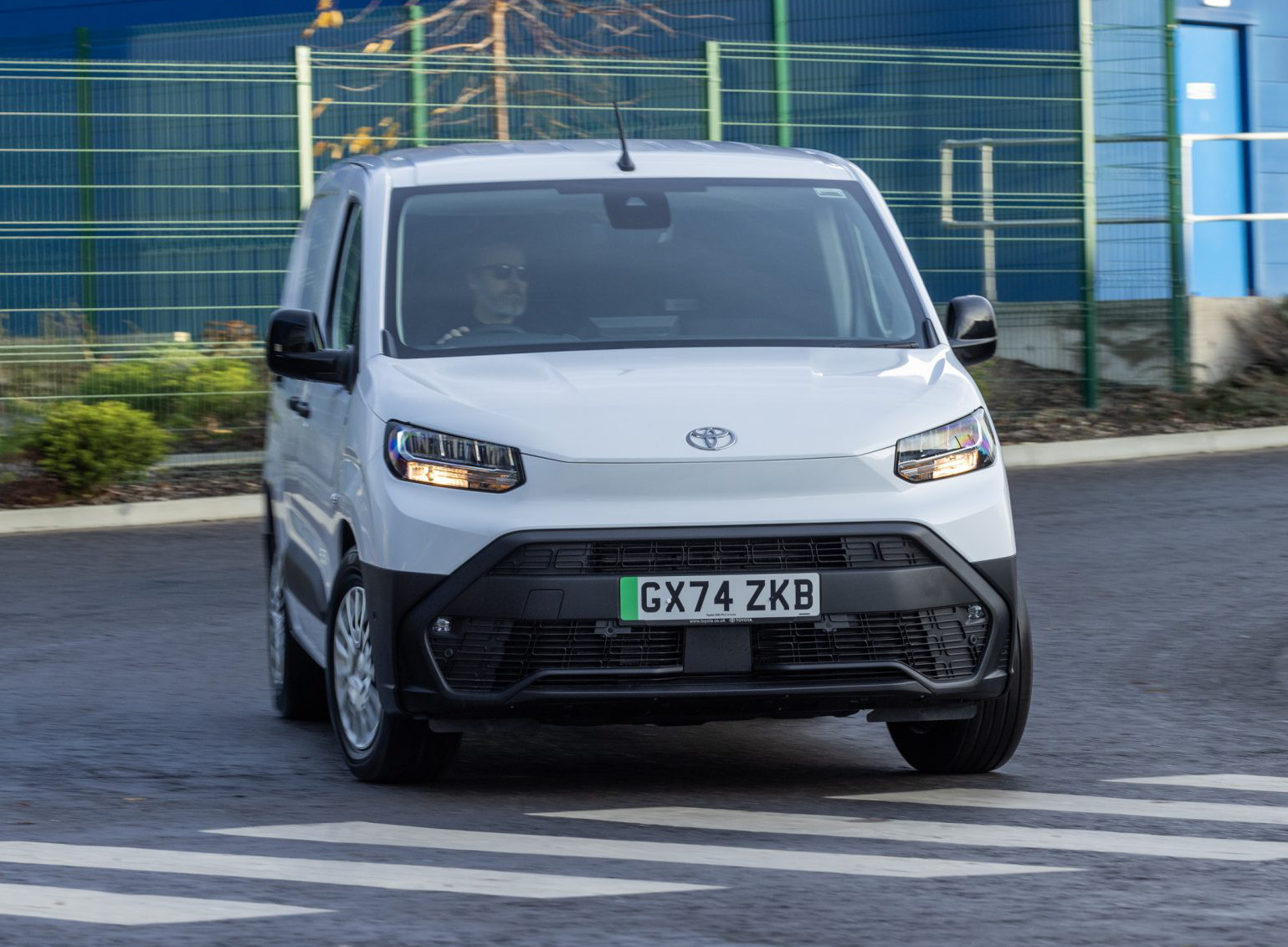
Toyota Proace City Electric (2021-)
Range: up to 213 miles (combined)
The Toyota Proace City Electric shares its DNA with the Citroen e-Berlingo, Fiat e-Doblo, Peugeot e-Partner, and Vauxhall Combo Electric, as the Japanese maker joined forces with the Stellantis group to build small and medium vans, and these five are among the finest small electric vans on offer right now. The most recent versions offered at the time of writing come with a 213-mile range and 100kW charging capability, which means you should be able to charge up to 80 per cent in around 30 mins on a rapid public charger. They are also good to drive and feel more like an electric car than a van thanks to their smooth ride and decent refinement.
An 803kg maximum carrying capacity is bigger than many rivals and there’s up to 3.9-cubic metres of load volume in the cargo bay. With keen pricing on their side, the Citroen e-Berlingo and its relations make sound financial sense, but the Proace offers an extra trick up tis sleeve, thanks to Toyota’s warranty set-up. This offers up to 10 years of cover provided the van is serviced within the Toyota dealer network.
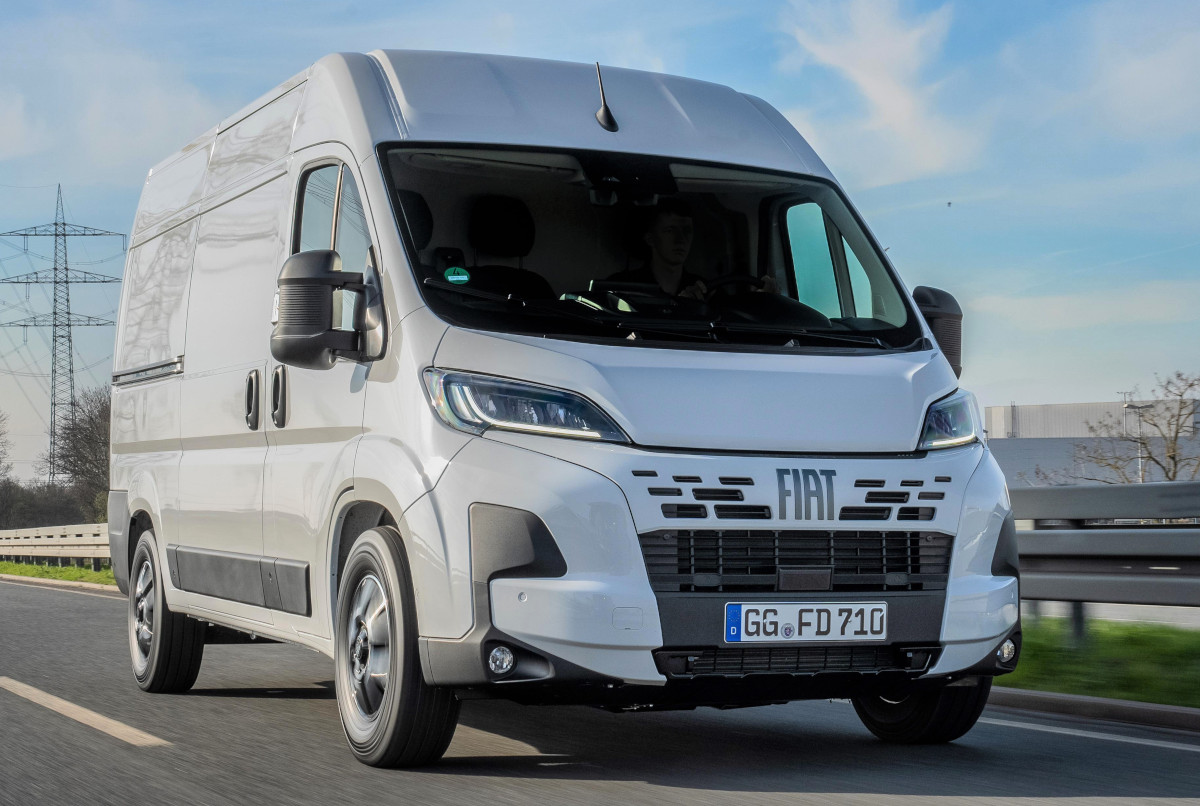
Fiat E-Ducato (2024-)
Range: up to 263 miles (combined)
Out of all the large electric van choices, the Fiat E-Ducato noses ahead of many rivals by offering a large battery driving range coupled to a maximum payload that varies from 710kg all the way up to a massive 1,770kg. It also has a gross vehicle weight of 4,250kg, so it’s more than up to anything you ask of it.
And although this version of the Fiat E-Ducato can trace its roots all the way back to its diesel-engined 2007 ancestor, the electric model has now received the latest design refresh that was brought into diesel models some time previously. That’s important because it brings some significant upgrades to the interior and infotainment tech.
As with Fiat Ducatos of the past, the E-Ducato is offered as a chassis ca or panel van. However, whereas before there were multiple battery options, there is now the single choice of a 110kWh battery pack, giving a WLTP range of up to 263 miles combined, which is a significant improvement. Power is now more than doubled to an impressive 279bhp, too.
That being said, the Renault Master E-Tech is much more modern-looking inside and out, while the Mercedes eSprinter offers a marginally superior range and both ride and handle with more aplomb. Neither is as powerful as the Fiat, however, although the vans from Fiat’s sister brands (the Peugeot e-Boxer, Citroen e-Relay and Vauxhall Movano Electric all offer near-identical technical stats to the Fiat).
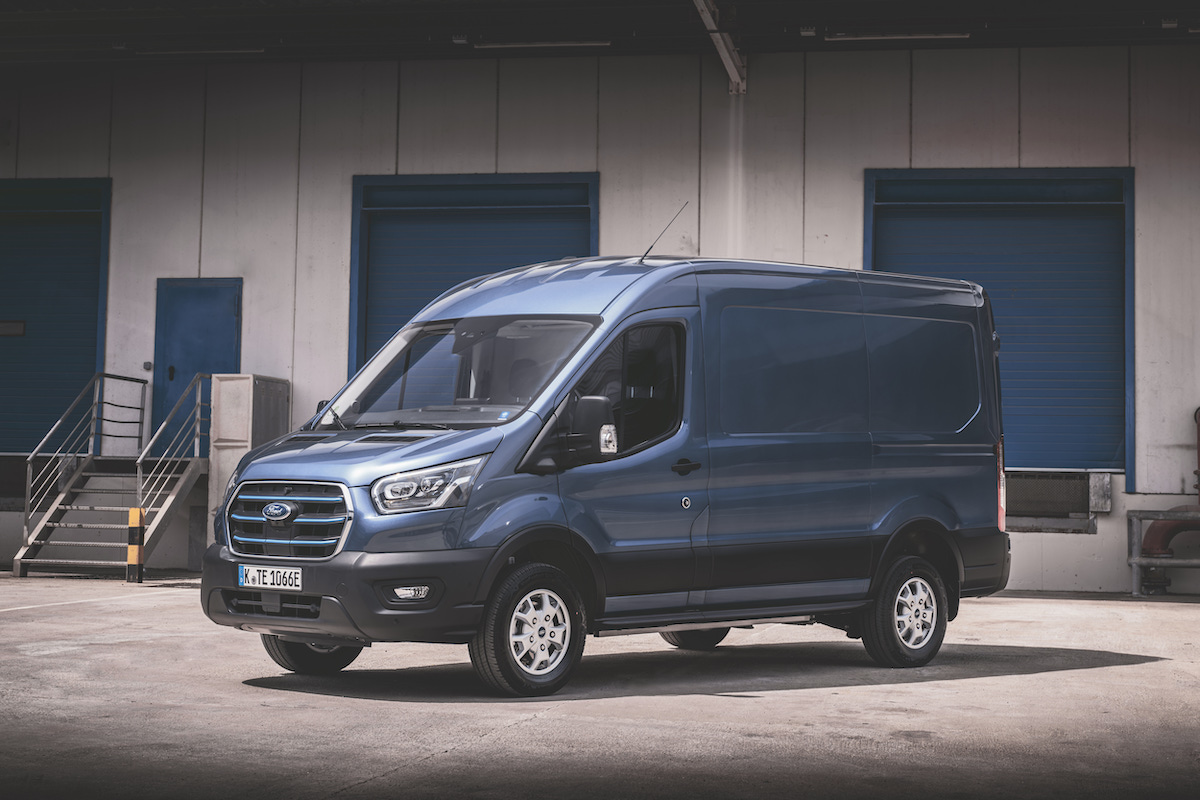
Ford E-Transit (2023-)
Range: up to 249 miles (combined)
For decades, the Ford Transit has been the default choice of van for British business, so much so that its very name has come to define this entire genre of vehicle. And that doesn’t look set to change any time soon, because the latest Ford e-Transit isn’t just the best large electric van out there, it’s the best large van full stop.
Not only is it available in a wide variety of specs, with varying choices in length, height, wheelbase, weight, payload, battery capacity and power output, it’s also the best vehicle of its type to drive thanks to class-leading comfort, refinement and agility, plus it has one of the most civilised-feeling interiors (albeit with the caveat that rivals, especially Renault, are catching up on this front). It’s even rather quick off the line if you opt for one with the 265bhp motor, while the battery range runs up to 249 miles.
There’s simply nothing this van doesn’t do brilliantly, and that’s precisely what has made the Transit such a smash hit over the years.
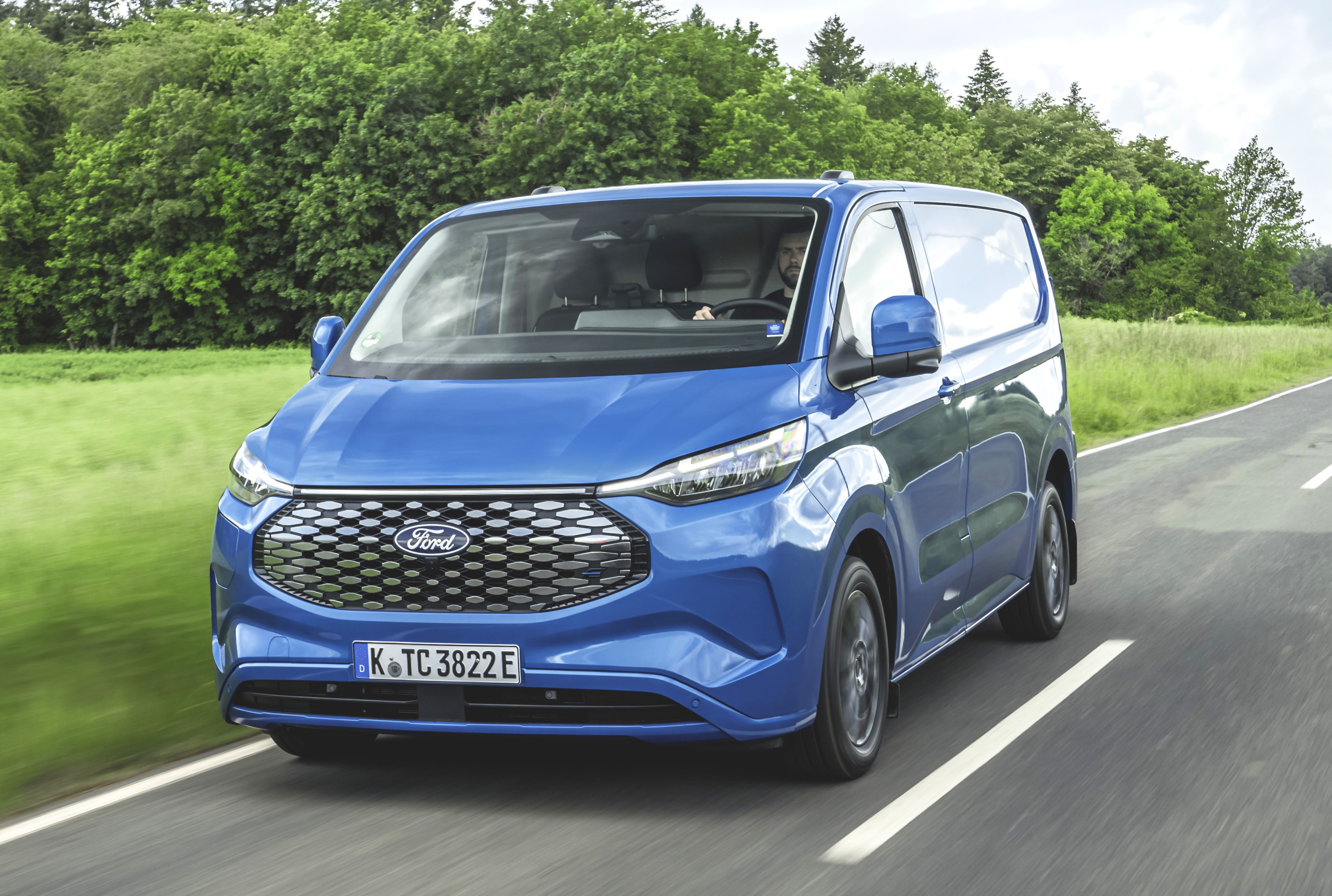
Ford E-Transit Custom (2024-)
Range: up to 209 miles (combined)
The Ford E-Transit Custom is a big deal for the Blue Oval, simply because the medium-sized Transit model is such a huge seller. Therefore it’s played it fairly safe in design terms, meaning the electric Transit Custom doesn’t actually look all that different from plug-in hybrid and diesel versions.
Yet that’s fine, because the Transit Custom is an impressively complete product whatever powertrain it features, with comfortable and refined driving dynamics and a car-like cabin that also offers neat little tricks like a steering wheel that can pivot to turn into a laptop holder/lunch break table. At 64kWh, the all-electric version doesn’t offer the biggest battery for this type of van so its range according to WLTP combined figures is 209 miles. That’s short of the 230 miles claimed by the Maxus eDeliver 7, but its charging peak of 125kW means it can top up to 80 per cent battery in under 40 minutes.
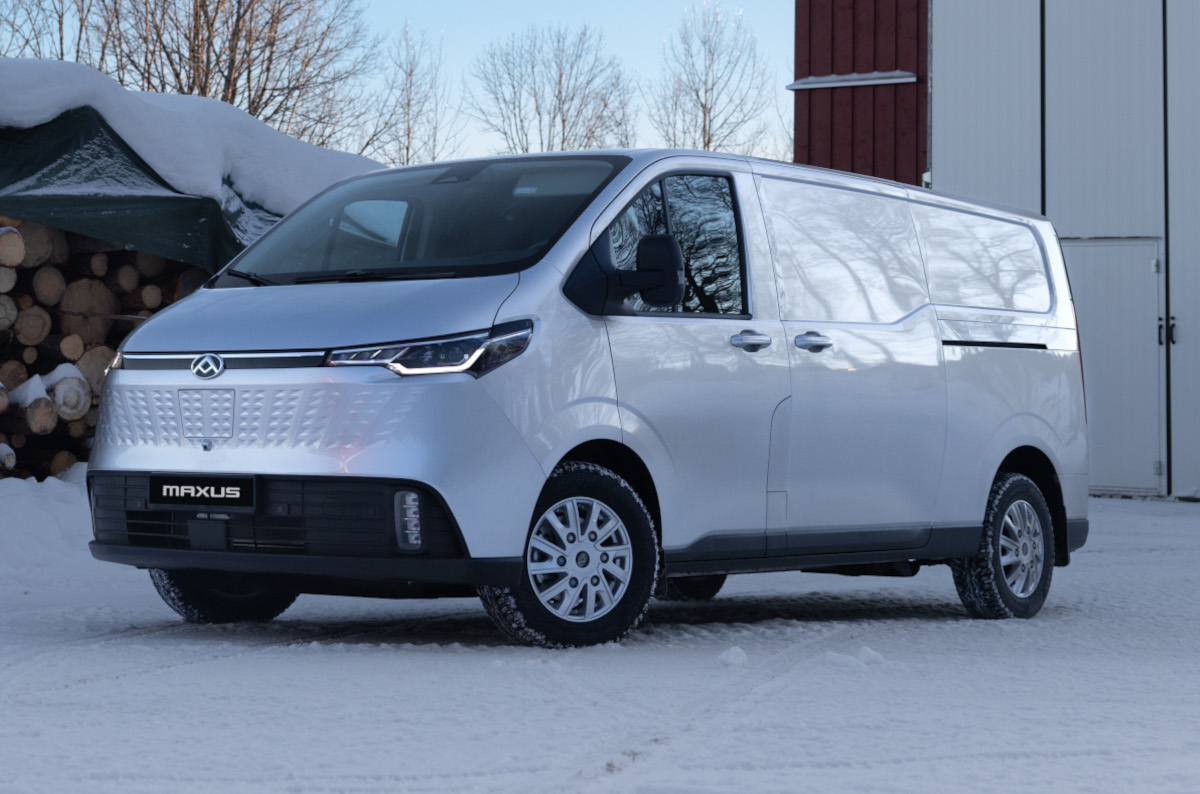
Maxus eDeliver 7 (2024-)
Range: up to 230 miles (combined)
Chinese commercial vehicle brand Maxus has been producing budget-focused electric vans for a while now, and its latest offering – the eDeliver 7 sits between the compact eDeliver 3 and the full-size Maxus eDeliver 9. Compared with the Fiat e-Scudo, Vauxhall Vivaro Electric and other Stellantis-group vans with which it competes, it offers both more interior space and a greater payload. In fact, with a rating of up to 1,200kg, it can carry more weight than any other direct rival.
The eDeliver 7 also promises the best official range for this type of van, with up to 230 miles of range from its 88kWh battery pack. That being said, reports suggest that the real-world efficiency of the eDeliver 7 is some way off the class best, meaning vans such as the Ford E-Transit Custom might actually give you a greater range on a single charge in real-world driving.
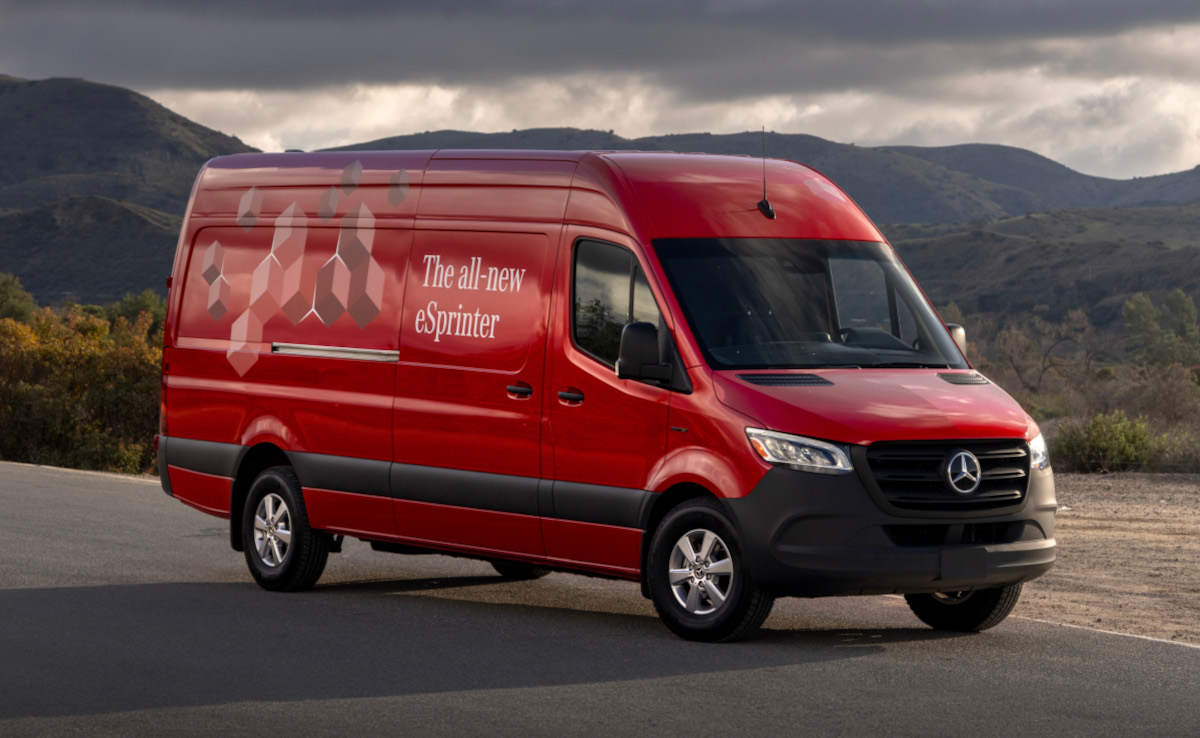
Mercedes-Benz eSprinter (2023-)
Range: up to 273 miles (combined)
You can beat a Mercedes-Benz if you want a posh badge on the bonnet of your van. What’s more, in higher-spec version such as the ‘Pro’ trim levels, the sort of equipment levels you get feels genuinely premium: there’s cabin temperature pre-conditioning, Mercedes’ MBUX infotainment system and a heated driver’s seat.
And that’s all useful on longer journey – the undertaking of which is an eminent possibility thanks to a battery pack of up to 113kWh that delivers a potential range of up to 273 miles. The only fly in the ointment are that the largest-battery version is rather heavy, meaning it’s only available with a gross vehicle weight of 4.25 tonnes and therefore may require HGV licences for some drivers.
This version of the eSprinter offers a significantly broader range of battery packs, dimensions and load capacities than its predecessor, however, meaning you should be able to find an eSprinter to suit your needs. And if your electric van needs require something smaller but you still want the Mercedes-Benz badge on the bonnet, then there’s always the eVito, though this is getting rather long in the tooth at the time of writing.
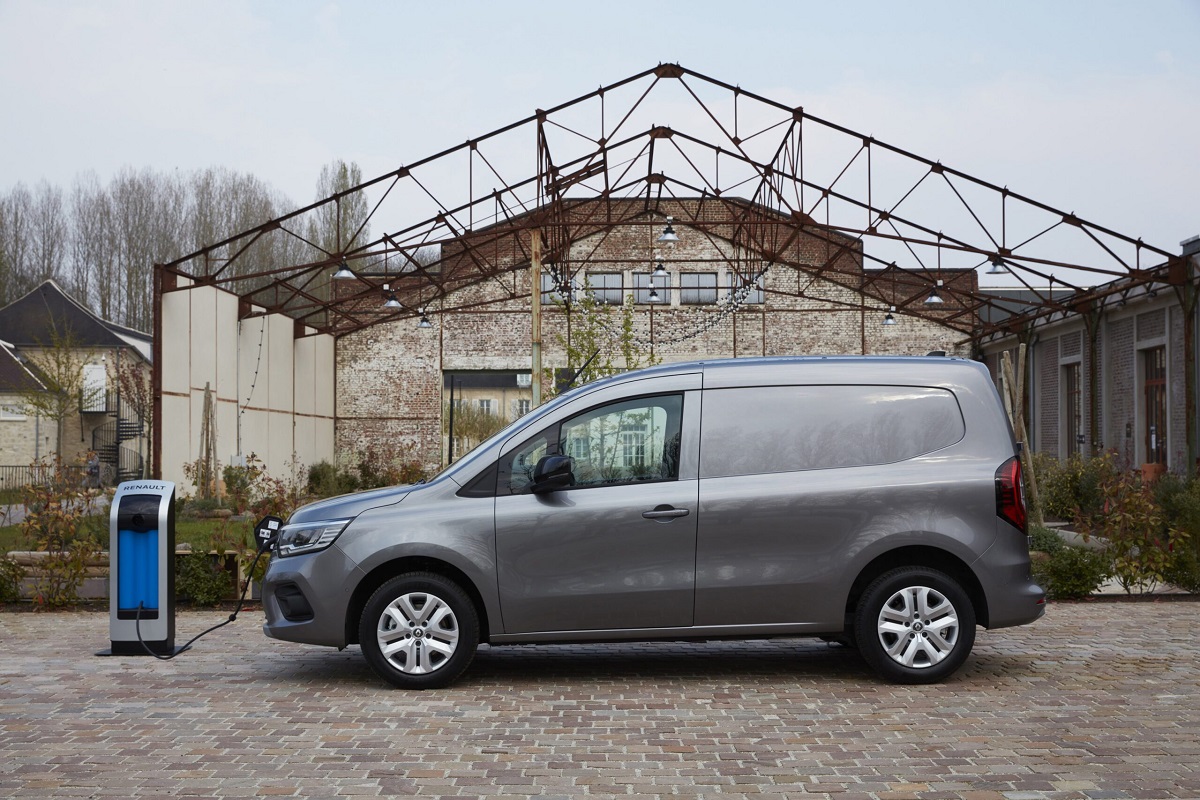
Renault Kangoo E-Tech (2021-)
Range: up to 186 miles (combined)
The Renault Kangoo E-Tech, which was previously known as the ZE, is one of the best-selling commercial vehicles with a battery pack. Its compact size makes it ideal in cities, but it offers more payload space than the supermini Zoe ZE van. Depending on which Kangoo E-Tech you pick, it can carry up to 640kg, which should be more than sufficient for most business drivers’ needs.
The driving experience in the Kangoo E-Tech is good and it’s quiet at motorway speeds, while the single-charge range of 186 miles is reasonable for a van of its size.
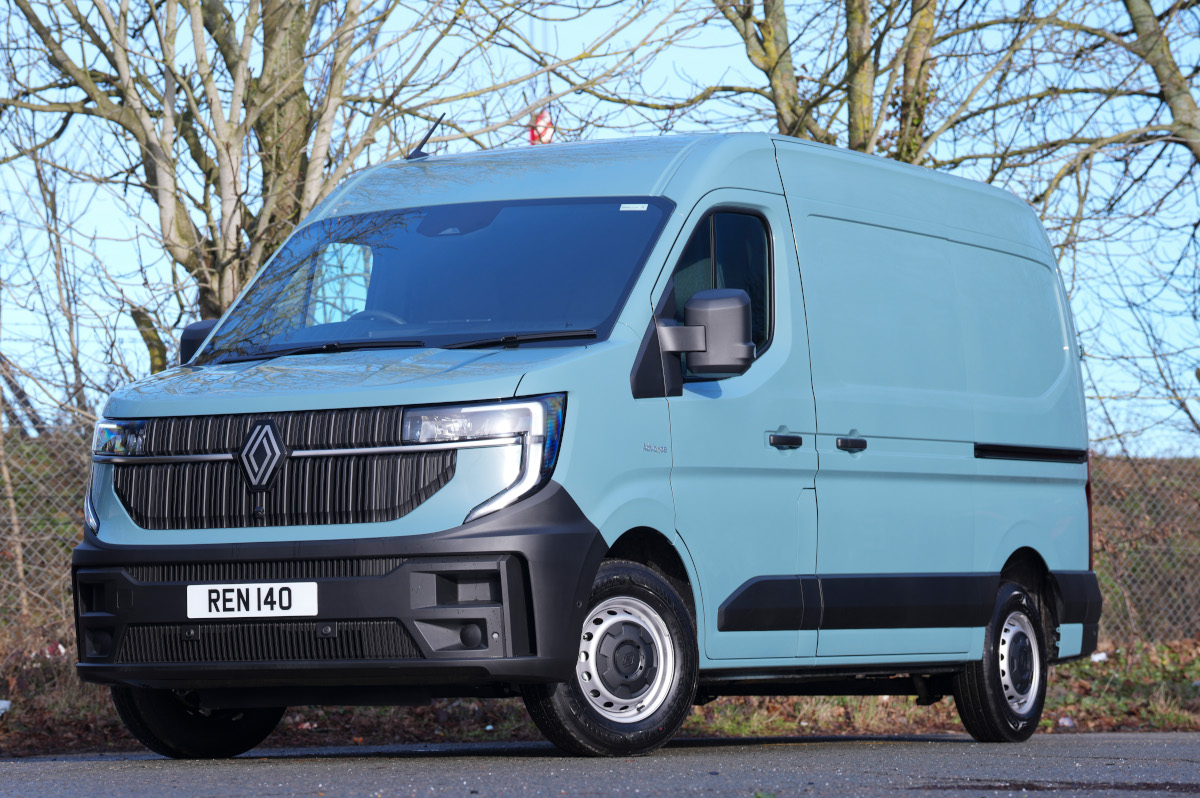
Renault Master E-Tech (2024-)
Range: up to 285 miles (combined)
Renault’s Master is one of the best large vans you can buy and the all-electric E-Tech, or ZE as it used to be called, is a versatile zero emissions option.
But where the old model fell a little short on driving range, the new Renault Master excels. It offers an 87kWh battery pack which, with the lower speed limits restricting the 4.0-tonne model, gives the Master a theoretical range of 285 miles. And though the unrestricted 3.5-tonne version can only muster 255 miles, that’s still impressive for a vehicle of this size and shape.
The other area in which the Master impresses is a modern and usable cabin design that offers an up-to-date infotainment screen as well as 135 litres of in-cabin storage space – always valuable real estate in a working van.
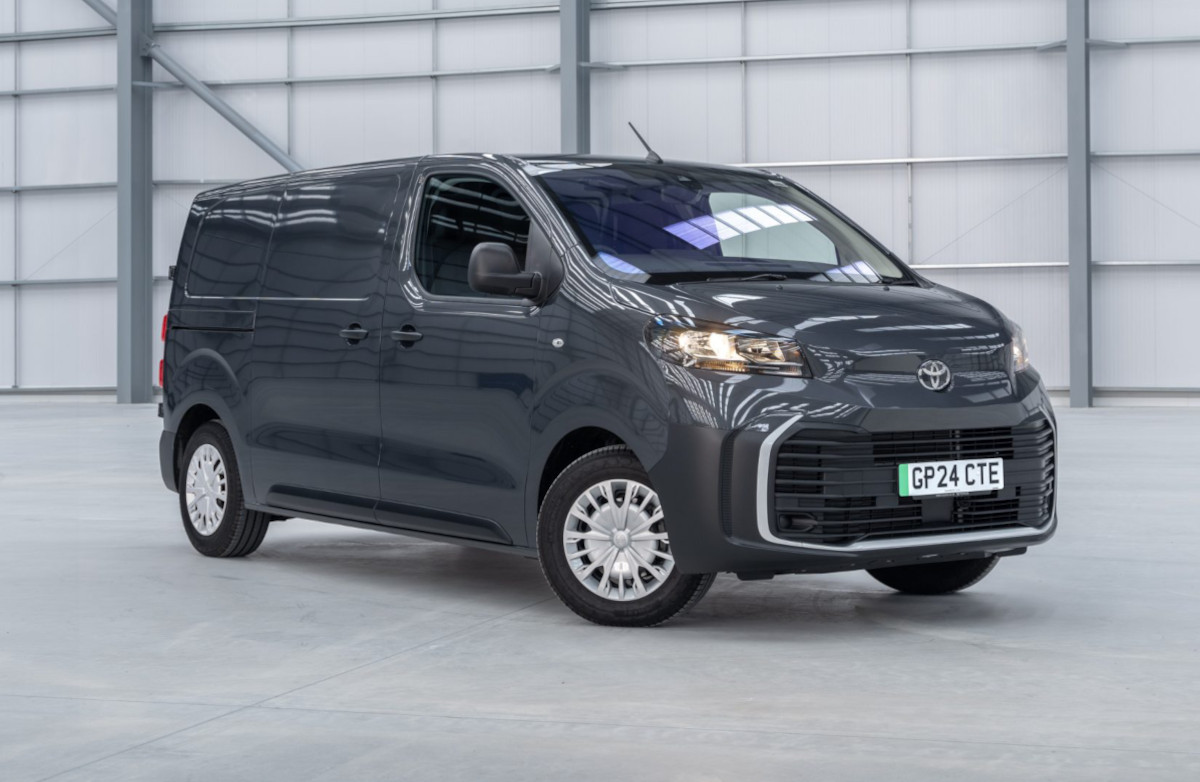
Toyota Proace Electric (2021-)
Range: up to 148-217 miles (combined)
There’s not a great deal of choice when you pick the Toyota Proace Electric, though you can have the Toyota Proace City Electric as an alternative. The Japanese firm isn’t unduly bothered as you can always select from its near cousins, such as the Citroen e-Dispatch, Peugeot e-Expert, or Vauxhall Vivaro-e. Where Toyota scores over these commercial vehicles is its superb 10-year warranty. For business users, this gives enormous peace of mind.
Unlike some competitors, the Proace does have a choice of two battery pack sizes, offering driving ranges between 143- and 205 miles. Load space is decent, if not huge, and the Toyota delivers a driving experience similar to that of many electric cars thanks to its comfort and refinement.
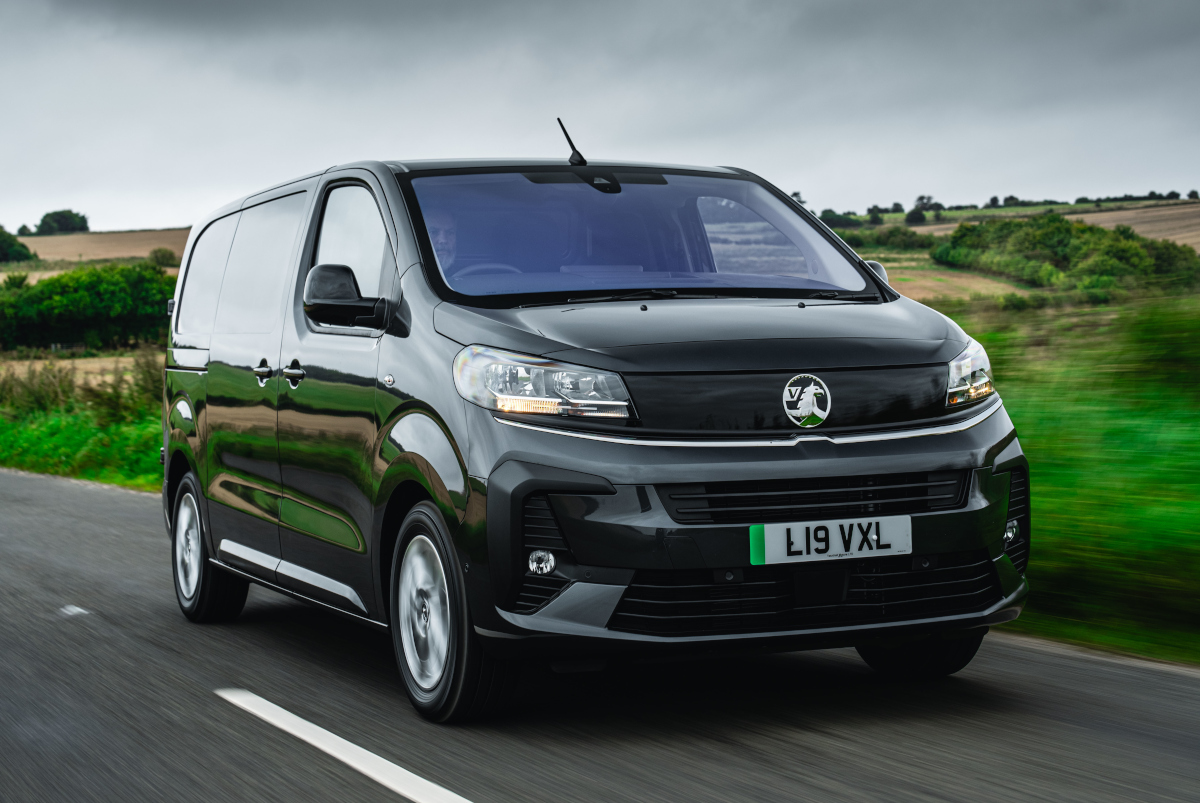
Vauxhall Vivaro Electric (2020-)
Range: 148-217 miles (combined)
The Vivaro Electric (formerly called the Vivaro-e) from Vauxhall is part of a trinity of Stellantis-made mid-size vans that includes the Citroen e-Dispatch and Peugeot e-Expert. All three have a choice of two battery sizes, so you have a range of 143 miles or 205 miles depending on which you pick. They also offer rapid charging and each can carry a payload of up to 1,200kg
In the real-world, the Vivaro Electric is simply one of the best electric vehicles of its type. Quiet, smooth, and easy to drive, the electric motor is ideally suited to the needs of its users and there are plenty of variants on offer with its body size. With low running costs, the Vauxhall and its French cousins show that an electric version can indeed replace the traditional diesel option.
Vauxhall Vivaro Review
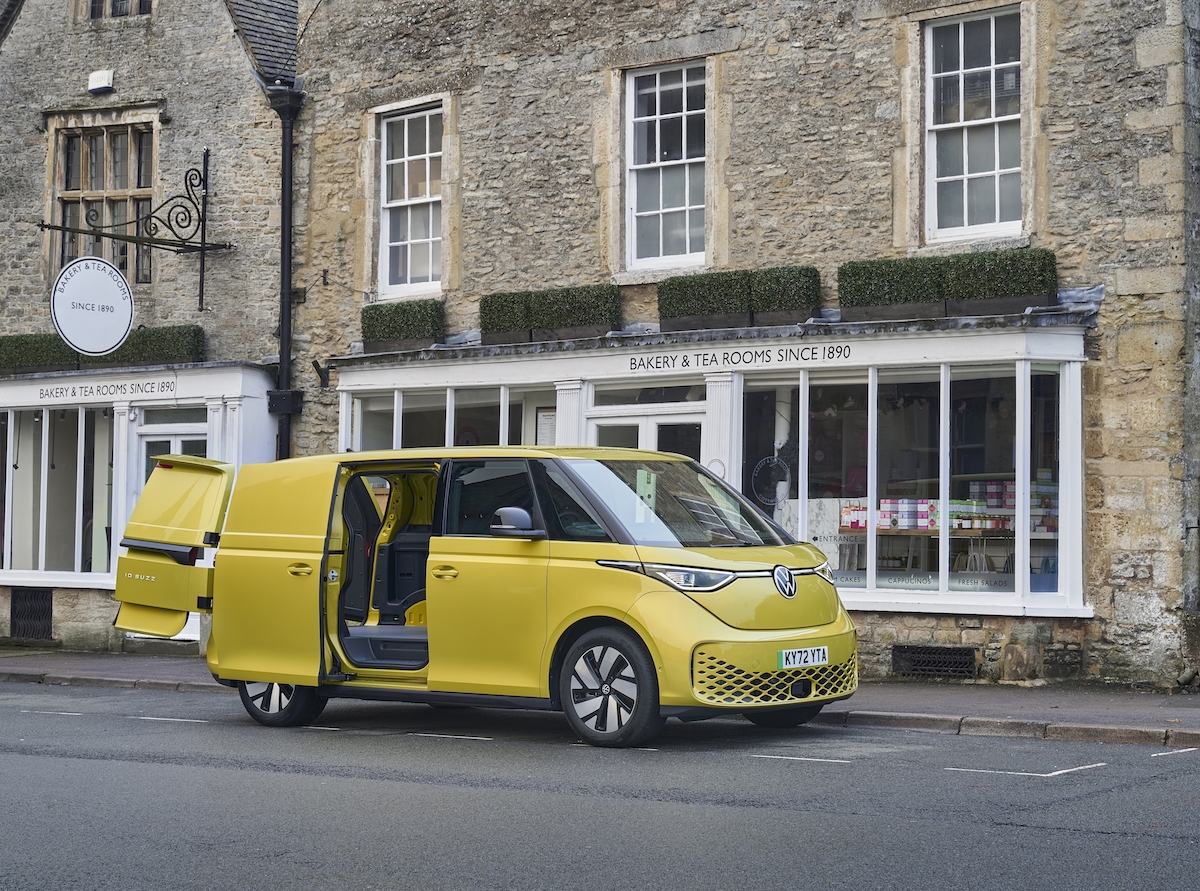
Volkswagen ID Buzz Cargo (2022-)
Range: 254 miles
The ID Buzz Cargo may not have the space or functionality of the bigger Transporter, but nothing else in Volkswagen’s van range - or anyone else’s, for that matter - can match the ID Buzz for style or character. There’s another problem with the VW ABT e-Transporter, too, and that’s its measly 82-miles range. Choosing the ID Buzz will mean you don’t have to visit a charger anywhere near as often thanks to its electric range of 254 miles, and it’s fast charging capabilities means you can get a 5% to 80% top-up in less than 30 minutes.
It’s not just the outside that’s stylish, either, because the cabin is just as funky and comes with a generous amount of standard equipment. However, do be aware of the ID Buzz’s high price, even if you can write this down and offset the VAT cost.
Volkswagen ID Buzz Cargo Review