The BMW 4 Series has been on sale since 2013 but it’s actually the latest in a long line of mid-size BMW coupe and convertible models dating back more than forty years. Introduced as a direct replacement for the previous 3 Series coupe and convertible models, the 4 Series is effectively an extension of the 3 Series range. BMW decided to adopt a new naming strategy in the noughties, however, with odd numbers for four-door saloons and five-door hatchbacks, and even numbers for its coupes and convertibles. So, 4 Series it is, even if there is actually a hatchback model in the range, as we’ll come on to in a bit.
Arriving a year after the 3 Series saloon model that it shares most of its mechanical parts with, the first-generation 4 Series was introduced in 2013. New name apart, the big news for the 4 Series was the introduction of a new body style in the form of the BMW 4 Series Gran Coupe: basically a five-door version of the two-door coupe. The switch to the 4 Series badge also meant adding another new model name to the BMW lineup, with the M4 arriving as the high-performance, M-division-fettled version in 2014. It has the same upgrades that the M3 gets over the 3 Series, and is available as a coupe or convertible, but there’s no M4 Gran Coupe. We’re focusing on the core 4 Series models for this guide: you can read our separate guide to the M4 here.
BMW shifted approach for the second-generation 4 Series introduced in 2020. Although it still shares many parts with the equivalent 3 Series, the 4 Series looks very different. It has a sportier, more muscular design and, to the horror of BMW purists, no ‘Hoffmeister kink’ (a classic BMW design feature on the rearmost window pillar). It was also the first BMW to feature a larger, more vertical interpretation of the brand’s famous ‘twin-kidney’ grille. It’s safe to say that not everyone’s a fan. BMW also spun another model off the 4 Series with the BMW i4, a pure-electric version of the Gran Coupe that’s marketed as an entirely separate model.
The 4 Series has been offered with a range of petrol and diesel engines over the years, although diesel is no longer available in brand new examples. Over the course of two model generations, there have been turbocharged four-cylinder and six-cylinder engines, available with rear-wheel drive or ‘XDrive’ all-wheel drive. Some are available with a manual gearbox but most have an automatic transmission as standard. Unlike some earlier BMW models, the 4 Series has always been a well-equipped car. Various high-tech features are standard or were optional when new, either individually or grouped in option packs. Trim levels include the familiar M Sport, which gives a sportier appearance and driving experience.
Our guide to the BMW 4 Series models covers how the model has evolved over time, which models are available and what to look out for if you’re in the market for one.
BMW 4 Series Generations
Frequently Asked Questions
Which BMW 4 Series years are the best?
Every version of the BMW 4 Series is good to drive and has a decent amount of power and kit, so choosing the best one for you could be a case of your personal preferences. If you can live with its divisive looks (and can afford it), we’d argue that the post-2020 model is the best bet, for its luxurious feel, powerful engines and wealth of high-tech features.
Which BMW 4 Series years are the worst?
There aren’t really any weak links with the BMW 4 Series. Independent reliability surveys suggest that there are no especially bad years for reliability, but as with most cars, the earliest versions can suffer niggles that get straightened out later in the car’s life cycle.
Is a used BMW 4 Series a good deal?
The BMW 4 Series is far from cheap, especially the post-2020 model. It’s great to drive, loaded with kit and has a premium look and feel, though, and has a generally good record for reliability. If you can find one at a price that’s right for you, it could be a good deal.
BMW 4 Series Pros and Cons
Pros:
- Responsive and enjoyable to drive
- Top-quality interior with lots of advanced tech
- All versions are well-equipped
Cons:
- Higher-spec versions are expensive
- Second-generation model has divisive looks
- Boomy four-cylinder petrol engines
BMW 4 Series mk2 (2020-present)
Bodystyles:
- Two-door coupe
- Five-door coupe
- Two-door convertible
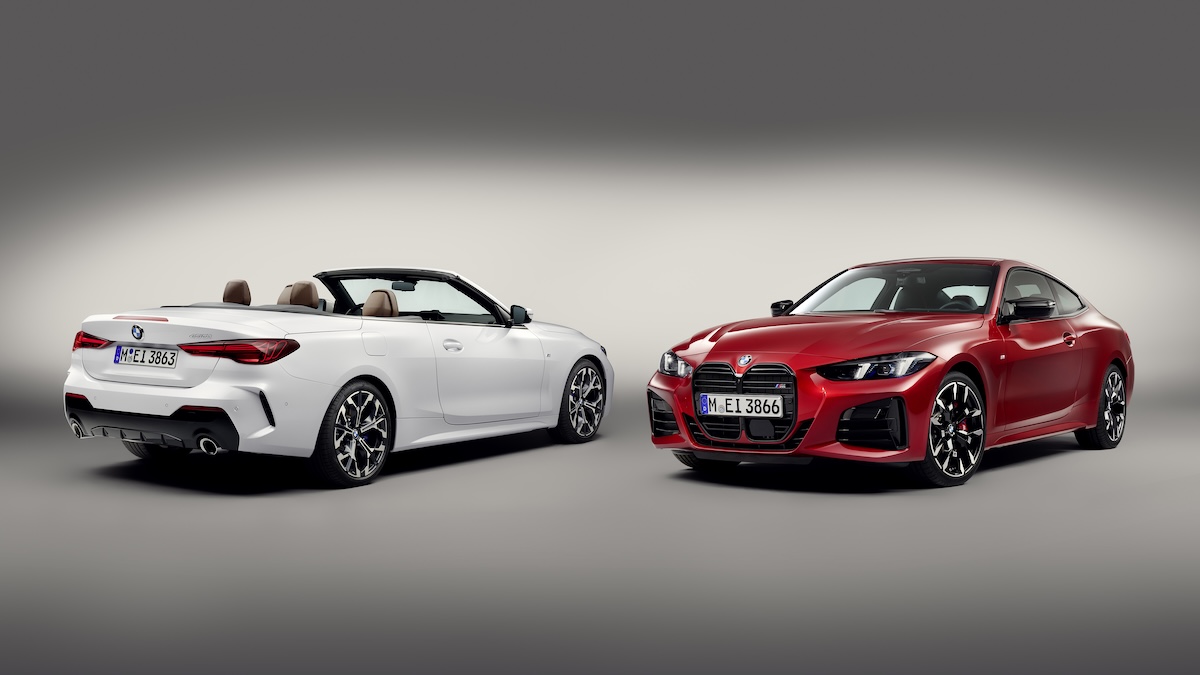
As great as the second-generation BMW 4 Series is in most respects, any debate about it tends to revolve around its exterior design. Specifically its front grille, an XXL, vertically-oriented edit of BMW’s familiar ‘kidney grille’. If the aim was to get attention, it worked. Elsewhere, the exterior has few traditional BMW styling elements and a definite ‘muscle-car’ vibe. It’s also noticeably longer than the car it replaced, and all of these elements add up to give the 4 Series a more distinct character from the 3 Series it's based on.
Looks apart, the second-generation 4 Series shares most of its mechanical and interior parts with the BMW 3 Series that went on sale in 2019. The choice of body styles is carried over from the first-generation car, with two-door coupe or convertible models, and the five-door 4 Series Gran Coupe. Whereas the previous 4 Series Convertible had a folding metal roof, the second-generation model has a fabric roof that brings two benefits: less weight and more boot space.
There’s not as wide a selection of engines compared with the first-generation car, but there’s plenty of choice and all are turbocharged, come with an eight-speed automatic gearbox and give good performance. Of the two four-cylinder options available, the entry-level 420i makes most sense, since it gives you a fine balance between pace and price. The 430i is a lot more powerful but, like the 420i, it sounds rather coarse when worked hard. For a more mellifluous soundtrack – and effortless acceleration – choose the M440i, which has a 3.0-litre six-cylinder engine. The diesel options are the four-cylinder 420d or the six-cylinder 430d and 440d. All are gutsy, with the 430d and 440d seriously quick.
There haven’t been many updates over the years, other than the introduction of the ‘BMW Curved Display’ in the 2023 model year. This new dashboard layout replaces the previous driver display and centre touchscreen with a 12.3-inch driver display and a 14.9-inch centre screen that combine to form a single display that curves towards the driver. A range update in early 2024 brought minor cosmetic changes, with new front and rear light lenses, new alloy wheel designs and some updated trim inside. By this time the drivetrain options had been whittled down to just the rear-wheel-drive 420i and M440i xDrive, too.
Only high-spec, sporty trim levels are available. M Sport is the entry-level option and it gets more or less the lot, including 18-inch alloy wheels, three-zone climate control, LED headlights, front- and rear parking sensors, leather upholstery and Apple CarPlay/Android Auto integration, and various driver assistance systems, all as standard. M Sport Pro features 19-inch alloys, adaptive suspension and sportier interior and exterior trim: M440i models have a similar spec. As you’d expect, when new you could go to town on the options list, adding thousands to the car’s price with either single options or an array of option packs.
This latest BMW 4 Series is proving to be a generally reliable car, as is the 3 Series it shares many parts with. In recent years, BMW has performed well in independent owner satisfaction surveys, too, so all the indications are that the 4 Series ought to be a sound ownership prospect.
BMW 4 Series Mk2 Review
Search for a BMW 4 Series on CarGurus
BMW 4 Series mk1 (2013-2020)
Bodystyles:
- Two-door coupe
- Five-door coupe
- Two-door convertible
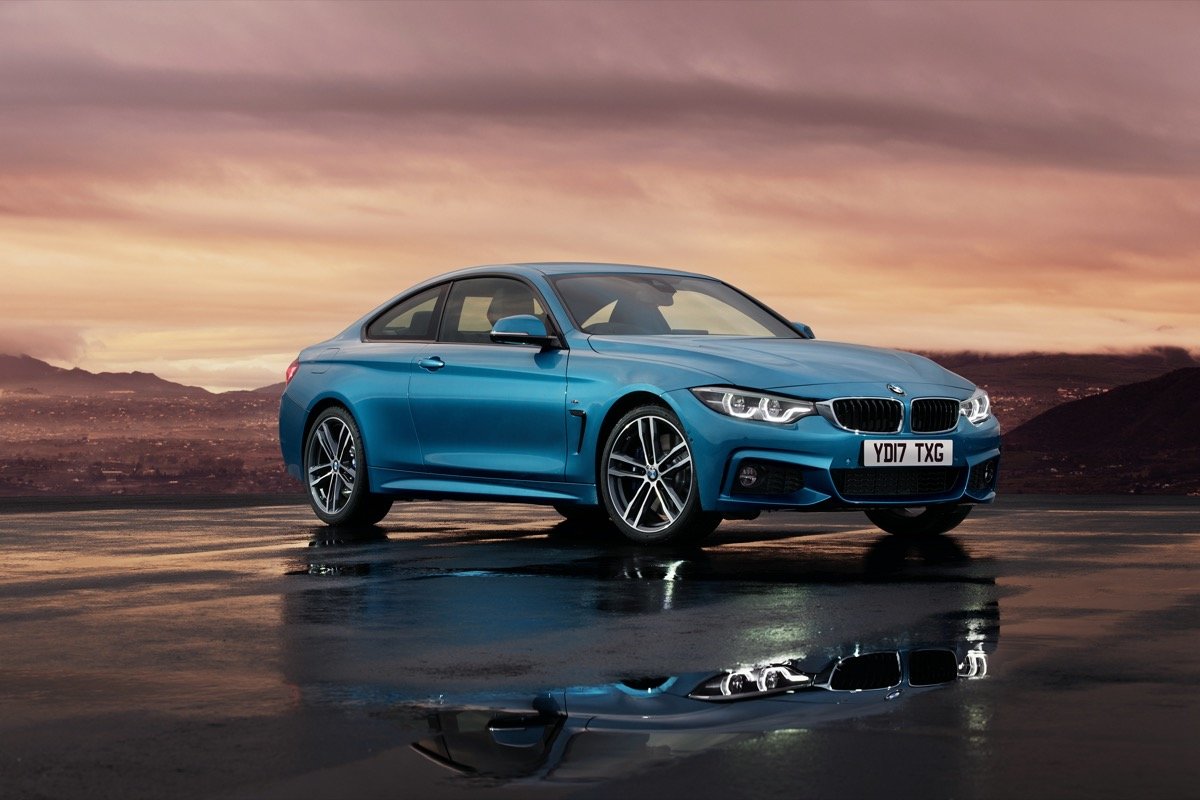
As we’ve already covered, the first-generation BMW 4 Series is actually the latest in a long line of 3 Series-based coupe models and convertible models, and the new name was pretty much the only surprising thing about it. In most respects, the first 4 Series looks and feels much like a 3 Series, which is no bad thing. In fact, the only metal bodywork common to both cars is the bonnet; the two cars’ length and width are almost identical, but the 4 Series is a fraction lower and sleeker overall.
The BMW 4 Series Convertible closely mirrors the shape of the coupe and, like many convertibles of the time, it has a folding metal – rather than fabric – roof. The electrically powered folding mechanism is a great piece of street theatre and the metal top improves both security and soundproofing. It adds weight and complexity, though, and when folded, the remaining boot space is quite small. If practicality is more your thing, there’s the 4 Series Gran Coupe, a five-door version of the two-door coupe. As well as the extra pair of rear side doors, you get a hatchback bootlid, yet it still has frameless windows and looks elegant enough to justify the coupe badging.
Although the new BMW 4 Series model lineup didn’t offer as many engine and trim options as the related 3 Series, the Mk1 4 Series still gives you a lot of choice. There are no less than 10 different engines to choose from: five petrol and five diesel, all turbocharged. The four-cylinder petrol options are the BMW 420i, 428i, and 430i. The entry-level 420i is pretty weedy; the 428i and 430i give more lively acceleration but all three sound rather gruff. The six-cylinder options are the 435i and 440i: both are quick and sound great, but the MPG might sting a bit.
It’s a similar story with the diesels, although their extra torque means that even the entry-level, four-cylinder 418d pulls well. The other four-cylinder diesels are the big-selling 420d and the 425d; both are impressively flexible, and offer really good fuel consumption and CO2 emissions, but are not as strong or as easy on the ear as the mighty 430d and 435d six-cylinder diesels. Most versions are available with either a 6-speed manual or an 8-speed automatic gearbox, but the 430d and 435d are auto-only. All are rear-wheel drive as standard but BMW’s ‘xDrive’ four-wheel drive system is available for the 420i, 420d, 430d and 435d.
The mid-life update (called a Life Cycle Impulse, or LCI, in BMW speak) for the first 4 Series took place in 2017. It includes the usual cosmetic tweaks, with new bumpers and some slightly different interior trim. All models gained LED headlights, while suspension and steering changes gave a slightly sharper drive.
From the off, the first 4 Series was a well-equipped car. Trim levels include Luxury, SE, Modern, Sport and M Sport. Even the earliest entry-level SE cars have dual-zone climate control, cruise control, leather upholstery, front- and rear parking sensors and heated front seats. M Sport versions have a sportier look and firmer suspension to give a sharper drive, although standard suspension was an option for some M Sport models when new. A huge range of individual options and a number of grouped option packages could be specified when new.
The first-generation 4 Series has a solid reputation for reliability. EGR (Exhaust Gas Recirculation) valves can fail on diesel models and faulty steering racks can be an issue regardless of engine. On the whole it’s a car that wears the miles well, although the cost of fixing any problems can be on the high side.
BMW 4 Series Mk1 Review
Search for a BMW 4 Series on CarGurus
Related topics: