
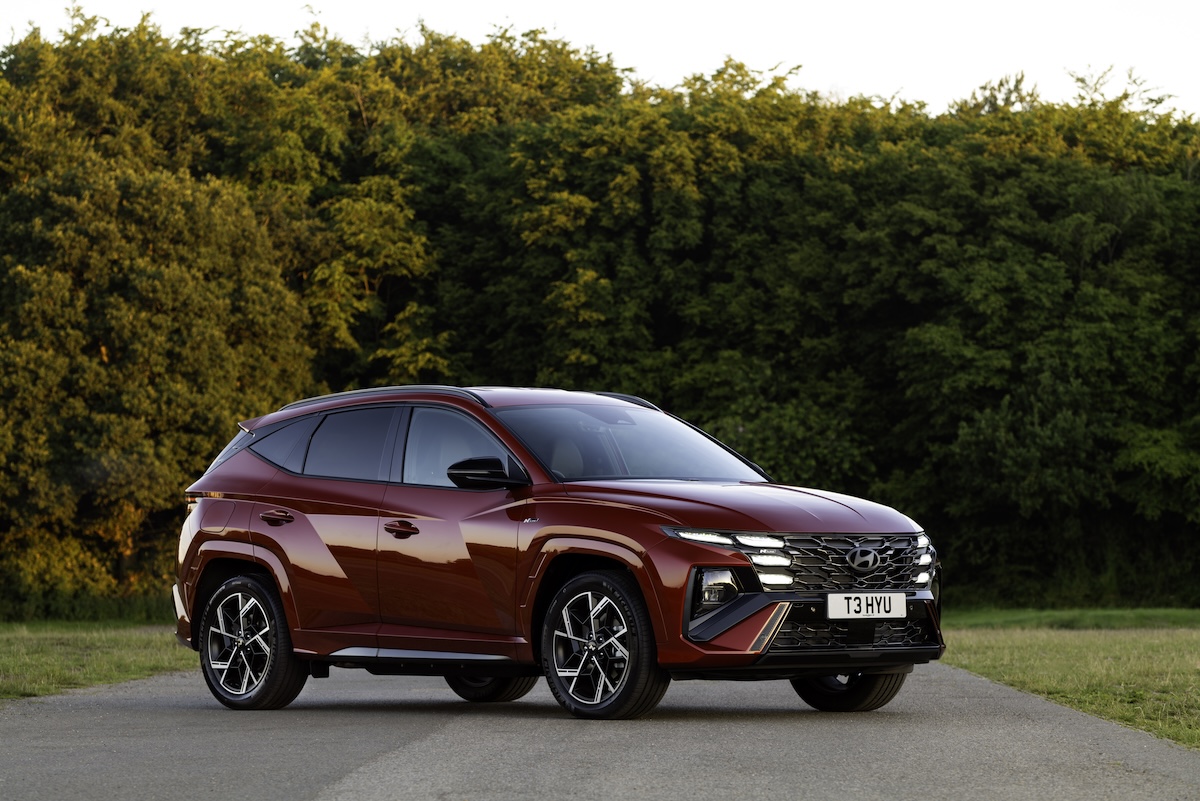
If you're looking for a new family SUV, the Hyundai Tucson and Volkswagen Tiguan are two of the strongest options on the market. The Tucson stands out with its bold, futuristic styling and a cabin packed with technology, moving Hyundai firmly into more premium territory.
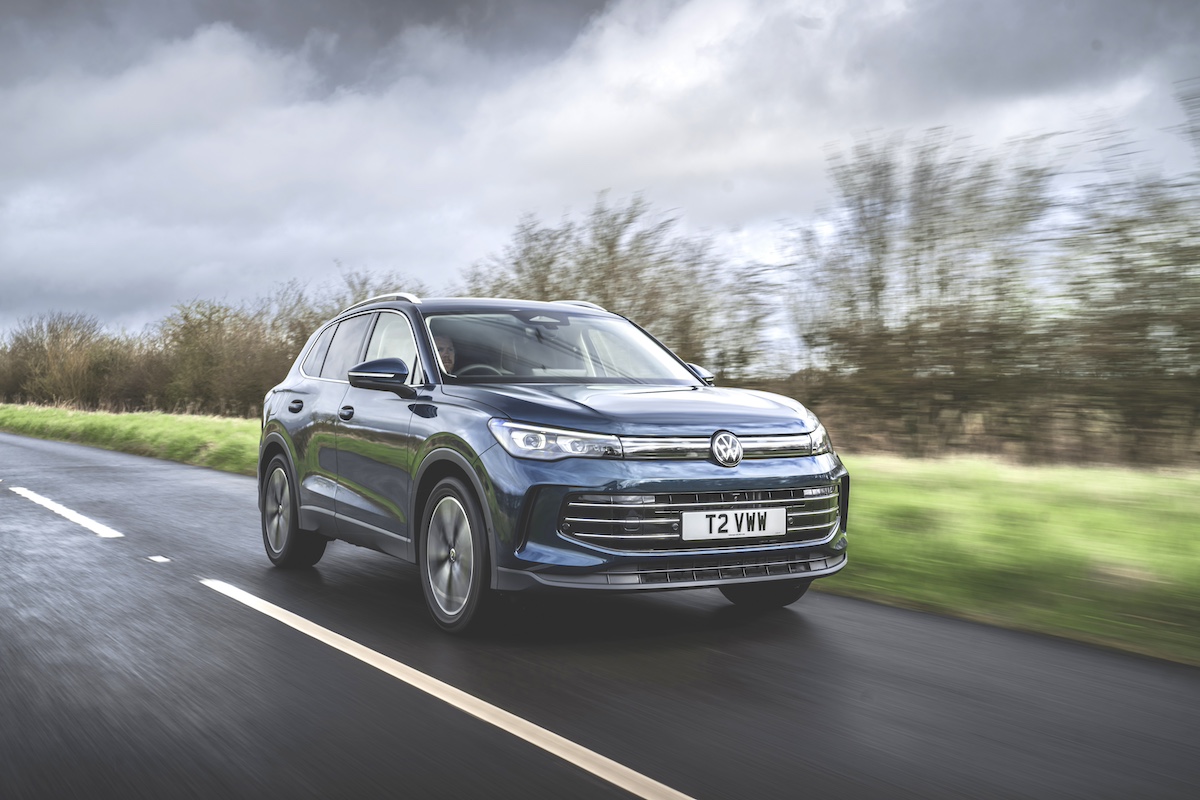
On the other side is the Volkswagen Tiguan. As VW's best-selling car worldwide, it plays things a little safer with conservative styling, but promises a high-quality interior and a sophisticated feel. Both offer a range of efficient hybrid powertrains, but they go about their business in different ways. So, which one is the right fit for your driveway?
Hyundai Tucson vs Volkswagen Tiguan
- Practicality
- Driving Impressions
- Technology and Equipment
- Running Costs
- CarGurus Buyer Insights
- Verdict
Practicality
Hyundai Tucson practicality score: 4/5
Volkswagen Tiguan practicality score: 5/5
Both of these SUVs are well-suited to family life, with plenty of space for passengers and luggage. The Tucson offers ample legroom and headroom in both the front and back, making it comfortable for tall adults. The rear bench is wide enough to accommodate three, though it's best for shorter journeys.
The Tiguan is just as spacious for passengers, but it adds a clever sliding rear bench. This allows you to choose between maximum legroom for rear passengers or a bigger boot. Speaking of which, the Tiguan has the edge in luggage space, offering 652 litres compared to the Tucson's 620 litres (in their standard petrol forms). It's worth noting that choosing a hybrid powertrain reduces boot space in both. The Tiguan plug-in hybrid (PHEV) drops to 490 litres, while the Tucson PHEV offers a more useful 558 litres. For all-out boot space, the non-hybrid Tiguan wins, but if you want a PHEV, the Tucson is the more practical choice.
Driving Impressions
Hyundai Tucson driving score: 4/5
Volkswagen Tiguan driving score: 3/5
The Tucson and Tiguan are both set up for comfort rather than sporty handling. The Tucson's range is built around a 1.6-litre petrol engine with various levels of hybrid assistance. The self-charging hybrid is a highlight, offering smooth and quiet progress with enough punch for easy overtaking. While its six-speed automatic gearbox can feel a little slow to react, the overall experience is relaxed and refined.
The Tiguan offers a wider range of engines, including petrol, diesel and plug-in hybrid options. However, the entry-level 1.5-litre mild-hybrid petrol engine can feel underwhelming, needing to be worked hard to get up to speed. The plug-in hybrid models are much better, offering quiet electric running and brisk performance. Neither car is particularly exciting to drive on a twisty road, but for comfortable, quiet cruising, the Tucson feels a little more polished.
Technology and Equipment
Hyundai Tucson technology and equipment score: 4/5
Volkswagen Tiguan technology and equipment score: 3/5
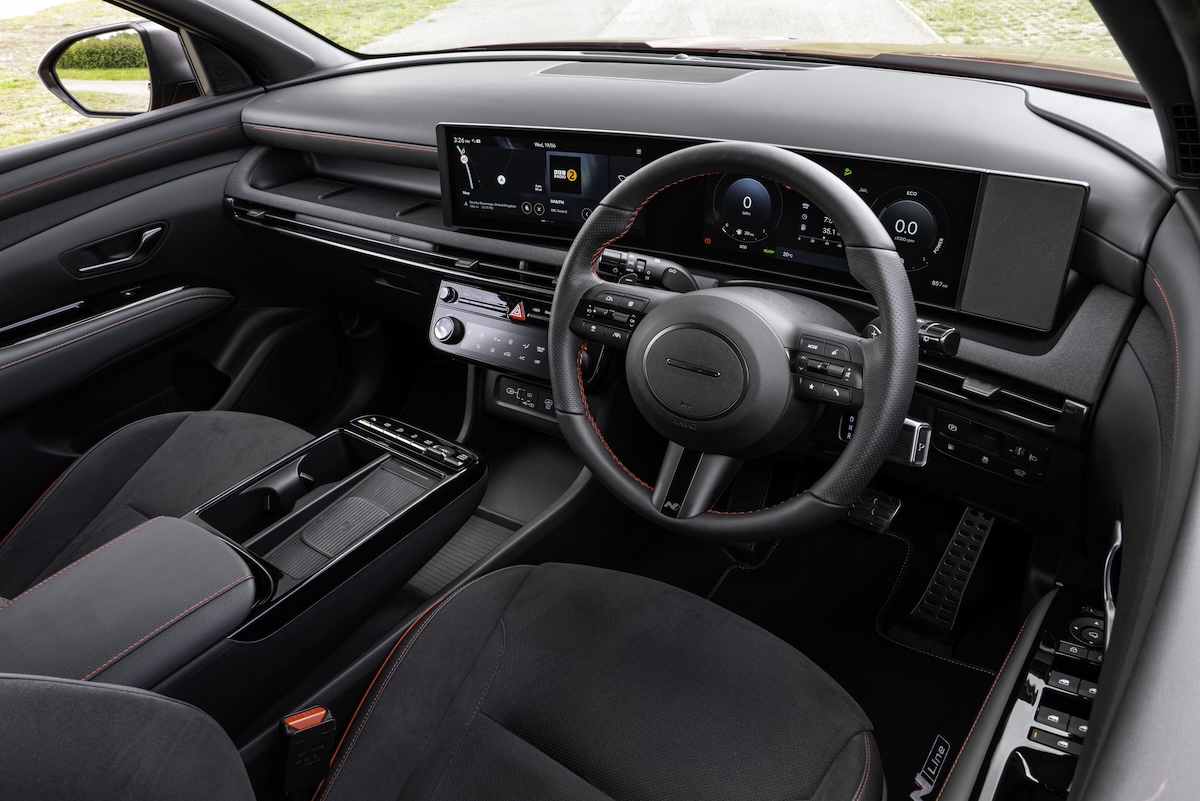
Hyundai has made huge strides in technology, and the Tucson is a prime example. Models built from mid-2024 onwards feature a brilliant twin-screen setup, with two 12.3-inch displays housed in a single curved panel. It looks great and is easy to use, thanks in part to the welcome return of some physical buttons for climate control. Even entry-level models are well equipped, with satnav, dual-zone climate control, and Apple CarPlay and Android Auto as standard.
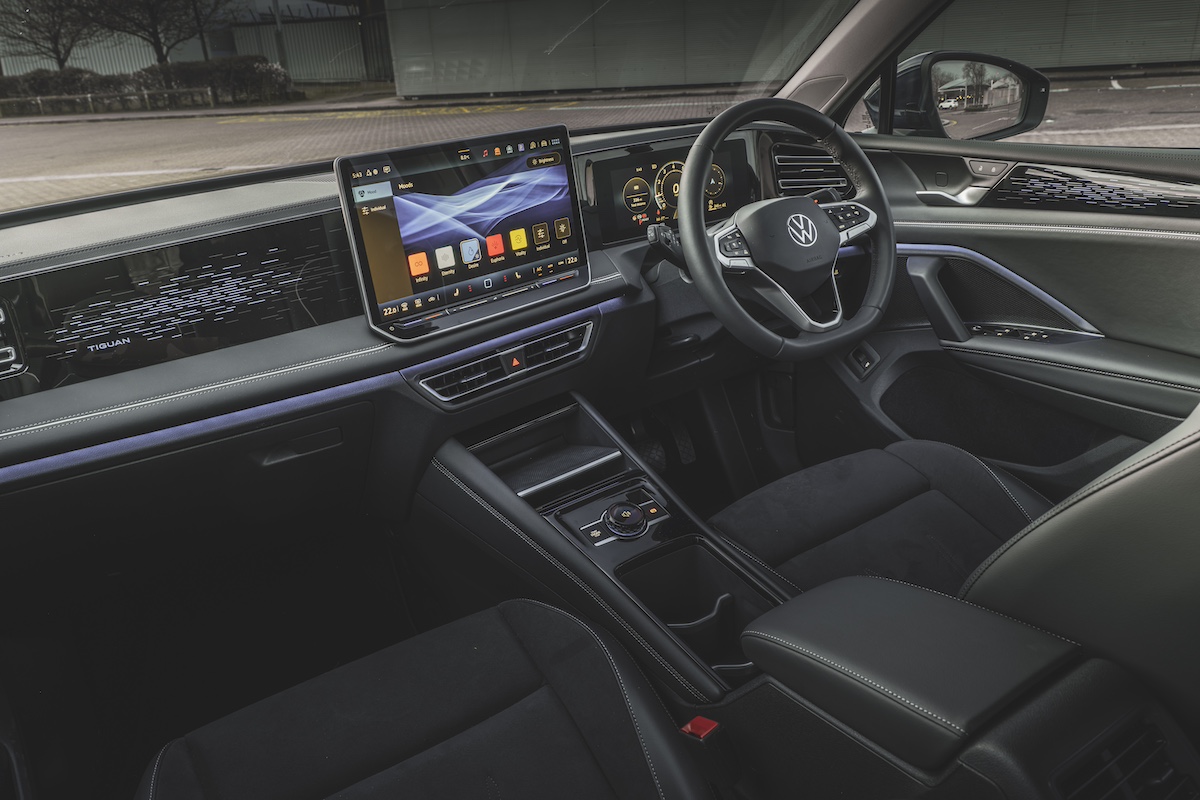
The Tiguan also goes for a minimalist, screen-focused interior, with a large central touchscreen controlling almost everything. While the graphics are sharp, the system can be frustrating to use on the move, with simple tasks like adjusting the fan speed requiring a dive into sub-menus. The build quality feels solid and upmarket, but the Tucson's more intuitive layout, particularly in post-facelift form, makes it easier to live with day-to-day.
Running Costs
Hyundai Tucson running costs score: 4/5
Volkswagen Tiguan running costs score: 4/5
As you'd expect, the plug-in hybrid versions of both cars offer the lowest running costs, provided you can charge them regularly. The Tiguan PHEV is the star here, with an official electric-only range of 60-70 miles, which is significantly more than the Tucson PHEV's 40 miles. For non-PHEV models, the official fuel economy figures are broadly similar, with both self-charging and mild-hybrid models returning around 40-45mpg.
Where the Tucson pulls a significant advantage is warranty. Hyundai offers a five-year, unlimited-mileage warranty as standard, which provides great peace of mind. Volkswagen, by contrast, provides a standard three-year, 60,000-mile warranty. That extra two years of cover from Hyundai is a major selling point, especially for those planning to keep their car for a long time.
CarGurus Buyer Insights
| Hyundai Tucson | Volkswagen Tiguan | |
|---|---|---|
| CarGurus expert rating | 4 out of 5 | 4 out of 5 |
| CarGurus user rating | 4.6 out of 5 | 4.5 out of 5 |
| Percentage of good/great deals available on CarGurus* | 31.2% | 33.2% |
| Overall CarGurus rating | 4.4 out of 5 | 4.4 out of 5 |
The Verdict
Hyundai Tucson Overall CarGurus rating: 4.4/5
Volkswagen Tiguan Overall CarGurus rating: 4.4/5
This is an incredibly close contest, and our Overall CarGurus ratings reflect that, with both the Hyundai Tucson and Volkswagen Tiguan scoring an identical 4.4 out of 5. There is no outright winner here; the best car for you will come down to your personal priorities.
The Hyundai Tucson makes a strong case for itself with its distinctive design, user-friendly technology, and generous levels of standard equipment. Its biggest trump card, however, is the five-year unlimited mileage warranty, which offers long-term peace of mind that the Tiguan's three-year cover can't match.
The Volkswagen Tiguan fights back with a more premium-feeling cabin, a slightly more versatile and larger boot in non-hybrid form, and a class-leading electric range in its plug-in hybrid model. It feels like the more grown-up, sophisticated choice, but it comes with a higher price tag and a more frustrating infotainment system. Ultimately, both are excellent family SUVs, and you can't go wrong with either.
Hyundai Tucson Pros and Cons
| Pros | Cons |
|---|---|
| Striking exterior design | Automatic gearbox can be slow to respond |
| Excellent infotainment system (post-2024) | Boot space shrinks on hybrid models |
| Five-year unlimited mileage warranty | PHEV electric range trails the Tiguan |
Volkswagen Tiguan Pros and Cons
| Pros | Cons |
|---|---|
| High-quality and spacious interior | Frustrating touchscreen controls |
| Large and practical boot | Entry-level engine feels underpowered |
| Long electric range on PHEV models | Shorter warranty than the Tucson |
*The Overall CarGurus rating: that informs these recommendations is based on CarGurus' proprietary market data from January 2026, CarGurus expert reviews, and CarGurus user reviews.