Volkswagen Tiguan Review (2024-present)
Pros and cons
What we like
Brilliant for practicality and versatility
Nicely trimmed interior
Good looks and desirable image
What to consider
Infotainment system is way too complex
Firm ride on larger alloy wheels
Many versions look rather expensive
The CarGurus verdict
We reckon family car buyers will love the Tiguan SUV for its generous interior space, big boot and cleverly designed rear seats, and the posh-feeling cabin with very decent standard kit won’t go amiss, either. The fact that it’s smart, stylish and desirable will be another big draw for buyers, and a wide variety of powertrain options (including plug-in hybrids that'll do around 60 miles on EV power) means there should be something for most tastes.
It’s not a cheap option by any stretch of the imagination, the ride could be more cosseting, and the touchscreen system is needless complicated at times, but as an overall proposition there's still a lot to like about the latest Tiguan.
out of 5 expert review
What is the Volkswagen Tiguan?
The Tiguan SUV is Volkswagen’s best-selling car worldwide (although the Volkswagen Golf and Polo do slightly better in the UK), so it’s a car that the German firm really needs to get right. This latest version is the third generation of VW’s mid-size five-seater family SUV, and it sits towards the posher end of the spectrum where mainstream rivals are concerned: maybe not on a par with competitors from Audi, BMW and Mercedes-Benz for image and prestige, but up there with the best of the rest, including Volvo, Lexus, Alfa Romeo, Jaguar, Honda, Toyota, Kia, Hyundai, Peugeot and Renault.
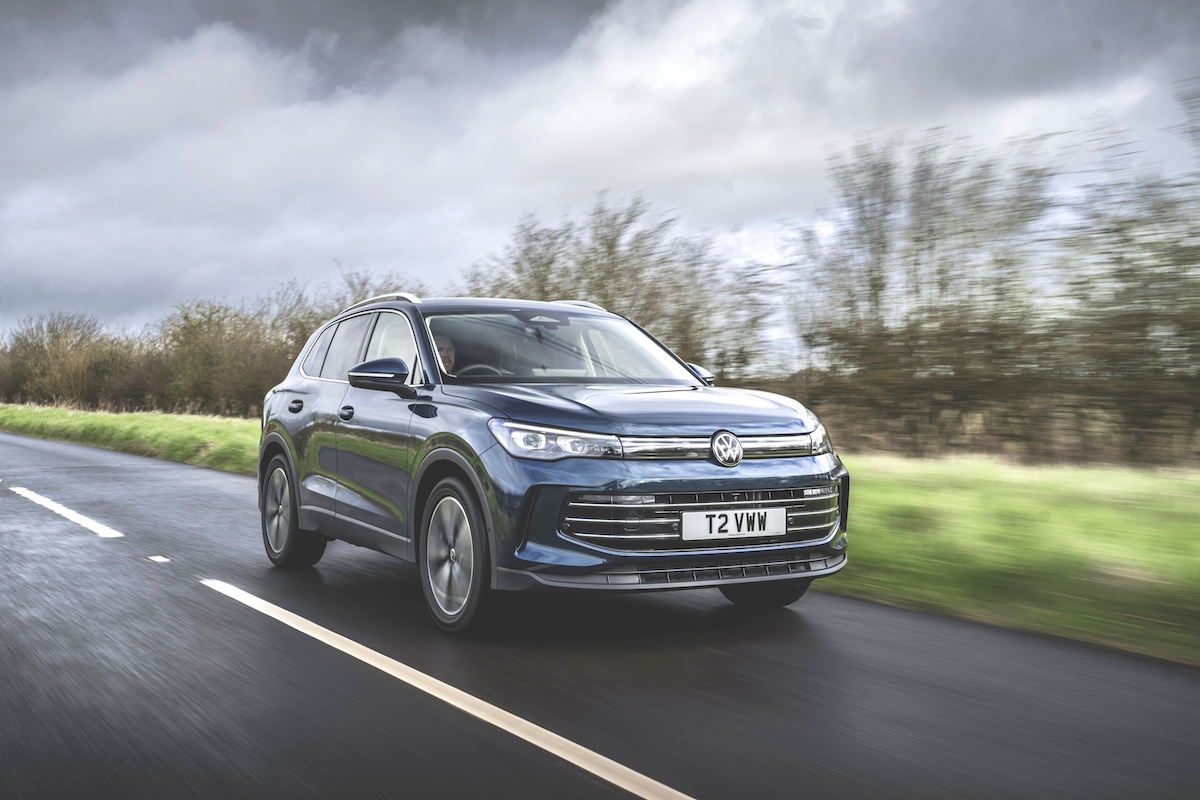
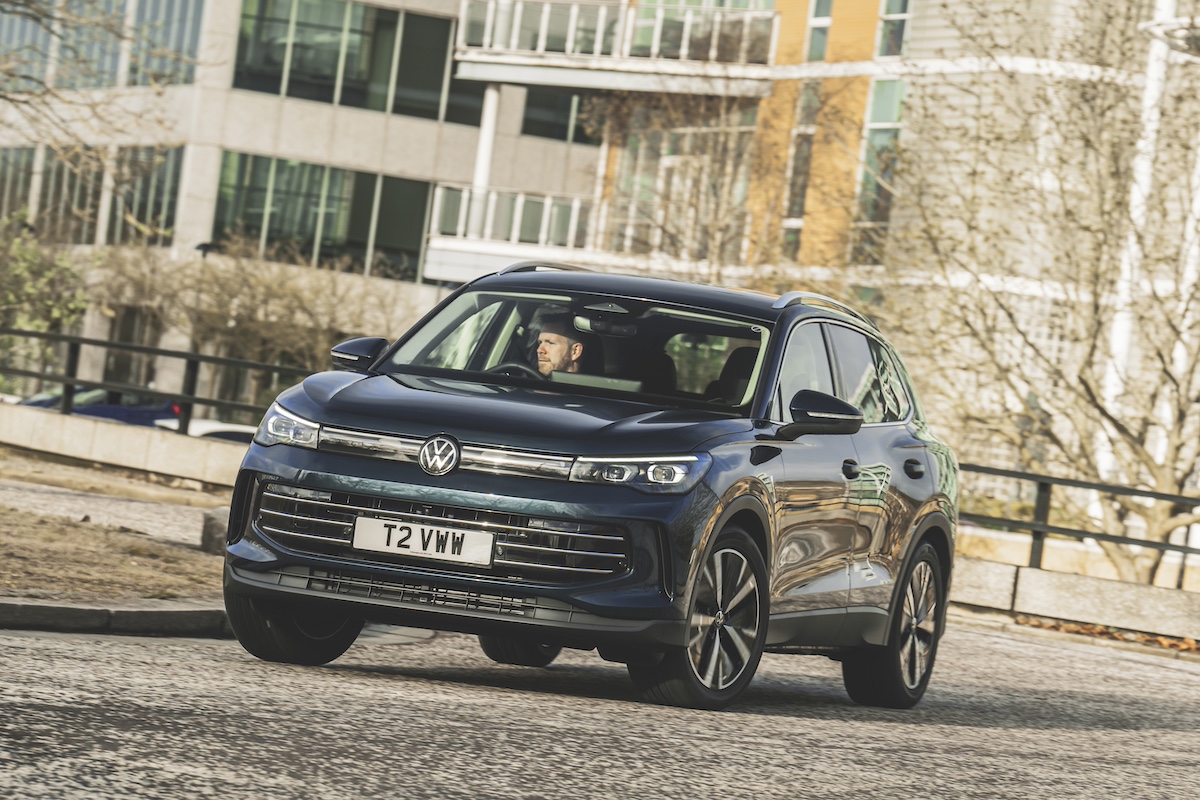
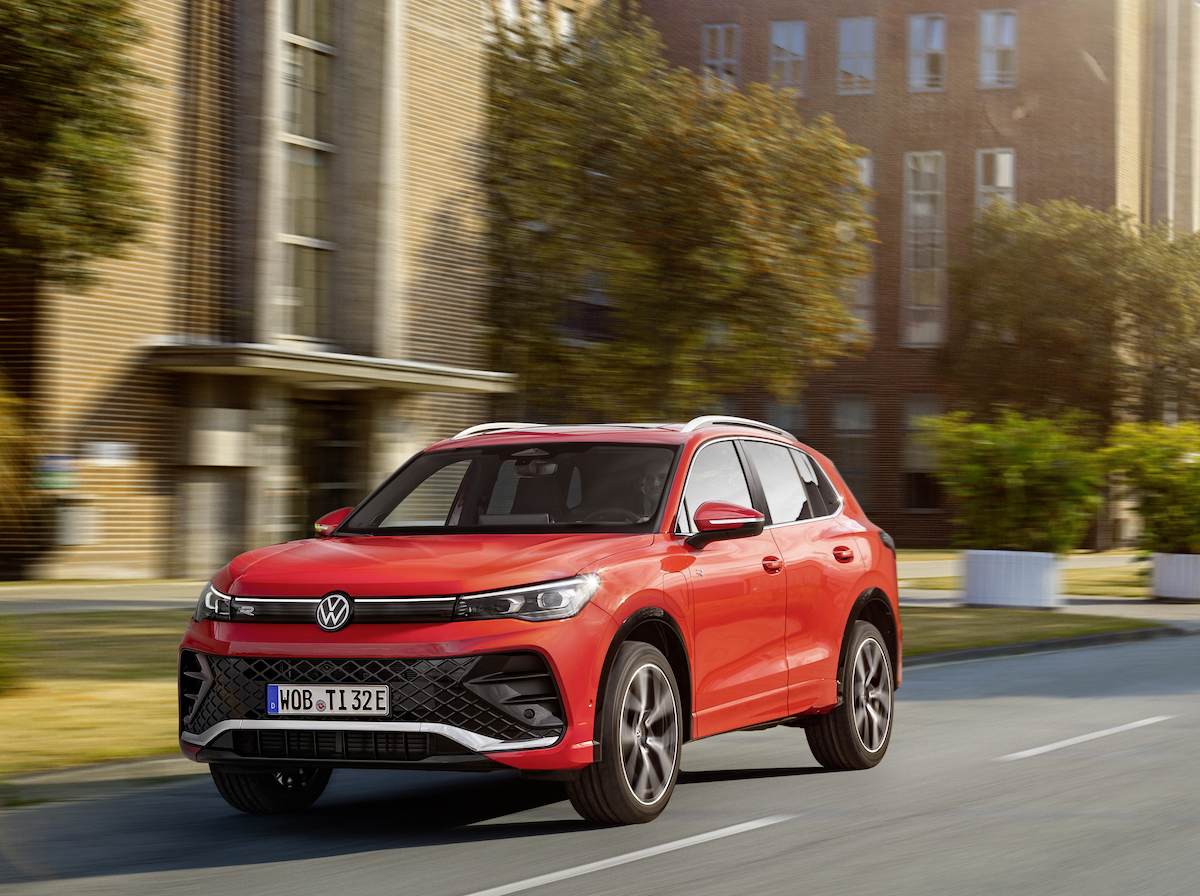
How does the new Volkswagen Tiguan mark itself out from the rest? Well, its looks take the classic Volkswagen approach of smart conservatism punctuated by the odd injection of bling (the horizontal light bar between the headlights on high-end versions being a good example of the bling), while the interior quality also feels like a cut above compared with many rivals. It also attempts to double down on technology, particularly in the form of the dazzlingly glossy touchscreen infotainment system. As we’ll discover, though, wow-factor sometimes comes at a price.

Practicality
How practical is it?
The Mk3 Tiguan is only a fraction bigger than the Mk2, but it still manages to provide an hugely impressive amount of interior space. With a driver and front-seat passenger of six-foot-plus, there’s still plenty of space behind for folk of a similar size to be comfy in the back. Both headroom and legroom are very generous, and the rear bench can also be slid back and forth if you want to liberate more boot space. They can also recline by a few degrees if their occupants fancy a nap.
Things will be a bit less comfy if you try and squeeze three bodies in the back rather than two, but they will fit. Whoever ends up in the middle even gets a relatively wide seat to sit on, although they will have to straddle the bulky transmission tunnel in the floor in front of them.
Lift the tailgate (it's powered on mid-level Match trim and above), and you’ll find a square-shaped, flat-sided boot of a very generous 652 litres, dropping to 490 litres in the plug-in-hybrid versions. There’s a false floor - with a massive amount of concealed space underneath - that reduces the obstruction of the load lip at the entrance of the boot, and when you drop the 40/20/40 split-folding rear seats, it levels off the step up to the rear seatbacks as well. The dropping process involves pulling catches in the boot or tapes on the seats themselves, but the backrests don’t quite lay flat, so part of your extended load area is slightly sloped.
Finding a comfortable driving position is reasonably easy because there’s lots of adjustment in both the seat and the steering wheel, although some drivers might wish that the wheel came a bit further towards them. It’s also a bit surprising that no version has electric seat adjustment as standard. Your visibility is pretty clear in all directions, but all versions have front- and rear parking sensors and a reversing camera as well.
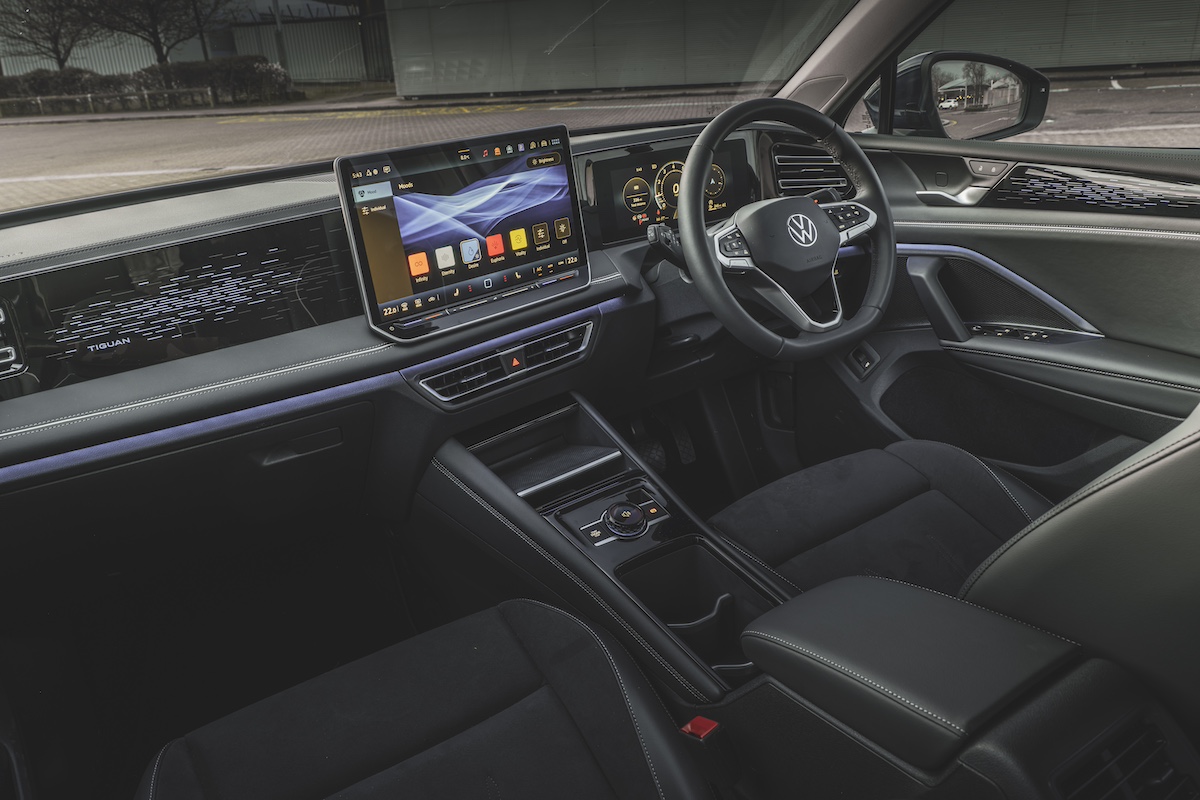
The other thing that strikes you about the Tiguan’s cabin is how minimalist it is. There’s almost no switchgear, meaning that the vast majority of functions are operated through the touchscreen. We’ll talk about the effect of that in the Technology and equipment section. Trust us, we have plenty to say on the subject.

Driving
What’s it like to drive?
The Tiguan’s engine range starts with two eTSI options, and these are 1.5-litre mild-hybrid four-cylinder turbo petrol engines with outputs of either 128bhp or 148bhp. Unusually in this day and age, a diesel engine is also offered, a 2.0-litre TDI with 148bhp. Then there are the eHybrid models, which are plug-in hybrids that combine the 1.5-litre petrol engine with a 19.7kWh battery, an electric motor and a six-speed DSG automatic gearbox (all the rest have seven-speed automatics) to develop either 201bhp or 268bhp.
We’ve tried the more powerful of the two e TSI mild hybrids, and to be honest, it’s a little bit underwhelming. The level of performance is adequate provided you’re not in too much of a hurry, but for too much of the time, the engine has to work surprisingly hard to simply maintain even moderate pace. You hear the engine revving away (it’s not noisy, but it is noticeable) and the gearbox searching around trying to figure out which of its ratios is best-suited to the situation at hand. Ask for stronger acceleration, and the revs climb even higher, but the increase in forward motion that you feel is disproportionately small.
The eHybrid plug-in hybrid model is more expensive but also more impressive. Even the entry-level version with 201bhp feels brisk enough, and with an all-electric range of around 60-70 miles from a full battery you might end up being able to do a lot of your driving without needing to trouble the petrol engine. The performance of the electric motor is strong enough for most situations, and the Tiguan is impressively quiet to drive in its EV mode. When the petrol engine does cut in it does so very smoothly, and with petrol and electric motor combined the acceleration is strong if not scintillating. Our biggest gripe with the eHybrid is that the hill hold control doesn't work brilliantly with the electric motor, meaning you sometimes find yourself rolling momentarily before the motor responds to the accelerator.
Elsewhere, the Tiguan’s driving experience takes on a similar adequate-but-not-dazzling theme. The standard suspension has a firm edge, so there’s a slightly jittery feeling at low speeds, while you feel quite a whack through the suspension on sharper cracks and potholes. To be fair, though, we do suspect that this might be because our high-spec test car rode on large 19-inch alloy wheels: we wouldn’t be at all surprised if more humble versions on smaller rims felt a bit cushier.
We also tried a car on the optional adaptive suspension, which alters the stiffness of its dampers according to which of the driving modes you select. In truth, switching between the modes only reveals a very marginal difference, but regardless of mode, the optional suspension does take a little of the edge off the Tiguan’s ride.
Whichever suspension you have fitted, the Tiguan has tight control over the movements of its bodywork, and there’s plenty of grip and traction. That all helps the car feel pretty eager to change direction, and that feeling is helped further by steering that’s quick and responsive, but without feeling twitchy.
Tech and equipment
Technology, equipment & infotainment
The most obvious bit of technology in the Tiguan is the swish-looking infotainment system, which is formed by a 10.25-inch digital instrument panel behind the steering wheel and a large 12.9-inch central infotainment touchscreen in the middle of the dashboard. That’s standard across the range (trim levels within the line-up include standard Tiguan, Life, Match Elegance and R-Line), but if it’s not enough for you, then a massive 15.0-inch central screen upgrade is available on the options list.
All versions also get eight speakers, DAB, Bluetooth, Apple CarPlay and Android Auto, while if you upgrade from the base-level Tiguan to Life trim or above, you also get navigation, wireless smartphone charging and voice control.
Whichever screen you go for, the system looks great, with sharp, modern graphics and really slick screen transitions, while the screen also reacts quickly and reliably to taps and swipes. It is all still somewhat unnecessarily complicated at times, and there are things buried in the screen that really should be physical controls (the fan speed for the heather being an obvious candidate), and there are seemingly endless menus and submenus, but with time you do start to get used to where things are.
Among the standard roster of safety equipment is a driver attention monitor, along with the usual collection of airbags, autonomous emergency braking with pedestrian and cyclist monitoring, front and rear cross traffic assist, lane keep assist, a lane-change system, traffic sign recognition, front- and rear parking sensors, and a reversing camera.
Upgrading from the standard Tiguan to Life trim adds adaptive cruise control, while Match versions also come with posher headlights and more sophisticated parking assistance. Elegance trim makes the adaptive cruise control more sophisticated, and you also get 360-degree cameras.
In terms of other luxury kit, the standard base-level Tiguan comes with 17-inch alloy wheels, climate control, a leather-wrapped steering wheel with gearshift paddles, cloth upholstery, black roof rails and all-round LED lighting.
Upgrading to Life trim gets you 18-inch wheels, ambient interior lighting, power adjustable lumbar support for the front seats, and three-zone climate control with controls in the rear. Match trim adds keyless entry, a powered tailgate, more intricate ambient lighting, a light strip between the headlights and silver roof rails. Elegance cars have 19-inch wheels, additional exterior styling elements, and heated front seats with massaging function. Choosing the Tiguan R-Line gives you 20-inch wheels, even more styling touches, even posher ambient lighting, and sports seats.
Running costs
Volkswagen Tiguan running costs
The two eTSI mild hybrid petrol engines are likely to be the most popular, and these have official WLTP fuel economy figures of 46.3mpg for the 128bhp version, and 45.6mpg for 148bhp version. The diesel, meanwhile, has an official figure of 52.3mpg, and despite that fuel type’s nosedive in popularity in recent years, this will still be the most cost-effective option for those who cover vast amounts of motorway miles.
You might be licking your lips when you see the official WLTP figures for the two plug-in eHybrid models. The 201bhp version posts a stunning figure of 706.2mpg, while the 268bhp version posts 565mpg. However, don’t go expecting figures like that in the real world, because the official WLP laboratory tests are unrealistically flattering to plug-in hybrid cars. How economical your car is will depend entirely on how you use it. Plug it in daily and restrict yourself exclusively to short trips that can be dealt with by electric power alone (Volkswagen claims an electric-only range of around 70 miles), and you won’t use a drop of fuel. Call upon your petrol engine on a regular basis, and the extra weight of the batteries will likely make the car thirstier than one of the regular models. However, it is worth noting that the impressive all-electric range will likely make these plug-in hybrids a relatively affordable option for company car drivers looking to minimise their Benefit-in-Kind tax bills.
Insurance groupings start at group 18 for the 128bhp 1.5-litre eTSI, while upgrading to the 148bhp version will raise your insurance grouping to 21 or 22 depending on trim level. The diesel sits in group 22 or 23. Choosing the less powerful of the two plug-in hybrids means you’ll pay a group 27 or group 28 premium, while the range-topping PHEV version is in group 31.
When buying a Tiguan, be careful of the luxury car surcharge that applies to cars that cost over £40,000 when new, including optional extras. Some versions of the Tiguan sit below that threshold, but some sit above. Those that bust the threshold will be liable for an additional charge of £425 per year for a five-year period between years two and six of the car’s life.

Volkswagen Tiguan reliability
In the most 2024 What Car? Reliability Survey, Volkswagen came a fair-to-middling 18th of the 31 manufactures considered, which is hardly an earth-shattering performance.
In the Family SUV class of 33 entrants, the previous Tiguan placed 22nd when fitted with a petrol engine, and 28th when packing a diesel. Again, no great shakes. The Mk3 Tiguan is based on a development of its predecessor’s platform, but we'll have to wait for fresh reliability data to see how it fares for mechanical dependability.
VW’s warranty is, once again, nothing to write home about in the scheme of things. You get unlimited-mileage cover for two years, and a third year of cover limited to 60,000 miles. That’s the base minimum you should expect on a new car these days, and a long way behind brands such as Kia and Hyundai.


What owners say
"The Volkswagen Tiguan has received positive feedback from drivers across its model years, especially for its comfortable ride, spacious interior, and strong safety features, making it suitable for families. However, some drivers have found certain aspects, like the navigation system, to be a bit challenging. Overall, owners appreciate the vehicle's blend of performance and quality, while also valuing its design and comfort."
The cd player is in a very awkward location but we will have to get used to it. The hatchback could have done with a self closing switch as it is quite heavy.
20 May 2025The size allows plenty of room for four adults, but is not too large to make supermarket parking practically impossible. The addition of rear seat adjustments in both seat position and backrest also helps to comfortably accommodate even the taller adults. The semi-auto DSG gearbox makes gear change almost imperceptible. Plus the ride is comfortable and composed over most surfaces.....except pothole-riddled roads. However, one must accept that only a military tank could travel along UK roads without subjecting its occupants to the bone-shaking jolts that we UK drivers routinely endure. The information display has a very wide range of menus and settings that provide ample data in a clearly defined manner. I cant compare this compact SUV to other makes because Ive not driven any offerings from rival manufacturers. The fact that Ive bought one should indicate I think the car is value for money.
10 January 2024Good service record and comfortable to drive. Looks sleek and modern
25 July 2022What owners say
The cd player is in a very awkward location but we will have to get used to it. The hatchback could have done with a self closing switch as it is quite heavy.
20 May 2025The size allows plenty of room for four adults, but is not too large to make supermarket parking practically impossible. The addition of rear seat adjustments in both seat position and backrest also helps to comfortably accommodate even the taller adults. The semi-auto DSG gearbox makes gear change almost imperceptible. Plus the ride is comfortable and composed over most surfaces.....except pothole-riddled roads. However, one must accept that only a military tank could travel along UK roads without subjecting its occupants to the bone-shaking jolts that we UK drivers routinely endure. The information display has a very wide range of menus and settings that provide ample data in a clearly defined manner. I cant compare this compact SUV to other makes because Ive not driven any offerings from rival manufacturers. The fact that Ive bought one should indicate I think the car is value for money.
10 January 2024Good service record and comfortable to drive. Looks sleek and modern
25 July 2022A lot of bells and whistles for the money. The automatic is smooth and quick, in fact without the display you wouldnt know it had changed gear. Great car,I would highly recommend it.
13 July 2024It is a VW and is my 5th VW so I am justifiably loyal to the brand as I have had no issues with any of my cars.
7 January 2024Mine is automatic. The best car and make I have ever driven. Smooth plenty of room. Comfortable seats. Great safety for the kids. Only complaint sat nav is not the easiest.
12 March 2022Excellent It does everything I want and then some it makes me smile every time I go out in it
31 December 2020Very comfortable car with lots of room, great boot for the dog. Good ride on bumpy and undulating roads. Would buy one again
29 March 2022Excellent in everything smooth to drive comfortable good value for money
7 April 2021I just bought a Wolswagen Tiguan and I am very happy,very good quality inside ,big screen with Apple car ,would highly recommend
5 September 2023Three things to know
- You expect a Volkswagen - especially quite a large and expensive one - to have a higher quality interior than most mainstream rivals, and the VW Tiguan delivers on that score. All of the surfaces and panels in your direct eyeline have an appealing look and feel, which complements the modern, minimalist design. The plastics are a bit less plush lower down in the cabin, but not to the extent that they let the side down.
- We mentioned in the Technology and Equipment section that the level of ambient lighting in the Tiguan gets more sophisticated as you progress through the trim levels. The basic trim has none to speak of, while Life and Match trims have a basic system that emits light from between certain interior panels in 10 colours. In Elegance and R-Line trims, the number of colours rises to 30, plus the upright glossy panel in the dashboard gets a kind of speckled matrix design that is backlit.
- In most cars, the stalks behind the steering wheel conventionally operate the indicators on the left-hand side and the wipers on the right. In the Tiguan, however, the right hand side is occupied by the automatic gear selector, and that means that the left-hand stalk takes care of both the indicators and wipers. Using it takes some getting used to.
Which one to buy
- If you’re looking to keep costs down: There isn’t much kit that the entry-level trim - known simply as Tiguan - doesn’t get, so you shouldn’t feel like a second-class citizen. Do bear in mind, however, that this version is only available with the less powerful 128bhp eTSI engine.
- If you’re looking for the best balance of kit and cost: If we could, we’d probably spend the extra on upgrading to Match trim, because it looks a bit sharper with additional styling elements, and you also get niceties such as a powered tailgate and keyless entry.
- If you’re a company car driver: Electric cars are the most affordable cars to run as company cars due to their very favourable tax rates, but the Tiguan doesn’t offer a zero-emissions powertrain, so one of the plug-in hybrids will be your best bet. It will likely be a tad cheaper on tax than many rival PHEVs, too, and that’s down to its impressive electric-only range.
- If you’re looking for the fastest Tiguan: That’s the 268bhp version of the plug-in hybrid, which is only available in high-end R-Line trim. That makes it even more expensive, though, and with a 0-62ph time of 7.2 seconds, it’s still not all that quick.


Pricing trends
Starting RRP
£29,817
Current avg. market price
£30,514
Trending down by 4.8% this month
May 2026 - October 2026
More on the Volkswagen Tiguan (2024 - 2026)


Compare 2026 Volkswagen Tiguan Trims
The Tiguan lineup offers a range of trims from budget-friendly options to fully loaded models, all featuring FWD drivetrains for a smooth ride.
- Starting at £32,946
- Most Popular: 2.0 Tdi R-line 5dr Dsg
Trim Overview
Prices updated weekly from CarGurus listings.
| 2.0 Tdi Life 5dr Dsg | 1.5 Etsi 150 R-line 5dr Dsg | 2.0 Tdi R-line 5dr Dsg (Most Popular) | 1.5 Tsi Ehybrid R-line 5dr Dsg | 1.5 Tsi 272 Ehybrid R-line 5dr Dsg | |
|---|---|---|---|---|---|
| Starting MSRP | £39,500 | £40,970 | £42,200 | £44,450 | £47,170 |
| Avg. Market Price | £35,344 | £32,946 | £35,850 | £35,344 | £35,344 |
| Positioning | Best value | Standard | Standard | Standard | Fully loaded |
| Standout Features | Privacy glass, Adaptive Cruise Control | Keyless Entry, Heated Seats | Bluetooth, Navigation System | Backup Camera, DAB Radio | Panoramic Roof, Navigation System |
| Drivetrain | FWD | FWD | FWD | FWD | FWD |
| Listings Available | 15 | 29 | 87 | 31 | 17 |
Quick Compare Table
Listing prices sourced from CarGurus — updated weekly. OEM specs from manufacturer data.
| 2.0 Tdi Life 5dr Dsg | 1.5 Etsi 150 R-line 5dr Dsg | 2.0 Tdi R-line 5dr Dsg | 1.5 Tsi Ehybrid R-line 5dr Dsg | 1.5 Tsi 272 Ehybrid R-line 5dr Dsg | |
|---|---|---|---|---|---|
| AI Summary | Best value option with essential features | Affordable trim with solid tech | Popular choice with great features | Hybrid option with advanced tech | Fully loaded with luxury features |
| Avg. Market Price | £35,344 | £32,946 | £35,850 | £35,344 | £35,344 |
| MSRP | £39,500 | £40,970 | £42,200 | £44,450 | £47,170 |
| Engine | 1968.0cc 150 hp I4 | 1498.0cc 150 hp I4 | 1968.0cc 150 hp I4 | 1.5l I4 Petrol Parallel Phev | 1.5l I4 Petrol Parallel Phev |
| Drivetrain | FWD | FWD | FWD | FWD | FWD |
| Privacy glass/Tinted windows | ✓ | — | — | — | — |
| Adaptive Cruise Control | ✓ | ✓ | ✓ | ✓ | ✓ |
| Cruise Control | ✓ | ✓ | ✓ | ✓ | ✓ |
| Parking Assist | ✓ | ✓ | ✓ | ✓ | ✓ |
| Climate control | ✓ | — | ✓ | — | — |
| Bluetooth | ✓ | ✓ | ✓ | ✓ | ✓ |
| AUX/USB connectivity | ✓ | — | ✓ | — | ✓ |
| Alarm/Immobiliser | ✓ | ✓ | — | ✓ | — |
| Air Conditioning | ✓ | ✓ | ✓ | ✓ | ✓ |
| Navigation System | ✓ | — | ✓ | — | ✓ |
| Apple CarPlay | ✓ | — | ✓ | — | — |
| Keyless Entry/Start system | — | ✓ | — | — | — |
| Heated Seats | — | ✓ | ✓ | — | — |
| isofix | — | ✓ | ✓ | ✓ | — |
| Backup Camera | — | ✓ | — | ✓ | ✓ |
| Stop/Start System | — | ✓ | — | ✓ | ✓ |
| DAB Radio | — | — | — | ✓ | — |
| Parking Sensors | — | — | — | ✓ | — |
| Active Listings | 15 | 29 | 87 | 31 | 17 |
Missing data displayed as "—".
Trim Deep Dives
2.0 Tdi Life 5dr Dsg — "Who It's For"
The 2.0 Tdi Life is the pick for shoppers who want essential features and good value without paying for higher trims.
- Avg. market price: £35,344 (updated weekly)
- Inventory: 15 listings — lower availability; may limit negotiating room
- View 2.0 Tdi Life listings
1.5 Etsi 150 R-line 5dr Dsg — "Who It's For"
The 1.5 Etsi 150 R-line is the pick for shoppers who want a well-equipped vehicle without stepping up to pricier options.
- Avg. market price: £32,946 (updated weekly)
- Inventory: 29 listings — lower availability; may limit negotiating room
- View 1.5 Etsi 150 R-line listings
2.0 Tdi R-line 5dr Dsg — "Who It's For"
The 2.0 Tdi R-line is the pick for shoppers who want a blend of features and performance without going for the top-tier trim.
- Avg. market price: £35,850 (updated weekly)
- Inventory: 87 listings — lower availability; may limit negotiating room
- View 2.0 Tdi R-line listings
1.5 Tsi Ehybrid R-line 5dr Dsg — "Who It's For"
The 1.5 Tsi Ehybrid R-line is the pick for shoppers who want hybrid efficiency with modern tech features without the highest price tag.
- Avg. market price: £35,344 (updated weekly)
- Inventory: 31 listings — lower availability; may limit negotiating room
- View 1.5 Tsi Ehybrid R-line listings
1.5 Tsi 272 Ehybrid R-line 5dr Dsg — "Who It's For"
The 1.5 Tsi 272 Ehybrid R-line is the pick for shoppers who want a fully loaded SUV with luxury features and advanced technology.
- Avg. market price: £35,344 (updated weekly)
- Inventory: 17 listings — lower availability; may limit negotiating room
- View 1.5 Tsi 272 Ehybrid R-line listings
Trim Recommendations
Most Popular — 2.0 Tdi R-line 5dr Dsg
With 87 active listings, the 2.0 Tdi R-line is the clear volume leader in the lineup.
Browse 2.0 Tdi R-line listings
Best Budget Option — 1.5 Etsi 150 R-line 5dr Dsg
At £32,946 avg market price — below the lineup median of £35,344 — it's the most accessible entry point.
Browse 1.5 Etsi 150 R-line listings
These recommendations are based on CarGurus' proprietary market data from October 29, 2026, CarGurus experts' opinions, and generative AI.

