
The Infiniti G37, introduced in 2009, is a fairly rare car in the UK, but it’s worth considering if you’re looking for something a bit different to – and cheaper than – the familiar options from Audi, BMW and Mercedes-Benz.
Given its scarcity, some background history might be useful: Japanese brand Infiniti was created in 1989 as Nissan’s premium offshoot, with the same kind of relationship to its parent company as Lexus has to Toyota. Initially only operating in the US, Japan and other selected markets, Infiniti arrived in the UK in 2009. Its first offering was the G37, a saloon, coupe and convertible model designed to compete with premium-brand cars such as the Audi A4, Lexus IS and Mercedes-Benz C-Class. Its most obvious rival, however, is the BMW 3 Series: the two cars have a similar character, with a blend of sportiness and luxury that errs on the sporty side. They also have very similar dimensions and, come on, there’s a definite hint of BMW’s ‘Hoffmeister kink’ in the side window line of the G37 coupe and saloon.
Unlike the huge model lineups offered by rival cars, the G37 keeps things simple. The only engine available is a 3.7-litre V6 petrol, linked to either a six-speed manual or seven-speed automatic gearbox. Rear-wheel drive is the default layout, but four-wheel drive versions were added later in the model’s life cycle. The convertible is based on the coupe and, in common with many convertibles of the time, it has a folding metal roof. The upsides over a fabric roof are added security and weatherproofing, while the downsides are extra weight and restricted boot space when the roof is folded. Every version is very well-equipped (for the time), with xenon headlights, electric driver’s seat adjustment and front- and rear parking sensors as a minimum.
The narrow model range and absence of a diesel option – not to mention buyers’ wariness of a new brand – meant that the Infiniti G37 sold in very low numbers in the UK. It was replaced by the Q50 saloon and Q60 coupe, in 2014 and 2016, respectively.
Our guide to the Infiniti G37 looks at the model’s history, which versions were available, and what to look out for if you’re considering buying one.
Infiniti G37 Generations
Frequently Asked Questions
Which Infiniti G37 years are the best?
The Infiniti G37 was only around for a single model generation so there’s not much difference between the earliest and latest versions. That said, post-2011 models are generally regarded as the best choice since they included upgrades over earlier cars. One of these is the switch to a new oil gasket design that remedies a problem that can cause earlier cars to suffer low oil pressure, and potential engine failure as a result.
Which Infiniti G37 years are the worst?
The Infiniti G37 received a number of updates over the years so the worst years to choose are the earliest ones. Some cars suffer from a cracked or melting dashboard, and oil gasket issues, but these problems are less common on post-2011 cars.
Is a used Infiniti G37 a good deal?
A used Infiniti G37 can be a good deal if your requirements are a match for its very specific qualities. It’s not as spacious as many rivals and there’s just one gas-guzzling engine, but it’s fast, good to drive, well-equipped and likely to cost less to buy than the usual suspects.
Infiniti G37 Pros and Cons
Pros:
- Powerful V6 engine
- Well-equipped for the time
- Fun to drive
Cons:
- Very limited model range
- Poor fuel economy
- Not as smooth or quiet as some rivals
Infiniti G37 Generations
First Generation (2009-2013)
Bodystyles:
- Four-door saloon
- Two-door coupe
- Two-door convertible
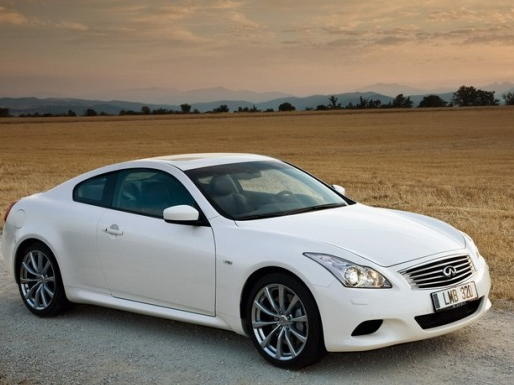
The Infiniti G37 is a rare sight on UK roads. Sold new between 2009 and 2013, it was only available for a single generation, before being replaced by the (slightly) more popular Q50/Q60. Sales figures were in the hundreds rather than thousands, so it was, by most standards, a commercial failure. It’s not a bad car outright, but it wasn’t in tune with the UK market of the time. That’s partly because of buyers’ scepticism of what was an unknown brand, and partly because of the narrow and rarefied nature of the model lineup.
First, the basics: the G37 is a coupe, convertible or saloon model in the same mould as rivals such as the BMW 3 Series and Mercedes-Benz C-Class. Where those two offer a wide range of petrol or diesel engines to choose from, the G37 has just one enigine: a 3.7-litre V6 petrol with 316bhp with either a six-speed manual or seven-speed automatic gearbox. It gives very strong performance, with a 0-60mph time of less than six seconds, but it's also thirsty; all versions give mid-20s mpg. Most are rear-wheel drive, but four-wheel drive versions badged G37x were added later in the model’s life cycle. The range-topping G37S has four-wheel steering, where the rear wheels turn slightly to give more stability at high speed and easier manouevrablility at low speed.
Even the (unnamed) entry-level trim gives a very high level of equipment for the time: standard features include xenon headlights, electrically adjustable front seats, keyless entry, front- and rear parking sensors, Bluetooth and automatic lights and wipers. GT trim adds extras including leather upholstery and heated front seats. Top-spec S models have four-wheel steering, front sport seats and uprated suspension and brakes. An update in 2010 included new headlights and front grille. There was also a new design for the front bumper, which incorporated the foglights. There were minor interior changes, with upgraded trim inserts and updated tech features.
Because the Infiniti G37 sold in such tiny numbers in the UK, finding robust reliability data is a challenge. Lots were sold in the US, however. There, the G37 has a reputation for being generally durable, but owners have cited issues with faulty electric windows, leaks caused by blocked sunroof drains and dashboards that crack or degrade badly.