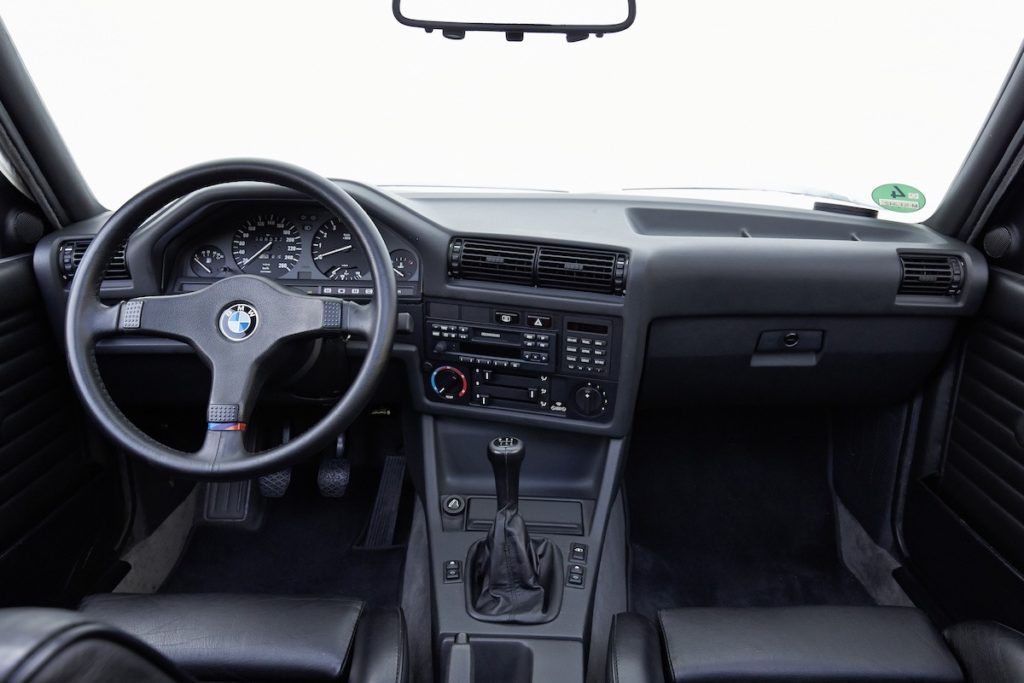
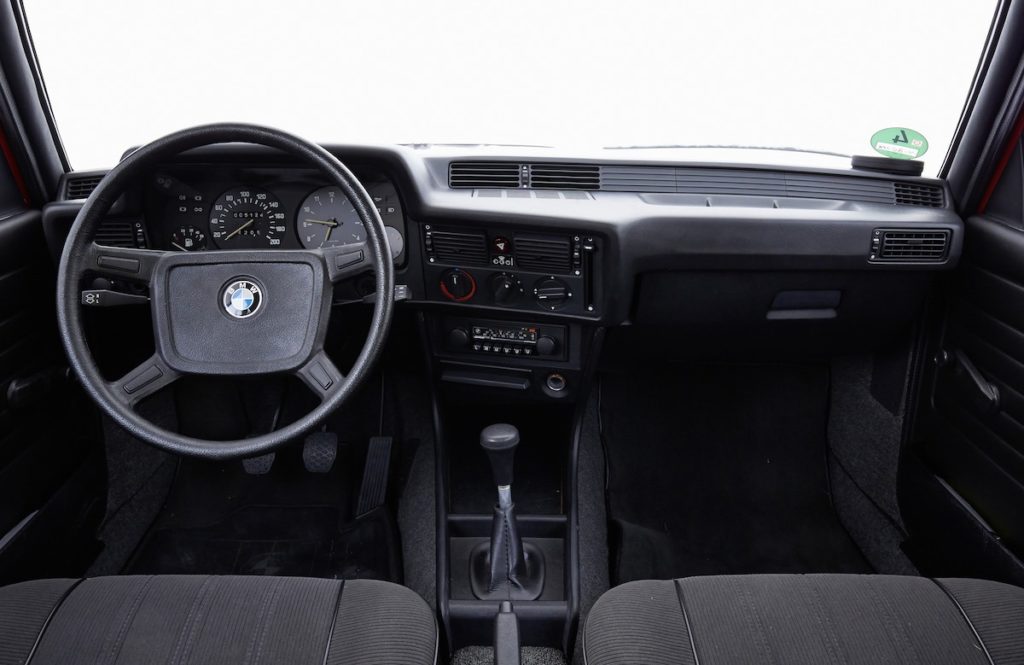
BMW as we know it today can almost be summed up by one model: the 3 Series. For six decades and through seven generations, the BMW 3 Series has been at the top of its class with global sales topping 16 million examples, an impressive performance for a compact executive car.
It’s the car that every other manufacturer wants to beat, and while some have succeeded in certain areas, the 3 Series has always remained the outstanding driver's car in its class, offering a level of interaction and involvement missing from other manufacturer’s models. That’s why it still emerges victorious from a fierce decades-long tussle with the Audi A4 and Mercedes-Benz C-Class.
But do you know which is which? Can you tell one generation from another? Let us be your guide with this whistle-stop tour of the BMW 3 Series bloodline.
BMW 3 Series Generations
- Frequently Asked Questions
- BMW 3 Series Pros and Cons
- BMW 3 Series: Seventh generation G20 (2019-)
- BMW 3 Series: Sixth generation F30 (2012-2019)
- BMW 3 Series: Fifth generation E90 (2005-2013)
- BMW 3 Series: Fourth generation E46 (1998-2006)
- BMW 3 Series: Third generation E36 (1990-2000)
- BMW 3 Series: Second generation E30 (1982-1994)
- BMW 3 Series: First generation E21 (1975-1983)
Frequently Asked Questions
Which BMW 3 Series years are the best?
BMW fans will debate for hours about this very question, and different people will have different answers. But for us, the fifth-generation E90, sold between 2005 and 2013, delivers a really nice balance between old-school interaction and modern trappings. For best effect, get one of the more powerful six-cylinder diesels, which are creamy smooth and bonkers powerful, yet surprisingly frugal.
Which BMW 3 Series years are the worst?
The earliest E21 and E30 variants are much coveted by enthusiasts and collectors, but for most normal folk, these BMW 3 Series models will be too old-hat to serve as a daily driver, especially considering how much you'll be required to pay for one given their classic status.
Is a used BMW 3 Series a good deal?
Very much so. Buy a good one that's been well looked after, and the 3 Series is a car that'll satisfy both your head and your heart. It’ll deliver family-friendly practicality along with driving pleasure in spades.
BMW 3 Series Pros and Cons
Pros:
- Class-leading driving experience
- Some truly fabulous engines
- Classy and desirable image
Cons:
- Pricey compared with mainstream rivals
- Maintenance and repair costs can be steep
- Not always the most generous with standard equipment

BMW 3 Series: Seventh generation G20 (2019-)
Bodystyles
- 4-door saloon
- 5-door estate
Notable features and facelifts of the BMW 3 Series G20
- BMW Intelligent Personal Assistant means most vehicle functions can be accessed by voice control
- M340i features turbocharged six-cylinder engine with 369bhp
The latest 3 Series, the seventh generation, is perhaps the most complete incarnation yet. It’s packed full of the latest technology that’s filtered down from the 5- and 7 Series models and features BMW’s Intelligent Personal Assistant – its take on Siri or Amazon’s Alexa – where you can talk to the 3 Series by uttering the words ‘Hey BMW’.
The launch models included the four-cylinder 320d turbodiesel and 330i turbo petrol, but were soon joined by the 318d and 330d, along with the 320i, 330e plug-in hybrid and a range topping M340i xDrive with a turbocharged 3.0-litre straight-six and four-wheel drive.

The 318d and 330d were dropped from the range in due course, but a powerful 335bhp six-cylinder diesel M340d joined the range to sit alongside the M340i.
In 2022, the G20-generation 3 Series received a mid-life facelift, the most notable part of which was the introduction of BMW's curved dashboard screen, which contains both the driver's instrument cluster and the central infotainment screen.
Performance, refinement and equipment levels have taken a further step forward, as has the high-quality cabin, ensuring that the G20 is a worthy model to continue the 3 Series dynasty.
BMW 3 Series G20 Review
Search for a BMW 3 Series G20 on CarGurus

BMW 3 Series: Sixth generation F30 (2012-2019)
Bodystyles
- 4-door saloon
- 5-door estate
Notable features and facelifts of the BMW 3 Series F30
- Coupe and convertible lines now get their own unique model line – they are now the 4 BMW Series
- 3 Series gets plug-in hybrid power for the first time.
The major departure for the sixth-generation 3 Series was BMW’s separation of the Saloon and Touring from the Coupe and Convertible, with the latter two cars now known as the BMW 4 Series. The 3 Series did gain a new body style though, called the BMW 3 Series Gran Turismo, which was a longer wheelbase hatchback model that was very roomy inside.
The styling had been updated and once again it was bigger - nearly 10 centimetres longer than the E90 model it replaced - endowing the 3 Series with increased rear legroom and a 20-litre larger boot.
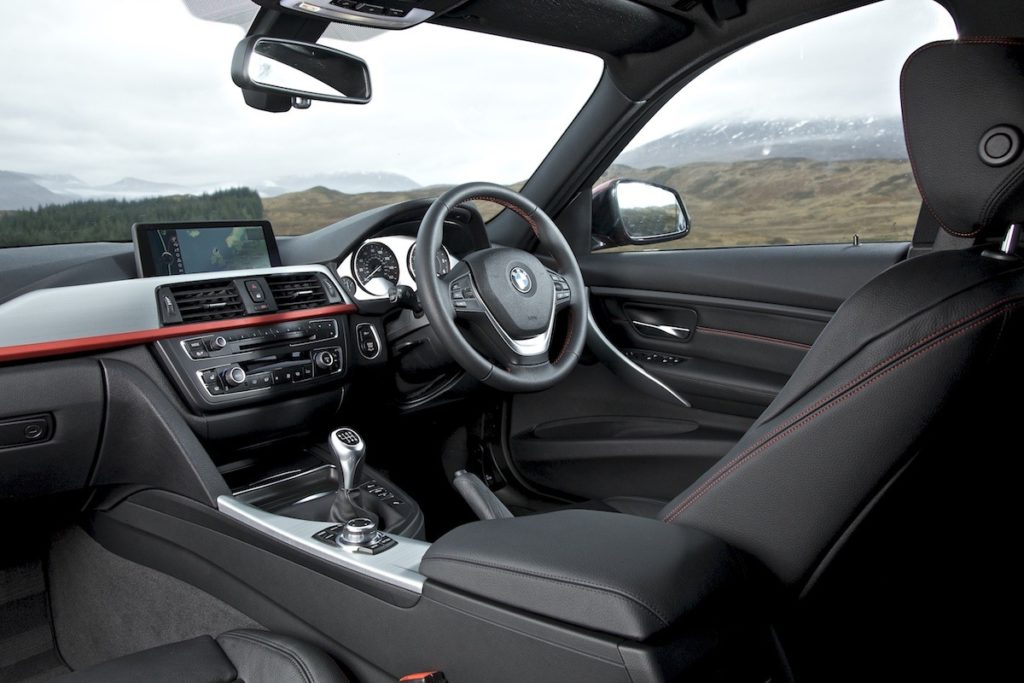
Along with enhanced specification – all models had air-conditioning, iDrive with a centrally mounted screen, Bluetooth and (from mid-2015) satellite navigation – there were several trim lines to choose from; ES, SE and M Sport, along with three new offerings called Sport, Luxury and Modern.
This generation of 3 Series also featured a number of firsts for BMW: all of its engines were turbocharged for the first time; xDrive all-wheel drive was introduced to the UK (and proved very popular); and the BMW 330e was BMW’s first plug-in hybrid 3 Series.
BMW 3 Series F30 Review
Search for a BMW 3 Series F30 on CarGurus

BMW 3 Series: Fifth generation E90 (2005-2013)
Bodystyles
- 2-door coupe
- 4-door saloon
- 5-door estate
- 2-door convertible
Notable features and facelifts of the BMW 3 Series E90
- No three-door 3 Series this time: that place in the range is now filled by the 1 Series
- iDrive rotary controller makes its 3 Series debut
- Convertible version gets folding hardtop
While BMW experimented with more avant garde styling on the contemporary 5- and 7 Series models, the design of the fifth-generation 3 Series was rather more subdued. And while it was bigger all round than the E46, lightweight materials ensured there was no weight gain.
For the interior, BMW moved away from the driver-focused cockpit and a start/stop button replaces the traditional key. Enhanced standard equipment included traction control and six airbags on all models. BMW’s iDrive system was offered for the first time in the 3 Series if satellite navigation was added as an option.
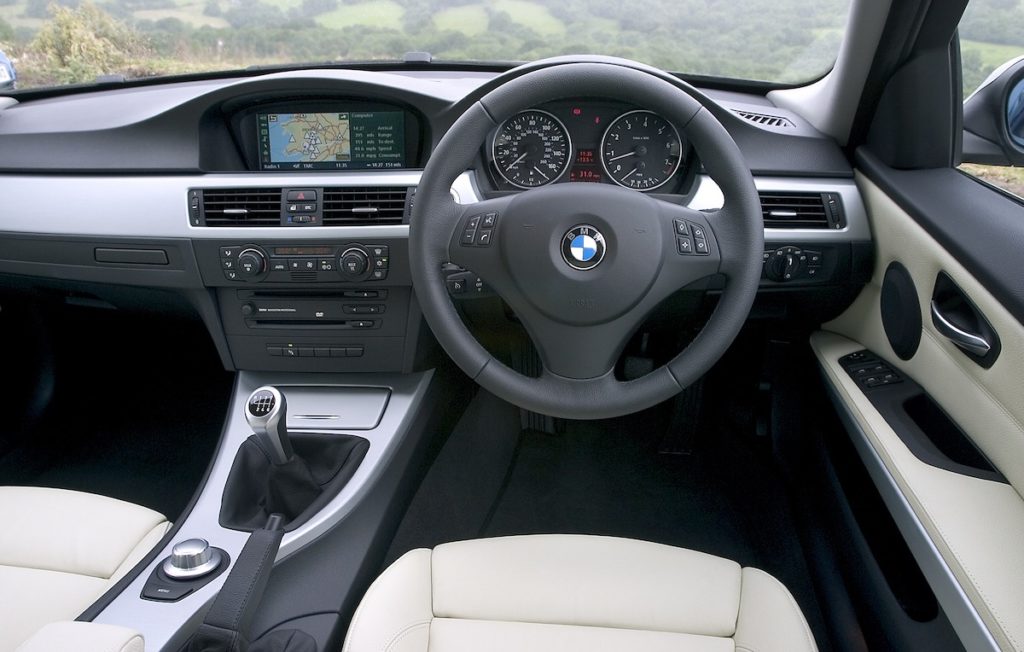
Diesel was the preferred choice of buyers with a 316d, 318d, 320d, 325d, 330d, and even a twin-turbo 335d being offered, while increasing use of BMW’s EfficientDynamics technologies saw the most economical 3 Series, the 320d ED, return nigh-on 70 mpg, along with correspondingly low CO2 emissions that made it an even more attractive company car at the time.
The Coupe and Touring models followed the pattern set by previous generations. However, the Convertible used a folding hardtop instead of a fabric hood for the first time. The top performer was the M3, now powered by a 414bhp V8 engine.
BMW 3 Series E90 Review
Search for a BMW 3 Series E90 on CarGurus
BMW 3 Series: Fourth generation E46 (1998-2006)
Bodystyles
- 2-door coupe
- 3-door hatchback
- 4-door saloon
- 5-door estate
- 2-door convertible
Notable features and facelifts of the BMW 3 Series E46
- 320d marks moment diesel becomes best-selling 3 Series
- Six-cylinder 330d diesel combines power and impressive fuel economy
- Air-con standard for the first time on all models
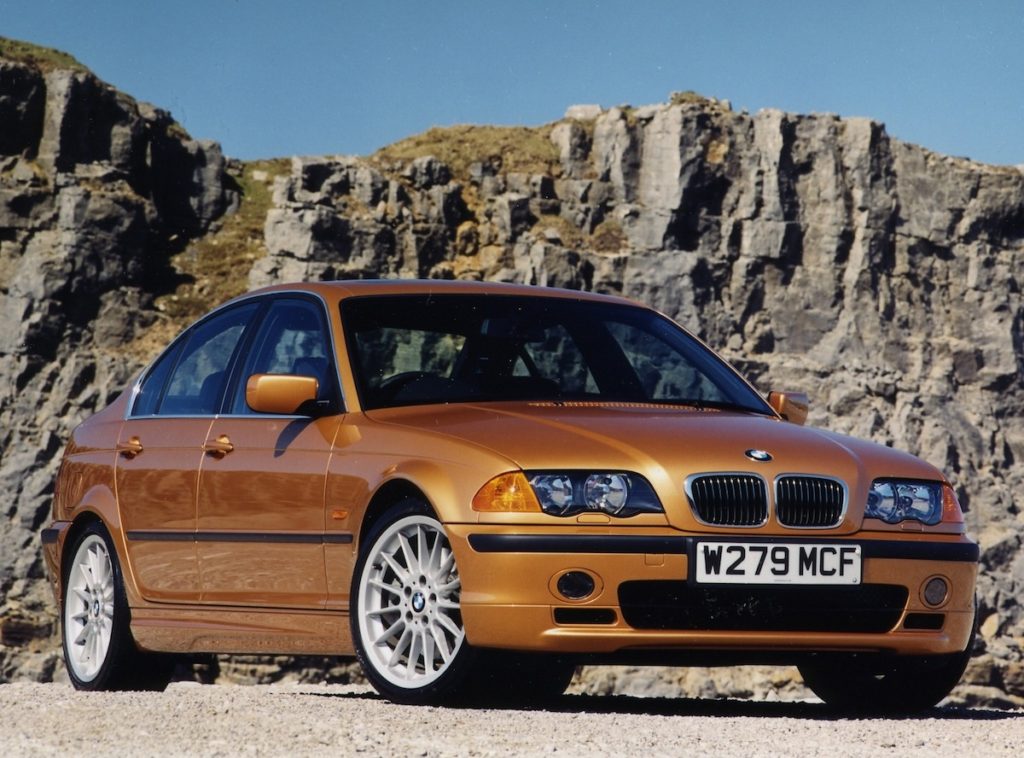
Launched in 1998, the fourth generation of 3 Series followed a similar path to its predecessor: four-door Saloon, two-door Coupe, Convertible, Touring estate and three-door Compact. It was larger, offering more interior space: the 3 Series Saloon was now 15cm longer than the original E21 model.
Engines ranged from the 316i to the 330i, with the latter being a genuine sports saloon with 228bhp. Along with the standard car, the main trim levels were SE and Sport, and for the first time all models featured air-conditioning as standard, while more advanced items such as satellite navigation were on the options list.

The M3 had a 338bhp straight-six for a 0-62mph time of under five seconds, while the even more hardcore 355bhp lightweight M3 CSL was faster again. Both offer a sublime driving experience and are coveted to this day.
However, it was the arrival of the 320d and 330d diesel models that was of the greatest significance. The 320d overtook the 318i as BMW’s best-selling model in the UK in 2001, while the 330d - with either 181- or 201bhp - was a genuine 150mph car that was still capable of returning more than 40 mpg.
BMW 3 Series E46 Review
Search for a BMW 3 Series E46 on CarGurus

BMW 3 Series: Third generation E36 (1990-2000)
Bodystyles
- 2-door coupe
- 3-door hatchback
- 4-door saloon
- 5-door estate
- 2-door convertible
Notable features and facelifts of the BMW 3 Series E36
- Larger, more sophisticated than the model it replaced
- Diesel introduced for the first time
The third-generation 3 Series (the E36) represented a revolution. It was significantly larger for increased interior space, while its styling was more rounded, with wider kidney grilles and glass panels covering its quad headlamps.
The four-door was the first to launch this time, and while the Coupe was instantly recognisable as a BMW 3 Series, it shared no panels with the Saloon. A Convertible and Touring were again offered, and a three-door Compact was introduced as an upmarket hatchback model.

The line-up of powertrains featured four- and six-cylinder units ranging from the entry-level 316i to the 190bhp 328i. The M3 moniker returned, but this time it was developed as a sporty road car and with 317bhp in the M3 Evolution, it offered Porsche-baiting performance. This was complimented by an all-new multi-link rear suspension design, which could better handle the increased engine outputs while still delivering the 3 Series’ trademark driver involvement.
This generation of 3 Series was also the first offered in the UK with a diesel engine, delivering refinement, performance and impressive economy, an indicator of how the executive saloon market would develop over the ensuing years.