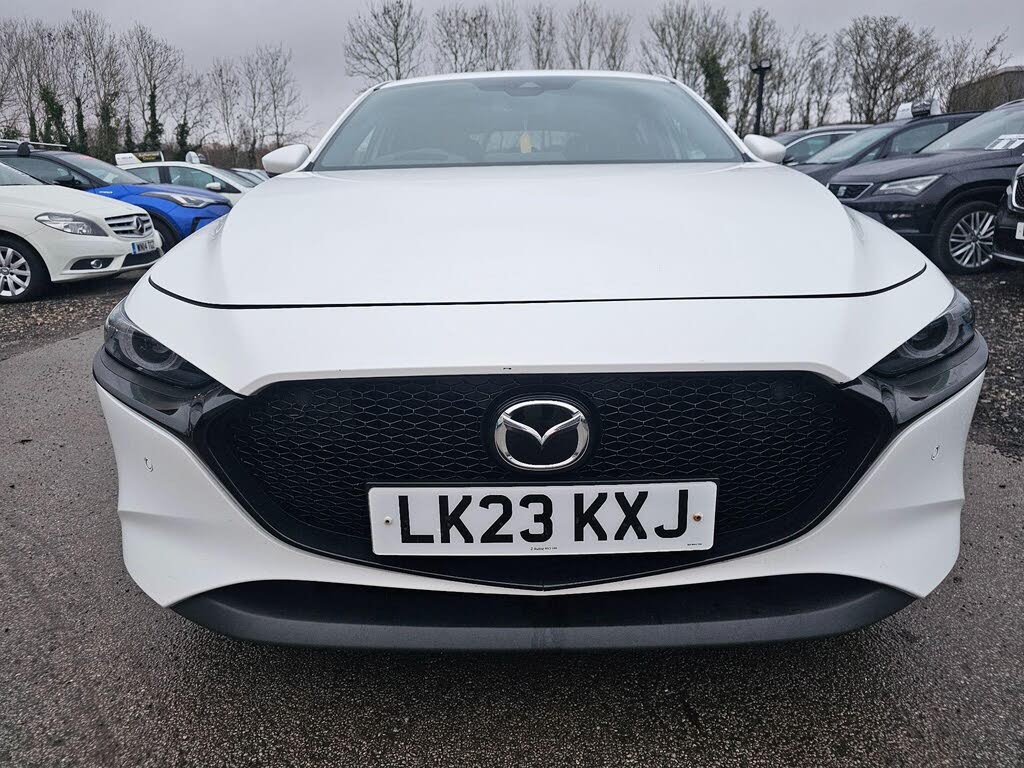
As you’d expect, the level of tech and safety features you get with a Mazda3 has increased over time. The lower-spec versions of the first model were a bit basic, but by the third-generation car, all versions have decent kit yet remain affordable. The current (fourth-generation) model is very well-equipped, reflecting the fact that it has moved upmarket compared with its predecessors and is now on a par with many premium-brand rivals for interior quality and overall appeal.
While Mazda has a solid reputation for reliability as a brand, it doesn’t usually fare as well in independent reliability surveys as its Japanese rivals Honda and Toyota. The Mazda3 itself doesn’t do a lot to alter that reputation: most versions are durable but the earliest models are prone to rust.
Our Mazda3 buying guide covers each of the four generations of the car, with advice on what’s good and bad about each, and which are the best models to buy.
Mazda3 Generations
Frequently Asked Questions
Mazda3 Pros and Cons
Mazda3 mk4 (2019-present)
Mazda3 mk3 (2014-2019)
Mazda3 mk2 (2009-2014)
Mazda3 mk1 (2004-2009)
Frequently Asked Questions
Which Mazda3 years are the best?
Although the third-generation Mazda3 is an appealing car at a great price, the current fourth-generation model is – by just about every criteria – the best one yet. It looks gorgeous inside and out, comes well-equipped and is fun to drive. It’s also the most reliable Mazda3 so far.
Which Mazda3 years are the worst?
The first-generation Mazda3 is now cheap to buy, but the oldest versions are twenty years old, and it’s the worst if you’re looking for long-term reliability. It’s also prone to major rust problems. The second-generation car can suffer from clutch issues, while premature brake wear is a worry for third-generation models.
Is a used Mazda3 a good deal?
The Mazda3 is a good deal if you want a mid-size hatchback or saloon that has more verve than most mainstream alternatives, yet is well priced. We’d say the third– and fourth-generation models are worth paying more for than the earlier cars since they’re especially stylish and represent a real step up in quality over their predecessors.
Mazda3 Pros and Cons
Pros:
- Stylish inside and out, especially later models
- More fun to drive than most similar cars
- Good value for money
Cons:
- Older cars can suffer from reliability issues
- Practicality is merely average
- Not as quiet or comfortable as some rivals
Mazda3 mk4 (2019-present)
Bodystyles:
- Five-door hatchback
- Four-door saloon
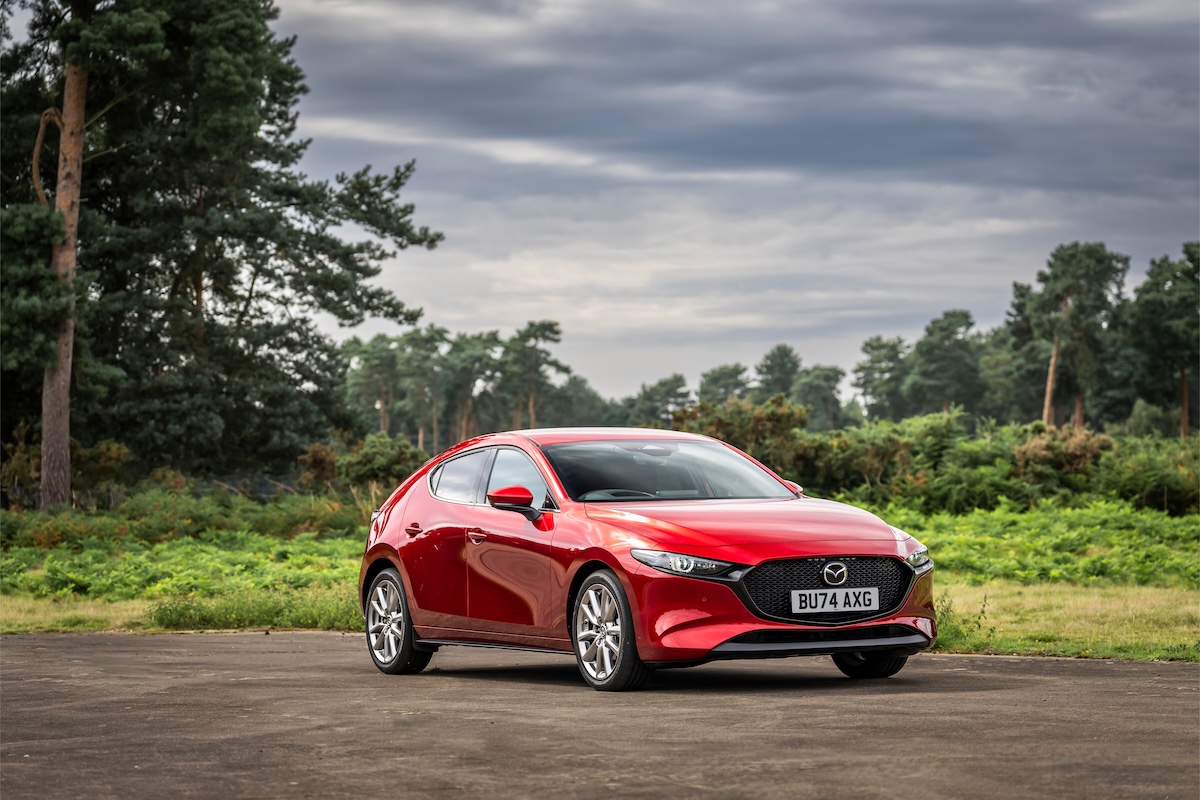
The current, fourth-generation Mazda3 is a striking-looking car with a squat, sporty shape. Its interior is equally stylish and feels a cut above many rivals for quality. On the whole, it’s the most upmarket Mazda3 yet, and it looks and feels like a rival for cars such as the Audi A3 and BMW 1 Series.
As before, you can choose from hatchback or saloon models, but for this generation, the hatchback gains a sleeker, almost coupe-like rear end. Rear headroom and visibility suffer as a result but it remains reasonably practical.
You don’t get the same breadth of choice as you do with some rivals when it comes to engines. The petrol options are a pair of naturally aspirated 2.0-litre mild hybrid (mHEV) units. The entry-level 120bhp version is called 2.0 Skyactiv-G: it doesn’t feel as gutsy as the turbocharged engines in many rival cars, but it’s just about up to the job. Alternatively there’s the 2.0 Skyactiv-X, a more advanced engine that compresses fuel and air at an unusually high ratio to give more power (178bhp) but better fuel economy and CO2 emissions than the Skyactiv-G engine. Both are available with a six-speed manual or six-speed automatic transmission; the Skyactiv-X is available with four-wheel drive as an option.
In the 2021 model year, the engines were renamed e-Skyactiv-G and e-Skyactiv X, with output for the e-Skyactiv X increased to 183bhp. If you want a fourth-generation Mazda 3 with a diesel engine, you should be able to find one if you look hard enough: a 1.8-litre diesel engine called Skyactiv-D was available for the first few months of 2019, but it wasn’t a big seller and was soon withdrawn. A new e-Skyactiv-G petrol engine was introduced in August 2024, with power boosted by 18bhp to 138bhp.
Core trim levels are SE-L, SE-L Lux, GT Sport, Sport Lux and GT Sport Tech, although more recently these have been renamed Prime-Line, Centre-Line, Homura, Exclusive-Line and Takumi. There have been a few special-edition versions over the years, too. All versions are very well-equipped: even the earliest entry-level models are fully loaded, with standard equipment including climate control, LED headlights, Mazda radar cruise control, a head-up display and the Mazda Connect infotainment system with a navigation system, wireless Apple CarPlay/Android Auto integration (the touchscreen functionality is locked out when the car is in motion, forcing you to use the rotary controller instead: it’s brilliant!). Standard driver assistance systems include blind spot monitoring, rear cross traffic alert, lane keep assist and traffic sign recognition. Just one step up to SE-L Lux adds features such as heated front seats, a reversing camera and keyless entry, while top-spec models have leather upholstery, a heated steering wheel and a Bose sound system.
Mazda’s standard warranty cover is three years or 60,000 miles: that matches the industry average, but some rivals offer five-, seven- or even ten-year cover. The good news is that the fourth-generation Mazda3 is proving to be a generally reliable car: owners have reported minor air-con and infotainment glitches, but little in the way of major problems.
Read our full mk4 Mazda3 review
Mazda3 mk3 (2014-2019)
Bodystyles:
- Five-door hatchback
- Four-door saloon
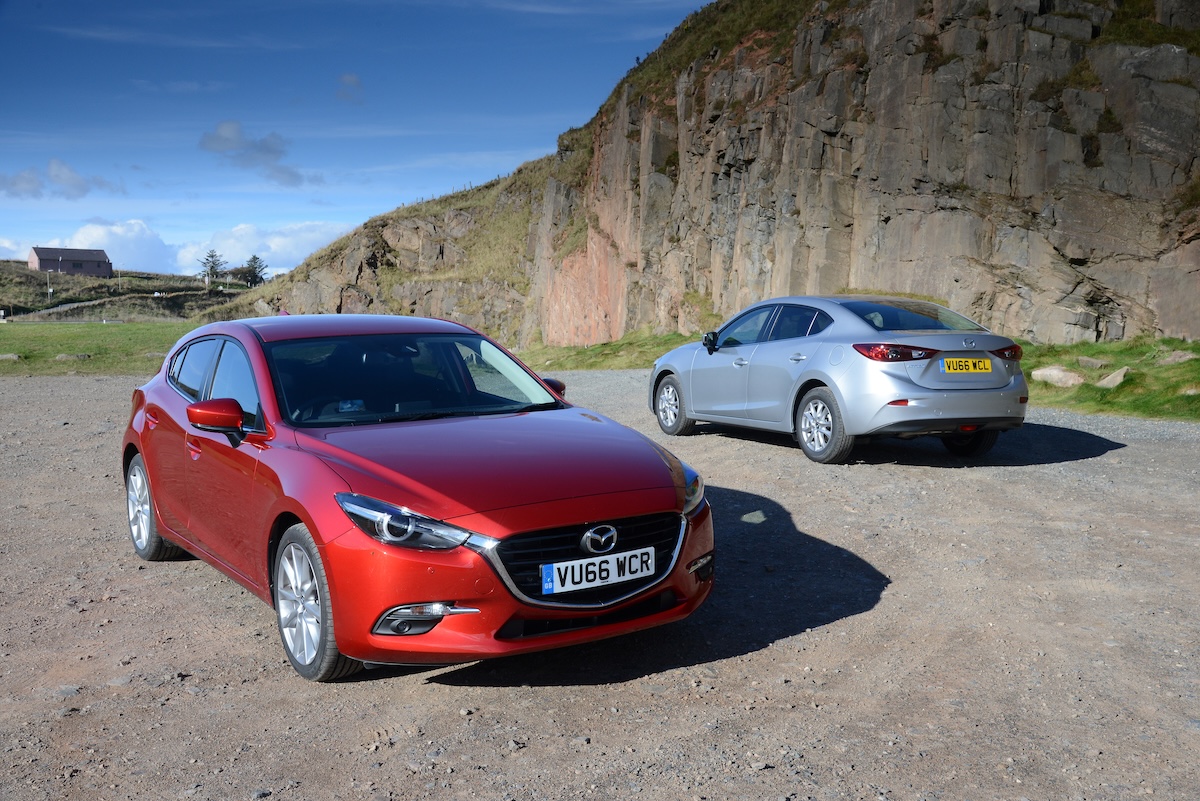
The third-generation Mazda3, introduced in 2014, feels like Mazda got its mojo back after the rather dull second-generation car. It represents a definite step up in quality and desirability, with sleek looks and a smart interior that give it a very European look and feel. Based on an all-new, all-Mazda platform, it looks low-slung and sporty despite having almost identical dimensions to its predecessor. And despite its new premium sheen and extra tech, it remains competitively priced.
This was the first Mazda3 to use the full range of ‘Skyactiv’ technology: Mazda’s name for lightweight construction techniques and a range of new engines. The entry-level 1.5-litre petrol engine has just 99bhp, but gives adequate acceleration. A better bet is the 118bhp 2.0-litre petrol, or the 163bhp version of the same engine that’s available for higher-spec models. The diesel option is a 2.2-litre unit with 148bhp and a hearty 280lb ft of torque. All have a six-speed gearbox as standard, with a six-speed automatic an option for the lower-powered petrol model or the diesel. The Skyactiv petrol engines aren't turbocharged, so they don’t give you the the low-rev punch that you get with the turbo engines many rival cars use. Driven sensibly, however, they give excellent mpg, both on paper and in real-world driving.
The model line-up is fairly easy to navigate, with core trim levels of SE, SE Nav, SEL-Nav and Sport Nav. Even the SE model is well equipped, with features including alloy wheels, power-folding door mirrors, air conditioning, Bluetooth and an automatic braking system. SE Nav versions add sat-nav, unsurprisingly. SE-L trim includes extras such as xenon headlights, dual-zone climate control, automatic headlights, rear parking sensors and heated front seats. Confusingly, Sport Nav models aren’t any more sporty, but they do get a range of luxurious upgrades, including leather trim, a Bose audio system, front parking sensors and a head-up display. Unlike the first- and second-generation Mazda3, there’s no MPS hot hatch model this time around.
An update for 2016 brought minor cosmetic changes inside and out, as well as the option of a 104bhp 1.5-litre diesel engine. Equipment upgrades include an electronic parking brake for all models, and LED headlights and a reversing camera for Sport Nav trim.
The third-generation Mazda3 looks and feels well put together and has a generally solid reputation for reliability. Premature brake wear is a common issue, however, especially with pre-2016 cars.
Read our full mk3 Mazda3 Review
Mazda3 mk2 (2009-2014)
Bodystyles:
- Five-door hatchback
- Four-door saloon
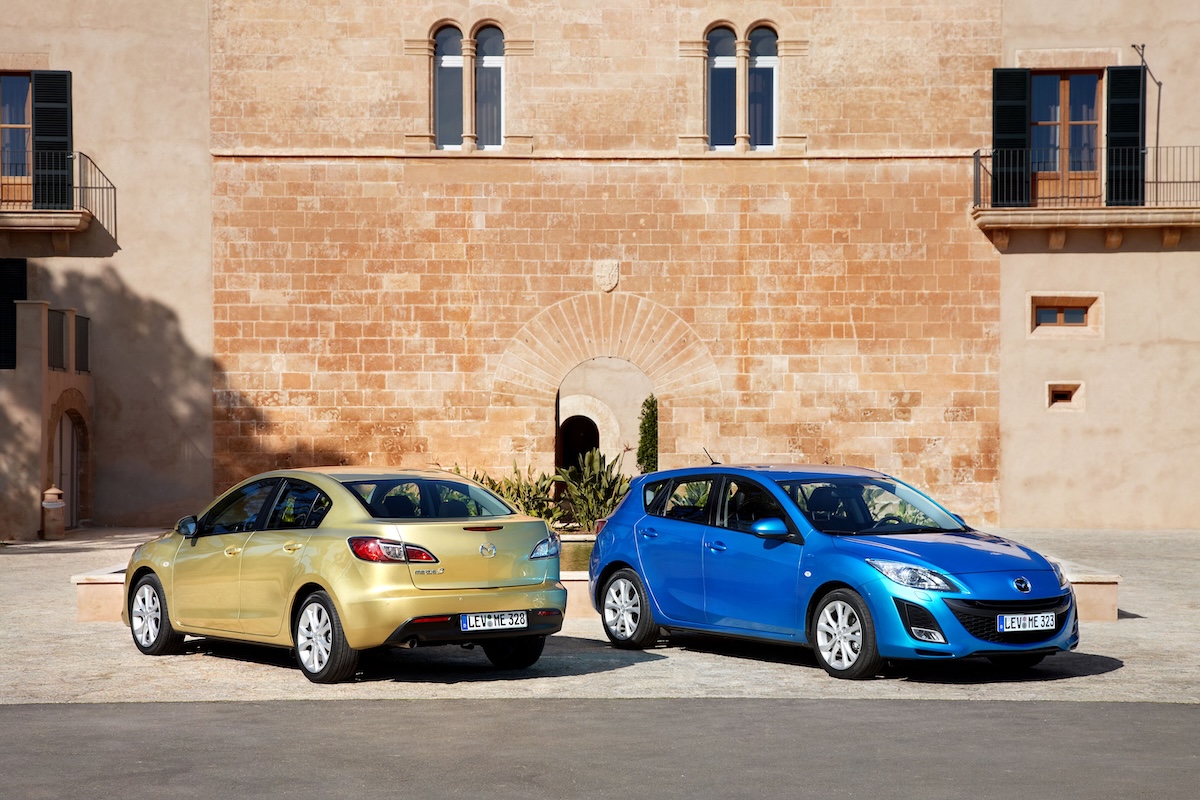
Largely because the first-generation Mazda3 ‘moved the dial’ so comprehensively compared with its predecessor, the second-generation model feels a bit underwhelming. Objectively, however, it’s a much better car: more comfortable and better equipped, yet similarly enjoyable to drive. It’s less characterful, however, with a bland interior and a softer, less edgy exterior dominated by a huge, ‘smiley’ front grille.
Introduced in early 2009, the second-generation Mazda3 is essentially an upgraded version of the first one, with the same basic chassis (shared with the concurrent Ford Focus) and almost identical dimensions. The range of models is similar, with a choice of 1.6-litre or 2.0-litre petrol engines, or a 1.6-litre diesel. The previous car’s 2.0-litre diesel was replaced by a new 2.2-litre unit with either 148- or 182bhp. While the 1.6 petrol continued with a five-speed manual gearbox as standard or a four-speed automatic as an option, the 2.0 petrol has a five-speed auto and the others have a six-speed manual.
Trim levels are largely the same as for the first-generation car, but each gets more equipment as standard. In fact, the second Mazda3 is a well-equipped car. Entry-level S models have front-, side- and curtain airbags, air conditioning, and electrically operated door mirrors as standard, while TS models have alloy wheels, dual-zone climate control and electrically folding door mirrors. Move up to TS2 and there’s a heated windscreen, Bluetooth connectivity, cruise control and automatic headlights and wipers. Sport models have a sportier look inside and out, as well as heated front seats, keyless entry, sat-nav, Bose audio and rear parking sensors. As with the first-generation car, the Mazda3 MPS sits at the top of the range. This hot-hatch version really is quite hot, with a turbocharged 2.3-litre engine with 256bhp and a 0-60mph time of 6.1 seconds. It’s fast, frantic and well-equipped (with a range of sporty upgrades over Sport trim), but the steering and handling aren’t up there with the best hot hatches of the time.
An update in 2012 included subtle cosmetic changes inside and out, extra body strengthening for improved ride and handling, and equipment upgrades. The model line-up was tweaked, too, with the 2.0-litre petrol engine dropped and new Tamura and Venture trim levels.
The second-generation Mazda3 is now at an age where its service history and mileage are crucial to how much it’ll cost you to buy and maintain. Unfortunately, there are a number of issues to look out for. Early manual models were known for clutch failure, while underbody rust can also be an issue.
Mazda3 mk1 (2004-2009)
Bodystyles:
- Five-door hatchback
- Four-door saloon
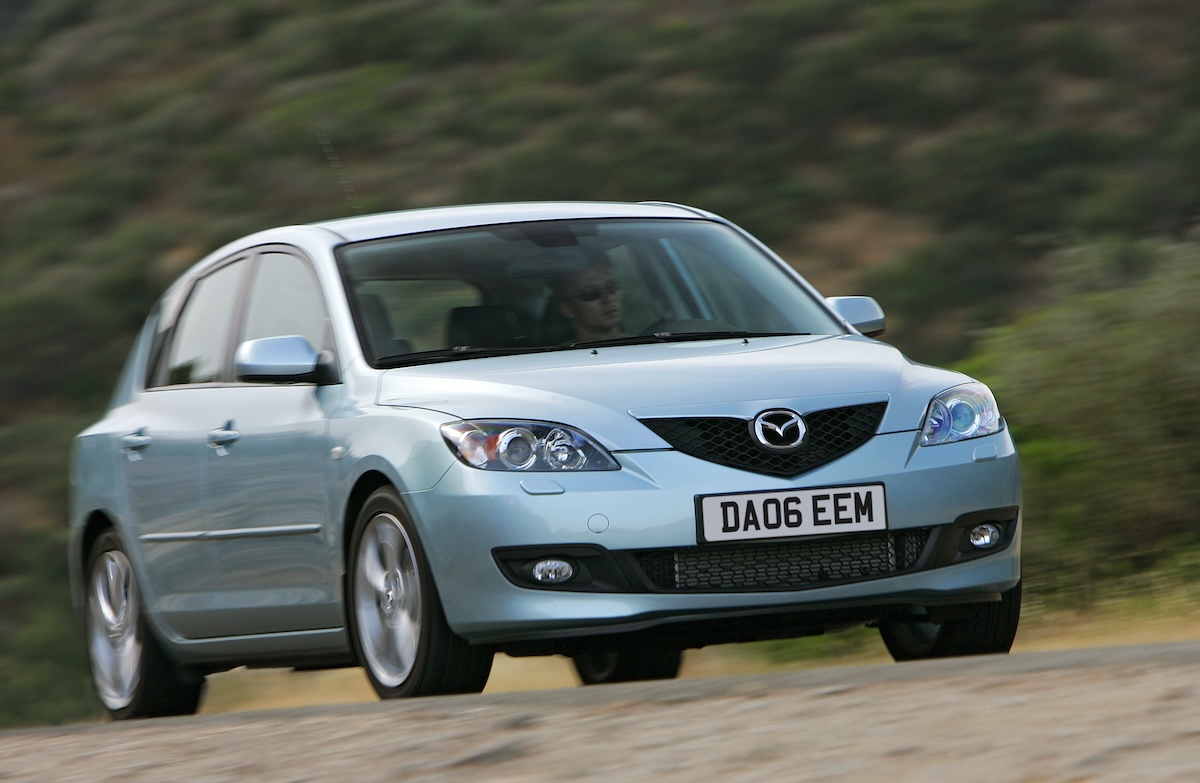
The first Mazda 3 was the second of the brand’s cars – after the Mazda6 – to bring some of the sporty character of its MX-5 roadster to its mainstream models. With a much more dynamic look and feel than the Mazda 323 it replaced, the new Mazda 3 felt like a real – and welcome – shift in direction. Five-door Mazda3 hatchback and four-door Mazda3 saloon body styles were available, and although the saloon wasn’t a big seller in the UK, it has arguably aged more gracefully thanks to its sleeker roofline.
Initially, there was a choice of three petrol engines, all four-cylinder units. The entry-level 1.4 has just 83bhp so needs to be pushed hard, but the 104bhp 1.6 is reasonably gutsy and the 148bhp 2.0 gives pretty swift acceleration. The two 1.6-litre diesel engines available (with either 89bhp or 108bhp) have the extra flexibility you’d expect of a diesel, but run out of puff at higher speed. The lower-powered models have a five-speed manual gearbox, with a six-speed manual reserved for the 2.0, and a four-speed automatic being offered as an option for the 1.6 petrol. A 2.0-litre diesel with 141bhp and a six-speed gearbox arrived in 2007. While all models handle well compared with rivals, the Mazda3 can’t match cars such as the Volkswagen Golf for comfort: the engines are noisy and the ride is rather fidgety.
An update in 2006 included mild cosmetic changes inside and out, but there were also more far-reaching changes, with tweaks to the suspension to improve ride comfort and extra soundproofing to reduce cabin noise. They worked to an extent. The update also introduced a new hot hatch version in the shape of the Mazda3 MPS. With a turbocharged 2.3-litre four-cylinder petrol engine developing 256bhp, it’s very quick, even by modern standards. Despite suspension, brake and steering upgrades, and a limited-slip differential, the front-wheel-drive (FWD) chassis often feels overwhelmed by all that power, so it doesn’t have the finesse of a Ford Focus ST or Volkswagen Golf GTI.
When new, the first Mazda3 was very keenly priced, especially considering how much equipment most versions have. Entry-level S trim is a bit basic, but it includes front- and side airbags, electric door mirrors and, for 1.6 models, alloy wheels. TS trim includes curtain airbags, air conditioning and steering wheel stereo controls, while TS2 trim adds electric rear windows and stability control. Sport trim includes a bodykit, climate control, larger alloys, xenon headlights, automatic headlights and wipers, a Bose premium audio system and more. MPS models build on Sport spec with a range of even sportier design details.
Although Mazda has a generally sound reputation for reliability as a brand, the first-generation Mazda3 doesn’t always live up to it. Clutch and gearbox issues are something to look out for, and rusting bodywork can be a major concern.
Related Topics: