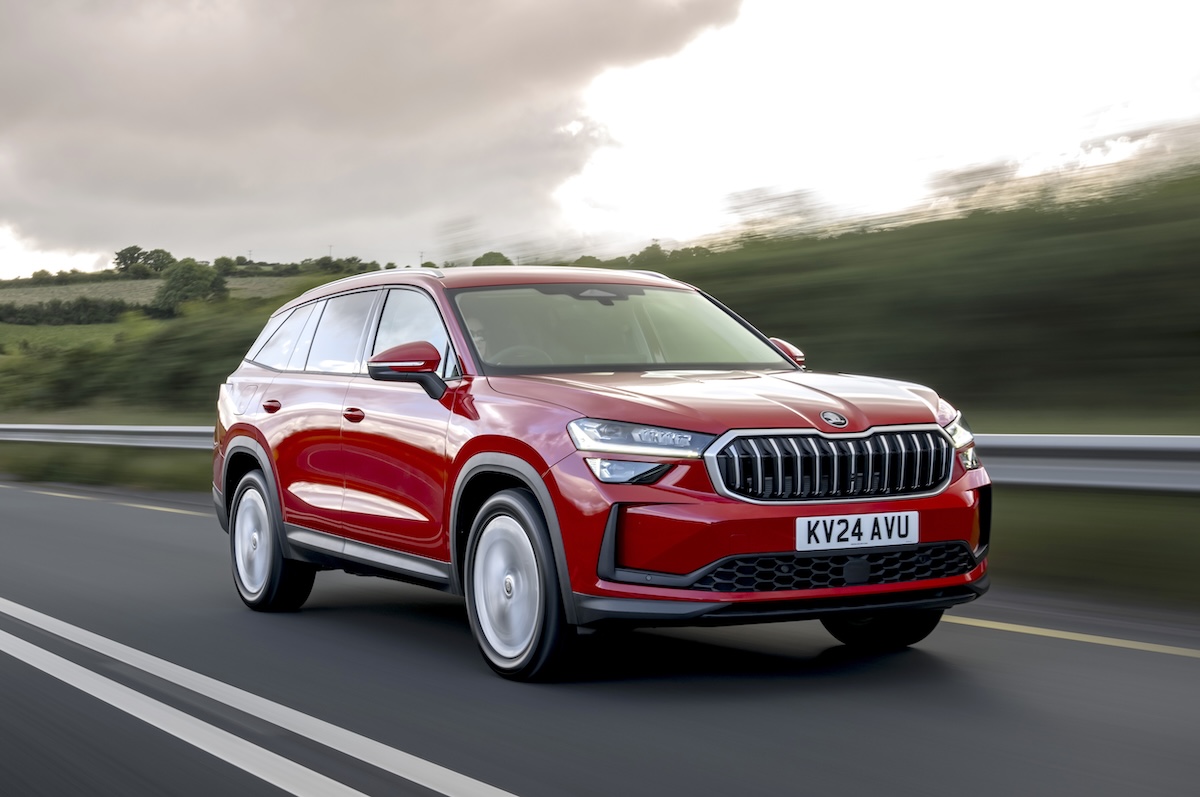
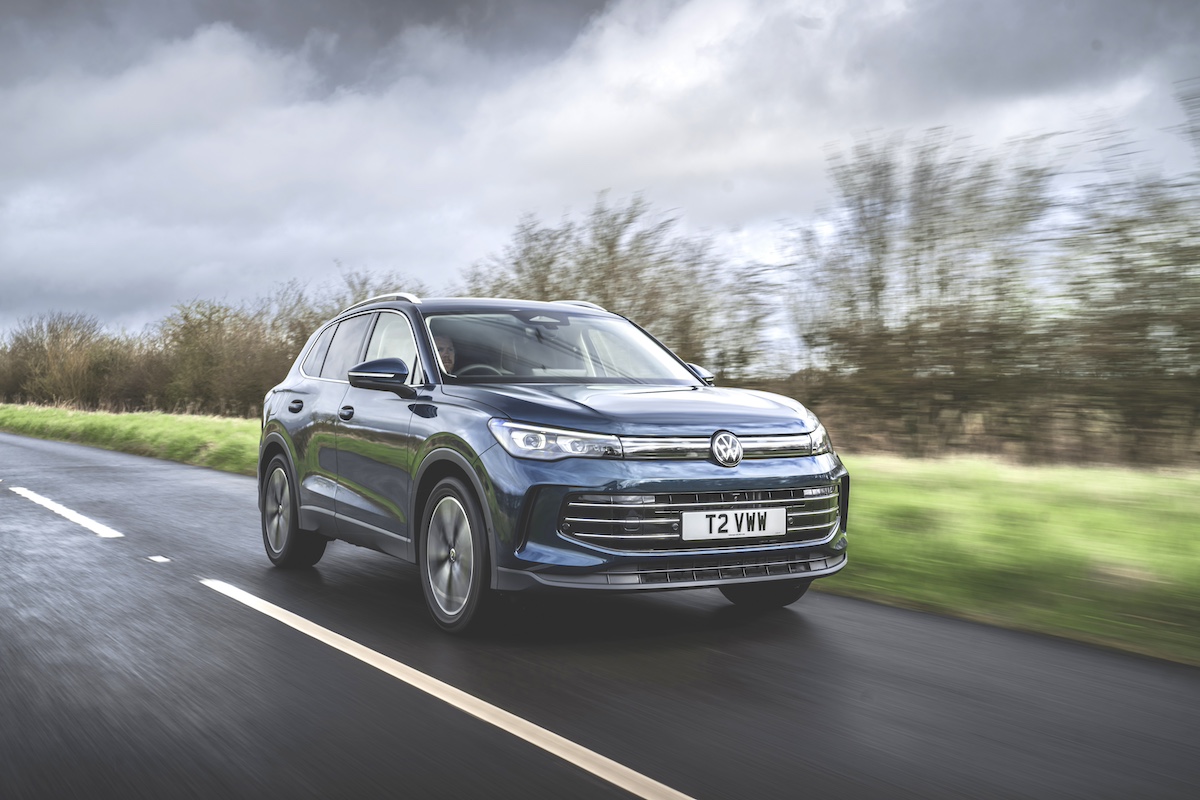
If you're looking for a new family SUV, chances are the Skoda Kodiaq and Volkswagen Tiguan are high on your list. Both have just been updated, and while they share a lot of parts under the skin thanks to being part of the same VW Group family, they offer two very different takes on what a modern SUV should be.
The Kodiaq is all about maximum space and value, offering the trump card of seven seats and a truly enormous boot. The Tiguan, on the other hand, is a strict five-seater that focuses on a more premium feel, a high-tech cabin, and a sharper design. With similar engines on offer, including frugal plug-in hybrids, which one is the right fit for your family?
Skoda Kodiaq vs Volkswagen Tiguan
Practicality
Skoda Kodiaq practicality score: 5/5
Volkswagen Tiguan practicality score: 5/5
When it comes to family life, practicality is king, and this is where the Kodiaq plays its strongest hand. With up to 910 litres of boot space in the five-seat version, it dwarfs the Tiguan's still-generous 652 litres. Crucially, the Kodiaq is available with seven seats, making it the default choice for larger families. Even with all seven seats in place, you get a usable 340 litres of boot space – more than you'll find in many superminis.
That's not to say the Tiguan isn't practical. Its boot is well-shaped, and the rear seats slide to let you choose between more legroom or a bigger boot. It's an exceptionally practical five-seater. But it simply can't compete with the sheer volume and flexibility of the Skoda. If you need to carry more than five people, or regularly haul bulky items like flat-pack furniture or a couple of big dogs, the Kodiaq is the clear winner here.
Driving Impressions
Skoda Kodiaq driving score: 4/5
Volkswagen Tiguan driving score: 3/5
You won't be surprised to hear that both these SUVs are set up for comfort rather than B-road thrills. They share the same range of engines, including efficient mild-hybrid petrols, long-legged diesels, and clever plug-in hybrids with over 60 miles of electric range.
The Kodiaq feels calm and composed on the motorway, making it a good long-distance cruiser. Its steering is light, which is helpful for parking, but it can feel a little vague on faster roads. The Tiguan has a slightly firmer ride, which means you feel bumps a little more around town, though it also feels a touch more controlled and responsive in corners. The Kodiaq's superior ride comfort gives it the edge for us, feeling more settled and relaxing, which is exactly what you want from a big family bus.
Technology and Equipment
Skoda Kodiaq technology and equipment score: 4/5
Volkswagen Tiguan technology and equipment score: 3/5
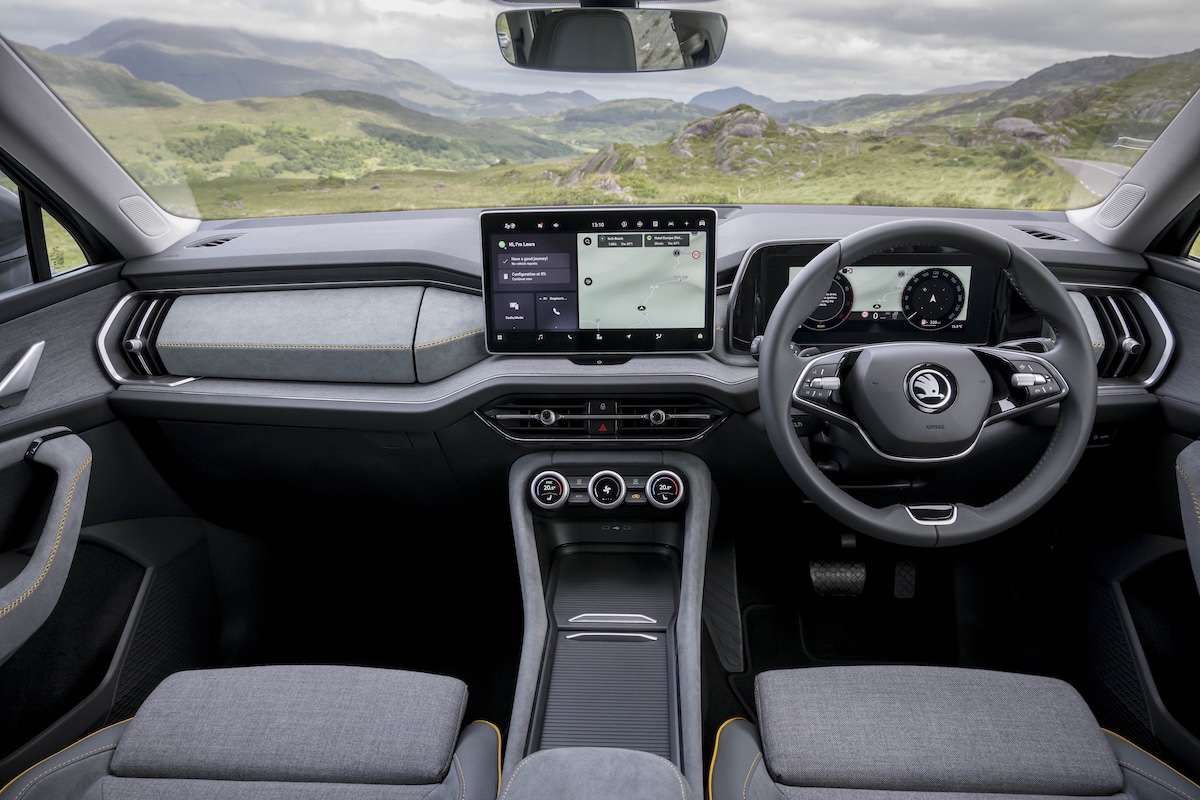
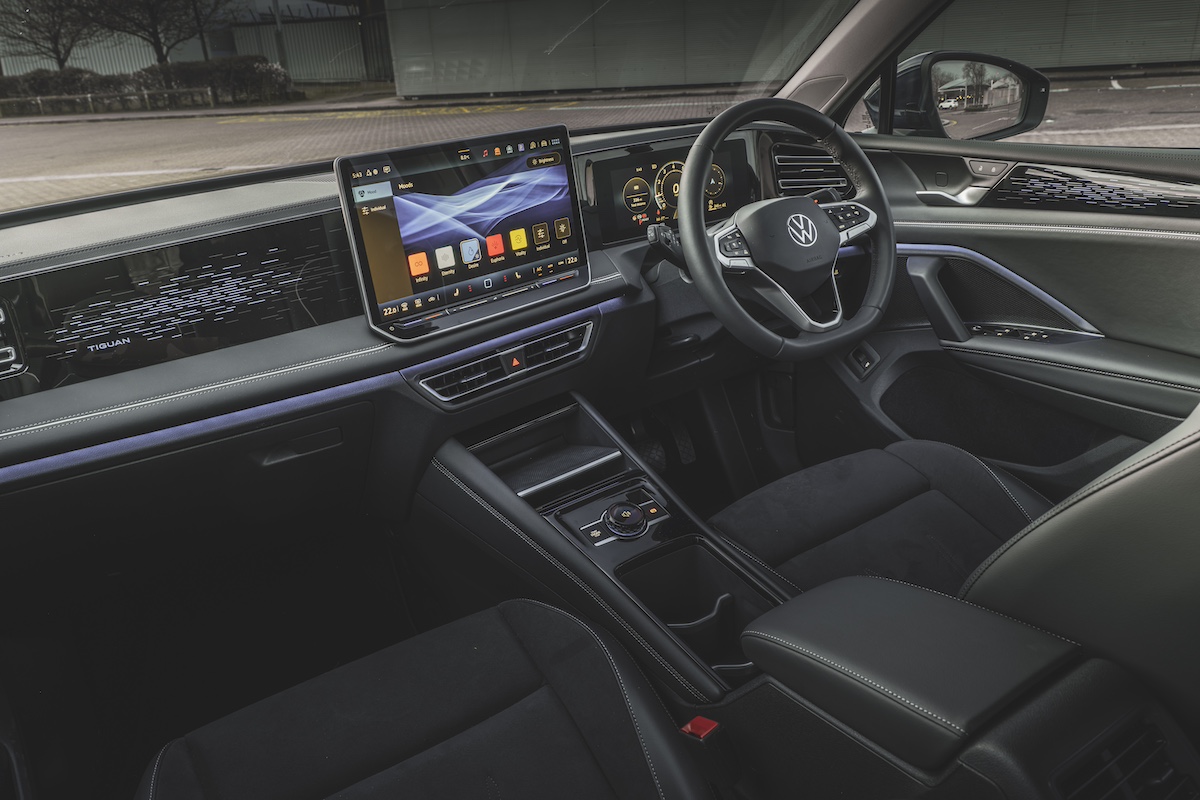
Step inside and both cars greet you with big, impressive screens. The Kodiaq gets a large 13-inch central touchscreen as standard, while the Tiguan has a 12.9-inch screen (with a 15-inch version optional). Both have crisp graphics and come with wireless Apple CarPlay and Android Auto.
The big difference is how you use them. Skoda has cleverly kept physical 'Smart Dials' for the heating and other key functions, which are a joy to use on the move. Volkswagen, however, has moved almost everything into the touchscreen. It looks slick, but having to dive into menus just to change the fan speed can be a real faff while driving. The Kodiaq is also a bit more generous with standard kit, and for sheer user-friendliness, its blend of screen and physical controls gives it the edge.
Running Costs
Skoda Kodiaq running costs score: 4/5
Volkswagen Tiguan running costs score: 4/5
As a rule of thumb, the Kodiaq is the more affordable choice. Its starting price is lower than the Tiguan's, and it represents good value for the amount of car you get. The Tiguan positions itself as the more premium option, and its higher price tag reflects that.
Day-to-day running costs will be similar. The petrol, diesel, and plug-in hybrid engines are shared between them, so fuel and tax bills will be almost identical. The plug-in hybrids are particularly appealing for company car drivers and those who can charge at home, offering the potential for low fuel bills. The main difference in cost comes down to the purchase price and insurance, where the Skoda's value-focused approach makes it the slightly cheaper car to own.
CarGurus Buyer Insights
|
Skoda Kodiaq Review (2024-present) |
Volkswagen Tiguan Review (2024-present) |
| CarGurus expert rating |
4 out of 5 |
4 out of 5 |
| CarGurus user rating |
4.8 out of 5 |
4.8 out of 5 |
| Percentage of good/great deals available on CarGurus* |
33.3% |
34.0% |
| Overall CarGurus rating |
4.4 out of 5 |
4.4 out of 5 |
The Verdict
Skoda Kodiaq Overall CarGurus rating: 4.4/5
Volkswagen Tiguan Overall CarGurus rating: 4.4/5
Choosing between these two is difficult, and our CarGurus Buyer Insights data reflects that, with both cars achieving an identical Overall CarGurus Rating. This isn't a cop-out; it shows just how good both of these family SUVs are, and that the 'better' car really depends on your personal priorities.
The Skoda Kodiaq is the undisputed champion of practicality. If you need seven seats, a cavernous boot, and the best possible value for money, it's the one to go for. Its user-friendly interior is a real bonus in day-to-day use. The Volkswagen Tiguan is for those who prioritise a premium feel and are happy with five seats. Its cabin feels a touch more upmarket, its styling is arguably a little sharper, and it feels a bit more sophisticated.
Because the scores are tied, we can't declare an outright winner. Instead, it's a victory for choice. Need space and value? Buy the Kodiaq. Want a more premium five-seat experience? The Tiguan is your answer. You can't go wrong with either.
Skoda Kodiaq Pros and Cons
| Pros |
Cons |
| Unbeatable practicality with seven seats |
Interior feels less premium than the Tiguan's |
| Huge boot space |
Ride can be firm on larger wheels |
| Good value for money |
Light steering lacks feel |
Volkswagen Tiguan Pros and Cons
| Pros |
Cons |
| Premium and high-quality cabin |
Only five seats available |
| Sophisticated technology and design |
More expensive to buy |
| Tidy handling for an SUV |
Touchscreen controls can be frustrating |
*The Overall CarGurus rating that informs these recommendations is based on CarGurus' proprietary market data from May 2026, CarGurus expert reviews, and CarGurus user reviews.
Read Our Full Reviews: