I drove the new Ford Puma Gen-E recently. Now, there are lots of reasons why this makes me happy. First is because it’s peachy to drive; fizzy in the corners, friendly and unintimidating at all times, and just a pleasure to cover miles in.
Second is because the costs, practicality and critical buying stuff all adds up to this being a great all-rounder for anyone who wants a versatile, compact and affordable family EV. Ford’s even thrown a new ‘Power Promise’ on all of its new electric cars, which includes a free home charger, 10,000 miles of charging costs covered, and five years free servicing. All good news.
But, being the battery geek that I am, I’m particularly happy because the Puma showcases the kind of efficiency that I want to see more of. It feels to me like the government, the media and the consumer are all too focussed on range, when it comes to electric cars. And efficiency is forgotten about.
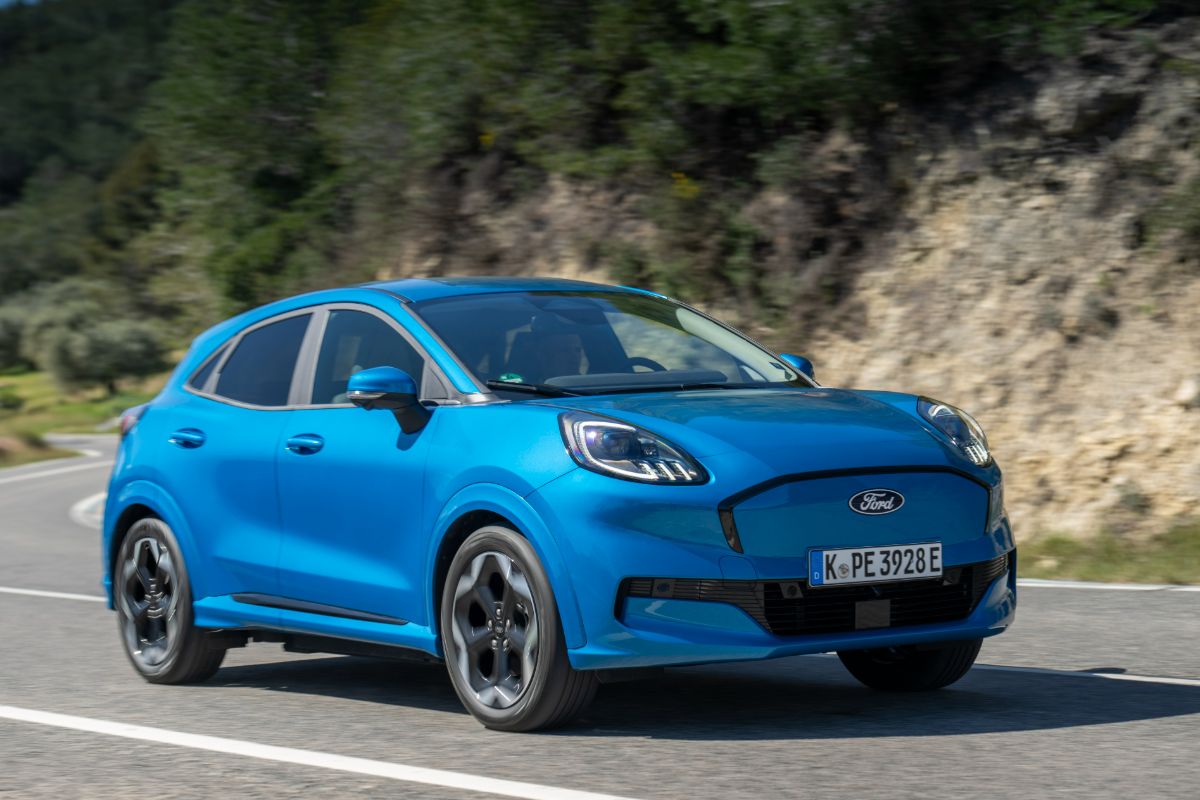
Obviously, these two things are intrinsically linked. But it’s still one thing to boast about a long-range EV that’ll do 400 miles to a charge because it’s got a continent’s worth of lithium and cobalt in its floorpan. And an entirely different achievement to sell a car that’ll do 233 WLTP miles to a charge, despite a very modest 43kWh usable battery capacity. And Ford has just done the latter, with the new, electric Puma. For some context, the Skoda Elroq 55 manages a 232 mile WLTP range from a 52kWh usable battery capacity, so you can see why I’m excited (I know, I should get out more…).
Anyway, driving the Puma on a route including a fair stretch of motorway miles and up into fast mountain roads, with the air-con working hard, and it still returned 4.4m/kWh. That’s a real-world range of 189 miles, which is impressive – especially as we were on the 18-inch wheels that drop the official range to 226 miles. Another journo saw over 5.0 m/kWh on a more moderate town and motorway route, which would be a 215 mile real-world range. Yes, this was in balmy, 20-degree weather, and when I had a go in the Puma Gen-E on a chilly 6deg morning, efficiency dropped to 3.4 miles/kWh (which still isn’t bad at all for cold running, by the way, despite the Puma foregoing a heat pump).
But the real joy here is that Ford has produced a 43kWh car that competes on range with rivals that have much bigger usable capacities, simply because it’s efficient.
Then, I noticed that the Puma has a total installed battery capacity of 53kWh! Which is a huge ‘dormant’ buffer, compared with the 10-15% buffer that most EVs have. If we use the Elroq 55 for context again, that gets a total installed capacity of 55kWh – leaving a buffer of 3kWh, compared with the Puma’s 10kWh.
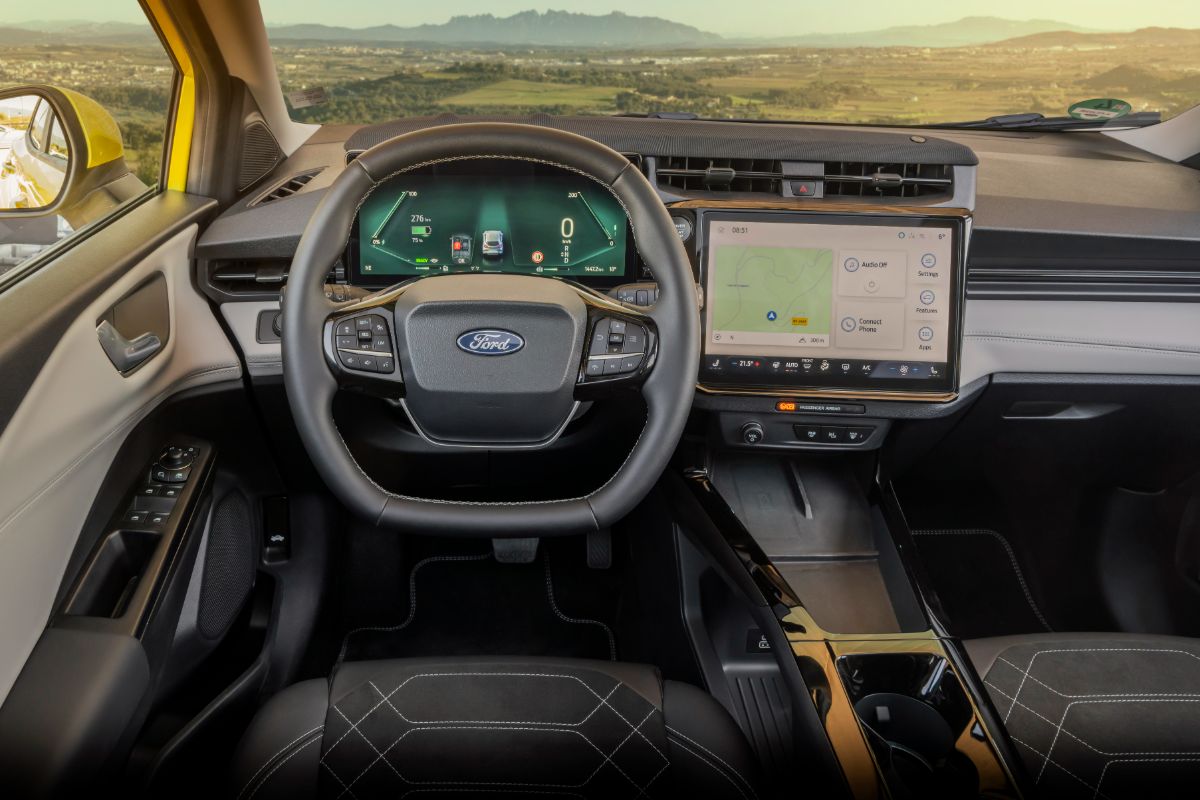
Ford experts tell me that they’ve done this to enable more consistent, faster charging, so that the Puma can hit its peak 100kW rapid charging speed until it’s close to 80% charged, and that’s great to hear. Average charging speeds and charging curves is yet another area that I want manufacturers to be more transparent about, but that’s another column…
Part of me is even more impressed with Ford’s packaging and powertrain efficiency, as it’s managed to shoehorn in a 53kWh lithium-ion NMC pack into the Puma’s 4.2-metre long frame, and still keep the kerbweight to below 1,600kg, and real-world efficiency much higher than most rivals. But to know that you’re lugging that much battery around while only actually being able to charge 43kWh of it is a bit frustrating.
By my maths, Ford could have produced exactly the same Puma, at the same cost and with the same battery, but allowed for a usable capacity of 48kWh instead – still saving 5kWh for battery preservation and charging speeds, yet giving it a WLTP range of 260 miles and real-world range of 210 miles or more. This would have made it a much more compelling prospect when there are alternatives like the Skoda Elroq, MG4 and Kia EV3, which aren’t far off the Puma’s price but have usefully longer ranges on offer.
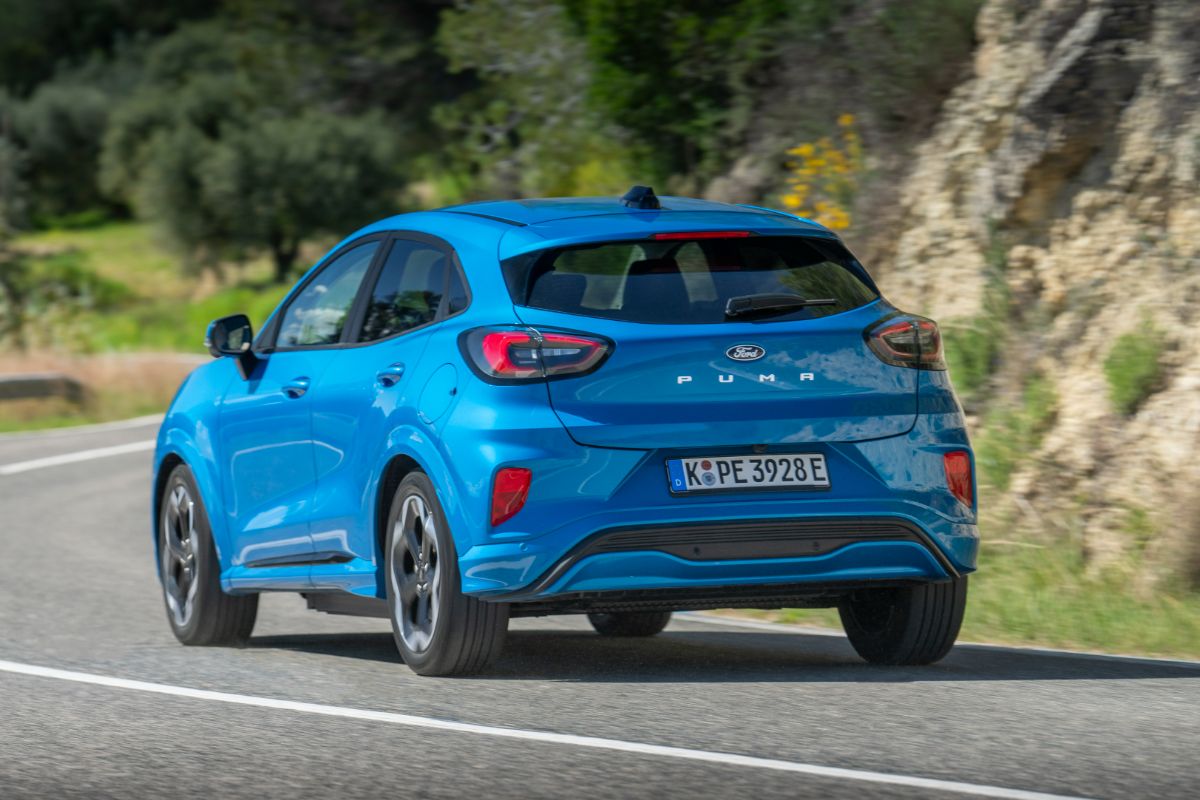
Oh well... I suspect Ford has reasons that it’s not willing to share, that better explain the decision to keep the Puma as a shorter range car; perhaps even so that it doesn’t tread on the toes of the Explorer and Capri? We may never know, but charging efficiency – and battery longevity, which is the chief reason that every electric vehicle has dormant cells secreted away in its battery pack - is the only official line we’ve been given.
Regardless of my consternation over so much unused battery capacity lurking beneath the Puma’s sweeping lines, Ford deserves credit for making such an efficient electric car. Not to mention one that’s sweet to drive and has an incongruously huge boot for such a compact vehicle. It really is a great little electric family car, and hopefully it’ll help to start shining more of a light on efficiency, rather than just range.
After all, EVs are here because they’re the greener, renewable alternative to fossil fuel, and to make the most of the environmental benefits of EVs we need to maximise our use of the battery’s resources. How do we do that? Make them more efficient. So, let’s start celebrating - and incentivising! - miles-per-kWh, rather than kWh per vehicle. Then we’ll start to see what EVs can really do.
Related Topics:


