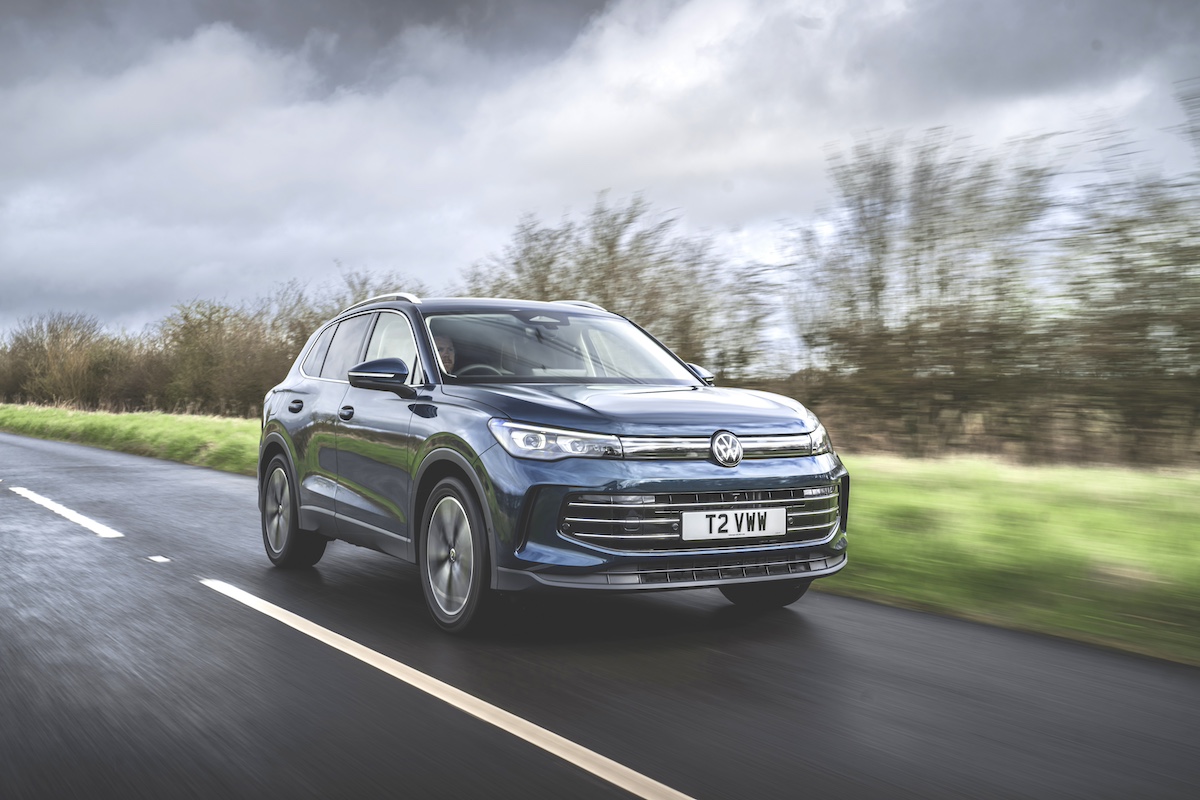
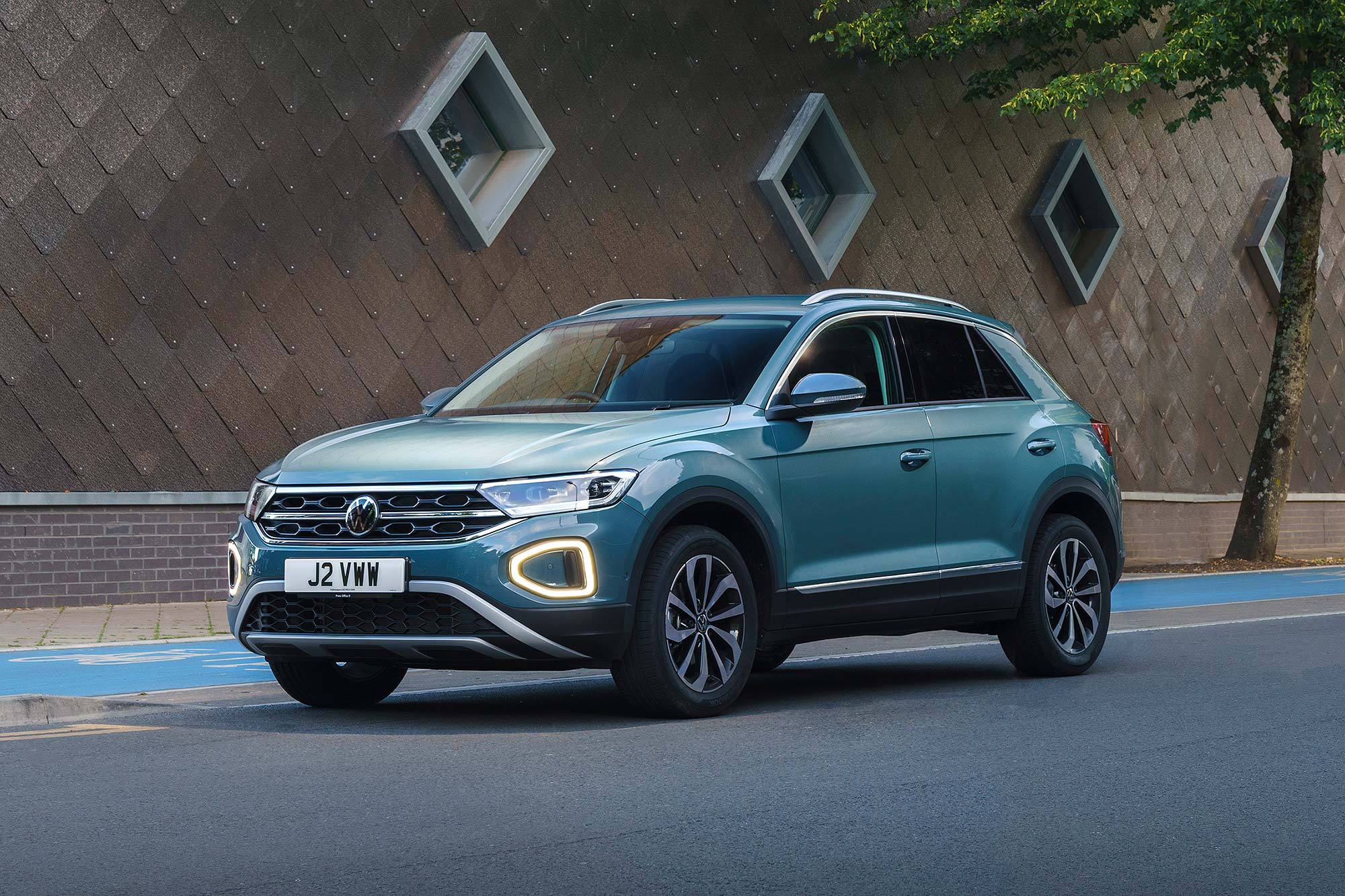
If you’re in the market for a Volkswagen SUV, you’re faced with a choice that many buyers grapple with: the sensible, family-focused Tiguan or the smaller, more style-led T-Roc. Both cars offer that desirable high driving position and VW’s solid, dependable image, but they cater to quite different priorities.
The latest Tiguan has doubled down on practicality and technology, growing in size to become one of the most spacious family SUVs you can buy. The T-Roc, on the other hand, is based on the smaller Polo and aims to blend SUV looks with the compact dimensions and fun-to-drive nature of a hatchback. So, which of these in-house rivals is the better fit for you?
Volkswagen Tiguan vs Volkswagen T-Roc
Practicality
Volkswagen Tiguan practicality score: 5/5
Volkswagen T-Roc practicality score: 3/5
This is where the Tiguan plays its trump card. It is a phenomenally practical car, designed with family life at its core. The boot is vast, offering a class-leading 652 litres of space, and the rear seats slide forwards and backwards to let you choose between maximum legroom or boot capacity. There’s acres of space for adults in the back, and plenty of clever storage cubbies dotted around the cabin. For carrying people and their luggage, the Tiguan is hard to fault.
The T-Roc, being a smaller car, is naturally compromised in this area. Its 445-litre boot is a good size for the small SUV class, but it’s dwarfed by the Tiguan’s. Rear-seat passengers will also find things tighter, particularly on legroom. While it’s perfectly adequate for couples or those with young children, it can’t compete with the sheer space and versatility of its bigger sibling. If practicality is your number one priority, the Tiguan is the obvious winner.
Driving Impressions
Volkswagen Tiguan driving score: 3/5
Volkswagen T-Roc driving score: 4/5
The Tiguan’s focus is squarely on comfort and ease of use. The ride is soft and does a good job of isolating you from bumps in the road, making it a relaxing car for long motorway journeys. The steering is light, and it’s an easy car to place on the road, but it never feels particularly engaging or fun. It’s a safe, stable, and predictable family hauler, which is exactly what many buyers are looking for.
By contrast, the T-Roc is one of the more entertaining cars in its class. Because it’s smaller and lighter, it feels more agile and responsive than the Tiguan. It turns into corners with more enthusiasm and generally feels more like a traditional hatchback to drive. It’s not quite as comfortable or refined as the Tiguan, but if you enjoy driving, the T-Roc offers a more rewarding experience from behind the wheel.
Technology and Equipment
Volkswagen Tiguan technology and equipment score: 3/5
Volkswagen T-Roc technology and equipment score: 3/5
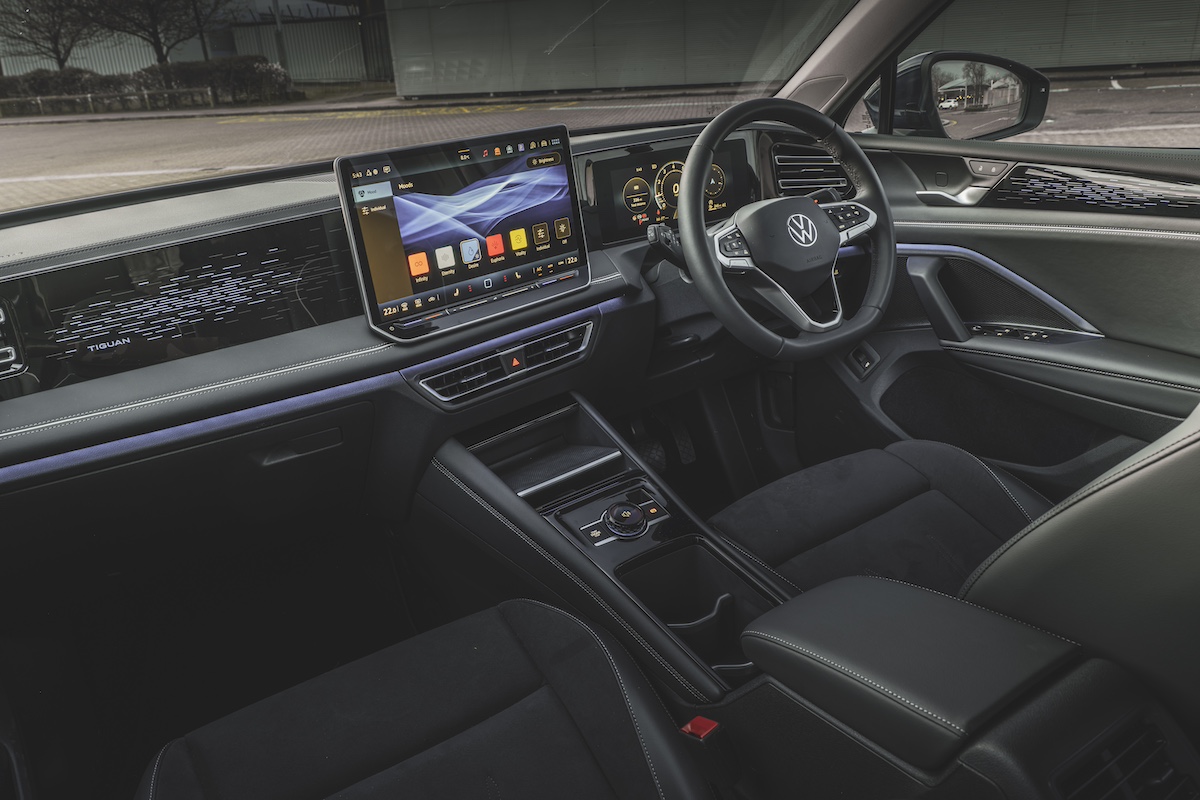
Volkswagen has packed the latest Tiguan with its newest tech, dominated by a huge central touchscreen that can be up to 15 inches in size. It looks impressive and comes with plenty of features, including wireless Apple CarPlay and Android Auto. However, VW has moved almost all the controls to the screen or to touch-sensitive sliders, which can be frustrating and distracting to use while driving.
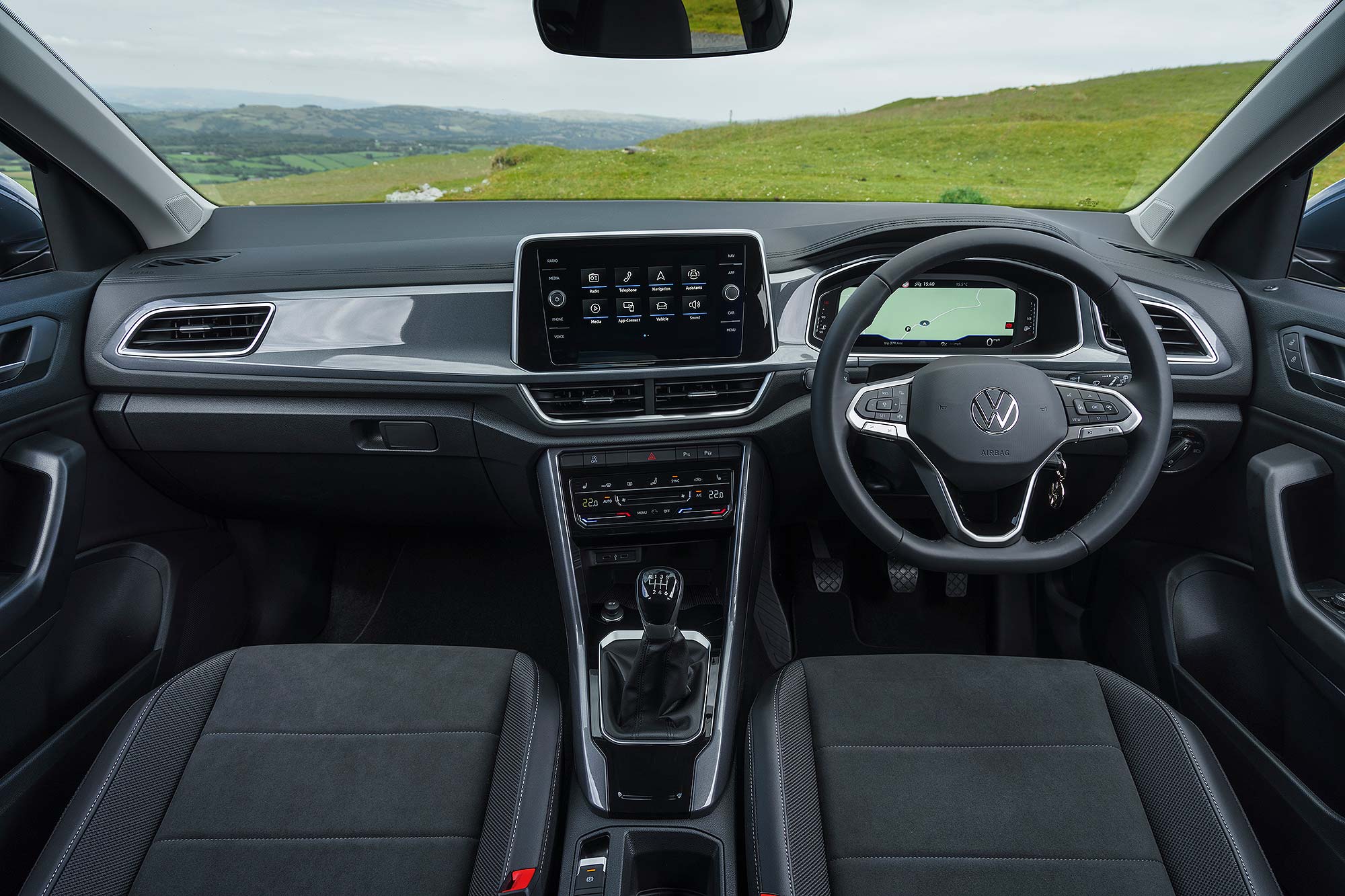
The T-Roc’s setup is a little older, but some might say it's better for it. It gets a clear digital driver’s display and a responsive central touchscreen, but crucially, it retains physical buttons and dials for the climate controls. This makes adjusting the temperature on the move a much simpler and safer task. While the Tiguan’s screen is bigger, the T-Roc’s more user-friendly interface means there’s no clear winner in the technology stakes.
Running Costs
Volkswagen Tiguan running costs score: 4/5
Volkswagen T-Roc running costs score: 4/5
As you’d expect, the smaller, lighter T-Roc is generally more fuel-efficient than the Tiguan when comparing their conventional petrol and diesel engines. This will result in slightly lower fuel bills for most drivers.
However, the Tiguan has a significant advantage for some buyers: it’s available as a plug-in hybrid (PHEV). With an official electric-only range of more than 60 miles, many owners will be able to complete their daily commute and school run without using a drop of petrol, provided they can charge at home. This also makes it a compelling choice for company car drivers thanks to low Benefit-in-Kind tax rates. The T-Roc isn’t available with any form of hybrid power, which is a notable omission in today’s market.
CarGurus Buyer Insights
|
Volkswagen Tiguan |
Volkswagen T-Roc |
| CarGurus expert rating |
4 out of 5 |
4 out of 5 |
| CarGurus user rating |
4.5 out of 5 |
4.1 out of 5 |
| Percentage of good/great deals available on CarGurus* |
33.2% |
32.3% |
| Overall CarGurus rating |
4.4 out of 5 |
4.3 out of 5 |
The Verdict
Volkswagen Tiguan Overall CarGurus rating: 4.4/5
Volkswagen T-Roc Overall CarGurus rating: 4.3/5
This is a close contest between two accomplished SUVs from the same stable, but there can only be one winner. Based on our comprehensive CarGurus Buyer Insights, the Volkswagen Tiguan takes the victory.
While the T-Roc is more stylish and fun to drive, the Tiguan excels in the areas that matter most to family SUV buyers. Its huge advantage in practicality, with its vast boot and spacious rear seats, is impossible to ignore. This, combined with its superior comfort and the availability of a long-range plug-in hybrid model, makes it a more complete and versatile package.
The T-Roc is a great choice if you don’t need the extra space and prioritise a more engaging driving experience and compact dimensions. However, for its breadth of abilities as a comfortable, high-tech, and supremely practical family car, the Volkswagen Tiguan is our winner.
Volkswagen Tiguan Pros and Cons
| Pros |
Cons |
| Supremely practical and spacious |
Uninspiring to drive |
| Very comfortable and refined ride |
Infotainment can be fiddly |
| Long-range PHEV option available |
Conservative styling |
Volkswagen T-Roc Pros and Cons
| Pros |
Cons |
| More fun and agile to drive |
Much smaller boot and rear seats |
| Stylish exterior design |
No plug-in hybrid option |
| Simpler, more user-friendly controls |
Some cheap-feeling interior plastics |
*The Overall CarGurus rating: that informs these recommendations is based on CarGurus' proprietary market data from January 2026, CarGurus expert reviews, and CarGurus user reviews.
Read Our Full Reviews: