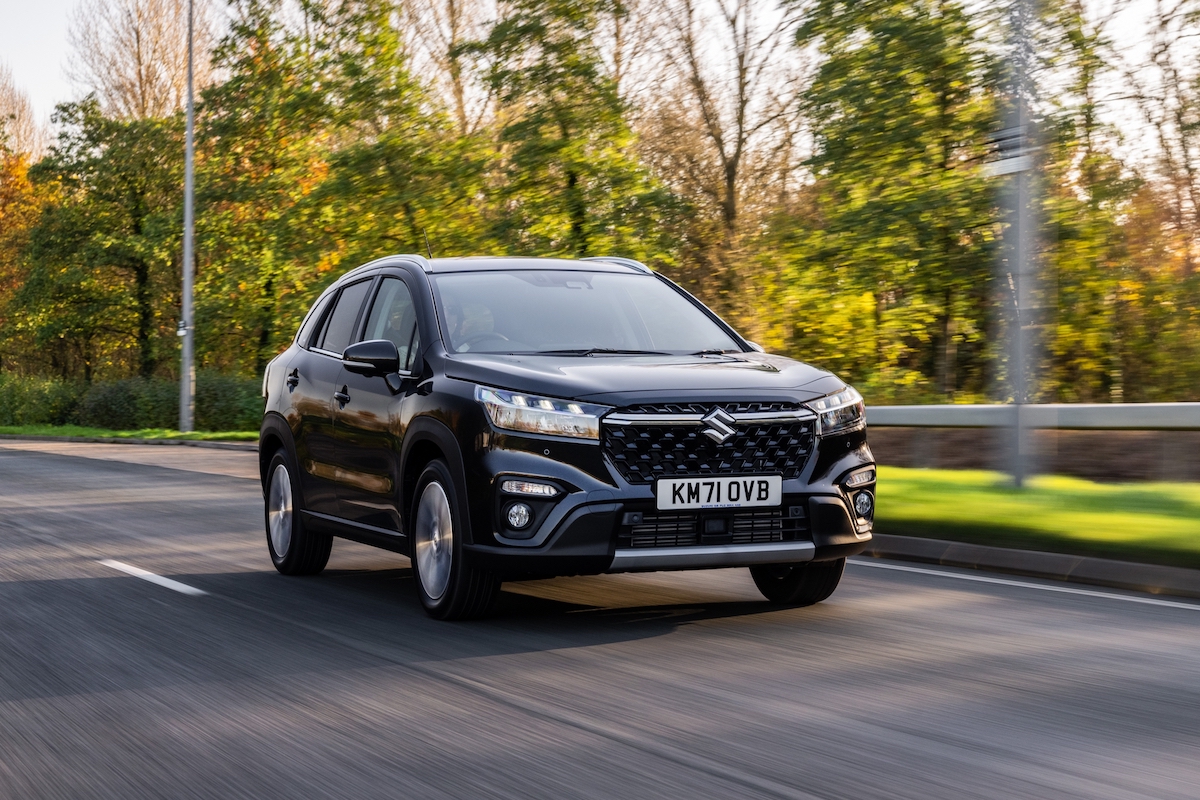
Suzuki S-Cross Review (2013-2021)
CarGurus expert score
Pros and cons
What we like
Plenty of space for a small car
Four-wheel-drive models will suit country-dwellers
Easy to drive
What to consider
Basic standard of finish
Lots of wind and road noise at speed
Early 1.6 petrol cars are quite slow
The CarGurus verdict
With plenty of space, a decent-sized boot, hassle-free driving manners and an excellent reliability record, the S-Cross is the epitome of practical, common sense, family car.
Normally, we’d think twice about recommending a basic model, as equipment levels can be rather spartan, but this is not the case with the S-Cross. Considering the 1.0-litre engine is smooth, flexible, reasonably economical and delivers more than enough performance, buying one of the cheaper versions makes absolute sense. The availability of automatic gearboxes and four-wheel drive only serve to boost its credentials. Certainly, the S-Cross is not the most cultured or the most luxurious vehicle, and is undoubtedly a bit of a leftfield choice, but if you buy one at the right money, it could be a pretty shrewd move.
out of 5 expert review
What is the Suzuki S-Cross?
What would Suzuki give to achieve the same level of success with four wheels as it has with two? Unfortunately, while Suzuki’s motorcycles are amongst the most thrilling machines on the planet, the cars... well, they’re just not.
The S-Cross SUV is definitely more Daddy Day Care than Days of Thunder, and with so many basic plastics used throughout the cabin, it’s almost embarrassingly utilitarian compared to a Nissan Qashqai or a Kia Sportage. It was replaced by the current S-Cross in 2021.

Practicality
How practical is it?
The lack of fine furnishings in the S-Cross does mean dog slobberings or child detritus can be vanquished with a quick swipe from a damp chamois.
Further back, headroom is on the snug side, especially in cars fitted with sunroofs, and the big transmission tunnel running down the middle of the car really limits foot space for anyone perched on the skinny centre seat.
But practicality is boosted by a decent amount of boot space – 430 litres – that's complemented by a neat, square, shape. Because the boot has a removable floor, which can be set at two different heights, it's easy to create a level surface once the rear seats are folded down.

Driving
What's it like to drive?
Setting off, the first thing you’ll notice is the steering is not exactly a paragon of precision, but it is light and breezy, as are the clutch pedal and the gearshift, which is ideal if you spend your time pottering around in town.
Although far from terrible, the ride is on the fidgety side and some larger lateral impacts can be very disruptive and pretty audible with it.
Undoubtedly the worst aspect of the S-Cross is its shortage of soundproofing. Along with a fair bit of wind noise, the excessive amount of road roar coursing up through the wheel arches can turn longer journeys into wearisome affairs.

Tech and equipment
Technology, equipment & infotainment
The dashboard and steering wheel are scatter-gunned with a mixture of rocker switches and buttons, which are clearly marked and easy to hit while driving, unlike the graphics in the central touchscreen fitted to higher-spec models, which are squintingly small and confusingly labelled.
Engine-wise, the early 1.6-litre petrol motor is pretty flat compared to the later turbocharged 1.0-litre three-cylinder Boosterjet motor, which is smoother and altogether perkier.
The pick of the range in the line up is the 1.4-litre four-cylinder turbocharged engine, which comes with a six-speed gearbox and generates a solid band of power. Consequently, it's very relaxed when cruising, and snapping down a gear or two scoots the S-Cross past slower-moving traffic with ease. The latest models are available with just one engine, a 1.4-litre four-cylinder, which is enhanced by a 48v mild hybrid system and a choice of six-speed manual or an automatic gearbox. Despite this hybrid assistance, the power output is only rated at 129bhp.
While the turbodiesel engines produce a grumpy old clatter at idle, they do generate a strong slug of mid-range power. Consequently, they respond best to a quick-on-the-draw gearshift strategy in order to maintain that mid-range sweet point, because beyond 2,000rpm things rapidly run out of puff.

Running costs
Suzuki S-Cross running costs
Depending on trim level, the early 118bhp 1.6 petrol engine is claimed to do anywhere between 47.8mpg and 51.3mpg. However, these MPG figures should be taken with a pinch of salt, as they were calculated under an old lab-based testing method that's since been replaced by a more accurate (if still optimistic) one. In the real world, you’re more likely to get mid-to-high thirties.
On paper, the most economical S-Cross is the 1.0-litre Boosterjet five-speed manual. In front-wheel-drive form, it's claimed to return 56.5mpg, while the AllGrip four-wheel-drive version has only a slightly inferior number of 53.3mpg. You do need to bear in mind this is a three-cylinder engine and, like all engines of this configuration, requires a very considered driving style to achieve their claimed averages. Make the most of the perky nature and you’ll struggle to get near those numbers.
As well as being considerably stronger and smoother, the 1.4-litre, four-cylinder Boosterjet is claimed to be capable of around 50mpg and, given you don’t need to spank it everywhere, you’ll have half a chance of getting close to that number.
The latest S-Cross models are available with just one engine, a 1.4-litre four-cylinder unit, which is enhanced with a 48v mild hybrid system to help reduce emissions. Despite this assistance, the power output is only rated at 129bhp, although the claimed 50mpg for both manual and automatic versions is probably closer to reality, as this was verified by the latest WLTP fuel consumption testing method.
Depending on the vintage, the 1.6-litre diesel engine is rated at anywhere between 64.2 and 67.2mpg. Given these engines respond best to a short stab of the accelerator and early-in-the-rev-band gearshifts, they should get reasonably close to their claimed average.
On average, recommended service intervals are every year or 10,000 miles, but this can vary with the type of driving you subject your car to. Suzuki considers low-mileage cars to be more likely to require extra maintenance. Servicing should cost around £175 for the 1.4T and 1.6 petrol engines, and £190 for the diesel. Suzuki dealers also offer fixed-price servicing packages for cars aged three- to 15 years old.
Given the car's respectable citizen status, it is perhaps not surprising that the S-Cross doesn’t cost a fortune to insure. At the time of writing, groupings ranged between 13 at the bottom of the range to 26 at the top. Consequently, it shouldn’t cost a fortune to have your higher risk teenage offspring as a named driver on your policy.
Suzuki S-Cross reliability
Although Suzuki is very much a niche brand in the UK, the Japanese company ranks in the top 10 of the biggest automobile manufacturers worldwide.
As a brand, Suzuki finished slightly down on previous showings in the 2020 What Car? reliability survey, coming equal 14th of 31 brands surveyed
New S-Cross models come with a basic three-year, 60,000-mile warranty including three years’ roadside assistance and a 12-year anti-perforation warranty. You can also purchase three different levels of the extended warranty, either paid for upfront or in instalments.
The initial three-year warranty will have long since expired on earlier models, but encouragingly, Suzuki is well regarded for producing durable, reliable cars.
Suzuki also has a large-ish dealer network in the UK, so finding somewhere local to repair and service your S-Cross shouldn’t present any problems. If you can’t find one nearby then, given the simple nature of the S-Cross, any independent specialist should be capable of fettling it.
Although it’s highly unlikely that anyone would have used their S-Cross for serious off-roading, it's worth checking underneath for damage and listen for whines on a test drive to ensure all the off-road features on four-wheel-drive variants function correctly.
If you’re reasonably handy with a tool kit then the relative mechanical simplicity and inherent robustness of the S-Cross makes it’s a simple and relatively inexpensive vehicle to maintain. A basic DIY oil and filter change should cost no more than £50 for parts, while brake pads can be replaced for about £30 a set and a pair of discs can be had for as little as £70. Replacement ancillary drive belts cost about £20 while a water pump will cost in the region of £50.
The most costly outlay will be with the diesel models, which have a timing belt that requires changing every five years or 60,000 miles, This can be quite a costly fix as more than likely than not it will require the services of an experienced mechanic.


What owners say
Probably best value for money car at the market right now. Don't expect luxury you get a day-to-day workhorse for family that will keep you on the road for years ahead
28 December 2025Three things to know
- The S-Cross has a cheeky trick up its sleeve, as it is available with front- or four-wheel drive, the latter known as AllGrip. Although ground clearance is no better than a family hatchback, the ability to get off a frosty drive or up a rutted farm track without carrying a shovel and a bag of grit could be seen as a proper bonus. If only it looked a bit more 4x4...
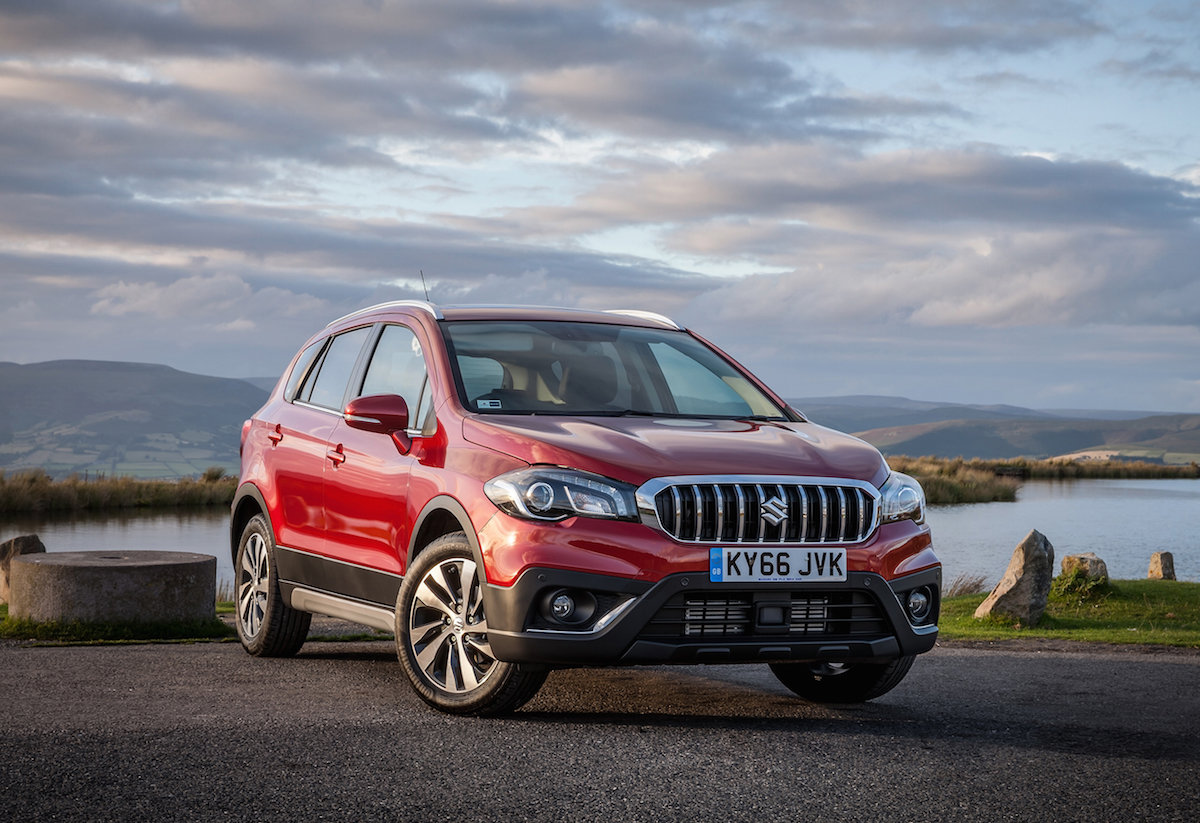
- No doubt stung by stylistic criticism, in 2016 Suzuki ushered in a heavily updated S-Cross, featuring an emboldened front end, complete with raised clamshell bonnet and outlandishly toothy, chrome grille. At the same time, the ride height was increased and the old 118bhp 1.6-litre four-cylinder petrol was ditched in favour of some new ones: a 109bhp 1.0-litre three-cylinder petrol, a 127bhp 1.4-litre four-cylinder petrol engine and an upgraded version of the 1.6 DDiS diesel motor.
- Trim levels were also upgraded in 2016. Even basic SZ4 trim comes with alloy wheels, dual-zone air-conditioning, keyless entry and start-up, cruise control, a DAB radio and Bluetooth connectivity. Up the ante to SZT, and this adds satnav, a rear parking camera and front- and rear parking sensors, while top-end SZ5 models include leather heated seats, adaptive cruise control and a panoramic sunroof.
Which one to buy
- If you’re buying on a budget: Obviously, beauty is in the eye of the beholder but many people think the S-Cross actually got uglier with its 2016 chromium-grilled facelift. If you’re one of those folks and pennies are tight, then the earlier cars could be a very shrewd buy. Unless you’re intent on towing and need the additional grunt, you’ll be better off limiting your search to the 1.6 petrol engine versions, as the stronger diesel is pretty agricultural. With this in mind, you’ll have a choice of various trim levels and front- or four-wheel-drive AllGrip cars, usually with mid-40,000 mileages and for around £6,000-7,000.
- If you want an automatic: Early S-Cross models made do with a CVT (continuously variable transmission) automatic, and if you’ve ever driven a CVT you’ll know how they have an irritating habit of sending the engine revs soaring every time the accelerator pedal is firmly pressed. If you think you’ll find this too annoying, go for a post-2015 car with a TCSS twin-clutch gearbox. It’s still not the smoothest-shifting device, but at least you won’t have to listen to the engine revving its valves out on a regular basis.
- If your heart is set on all-wheel-drive: Suzuki’s All Grip isn't a permanent four-wheel-drive system. Instead, it uses an electronically-controlled clutch pack and you can alter the traction settings via a rotary controller. In ‘Automatic’ mode, it drives the front wheels most of the time, unless a lack of traction is detected, whereupon the rear wheels will be called into play. There's also ‘Sport’ mode, which shoves more torque to the rear wheels and ‘Snow’ for all kinds of slippery conditions. A further ‘Lock’ setting splits the engine’s torque equally front-to-rear to give you the maximum chance of bailing your S-Cross out of the sticky stuff.