Audi RS6 Avant C6 Review (2008-2010)

CarGurus expert score
Pros and cons
What we like
Phenomenal performance from the twin-turbo V10 engine
Quattro 4x4 system makes for accessible acceleration in all weathers
Stylish and well made cabin
What to consider
Nothing like as involving as a BMW M5
Colossal running costs
Beware of the insurance implications of a modified car
The CarGurus verdict
Supercar performance in a relatively low-key, practical estate car body; that’s the basic premise of the Audi RS6 Avant. And the fact that its 5.0-litre twin-turbo V10 engine is shared with the Lamborghini Gallardo and Audi R8 guarantees maximum points in any bar-room bragging competition. Whatever demerits the four-wheel drive RS6 might accrue from a slight lack of driver involvement when being belted really hard along empty back-roads, are more than compensated for by its phenomenal point-to-point pace in all weathers.
But any recommendation of this ballistic Audi must contain a crucial caveat, which is this: if you have to work out if you can afford to run an RS6, then you can’t afford to run an RS6. The fuel costs alone can be fiscally crippling, on top of which you must add servicing and maintenance. And if anything major goes wrong…
Unafraid despite the warning? Then buckle up and hang on tight!
out of 5 expert review
What is the Audi RS6?
When the time came for Audi to replace the original RS6 Avant few could have expected the German company to stick the 5.0-litre V10 engine from the Lamborghini Gallardo under the bonnet of the RS6 (C6) and attach a pair of turbochargers to it. (Although it helped that Lamborghini is part of the Volkswagen/Audi group.)
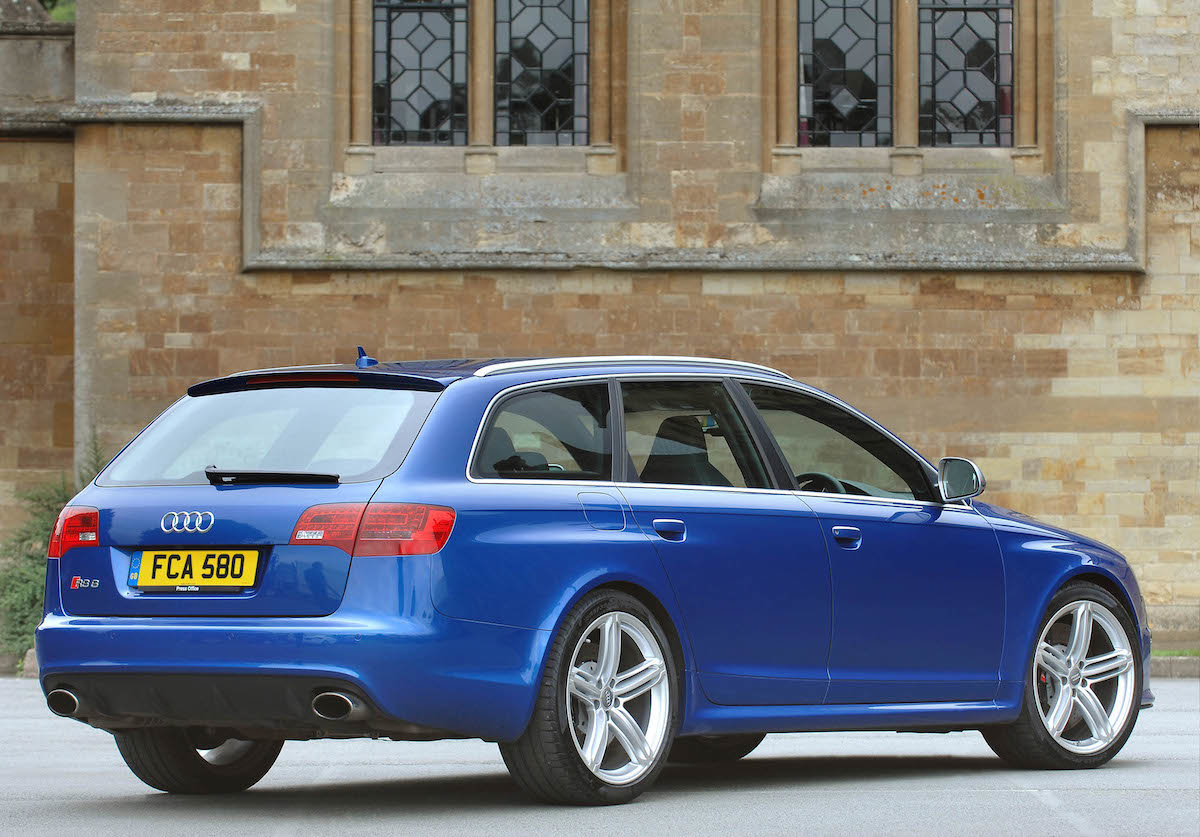
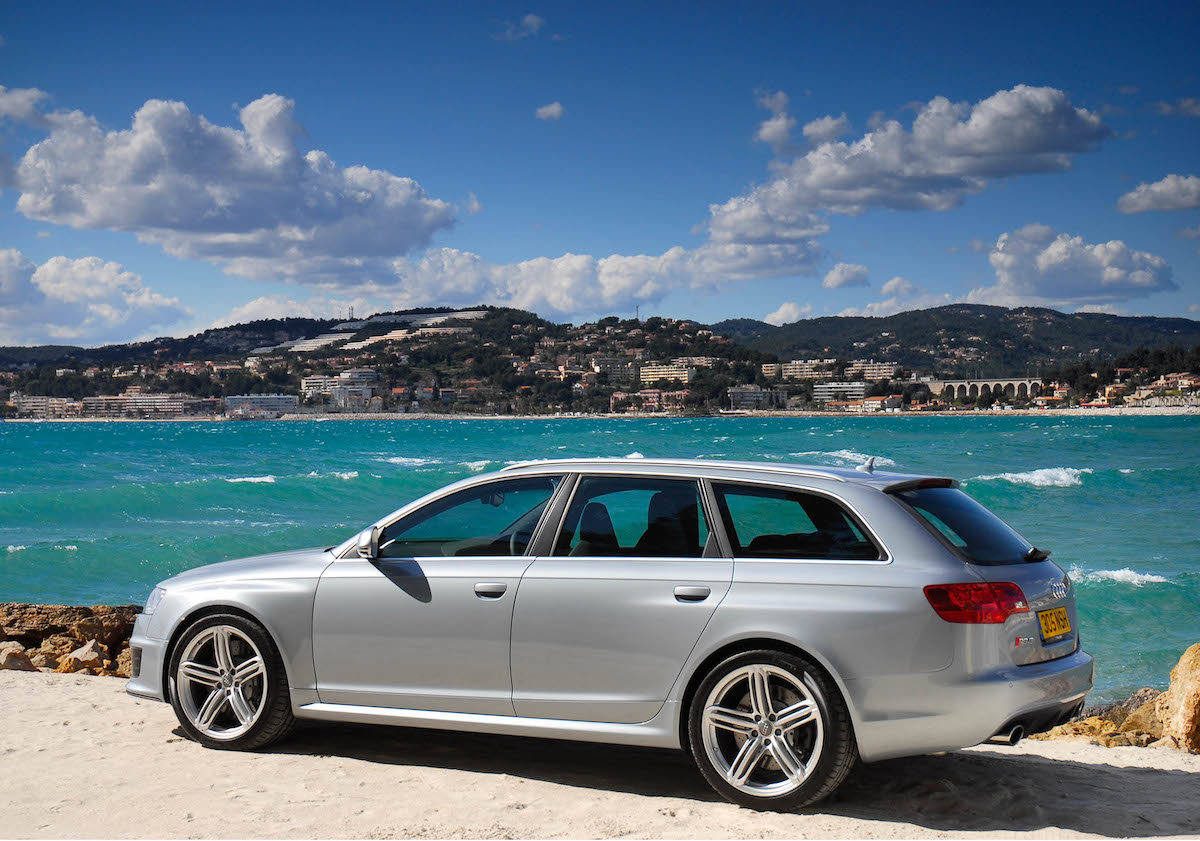
Yet it doesn’t garishly broadcast its potential: the RS6 Avant does feature slightly broader front and rear wheelarches and has its own unique style of alloy wheels, but the revised styling is subtle enough that, at a glance, it’s easy to mistake for more mainstream versions of the Audi A6 estate.
The C7 Audi RS6 model that followed in 2013 looked somewhat more pumped-up, but it was fitted with a much more ordinary twin-turbo V8.

Practicality
How practical is it?
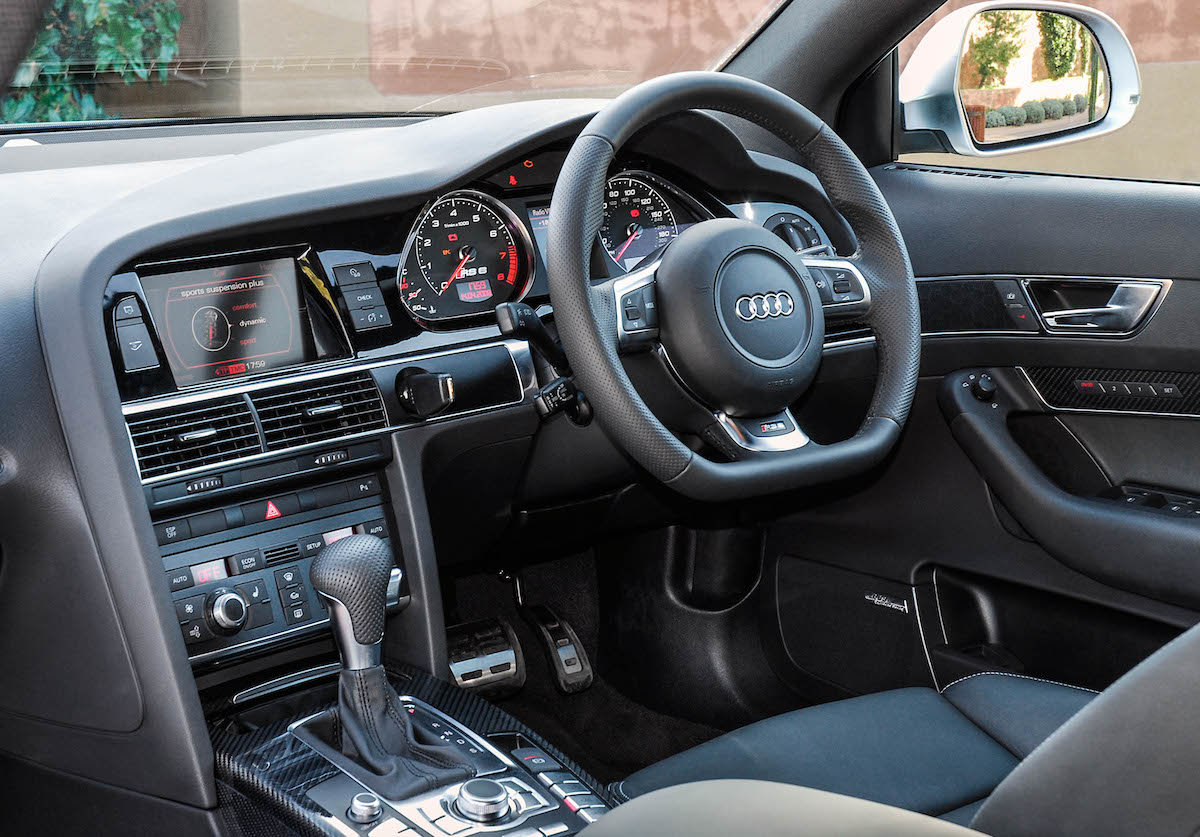
Inside the RS6 shares much in common with the standard A6’s cabin – no bad thing given it’s subtly stylish and solidly built.
Passengers have plenty of space to lounge around in and the 565-litre luggage area in this hugely practical estate car (an Audi RS6 sedan was also available, which we'll review separately) is massive, although it’s a shame the back seats don’t fold down completely flat.
Driving
What's it like to drive?
More blunt weapon than intimate and engaging sports car, the RS6 Avant (C6) is nevertheless an awe-inspiring machine. That thumping TFSI bi-turbo powerplant endows the four-wheel drive estate car with not only a peak power output of a hugely impressive 580hp, but also a whopping 479lb ft of torque between 1,500 and 6,250rpm.
That combination guarantees both stupendous acceleration – 0-62mph in 4.5 seconds and 0-124mph in 14.9 seconds – and also the type of mid-range explosiveness that makes safe overtaking a right foot-twitch cinch. All brought to you with the accompaniment of a magnificent soundtrack. Artificially limited to a top speed of 155mph as standard, or if you pay your Audi dealer (or, these days, an Audi specialist) to electronically remove the restriction, then 190mph- beckons should you find yourself on an autobahn.
The C6 RS6 Avant possesses the depth of performance that threatens the egos of Lamborghini, Ferrari and Porsche drivers, especially if the roads are wet or otherwise slippery, thanks to its quattro four-wheel drive system. In fact, so awesome is the pace of the RS6 Avant that many owners of exotic supercars favour the hyper-estate as everyday transport: Audi once dubbed the RS6 Avant ‘the car for all reasons’.
Tech and equipment
Technology, equipment & infotainment
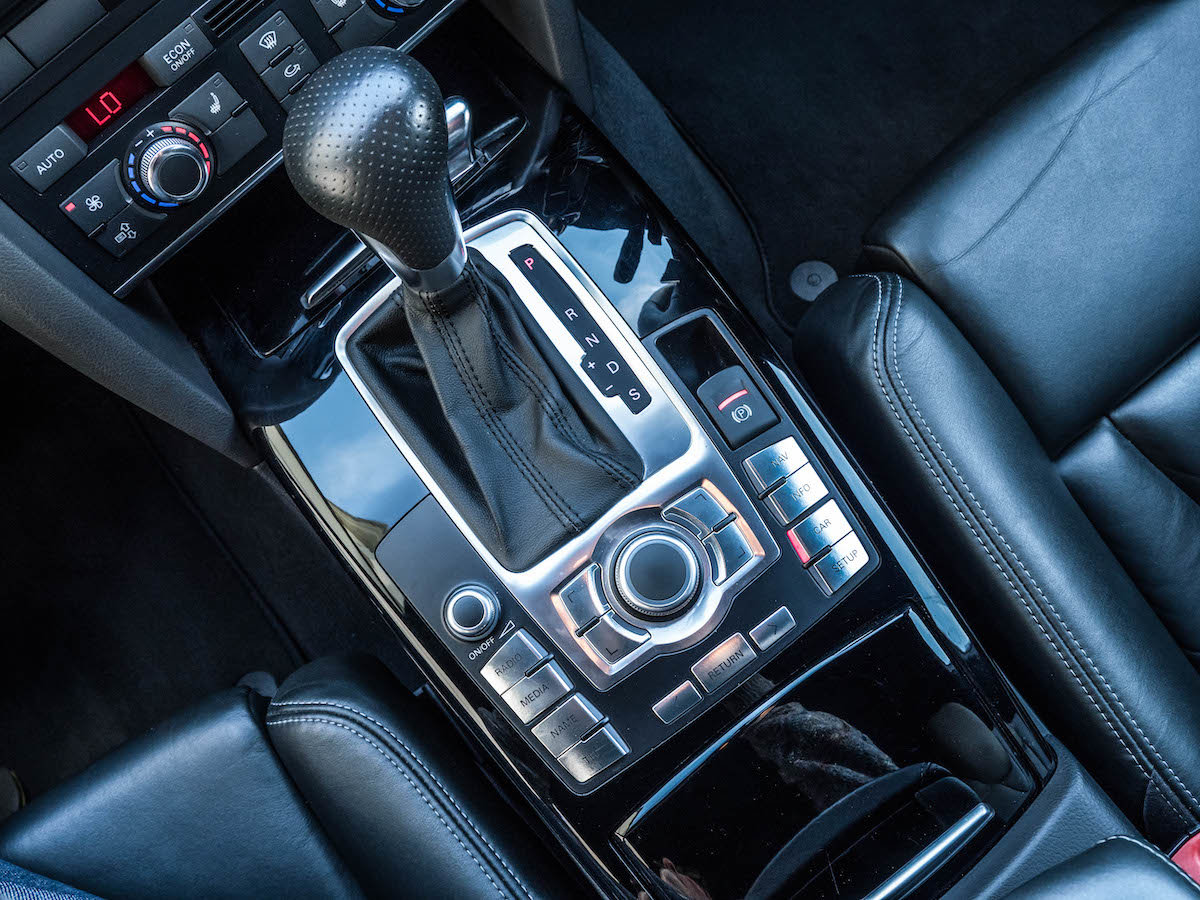
Choose and RS6 you’ll be treated to electrically powered and heated Recaro sports seats, a race-style flat-bottomed steering wheel and carbon fibre trim pieces on the facia and doors, as well as leather upholstery, climate control and satnav.
Although there was a very mild facelift in 2009 and a limited edition Audi RS6 Plus model, essentially there’s just one version of the RS6 Avant (C6), so all cars feature a six-speed Tiptronic automatic gearbox with paddles for manual operation, and Audi’s Dynamic Ride Control (DRC) suspension that incorporates three-setting adjustable damping.
Running costs
Audi RS6 running costs
Got deep pockets? You’re going to need them… Let’s start with the fuel consumption. The quoted combined figure is 17mpg, which unlike with a lot of cars is a fair reflection of what you’re likely to achieve in the real world. But that’s only if you drive your RS6 Avant gently, which let's face it, you probably won't. Owners report that extended use in an urban environment can raise the consumption to 8mpg: during the sort of hard driving that the car encourages, expect to see 10-12mpg. And, of course, that’s super unleaded rather than the regular stuff. One owner, however, reported 29mpg on a very steady motorway run driven with economy in mind, but that type of fuel economy is very much the exception… It won’t surprise you to learn that the RS6 Avant sits in the highest road tax bracket, costing you £580 annually.
Few RS6 Avants are these days serviced at an Audi dealer – there are a handful of well respected specialists around the UK and owners tend to gravitate towards them not just because they’re considerably cheaper, but also because they have greater knowledge and experience of Audi’s S and RS models. Even at a specialist, though, expect to pay about £600 for a minor service and £750 or so for a major one. Although not stipulated in Audi’s servicing requirements, keen owners book in an oil and filter change every 10,000 miles to be on the safe side. Similarly, Audi reckons the Tiptronic gearbox is sealed for life, whereas owners and RS specialists recommend a £500 oil and filter change every 40,000 miles.
On top of those costs, the V10 engine needs a cambelt change every four years or 40,000 miles, for which you can expect to pay around £1,200. And do make sure that the thermostat, water pump, rollers and tensioners are attended to at the same time, or at least were by the previous owner.
Weighing in at just over two tonnes, the RS6 Avant is heavy on its tyres and brakes. Tyres last about 17,000 miles (or a single trackday if you take the car onto the circuit) and are in the region of £250 each. Unless you just cruise around in your RS6, the brake discs are going to last about 20,000 miles. At an Audi specialist, a pair of new front discs and pads will set you back £1,000 or so, and considerably more at an Audi dealer.
Audi RS6 reliability
In general terms the RS6 Avant is a reliable machine, but while faults aren’t commonplace, if something major does go wrong then the bill will be commensurately large. With such a sophisticated car it’s well worth investing in a pre-purchase inspection by a respected Audi RS specialist; a quick dive into the RS6 forums on the internet will furnish you with the names you need.
Closest thing to a common problem is a small O-ring in the oil pump that can/will fail. It’s a celebrity in RS6 circles for costing 50p to buy, but costing £2,200 to fit because it’s buried so deep in the engine. Speak to a specialist about this as some garages will insist that the engine has to come out which raises the cost to well the other side of £4,000. The same advice applies to the engine coolant pipes that run around the inside of the driver’s side wheelarch: where they’re exposed to the elements, they corrode and leak. A good specialist will have a ‘cheap’ fix, but even that will still set you back about £700.
Age and corrosion are taking a toll on the metal joints for the hydraulic pipes of the Dynamic Ride Control suspension, with replacements costing £500-ish. Other suspension components are by now getting tired, too. One owner reports having his RS6 fitted with new suspension arms, bushes and anti-roll bars, then being presented with a bill for £3,500.
Intercooler radiators for the turbochargers are known to leak resulting in a loss of turbo boost and leading, in extreme circumstances, to the failure of the turbochargers. A factory-spec intercooler is about £1,000. And the turbochargers on high-mileage cars are now reaching the point where they will benefit from being reconditioned before they fail completely.
While not a common issue, the valve seals in a few of the V10 engines are starting to fail, and it's an 'engine-out job' to replace them. Budget in the ballpark of £3,000-4,000 for that. On the plus side, rust isn’t a problem with the RS6 Avant, so if you spot any it may well be the consequence of a poor quality accident repair.
As we said at the start of this Reliability section, a pre-purchase inspection is money well spent, as some of these very costly issues aren’t so easy to spot.

What owners say
Three things to know
- Can you REALLY afford to run an RS6 Avant? Not just buy one, but keep it on the road? Some owners report that they put aside about £3,000 a year for fuel, tyres, brakes, servicing and general maintenance. The RS6 Avant is generally reliable but if something major does go wrong, particularly in the engine bay, then the bills can run into thousands. Even the youngest examples are ten years old or more, and at that age, components are starting to wear out. Leaking dampers, for instance, are around £600 each to replace once labour is factored in. You have been warned!
- Although there’s essentially only one version of the RS6 Avant and it’s reasonably well equipped, original owners are likely to have specified an option or two. After all, if you could afford £77,625 for an estate car then you could probably afford a few extra goodies. Amongst those options are self-closing doors, a solar sunroof, satellite TV, 3D Europe-wide satnav, a parking camera, and the removal of the top speed limiter to enable your RS6 Avant to reach more than 190mph. So when buying, check what the car has got.
- Despite this RS6 Avant costing £77,625 when new and it possessing thunderous performance straight from the factory, plenty of owners have modified their cars to enhance the speed and handling. A popular modification is to re-programme the engine’s ECU; lifting the power output from the standard 572bhp to in excess of 700hp is comparatively simple, while some owners claim that the V10 engine will withstand 800hp- without any internal strengthening measures. A few owners have swapped the Audi’s sometimes troublesome Dynamic Ride Control suspension for aftermarket coilover suspension: brake upgrades are also popular and exhaust systems, too. But beware the insurance implications.
Which one to buy
- For the full-on Audi RS6 Avant experience: You don’t have a choice, really, because they’re all the same! During a test drive, though, you have to find an empty piece of road and stamp the throttle pedal to the floor. The acceleration will be instantaneous and unexpectedly brutal, with the gearshifts banging through smoothly but with a thrilling increase in engine note with each new ratio selected. It’s addictive stuff, but keep an eye on the speedo; the police may not accept that as an excuse.
- If you enjoy the freedom of the autobahn: In standard guise the RS6 Avant is restricted to a top speed of 155mph. With the restriction removed (either by Audi or an independent specialist) the car is capable of ‘in excess’ of 190mph: one owner reports that at a speed trial event on an airfield, his RS6 was independently verified to have hit 195mph. That’s normally the preserve of Lamborghinis, Ferraris and Porsches.
- If you’re looking for a touch of exclusivity: At the end of the RS6 Avant’s short lifespan, Audi introduced the RS6 Plus, a limited edition model of just 500 units worldwide. It has an extra 9bhp (big deal!), the top speed restrictor was removed at the factory, it features a unique design of alloy wheel, and the engine bay is prettified with the Carbon Design Package. That’s hardly a ‘must-have’ list of extra features over the standard RS6 Avant, but you won’t find many examples of the RS6 Plus for sale on the UK market.
- If you want your RS6 Avant to sound a little bit ‘growlier’: The sound of the RS6’s V10 engine at full throttle is one of the automotive world’s great delights, yet it still isn’t enough for some. A popular upgrade is a sports exhaust – from the catalyst back – which adds more vocal ferocity to the soundtrack. If the car you’re considering has one, make sure to cruise at motorway speeds for a while, as some of these exhaust systems suffer from annoying boom and drone at certain speeds.