Ford Explorer Review (2024-present)

Pros and cons
What we like
Really good to drive
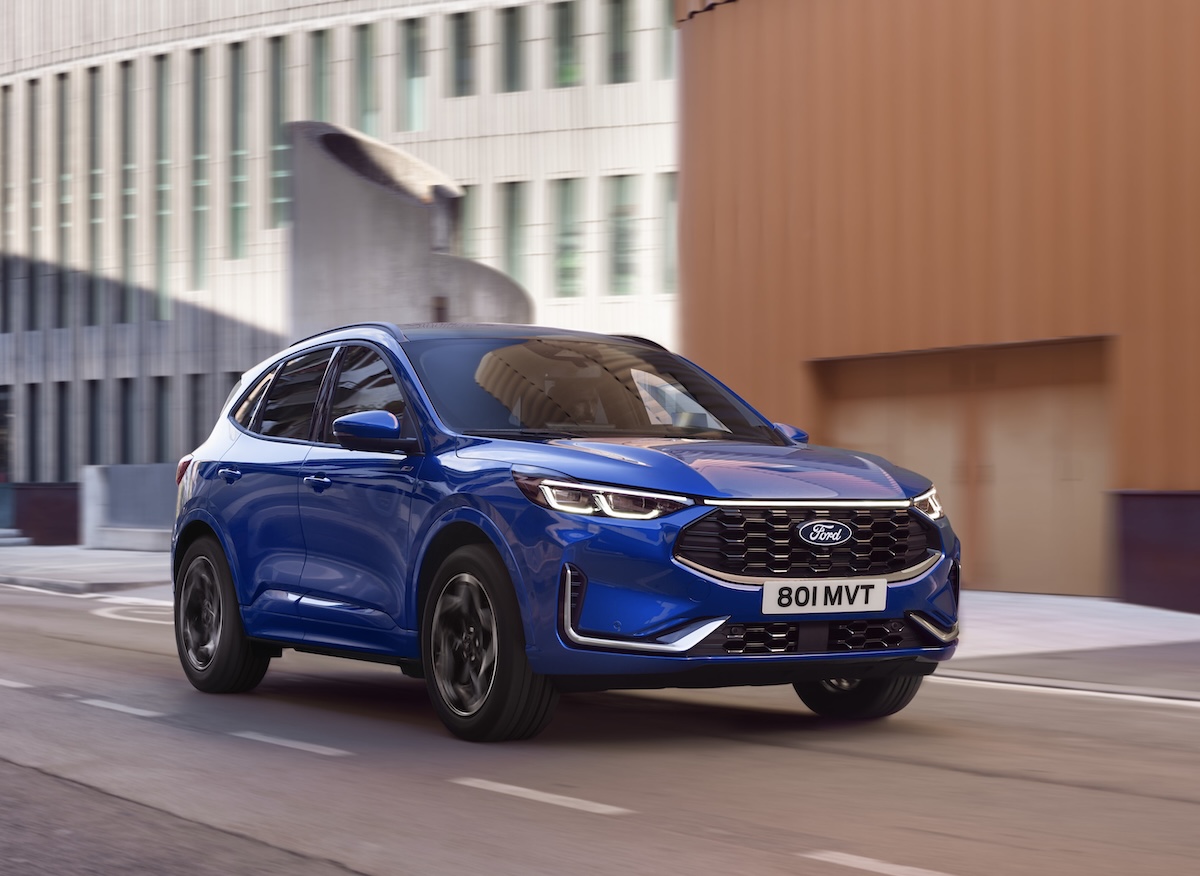
Looks good
Very generously equipped
What to consider
Doesn't really stand out in any way
Touchscreen isn't the easiest to use
Some other ergonomic issues
The CarGurus verdict
The Ford Explorer is a really good electric SUV, and is one of the best in its class to drive. Ford’s done a great job of making it feel a bit different to everything else, including the Volkswagen, Skoda and Cupra models that it shares much of its DNA with. But it can still be difficult to figure out what the Ford’s unique selling point will be. Others have a bigger boot, and there are cheaper alternatives that do a similar job with a similar range, while you can also opt for electric family cars with longer warranties.
Ultimately, the Ford will do a great job of ferrying you and the kids around in comfort, and it looks pretty cool, too. But the monthly finance deals will need to be keen on the Explorer to get buyers to move away from other brands that have now become better known and more established in the electric car classes.
out of 5 expert review
What is the Ford Explorer?
The 2024 Ford Explorer has been a long time coming, but it’s great to finally see Ford joining the more affordable electric car classes below its initial plug-in passenger car, the Mustang Mach-E. Even if, interestingly, this is the first Ford passenger car to arrive on Volkswagen’s MEB platform.
Yes, you read that right… A few years back, VW and Ford struck a deal to share platforms and parts, so VW now uses Ford’s commercial vehicle underpinnings for its vans and pick-ups, while Ford uses VW’s electric car platforms for its cars. And here we are, with a new, mid-sized electric Ford SUV that uses the same motors and architecture as the VW ID.4 and Skoda Enyaq.
Ford has gone to great lengths to make the Explorer drive like a Ford, though, having heavily fettled the suspension and steering. It’s also a completely bespoke exterior design, and has its own infotainment software, so it’s not simply a badge-engineered Volkswagen, by any stretch.
There are three batteries on offer; the 52- and 77kWh (usable capacity) batteries offer range of between 239- and 374 miles of official WLTP range, while the biggest 79kWh battery is only offered with four-wheel drive and a big power boost, so actually has a middling range of 329 miles.

Practicality
How practical is it?
Let’s start with the really clever practicality touches that set the Ford apart. First up is the horrendously named ‘My Private Locker’, which is a useful cubby that’s hidden behind the touchscreen. You manually tilt the screen to reveal the void behind it, and then slide it back into place where it locks to leave any valuables secreted away securely and out of sight.
Second is the huge centre stowage cubby - Ford calls it the ‘MegaConsole’: of course it does - between the front seats, which has removable cup holders (if you take them out, there’s a dedicated cubby to stow them away in the lower-level shelf between the seats) and is deep enough to take a laptop.
This is all useful stuff, but it also has to be pointed out that there’s no ‘frunk’ storage in the nose of the car, and while there’s a very decent 470 litres of boot space, bigger rivals like the Tesla Model Y and Skoda Enyaq are roomier still under the tailgate. It’s also intensely irritating that Ford has taken the haptic touch-sensitive steering wheel controls from some VW models, which are far too easy to hit by accident when you’re driving.
There’s plenty of passenger space in the electric Ford Explorer, and any driver should be able to get comfortable courtesy of the 12-way electrically adjustable driver’s seat that every Explorer gets. You even get heated seats and massage function as standard across the range, which is unusually generous.
In the back, a flat floor means that there’s loads of foot space, and there’s a vast amount of legroom, while headroom is fine, but six-footers may find themselves feeling a touch close to the headlining in those Explorers that get the panoramic glass roof.

Driving
What’s it like to drive?
We had a go in the range-topping Ford Explorer Extended Range AWD (all-wheel drive) on our test drive, which gets 335bhp and can do 0-62mph in 5.3 seconds, so it’s no surprise that straight-line pace is a proper giggle.
What is more of a surprise is that the Ford feels quite different to its Volkswagen counterparts on the road. While the VW ID.4 and Skoda Enyaq are confident and smooth, the Ford really does bring more fun to the party. The steering is communicative and well-weighted, while the car feels nicely balanced and keen to swing through corners. It’s playful, yet also comfortable with well-sorted damping that remains pliant even in town: and that’s despite the standard 20-inch alloy wheels of the Premium-trimmed test car that we tried.
The single motor Extended Range RWD (rear-wheel drive) is also really nice to drive. Not as fast, of course, but the 282bhp powertrain still allows it to do 0-62mph in a sprightly 6.4 seconds, and is more involving than just about any rival: even if the dual motor is the one to go for if you want the proper Ford magic.
If there’s one criticism, it’s that we’d like an additional brake regen mode. You can choose from the very gentle default regen, or select ‘B’ via the steering column-mounted gear shifter (familiar from the VW ID range) for much heavier regen that’s strong enough for one-pedal driving around town. It all gels well and is easy to predict, plus the brake pedal feel and response is good, so the Explorer is a doddle to drive smoothly, but it’d still be good to have the option of a more middling regen mode in addition to the others.

Tech and equipment
Technology, equipment & infotainment
There are only two trim levels in the Ford Explorer, and both have masses of equipment. Even entry-level Ford Explorer Select gets those electrically-adjustable seats with massage function and lumbar adjustment, keyless entry, a seven-speaker soundbar, LED headlamps with automatic high beam, reversing camera and parking sensors, and advanced driver assistance technology including semi-autonomous adaptive cruise control and more.
Premium trim is a big jump in price, but it does get you the panoramic glass roof and the excellent Bang and Olufsen sound system. You can add a tow bar, and while the towing limit of 1,000kg for the RWD and 1,200kg for the AWD is a bit low, it’s still useful for a light trailer or, more likely, will be great for bike racks. A head-up display is available as part of a pack that also brings an upgrade to a 360-degree parking camera and a semi-autonomous driving mode.
The 14.6-inch Ford SYNC Move touchscreen infotainment is standard on all Ford Explorer models, and the good news is that it uses different software to the Volkswagen, Skoda and Cupra models. The bad news is that it’s still quite annoying to use in some ways. There are four tiny shortcut buttons permanently visible at the top of the screen, and they’re configurable so that you can set them to do whatever functions you want, but they’re difficult to hit on the move and there’s no ‘back’ button to return to a previous screen if you just wanted to dip briefly into the settings.
Even so, there is a home button to return to the main menu, and the climate controls are always visible on the screen, so it’s not too bad. You also get over-the-air updates, wireless Apple CarPlay and Android Auto as standard.

Running costs
Ford Explorer running costs
At launch, the Ford Explorer starts from just under £40,000 for the 52kWh Select model, but most buyers will go for a 77kWh version, which is roughly £45,000 to £50,000. The AWD Extended Range that we like so much is a faintly horrifying £54,000.
That’s not cheap but, believe it or not, it’s actually on a par with a lot of electric crossovers like this and the Ford has more standard equipment than many. Having said that, rivals like the Renault Scenic E-Tech and the Kia Niro EV do make the Ford look expensive on list price. Ultimately, for retail buyers, it’ll mostly come down to the monthly PCP finance deals that Ford offers, and we’re yet to see details of those.

Ford Explorer reliability
The Explorer is too new to have much reliability data, but the Volkswagen-sourced parts have been around for a few years now and have proven to be pretty reliable. Ford offers the Explorer with a three-year, 60,000-mile warranty, which is underwhelming next to the longer warranties from Hyundai and Kia, but the battery is covered for eight years and 100,000 miles.


What owners say
Three things to know
- Charging speeds in the electric Ford Explorer vary depending on the model. The 52kWh car charges at up to 125kW, while the 77- and 79kWh models manage up to 185kW, so all will achieve a 10-80% rapid charge in under 30 minutes provided you plug into a powerful enough fast charging station. Membership of the BlueOval charge network is available, which gives access to over 600,000 charging points across Europe. A 7kW home charger will deliver a full charge in under nine hours for the small battery Explorer, while the charge time will be around thirteen hours for the big battery models.
- The Ford Explorer is built in Cologne, Germany, and uses with lithium-ion NMC battery cells from Chinese company CATL. There’s talk of Ford introducing an LFP lithium-iron battery (like those used in the BYD Seal) to its electric vehicles soon, but there’s no official confirmation, yet.
- Don’t get confused between this new Ford Explorer, which is designed and built for the European market, and the bigger, petrol-powered Ford Explorer that’s sold in America… Yup. Confusing, right?
Which one to buy
- If you want the best value: If you don’t mind having a shorter range of 239 miles, the 52kWh Select model that will join the range later in 2024 will be the cheapest Ford Explorer, and will still be really well equipped. Stick with the Select trim on the 77kWh model if you want longer range but still want to keep costs down.
- If you want the best company car: Since Benefit-in-Kind company car costs are remaining extremely low on zero-emissions cars for the next few years, you may as well go for the Extended Range Premium model; the extra driving range will be really beneficial for a lot of commuters, and the panoramic glass roof and Bang and Olufsen audio both really enhance the ownership experience with this new, electric Ford.
- If you want the sportiest: Go for the dual motor Extended Range AWD. This the Explorer for anyone who wants the best driving experience, and it only comes in Premium trim. You can add 21-inch alloy wheels, which might up the style ante, but be careful that they don’t corrupt the ride comfort.
- If you want the best family car: If you can stretch to it, the Extended Range RWD Premium would be spot on, as the range and charging speed keeps the motorway service station visits to a minimum, while the panoramic glass roof makes the rear seats much lighter.


Pricing trends
Starting RRP
£35,095
Current avg. market price
£30,006
Trending down by 2.0% this month
April 2026 - October 2026
More on the Ford Explorer (2024 - 2026)
Compare 2026 Ford Explorer Trims
The 2026 Ford Explorer offers a range of trims from budget-friendly options to well-equipped models, all featuring electric drivetrains for efficiency.
- Starting at £25,997
- Most Popular: 210kw Premium 77kwh 5dr Auto
Trim Overview
Prices updated weekly from CarGurus listings.
| 125kw Style 52kwh 5dr Auto | 210kw Select 77kwh 5dr Auto | 210kw Premium 77kwh 5dr Auto (Most Popular) | 250kw Premium 79kwh Awd 5dr Auto | |
|---|---|---|---|---|
| Starting MSRP | £39,195 | £45,795 | £49,895 | £53,895 |
| Avg. Market Price | £25,997 | £27,160 | £31,567 | £31,665 |
| Positioning | Best value | Standard | Standard | Trail-ready |
| Standout Features | Backup Camera, Navigation System, Adaptive Cruise Control | Parking Assist, Backup Camera, Adaptive Cruise Control | Navigation System, Privacy glass/Tinted windows, Backup Camera | Cruise Control, Backup Camera, Adaptive Cruise Control |
| Drivetrain | RWD | RWD | RWD | AWD |
| Listings Available | 11 | 21 | 87 | 53 |
Quick Compare Table
Listing prices sourced from CarGurus — updated weekly. OEM specs from manufacturer data.
| 125kw Style 52kwh 5dr Auto | 210kw Select 77kwh 5dr Auto | 210kw Premium 77kwh 5dr Auto | 250kw Premium 79kwh Awd 5dr Auto | |
|---|---|---|---|---|
| AI Summary | Best value option for budget-conscious shoppers | Solid choice with essential features | Most popular trim with premium features | Best for those needing all-wheel drive |
| Avg. Market Price | £25,997 | £27,160 | £31,567 | £31,665 |
| MSRP | £39,195 | £45,795 | £49,895 | £53,895 |
| Engine | 0.0cc 170.0 hp 0 | Electric | Electric | Electric |
| Drivetrain | RWD | RWD | RWD | AWD |
| MPG/MPGe (City/Hwy) | 0.0/0.0 | 0.0/0.0 | 0.0/0.0 | 0.0/0.0 |
| Backup Camera | ✓ | ✓ | ✓ | ✓ |
| Navigation System | ✓ | ✓ | ✓ | ✓ |
| Parking Assist | ✓ | ✓ | ✓ | ✓ |
| Privacy glass/Tinted windows | ✓ | ✓ | ✓ | ✓ |
| Adaptive Cruise Control | ✓ | ✓ | ✓ | ✓ |
| Cruise Control | ✓ | ✓ | ✓ | ✓ |
| Keyless Entry/Start system | ✓ | ✓ | ✓ | ✓ |
| isofix | ✓ | — | — | — |
| Apple CarPlay | ✓ | ✓ | — | — |
| Climate control | ✓ | ✓ | — | — |
| Alarm/Immobiliser | ✓ | ✓ | ✓ | ✓ |
| Android Auto | — | ✓ | ✓ | ✓ |
| Active Listings | 11 | 21 | 87 | 53 |
Missing data displayed as "—".
Trim Deep Dives
125kw Style 52kwh 5dr Auto — "Who It's For"
The 125kw Style is the pick for shoppers who want essential features without paying for higher trims. It's the most budget-friendly option in the lineup.
- Avg. market price: £25,997 (updated weekly)
- MPG/MPGe: 0.0 city / 0.0 hwy
- Inventory: 11 listings — lower availability; may limit negotiating room
- View 125kw Style listings
210kw Select 77kwh 5dr Auto — "Who It's For"
The 210kw Select is the pick for shoppers who want a well-rounded electric SUV without the premium price of the top trim. It offers a solid mix of features.
- Avg. market price: £27,160 (updated weekly)
- MPG/MPGe: 0.0 city / 0.0 hwy
- Inventory: 21 listings — lower availability; may limit negotiating room
- View 210kw Select listings
210kw Premium 77kwh 5dr Auto — "Who It's For"
The 210kw Premium is the pick for shoppers who want advanced features and comfort without going for the highest price. It's the most popular trim in the lineup.
- Avg. market price: £31,567 (updated weekly)
- MPG/MPGe: 0.0 city / 0.0 hwy
- Inventory: 87 listings — lower availability; may limit negotiating room
- View 210kw Premium listings
250kw Premium 79kwh Awd 5dr Auto — "Who It's For"
The 250kw Premium is the pick for shoppers who need all-wheel drive and extra power for off-road adventures. It's designed for trail-ready performance.
- Avg. market price: £31,665 (updated weekly)
- MPG/MPGe: 0.0 city / 0.0 hwy
- Inventory: 53 listings — lower availability; may limit negotiating room
- View 250kw Premium listings
Trim Recommendations
Most Popular — 210kw Premium 77kwh 5dr Auto
With 87 active listings, the 210kw Premium is the clear volume leader in the lineup.
Best Budget Option — 125kw Style 52kwh 5dr Auto
At £25,997 avg market price — below the lineup median of £29,363 — it's the most accessible entry point.
These recommendations are based on CarGurus' proprietary market data from October 22, 2026, CarGurus experts' opinions, and generative AI.

