Infiniti Q50 Review (2014-2019)
Infiniti Q50 cars for sale
3.0
Expert review
Pros
Very generous standard kit
Reliable and efficient diesel engine
Big boot of non-hybrid models
Cons
Infiniti no longer sold in the UK
Not as engaging to drive as a BMW 3 Series
The 3.0 V6 turbo has high running costs
The CarGurus verdict
There’s a lot to like about the Q50, including lots of standard equipment and excellent interior. If you go for one of the diesel models it will provide strong performance and excellent fuel economy. It's not the most engaging car to drive and the sport suspension models can be a bit crashy over rougher ground, but as a relaxed, refined motorway cruiser, it is a highly competent machine.
Of course, that badge will always be an issue in terms of resale values; hit the seller hard in the wallet, and you could just bag yourself a bit of a bargain.
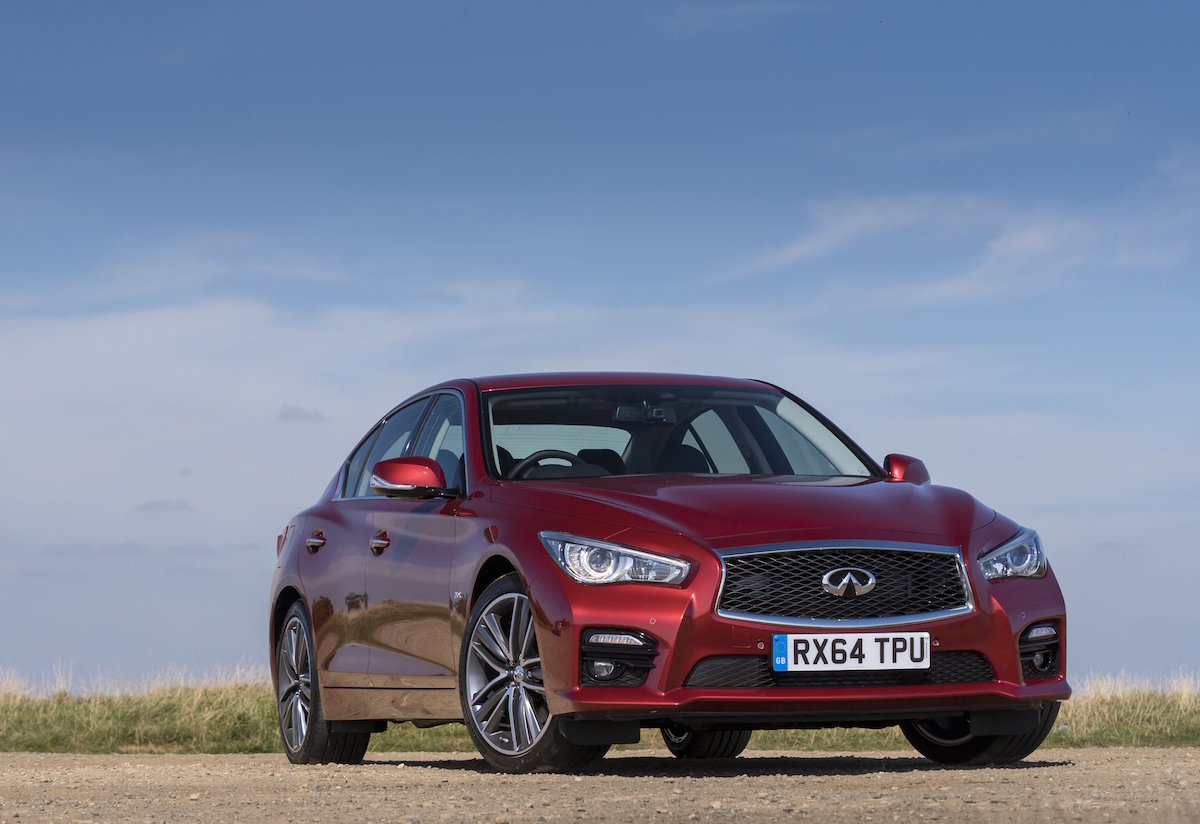
The Q50 is a premium four-door saloon that was designed to compete with popular rivals from the upmarket German brands, as well as some lower volume competitors from the likes of Volvo, Jaguar and Alfa Romeo. Japanese manufacturer Infiniti is a posh offshoot of Nissan, very much in the same way as Lexus is to Toyota.
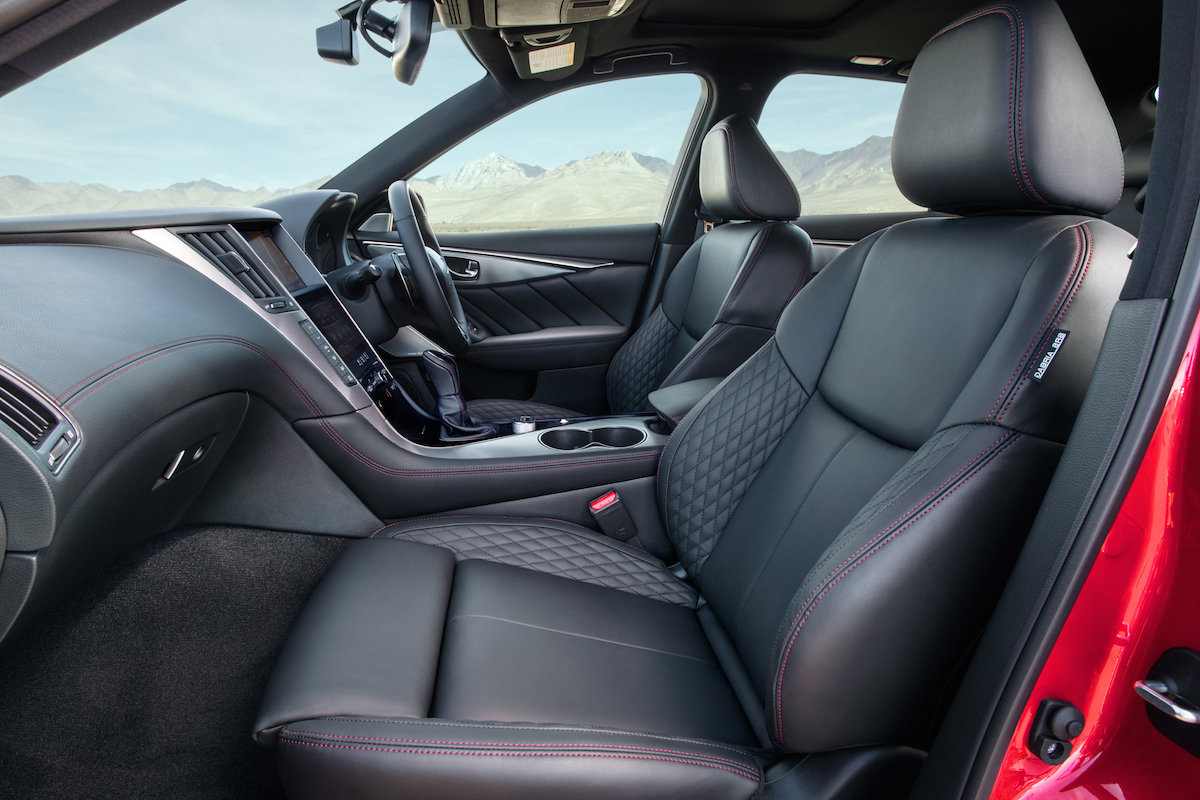
The styling is striking, thanks to its diamond-cut grille, deep front and rear air dams, and lashings of chrome detailing. It’s also impressive inside and looks and feels every bit as solid and as sophisticated as the aforementioned rivals.
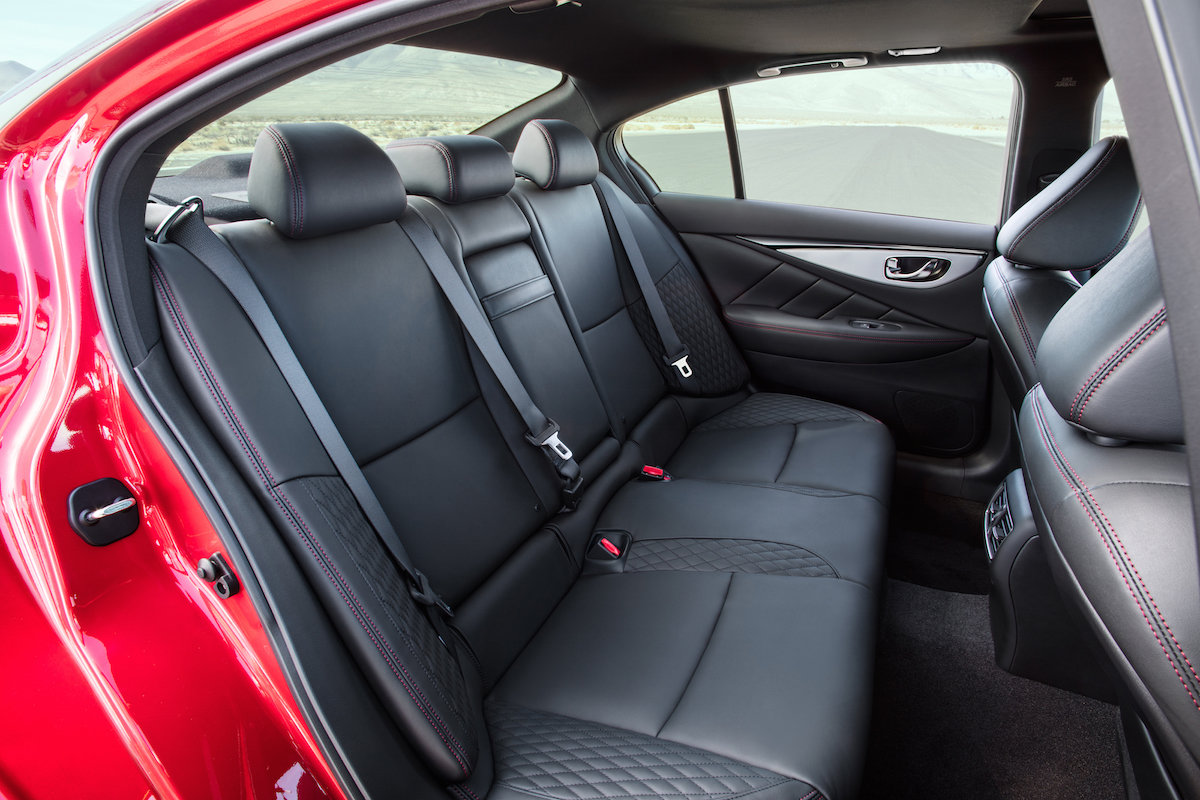
The Q50 is slightly longer than an equivalent A4, C-Class, and 3 Series, but that doesn’t create any tangible increase in interior space. There’s a decent amount of rear legroom, but the sloping roof eats away at headroom and, because it’s rear-wheel drive (four-wheel drive versions are also available), there’s a hefty transmission tunnel running down the centre of the car. We’d think of the Q50 as a four-, rather than a five-seater.
At 500 litres, the boot is big, but you will lose 100 litres, along with the standard car’s split-folding rear seats, to battery accommodation if you go for the hybrid model. There’s also no estate version, which all three German rivals offer.
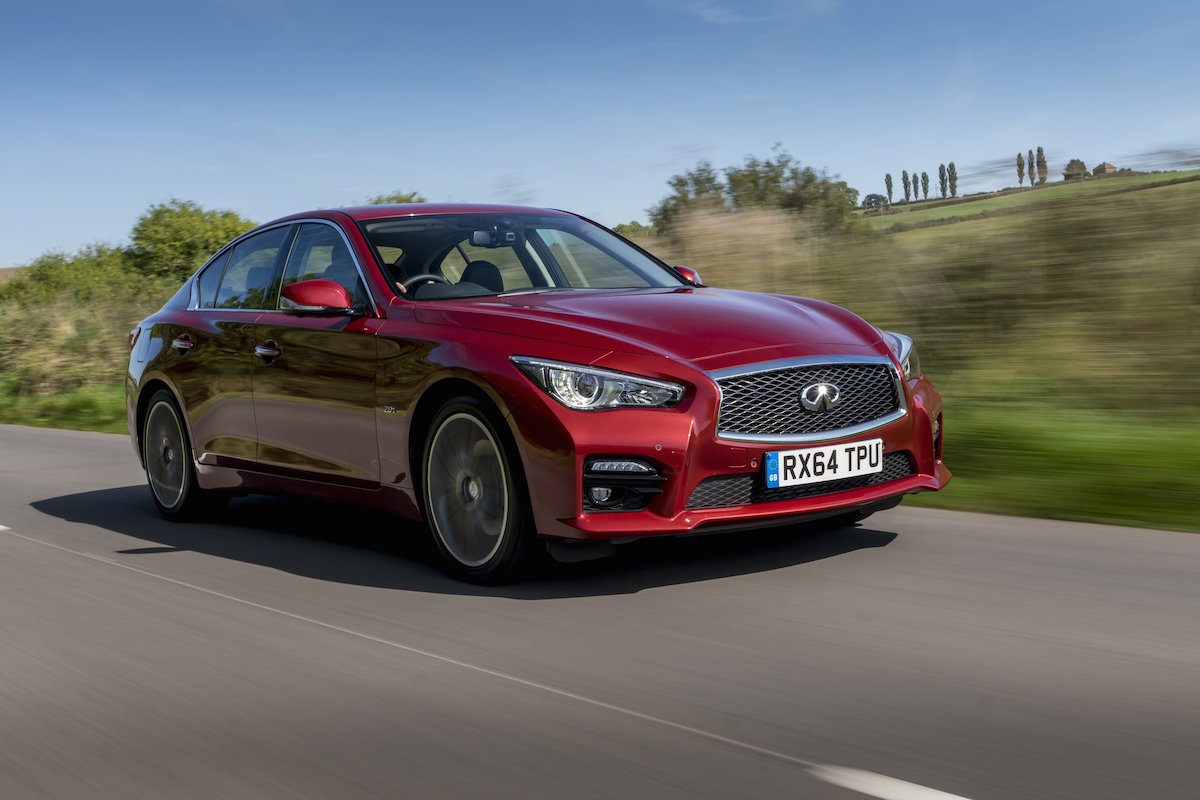
The most common versions of the Q50 are powered by Mercedes’ 168bhp 2.1-litre diesel engine, which is solid but not particularly refined. If you can find one, there’s also a 208bhp 2.0-litre turbocharged petrol engine, but this is thirsty and also not great at refinement.
Further up the scale is the Q50 hybrid, which uses the combination of a 302bhp 3.5-litre V6 engine and a 68bhp electric motor. Then there is the range-topping 395bhp, 3.0-litre, twin-turbocharged V6 petrol engine.
The driving experience is a mixed bag. The standard steering is very light, which is great around town, but it doesn’t feel especially connected to the front wheels. Consequently, the Q50 can feel quite lazy and heavy when turning into corners. The ride is really quite uncomfortable, particularly on Sport models, although the body is reasonably well controlled.
The driving position is spot-on, and all models come with lots of standard equipment. The elegantly dashboard is a bit odd, though, because it mixes touchscreen systems – of which there are two – with a plethora of backup switches and buttons.
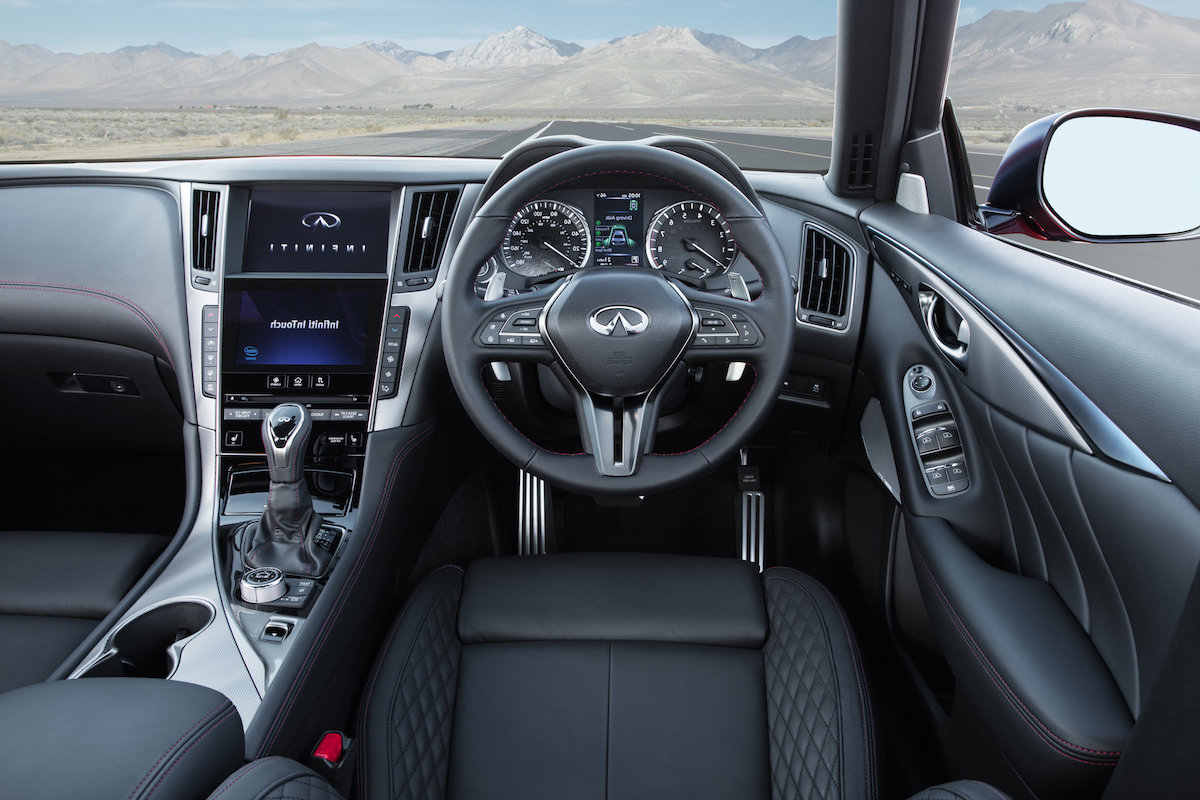
This is where the Q50 really stands out from its rivals. Trim levels start with SE, which comes with 17-inch alloy wheels, run-flat tyres, cruise control, a speed limiter, a rear-view camera, keyless entry, Bluetooth, USB connectivity, and voice control.
The next step up is Premium, which includes heated leather seats and fancier interior trim, while Sport adds a chunkier front bumper, LED headlamps, LED daytime running lights, and 19-inch alloy wheels. Inside, you’ll find power-operated front seats and a power-adjustable reach and rake steering column. The hybrid and 3.0 Turbo models come with sports suspension, sports seats, and LED headlights.
The British public can be a sceptical lot, so any new manufacturer, even one backed by a familiar name like Nissan, is always going to find it difficult setting up shop on these shores. This is especially true of the lease-dominated, executive end of the market. More than anything, what ‘did’ for Infiniti was the forecast that resale values wouldn't be good, as well as expensive running costs and high CO2 emissions. This led to punitive BIK company car tax and very pricey contract hire rates. In short, Infiniti was squeezed out by failing to understand prevailing market conditions.
But weak resale values are great news for anyone thinking of buying a used Q50. For less than £10,000 you can have a contemporary-looking executive diesel saloon, with around 55,000 miles on the clock and an automatic gearbox, sitting on your drive. It gets even better if you’re prepared to shift gears yourself, as the bidding for manual gearbox cars starts at less than £8K.
In terms of fuel economy, the automatic diesel engine should return up to 58.9mpg on paper, and because it comes with such a large fuel tank, it's capable of almost 1,000 miles between fill-ups. Choose the manual model and that official economy pushes into the early 60s, but bear in mind these figures were calculated under the old NEDC rating system, so mid-to-high 40s is probably more realistic. Equally theoretically, the hybrid is claimed to average 45.6mpg or 41.5mpg when fitted with the four-wheel-drive system. The turbo version promises 31mpg but only if you drive it gently. Open up the taps on a regular basis and that figure will plummet into the teens.
Insurance group ratings start at 29 for the entry-level diesel models, while the 2.0T petrol starts at group 34. The hybrid and the 3.0T are far costliest to insure, with group ratings starting at 40.
Service intervals are every 12 months and 12,000 miles for the petrol cars, and 15,550 miles for the diesel, whichever comes first.
When it was a new car, the Infiniti Q50 came with a conventional three-year, 60,000-mile mechanical warranty, 12 years of cover for perforation by corrosion and a three-year paint warranty.
Although Infiniti never made it into any reliability surveys, we’d be surprised if you encountered significant problems, and if things do go wrong it's good to know that many Infiniti components are shared with Nissan.
That said, those parts may be quite expensive, and parent company Nissan doesn’t fare particularly well when it comes to customer satisfaction and reliability surveys. It was rated at a lowly 27 out of 31 manufactured surveyed in the 2020 What Car? reliability survey.
The Q50 engines are tried and tested so they should be good for stellar mileages but we have heard some reports of problems with the infotainment system and steering rack leaks at around 60,000 miles. Additionally, some transmission glitches have been reported with higher mileage cars.
Given the additional complexity, we’d probably advise against the hybrid version in favour of the more conventional diesel models.
Other than that, the usual checks apply. Look out for tyre wear, especially on the rears, inspect the condition of the alloy wheels and the paint finish, especially at the front of the car as this area can be vulnerable to stone chipping. The cabin should look pretty immaculate throughout, and ensure there’s a fully-stamped up service record, which will probably be a mix of main dealers and independent specialists. If the latter is predominant, check out the online reviews to ensure the specialist has a good reputation.
- The Q50’s party trick was new steering system, which could direct the car electronically, without the need for a mechanical connection between the steering wheel and the front axle – but manufacturing regulations stipulated that there must still be a physical connection between the two. Known as ‘steer-by-wire’, Infiniti trumpeted it as a revolutionary world-first when the car was launched, but it didn’t go down well. Apart from failing to save any weight (because of the required mechanical link) it’s really odd. The weight and feedback of the steering change mid-corner, and it feels very artificial. It was also an £800 option.
- Infiniti announced its exit from the UK market in 2019 after very low sales, and it wound up its operations the following year. Several authorised repairs remain and, because the cars share many components with parent company Nissan, the Japanese brand’s franchised dealers should be able to help.
- The Q50 gained a maximum five-star score in the Euro NCAP safety test in 2013. All models come with emergency brake assist and six airbags, but it’s worth looking out for those with the additional Safety Shield pack, which includes lane-departure and blind-spot warning systems, high-speed emergency braking, and cross-traffic alert.
- If you’re a budget commuter: Although diesel is becoming less and less popular, if you’re putting in the miles, then the 2.1-litre diesel still makes the most sense. What’s more, there are far more diesel than petrol models available. The diesel engine is supplied by Mercedes-Benz and has featured in almost every Benz model line-up for years. It's powerful and consumes diesel at a relatively parsimonious rate. Sadly, despite constant refinement developments, this engine has always been a bit of a clatterbox. At least the seven-speed automatic shifts pretty sweetly. Look out for an SE or Premium Tech spec, as they come with an additional safety kit pack and their softer springs and dampers will give a more relaxed motorway ride quality than the punchier Sport models.
- If you fancy the idea of a hybrid: Hybrids are massively in vogue but don’t go thinking the Q50’s powertrain is as well resolved as those made by Lexus and Toyota. A lack of engineering development means the transitions from all-electric mode, which operates at low speeds around town, to combined petrol and electric power, can be rather abrupt.
- If you want a sleeper performance car: Things don’t come much stealthier than the Q50 3.0-litre twin-turbo. The best part of the equation is that this BMW M3-matching performance car is available for hot hatch money. You’ll know from the moment you set off that there’s something brewing, as the ride is extremely tight at low speeds, although you may wonder who stole the thunder. Under 4,000rpm the engine is surprisingly docile, but ping the revs beyond this and you’ll need to hang on tight, as all hell breaks loose as 400bhp exits via a pair of smoking rear tyres.


