Kia K4 2026 review | Good-value hatch alternative to a family SUV

Pros and cons
What we like
Bold styling and high-tech interior
Excellent value for money
Boot space in 1.6 T-GDI versions
What to consider
Boot space in 1.0 T-GDI versions
Rear seat could be comfier
Light controls take some getting used to
The CarGurus verdict
The Kia K4 is a good all-rounder with a reassuring breadth of abilities. It drives confidently, has plenty of standard equipment and, save for a few quirks, is roomy and practical. It’s a shame the choice 1.6-litre engine isn’t a bit more fuel-efficient, though, and keen drivers may wish for a bit more engagement.
The Kia K4’s biggest selling point is superb value for money. Priced from £19,995, it offers a lot of car for the cash, meaning buyers can trade up to the more desirable higher-grade trims without breaking the bank. A 1.6-litre Kia K4 in GT-Line trim looks attractively priced. We expect it to offer a stern challenge to the Volkswagen Golf and others in the family hatchback sector.
out of 5 expert review
What is the Kia K4?
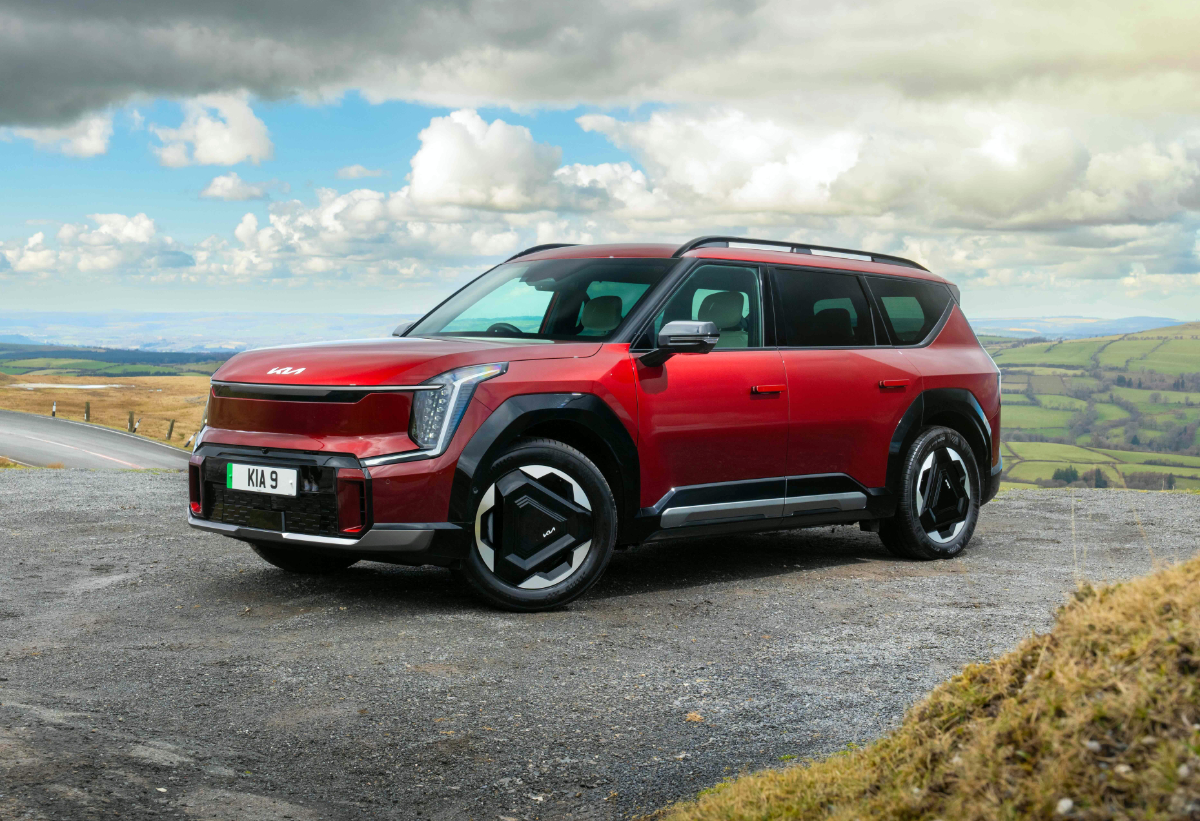
The Kia K4 is the family hatchback replacement for the old Kia Ceed. That long-running model was a car built just for Europe; the K4 is a ‘world car’ that is built in Mexico and has been on sale in North America since 2024. Kia has still tailored things for Europe, though – the five-door hatchback has been designed just for us, and will be offered here alongside the global four-door fastback.
You can consider the Kia K4 a petrol-powered hatchback alternative to the Kia EV4 electric SUV. The range initially comprises a 1.0-litre mild hybrid and 1.6-litre turbo (which is offered in two power outputs), with a hybrid version coming later. Also set to follow is a five-door estate, called the K4 Sportswagon.
Although there are fewer entrants than there once were (remarkably, you can no longer buy a new Ford Focus), the family hatch sector is still a popular one with British car buyers. The Volkswagen Golf leads the way, with alternatives including the Vauxhall Astra, Peugeot 308, Honda Civic, Toyota Corolla, sister company Hyundai’s ageing i30 and the ultra-roomy, good-value Skoda Octavia. While Chinese new-entrant brands haven’t yet entered this sphere, they are expected to soon – with cars such as the Leapmotor B05.
Fancy spending a bit more on a premium family hatch? The BMW 1 Series, Audi A3 and Mercedes-Benz A-Class all still sell well in the UK. It’s also worth noting that although the Kia Ceed has been retired, the Kia XCeed crossover-style hatch continues for a while.
Kia is offering a focused range of K4 variants: entry-level Pure, stylish GT-Line and range-topping GT-Line S. Equipment is generous on all three – so much so, there are no optional extras, meaning you only need to choose the colour when configuring one.
Prices start from less than £27,000, which is over £2,000 cheaper than the most basic Volkswagen Golf. Factor in Kia’s excellent seven-year, 100,000-mile warranty and the overall package looks promising. So how does it fare in action? Read on to find out.

Practicality
How practical is it?
The Kia K4 is at the larger end of the family hatchback class. At 4,440mm, it is more than 150mm longer than a Volkswagen Golf, and not far shy of a Nissan Qashqai family SUV (it’s almost identical in size to its electric sister car, the Kia EV4). This should pay dividends in terms of interior practicality, but the K4’s strengths here aren’t quite as clear-cut as they could be.
There should be no complaints up front. It has a large-car feel, something enhanced by an open-plan dashboard that visually widens the cabin. Curiously, when the door is open, the doorhandles are a bit of a stretch to reach from the driver’s seat, while the far corners of the central touchscreen are also slightly more than an arm-stretch. The seats are supportive, more so than in a non-sporty Volkswagen Golf (GT-Line seats are particularly appealing), and there’s plenty of adjustability. Extra marks for the deep, wide windscreen as well, which provides a good view across the bonnet.
The Kia K4 has shallow door bins, too small to stow water bottles. It does, however, have massive cupholders in the centre – they’re so big, you almost need cupholders within the cupholders. You sense they’ve been designed for US-spec ‘Big Gulp’ soda cups…
Rear-seat space could be better, though. OK, there’s a good amount of kneeroom, but space under the front seats is tight, which squeezes your feet. The rear bench seat is flat, soft and rather low, which leads to a perched feel for rear passengers, and while headroom is OK, a thick C-pillar means it’s rather dark and gloomy back there. This is reinforced by the black roof lining in GT-Line models. Pure variants get a brighter, light grey roof lining.
There are USB sockets in the rear, and a shallow stowage tray in the centre, but there’s only a single (rather cheap) seatback map pocket on the passenger side. The backs of the front seats are made from hard plastic, so be careful not to bump your knees on them – the grab handle sculpted into the top of the seat is handy when getting out, though, as you’re sitting rather low in the back of the K4. While there are rear door bins, they’re again so tiny, you will struggle to fit a water bottle into them.
Kia builds cars very well, and the K4 feels like a precision-made machine. Panel fit is even and the interior feels robust. There are, however, some rather vinyl-look plastics in places, and the lower dash plastics are hard and scratchy. GT-Line models offer better perceived quality than the entry-level Pure, thanks to their sportier and more upmarket interior trim.
Boot space in the Kia K4 hatchback comes with a noteworthy proviso. While you get a generous 438 litres in the 1.6-litre versions – a much larger space than a Volkswagen Golf, for example – this shrinks significantly to just 328 litres in the 1.0-litre cars. That’s smaller than a Volkswagen Polo, a car from the class below. Given the expected popularity of the 1.0-litre K4, it’s worth bearing in mind. And the reason? The space taken up by the 1.0-litre engine’s ‘MHEV’ mild hybrid system. The loss in boot capacity carries through when the rear seats are folded, too – 1,217 litres versus 1,107 litres. The rear seats are split 60:40, though, and there’s a load-through ski hatch hiding behind the centre armrest.
In fairness, you might not notice this loss of space at first, because it’s all found beneath the adjustable boot floor of the bigger-engined version, which the 1.0-litre lacks. This means that, visually, both versions look to have the same amount of space at first – and it’s a practical space at that, with hollowed-out side sections either side of the boot opening, before narrowing around the wheelarches. It’s only when you start loading bigger items when the shallower space of the 1.0-litre shows up. The bootlid is quite upright in shape, and the load opening extends rearwards, making it easy to access.

Driving
What's it like to drive?
The Kia K4 Pure 1.0 T-GDI 48V is the lead-in car, which CarGurus sampled in six-speed manual guise. It’s a three-cylinder turbocharged engine, supported by 48V mild hybrid technology. The aim here is to ‘fill in’ the low-rev gaps in power, and support the little engine while its turbo spools up.
It’s a refined, subdued engine, with better refinement here than in some other smaller Kias. The 48V system means it has a ‘silent’ engine stop-start system – instead of a whirring starter motor, the engine simply comes alive when you press the clutch. Because it’s so discreet, stop-start activity is much less obvious, which should reduce the temptation of some to disable it.
The manual gearchange is lovely, really light and positive in its action. The clutch is light too, and the snappy pedal makes it a fuss-free way to go manual. The engine does need a bit of working to unlock its power, though – indeed, the accelerator pedal feels tuned to encourage eco driving, needing exaggerated movements to summon meaningful pulling power. It’s worth being mindful of this; it’s not as slow as it seems on first acquaintance, even if 0-62mph in 12.3 seconds will hardly set the world alight.
The 1.6-litre engine is immediately more eager, with more in reserve. Because it’s so refined below 4,000rpm, it feels more effortless, although it does become more growly at higher revs. The DCT automatic transmission is standard, and shifts smoothly; the extra-large T-shaped gearlever is also a nice touch, feeling like something you’d normally find in a premium SUV. Because the 1.6-litre engine doesn’t have a 48V system, the starter motor will whirr every time the stop-start system restarts the engine; it makes a rather weedy-sounding noise.
Ride quality has a tautness to it that you’ll notice particularly around town. GT-Line models with larger alloy wheels can feel a touch jiggly over rougher roads; the 16-inch wheels on Pure models are less susceptible to this, but both can feel a little choppy at times. The Kia K4 handles potholes reassuringly though, with a confident feeling of integrity.
High-end multi-link rear suspension probably helps here. It also adds a bit of depth to the handling, even across more challenging roads. It’s not particularly dynamic, but feels robust and grippy. It’s a shame the steering is rather light and lifeless, even in Sport mode. It also feels a little loose around the straight-ahead, although the premium suspension does help it respond well on twisting roads. Speaking of lightness, the brakes are too, and will again require some acclimatisation. They prove powerful in use, though, confidently hauling down the K4 from higher speeds.
Two more driving quirks relate to the wipers. The ‘auto’ setting for the windscreen wipers doesn’t seem to wipe fast enough during heavy rain, while the rear wiper leaves an unswept area at the top that makes it hard to see cars in the distance. The screen seems to quickly get dirty in poor weather, too.

Tech and equipment
Technology, equipment & infotainment
All Kia K4s feature the same comprehensive infotainment setup, with a 12.3-inch touchscreen, 12.3-inch digital instrument cluster and a 5.3-inch control display between them. Kia’s ‘Connected Car Navigation Cockpit’ (ccNC) system merges sat-nav, multimedia and vehicle settings into a single display, with wireless Apple CarPlay and Android Auto standard on all versions (although you only get a wireless charger in the GT-Line).
Those who have driven other modern Kias will be familiar with how it all works. The system requires a fair bit of swiping left to right between different menus, and disabling various driver assistance (ADAS) systems can be a little tricky until you’re used to the graphical displays. The climate control display is also obscured by the steering wheel when on the move. Kia has retained physical climate controls, however – the toggle controls are lovely to use – and there are physical keys to jump directly between the various sub-menus. A physical rotary volume control is a nice touch as well, as are the programmable ‘star’ shortcut buttons on the dashboard and steering wheel. They can help take some of the pain out of disabling ADAS systems.
The driver’s display offers a choice of various layouts. They all look modern, but the tiny fuel and temperature gauges across the bottom are a little hard to read. A nice touch is how the speed limit is depicted as a tiny dot on the arc of the speedometer. When you’re below the limit, it’s white; stray above it and it turns red. On GT-Line models, there’s also an ingenious blind-spot camera – indicate left or right and a rear-view live feed pops up in the driver’s display. It’s technology that nobody’s beaten.
The Kia K4 has Digital Key 2.0 tech, allowing smartphones to function as virtual keys (it’s standard on GT-Line S). The Kia Connect system also offers over-the-air updates, music streaming and wi-fi hotspot connectivity. Subscription upgrades include Amazon Music and Soundcloud, plus YouTube, Netflix, Disney+ and TikTok – even arcade games. There’s a Kia AI assistant too, which is powered by ChatGPT. Activate it by saying ‘Hey Kia’ and it should prove more intuitive than older voice assistants, with a broader range of functionality.
All Kia K4s are very well equipped. The entry-level Pure has climate control, over-the-air infotainment functionality and seven years of Kia Connect services, electric door mirrors, rear parking sensors and a reversing camera, plus 16-inch alloy wheels. GT-Line boosts the wheel size to 17 inches and adds the GT-Line exterior styling pack, including gloss black detailing, ‘small cube’ LED headlights, rear privacy glass, electric folding door mirrors with LED indicators, heated front seats, a heated steering wheel, alloy pedals and a wireless phone charger. GT-Line S includes 18-inch alloys (but only on the 1.6), black artificial leather upholstery, ventilated front seats, heated outer rear seats, ambient lighting, an eight-speaker Harman Kardon premium sound system and a front tilt/slide sunroof.
A quick note on steering wheels; it’s a two-spoke wheel on Pure, with GT-Line models getting a sportier three-spoke item. All Kia K4s have very tactile column stalks. As for safety tech, if you want the full safety assist pack, choose one of the GT-Line models; they add a 360-degree parking camera, a more advanced forward collision avoidance system, and Highway Driving Assistant 2.0 driver-assisted cruise control.

Running costs
Kia K4 running costs
Unlike the Volkswagen Golf, no Kia K4 quite manages to crack 50mpg, but the 1.0-litre gets close with an average of 49.6mpg. This is the same for both manual and DCT automatic versions – and, as gearchanges will be automatically optimised, the DCT may prove to be more efficient in real-world driving.
Fuel economy does dip with the 1.6-litre engine, with the 144bhp model averaging 43.6mpg, and the 174bhp alternative recording 42.2mpg. The 1.6 engines don’t have any mild hybrid tech – that’s why they have a bigger boot – explaining some of the difference. CO2 emissions are correspondingly higher. Kia doesn’t yet offer a full hybrid K4; if you prefer a full EV, look to the Kia EV4 instead.
Service intervals for the Kia K4 are surprisingly short – every 12 months or 10,000 miles. Many rivals offer two-year service intervals, or a variable mileage-based alternative, meaning owners will have to factor in Kia’s more fixed approach to running costs. This will, however, ensure the seven-year, 100,000-mile warranty remains fully valid.

Kia K4 reliability
Kia has an excellent reputation for reliability – it wouldn’t be offering a seven-year warranty if it didn’t. This is evidenced by the Kia EV3 being ranked the joint most reliable car overall in the 2025 What Car? Reliability Survey, with the Kia Niro range also in the top 10.
Overall, Kia is rated the eighth most reliable car brand in the UK, with a What Car? reliability rating of 94.4 percent. The firm has been trending up in recent years too, suggesting its newer models are getting more dependable. Can the Kia K4 continue this trend?
The Kia seven-year warranty is fully transferrable to future owners of the car. It includes 12 months of breakdown cover, using roadside assistance firm the RAC. Kia offers special-rate deals to extend this, too.


What owners say
Three things to know
- You can still get a Kia K4 with a manual gearbox. Stick shifts are becoming something of a rarity these days, according to CarGurus research, so it’s noteworthy that Kia has introduced a car in 2026 with a six-speed manual option. It’s offered on the entry-level Pure 1.0 T-GDI 48V, with a seven-speed DCT automatic also available for £1,500 more.
- Kia has developed a shortcut to disable the speed limit warning (which it calls Intelligent Speed Limit Assist). Instead of delving into the infotainment menus, simply push and hold the volume dial on the steering wheel for three seconds. The current speed limit will still be shown on the driver display.
- The Kia K4 offers various drive modes, which alter parameters such as accelerator response and steering weight. The dashboard colour scheme changes according to the drive mode; it’s a greeny blue in Eco, red in Sport and an orangey yellow in normal mode. You can toggle between modes using a button on the steering wheel.
Which one to buy
- If you want the most affordable Kia K4: Go for the Pure 1.0 T-GDI 48V manual. At £25,695, it easily undercuts its family hatch arch-rival, the Volkswagen Golf 1.5 TSI Life.
- If you want a Kia K4 with the biggest boot: You’ll need to pick one of the 1.6-litre models, as the 1.0-litre versions have a mild hybrid system that eats into boot space. This takes the effective entry price up above £31,000.
- If you want the best Kia K4 all-rounder: The GT-Line 1.6 T-GDI offers the best combination of value, practicality and performance. There is a fuel economy penalty compared to the 1.0-litre, but the extra performance more than makes up for this – it’s more than three seconds quicker in the 0-62mph dash, for example. GT-Line trim also looks great, both outside and in.
- If you want a Kia K4 with a manual gearbox: There’s just one in the line-up: the Pure 1.0 T-GDI 48V. You can have it with a seven-speed DCT automatic for an additional £1,500.


Pricing trends
Starting RRP
£25,510
Current avg. market price
£24,075
Trending down by 16.3% this month
May 2026 - October 2026
More on the Kia K4 (2026 - 2026)
Compare 2026 Kia K4 Trims
The 2026 Kia K4 offers a range of trims from budget-friendly options to fully loaded models, all featuring advanced tech and comfort.
- Starting at £20,945
- Most Popular: 1.0t-gdi 115 48v Gt-line 5dr Dct
Trim Overview
Prices updated weekly from CarGurus listings.
| 1.0t-gdi 115 48v Pure 5dr | 1.0t-gdi 115 48v Gt-line 5dr Dct (Most Popular) | 1.6t-gdi 150 Gt-line 5dr Dct | 1.0t-gdi 115 48v Gt-line S 5dr Dct | |
|---|---|---|---|---|
| Starting MSRP | £25,510 | £29,510 | £30,705 | £33,405 |
| Avg. Market Price | £20,945 | £23,512 | £23,882 | £25,861 |
| Positioning | Best value | Standard | Standard | Fully loaded |
| Standout Features | Android Auto, Parking Assist | Heated Seats, Alloy Wheels | Privacy glass, Heated Seats | Panoramic Roof, Heated Steering Wheel |
| Drivetrain | FWD | FWD | FWD | FWD |
| Listings Available | 11 | 26 | 10 | 15 |
Quick Compare Table
Listing prices sourced from CarGurus — updated weekly. OEM specs from manufacturer data.
| 1.0t-gdi 115 48v Pure 5dr | 1.0t-gdi 115 48v Gt-line 5dr Dct | 1.6t-gdi 150 Gt-line 5dr Dct | 1.0t-gdi 115 48v Gt-line S 5dr Dct | |
|---|---|---|---|---|
| AI Summary | Best value option for budget-conscious buyers | Popular choice with great features | More power with similar features | Fully loaded with premium features |
| Avg. Market Price | £20,945 | £23,512 | £23,882 | £25,861 |
| MSRP | £25,510 | £29,510 | £30,705 | £33,405 |
| Engine | 1.0l I Petrol | 1.0l I Petrol | 1.6l I Petrol | 1.0l I Petrol |
| Drivetrain | FWD | FWD | FWD | FWD |
| Android Auto | ✓ | ✓ | ✓ | ✓ |
| Parking Assist | ✓ | ✓ | ✓ | ✓ |
| Apple CarPlay | ✓ | ✓ | ✓ | ✓ |
| Backup Camera | ✓ | ✓ | ✓ | ✓ |
| Cruise Control | ✓ | ✓ | — | ✓ |
| Navigation System | ✓ | ✓ | ✓ | ✓ |
| isofix | ✓ | — | — | — |
| Parking Sensors | ✓ | — | — | — |
| Bluetooth | ✓ | ✓ | ✓ | ✓ |
| Climate control | ✓ | ✓ | ✓ | — |
| AUX/USB connectivity | ✓ | — | ✓ | — |
| Air Conditioning | ✓ | ✓ | ✓ | — |
| Heated Seats | — | ✓ | ✓ | ✓ |
| Privacy glass/Tinted windows | — | ✓ | ✓ | ✓ |
| Heated Steering Wheel | — | — | — | ✓ |
| Active Listings | 11 | 26 | 10 | 15 |
Missing data displayed as "—".
Trim Deep Dives
1.0t-gdi 115 48v Pure 5dr — "Who It's For"
The Pure is the pick for shoppers who want essential features without paying for extras. It's the most budget-friendly option in the lineup.
- Avg. market price: £20,945 (updated weekly)
- Inventory: 11 listings — lower availability; may limit negotiating room
- View Pure listings
1.0t-gdi 115 48v Gt-line 5dr Dct — "Who It's For"
The Gt-line is the pick for shoppers who want a well-equipped vehicle with stylish features without stepping up to the higher trims. It's the most popular trim in the lineup.
- Avg. market price: £23,512 (updated weekly)
- Inventory: 26 listings — lower availability; may limit negotiating room
- View Gt-line listings
1.6t-gdi 150 Gt-line 5dr Dct — "Who It's For"
The 1.6t-gdi Gt-line is the pick for shoppers who want more power and performance without sacrificing essential features.
- Avg. market price: £23,882 (updated weekly)
- Inventory: 10 listings — lower availability; may limit negotiating room
- View 1.6t-gdi Gt-line listings
1.0t-gdi 115 48v Gt-line S 5dr Dct — "Who It's For"
The Gt-line S is the pick for shoppers who want a fully loaded experience with premium features and comfort.
- Avg. market price: £25,861 (updated weekly)
- Inventory: 15 listings — lower availability; may limit negotiating room
- View Gt-line S listings
Trim Recommendations
Most Popular — 1.0t-gdi 115 48v Gt-line 5dr Dct
With 26 active listings, the Gt-line is the clear volume leader in the lineup.
Best Budget Option — 1.0t-gdi 115 48v Pure 5dr
At £20,945 avg market price — below the lineup median of £23,697 — it's the most accessible entry point.
These recommendations are based on CarGurus' proprietary market data from October 22, 2026, CarGurus experts' opinions, and generative AI.

