MG4 2026 review | Affordable, very likeable electric hatchback
MG MG4 cars for sale
4.0
Expert review
Pros
Fantastic value for money
Surprisingly fun to drive
Generously equipped, even in entry-level SE spec
Cons
Not quite as accommodating for passengers or luggage as a Volkswagen ID.3
Sound system in SE models isn’t the best-sounding
Steering wheel infotainment controls a bit fiddly

The CarGurus verdict
The MG4 marks MG’s coming of age for the 21st century, especially when it comes to electric cars. Its design is distinctive, grown-up and well thought-through inside and out. Also, its technology is up to date, and its price point remains highly competitive versus key rivals. That it’s also enjoyable to drive, reasonably efficient and offered in a broad range of specifications – from long-range daily drivers to high-performance variants – is also to the car’s credit.
Granted, its build quality isn’t up to what you’d call premium standards, but then it’s not priced at BMW or Mercedes-Benz levels. You certainly won’t feel short-changed when you compare it to the interior of a Volkswagen ID.3. While the cheapest MG4 variants have since been replaced by the newer MG4 EV Urban, the standard MG4 still represents strong value given its space, performance and equipment.

What is the MG4?
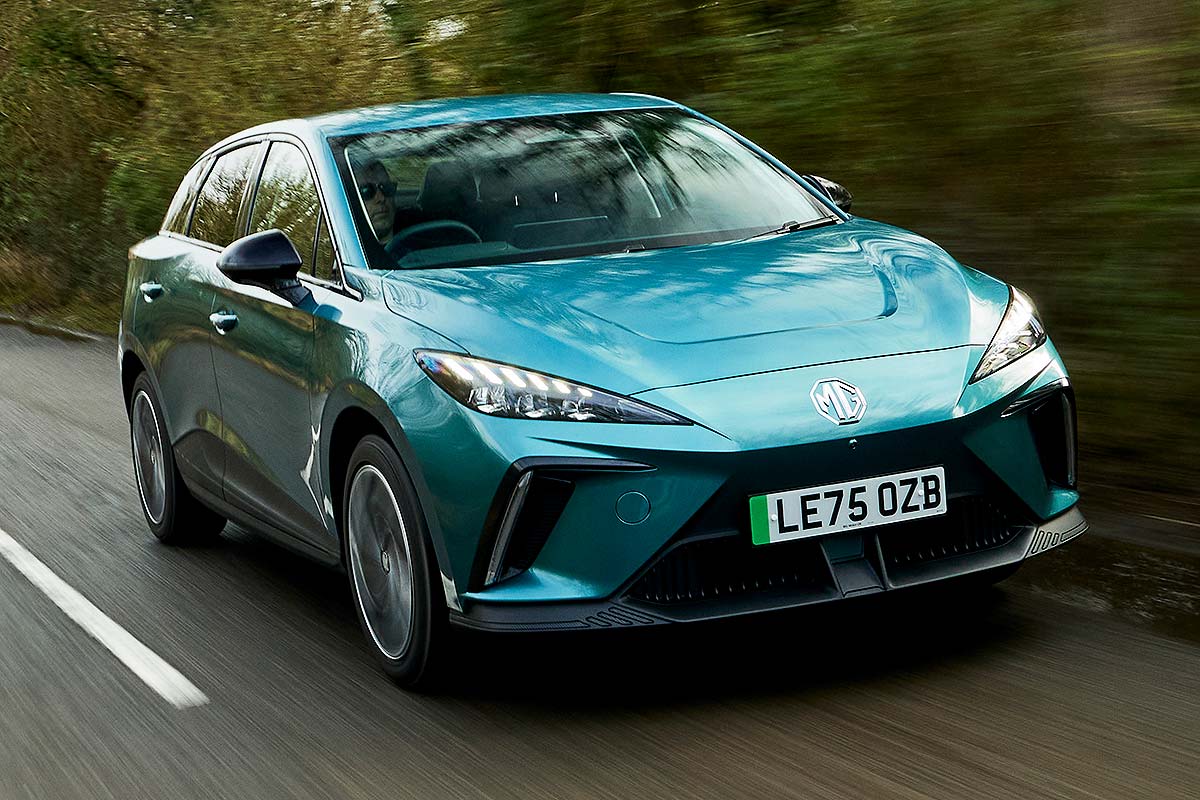
Since the MG4 electric hatchback was the first MG to be built solely as an EV, there was no need for its body styling or engineering to accommodate a petrol or diesel engine. As a result, it looks a lot more funky and futuristic than the old MG5 or ZS models. In fact, its pointy snout and dart-like profile are more than a little similar to the Cupra Born.
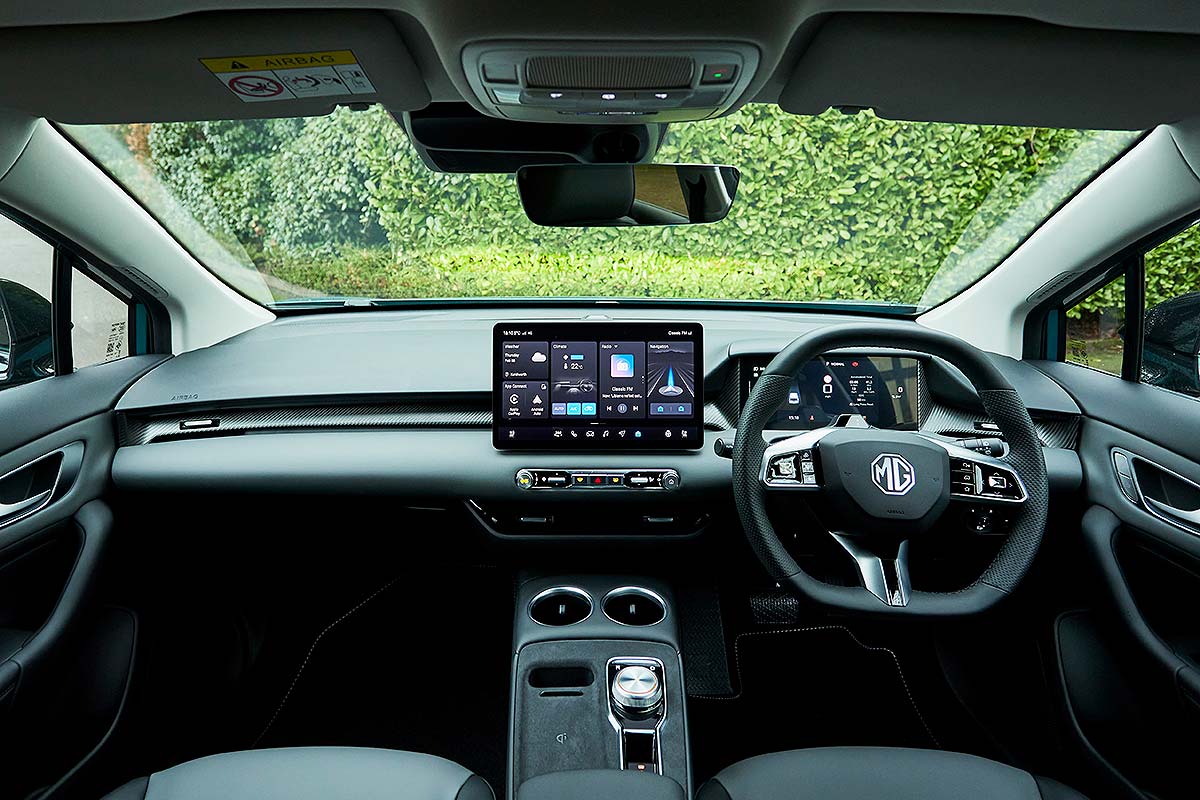
Like the ID.3 or Born, the MG4 feels airy inside thanks to a flat floor and the slim battery pack that sits beneath it. The modern-looking, slimline dashboard with its tablet-style central touchscreen is much less bulky than the more old-fashioned dash in the MG5, too – adding further to the sense of spaciousness.
There are several versions to choose from. The MG4 was originally offered in SE and Trophy trims, although the current line-up has been streamlined to Premium Long Range, Premium Extended Range and XPower versions. SE was the entry-level model, but still offered plenty of standard equipment, including adaptive cruise control and lane-keep assist, while the Trophy had a glitzier design that included a smart-looking rear spoiler and a contrasting-coloured roof. Both versions got 17-inch alloy wheels.
Depending on the model year, the MG4 has been offered with three different battery sizes. The original 49kWh Standard Range model had a WLTP-tested range of 217 miles, while the 64kWh Long Range version can deliver up to 288 miles of range. The Long Range model uses a 201bhp motor, enough to propel the car to 62mph from rest in 7.9 seconds.
The lineup has since expanded to include the Extended Range, which uses a larger 77kWh battery for up to 338 miles of driving, along with the performance-focused MG4 XPower. The latter retains a 64kWh battery, but adds dual motors for all-wheel drive and a combined output of 429bhp, giving a 0-62mph time of just 3.8 seconds. It doesn’t look dramatically different to standard MG4 models, although details such as bright brake calipers help to distinguish it.
Charging performance is competitive for the class. The 64kWh versions support rapid charging that can take the battery from 10 to 80 percent in around 30 minutes in ideal conditions. The smaller battery and Extended Range versions require slightly longer. Charging at home via a typical 7kW wallbox will be an overnight process.
MG has recently broadened the MG4 family by introducing the cheaper MG 4 EV Urban beneath it, while streamlining the original MG4 lineup to consist of the Premium Long Range, Premium Extended Range and dual-motor XPower.

How practical is it?
How practical the MG4 is depends on how you look at it. As one of the first MG models built on underpinnings designed solely for electric cars (the Modular Scalable Platform, or MSP), the MG4 benefits from packaging advantages over the MG5 or MG ZS EV. There’s no transmission tunnel or bulky space designed to accommodate a petrol or diesel engine, for example. However, compared to the similarly sized VW ID.3 or Cupra Born, there is a little less rear passenger space and boot capacity (363 litres, versus 385 litres for the ID.3).
It’s typically positioned below an equivalent ID.3 on price. Historically, the standard-range SE sat in direct price comparison with much smaller supermini EVs such as the Peugeot e-208, Vauxhall Corsa Electric or Renault Zoe. Looked at as a competitor for those models, it’s much more generously proportioned in terms of front-seat space, boot space and passenger room.
One area where the MG4 misses out is under-bonnet storage. Given that the car has its motor located under the boot, you might reasonably expect a little storage space up front.
As for in-cabin storage, the MG4 has plenty of oddment bins and cupholders, plus a useful fabric tray to hold your phone (it used to fly off the previous plastic tray whenever you turned into a corner...). The phone holder features small holes that allow you to neatly thread through the charging/connecting leads from the USB ports below.
What's it like to drive?
The MG4 is genuinely impressive to drive. All but the MG4 XPower get a rear-mounted motor and rear-wheel drive, which means the car’s front end is not only lighter, but the front wheels don’t have to do anything but steer. As a result, the MG4 feels agile, lively and keen to change direction. You can even sense the rear wheels pushing you out of tighter corners.
Relatively soft suspension helps the MG4 to feel grippy in corners, as the nose of the car is happy to turn in, rather than ‘skating’ and bouncing as more stiffly sprung cars can tend to do (especially front-engined, front-wheel-drive ones).
Another benefit of this is the smooth and supple ride – at least for an electric car. EVs tend to ride rather firmly as a result of their heavy battery packs, but MG seems to largely have solved this issue.
A little less impressive is the occasional bassy shudder that you can feel running through the cabin if you happen to catch certain types of potholes when the suspension is under load during cornering. The lane-keep assist won’t actively steer you and keep you centred in your lane as effectively as some similar set-ups from other manufacturers, either.
That being said, the MG4’s long-distance cruising credentials are otherwise impeccable – it’s quiet, stable at motorway speeds and acceleration is seamlessly punchy coming out of roundabouts or down slip roads.
Obviously, if you do a lot of miles then you may want to consider the MG4 Extended Range. The larger battery adds weight, but the core chassis balance remains similar to other MG4 models.
As for the MG4 XPower, is it the electric hot hatch we’ve been waiting for? Well, not really, but it is a hugely impressive amount of performance for the money. It’s still nice to drive, of course, but the XPower actually feels a bit less entertaining in corners than the standard rear-driven MG4.
That being said, the MG4’s long-distance cruising credentials are otherwise impeccable – it’s quiet, stable at motorway speeds and the acceleration is seamlessly punchy coming off roundabouts or down slip roads.
Obviously, if you do a lot of miles then you may want to consider the MG4 Extended Range, although we’re yet to try it so can’t comment on how the heavier battery may affect the way it drives. We have, however, driven the MG4 XPower, so is it the electric hot hatch we’ve been waiting for? Well, not really, but it is a hugely impressive amount of performance for the money. It’s still nice to drive, of course, but the XPower actually feels a bit less entertaining in corners than the standard rear-wheel drive MG4.
Technology, equipment & infotainment
The level of standard equipment on early entry-level SE models was impressively high. There’s active emergency braking that’ll spot cyclists and pedestrians as well as cars, adaptive cruise control, driver attention alert (all of which come under the umbrella of ‘MG Pilot’ branding), and automatic high-beam assist for the headlights.
All MG4s also get a 7.0-inch digital driver display and central touchscreen infotainment system, plus Apple CarPlay and Android Auto connectivity. The standard four-speaker stereo sounds a touch weedy, though.
Step up to the Trophy model (the Extended Range is only offered as a Trophy) and the audio system is improved to a six-speaker setup, plus you get satnav, heated seats, a heated steering wheel, an electrically adjustable driver’s seat, an adjustable boot floor, wireless phone charging and a 360-degree parking camera.
The streamlined range means the Premium Long Range is now the entry-level model. Standard kit includes 18-inch alloy wheels, a 12.8-inch touchscreen infotainment system, wireless phone charging, wireless Apple CarPlay and Android Auto connectivity, and a 360-degree parking camera. Buying a later model will ensure you get more kit for your money.
In general, the MG4 feels like a slick and modern product, with interior build quality about on par with what you’d expect from Kia, Toyota or Peugeot.
The user experience for the touchscreen and digital driver display isn’t the most intuitive we’ve seen. For example, the multi-function toggle switches on the steering wheel are a little complicated and you can end up inadvertently scrolling through the trip computer data instead of adjusting the stereo volume, as both functions can be accessed by the same joystick/toggle switch on the right-hand side of the steering wheel.
Although there are physical buttons for the volume control, the climate control can only be accessed through the touchscreen, which is distracting and fiddly when you’re on the move. This was improved across the whole MG4 range with the 2023 refresh, though, with bigger icons in the heating and ventilation menu. The whole system is also very configurable, especially the central touchscreen, so with a little time you can customise it for your needs.

MG4 running costs
In terms of efficiency, the MG4 is good but not stellar. Official figures suggest between 3.6 and 3.8 miles per kWh overall, and while we achieved a little over four miles per kWh on our test route, that was with some deliberately energy-efficient driving. Driving with less of a focus on efficiency, we saw a figure of 3.5 miles per kWh.
Where the MG4 really scores, however, is in its residual values – the likely future value of the car over a certain period of time. According to data analysts at CAP (the body that sets predicted residual values), the MG holds its value well compared with many rivals, performing broadly on par with brands such as Tesla and ahead of some mainstream competitors including the Volkswagen ID.3.
This is good news for those planning to finance an MG4, because it makes monthly PCP payments generally more affordable. And when the MG4 is positioned below many equivalent rivals on price, that’s an added bonus when it comes to affordability.

MG4 reliability
MGs, it has to be said, don’t have a sparkling reputation for reliability, with the brand finishing 30th out of 30 manufacturers in the 2025 What Car? Reliability Survey. Meanwhile, the MG4 finished 12th out of 19 cars on the list of electric cars, which suggests that you need to approach ownership with your eyes open.
At least the warranty that MG offers is among the best in the business, so most complaints should be sorted for free. MG’s seven-year/80,000-mile warranty covers both the car and its high-voltage battery, which provides some reassurance if issues do arise.
- MG4 models feature vehicle-to-load (V2L) technology, allowing you to power appliances such as laptop computers or camping fridges from the car’s high-voltage battery. And don’t worry, you can set a minimum charge level, so that your camping mini-fridge doesn’t use up the power you needed to get home…
- If you’re buying used, note that the MG4 lineup has evolved over time. In 2023, MG introduced the Extended Range and XPower models, and more recently the cheaper MG4 EV Urban arrived as a separate model beneath the MG4. The main MG4 range has also been streamlined to three versions: Premium Long Range, Premium Extended Range and XPower.
- Don’t be fooled into thinking that MG is a niche, small volume brand. MG has been owned by Chinese car maker SAIC for many years, and has built up a big following in the UK as a provider of affordable EVs. It registered around 85,000 cars in the UK in 2025, placing it 10th in the manufacturer rankings.
- If you’re after a bargain: MG4 Premium Long Range. With entry-level versions no longer part of the main MG4 line-up, the Long Range model now represents the sweet spot. Its larger battery delivers a claimed WLTP range of 288 miles, while equipment levels remain generous. Standard kit includes 18-inch alloy wheels, a 12.8-inch touchscreen infotainment system, wireless Apple CarPlay and Android Auto connectivity, and a 360-degree parking camera.
- If you go on regular long drives: The 77kWh MG4 Premium Extended Range is the best option if you really do high mileage. Its range of 338 miles means you won’t need to charge so often. However, don’t discount the MG4 Premium Long Range. It’s cheaper and still has plenty of equipment, and its WLTP range of 288 miles means it isn’t far behind in real-world terms. Charging performance is broadly similar between the two.
- If you want all the gadgets: Higher-spec versions (previously known as Trophy) add extra convenience and safety equipment, including built-in navigation, a wireless phone charger and more advanced driver assistance systems like blind-spot monitoring and rear cross-traffic alert. Even in higher trims, the MG4 generally undercuts rivals such as the Volkswagen ID.3.
- If you want the sportiest: It’s got to be the MG4 XPower. It may not be the best handling car in the class, but it’s still good fun thanks to the confidence and sheer pace that it offers. With dual motors producing 429bhp, it’ll hit 62mph in just 3.8 seconds. That’s BMW M and Porsche territory.