Mazda CX-5 2026 review | Family-favourite SUV takes on the premium brands

Pros and cons
What we like
Good ride comfort
Roomy and practical interior
Handles well for an SUV
What to consider
No hybrid or plug-in hybrid options
Engine lacks a bit of power
Over-reliance on touchscreen for some core controls
The CarGurus verdict
For Mazda CX-5 loyalists, the latest model is a fine evolution. It looks sleeker but still familiar, has a more modern interior with significantly more space, and still drives with that touch of dynamism that makes Mazda special. The new button-free infotainment takes some getting used to, but the extra functionality of Google built-in is at least welcome.
It’s on the engine front where the Mazda CX-5 may disappoint some. Yes, it has more pulling power than before, but it’s still not as responsive as more modern rivals, and on-paper fuel economy isn’t as good either. If you’re a Mazda loyalist, it won’t be a deal-breaker, but if you’re coming from a rival family SUV, take a test drive first to see how it works for you.
out of 5 expert review
What is the Mazda CX-5?
The CX-5 is Mazda’s best-selling car in the UK. Indeed, it’s a car that is popular all around the world, and being on sale in 100 countries has helped Mazda shift more than five million of them since 2012. Here in the UK, CX-5 customers are very loyal, buying version after version.
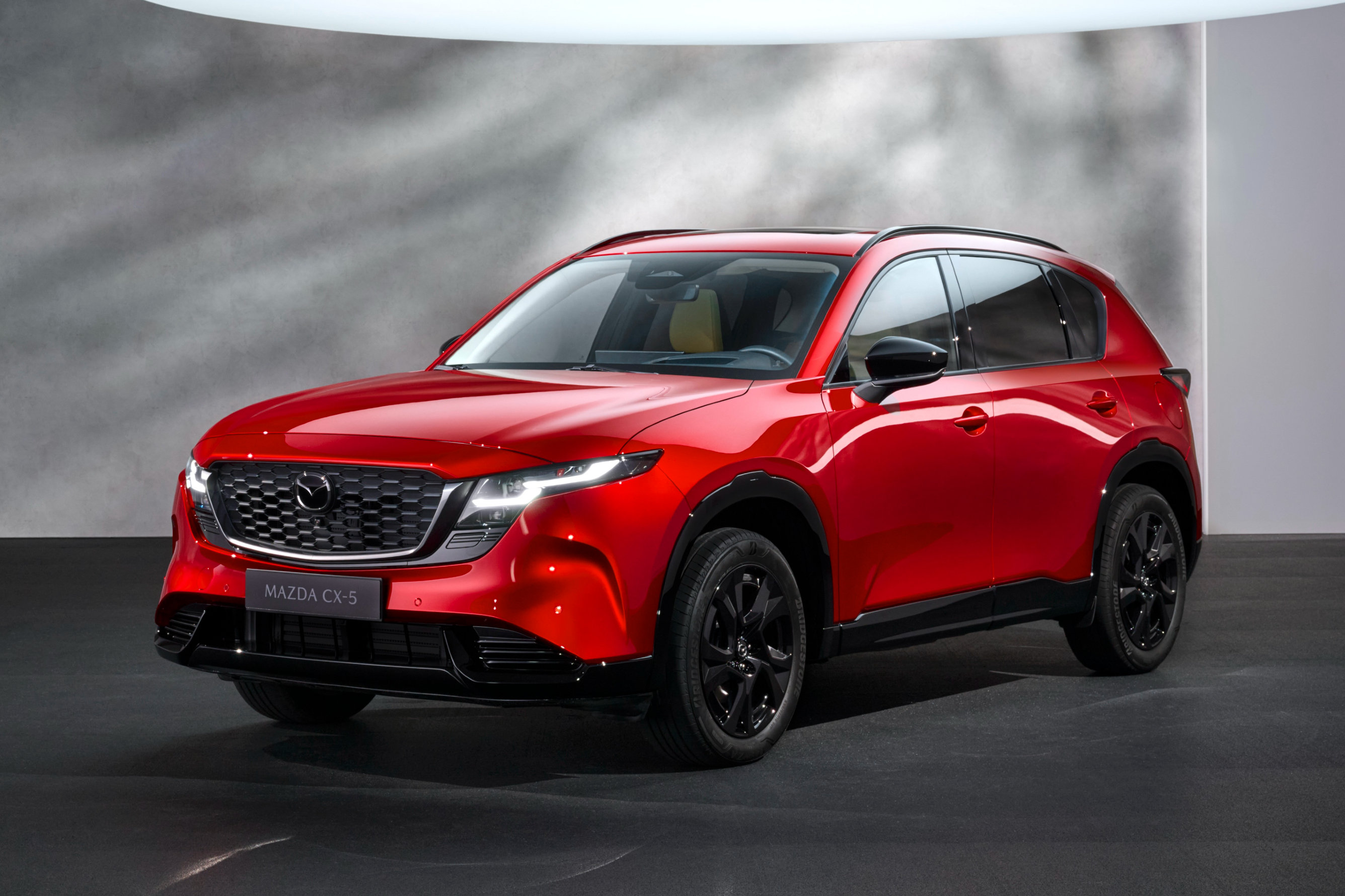
The latest model has grown a fair bit. It now measures nearly 4.7 metres long, positioning it at the larger end of the family SUV sector. In terms of dimensions, it is now equivalent to models such as the Honda CR-V, Vauxhall Grandland and MG HS, rather than slightly smaller rivals like the Volkswagen Tiguan, Nissan Qashqai and Kia Sportage. It’s also now only slightly shorter than the Mazda CX-60 SUV.
Mazda has chosen not to electrify the CX-5 yet. It remains proudly petrol-powered (Mazda doesn't offer a diesel alternative), now with a larger 2.5-litre four-cylinder engine rather than the previous 2.0-litre. It’s not turbocharged either, and has only the mildest form of mild hybrid technology (a 24V setup, rather than the 48V system some rivals boast). There are no hybrid or plug-in hybrid options, either.
This will help keep costs down, says Mazda, and it should boost long-term reliability. It also helps serve up more of the driver-pleasing feel and responsiveness Mazda is famed for. The engineers are proud that the CX-5 doesn’t have a turbo; it makes for a more natural-feeling engine response, they say.
As before, there are four trim lines: Prime-Line, Centre-Line, Exclusive-Line and Homura. Buyers also get a choice of front-wheel drive or all-wheel drive, both with a standard six-speed automatic gearbox.
Mazda CX-5 owners are very loyal, so the firm has worked hard to give them exactly what they want: the same strengths they know and love, only better. That’s why the car’s design is familiar, if now sleeker and more modern, and why so much effort has gone into making big leaps with interior space and practicality. The CX-5 is Mazda’s Volkswagen Golf, where each new generation is a gradual evolution. And with five million examples sold all around the world, you can understand why Mazda is reluctant to change a winning formula.

Practicality
How practical is it?
It’s all change inside the Mazda CX-5. Gone are the old climate control buttons and rotary controller in the centre console. In comes a large-format touchscreen, into which most major controls have been centralised. This makes for a cleaner, more contemporary interior, complete with a tan leather trim across the dashboard in our top-spec Homura test car. It's a pleasant interior, although it does feel like Mazda has regressed slightly when it comes to quality of materials. Where the previous CX-5 felt like a match for a BMW, this one does not.
The Mazda CX-5’s practicality is, however, outstanding. It is 115mm longer than before, now measuring 4,690mm in length, plus it’s now 15mm wider and 30mm taller. The wheelbase is longer too, and Mazda has used these increased dimensions to significantly boost interior space – particularly for those seated in the back and luggage in the boot.
Rear-seat space is almost limousine-like. Even if you're six foot tall and sitting behind a front seat set to your driving position, you'll discover an abundance of knee room and foot space. The footwells are cavernous and there is more than ample headroom, too – even in a model fitted with the optional panoramic glass roof. The seat itself could be a bit more supportive to take advantage of all this space, but it’s still comfortable enough, and top-spec Homura has heated rear seats. The third rear passenger won’t be quite as well off, though, due to a bulky transmission tunnel running through the centre of the car.
It is now easier to step into the rear, thanks to larger doors that open out to almost 90 degrees. Parents will appreciate this, as it’s also simpler to get babies in and out of child seats; there’s less bending involved, and the wider open area provides more space to work with.
Boot space is up too, growing by 61 litres to a useful 583 litres. This makes the Mazda CX-5’s boot one of the largest in its class. It looks voluminous, with plenty of width and length, and we like the hollowed-out stowage areas in each corner either side of the boot opening. The load space is deep too, and the flat and relatively low sill makes it easier to lift heavy items in. The large boot opening helps you lean in to retrieve items, and if you pull the remote levers below the parcel shelf, the rear seats will spring forward and fold flat, creating a cavernous 2,019-litre load area. Again, this takes some beating. The 40:20:40-split rear seat provides plenty of options for carrying passengers and luggage, too.
In the front, the Mazda CX-5 has well-positioned seats that are easy to get in and out of. Foot space is plentiful and the driving position is excellent. We like how the round, nice-to-hold steering wheel can be set nice and close, just like in a Mazda MX-5 sports car (the wheel isn’t unusually angled, like in some SUVs). The seats are firmly supportive and offer plenty of adjustment. Looking forward, the ‘peaks’ in the wings make them easier to see when parking, and the windscreen pillars aren’t as thick as in some modern cars. The extra-large door mirrors are also worthy of praise.
A 360-degree parking camera features on Exclusive-Line versions and above. This snazzy piece of tech includes a ‘see-through’ view, showing what is beneath the front and rear wheels. It’s a bit like Land Rover’s ‘ClearView’ tech. Cleverly, it even shows outlines of the rear wheels, so you can judge how close you are to a kerb. We found it was uncannily precise.
Other useful improvements include a more open-plan centre console with larger cupholders, with space for mobile phones and other oddments at the front. There’s a wireless mobile phone charger beneath the centre armrest, which has split sections so one side can be opened without the other person having to move their arm.

Driving
What's it like to drive?
The Mazda CX-5’s power output of 139bhp sounds a little lacking these days. Zero to 62mph acceleration in 10.5 seconds isn’t as swift as many rivals either. Also, while Mazda insists the engine has more pulling power than before, it doesn’t have the instant grunt of turbocharged or electrified rivals.
All this means you have to work the engine harder than we’ve become accustomed to. And using lower gears and higher revs inevitably results in more engine noise. The Mazda CX-5 will downchange a gear or two even on fairly modest inclines, and you’ll sometimes hear it change down to fifth at motorway speeds. It takes a while to get used to the extra engine noise this generates. The 2.5-litre motor is very smooth, but it’s decidedly vocal.
If you leave it in ‘normal’ mode, the transmission is less inclined to change down a gear, in the interests of saving fuel. This can make the throttle pedal feel flat and unresponsive. You have to drive in ‘sport’ for the alertness and performance you get in many other modern cars, which means putting up with the extra noise.
It’s something you’ll get used to, and does make for a quite engaging driving experience. But it’s rare to have such an ‘engine-first’ car these days, and it’s perhaps only car enthusiasts who will truly appreciate the prominence of the CX-5’s engine in the driving experience. It’s worth noting that the rest of it is nice and refined though, particularly top-spec Homura which has acoustic side glass. The suspension works quietly and road noise is kept at bay.
Elsewhere, the Mazda CX-5 still feels like a Mazda to drive. It’s one of the more engaging models in its sector, with the engineers clearly spending a lot of time to tailor key areas such as steering feel, handling agility and brake pedal response. Even if you’re not a driving aficionado, you’ll notice that the Mazda CX-5 simply feels that bit cleaner, nicer and more satisfying to drive than some of its rivals.
The third-generation Mazda CX-5 is, pleasingly, a bit comfier than previous models. The engineers have fitted softer springs, so it’s more compliant over bumps, while the clever dampers stay soft over rough roads, then firm up when you’re zipping through bends at speed. There is still a taut edge to the ride, but it’s much more pliant as speeds rise, with a nicely oiled and sophisticated feel.
There’s a touch more body lean through bends, but it's not excessive, and the car’s general dynamism remains intact. It handles in a precise way, with good front-end bite and confident rear suspension that helps you trace cleanly through corners. The steering response is particularly lucid and linear, again delivering a trace of the Mazda MX-5’s engaging enthusiasm without going overboard. It’s easy but well-weighted. The brakes also have a nice, firm feel.
There’s little difference between front-wheel-drive and all-wheel-drive versions of the CX-5. Perhaps there’s a touch more front-end softness in the former when you press on, and the all-wheel driver does a better job of keeping this understeer in check. We felt the AWD CX-5 might be a bit ‘pointier’ too, thanks to clever tech that helps turn the rear end into bends. However, many people won’t notice the difference; both are confident, assured cars to drive.

Tech and equipment
Technology, equipment & infotainment
The Mazda CX-5 runs the popular ‘Google built-in’ operating system first seen in modern Renaults. It’s an excellent setup that includes Google Maps, Google Assistant and the Google Play app store. Sync it with your Google account and you can search for destinations at your computer or on your phone, then they’ll be linked automatically to the CX-5’s Google Maps navigation.
Our test car even had the Google Chrome internet browser. When setting the satnav, we noticed the Mazda technician used it to open Gmail, clicking on a link in an email to set the route, complete with waypoints, straight into Google Maps. It was a double-take moment that wowed me with its seamlessness, and underlined how clever the Google infotainment system can be.
We didn’t get a chance to try the voice assistant, but Mazda says it’s comprehensive, and is set to become smarter still when the Google Gemini AI assistant arrives. This, it insists, will make up for any lack of physical buttons.
We still missed them, though. The various ADAS safety aids, for example, can now only be disabled in the touchscreen itself, which means clicking through several menus each time you start up. In fairness, Mazda has added a button to turn off the audible speed limit warning, but why doesn’t it disable all the settings you choose, like a similar button does in modern Renaults?
The loss of physical climate controls is a shame, too. They now reside within the touchscreen. Admittedly, they are in a permanently-displayed bar at the bottom, rather than in a menu that only appears when you click on it. Even so, when you are on the move, it’s a bit difficult to precisely hit the temperature display – and the icons for heated (or cooled) front seats are even smaller. There are physical buttons for front and rear screen demisters, at least.
As standard, the Mazda CX-5 has an eight-speaker stereo. Exclusive-Line and Homura add a 12-speaker Bose sound system which is as rich as you’d expect from this premium audio brand.

Running costs
Mazda CX-5 running costs
For a car of its size and quality, the CX-5 looks well priced, with the range kicking off from under £32,000. Do bear in mind, though, that for that sum you only get a regular petrol engine, rather than any kind of hybrid.
This means the CX-5 can’t offer the low-speed pure electric running of full hybrids, nor the long-distance, 50-plus miles electric range of today’s plug-in hybrids. On-paper fuel economy is therefore not as impressive as others in the sector, while CO2 emissions are much higher – far too high for most company car drivers, for example. This will push up first-year VED (road tax) rates, but it reverts to the standard annual fee after that. And as most models cost under £40,000, they avoid the ‘expensive car’ supplement too.
The CX-5 returns 40mpg in its front-wheel-drive configuration, and 38mpg for the all-wheel-drive version. In our tests we've found that real world economy is around 2mpg shy of the claimed figures. That's not a bad delta, but it's hard to ignore that even the official figures are a lacklustre by class standards.

Mazda CX-5 reliability
The Mazda brand has a great reputation for reliability and its engineers will be eager to maintain that with the firm’s global best-seller. As such, the latest Mazda CX-5 doesn’t introduce any fancy engine technology, or hybrid options, sticking instead with a 2.5-litre four-cylinder non-turbocharged engine already seen in the Mazda3 and Mazda CX-30.
In September 2025, Mazda underlined its reputation for reliability by upping its new car warranty to six years or 100,000 miles (whichever comes first). It includes three years’ roadside assistance and a 12-year anti-rust warranty (so long as you have it inspected annually).
However, it is worth noting that, in the 2025 What Car? Reliability Survey, Mazda only placed 15th for cars aged up to five years old. This mid-table ranking placed it in between Hyundai and Skoda - and is some way off the top five ranking of fellow Japanese brands Honda, Suzuki and Toyota. Past evidence seems to suggest petrol models perform better than diesels - so things may well improve now Mazda has ditched the diesel CX-5.


What owners say
"The Mazda CX-5 offers a blend of comfort, style, and performance that many drivers appreciate across its model years. Owners praise its modern features, spacious interior, and smooth ride, especially the available AWD options. However, some have raised concerns about occasional electrical issues and the slippery leather seats, which can be problematic for passengers. Overall, the CX-5 is regarded as a reliable and enjoyable SUV choice."
I was put off by the comments on the internet about electrical problems with this vehicle . I do not want to buy problems !
15 December 2024Lovely comfortable ride with plenty of power if you need it. A very reliable, modern car with all the current features. My favourite is the heads up display and also the infotainment capabilities on screen. I’m very happy with the CX5.
23 May 2024Well made, well appointed, A joy to drive. My second, would I buy a third?...... definitely! Antonymac
14 August 2023What owners say
I was put off by the comments on the internet about electrical problems with this vehicle . I do not want to buy problems !
15 December 2024Lovely comfortable ride with plenty of power if you need it. A very reliable, modern car with all the current features. My favourite is the heads up display and also the infotainment capabilities on screen. I’m very happy with the CX5.
23 May 2024Well made, well appointed, A joy to drive. My second, would I buy a third?...... definitely! Antonymac
14 August 2023This car has all features and low carbon emission and good fuel economy other models are Toyota RAV4 2 .0 diesel and Honda CR-V are comparable
23 August 2022Ticked all the boxes. Great kit great looks fabulous to drive. Handles more like a car than a big SUV.
29 May 2021Good value for a SUV!The cars features are excellent,one of the best SUV I’ve driven
7 April 2021Good all around features and AWD versions more available. Compared to the Hyundai Tucson, has more features.
3 January 2024Its a fine looking car with great quality I had a Kadjar which I part exchanged for the cx5 The Mazda has a far better ride and the quality shines through
14 May 2022Durable, reliable and good design inside out. I like the 2.2 diesel sports model..
17 March 2022Stunning car, stylish, spacious and very comfortable. Everything you seek from a modern SUV. Compared to a Nissan Qashqai or Kia Sportage, this won in it’s practically and looks which good power and car design.
18 May 2023Three things to know
- The Mazda CX-5 is only available with a single engine option: a 2.5-litre mild hybrid petrol. The firm’s engineering boss told us that the next development will be an even cleaner version optimised for strict Euro 7 emissions regulations. After that, a full hybrid will arrive, but Mazda will not offer a plug-in hybrid version. If you want a plug-in hybrid SUV with a Mazda badge, look to the CX-60 instead.
- The Mazda CX-5 only comes with a six-speed automatic gearbox option, and you can choose either front-wheel drive or all-wheel drive. We felt it could usefully do with another gear or two, but there are steering wheel paddles so you can take control yourself. Simply flick the auto gearlever to the left to select manual mode.
- Engaging sport mode is easy. There’s a button on the steering wheel that you can flick with your right thumb to switch between normal and sport. It means that when roads get twisty, you can quickly and easily optimise the gearshift so it doesn’t change up early, which makes for a more fluid driving experience.
Which one to buy
- If you want the cheapest Mazda CX-5: The most affordable version will be the CX-5 Prime-Line. Interestingly, Mazda says this now has more equipment than the previous Centre-Line model, with standard features that include a 12.9-inch infotainment display with Google built-in, 17-inch alloy wheels and radar cruise control. Prices start from under £32,000.
- If you like a bit of colour inside your Mazda CX-5: Perhaps avoid the Prime-Line and Centre-line. Both have a uniformly black interior. Centre-Line is brighter, as it comes with the option of a smart black and white upholstery combination. The top-spec Homura is available with a fancy tan leather option.
- If you like big infotainment screens in your Mazda CX-5: You’ll need the range-topping Homura. This has an enhanced 15.6-inch centre display, instead of the 12.9-inch screen in other versions. It also has ambient LED lighting in the doors, offering a choice of seven different colours.
- If you want a Mazda CX-5 with all-weather traction: Choose the all-wheel-drive model, rather than the standard front-driven car. The fuel economy penalty is only around 2mpg and the extra traction is useful in wet, muddy or snowy conditions – particularly if you’re making the most of the Mazda CX-5’s 2,000kg towing capacity.


More on the Mazda CX-5 (2026 - 2026)
Compare 2026 Mazda CX-5 Trims
The 2026 Mazda CX-5 offers a range of trims from budget-friendly options to fully loaded models, all featuring a stylish design and advanced tech.
- Starting at £32,138
- Most Popular: 2.0 E-skyactiv G Mhev Exclusive-line 5dr Auto
Trim Overview
Prices updated weekly from CarGurus listings.
| 2.0 E-skyactiv G Mhev Centre-line 5dr | 2.0 E-skyactiv G Mhev Centre-line 5dr Auto | 2.0 E-skyactiv G Mhev Exclusive-line 5dr | 2.0 E-skyactiv G Mhev Exclusive-line 5dr Auto (Most Popular) | 2.0 E-skyactiv G Mhev Homura 5dr | 2.0 E-skyactiv G Mhev Takumi 5dr | 2.0 E-skyactiv G Mhev Homura 5dr Auto | 2.0 E-skyactiv G Mhev Takumi 5dr Auto | |
|---|---|---|---|---|---|---|---|---|
| Starting MSRP | £31,035 | £32,635 | £34,135 | £35,735 | £36,135 | £36,535 | £37,735 | £38,135 |
| Avg. Market Price | £32,138 | £32,138 | £32,138 | £32,138 | £32,138 | £32,138 | £32,138 | £32,138 |
| Positioning | Best value | Standard | Standard | Standard | Standard | Standard | Standard | Fully loaded |
| Standout Features | Android Auto, Bluetooth, Navigation System | Apple CarPlay, Climate control, Parking Assist | Backup Camera, Heated Steering Wheel, Keyless Entry/Start system | Navigation System, Heated Seats, Privacy glass/Tinted windows | Heated Steering Wheel, Bluetooth, Navigation System | Heated Seats, Privacy glass/Tinted windows, Navigation System | Heated Seats, Backup Camera, Privacy glass/Tinted windows | Heated Steering Wheel, isofix, Navigation System |
| Drivetrain | FWD | FWD | FWD | FWD | FWD | FWD | FWD | FWD |
| Listings Available | 37 | 21 | 64 | 127 | 48 | 21 | 65 | 29 |
Quick Compare Table
Listing prices sourced from CarGurus — updated weekly. OEM specs from manufacturer data.
| 2.0 E-skyactiv G Mhev Centre-line 5dr | 2.0 E-skyactiv G Mhev Centre-line 5dr Auto | 2.0 E-skyactiv G Mhev Exclusive-line 5dr | 2.0 E-skyactiv G Mhev Exclusive-line 5dr Auto | 2.0 E-skyactiv G Mhev Homura 5dr | 2.0 E-skyactiv G Mhev Takumi 5dr | 2.0 E-skyactiv G Mhev Homura 5dr Auto | 2.0 E-skyactiv G Mhev Takumi 5dr Auto | |
|---|---|---|---|---|---|---|---|---|
| AI Summary | Best value option for budget-conscious shoppers | Standard features with added convenience | Well-equipped with premium features | Most popular trim with advanced tech | Standard features with stylish design | Standard features with luxury touches | Standard features with added convenience | Fully loaded with all features |
| Avg. Market Price | £32,138 | £32,138 | £32,138 | £32,138 | £32,138 | £32,138 | £32,138 | £32,138 |
| MSRP | £31,035 | £32,635 | £34,135 | £35,735 | £36,135 | £36,535 | £37,735 | £38,135 |
| Engine | 1998.0cc 165 hp I4 | 1998.0cc 165 hp I4 | 1998.0cc 165 hp I4 | 1998.0cc 165 hp I4 | 1998.0cc 165 hp I4 | 1998.0cc 165 hp I4 | 1998.0cc 165 hp I4 | 1998.0cc 165 hp I4 |
| Drivetrain | FWD | FWD | FWD | FWD | FWD | FWD | FWD | FWD |
| Android Auto | ✓ | ✓ | ✓ | ✓ | ✓ | ✓ | ✓ | ✓ |
| Apple CarPlay | ✓ | ✓ | ✓ | ✓ | ✓ | ✓ | ✓ | ✓ |
| Privacy glass/Tinted windows | ✓ | ✓ | — | ✓ | ✓ | ✓ | ✓ | ✓ |
| Bluetooth | ✓ | ✓ | ✓ | ✓ | ✓ | ✓ | ✓ | ✓ |
| Navigation System | ✓ | ✓ | ✓ | ✓ | ✓ | ✓ | ✓ | ✓ |
| Parking Assist | ✓ | ✓ | ✓ | ✓ | ✓ | ✓ | ✓ | ✓ |
| AUX/USB connectivity | ✓ | ✓ | — | — | — | ✓ | — | — |
| Cruise Control | ✓ | ✓ | ✓ | ✓ | ✓ | ✓ | ✓ | ✓ |
| isofix | ✓ | ✓ | — | — | — | — | — | ✓ |
| Alarm/Immobiliser | ✓ | ✓ | — | — | — | — | — | — |
| Adaptive Cruise Control | ✓ | — | — | — | — | — | — | — |
| Climate control | — | ✓ | — | — | — | — | — | — |
| Backup Camera | — | — | ✓ | ✓ | ✓ | — | ✓ | — |
| Heated Steering Wheel | — | — | ✓ | ✓ | ✓ | ✓ | ✓ | ✓ |
| Keyless Entry/Start system | — | — | ✓ | — | — | — | — | — |
| Heated Seats | — | — | — | ✓ | ✓ | ✓ | ✓ | ✓ |
| Active Listings | 37 | 21 | 64 | 127 | 48 | 21 | 65 | 29 |
Missing data displayed as "—".
Trim Deep Dives
2.0 E-skyactiv G Mhev Centre-line 5dr — "Who It's For"
The 2.0 E-skyactiv G Mhev Centre-line 5dr is the pick for shoppers who want essential features without paying for extras. It's a great entry point into the CX-5 lineup.
- Avg. market price: £32,138 (updated weekly)
- Inventory: 37 listings — lower availability; may limit negotiating room
- View 2.0 E-skyactiv G Mhev Centre-line 5dr listings
2.0 E-skyactiv G Mhev Centre-line 5dr Auto — "Who It's For"
The 2.0 E-skyactiv G Mhev Centre-line 5dr Auto is for those who want a standard trim with added convenience features without a significant price jump.
- Avg. market price: £32,138 (updated weekly)
- Inventory: 21 listings — lower availability; may limit negotiating room
- View 2.0 E-skyactiv G Mhev Centre-line 5dr Auto listings
2.0 E-skyactiv G Mhev Exclusive-line 5dr — "Who It's For"
The 2.0 E-skyactiv G Mhev Exclusive-line 5dr is ideal for shoppers seeking a well-equipped vehicle with premium features without going fully loaded.
- Avg. market price: £32,138 (updated weekly)
- Inventory: 64 listings — lower availability; may limit negotiating room
- View 2.0 E-skyactiv G Mhev Exclusive-line 5dr listings
2.0 E-skyactiv G Mhev Exclusive-line 5dr Auto — "Who It's For"
The 2.0 E-skyactiv G Mhev Exclusive-line 5dr Auto is the pick for shoppers who want advanced tech and comfort features in a popular trim.
- Avg. market price: £32,138 (updated weekly)
- Inventory: 127 listings — lower availability; may limit negotiating room
- View 2.0 E-skyactiv G Mhev Exclusive-line 5dr Auto listings
2.0 E-skyactiv G Mhev Homura 5dr — "Who It's For"
The 2.0 E-skyactiv G Mhev Homura 5dr is for those who want stylish design and standard features without the highest price tag.
- Avg. market price: £32,138 (updated weekly)
- Inventory: 48 listings — lower availability; may limit negotiating room
- View 2.0 E-skyactiv G Mhev Homura 5dr listings
2.0 E-skyactiv G Mhev Takumi 5dr — "Who It's For"
The 2.0 E-skyactiv G Mhev Takumi 5dr is for shoppers who want a touch of luxury with standard features without going fully loaded.
- Avg. market price: £32,138 (updated weekly)
- Inventory: 21 listings — lower availability; may limit negotiating room
- View 2.0 E-skyactiv G Mhev Takumi 5dr listings
2.0 E-skyactiv G Mhev Homura 5dr Auto — "Who It's For"
The 2.0 E-skyactiv G Mhev Homura 5dr Auto is for those who want a stylish vehicle with added convenience features without the highest price tag.
- Avg. market price: £32,138 (updated weekly)
- Inventory: 65 listings — lower availability; may limit negotiating room
- View 2.0 E-skyactiv G Mhev Homura 5dr Auto listings
2.0 E-skyactiv G Mhev Takumi 5dr Auto — "Who It's For"
The 2.0 E-skyactiv G Mhev Takumi 5dr Auto is for shoppers who want a fully loaded vehicle with all the features for a premium experience.
- Avg. market price: £32,138 (updated weekly)
- Inventory: 29 listings — lower availability; may limit negotiating room
- View 2.0 E-skyactiv G Mhev Takumi 5dr Auto listings
Trim Recommendations
Most Popular — 2.0 E-skyactiv G Mhev Exclusive-line 5dr Auto
With 127 active listings, the Exclusive-line 5dr Auto is the clear volume leader in the lineup.
Browse 2.0 E-skyactiv G Mhev Exclusive-line 5dr Auto listings
Best Budget Option — 2.0 E-skyactiv G Mhev Centre-line 5dr
At £32,138 avg market price — below the lineup median of £32,138 — it's the most accessible entry point.
Browse 2.0 E-skyactiv G Mhev Centre-line 5dr listings
These recommendations are based on CarGurus' proprietary market data from October 22, 2026, CarGurus experts' opinions, and generative AI.

