Mercedes-Benz B-Class 2026 review | Alternative to a premium SUV
Mercedes-Benz B-Class cars for sale
4.0
Expert review
Pros
Roomy and practical cabin
Tax-efficient plug-in hybrid
Comfortable ride
Cons
There are cheaper MPVs with even more space, if you can live with a humble badge
Not very exciting to drive
Plain-looking exterior

The CarGurus verdict
The B-Class may not attract as much attention as a small SUV like the Mercedes-Benz GLB, but that's not necessarily a bad thing. If you are looking for an upmarket yet practical family car, and prefer understatement to ostentation, the B-Class could be for you.
To drive, the B-Class is all about comfort, so we'd resist the temptation to pick one of the more expensive models with larger alloy wheels. The Sport Executive specification really has all you need, so there is really no requirement to spend more.
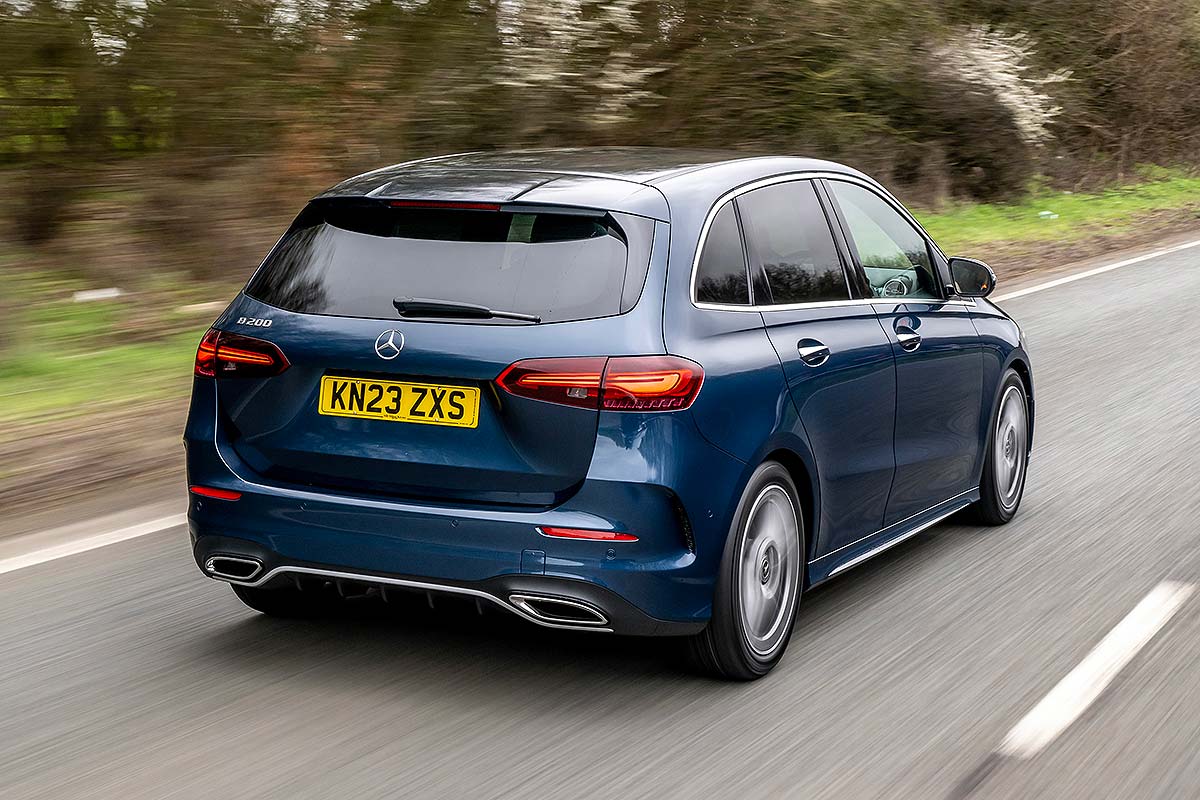
What is the Mercedes-Benz B-Class?
The third-generation Mercedes-Benz B-Class is a five-seat MPV, the order books for which opened in late 2018. It was launched to mostly positive reviews, with star-billing shared between a host of high-tech driver aids, the spectacular MBUX infotainment system, and diesel engines that met the latest RDE2 exhaust emissions standards.
The latter was particularly great news for anyone considering the Mercedes-Benz B-Class as a company car, because RDE2-compliant diesels didn't attract the four percent benefit-in-kind tax surcharge (the rules have changed a lot since then). On the whole, though, the B-Class offered a competitive package, whether you were buying the car as a family runaround or for work.
Known officially as the ‘W247’ B-Class in Mercedes-speak, MPVs of this size – or any size, for that matter – are a rare breed these days, as family car buyers have flocked towards more fashionable SUVs. But a key rival for the B-Class does remain: the BMW 2 Series Active Tourer.
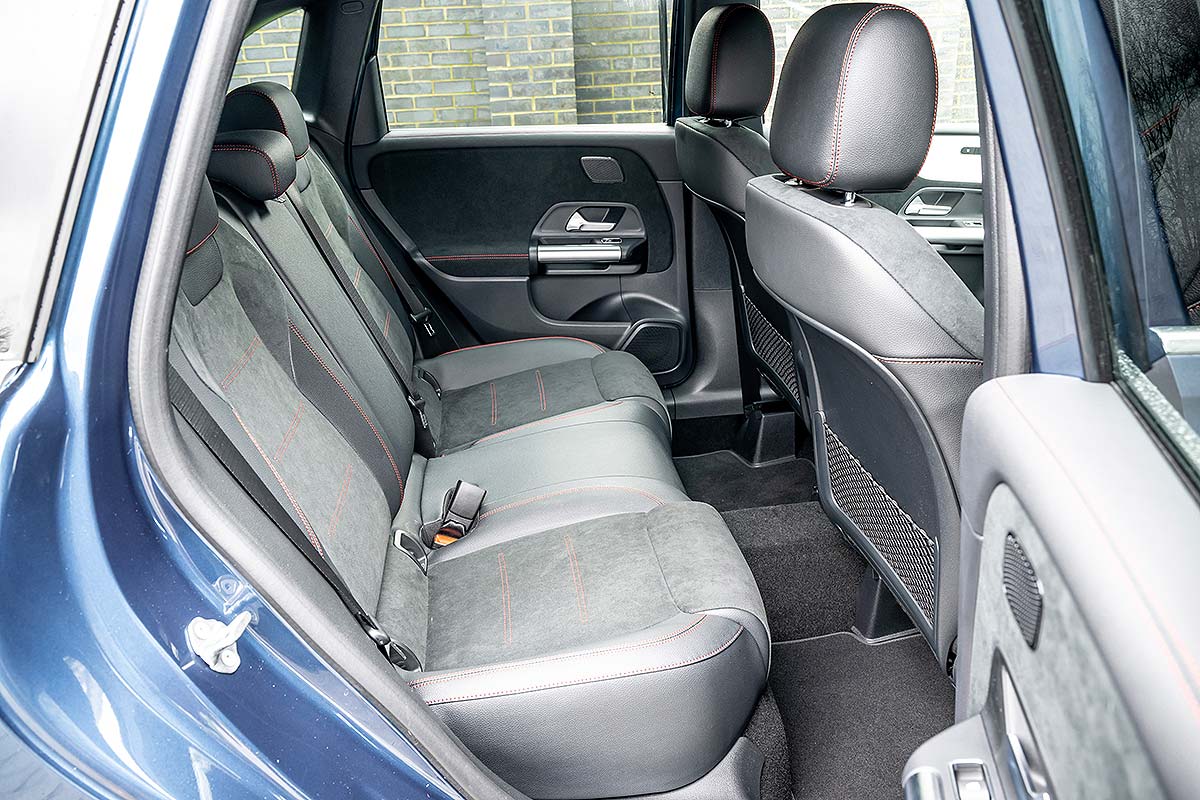
How practical is it?
There’s a strong family resemblance between the Mercedes B-Class and its A-Class hatchback sibling, but this car is considerably longer and wider. That shows inside, where there is a lot more rear-seat legroom and headroom. Even for very tall passengers, this is a roomy car.
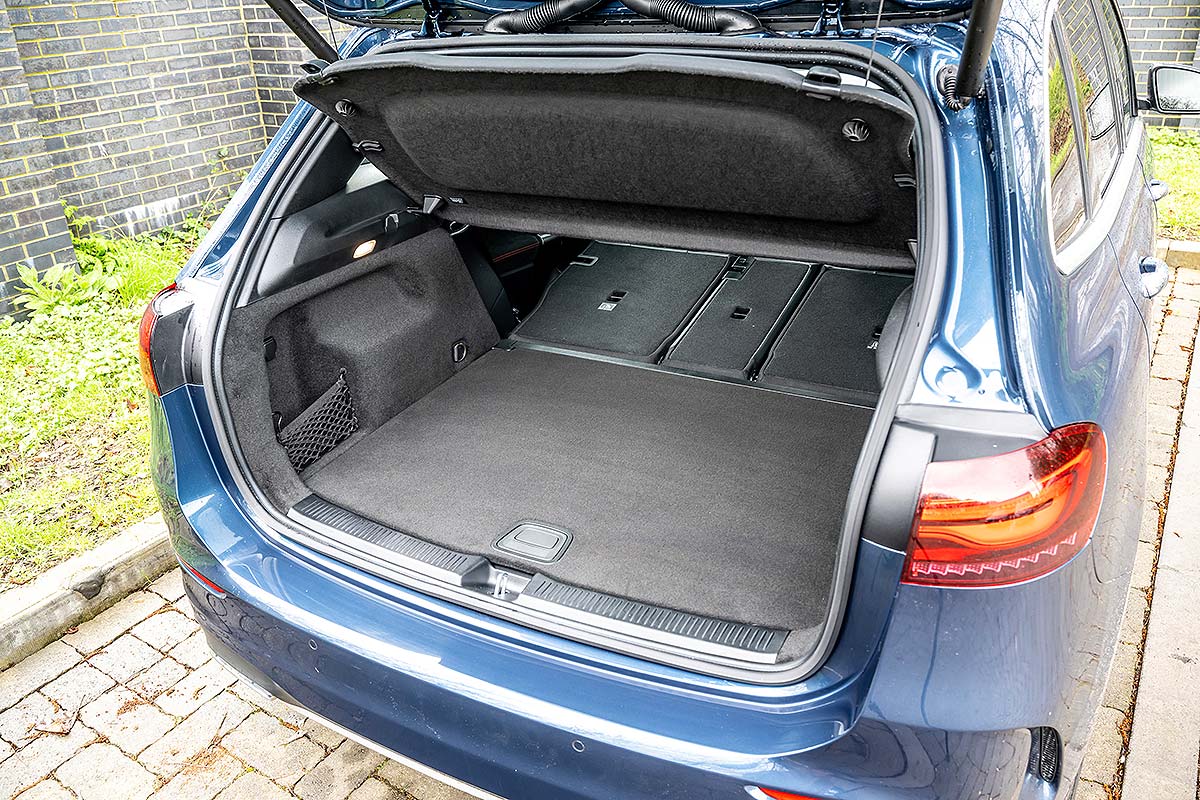
Boot space varies depending on the model year and engine chosen, which is something to be aware of if you’re thinking of buying used rather than new. However, the B-Class line-up has stayed relatively simple since its launch, so as a general rule you can expect a luggage capacity of 455 litres for non-hybrid models and 405 litres for hybrid cars. Fold the rear seats down (they split 40:20:40) and that expands to 1,530 and 1,440 litres respectively.
The B-Class does have a trump card over its BMW rival. Although boot space is comparable – with 415 litres in the BMW’s boot, expanding to 1,405 with the rear seats flat – the back bench in the B-Class can slide forwards to free up more space. If you move the seat all the way to the front of its runners, you get a whopping 705 litres of luggage room.
There’s a range of B-Class accessories available from Mercedes-Benz, should you need them. You can have a fold-out sill protector, for example, as well as a rubber boot tub, a cool box, child seats, roof boxes and roof-mounted bicycle carriers. There are also coat hangers, fold-out tables, tablet holders and bag hooks that attach to the backs of the front seats.
If you’re interested in towing, the current B-Class line-up consists of the B200 petrol mild-hybrid and the B200d diesel. The B200 has an unbraked towing capacity of 745kg and a braked capacity of 1,600kg, while the B200d has an unbraked capacity of 750kg and the same 1,600kg braked limit as the petrol.
In the front, the cabin is dominated by the MBUX infotainment system, with its pin-sharp twin-screen displays. There are lots of soft-touch materials, and a real sense of occasion to the interior design, so this is certainly one of the poshest-feeling cars of its type. Some of the plastics on the lower doors aren't quite so plush, but they're not low-rent enough to spoil the overall ambience.
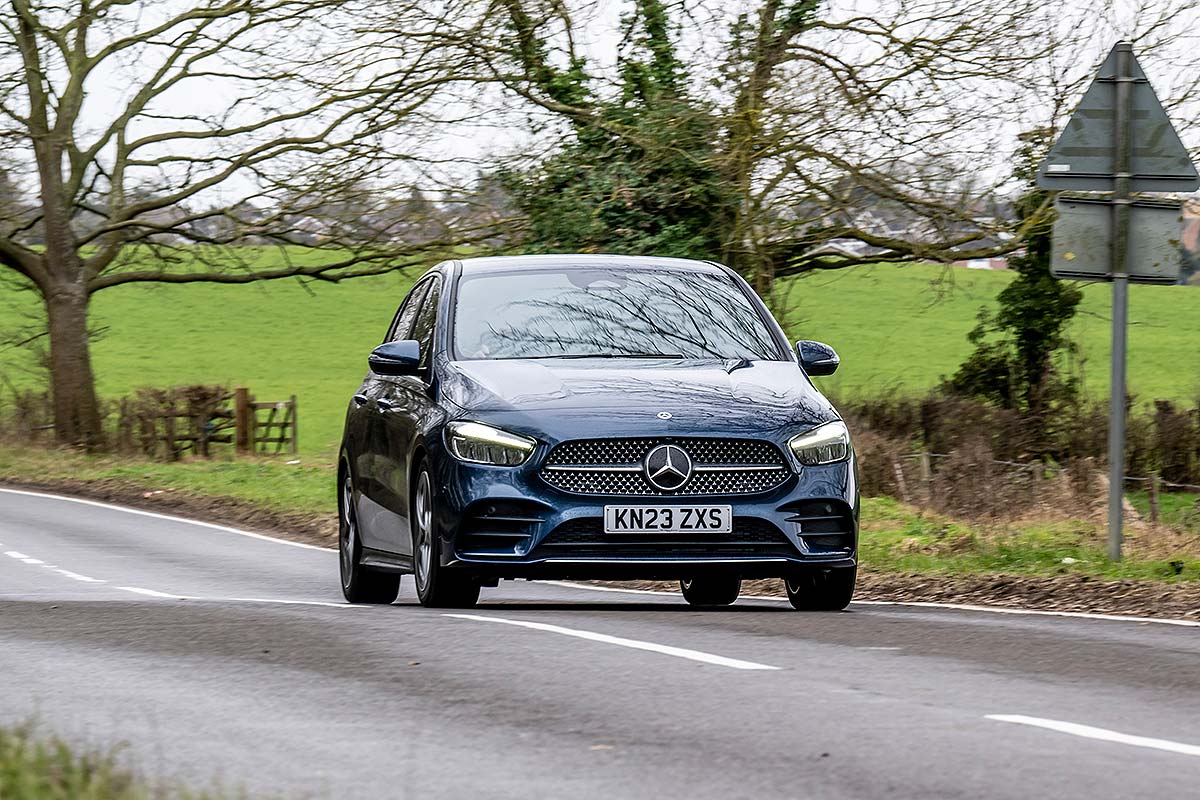
What’s it like to drive?
From the driver's seat, the B-Class is more about comfort than an exciting drive. Its ride is smooth, absorbing bumps of all shapes and sizes in a fuss-free manner for relaxing progress, and the cabin is quiet at motorway speeds. If you do enter a corner with enthusiasm, the B-Class will handle neatly enough, but it's better suited to a steadier driving style.
A wide variety of different engine choices have been offered for the B-Class since its launch in 2018, but this was pared back for the car’s 2022 facelift. As mentioned previously, you are now left with a simple choice between the B200 mild hybrid petrol or B200d diesel.
The B200 has a 1.3-litre turbocharged mild hybrid petrol engine, with 161bhp provided by the engine itself and 14bhp from the hybrid system. It’s front-wheel drive, with power going through a seven-speed dual-clutch automatic gearbox, and will accelerate from 0-62mph in 8.4 seconds on its way to a 139mph maximum.
The B200d’s 2.0-litre turbocharged diesel motor is marginally less powerful, with 148bhp. But with an eight-speed dual-clutch box, it’ll still hit 62mph in 8.5 seconds, and top out at 136mph. Looking further back, from launch there was a choice between the 132bhp B180 and the 159bhp B200, both petrols, both using fundamentally the same four-cylinder 1.3-litre turbo engine in different states of tune, and both with the same seven-speed automatic gearbox.
On the diesel front, you could have a B200d or a B200d. Yes, you read that correctly, there were two variants with the same name, one producing 148bhp and the other 187bhp. Wasn’t that a sensible idea?
Mercedes later expanded the range with a less powerful diesel, the 114bhp B180d, and the 221bhp B250 petrol. The latter was front-wheel-drive only, and the reality was the car struggled to get its power down, but a 4Matic all-wheel-drive version of the B220 was offered at the same time.
In the summer of 2020, Mercedes launched the B250e plug-in hybrid. With an all-electric range of 42 miles and low carbon dioxide (CO2) emissions, the B250e was a tax-efficient choice for company car drivers. Today, you may not benefit from those same tax efficiencies, but as a used purchase it could make a very efficient and quiet commuter car.
Technology, equipment & infotainment
At the moment, Mercedes offers four trim levels for the B-Class: Sport Executive, AMG Line Executive, AMG Line Premium and AMG Line Premium Plus. All can be had with either the petrol or the diesel engine, with the petrol costing around £1,100 less than the diesel regardless of the trim chosen.
Even with the Sport Executive, the MBUX infotainment system is standard. It comes with a 10.25-inch instrument display and a 10.25-inch central infotainment display, along with keyless entry and go, cruise control, Bluetooth, Apple CarPlay and Android Auto connectivity, LED headlights and rear lights, heated front seats, electric door mirrors, a reversing camera, active parking assist with Parktronic (where the car can manoeuvre into a space for you), dual-zone climate control, blind-spot assist, lane-keep assist, automatic emergency braking and 17-inch alloy wheels.
Make the step up to AMG Line Executive and you’ll be adding wireless phone charging, AMG floor mats, a sporty looking steering wheel and sports seats, built-in satellite navigation, a heated steering wheel, heated windscreen washer nozzles and 18-inch wheels.
The next step up on the trim level ladder is the AMG Line Premium. Here you’ll be treated to fully-electric front seats with a memory function, an upgraded Mercedes-Benz sound system, augmented reality navigation and 19-inch wheels.
You then arrive at the top-spec AMG Line Premium, which brings a 360-degree camera, panoramic sliding sunroof, head-up display, traffic sign assist, additional features in the infotainment system and multibeam LED headlamps with Adaptive Highbeam Assist Plus. The latter means 18 individual LEDs in each lamp that turn on and off individually and automatically, depending on what is required and ahead on the road.

Mercedes-Benz B-Class running costs
Which B-Class has the lowest running costs? It really depends on how far you drive each day, and whether you are buying new or used.
Looking at the current B-Class, we’d steer towards the B200d if you regularly undertake long journeys, as Mercedes claims between 51.4 and 55.4mpg, depending on trim level (more kit means a heavier car, possibly larger wheels, and reduced efficiency). On a long-distance cruise you may see better than that.
Should you drive regularly in towns or cities, in combination with some long-distance adventures, the petrol will likely suit you more. Its engine will be happier over the course of your ownership, as petrols are generally better suited to low-speed, about-town driving. And it’s still fairly frugal, with a claimed 44.1-47.1mpg.
Looking at the W247 B-Class back-catalogue, though, the B250e plug-in hybrid is the pick of the bunch in terms of running costs. If you can recharge at home overnight and don't fully drain the battery during the day, you could go weeks or even months without filling up with petrol. The official combined figure is 235.4mpg.
High-mileage drivers won't get close to that without very regular recharging, and so might want to consider one of the diesels instead. They are all closely matched in terms of economy, which isn't that surprising when you remember they are essentially the same engine in different states of tune.
If you want petrol power, but need to keep an eye on running costs, we'd give the B250 a miss. Its official combined figure of 39.8-40.4mpg isn't bad in isolation, but it's nothing like as economical as the other petrols.
Mercedes-Benz offers servicing plans that allow owners to pay for several services up front, or to spread the cost across monthly payments. However, there are many independent Mercedes specialists who will be able to undercut main dealer prices. Be mindful, however, that doing so will invalidate the car’s three-year, unlimited mileage warranty.
Mercedes B-Class reliability
Mercedes’ cars are generally thought of as reliable, but that's not necessarily the case. There's actually quite a wide variation in performance from model to model, and from generation to generation.
With the third-generation B-Class, there are no big causes for concern that we are aware of, but electrical faults aren’t uncommon and the seven-speed gearbox suffers from occasional gremlins. All new Mercedes models come with a three-year, unlimited mileage warranty.
We would, however, be wary of buying a diesel if you mostly drive short distances, as the diesel particulate filter (DPF) may become clogged. This warning isn't specific to Mercedes-Benz or the B-Class, but applies to any modern diesel with a DPF, whether you buy new or used.
With a used car, it's worth knowing that Mercedes-Benz Approved Used vehicles come with a one-year, unlimited-mileage warranty. It's always worth checking if there is any recall work outstanding before you buy, but a Mercedes-Benz dealer should be able to help. Alternatively, you can enter the registration number into the recall checker on the GOV.UK website.
Something to be mindful of if you’re interested in a used B250e: the battery is only covered for 62,000 miles or six years. This isn’t necessarily a sign to avoid a car with more miles on the clock, or one that’s seven years old, but be sure to check the car’s history thoroughly to ensure there haven’t been any electrical failure warning signs. Also check that the battery can take a full charge.
- You will either find it brilliant or baffling, but the MBUX infotainment system is a highlight of B-Class ownership. Controlled either with the touchscreen, a touchpad control on the centre console or voice commands (say "Hey Mercedes!" to get the system's attention), it's a complex but highly impressive bit of kit. Mercedes says the system can even respond to indirect commands, so if, for example, you say "I'm cold", MBUX will warm up the cabin.
- Safety is another strong point for the B-Class. When tested by Euro NCAP in 2019, it scored the maximum five stars overall. A 96 percent score for adult occupant protection is especially high. It's possible to add more driver and safety aids by specifying the Driving Assistance package. This includes technologies such as cross-traffic assist, which will apply the brakes if pedestrians, cars or motorcycles are crossing behind you while you're reversing out of a parking space. It's a shame this package is only available on the top-spec AMG Line Premium Plus version, however.
- Remember when the numbers in a model name referred to a car's engine capacity? Those days have long gone. While the B200d’s engine is indeed a 2.0-litre turbodiesel, the B200 petrol is only 1.3 litres. Looking back at used examples of the third-generation B-Class, the B180 does not have the 1.8-litre engine, but instead a 1.3-litre four-cylinder turbocharged petrol. And the B250 has a 2.0-litre turbo petrol. It’s the same story with older diesels; the B180d and B220d are both powered by a turbocharged 2.0-litre unit.
- If you want a diesel: There’s only one choice when buying new, and that’s the B200d. Compared to the older B180d and B220d, the former is a bit lukewarm, while the latter is quicker than it needs to be. The B200d hits the bullseye with strong performance, a reasonable price tag and excellent fuel economy.
- If you want a petrol: Like the diesel, if you’re buying new you have a choice of one, and that’s the B200. It’s not a bad engine, and it’ll save you £1,100 regardless of trim level versus the diesel B200d.
- If you want emissions-free short journeys: You need to look at a used example of the B250e plug-in hybrid. Its electric-only range is 42 miles, which is 14 miles further than the claimed range of BMW’s rival: the 225xe Active Tourer. The B250e's official combined fuel economy figure is 235.4mpg, which you won’t get anywhere near in the real world, but for short journeys around town you might not have to use the engine at all, provided the car is charged when you set off. It's quick, too, with a 0-62mph time of 6.8 seconds.
- If you want all the toys: choose the AMG Line Premium Plus. The most fully loaded of all B-Class models, this is crammed full of tech and gadgets. The multibeam LED headlights point around corners and switch from high-beam to dipped when traffic comes the other way. The augmented reality navigation system is like something out of science fiction, and the ambient interior lighting features no fewer than 64 different colours.


