Mercedes-Benz CLA (2019-2025) review | Executive style in a compact package

Pros and cons
What we like
Stylish and distinctive looks
Lots of engines and specs to suit different needs and budgets
Shooting Brake is surprisingly practical
What to consider
AMG models are very expensive to run
Reliability has to be a concern
Four-wheel-drive cars have higher fuel bills
The CarGurus verdict
If you’re looking for a small, stylish premium car that gives you a modicum of driving fun while retaining comfort levels, then the CLA is well worth checking out. The Shooting Brake adds an extra layer of practicality without turning frumpy, and there are enough choices of trim and engine to satisfy varying tastes.
Long-term running costs and reliability, as with all modern Mercedes, might be a concern, but no more so than rivals BMW and Audi, and at the time of writing all cars will be covered by a manufacturer warranty. So we’d definitely recommend considering it alongside an Audi A3 Saloon or a BMW 2 Series Gran Coupe.
out of 5 expert review
What is the Mercedes-Benz CLA?
Choosing a new car often is often about deciding where your priorities lie. Is practicality the most important factor? Or fuel economy, perhaps? Time and time again, however, research tells car manufacturers that how a vehicle looks is very high on customers’ lists of priorities. Which is where cars like the CLA come in.
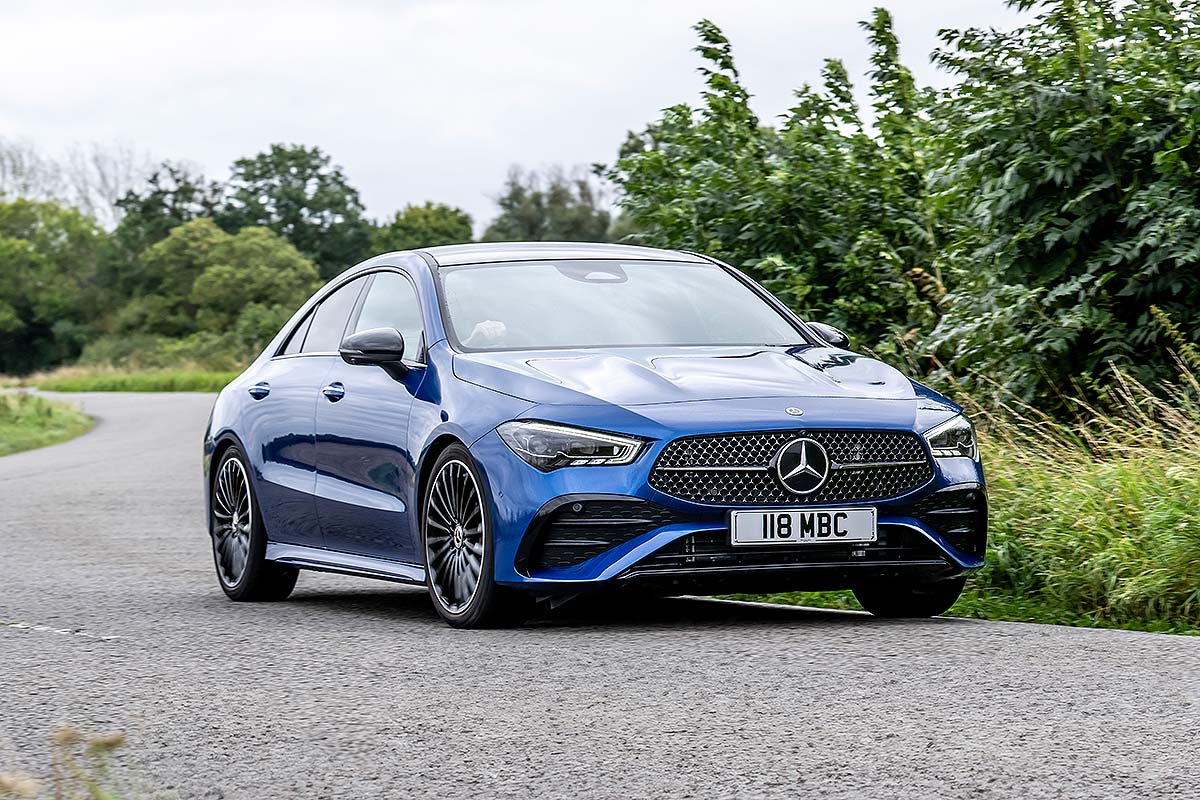
If you’re in the market for a small Mercedes-Benz saloon, one already exists: the A-Class, which is available as a hatchback or saloon. So, what does the CLA do differently? Well, it gets an immaculate haircut, then pulls on a sharp jacket and sunglasses. Mercedes has taken the mechanical underpinnings of the A-Class and dressed them in a sleek, coupe-inspired saloon body. It even calls the CLA a four-door coupe (coupes traditionally have two doors), much like its larger sibling, the CLS. Also like the CLS, there is a sleek estate version, called a shooting brake. As four-door coupe is to saloon, so shooting brake is to estate...
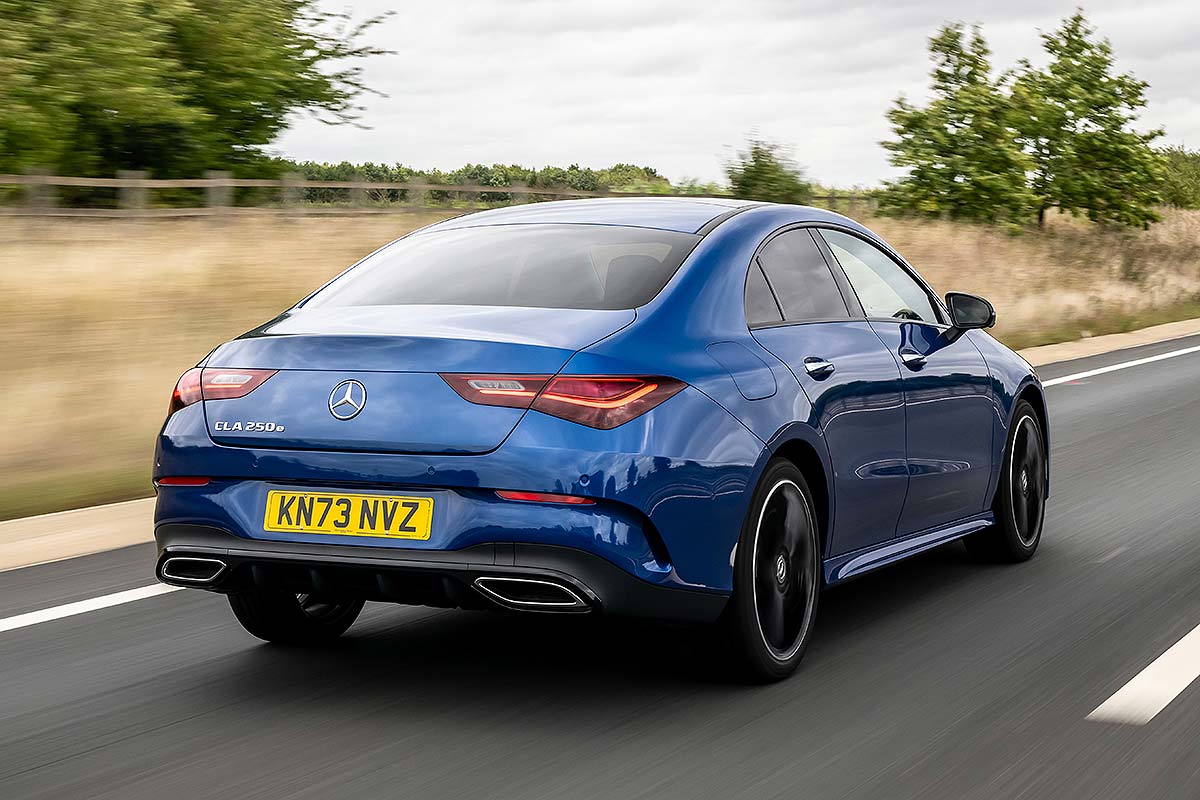
The Mercedes-Benz CLA has a more sweeping roofline than the A-Class saloon, and is ever so slightly longer. Its rear lights are different, and so are the bumpers. But overall, you’d be slightly hard pressed to tell the cars apart.
Launched in 2019, production of the second-generation Mercedes CLA seen here ran until 2025, with a mid-life refresh in 2023 to add more technology, revise the engine line-up and give the whole car a minor revamp. If you’re after a brand-new car, you will need to look at the third-generation Mercedes CLA, now available in fully electric guise for the first time.
Practicality
How practical is it?
The CLA Shooting Brake is more practical, and the one to go for if you want a compact used estate car. Pre-facelift examples of the shooting brake generally offer 505 litres of boot space, or 1,370 litres with the 40:20:40-split rear seats down. Post-facelift models have a little less space: 485 litres with the seats up and 1,350 seats with them folded.
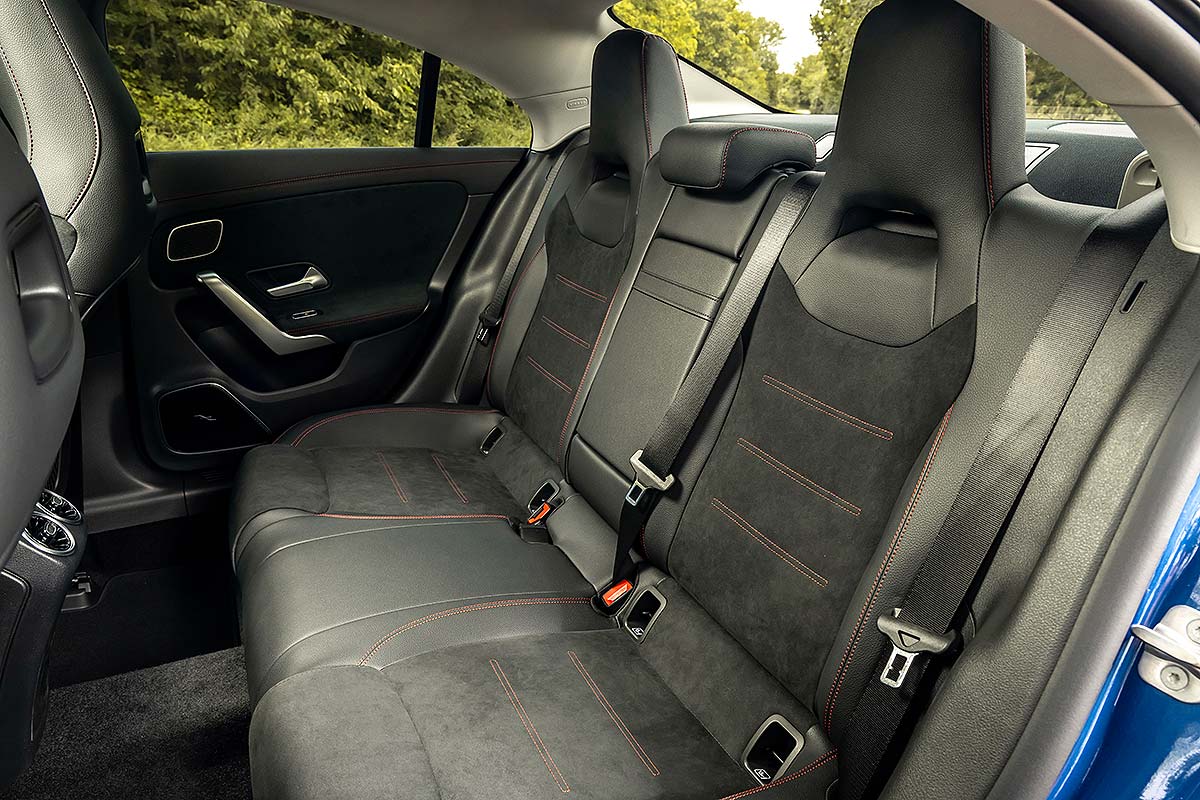
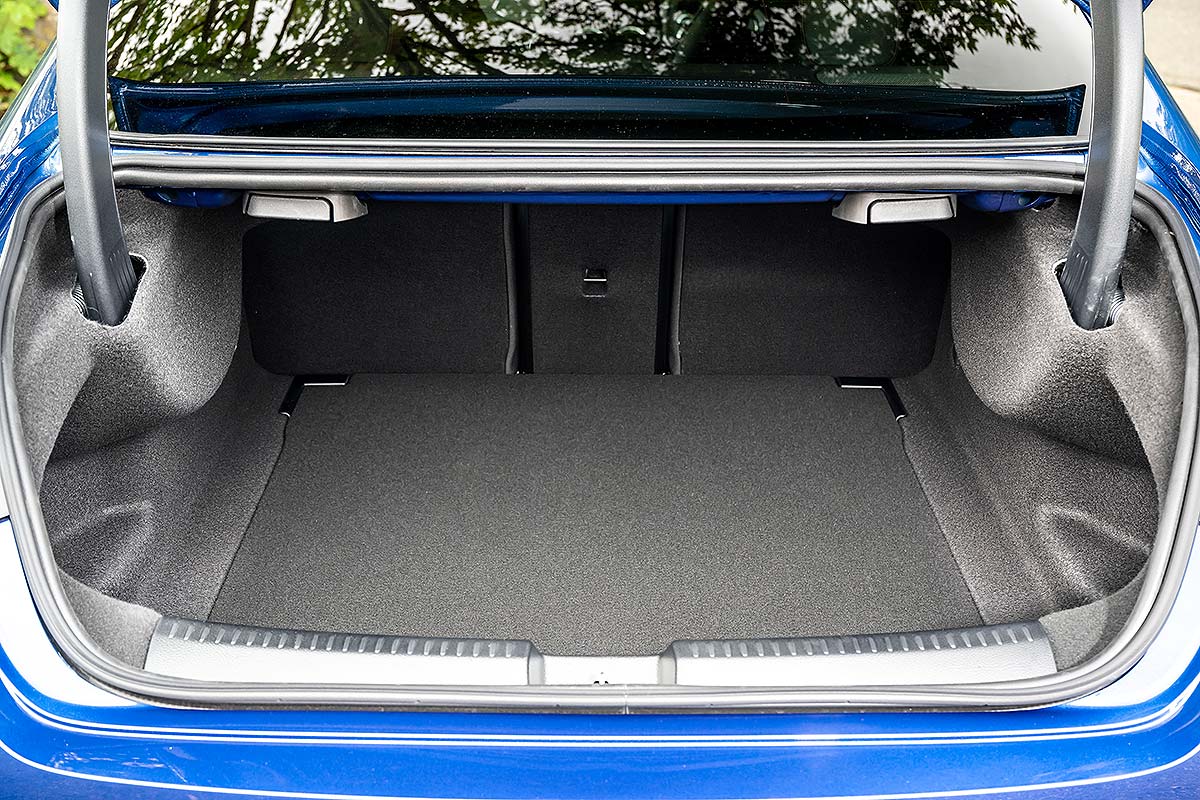
By comparison, the CLA saloon is less practical, providing 460 litres of storage space in the boot for pre-facelift cars, or 440 litres post-facelift. The boot opening is also narrower compared to the shooting brake, and there is a fraction less headroom for rear-seat passengers.
What about the differences between the CLA and the A-Class? There are a few, but not necessarily what you might expect. Logic suggests the lowered roofline of the CLA would compromise rear headroom, and you’d be right – taller rear-seat passengers in the four-door coupe will mess their hair up pretty quickly. Still, the boot in the CLA saloon is bigger than in the A-Class saloon, an unexpected bonus due to its extra body length – and the shooting brake’s boot is larger still. In fact, it swallows more luggage than a C-Class Estate, and offers extra headroom for passengers, too.
When it comes to hauling trailers and the like, with the usual caveat of ‘it varies by model year and engine choice’, the second-generation CLA can tow around 750kg unbraked and 1,600kg braked, while the sporty CLA AMG 35 can haul,800kg braked). Just be sure to check the used example you’re looking at has been fitted with a tow bar.
Mercedes also offered a range of accessories for the CLA. It wasn’t the most comprehensive in the world – family focussed brands like Kia or Skoda generally do better in this department – but there are still plenty of useful gadgets that made your used CLA even easier to live with. Roof bars, roof boxes, a boot load sill protector, child seats, a cool box, boot storage dividers, rubber floor mats and a rubber boot mat were all available direct from Mercedes.
There was even a Mercedes-branded Garmin smart watch at one point, which doesn’t exactly make the CLA more practical, but perhaps it’ll make you feel like the American astronauts of the 1960s? An Omega Speedmaster on the wrist and a gold Corvette Stingray parked in the garage – it’s basically the same thing, no?
Driving
What's it like to drive?
The Merecedes-Benz CLA drives rather well. This is the car’s second generation, and the first CLA wasn’t particularly impressive from behind the wheel. Thankfully, it’s a much more positive story this time around. Mercedes has tuned the new CLA to be a bit more dynamic and sporty than the A-Class, but retaining an element of comfort. It’s definitely not a sports saloon, but it does have a streak of zing to it, with poised handling and a reasonably pliant ride.
Both front-wheel-drive and all-wheel-drive versions were available when the CLA was new, with the latter dubbed ‘4Matic’. There are a couple of performance versions from Mercedes-AMG too, in the shape of the CLA 35 and CLA 45. They up the excitement factor, but cost considerably more. More on these in a moment.
The engines on offer changed slightly over the course of the second-gen CLA’s life, but it wasn’t the most complicated line-up Mercedes offered. Smallest of the lot were the CLA 180 and 200, both with the same 1.4-litre turbocharged petrol engine, and offering 134bhp and 161bhp respectively. The CLA 220 and 250 both share an engine too, this time a 2.0-litre turbo petrol with 187bhp and 222bhp respectively.
If you’re looking for a diesel then your choice isn’t really a choice, as there was only one: the CLA 220d with 221bhp from its 2.0-litre turbocharged engine. It has a useful 295lb ft of torque, which will give it a feeling of low-down grunt compared to some of the petrol versions.
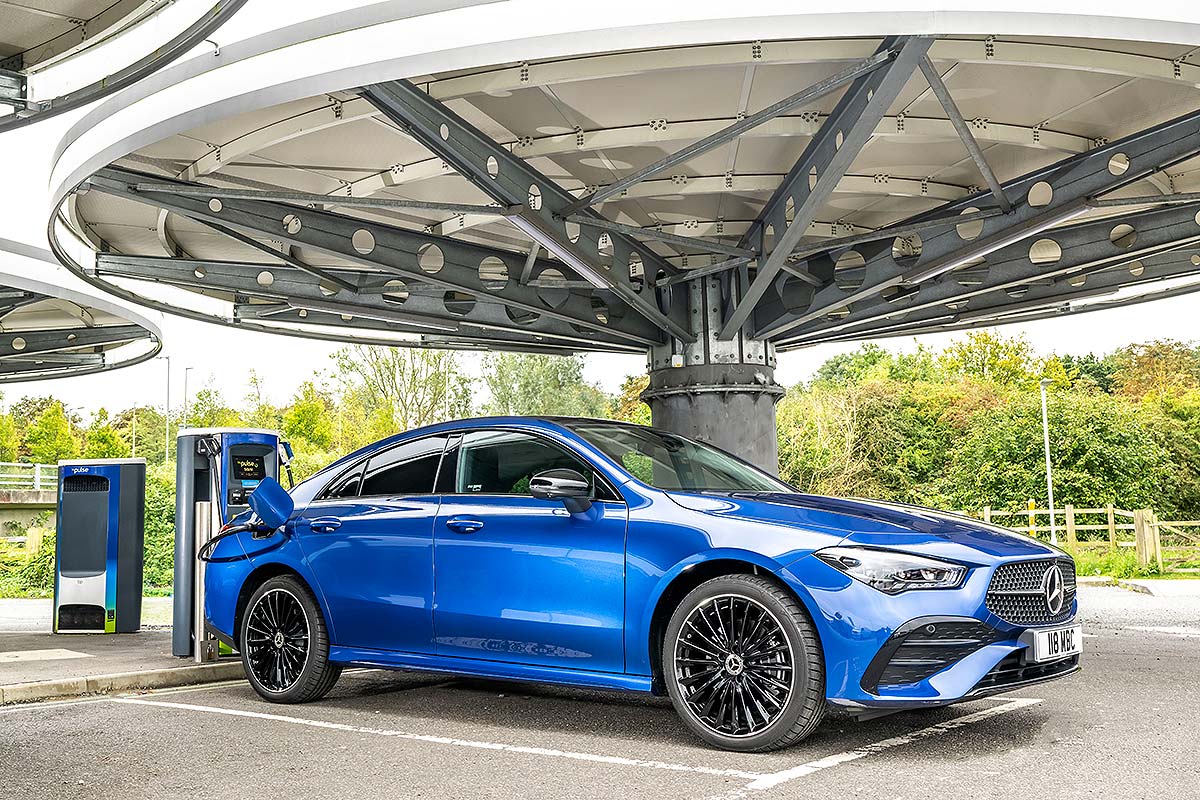
If economy is front of mind, you may be interested to know that Mercedes offered a CLA plug-in hybrid for the first time: the CLA 250e. This offered a total of 215bhp from its 1.4-litre petrol engine and electric motor combined, but the pre-facelift and post-facelift models varied slightly in that Mercedes fitted a larger battery to later models. The earlier cars have a 10.6kWh battery that is good for around 44 miles of all electric driving, while later examples used a 15.6kWh battery that could bump the range up to 52 miles.
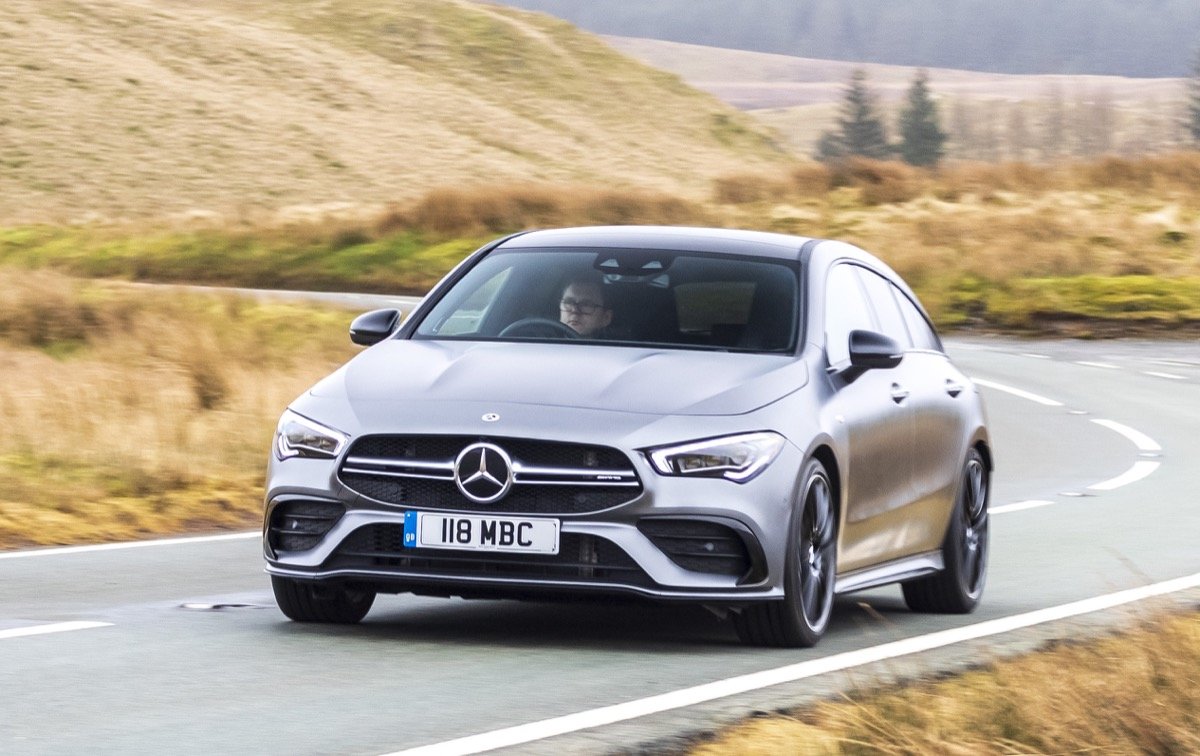
Turning to the sporty, all-wheel-drive cars from AMG, the CLA 35 has a 2.0-litre turbocharged engine with 302bhp, plus enough grunt to accelerate from 0-62mph in 4.9 seconds and reach 155mph. The CLA 45 S makes 415bhp from the same engine, allowing it to hit 62mph in 4.0 seconds exactly and nudge 168mph flat-out. The latter remains the more expensive of the two on the used market, and it’s worth pointing out that pre-facelift 35s had a seven-speed automatic while the 45 S had an eight-speed – but then post-facelift both were given the same eight-speed transmission. Whichever one you go for, however, it will feel devastatingly quick on any UK road.
All non-AMG petrol models were sold with a seven-speed automatic gearbox (there was never a manual version in the UK) and the diesel always had an eight-speed auto. But a catch-all for petrol doesn’t quite work, as the 250e hybrid used the eight-speed auto as well. Again, you need to pay attention to the model year and the spec sheet to make sure if you have a seven-speed or an eight-speed with your AMG CLA 35.
Tech and equipment
Technology, equipment & infotainment
Trim levels in the standard CLA range start higher than in the A-Class, reflecting the CLA’s more premium positioning in the Mercedes-Benz product line. So, your choices are three variations of the sporty AMG spoc: AMG Line, AMG Line Premium and AMG Line Premium Plus.
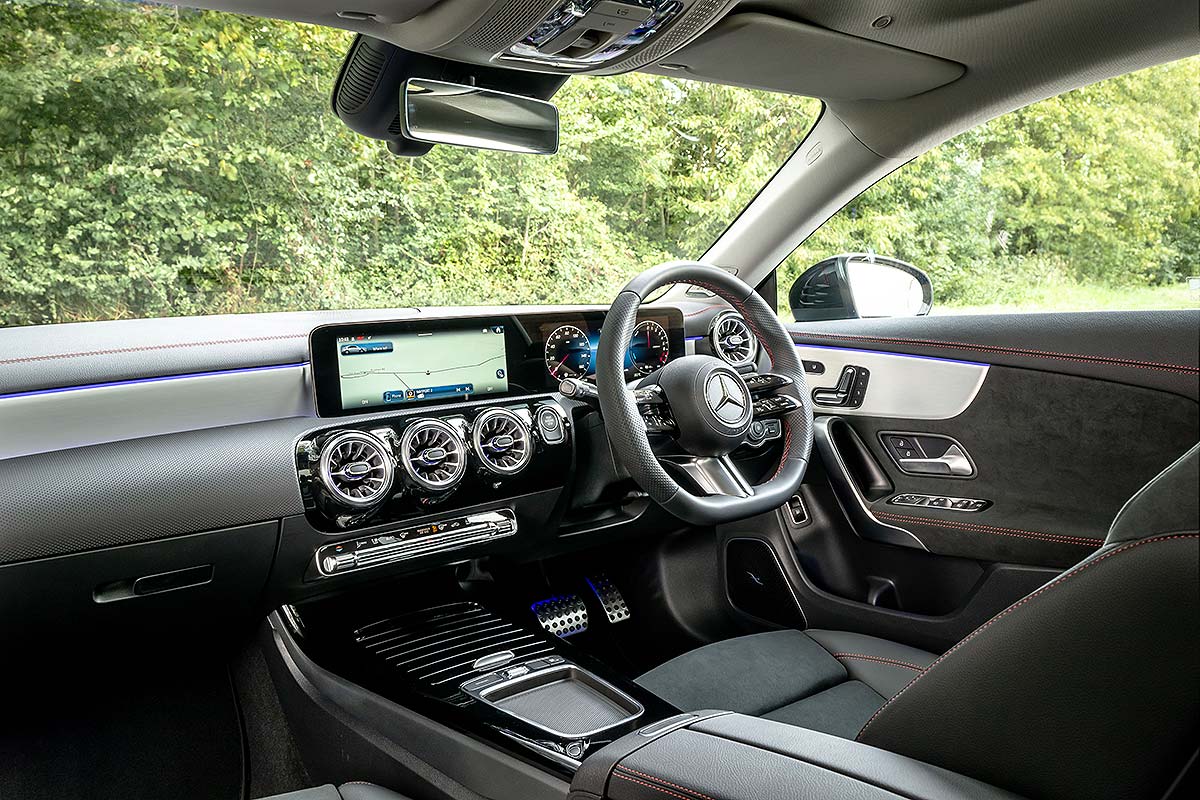
As a general rule, AMG Line gets you cruise control, a choice of driving modes, engine stop-start, keyless go, LED headlights and tail lights, dual zone air-conditioning, heated seats, a 180-degree reversing camera, lane-keep assist, Bluetooth, a DAB radio, ‘Hey Mercedes’ voice control, Apple CarPlay and Android Auto, plus wireless phone charging.
AMG Line Premium added illuminated door sills, a choice of 64 interior ambient lighting colours, rear-seat armrests, keyless entry and a nicer 225W sound system. Above that, AMG Line Premium Plus added multibeam LED headlights, a panoramic sunroof, electric front seats with a memory function, a system called Traffic Sign Assist and a 360-degree parking camera.
Mercedes and plenty of other brands like to sprinkle in new trim levels from time to time, making buying a used car that little bit more difficult, but by some miracle that didn’t happen over the course of the second-gen CLA’s life. That being said, what was included in the above trim levels, and what additional packages were on offer as cost options, did vary slightly. Furthermore, a lower-level trim did emerge for post-facelift cars, called Sport Executive. This had air-conditioning but it was only single-zone, the floor mats were plain, there were more basic seat and steering wheel coverings, and the wireless phone charger was removed.
One big difference between pre- and post-facelift cars can be seen in their screens. The central infotainment screen measured 10.25 inches at all times, whereas the instrument screen ahead of the driver was 7.0 inches in AMG Line models and 10.25 inches in AMG Line Premium and AMG Line Premium Plus cars.
Eighteen-inch wheels were standard across the board, including on AMG models, though these featured specific AMG wheel designs. A cost option was for 19-inch rims on the AMG cars, so you know someone has spent a few extra pennies if you spot these on a used example.
Running costs
Mercedes-Benz CLA running costs
When it comes to fuel economy and emissions, the CLA 220d should manage 51-57mpg (WLTP) according to official fuel economy ratings, depending on the model year and body style. That means it’s the only non-hybrid model with economy figures into the 50s.
As for petrol cars, the smaller engined 180 and 200 will achieve somewhere in the region of 44-46mpg, while the 2.0-litre 220 and 250 will deliver approximately 40mpg. The AMG cars will manage 32-36mpg at a push, but drive enthusiastically and it’ll be much lower than that.
The plug-in hybrid 250e is the economy champion, on paper at least. The best-case for the early, smaller battery car is a quoted 256mpg, while the later car with a larger battery is able to deliver around 310mpg. You’ll almost certainly never see this in the real world, unless all your journeys are short and you recharge every time, but you might see an easy 100mpg – or not use the petrol engine at all. Just ensure you charge when possible, otherwise you’ll be carrying around an empty, pointless battery and burning more fuel thanks to additional weight from the motor and battery.
Mercedes-Benz cars have flexible service intervals, depending on how they are used, but the car will flag up when a service is due. If you don’t cover many miles, you may not get a service reminder for up to two years. However, we’d advise getting your used CLA serviced every year, a principle that should be applied to every car. Servicing a CLA won’t be cheap, but Mercedes offers fixed-price deals which can still apply to used cars. Alternatively there are many brilliant independent Mercedes specialists who can take care of servicing and any repairs you need.
Mercedes-Benz CLA reliability
There’s no way of sugar-coating this: Mercedes does not have a good reputation for reliability. As a brand, it regularly sits towards the bottom of independent studies, and has done for some years. In the latest What Car? Reliability Survey, for example, Mercedes ranked joint 22nd alongside Audi out of 30 car brands. Arch-rival BMW was up in sixth place.
The latest CLA is too new to have any meaningful data about its reliability, but there’s some positive news that the A-Class, upon which this car is based, appears to be faring OK in customer surveys. The What Car? Reliability Survey ranked the A-Class 16th out of 30 cars in the family car class. We hope the CLA is, at worst, similarly middle-of-the-road as time goes on.
Should anything go wrong with your CLA, newer used cars may still be covered by their three-year, unlimited-mileage manufacturer warranty. This is the same as offered by Audi and BMW.

What owners say
Excellent car had all the extras I wanted and at a great price
25 September 2025Good value for the car and good features aswell. I would compare to audi.
7 July 2026Initially no Sat Nav but now installed, would have expected as standard in a merc
13 January 2021What owners say
Excellent car had all the extras I wanted and at a great price
25 September 2025Good value for the car and good features aswell. I would compare to audi.
7 July 2026Initially no Sat Nav but now installed, would have expected as standard in a merc
13 January 2021I have had a number of E & C Class Estate cars in the past and was looking for a more compact version. The CLA Shooting Break fits the bill !!!
31 March 2024Three things to know
- The CLA Shooting Brake has more space in the back than the larger C-Class Estate from the same period. However, this does depend upon how you configure it. With its rear seats in place, the CLA has 505 litres of luggage capacity, versus 440 litres in the C-Class. However, fold its rear seats down and the C-Class wins for space, with 1,460 litres against 1,370 in the CLA Shooting Brake (and less again in AMG models).
- While Mercedes tried to make the CLA look noticeably different to an A-Class, their interiors are almost identical. That’s not necessarily a bad thing, as this cabin looks contemporary and feels well made. It’s also loaded with technology, if that floats your boat.
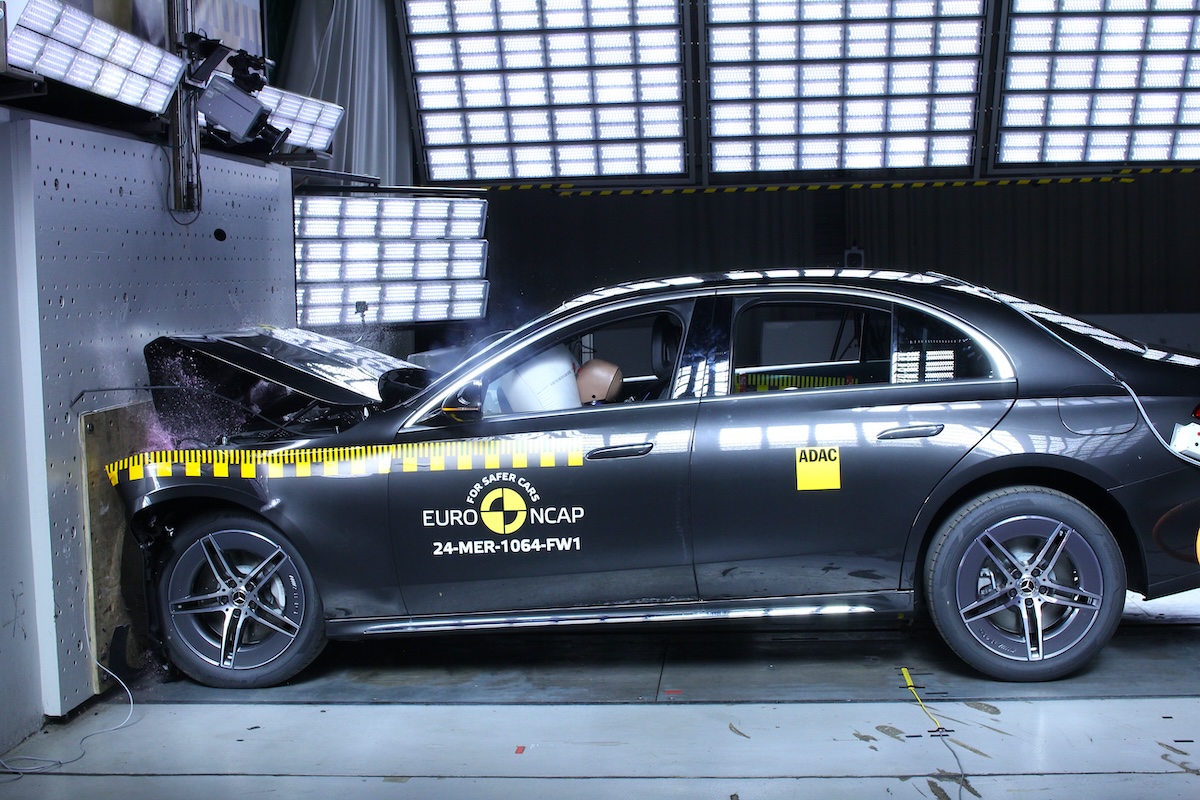
- If you’re looking at the CLA as a family car, you will be pleased to know it was awarded the maximum five stars in crash tests by the Euro NCAP safety organisation. All models come with a decent stack of safety features, including automatic emergency braking, lane-keep assist and a speed limit recognition system. If you want more, find a car with the optional Driving Assistance pack, which adds blind-spot warning and a certain level of autonomous driving capability. Various features work together so that, on motorways, the car will accelerate, slow down and steer for you. You need to keep your hands on the wheel at all times, though.
Which one to buy
- If you want bonkers speed: The Mercedes-AMG CLA 45 S is a monster of a machine, with 415bhp and a 0-62mph time of 4.0 seconds flat. That’s very fast indeed, and with all-wheel drive as standard it’ll rocket off the line in a manner guaranteed to raise a smile. Or a grimace, depending on your constitution.
- If you want maximum practicality: The Shooting Brake version of the CLA is much more practical than the four-door Coupe, and gives you back some of the rear headroom lost compared with the A-Class. It has a big boot too, even if the loading aperture is a bit narrow. Plus, it’s still got that rakish CLA style.
- If you regularly do long journeys: While there is a good choice of petrol engines, we’d still opt for the superior fuel economy of a diesel for regular motorway trips. It’s a strong engine and the eight-speed gearbox is marginally better than the seven-speeder found in petrol cars.
- If you want to watch the cash: There are four different trim levels in the non-AMG CLA range. For our money, AMG Line spec has all the features you need, including 18-inch alloy wheels, a 10.25-inch touchscreen infotainment system and wireless charging for your smartphone.
- If you spend a lot of time in towns or cities: The CLA 250e plug-in hybrid will whisk you around in zero-emissions silence for 40 miles or more, so it’s absolutely worth considering if a lot of your day-to-day driving is done at low speeds over short distances. Post-facelift cars have a larger battery, bumping their range up from 44 to 52 miles.


Pricing trends
Starting RRP
£26,192
Current avg. market price
£20,622
Trending down by 3.0% this month
April 2026 - October 2026
More on the mk2 Mercedes-Benz CLA (2019 - 2024)

Compare 2024 Mercedes-Benz CLA Trims
The 2024 Mercedes-Benz CLA offers a blend of luxury and performance, with a range of trims to suit various budgets and preferences.
- Starting at £23,838
- Most Popular: Cla 180 Amg Line Premium 4dr Tip Auto
Trim Overview
Prices updated weekly from CarGurus listings.
| Cla 180 Amg Line Executive 4dr Tip Auto | Cla 200 Amg Line Executive 4dr Tip Auto | Cla 180 Amg Line Premium 4dr Tip Auto (Most Popular) | Cla 200 Amg Line Premium 4dr Tip Auto | Cla 180 Amg Line Premium Plus 4dr Tip Auto | Cla 200 Amg Line Premium Plus 4dr Tip Auto | Cla 250e Amg Line Premium 4dr Tip Auto | Cla 220d Amg Line Premium Plus 4dr Tip Auto | |
|---|---|---|---|---|---|---|---|---|
| Starting MSRP | £37,035 | £38,535 | £39,225 | £40,725 | £42,570 | £44,070 | £47,015 | £47,290 |
| Avg. Market Price | £23,838 | £24,560 | £24,642 | £24,891 | £28,595 | £30,069 | £26,140 | £27,982 |
| Positioning | Best value | Standard | Standard | Standard | Standard | Standard | Standard | Fully loaded |
| Standout Features | Heated Seats, Navigation System | Apple CarPlay, Heated Seats | Navigation System, Heated Seats | Navigation System, Keyless Entry/Start system | Sunroof/Moonroof, Heated Seats | Panoramic Roof, Heated Seats | Apple CarPlay, Heated Seats | Heated Seats, Panoramic Roof |
| Drivetrain | FWD | FWD | FWD | FWD | FWD | FWD | FWD | FWD |
| Listings Available | 40 | 50 | 74 | 43 | 45 | 31 | 67 | 33 |
Quick Compare Table
Listing prices sourced from CarGurus — updated weekly. OEM specs from manufacturer data.
| Cla 180 Amg Line Executive 4dr Tip Auto | Cla 200 Amg Line Executive 4dr Tip Auto | Cla 180 Amg Line Premium 4dr Tip Auto | Cla 200 Amg Line Premium 4dr Tip Auto | Cla 180 Amg Line Premium Plus 4dr Tip Auto | Cla 200 Amg Line Premium Plus 4dr Tip Auto | Cla 250e Amg Line Premium 4dr Tip Auto | Cla 220d Amg Line Premium Plus 4dr Tip Auto | |
|---|---|---|---|---|---|---|---|---|
| AI Summary | Best value for luxury seekers | Solid features at a competitive price | Popular choice with premium features | Well-equipped with added tech | Luxurious features with a sunroof | Premium features with a panoramic roof | Efficient with advanced tech | Fully loaded for ultimate comfort |
| Avg. Market Price | £23,838 | £24,560 | £24,642 | £24,891 | £28,595 | £30,069 | £26,140 | £27,982 |
| MSRP | £37,035 | £38,535 | £39,225 | £40,725 | £42,570 | £44,070 | £47,015 | £47,290 |
| Engine | 1332.0cc 136 hp I4 | 1332.0cc 163 hp I4 | 1332.0cc 136 hp I4 | 1332.0cc 163 hp I4 | 1332.0cc 136 hp I4 | 1332.0cc 163 hp I4 | 1332.0cc 218 hp I4 | 1950.0cc 190 hp I4 |
| Drivetrain | FWD | FWD | FWD | FWD | FWD | FWD | FWD | FWD |
| Heated Seats | ✓ | ✓ | ✓ | ✓ | ✓ | ✓ | ✓ | ✓ |
| Navigation System | ✓ | ✓ | ✓ | ✓ | ✓ | ✓ | ✓ | ✓ |
| Privacy glass/Tinted windows | ✓ | ✓ | ✓ | ✓ | ✓ | ✓ | ✓ | ✓ |
| Apple CarPlay | ✓ | ✓ | ✓ | ✓ | ✓ | ✓ | ✓ | ✓ |
| Cruise Control | ✓ | ✓ | ✓ | ✓ | — | ✓ | ✓ | ✓ |
| Android Auto | ✓ | ✓ | ✓ | ✓ | — | ✓ | ✓ | — |
| isofix | ✓ | — | ✓ | ✓ | ✓ | — | — | — |
| Bluetooth | ✓ | ✓ | ✓ | ✓ | ✓ | ✓ | ✓ | ✓ |
| Climate control | ✓ | ✓ | ✓ | ✓ | ✓ | ✓ | ✓ | ✓ |
| Air Conditioning | ✓ | ✓ | ✓ | ✓ | — | ✓ | ✓ | — |
| DAB Radio | ✓ | ✓ | ✓ | ✓ | ✓ | — | ✓ | ✓ |
| Backup Camera | — | ✓ | — | — | — | — | — | — |
| Keyless Entry/Start system | — | — | — | ✓ | ✓ | — | — | ✓ |
| Leather Seats | — | — | — | — | — | — | ✓ | — |
| Active Listings | 40 | 50 | 74 | 43 | 45 | 31 | 67 | 33 |
Missing data displayed as "—".
Trim Deep Dives
Cla 180 Amg Line Executive 4dr Tip Auto — "Who It's For"
The Cla 180 Amg Line Executive is the pick for shoppers who want luxury features without the higher price tag. It's the most affordable trim in the lineup.
- Avg. market price: £23,838 (updated weekly)
- Inventory: 40 listings — lower availability; may limit negotiating room
- View Cla 180 Amg Line Executive listings
Cla 200 Amg Line Executive 4dr Tip Auto — "Who It's For"
The Cla 200 Amg Line Executive is ideal for those seeking a balance of features and price, offering a bit more power without breaking the bank.
- Avg. market price: £24,560 (updated weekly)
- Inventory: 50 listings — lower availability; may limit negotiating room
- View Cla 200 Amg Line Executive listings
Cla 180 Amg Line Premium 4dr Tip Auto — "Who It's For"
The Cla 180 Amg Line Premium is perfect for buyers wanting a well-equipped luxury vehicle with popular features at a reasonable price.
- Avg. market price: £24,642 (updated weekly)
- Inventory: 74 listings — lower availability; may limit negotiating room
- View Cla 180 Amg Line Premium listings
Cla 200 Amg Line Premium 4dr Tip Auto — "Who It's For"
The Cla 200 Amg Line Premium is suited for those who desire additional tech features and a more powerful engine without a significant price jump.
- Avg. market price: £24,891 (updated weekly)
- Inventory: 43 listings — lower availability; may limit negotiating room
- View Cla 200 Amg Line Premium listings
Cla 180 Amg Line Premium Plus 4dr Tip Auto — "Who It's For"
The Cla 180 Amg Line Premium Plus is for shoppers who want a touch of luxury with features like a sunroof and premium finishes.
- Avg. market price: £28,595 (updated weekly)
- Inventory: 45 listings — lower availability; may limit negotiating room
- View Cla 180 Amg Line Premium Plus listings
Cla 200 Amg Line Premium Plus 4dr Tip Auto — "Who It's For"
The Cla 200 Amg Line Premium Plus is ideal for those wanting a fully loaded experience with advanced tech and comfort features.
- Avg. market price: £30,069 (updated weekly)
- Inventory: 31 listings — lower availability; may limit negotiating room
- View Cla 200 Amg Line Premium Plus listings
Cla 250e Amg Line Premium 4dr Tip Auto — "Who It's For"
The Cla 250e Amg Line Premium is for eco-conscious buyers looking for a blend of luxury and efficiency in a stylish package.
- Avg. market price: £26,140 (updated weekly)
- Inventory: 67 listings — lower availability; may limit negotiating room
- View Cla 250e Amg Line Premium listings
Cla 220d Amg Line Premium Plus 4dr Tip Auto — "Who It's For"
The Cla 220d Amg Line Premium Plus is perfect for those who want a fully loaded luxury vehicle with a powerful diesel engine.
- Avg. market price: £27,982 (updated weekly)
- Inventory: 33 listings — lower availability; may limit negotiating room
- View Cla 220d Amg Line Premium Plus listings
Trim Recommendations
Most Popular — Cla 180 Amg Line Premium 4dr Tip Auto
With 74 active listings, the Cla 180 Amg Line Premium is the clear volume leader in the lineup.
Browse Cla 180 Amg Line Premium listings
Best Budget Option — Cla 180 Amg Line Executive 4dr Tip Auto
At £23,838 avg market price — below the lineup median of £25,515 — it's the most accessible entry point.
Browse Cla 180 Amg Line Executive listings
These recommendations are based on CarGurus' proprietary market data from October 22, 2026, CarGurus experts' opinions, and generative AI.

