The cost of running a vehicle has rocketed in recent years, and that goes for electric cars as well as petrol and diesel cars. As of January 2025, the cost per kWh of British domestic electricity has held steady at around 24.9p for a kilowatt hour (kWh), and has remained at a similar level ever since (this article was last updated in April 2026), but that’s still much higher than the 19p it would have cost you in 2021.
Even with that price jump, most EVs that are charged at home will still cost around half (or less) of what it costs to fuel an average diesel or petrol car: you’re looking at around 7-9p per mile for the average plug-in battery electric vehicle (or BEV), as opposed to roughly 15-20p per mile for most combustion-engined cars. However, if you’re making regular use of public rapid chargers, which are much, much more expensive, then you could well be paying just as much to fuel your EV as you would with a combustion-engined car, maybe even more.
That’s why it’s important to maximise the return you get from the fuel you put in your car, and that means buying one that’s as efficient as possible. In a combustion-engined car, you'd do this by choosing a car with a high miles-per-gallon (mpg) figure, but with an electric car, it’s a high miles-per-kilowatt-hour (m/kWh) that you want.
The caveat here is that, while most electric car manufacturers publish figures for the range (measured in miles) or the battery capacity (measured in kWh) of their cars, many don’t always publish an official WLTP m/kWh efficiency figure.
So the question is, what are the most efficient electric vehicles? We’ve researched figures from evdatabase.org, designed to give you a real-world idea of an electric car’s range and efficiency abilities, and filtered them by efficiency to bring you what that website calculates to be the 10 most efficient electric cars available today on the new car market (well, 11 as it turns out, because there was a dead-heat at the bottom end of the table). We’ve then used those figures to calculate a cost-per-mile figure, so that you know precisely what costs to expect. As you’ll see, the cars on this list aren’t necessarily the ones with the greatest battery size nor the ones that can go the longest distances between charges - you can find a list of those here - but they are the ones that give you the biggest return on the amount of electricity you put in.
The Most Efficient Electric Cars in 2026
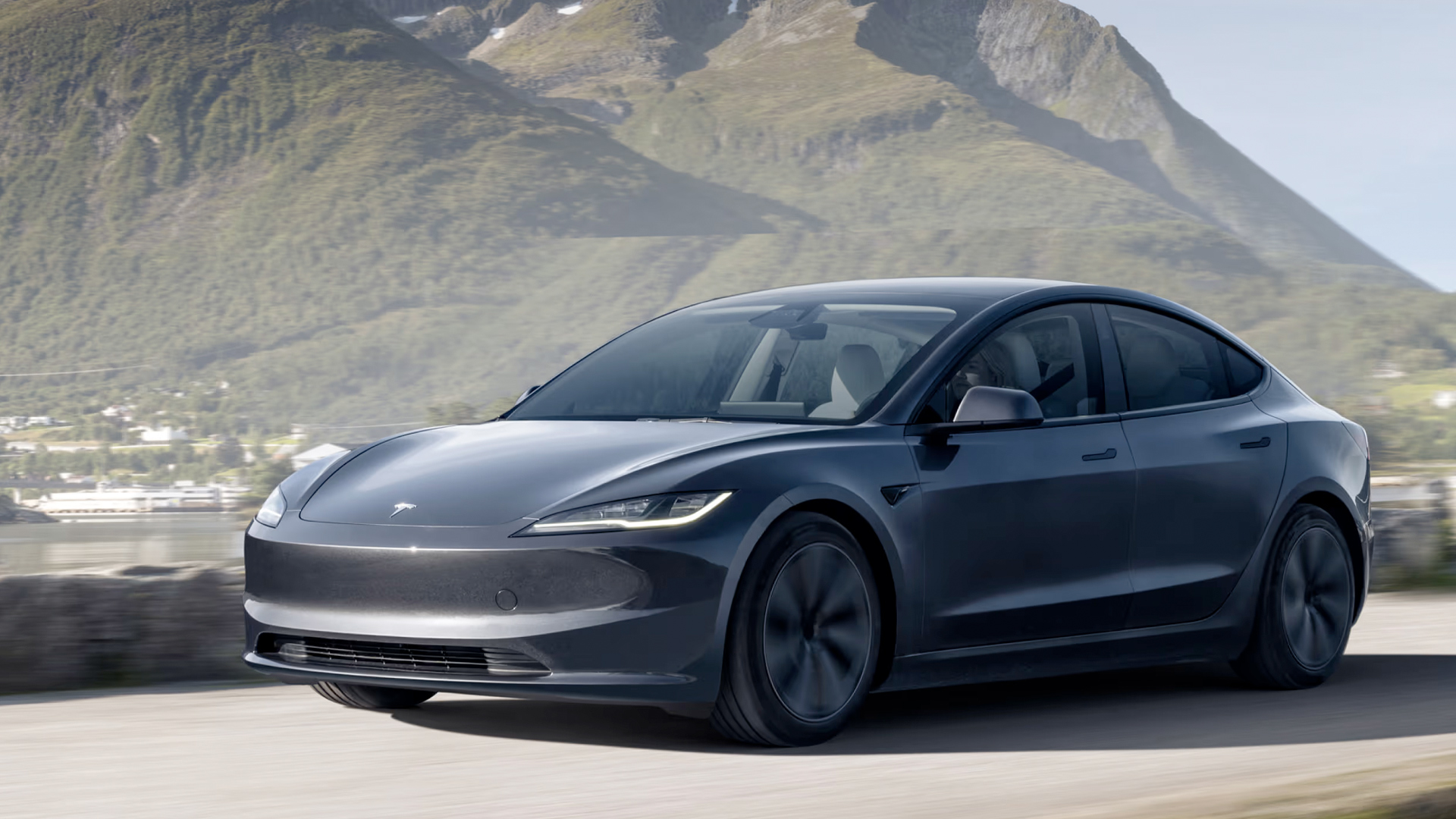
1. Tesla Model 3 RWD Highland
EVDB consumption: 4.59m/kWh
EVDB range: 275 miles
Cost per mile[^1]: 5.42p
The Tesla Model 3 has long been the poster-child for the mainstream EV movement: perhaps it was the car’s Model S and Model X stablemates that made electric motoring cool and desirable, but it was the Model 3 (along with the Tesla Model Y) that made that desirability affordable. And beneath all that hype lies a car of real substance. It’s enjoyable to drive, it goes like stink, and it has the kind of gadgetry - not least in the infotainment department - that will have tech-fans coming back for more time after time. The 60kWh Model 3 in question may not have the longest EV range in the Tesla line-up, but it’s worth noting that even the Long Range Dual Motor AWD version is still efficient enough to beat the second-placed car on our list, with a figure of 4.31m/kWh, and that version has a 340 miles of range, according to evdatabase.org.
Tesla Model 3 Review
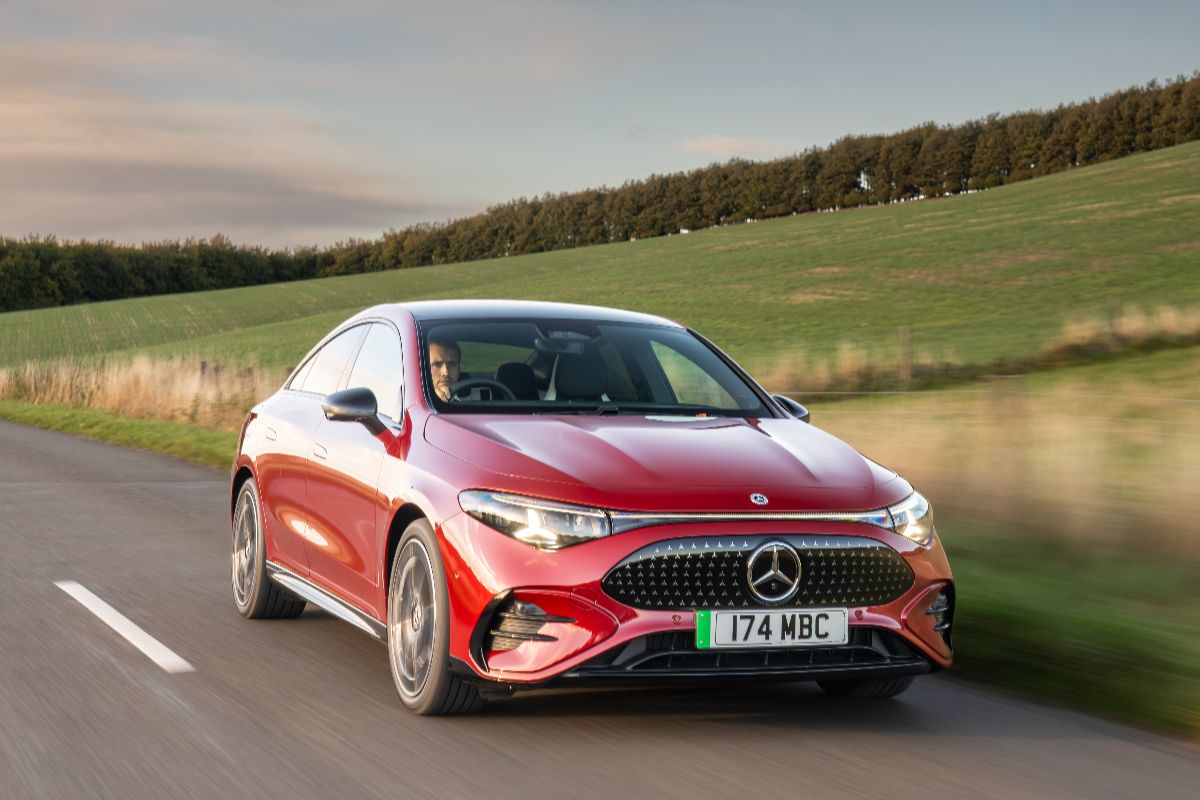
=2. Mercedes-Benz CLA 250+
EVDB consumption: 4.24m/kWh
EVDB range: 360 miles
Cost per mile[^1]: 5.87p
Technically, the name of the car we’re talking about here isn’t CLA. It’s actually ‘CLA with EQ Technology’. However, we’ve taken the liberty of simplifying it for you to save eveyone’s time. You’re welcome. However, the highfalutin moniker doesn’t undermine what is easily one of the best electric saloons on sale today. It’s slippery shape is designed specifically to maximise efficiency, as is the car’s innovative two-speed gearbox, a rarity in electric cars. The CLA is lovely to drive, delivering strong performance and a brilliant balance between ride comfort and handling sharpness. It’s also packed with tech and not as pricey as you might think. Sure, it’s not the most practical car of its type, with limited rear headroom and a narrow boot opening, but it has plenty going for it besides.
Mercedes-Benz CLA Review
Search for Mercedes-Benz CLA
See all
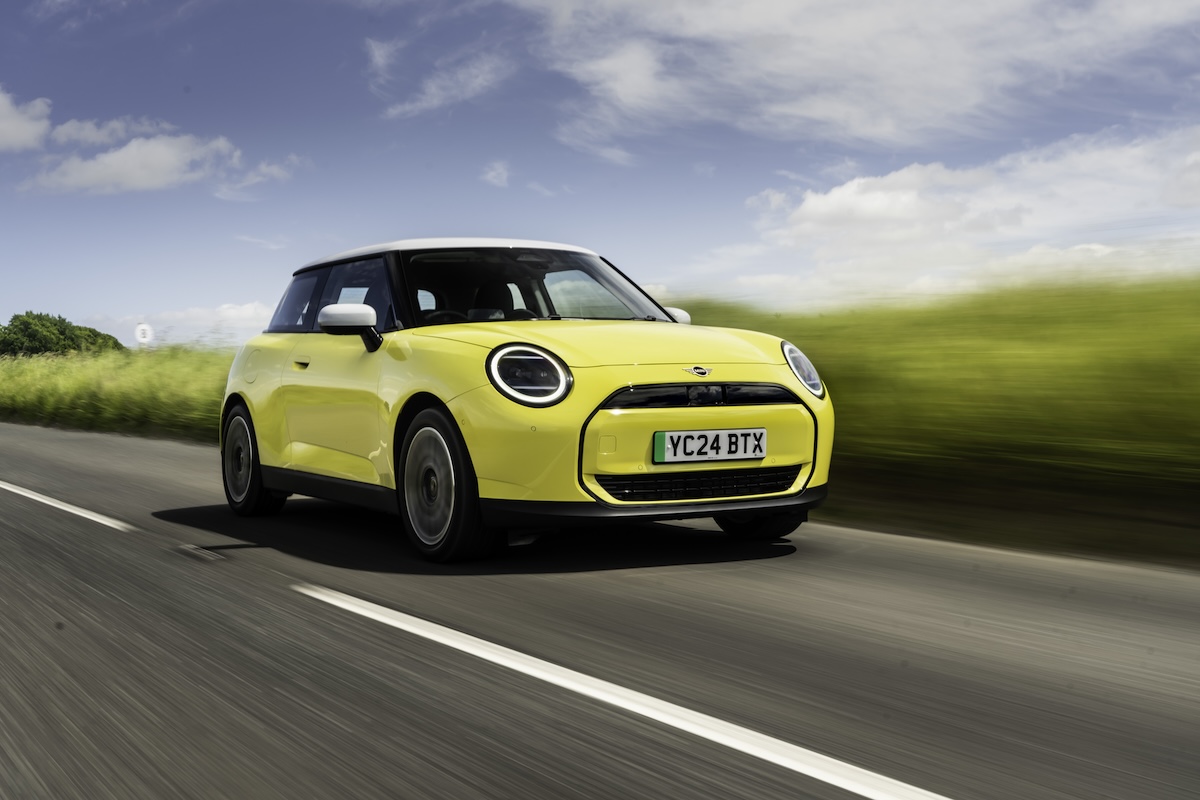
=2. MINI Cooper Electric E
EVDB consumption: 4.24m/kWh
EVDB range: 155 miles
Cost per mile[^1]: 5.87p
MINI’s second-generation electric Hatch came along in 2024, and is capable of delivering a far more usable range than the car it replaced, which was very limited in that regard. For all that, though, this is still one of the shorter-range electric cars due to its small battery. But a small battery pays dividends in terms of EV efficiency, because it makes the car much lighter, which has allowed the MINI to claim third spot in this list, making it one of the cheapest new EVs to run. That isn’t the only thing the MINI has going for it, though; this is one of the most engaging and entertaining EVs to drive, with the sort of light, agile handling we’ve come to expect from anything with a MINI badge. And inside, while nowhere near as roomy as a Volkswagen ID.3, it’s still beautifully finished. If you live in London, then, or any other big city for that matter, the MINI Electric is a really strong option.
MINI Cooper Electric Review
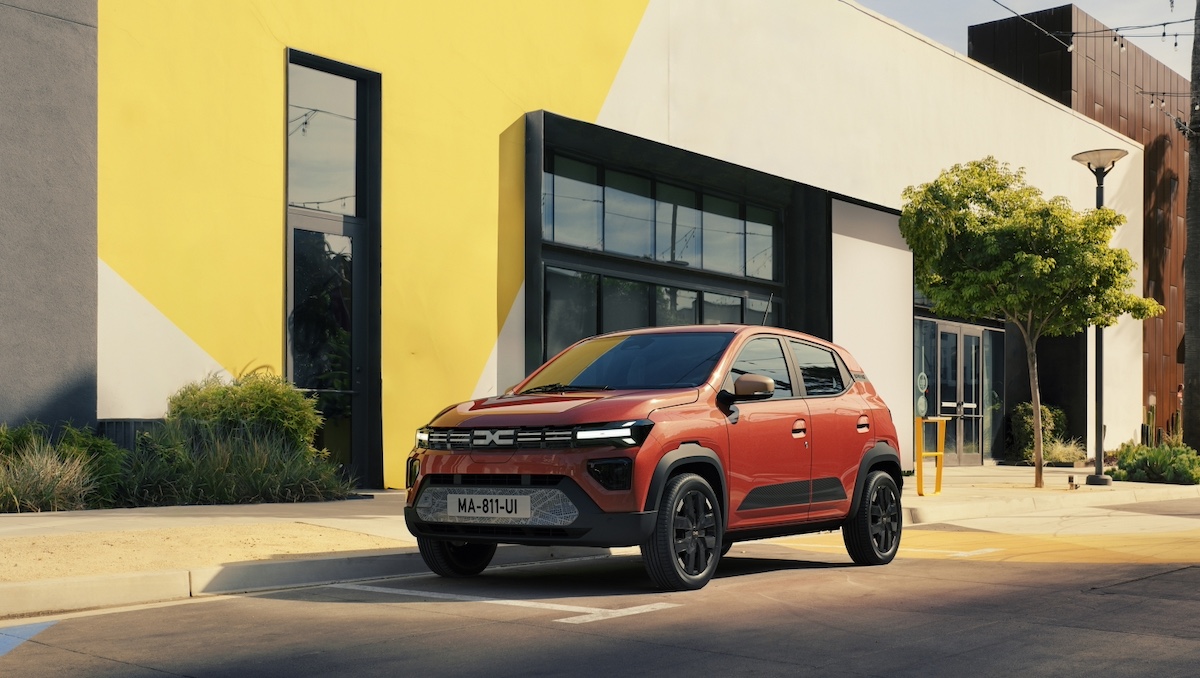
4. Dacia Spring Electric 70
EVDB consumption: 4.17m/kWh
EVDB range: 100 miles
Cost per mile[^1]: 5.97p
The Dacia Spring is the Romanian firm’s miniature electric car, which is cheap to buy (relatively speaking, at least) and cheap to run, too. Updates in 2026 gave it more power and range, both of which it badly needed, so it’s not as compromised a car as it was when it first arrived in the UK in 2024. The Spring looks appealing in a variety of other ways, too. It may be small, occupying about the same amount of space on the road as a city car such as the Hyundai i10, but it has a big-car attitude, with convincing SUV styling that’s as funky as it is chunky. Like with most Dacias, though, the biggest draw is the price: it’s one of the UK’s cheapest new cars, electric or otherwise.
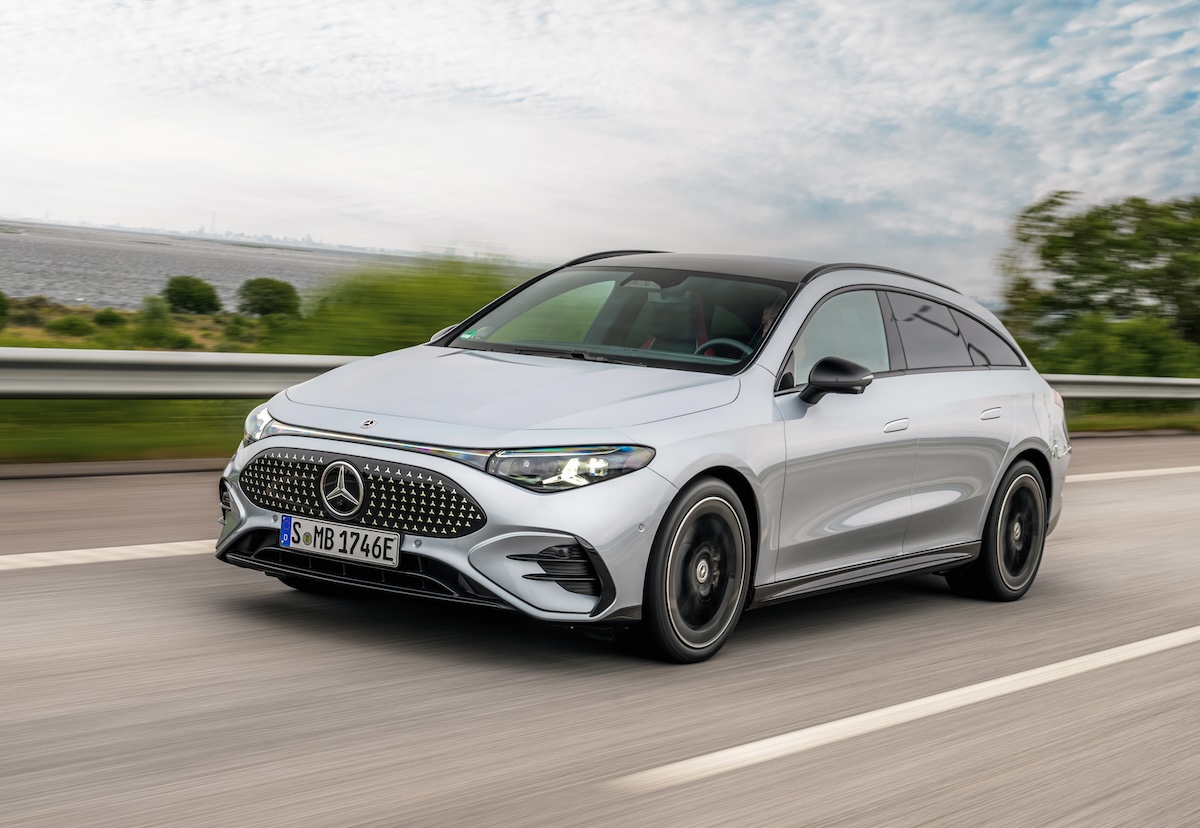
=5. Mercedes-Benz CLA 250+ Shooting Brake
EVDB consumption: 4.12m/kWh
EVDB range: 350 miles
Cost per mile[^1]: 6.04p
When we talked about the regular coupe-saloon version of the Mercedes CLA a little earlier, we cited its limited practicality as one of its few drawbacks. Well, here’s the answer. The CLA Shooting Brake is the estate version of that car, bringing more rear headroom, a bigger boot (455 litres rather than the 405 litres of the saloon) and, crucially, a much larger hatchback boot opening that allows you to utilise the cargo space far more effectively. The Shooting Brake’s not-quite-so-slippery shape means you have to safrifice a smidgen in the way of efficiency, but it’s still good enough on that score to comfortably make our list. We haven’t driven the car yet, but we imagine that it should be just as good as the regular CLA, and it’ll have most of the same features and benefits, too.
Mercedes-Benz CLA Review
Search for Mercedes-Benz CLA
See all
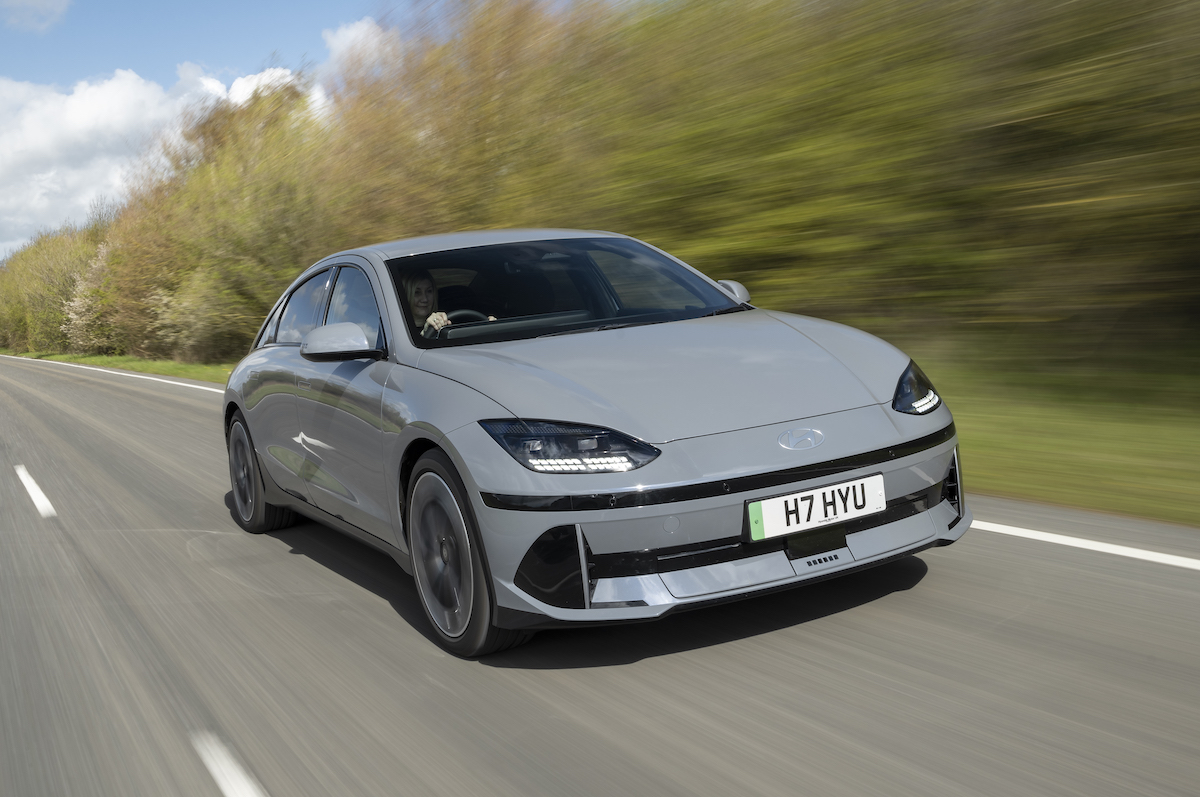
=5. Hyundai Ioniq 6 Long Range 2WD
EVDB consumption: 4.12m/kWh
EVDB range: 305 miles
Cost per mile[^1]: 6.04p
Few car companies have been as proactive in the mainstream EV market in the last few years as Hyundai, and not only has the Korean firm come up with a broad choice of models, but they’ve also been some of the most eye-catching and interesting offerings on the market. And the Ioniq 6 is perhaps the most interesting of the lot. It uses the same platform and running gear underneath as the smaller, boxier Ioniq 5 - and the Kia EV6, for that matter - but its aerodynamic ‘Streamliner’ shape helps it shine on the efficiency front, as its inclusion here shows. The ride is rather firm and the interior is short on quality in a few places, but the Ioniq 6 is much roomier than it looks and comes packed with tech.
Hyundai Ioniq 6 Review
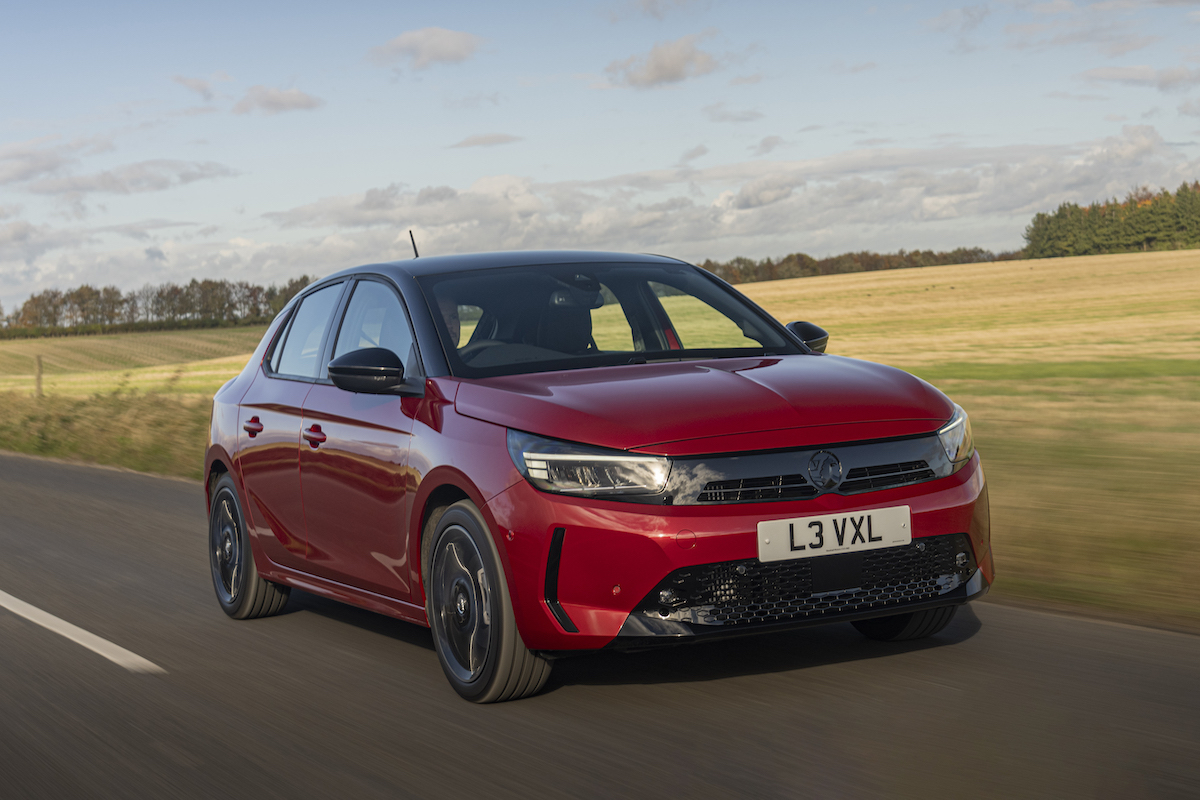
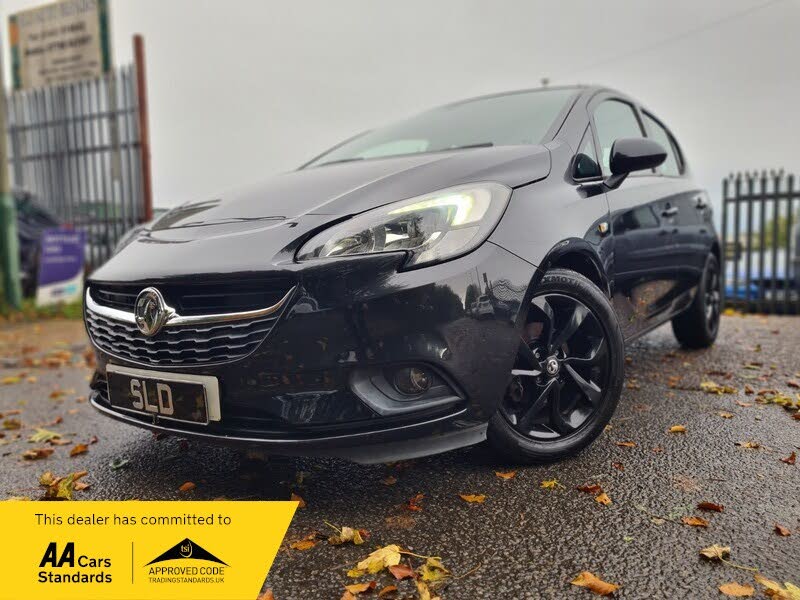
=7. Vauxhall Corsa Electric
EVDB consumption: 4.03m/kWh
EVDB range: 205 miles
Cost per mile[^1]: 6.17p
Vauxhall has offered an electric version of the Corsa for some years now, but in 2023, the car was facelifted and overhauled. This brought not only sharper looks, but also a new long-range variant featuring a new battery pack with improved cell technology, plus an extra 20 horsepower. And consistent tweaks and refinements since then have seen the car’s efficiency creep ever upwards, hence its inclusion here. Among cars of its size, this electric hatchback feels like a very grown-up car, with a comfortable ride, good refinement (especially in electric form) and a fairly soberly-styled but well-made interior. It’s not the roomiest car of its type, nor the most enjoyable to drive, but otherwise, it is a very good all-rounder.
Vauxhall Corsa Review
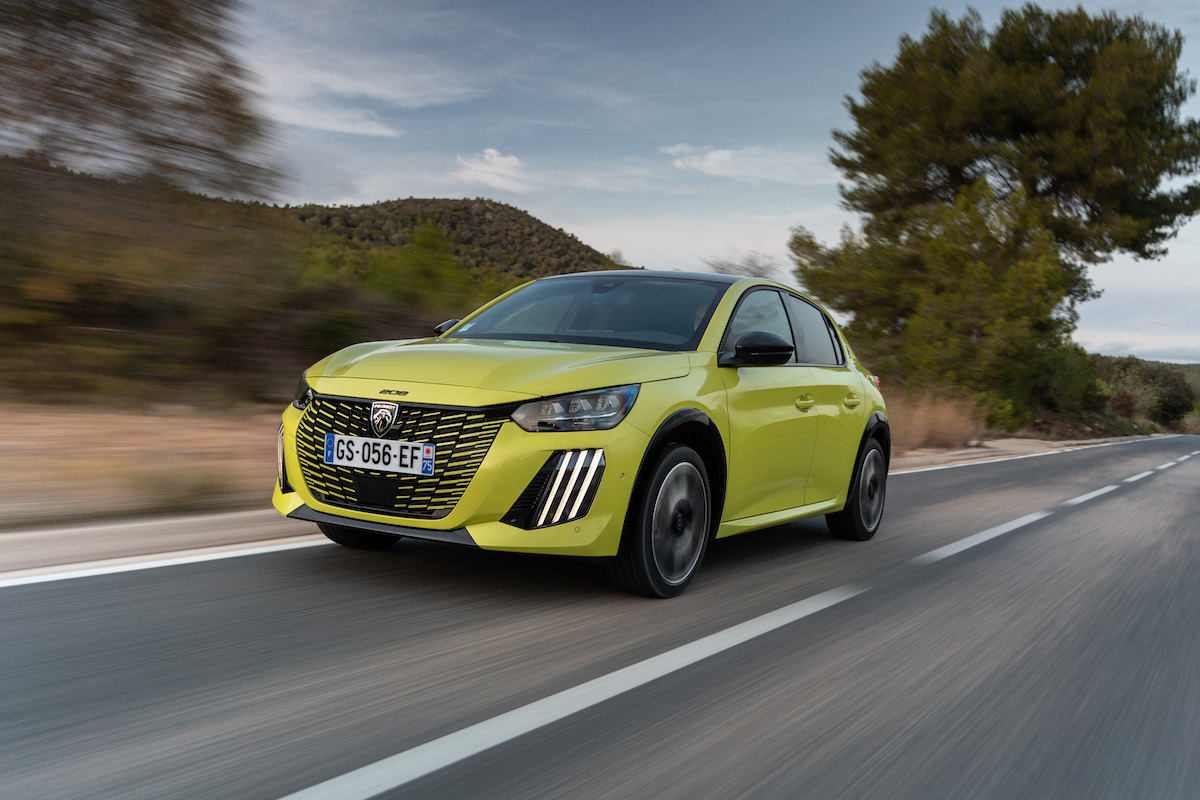
=7. Peugeot e-208
EVDB consumption: 4.03m/kWh
EVDB range: 205 miles
Cost per mile[^1]: 6.17p
Remember the consistent improvements in battery tech bestowed upon the Vauxhall Corsa Electric we were talking about just now? Well, as both Vauxhall and Peugeot are both members of the same group of brands brought together under the huge Stellantis manufacturing umbrella - and as a result are virtually the same in terms of their platform and running gear - it’s no surprise that the Peugeot e-208 received the same updates at similar times. It’s arguably a more stylish option than the Corsa, too, with more flamboyant features and curvier lines, while the interior is similarly eye-catching and impressive for quality. It’s good to drive, too.
Peugeot 208 Review
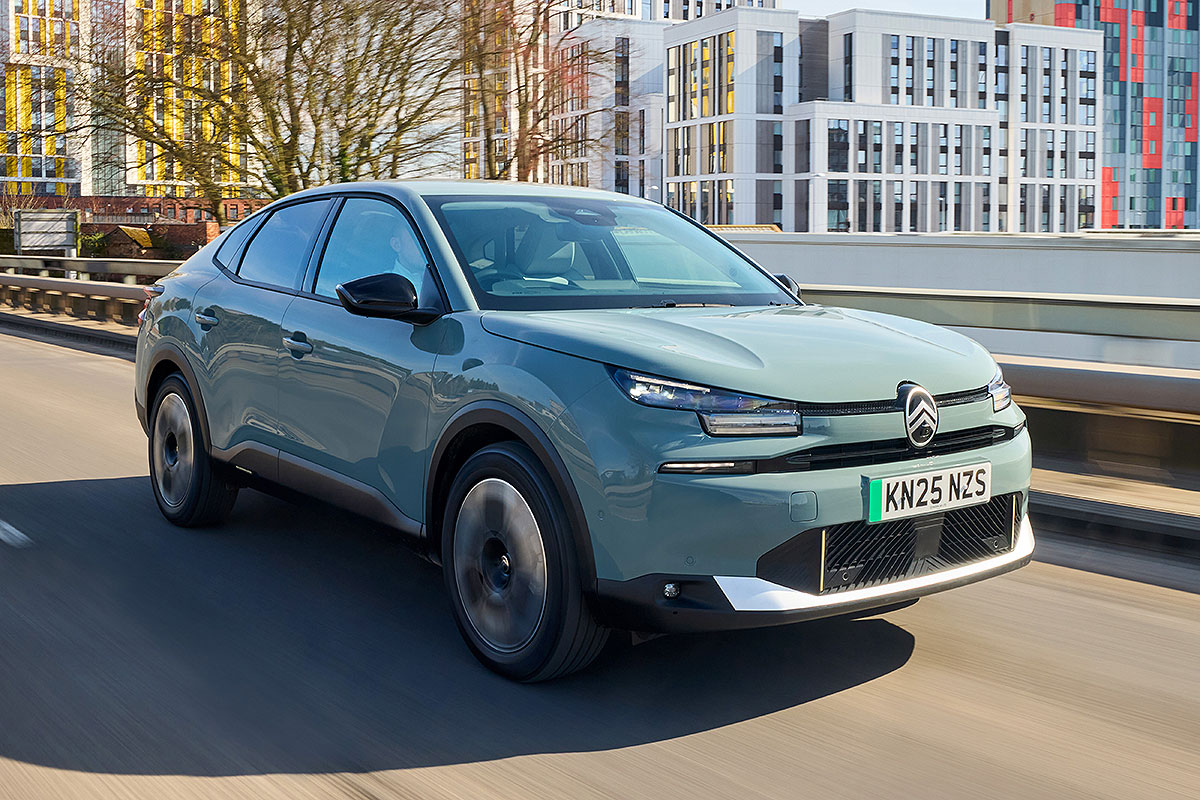
=7. Citroen e-C4 X
EVDB consumption: 4.03m/kWh
EVDB range: 205 miles
Cost per mile[^1]: 6.17p
We’ve just been chatting about manufacturing giant Stellantis, and guess what: Citroen is yet another member. And with the same platform and running gear as the Vauxhall and Peugeot models we’ve just been talking about, it’s no surprise to find the electric version of the C4 X sitting alongside its stablemates on our list. It's a bigger, roomier car than its Stellantis sister cars, but is has a more slippery shape, allowing it to post identical efficiency numbers.. And if you’re in the market for an electric family hatchback, you could do a lot worse than the Citroen e-C4 X. This SUV-inspired compact family car majors on comfort, with a gloriously plush way of floating over bumps, much like Citroens of old. Inside, you get comfortable, supportive seats, a smart dashboard with easy-to-use controls, and lots of space, especially in the back. It’s a really good all-rounder.
Citroen C4 X Review
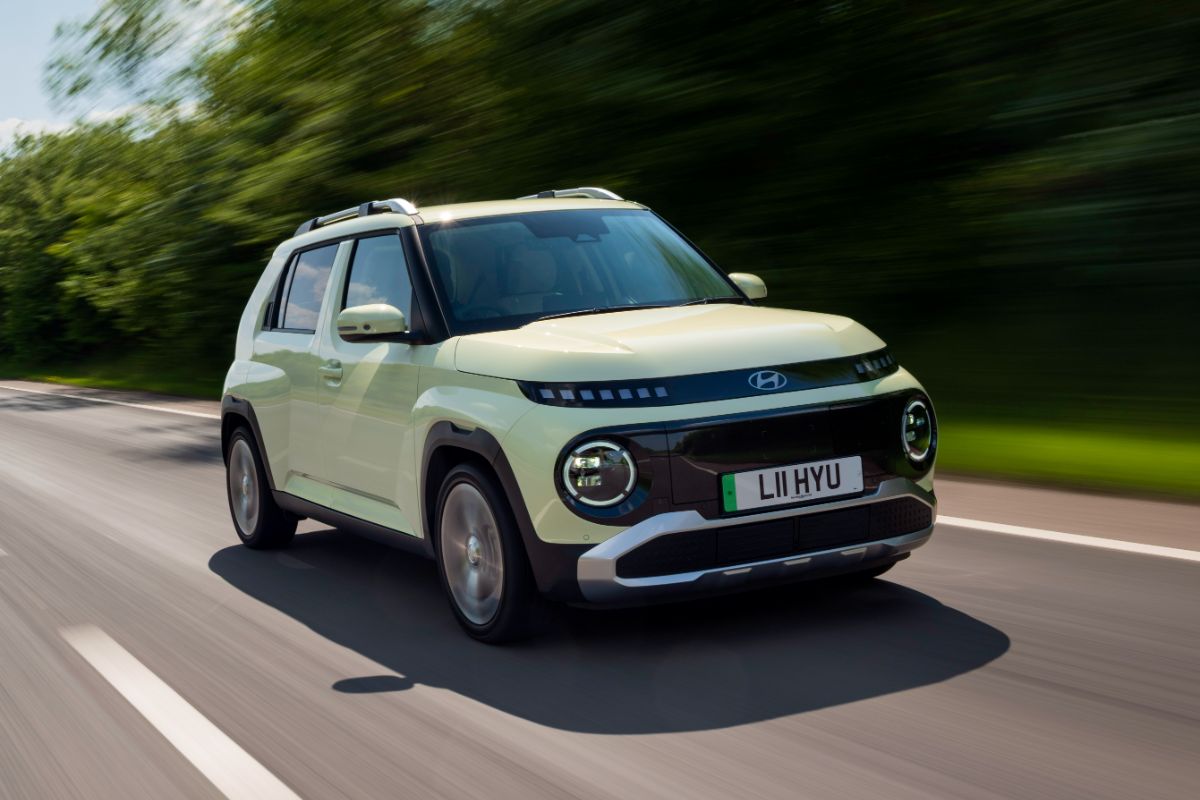
=10. Hyundai Inster Long Range
EVDB consumption: 4.02m/kWh
EVDB range: 185 miles
Cost per mile[^1]: 6.19p
Want to see what the city car of the future looks like? Well, you’re probably looking at it. The Hyundai Inster takes Hyundai’s much-vaunted electric car nous and packs it into a tiny SUV, small enough to be an absolute doddle to drive around town. But what you’ll really notice about the Inster is its sense of style: the baby SUV looks give way to a fantastically funky interior that’s surprisingly spacious given the Inster’s diminutive dimensions. And in this Long Range form, the Inster can actually travel surprisingly far on a charge for such a small car. Granted, it’s pricier than rivals like the Dacia Spring, but you do get a lot more for your cash.
Hyundai Inster Review
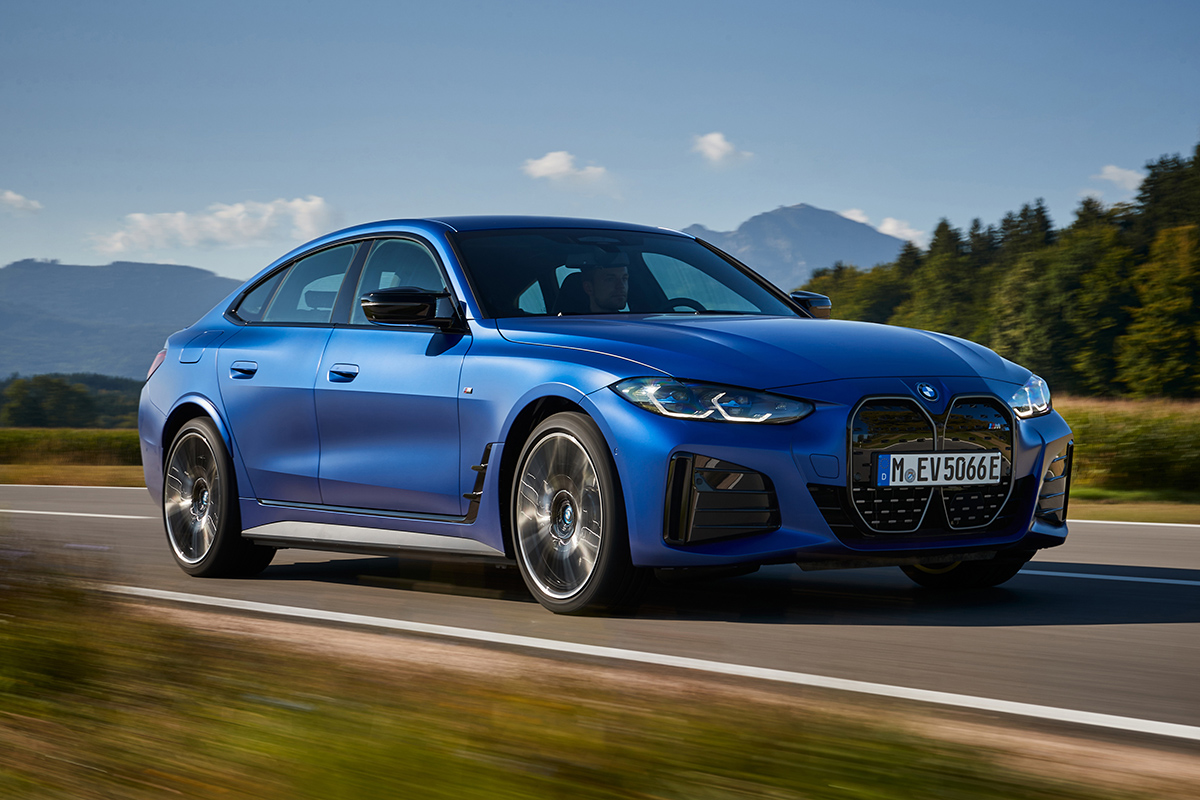
=10. BMW i4 eDrive35
EVDB consumption: 4.02m/kWh
EVDB range: 270 miles
Cost per mile[^1]: 6.19p
BMW started its electric journey more than a decade ago with the original i3, so it’s no surprise that, in the present day, the German firm knows a thing or two about EVs. Several electric BMWs have hit the market in recent years, and the i4 - the pure-electric counterpart to the 4 Series Gran Coupe - would appear to be the most efficient of them, probably down to its slinky four-door-coupe shape. As you’d expect from any BMW, it’s fabulous to drive, with cornering fun and cruising comfort provided in equal measure from the car’s rear-wheel-drive (RWD) powertrain, while the interior has all the space, quality and technology you could hope for.
BMW i4 Review
FAQs
Whats the most efficient electric car?
When this article was last updated, the most efficient electric car available to buy in the UK was the Tesla Model 3, with an average consumption of 4.59 miles per kilowatt hour.
Are electric SUVs efficient?
It’s worth noting that many of the same factors that affect miles per gallon in petrol or diesel cars also affect the energy efficiency of zero-emissions models. That’s why you’ll find plenty of small, compact cars in this list of the most efficient EVs, but only a handful of bigger ones. There’s no Jaguar I-Pace, Ford Mustang Mach-E, BMW iX, Toyota bZ4X, Nissan Ariya, Volvo EX90 or Porsche Taycan Cross Turismo for example, as these are all large, luxurious and heavy SUVs, and therefore relatively inefficient compared with smaller and lighter EVs.
How much should I be paying for electricity to charge my electric car at home?
If you are serious about saving money on the mileage you do in your all-electric car, don’t forget to shop around for those electricity tariffs that offer low-cost overnight charging. That way, you can cut electricity costs to as little as 7p/kWh, and this could save you up to 75% on the costs you'll face when charging at the UK's national average rate of 24.9p/kWh that we've used in our calculations. And of course, this will bring you a far greater – and safer – financial saving than any amount of time spent drafting lorries while wearing a woolly hat rather than turning the heater on.
[^1]: Calculated using the evdatabase.org efficiency figure, assuming electricity cost of 24.9p/kWh
Related Topics: