Mitsubishi ASX Review (2010-2020)
Mitsubishi ASX cars for sale
2.0
Expert review
Pros
More rugged than most crossovers
Proper 4x4 versions are available
Well equipped whichever model you choose
Cons
The 2.2-litre diesel needs frequent servicing
Dated and dull driving experience
Poorly finished cabin

The CarGurus verdict
As a new car, the ASX is keenly priced but it shows its age compared with newer rivals like the Skoda Karoq. It makes more sense if you find a keen used car deal, as the long warranty and strong reliability count in its favour.
Inside, the ASX may not have an upmarket finish but it's reasonably practical and there's lots of kit, even if you choose one of the more affordable specification levels. The engine line up has changed a lot over the years, with petrol now the only option for new car buyers. On the used market, we'd plump for one of the diesels. The 1.6-litre is the pick for fuel economy, while the 2.2-litre is the one to choose if you want livelier performance.
Whichever engine is under the bonnet, this isn't a memorable car to drive. It's not awful by any means, but you'll have a lot more fun in a Ford Puma or Skoda Yeti. It's a decent enough car, the ASX, but several rivals offer more.
The Mitsubishi ASX launched in 2010 as a rival for the likes of the Nissan Qashqai and Skoda Yeti. Mitsubishi offered front-wheel-drive cars for buyers looking for an upright driving position and SUV-looks, and 4x4 versions for customers looking for a proper 4x4 but with lower running costs than a full-fat offroader.
The line-up was quite straightforward, with a choice of two engines. The cheapest models were powered by a 115bhp 1.6-litre petrol, with a five-speed manual transmission. There was also a 148bhp 1.8 DiD diesel, with a six-speed manual 'box. Diesel buyers could pay extra for an electronically controlled 4x4 system.
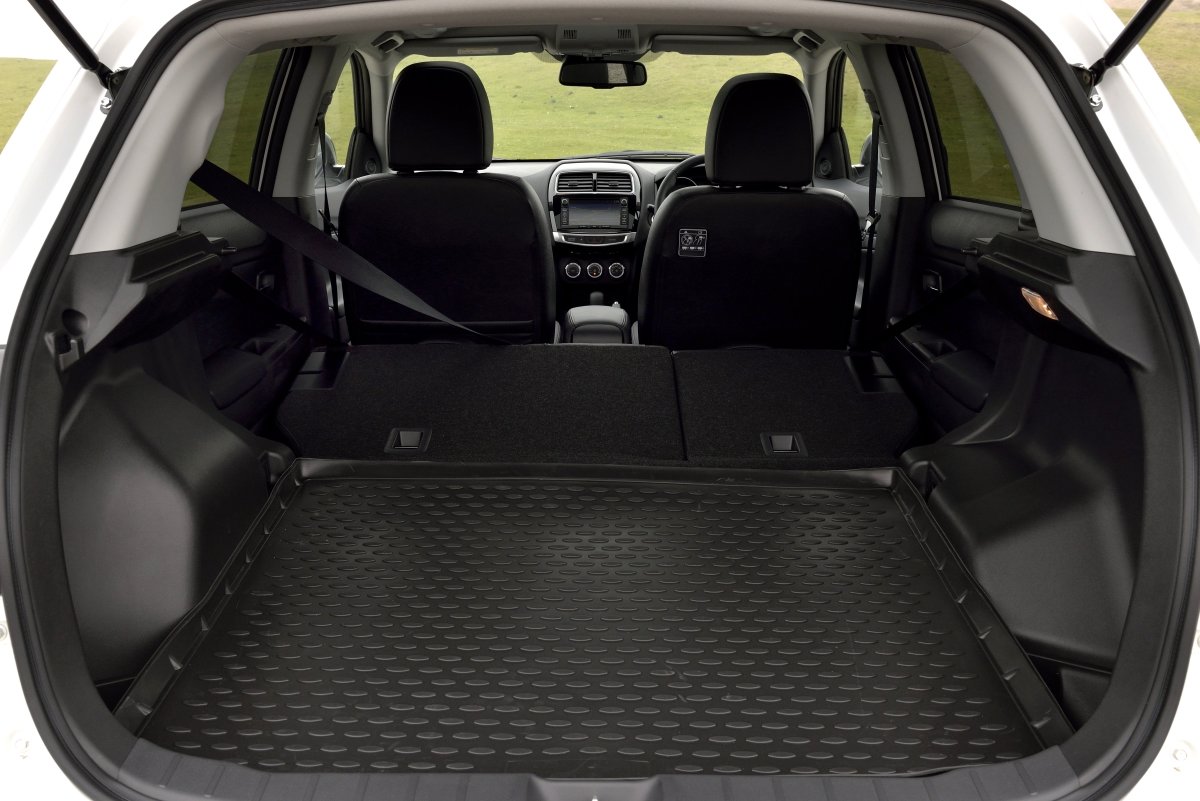
Practicality was one of the ASX’s key selling points when it was launched – along with a generous level of standard equipment and more off-road ability than you’d get with most rivals. Today, it still stacks up pretty well in these respects as a used buy, although more recent competitors have since moved the game on when it comes to cabin space and boot volume.
Open the hatchback and you'll find 442 litres of boot space, slightly more luggage room than a contemporary Nissan Qashqai or Skoda Yeti, but smaller than the current Qashqai or the Skoda Karoq. The rear seats fold with the usual 60/40 split, and they also incorporate a ski hatch for posting longer items through into the rear seat area.

If you're looking for a compact SUV that's fun behind the wheel, you're better off with a Skoda Yeti or the Seat Ateca. In fairness, the ride is reasonably comfortable, although sharper bumps are felt with a thump. The ASX isn't unpleasant to drive by any means, just a bit bland.
Things improved in 2013 with the arrival of a 2.2-litre diesel. This offered considerably more mid-range pulling power than the 1.8, and was matched to an automatic transmission and four-wheel drive. The extra muscle makes this engine a good choice for anyone with a trailer or small caravan to tow, or if you cover a lot of motorway miles.
The 1.8 DI-D continued to be sold alongside the 2.2, but with 114bhp and an emphasis on economy rather than performance. Later in the car's life the 1.8 made way for a 1.6-litre diesel, with improved fuel economy.
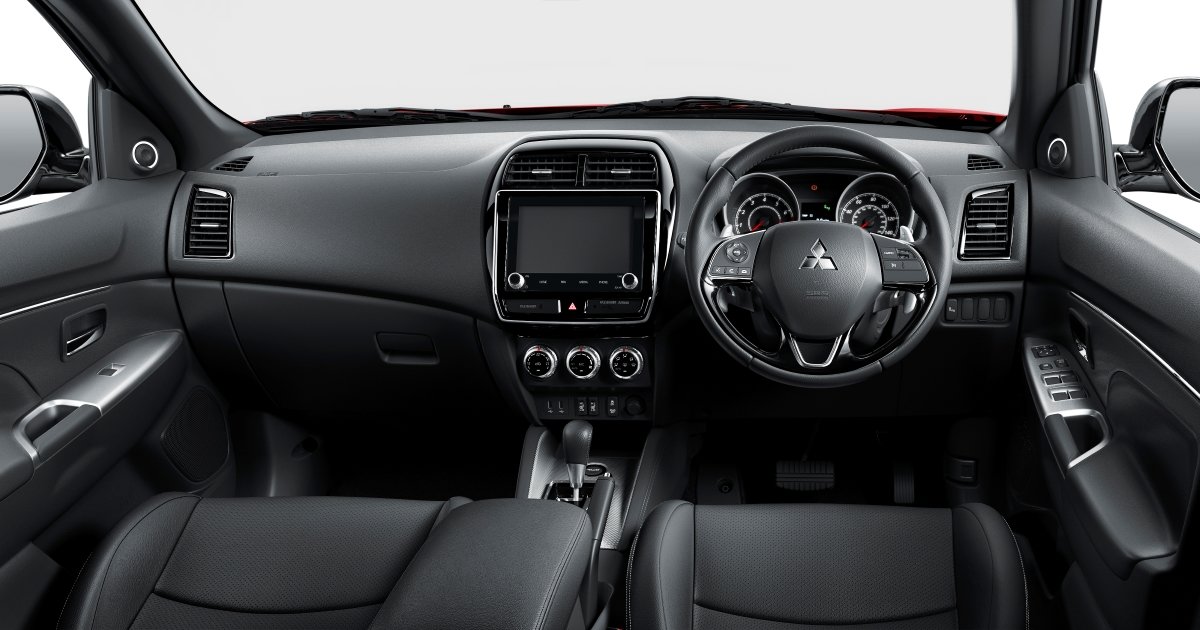
Standard equipment on the entry-level 2 spec included alloy wheels, air-conditioning, keyless entry, dual-stage front and side airbags, a driver's knee airbag and tilt and reach adjustment for the steering wheel.
Stepping up to the ASX 3 model added climate control in place of basic air-conditioning, one-touch starting, cruise control, heated seats, privacy glass, steering-wheel-mounted audio controls, Bluetooth, a leather-covered steering wheel and gear knob, automatic lights and wipers, and chrome exterior detailing. The top-spec ASX 4 added leather seats and an uprated stereo, along with satnav and a reversing camera.
A facelift in late 2019 brought more kit, including a new eight-inch touchscreen infotainment system with DAB, Bluetooth, Android Auto and Apple CarPlay. The entry-level Dynamic cars have heated front seats, climate control, cruise control, LED headlights and 18-inch alloy wheels. Stepping up to Exceed brings a panoramic sunroof, leather upholstery, an electrically adjustable driver's seat, black roof rails, LED front fog lamps and an integrated TomTom satnav.
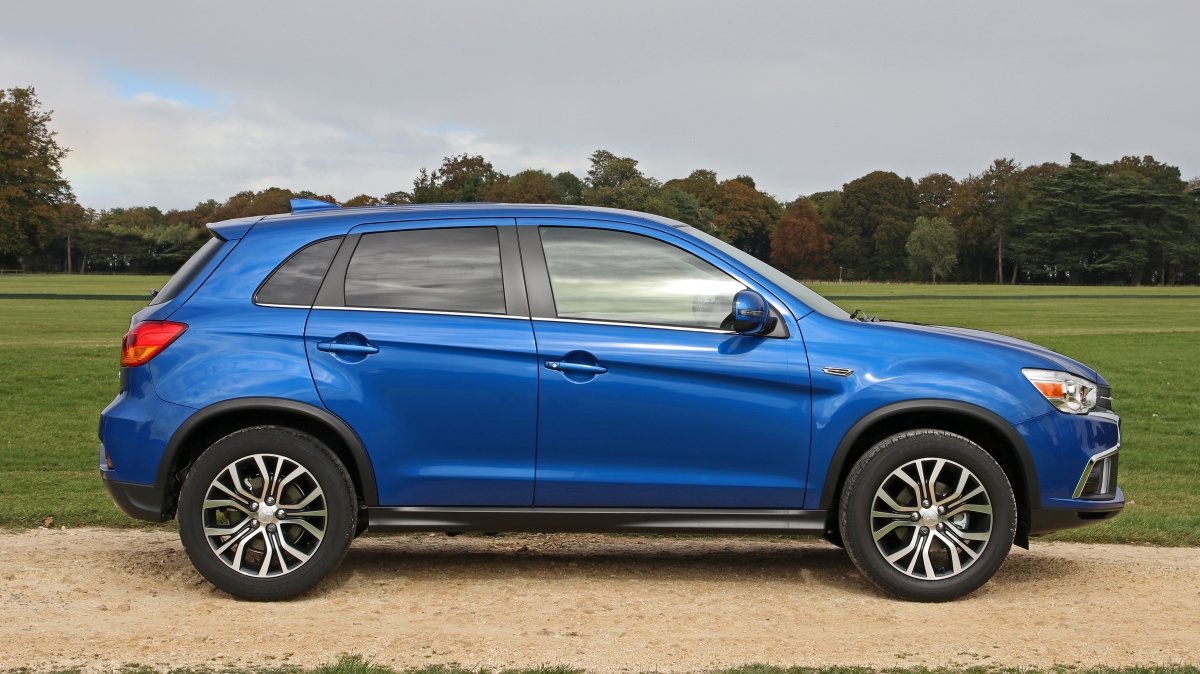
Whether you are thinking of the Mitsubishi ASX as a new or used car, it won't break the bank to buy or run. The bargain buys are the 1.6-litre petrols, although these aren't as fuel-efficient as the diesels. The official figures suggested 47.1mpg was achievable. Reckon on low 40s mpg in reality.
The diesel 1.6 is the one to go for if you want to go as far as possible on every gallon. Two-wheel-drive versions should be good for 61.4mpg according to the official figures. That might be a bit optimistic, but around 55mpg should be within reach in everyday driving, possibly even better if driven gently on the motorway. Bank on slightly less than 50mpg from 4x4 models with this engine.
The 1.6 diesel is also very cheap to tax, with an annual Vehicle Excise Duty bill of just £30 for the two-wheel-drive model if you go for one that was registered before 1st April 2017. Beyond that date, vehicle taxation changed to a new system where all petrol and diesel cars pay the same flat of £165 a year once they’re more than a year old.
The older 1.8-litre diesel isn't quite as frugal as the 1.6, but should return 45-50mpg. Again, reckon on slightly worse economy if you choose a four-wheel drive.
Every example of the 2.2-litre diesel has four-wheel drive and an automatic gearbox. It's a combination that makes for easy driving in all weathers, but doesn't do a lot for fuel economy. If you see 40mpg or better you'll have done well.
The slimmed down range offered for the final few years of ASX sales did away with diesel altogether. Instead, there's just one petrol engine, a 148bhp 2.0-litre. This model has been tested to the more realistic WLTP standard, so the official mpg figures don't need to be treated with as much suspicion. With a manual gearbox and front-wheel drive, the car achieves 37.7mpg on the combined cycle. With a CVT auto and four-wheel drive, the ASX returns 34.4mpg.
That's slightly off the pace set by the ASX's best rivals. For example, a Seat Ateca 1.5 TSI Evo has an official combined figure of 39.2-45.6mpg, while a Volkswagen T-Roc with the same engine returns 42.2-47.9mpg.
Insurance groups start from 13 of 50 for the 1.6 2. That's three groups lower than the equivalent Nissan Qashqai, so the ASX should be cheaper to insure. Most ASX models need to be serviced once a year or every 12,500 miles, whichever comes first. The 2.2 diesel needs servicing once a year or every 9000 miles, which is more frequently than most rivals.
Japanese brands usually do well in reliability surveys. Mitsubishi is no exception, and it's right up there with the likes of Honda and Toyota. Don't expect any significant trouble from an ASX, so long as it's well cared for and serviced on time.
That said, there have been a handful of recalls. Cars built during the 2011 and 2012 model year can develop a crack in the engine's multi-belt auto tensioner. This can lead to the drive belt falling off. If this happens, a warning light illuminates, power steering assistance is lost and the engine can overheat and stall.
Cars built before September 2018 may develop a crack on the weld between the tailpipe and the rear silencer. This can lead to the rear of the exhaust dropping onto the road.
Faulty software in the stability control system or the forward collision mitigation system are problems that effect some ASX models made in 2018. Either fault can prevent the electronic systems intervening in an emergency situation. Any Mitsubishi dealer should be able to confirm if a car you are thinking of buying has any outstanding recall work. Alternatively, go to the recall checker on the gov.uk website and enter the reg number of the car you are thinking of buying.
- Standard equipment on the entry-level 2 spec included alloy wheels, air-conditioning, keyless entry, dual-stage front and side airbags, a driver's knee airbag and tilt and reach adjustment for the steering wheel.
- Stepping up to the ASX 3 model added climate control in place of basic air-conditioning, one-touch starting, cruise control, heated seats, privacy glass, steering-wheel-mounted audio controls, Bluetooth, a leather-covered steering wheel and gear knob, automatic lights and wipers, and chrome exterior detailing. The top-spec ASX 4 added leather seats and an uprated stereo, along with satnav and a reversing camera.
- A facelift in late 2019 brought more kit, including a new eight-inch touchscreen infotainment system with DAB, Bluetooth, Android Auto and Apple CarPlay. The entry-level Dynamic cars have heated front seats, climate control, cruise control, LED headlights and 18-inch alloy wheels. Stepping up to Exceed brings a panoramic sunroof, leather upholstery, an electrically adjustable driver's seat, black roof rails, LED front fog lamps and an integrated TomTom satnav.
- If you’re looking for the best value: Choose the post-facelift 2.0 Dynamic. There's just one engine, a 148bhp petrol, so the choice is whether to go with Dynamic or Exceed spec. We'd stick with Dynamic trim. It comes with all the essentials and more at a keen price. There's no need to spend any more unless you want an automatic gearbox or four-wheel drive, which are only offered with the pricier Exceed.
- If you want all the toys: Standard equipment improved significantly after the facelift in September 2019, so we’d try to find one of these late models. That said, there aren’t many about and prices will be relatively high as they’re quite recent. If you’re looking at the older models, the most luxurious was the ASX 4 – it came with leather seats, satellite navigation, a reversing camera, and more. You get a lot for your money. Shop around, and you'll have a choice of two-wheel drive and 4x4 models.
- If you want the best all-rounder: buy an ASX 2.2 diesel. This engine offers a worthwhile improvement in performance over the 1.8-litre diesel, without a big hike in running costs. It comes with an automatic gearbox and four-wheel drive for secure and surefooted performance in bad weather. This engine was sold in 4 spec, so it's well equipped.
- If you are on a tight budget: go for the 1.6 2. This may be the entry-level spec with the least powerful engine, but it's not as spartan as some entry level cars. With only 115bhp, you won't be going anywhere in a hurry, but performance is adequate and fuel bills are affordable.

