Skoda Superb 2026 review | A five-star family car
Skoda Superb cars for sale
5.0
Expert review
Pros
Outstanding interior space and practicality
Well-equipped across all trims
Comfortable ride and very refined
Cons
Interior design and quality don’t match premium rivals
A BMW 5 Series is more enjoyable to drive
Reduced boot space in the plug-in hybrid
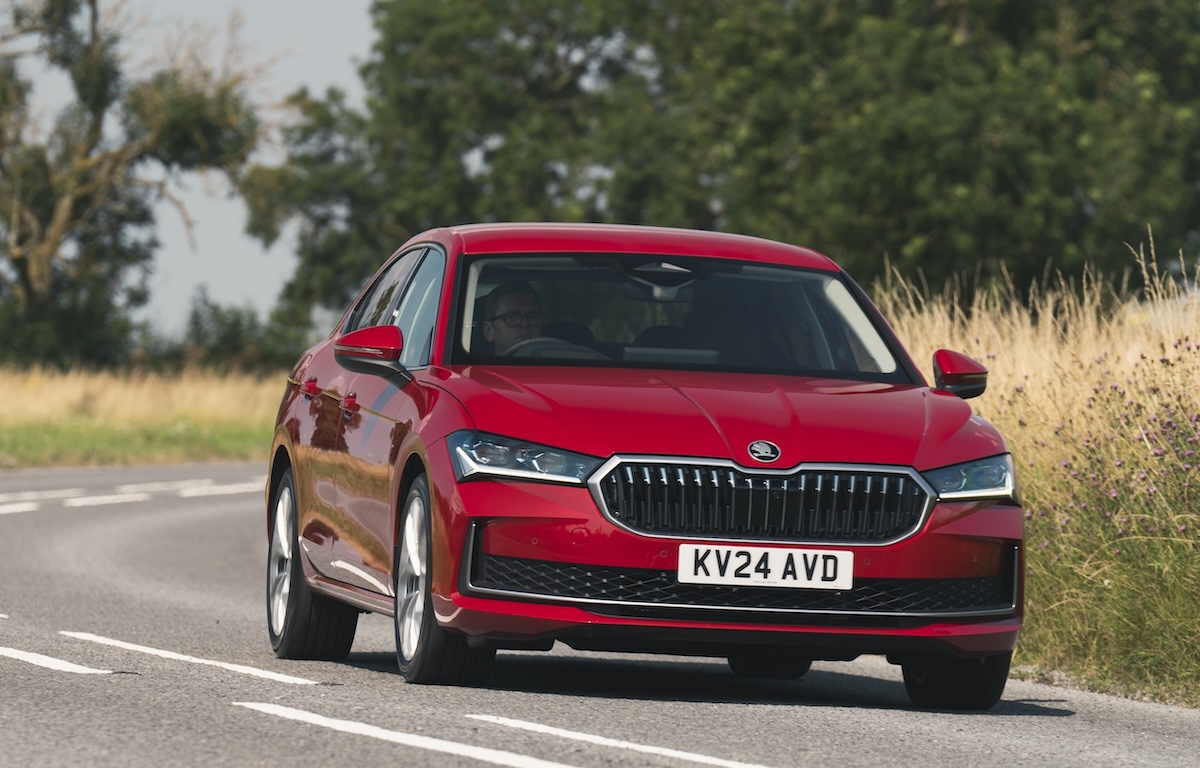
The CarGurus verdict
The Skoda Superb is one of the best-value large cars on the market. It offers more space than premium-badged rivals at a significantly lower price, and it offers generous space for passengers and a huge boot regardless of whether you choose the hatchback or estate version.
It might not leave you fizzing with excitement, but the Superb is an accomplished all-rounder. It has a good range of engines, satisfying handling, and it covers long distances with a level of comfort that is hard to find even in cars costing twice as much. It's one of our favourite cars simply because it is so fit for purpose. If you're looking for comfort, space and value, the Superb really is hard to beat.

What is the Skoda Superb?
The Superb is Skoda’s largest and most accomplished family car. It has long been one of the quiet bargains of the large car market, offering not only lots of space, but also great tech and a fantastically quiet and comfortable driving experience.
Sitting above the Octavia in the Skoda range, the Superb competes with cars such as the Peugeot 508 and Volkswagen Passat, but distinguishes itself by offering significantly more car for your money. It’s available as both a hatchback and an estate, with both likely to offer more space than an SUV at a similar price. Another way to think about the Superb's position in the market is to note that while it is physically larger than a Mercedes-Benz E-Class, it typically costs less to buy than the smaller C-Class.
Now in its fourth generation, the latest Superb builds on that long-standing formula with a cleaner look, more technology and a broader mix of electrified powertrains. Buyers can choose from petrol, diesel and plug-in hybrid (badged ‘iV’) versions, including models capable of more than 70 miles of electric range, based on the official figures. All versions use a DSG automatic transmission – there’s no manual option – while most are front-wheel drive, with all-wheel drive reserved for the more powerful engines.
As far as the trim line-up goes: SE Technology and SE L focus on value and comfort, SportLine brings a more aggressive look with lowered suspension and darker styling details, and the flagship Laurin & Klement (L&K) is the luxury option.

How practical is it?
The Skoda Superb is one of the most practical cars on the road. Even the hatchback boasts an impressive 625-litre boot, making it capable of handling everything from family luggage to larger items such as double baby buggies. The estate offers even more space, with a 660-litre boot. Owners of large dogs should take note: there’s little this side of a van-based MPV that beats a Superb for canine-carrying ability. An optional variable boot floor creates a virtually flat load space. It’s available for a few hundred pounds on all estate models except the plug-in hybrid (PHEV). Speaking of the PHEV, it’s worth noting that in this model the packaging of the battery means the estate's boot space drops to 510 litres.
Interior space for people is equally fantastic. Rear passengers, even tall adults, will find more than enough legroom, while headroom is also generous. Although the middle rear seat isn’t as comfortable as the one you’ll find in Skoda’s Kodiaq SUV, the Superb still excels as a family car. Indeed, travelling in the back feels a bit like being in a limo.
In the front, the gear selector has been moved to the steering column, freeing up additional storage space in the centre console. This includes room for a wireless phone charger, further boosting the Superb’s practicality.
What's it like to drive?
The Skoda Superb has always prioritised comfort over dynamic handling, and this latest generation continues that tradition. It’s an incredibly cosseting car, ideal for long-distance cruising thanks to excellent sound insulation and suspension that smooths out rough roads at both low and high speeds. Overall, the Superb feels relaxed and refined.
For this latest version of the Superb, all cars use a dual-clutch DSG automatic gearbox, with no manual transmission available. It's a smooth and unobtrusive gearbox that is well-suited to the Superb's character.
The entry-level 1.5-litre turbocharged petrol engine comes with a mild hybrid system and delivers 148bhp. It performs admirably in the Superb, being quiet at lower revs and delivering its power smoothly. If can sound coarse when you really rev it, but in virtually every other regard this is an impressive engine, and in terms of fuel economy, can return around 50mpg on long runs. The mild hybrid system improves efficiency by allowing the engine to shut off and coast when conditions allow, as well as enhancing its stop-start functionality when the car is stationary.
Skoda also offers a 2.0-litre TDI diesel engine, available with 148bhp or 190bhp, for those who often drive long distances. If anything, it suits the Superb even better than the petrol, with powerful mid-range pull, fuel economy of around 55mpg on a long run, and the ability to do more than 600 miles on a full tank. And while it might be slightly noisy at lower speeds (no escaping that diesel grumble), it becomes super-quiet and refined once cruising.
If you’re after something more performance-oriented, there’s a 2.0-litre turbocharged petrol engine with 261bhp, which delivers a 0-62mph time of 5.6 seconds. This provides more urgency for those seeking a quicker option, although the Superb is still more about refinement than excitement.
Alternatively, the plug-in hybrid, which is available only in estate form, combines the 1.5-litre petrol engine and an electric motor to deliver a combined 201bhp: enough to complete the 0-62mph sprint in 8.1 seconds and hit a top speed of 136mph.
While Dynamic Chassis Control adaptive suspension is available as an option on the SE Technology and SE L (it's standard on the SportLine and L&K models), it's not really needed. Even in its standard setup, this big Skoda offers excellent ride comfort with good body control through corners. A BMW 5 Series (or a used Ford Mondeo, for that matter) is a more exciting car to drive, but if it's long distance comfort you're after the Superb won't disappoint.

Technology, equipment & infotainment
All versions of the Skoda Superb are well-equipped, and come as standard with a 13.1-inch touchscreen infotainment setup that supports wireless Apple CarPlay and Android Auto. The system is easy to navigate, with clear graphics and simple menu structures.
Additionally, the Superb features Skoda’s Smart Dials. These are physical rotary controls for the climate system that, when pressed, can change function to act as shortcuts for the infotainment. It’s a neat idea, and cleverly combines a hi-tech look with intuituve operation.
A 10.25-inch digital instrument cluster is standard across the range, offering customisable displays and easy-to-read information.
There's a strong argument for sticking with the entry-level SE Technology trim, which is fitted with keyless start, heated seats and a reversing camera as standard. Upgrade to SE L for additional larger 19-inch alloy wheels, a more premium interior finish, Matrix LED headlights, a powered tailgate and heated seats (the driver's seat is also electrically adjustable).
The SportLine adds 19-inch black alloy wheels, more aggressive styling, sports seats, progressive dynamic steering and Dynamic Chassis Control adaptive suspension. Finally, the Laurin & Klement takes on a more upmarket look, with 18-inch alloy wheels, park assist and an advanced massage function for the driver and front passenger (this can work wonders on a bad back).

Skoda Superb running costs
The Skoda Superb offers excellent value, with prices starting from around £37,000. The estate carries a £1,300 premium over the hatchback, but both body styles offer significantly more practicality than similarly priced SUVs.
Fuel economy is competitive across the range. The 1.5-litre petrol is rated at up to 50mpg, with real-world figures of around 48-52mpg achievable. The 2.0-litre diesel in 148bhp guise returned just shy of 58mpg in the official WLTP test, and is an excellent option for regular long-distance driving. Even in the most powerful, 190bhp diesel with all-wheel drive we averaged nearly 50mpg with the car fully laden.
The Superb plug-in hybrid has the potential to deliver the lowest running costs if you have access to a home charger. Along with the ability to drive more than 70 miles in electric mode after a full charge, CO2 emissions from just 30g/km make it ideal for company car drivers. The Benefit-in-Kind (BiK) tax rate is also significantly lower than for petrol or diesel models.
Skoda offers both fixed and flexible servicing regimes. Under the fixed schedule, services are every 10,000 miles or annually, while cars on a flexible regime will request a service between roughly 9,000 and 20,000 miles, depending on how and where they have been driven.

Skoda Superb reliability
Skoda has a solid reputation for reliability, with the company usually performing well in dependability and customer satisfaction surveys. In this context, a 16th place ranking out of 30 manufacturers in the 2025 What Car? Reliability Survey might be deemed a little disappointing.
Meanwhile, there were mixed results for the previous iteration of the Superb in the executive cars section of the latest survey. Diesel versions finished joint second, but the plug-in hybrid and petrol models were towards the bottom of the table, in 18th and 20th out of the 23 cars included.
The latest Superb comes with a three-year, 60,000-mile warranty as standard, which is lacklustre by today’s standards. While it can be extended to four- or five years, you have to pay extra for the privilege. Rivals including Hyundai and Kia offer five- and seven years (respectively) of warranty cover as standard, while Toyota will cover you up to 10 years provided you have your car serviced at one of its main dealers.
- The Superb PHEV plug-in hybrid combines a 1.5-litre petrol engine with an electric motor for a power output of 201bhp. It has a claimed electric-only range of up to 70 miles, making it ideal for most commutes. The associated low CO2 emissions help to reduce company car tax bills, too. It’s available as an estate only and in all trim levels.
- The estate version of the Superb includes several practical features, like bag hooks and a clever hammock-style storage solution that makes organising your clutter that little bit easier. It also features an electric folding parcel shelf that automatically slides away when you open the boot.
- While most Superbs come with front-wheel drive, Skoda offers all-wheel drive on top-spec petrol and diesel versions. This doesn’t mean you can venture far off-road, but it does provide added traction in poor weather conditions and on slippery surfaces.
- For value-conscious buyers: The entry-level SE Technology trim, paired with the 1.5-litre turbocharged petrol engine, is the best all-rounder. It offers plenty of standard equipment and a refined driving experience without breaking the bank. Stick with the hatchback for the lowest price, or upgrade to the Skoda Superb Estate for maximum practicality.
- For high-mileage drivers: The 2.0-litre TDI diesel is still the best option for those who cover long distances regularly, delivering strong mid-range torque and excellent fuel economy at motorway speeds. It's an outstanding long-distance car.
- For ultimate practicality: The estate model is the obvious choice for those who need maximum boot space, offering more luggage capacity than most SUVs, and generally for a lower price.
- For performance: Opt for the 2.0-litre turbocharged petrol with 261bhp if you want more power and faster acceleration. It’s the quickest version of the Superb, though still not a car aimed at enthusiasts.


