Vauxhall Grandland X Review (2017-2021)
Vauxhall Grandland X cars for sale
3.0
Expert review
Pros
Vey well equipped
Pleasant to drive
Inoffensive styling
Cons
Doesn't excel in any one area
Many rivals are more interesting inside and out
Slight question marks over reliability
The CarGurus verdict
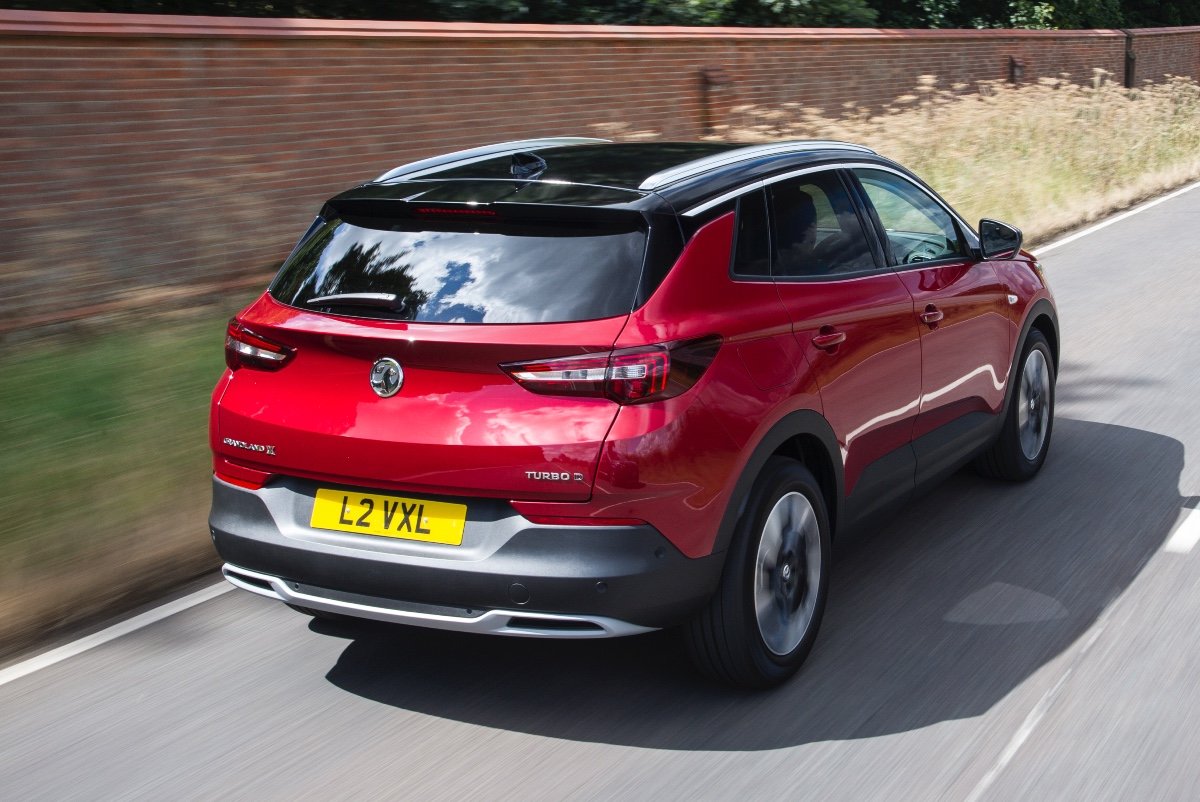
The Grandland X struggles to stand out in a crowded SUV market, because it isn’t the cheapest car in its class to buy or run. The good news is that it is based on the Peugeot 3008, which is one of the better cars in this class, so it will reap some advantages of the shared platform, technology, and parts, while heavy initial depreciation makes a case for it as a used buy.
Its Achilles’ Heel is that just doesn’t surpass rivals in any particular way. The Skoda Karoq and the Renault Kadjar are better looking; the Ford Kuga and the Seat Ateca superior to drive; the Nissan Qashqai is cheaper and a better all-rounder; and the Peugeot 3008 is, well, the same car underneath, but it looks better and it’s more popular.
If you're looking at a newer version of this car, in 2021 it was renamed and lightly redesigned to become the Vauxhall Grandland.
What is the Vauxhall Grandland X?
The first Nissan Qashqai kick-started the SUV craze in 2007, with other manufacturers quickly rolling out their own interpretations. Some responded faster than others, while those that took longer tended to add a little something to help their car stand out.
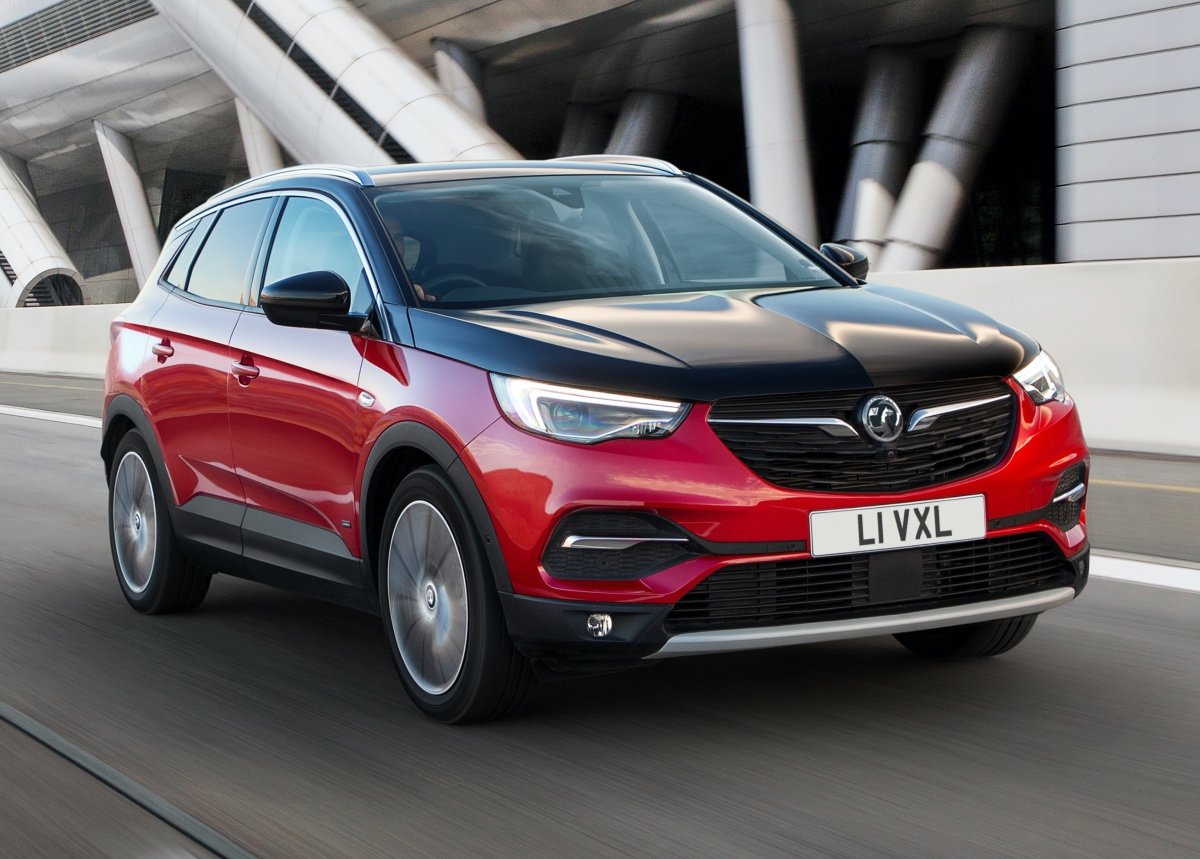
Vauxhall took its time launching SUVs. When its largest model, the Grandland X – which sits above the Mokka X and the Crossland X in the SUV line-up – hit showrooms, it shared much of its technology and parts with the Peugeot 3008. But where the Peugeot’s striking styling gives it an edge, the Vauxhall treads a more conservative path.
The exterior is neat and well proportioned, but it’s also conventional – an identikit SUV that’s unlikely to grab anyone’s attention.
How practical is it?
It’s all a bit ho-hum inside, without anything to make it feel truly special. The materials are good quality, and the touchscreen system and the major controls are well laid out and easy to use, but it lacks the X factor found in so many rivals, from the Seat Ateca to the Skoda Karoq.
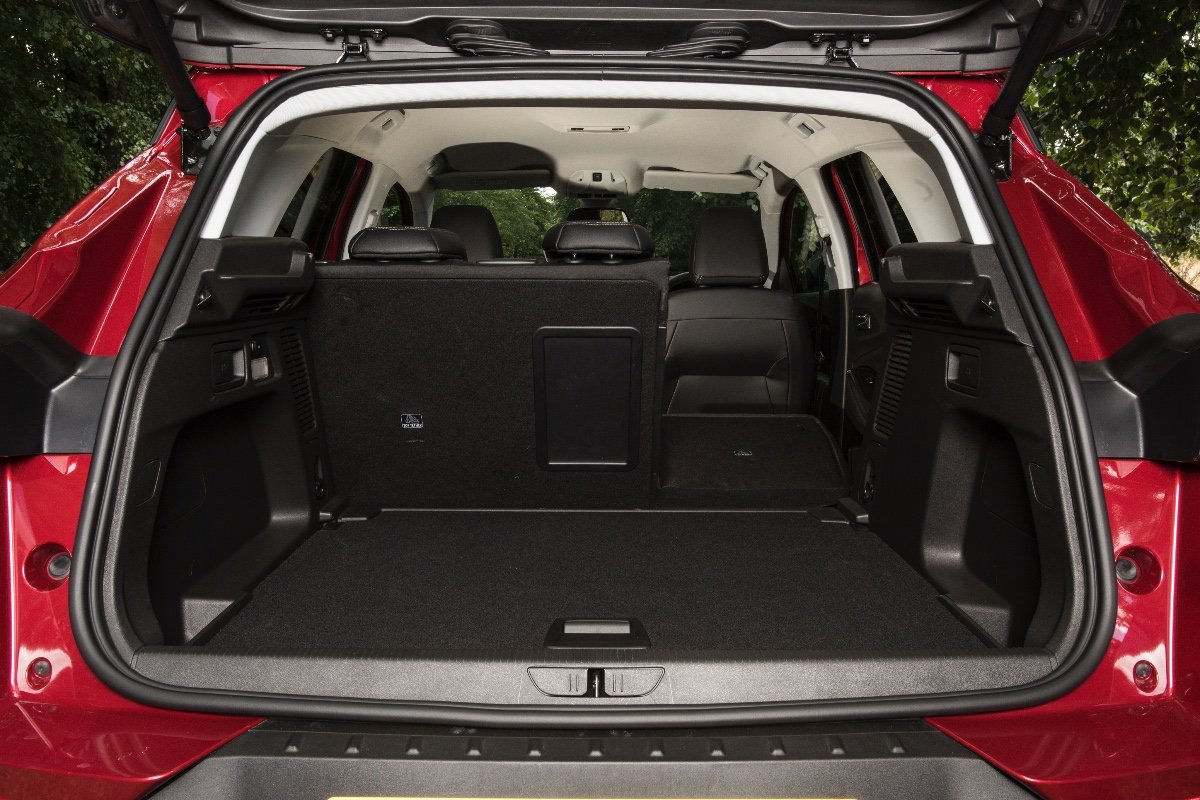
The upside is that the Grandland X is spacious. There’s lots of room in the back, headroom is perfectly sufficient for most adults (although cars with the sunroof have a little less) and legroom is also decent. The absence of a transmission tunnel also means there’s a completely flat floor, which makes it more comfortable to sit in the rear.
The boot can swallow 514 litres (1,652 litres if the rear seats are folded down) of luggage, which is on a par with most of the competition. However, the Volkswagen Tiguan is the class leader in this department, with 615 litres.
What's it like to drive?
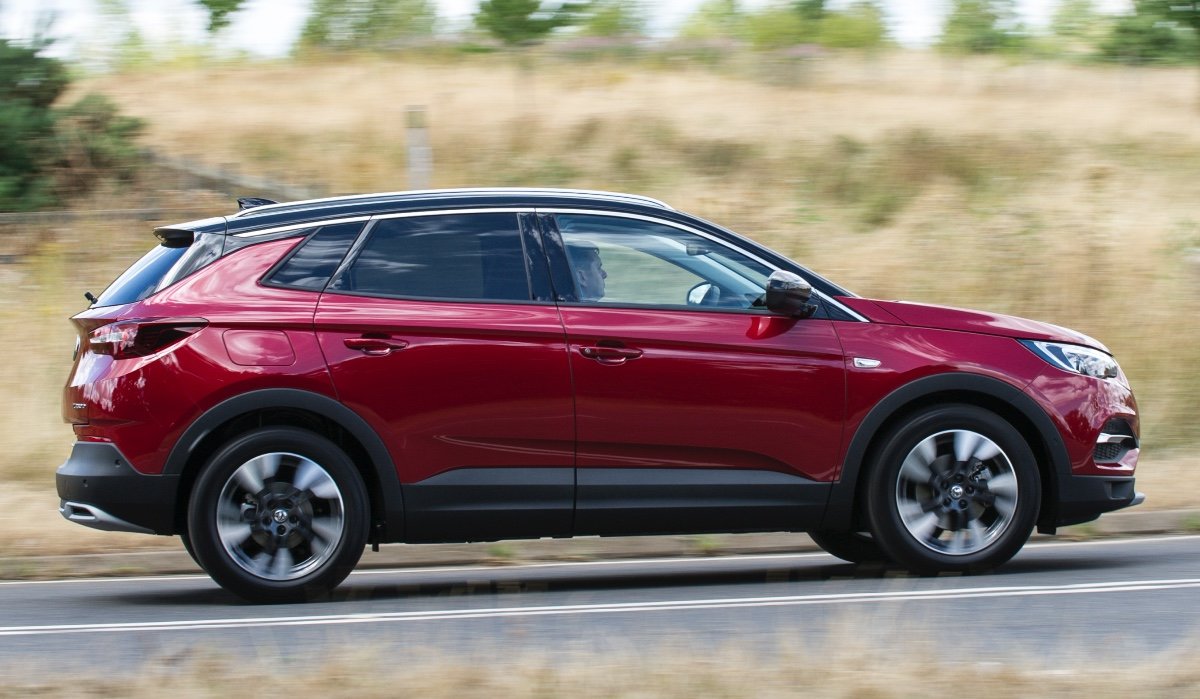
The middle-of-the-road theme continues on the road. The steering is accurate and consistent, without being particularly involving, unlike the Seat Ateca, which is far sharper to drive. The Grandland X has good body control and it’s composed in corners, although the hybrid versions (more on those below in Three Things to Know) are slightly compromised due to their additional weight.
Ride quality is decent. It’s comfortable enough and soaks up most bumps, but you do get the odd intrusion, especially if you have a car with larger wheels. Again, rivals do it better – we’d have a look at the Volkswagen T-Roc or the Honda CR-V if comfort is a priority.
The Grandland X has a relatively simple engine range, comprising a 1.2-litre petrol, a 1.5-litre diesel, and a petrol-electric hybrid that combines a 1.6-litre petrol engine with an electric motor (or, in the case of the Hybrid4, two electric motors).
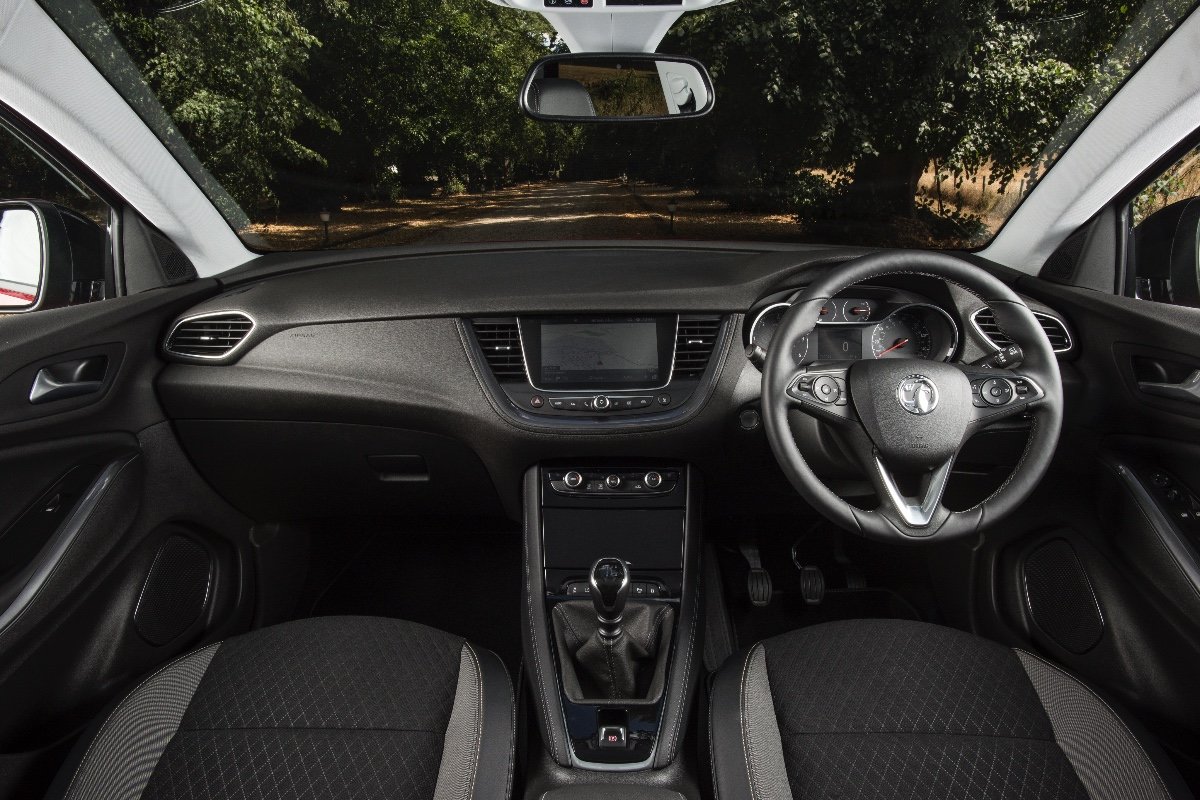
Technology, equipment & infotainment
For years, Vauxhall offered a dizzying array of trim levels with most of its cars. Thankfully, those days are now over, and the Grandland X has just six different specifications: SE Premium, Business Edition Nav, SRi Nav, Griffin, Elite Nav and Elite Nav Premium.
The good news is that even the less expensive trim levels come with a decent level of equipment. Even the ‘basic’ SE Premium has cruise control, climate control, rear parking sensors, alloy wheels, and an infotainment system with Apple CarPlay and Android Auto.
However, the amount of kit on the upper trim levels does push their prices up to put them at similar price points to premium models such as the Audi Q5.
Vauxhall Grandland X running costs
The three-cylinder 1.2 petrol engine produces a decent-enough 128bhp, but you have to rev it a fair bit to get anywhere, which isn’t the most efficient way of driving. The official fuel consumption figure ranges from 42.8mpg to 45.6mpg, depending on the trim level. However, this is likely to be a lot less in daily use.
The 128bhp 1.5-litre turbodiesel is far more economical, despite having similar performance to the smaller petrol unit. The official economy is 53.3-54.3mpg, which might be achievable if most of your journeys are longer motorway runs, but real-world mpg will likely be nearer 45mpg, especially if your trips are more mixed.
On paper, the hybrids are by far and away the cheapest to run. It’s hard to argue with 201.8-217.3mpg for the front-wheel drive model or 217.3-235.4mpg for the dual-motor all-wheel drive Hybrid4, but do not forget that these figures were attained in a lab, rather than in real-world use. The only way to get anywhere near such numbers is to run the Grandland X predominantly on electric power, so most of your journeys will need to be around 25 miles, and it should be charged as often as possible at home or at work. Public chargers are more expensive, and they reduce the money you save compared with filling up a petrol or a diesel car.
The Grandland X didn’t have great residual values when it was new, so it lost money faster than rivals. On the other hand, heavy depreciation makes for a used car bargain, so second-hand examples are often cheaper to buy than competitors.
Service intervals are long for the class – the 1.2 petrol only needs to be serviced after 16,000 miles – and Vauxhall also offers service plans based on the car’s age. At the time of writing, the manufacturer’s fixed price services started at £205 for an interim service using approved parts for a petrol or diesel car, to £455 for a major service on a hybrid with more than 300bhp.
Vauxhall Grandland X reliability
Vauxhall doesn’t have the greatest reputation for reliability. It came 29th out of 31 brands in the 2024 What Car? reliability survey, although the Grandland X – specifically this generation – finished a more respectable 13th out of 33 cars in the family SUV category.
Vauxhall’s warranty covers three years and 60,000 miles, which is the industry standard, and all cars of this generation will now be out of their factory warranty. A Hyundai Tucson is covered for five years with unlimited mileage, and the Kia Sportage and Niro have a seven-year, 100,000-mile warranty.
- The Grandland X Hybrid was added to the range at the start of 2020. There are two plug-in hybrid electric variants, one with front-wheel drive and the other, called Grandland X Hybrid4, with four-wheel drive and two electric motors to give it a total of 296bhp. With an official electric-only range of 35 miles – often lower in real-world driving conditions – the Hybrid versions are more expensive, but worthwhile if you largely use them in electric mode.
- The availability of a plug-in hybrid electric version is one of the many advantages of the Vauxhall being a close relative of the Peugeot 3008 – itself popular with UK car buyers. The Grandland X was developed in conjunction with Peugeot, before the French brand’s parent company – then PSA, now Stellantis – bought Vauxhall from General Motors, so it was always going to be a similar car. They share features such as the IntelliGrip traction control system, which allows you toggle between five different settings to for better grip on slippery surfaces.
- Vauxhall dropped the ‘X’ from the Grandland’s name in 2021 and gave a slight facelift. It did the same with the Crossland X – which is now just called the Crossland – in a slightly strange bid to simplify its SUV range.
- If you’re on a budget: The entry-level SE Premium with the turbocharged 1.2-litre petrol engine is your best bet. Yes, it’s more expensive than many basic versions of rivals, including the Nissan Qashqai, but the SE Premium has a lot more kit (see Technology and Equipment, above) so it’s arguably better value.
- If you want four-wheel drive: The only Grandland X with four-wheel drive is the Hybrid 4 that arrived in 2020. It’s not what would be considered a hardcore off-road setup – unlike, say, the Subaru XV – but it should be enough to handle the odd slippery surface.
- If you want low running costs: Check out a plug-in hybrid (PHEV) if low running costs are a priority. With official fuel economy figure of 204mpg and CO2 emissions of 35g/km, the headline figures seem perfect. However, as is always the caveat with PHEVs, you have to run the car on electric power as much as possible and charge on a home electricity tariff, which is cheaper than public charging, if you’re to maximise its potential. If that isn’t an option, then the 1.5-litre diesel engine is a better bet.

