Vauxhall Grandland Review (2021-2024)
Vauxhall Grandland cars for sale
3.0
Expert review
Pros
Affordable plug-in hybrid model
Generous equipment levels
Great petrol engine
Cons
Anodyne driving experience
Some cheap plastics inside
Plug-in hybrid has a small boot

The CarGurus verdict
The Vauxhall Grandland is a middle-of-the-road sort of car. It doesn’t do much particularly badly, but neither does it excel enough to give you a strong reason to buy it over and above one of its more compelling rivals.
On the plus side, it’s spacious, decent enough to drive, looks okay inside, and is pretty good value. But its interior isn’t as versatile as the best family-sized SUVs, nor as upmarket, and neither is it a car whose steering wheel you’ll really look forward to getting behind.
The regular plug-in hybrid version makes a lot of sense as a company car, but it’s also more frumpy to drive than the petrol or diesel models – again, not so much so that it’s a deal-breaker, but also by enough to make the Grandland a car you won’t rush to tell your fleet manager about. The GSe PHEV has a little more about it in terms of pace and sharpness, but not enough to tempt you away from more accomplished performance SUVs. You can read more about the Vauxhall Grandland GSe in our detailed First Drive review.
The Grandland isn’t bad, in other words. But having bought one, you might wonder whether you couldn’t have done better.

What is the Vauxhall Grandland?
If you’re getting a sense of deja vu, don’t be surprised. You’ve seen the Vauxhall Grandland before, though previously, it was known as the Vauxhall Grandland X. Now, though, it’s lost the 'X', but at the same time the Grandland has gained a new nose that’s in-keeping with the rest of the Vauxhall family, such as the latest versions of the Vauxhall Astra, Vauxhall Crossland and Vauxhall Mokka.
The bigger news, though, is that Vauxhall’s mid-size SUV also has a new interior tha transforms its level of appeal, and also now works to a very much simplified model line-up. Vauxhall hopes that’ll be enough to keep its family-sized crossover up to date. And it’ll need to be, because the Grandland is up against some very talented contenders such as the Ford Kuga, Skoda Karoq, Hyundai Tucson and Kia Sportage. It was replaced by the second-generation Grandland in 2024.
How practical is it?
The Grandland isn't short on space or practicality. Whether you’re sitting in the front or back, you’ll have room to stretch out, and you’ll find your head isn’t impinged upon by the roof, and there’s plenty of room for your elbows and shoulders.
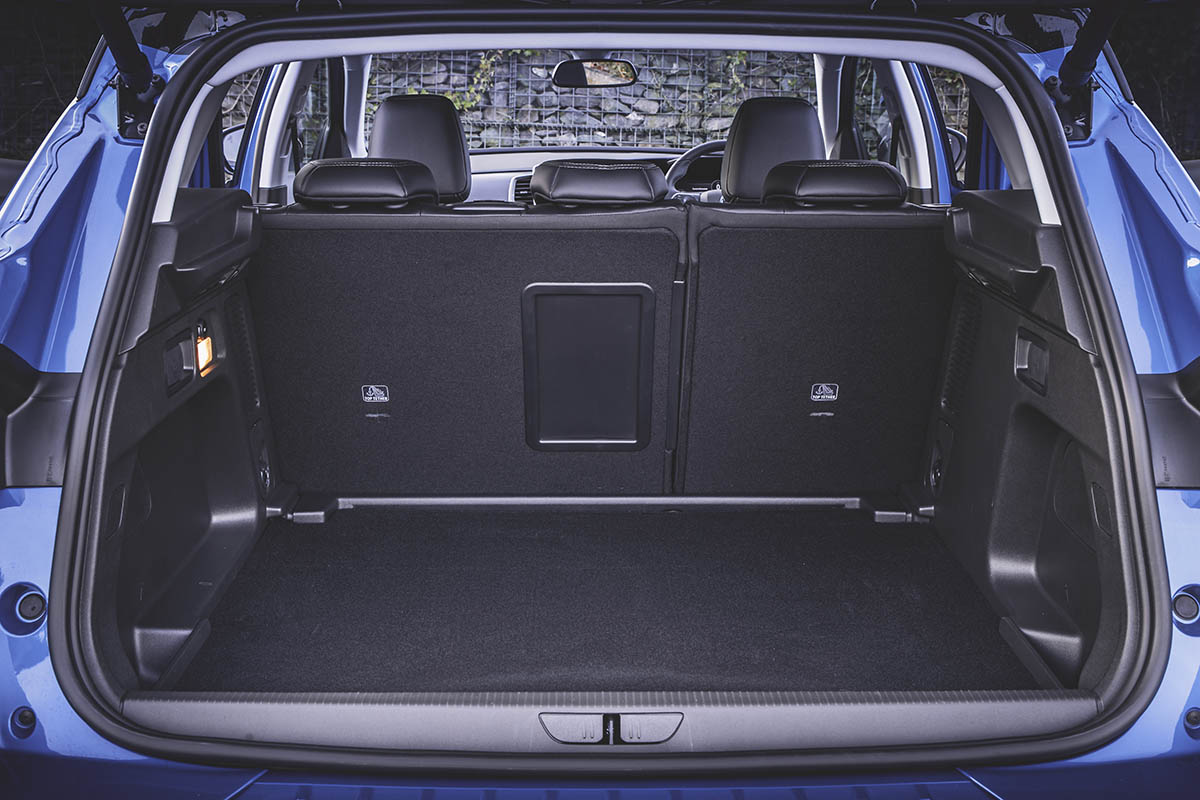
Boot space is good, too, at 514 litres, consisting of the main luggage bay and an extra cubby beneath the floor, although be aware that if you choose one of the plug-in hybrid models, you lose the cubby to the battery, which takes up its space, and that makes the entire boot a whopping 124 litres less capacious.
The rear seats fold onto their bases in a 60/40 format, leaving a nice, level boot floor. On the downside, though, they don’t slide forward and backward like they do in some other family SUVs – indeed, the three individually sliding and folding rear seats you get in a Citroen C5 Aircross make its luggage space much more flexible.
What's it like to drive?
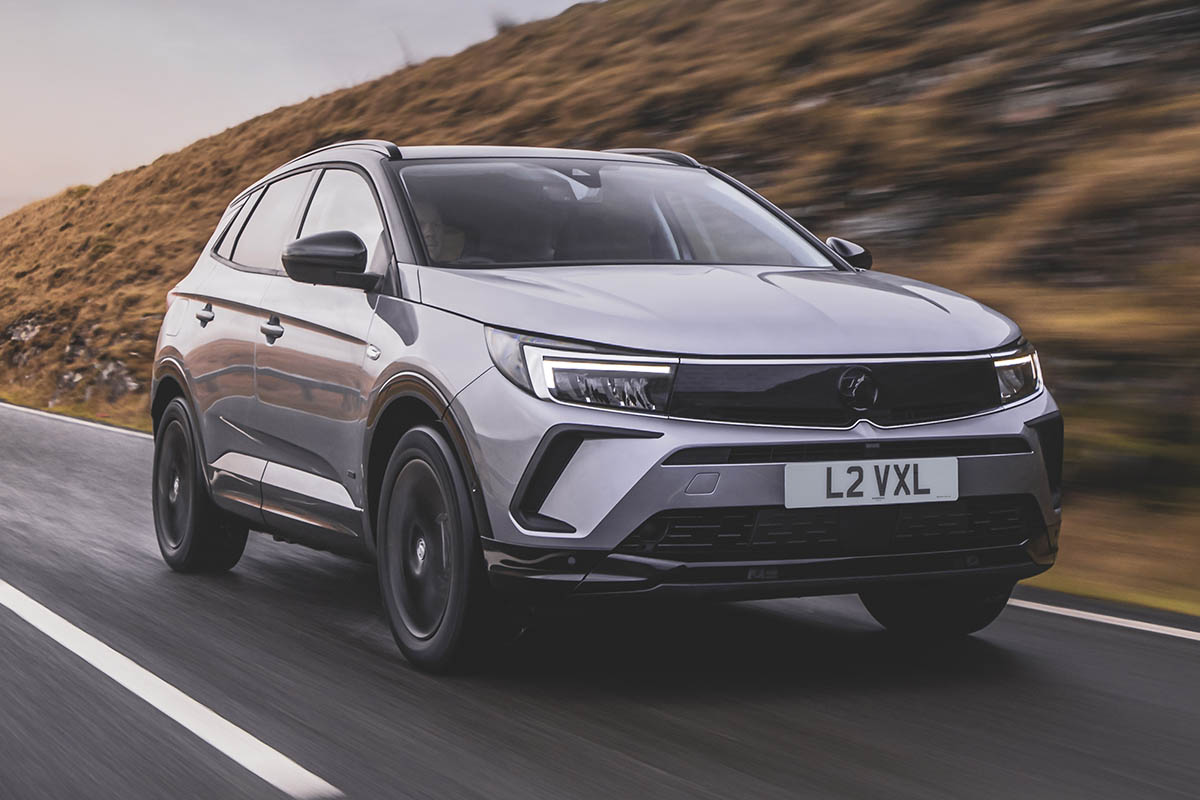
The petrol version is the sweetest to drive, with an excellent, gutsy three-cylinder engine up front that provides lots of mid-range punch. The manual version provides a light, easy gearchange – albeit with quite a long throw – but the eight-speed automatic is also good, changing gear swiftly and smoothly, and once you’re up to speed on a motorway, there’s no doubting the Grandland’s impressive stability.
There’s quite a bit of roar from the tyres, mind you, but the suspension does a decent job of glossing over the worst of Britain’s pockmarked carriageways. And with a faithful front end and well-controlled body lean, the Grandland doesn’t go to pieces if you try to press on a little. That said, a Seat Ateca or Ford Kuga will provide you with more smiles per mile.
The hybrid model is a bit less impressive, mainly because the suspension has more work to do to control all of its extra weight. So it’s a little more crashy over rough surfaces, and more reluctant to change direction. But this is an excellent hybrid powertrain, blending electric and petrol power incredibly seamlessly so that you can’t really tell when the changeover occurs, and with plenty enough get-up-and-go to make overtaking a breeze.
At the top of the range sits the Grandland GSe, which stands for Grand Sport electric, and that’s the name of Vauxhall’s new ‘electrified performance’ sub-brand. It uses a pokier version of the PHEV powertrain (296bhp rather than 222bhp) and has a fettled suspension with more sophisticated dampers, plus recalibrated steering. It’s just about quick enough to convince as a performance SUV, although more conventionally powered rivals like the Cupra Ateca are considerably quicker still.
They’re also more fun: the GSe definitely feels sharper than the regular PHEV but you’re still aware of those weight management issues as you turn. On the plus side, though, the suspension revisions haven’t harmed the ride comfort.
Technology, equipment & infotainment
Vauxhall has simplified the Grandland’s range for the new car, which makes it easier to understand. Now there are just three trim levels for mainstream versions: Design (which is only available on petrol or diesel models), GS Line and Ultimate.
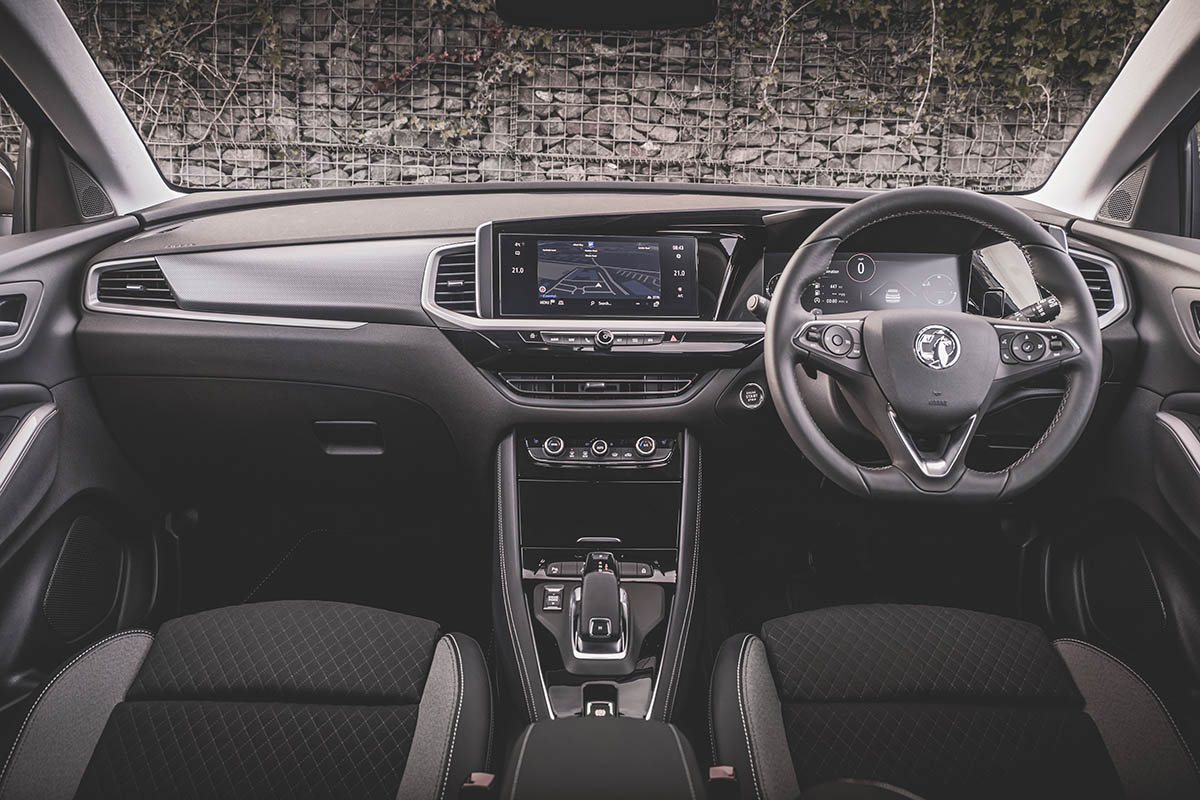
Even though it’s the entry-level model, the Design is still pretty well equipped, with LED headlights, cruise control, alloy wheels and dual-zone climate control all coming as standard. GS Line specification adds ‘Pure Panel’, which amounts to a larger touchscreen with satnav and a digital instrument cluster, as well as a more supportive driver’s seat and sportier styling. Ultimate then gets adaptive cruise control, heated front seats, a heated steering wheel, keyless entry and starting, and a power-operated boot lid.
The bigger screens in the GS Line and Ultimate versions really lift the Grandland’s interior, and make it much easier to access certain functions. The dashboard design is fresh and modern, but there are some areas where quality corners appear to have been cut: for example, the faux carbon fibre plastic trim that sits in front of the driver on GS Line versions looks pretty naff.
The GSe sits at the top of the range as a standalone model, and as such, it has all the luxury kit and driver assistance features you expect. However, it doesn’t get much more in the way of goodies than the Ultimate, with the extra money instead buying you more power, a fettled suspension and sportier styling.

Vauxhall Grandland running costs
You can reckon on achieving around 40mpg from the petrol version, whether you choose the manual or automatic gearbox – you might lose 1 or 2 mpg if you choose the auto, but it’s a pretty efficient gearbox, so the difference will probably be negligible. Choose the diesel engine, and you should see around 45-50mpg on average.
These figures are perhaps a shade off the best in the class, but they’re still very respectable – the Grandland isn’t a thirsty car and, realistically, you won’t notice much of a difference between it and the class best in this regard.
The plug-in hybrid’ versions’ official WLTP fuel economy figures look amazing at well over 200mpg, but they’re to be taken with a very large pinch of salt. The official tests tend to unrealistically flatter PHEVs, so don’t expect to get anywhere near that figure in the real world. Of course, the sort of mileage you do get will depend entirely on how often you plug the car in. Keep it charged up often, and confine yourself to short journeys, and you’ll hardly ever have to pay for petrol. However, if you don’t plug it in, you might see your regular fuel economy drop down as low as 30-35mpg.
Servicing and maintenance should be relatively affordable, because Vauxhall’s servicing prices are some of the lowest in the industry. You even get the option to manage your servicing costs by setting up a service plan, under which you pay monthly so that there are no unexpected big bills on that front.
One expense you will have to factor in if you buy either the petrol or diesel models is the timing belt, which needs to be changed every six years or 60,000 miles on the former (whichever crops up first), and every five years or 125,000 miles on the latter. This will cost you around £600 at a Vauxhall dealer, so it’s worth keeping in mind if you’re working out your potential purchase’s running costs.
Vauxhall Grandland reliability
It’s a bit tricky to get a clear idea of the Grandland’s reliability, though on balance the signs are not great. The Grandland X, the car’s closely-related predecessor, finished an impressive 7th out of the 75 cars that took part in the Auto Express Driver Power survey in 2021, but that result seems to be a bit of an outlier compared to the rest.
In the same survey, for example, Vauxhall as a manufacturer came 24th out of the 29 manufacturers that were included. Meanwhile, the Grandland X came 23rd out of the 28 family-sized SUVs featured in the 2021 What Car? Reliability Survey, with a relatively lowly score of 87.5 per cent, while Vauxhall itself came equal 22nd out of the 30 manufacturers that took part.
One of the biggest problems that’s affected petrol versions of the Grandland is the timing belt, which is known to disintegrate prematurely. As it does so, this can cause particles of rubber to enter the oil system, which in turn can cause significant engine damage. As a result of this issue, Vauxhall reduced the recommended timing belt change interval; you’ll therefore want to make sure any Grandland you buy has been serviced and had its timing belt changed promptly and in accordance with the manufacturer’s recommendations – otherwise, you could be looking at a car that already has rubber in the oil and whose engine is being gradually degraded.
The Grandland comes with a three-year warranty that’s limited to 60,000 miles in its final two years. This is in line with other Vauxhalls, but it’s about the bare minimum you can get away with in the industry these days. Toyota, Kia, Hyundai and Renault, among others, all offer significantly better warranties.
- If you’ve owned a Vauxhall Grandland X before, you might be wondering what differences there are with the new Grandland. Well, the changes are mostly cosmetic, most notably the new ‘Vizor’ front end, which has been tacked on a little unconvincingly (look closely, and you can still see the shape of the old car’s headlights). The biggest news, though, is the new interior, with its all-new architecture, and bigger infotainment screen, and this really does make the Grandland feel much more up-to-date than the drab cockpit that went before it. Also new is the seating – up front, the driver’s seat (on the GS Line and Ultimate) and passenger seat (only on the Ultimate) are certified by the respected German back health organisation AGR, so they should prevent aches and pains. Oh, and you can now get night vision as an optional extra, while the top-spec Ultimate comes with matrix LED headlights, which bend your high-beam lights around other cars so that you don’t have to dip them.
- The regular plug-in hybrid version of the Grandland combines a 1.6-litre petrol engine with a 13.2kWh battery in order to provide an electric range of around 25 miles. The total maximum power output of the petrol engine and the electric motor combined is 222bhp, which makes the plug-in Grandland pretty pokey. If that’s not enough for you, there’s also the sporty GSe version, which has the same powertrain, but boosted up to 296bhp, partly by an extra electric motor powering the rear wheels, which makes it four-wheel drive (all other versions are front-wheel drive). These plug-in hybrids are great for company car drivers, because they benefit from much lower tax rates, but it’s always worth bearing in mind that, as with all PHEVs, they can prove very thirsty if you don’t charge them up. That’s because you’re effectively lugging around the extra weight of a big battery without getting the benefit from it.
- If you’re not after a plug-in hybrid Grandland, then you’ve got two conventional engines to choose from. One is a 1.2-litre petrol with three cylinders, and the other is a four-cylinder 1.5-litre diesel. Coincidentally, both engines kick out the same amount of power – 128bhp – but while the 1.2-litre petrol comes as standard with a six-speed manual gearbox (the automatic is optional), the diesel comes only with the auto’, which makes it quite an expensive choice.
- If you’ve decided you want a Grandland, the best all-round option is the 1.2 Turbo 130 GS Line. In this form, the Grandland benefits from a cracking little petrol engine, and it’s at its least weighty, which means it rides and handles as well as it can. You also get a nice amount of kit as standard, too, without paying over the odds.
- If you’re choosing a company car, however, then one of the PHEV versions makes more sense. Plug-in hybrids’ company car tax rates are much lower than a regular petrol or diesel cars’, thanks to their low CO2 emissions, which makes them an awful lot cheaper to run. The range-topping GSe enjoys the same low tax rates as the more humble PHEV Grandlands, although those are still the ones we’d point you towards, as their low P11D values makes them even cheaper on tax than rival plug-ins like the Volkswagen Tiguan e-Hybrid.
- Buying on a budget? You’ll probably want the 1.2 Turbo 130 Design. This is as cheap as the Grandland gets but, happily, it doesn’t feel like a bargain-basement model; you still get the same great engine as in the GS Line version and, while the equipment list is a bit thinner, there are still plenty of mod-cons to enjoy.
- If you really want to push the boat out, though, go for the 1.2 Turbo 130 Ultimate auto. The automatic gearbox is brilliant, and a worthwhile addition to the Grandland if you can stretch to it, especially if you use your car in town. This Ultimate model comes with all the bells and whistles, too. It is quite expensive, though, so just make sure you wouldn’t be happier with a better model from a rival manufacturer if you’re going to spend all this cash.


