If you're after a used car that'll keep your fuel bills in check without breaking the bank to buy, a cheap hybrid is one of the smartest moves you can make. The good news is that the used market is stacked with hybrid models that have depreciated enough to represent genuinely brilliant value. From tiny superminis to full-size family SUVs, there's a hybrid out there to suit pretty much every need and budget, and many of them come with the added bonus of rock-solid reliability records.
What's more, buying a used hybrid doesn't mean you have to compromise on practicality or equipment. Many of the cars on this list were generously specced from new, and their efficient powertrains mean you'll be spending less at the pumps from day one. Whether you want a plug-in that can handle the school run on electric power alone, or a self-charging hybrid that sips fuel around town, we've rounded up the best cheap used hybrids you can buy right now.
About this guide
The cars in this guide have been selected to represent the best options currently available. Our recommendations are the result of a unique three-part scoring system that takes into account real-world tests from our team of expert reviewers, ratings from real-life owners who live with these cars every day, and an analysis of market data from CarGurus UK to identify which models offer the highest percentage of good and great deals. This combined approach ensures our list highlights cars that are not only great to own but also good value to buy. For more information, scroll to the bottom of this page.
Best Cheap Used Hybrid Cars 2026
- 2011-2020 Toyota Yaris
- 2007-2014 Honda Jazz
- 2017-2023 Hyundai Kona
- 2016-2022 Kia Niro
- 2017-2022 Hyundai IONIQ
- 2015-present Suzuki Vitara
- 2009-2016 Toyota Prius
- 2012-2019 Toyota Auris
- 2013-2021 Mitsubishi Outlander
- 2010-2016 Honda CR-Z
CarGurus expert rating: 4 out of 5
CarGurus user rating: 4.7 out of 5
Percentage of good/great deals available on CarGurus: 30.8%
Overall CarGurus rating: 4.4 out of 5
| Pros |
Cons |
| Super-low running costs |
Poor infotainment systems |
| Tremendous reliability record |
Dull in a variety of areas |
| Good safety equipment on later examples |
High prices compared with rivals |
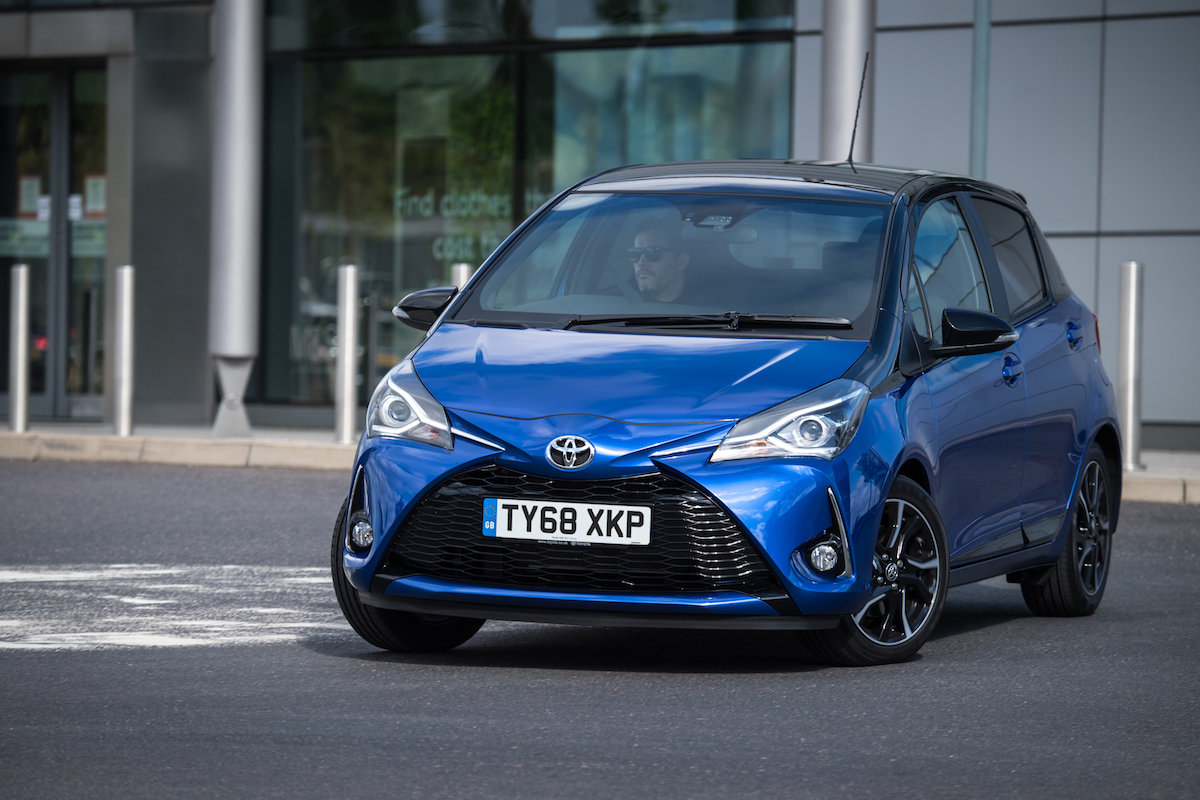
The Toyota Yaris was a trailblazer, bringing hybrid power to the supermini class long before most rivals. This third-generation model is known for its sturdy build and legendary Toyota reliability, making it a fantastic choice on the used market. The 1.5-litre hybrid powertrain, with its 98bhp, is the star of the show for anyone seeking low running costs. The system uses its electric motor to assist the petrol engine, allowing for quiet, electric-only crawling in traffic, and delivering an easy 45mpg in everyday driving.
While it's a supermini, the Yaris is surprisingly practical, offering decent passenger space and a 286-litre boot. It's true that the infotainment system feels dated by today's standards, and rivals like the Ford Fiesta are more fun to drive, but the Yaris's appeal isn't about thrills; it's about being one of the cheapest and most dependable cars you can run. With low insurance groups, affordable servicing, and excellent fuel economy, it's a smart, sensible, and budget-friendly entry into hybrid ownership.
The CarGurus Verdict: "The Toyota Yaris is practical, reliable and about as cheap to run as any car can be. It's very good at the basics, but struggles to offer a single area where it excels over others." - Vicky Parrott, contributing editor
Read our full Toyota Yaris review
CarGurus expert rating: 4 out of 5
CarGurus user rating: 4.6 out of 5
Percentage of good/great deals available on CarGurus: 31.4%
Overall CarGurus rating: 4.4 out of 5
| Pros |
Cons |
| Innovative and roomy interior |
Noisy on the motorway |
| Expect mile after mile of hassle-free reliability |
Doesn't ride and handle with the polish of a Ford Fiesta |
| Inexpensive to buy and run |
Some low-rent materials in the cabin |
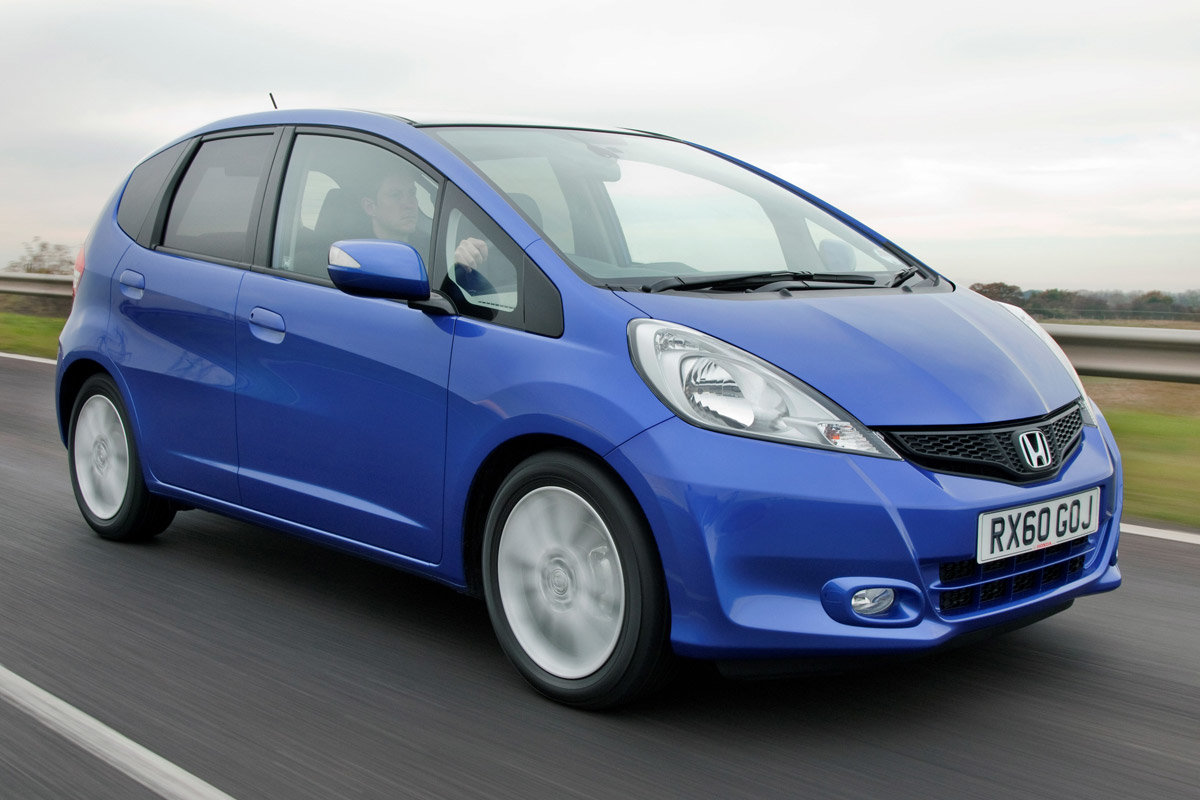
The Honda Jazz has always been considered an automotive Tardis, and this second-generation model is no exception. It's a supermini that thinks it's an MPV, offering incredible interior space and flexibility that embarrasses cars from the class above. The secret is Honda's brilliant 'Magic Seat' system, which allows the rear seat bases to flip up like cinema seats, creating a tall load space perfect for things like house plants or a bike. It's this unmatched practicality that makes the Jazz a perennial favourite for those who need maximum versatility in a compact, easy-to-park package. Even with the seats in place, the boot is a generous 399 litres, which is more than you'll find in a contemporary Ford Fiesta or VW Polo, although do bear in mind that if you go for the hybrid version we're talking about here, that space drops to 303 litres.
We'll confess, the hybrid system in the Jazz - the same electrified 1.3-litre petrol powertrain found in the contemporary Honda Insight - isn't the most sophisticated one you'll ever encounter. Pace wasn't too much of a problem, but things got noisy and unrefined for rather too much of the time. The Jazz Hybrid wasn't awfully popular as a new car, either, so you could have issues finding one on the used market. If you manage it, however, you'll do very well to find a proper hybrid car that's cheaper to buy. Economy is on point, too, with an official figure of 62.8mpg, and the car's low CO2 emissions mean that road tax will cost you just £20 per year. Combined with Honda's legendary reputation for reliability, the Jazz makes a compelling case for itself as a car that will be incredibly light on your wallet for years to come.
The CarGurus Verdict: "Conventional small hatchbacks offer nowhere near the level of practicality of the Jazz, which rivals larger cars with its boot and storage space. Honda's excellent reputation for reliability and customer satisfaction also counts very much in its favour." - Ivan Aistrop, senior editor
Read our full Honda Jazz review
CarGurus expert rating: 3 out of 5
CarGurus user rating: 4.8 out of 5
Percentage of good/great deals available on CarGurus: 32.8%
Overall CarGurus rating: 4.3 out of 5
| Pros |
Cons |
| Choice of petrol, electric or hybrid power |
Rear seats are rather cramped |
| Quirky and attractive looks |
Not as good to drive as a Ford Puma |
| Strong reliability record |
Cabin looks a little cheap in places |
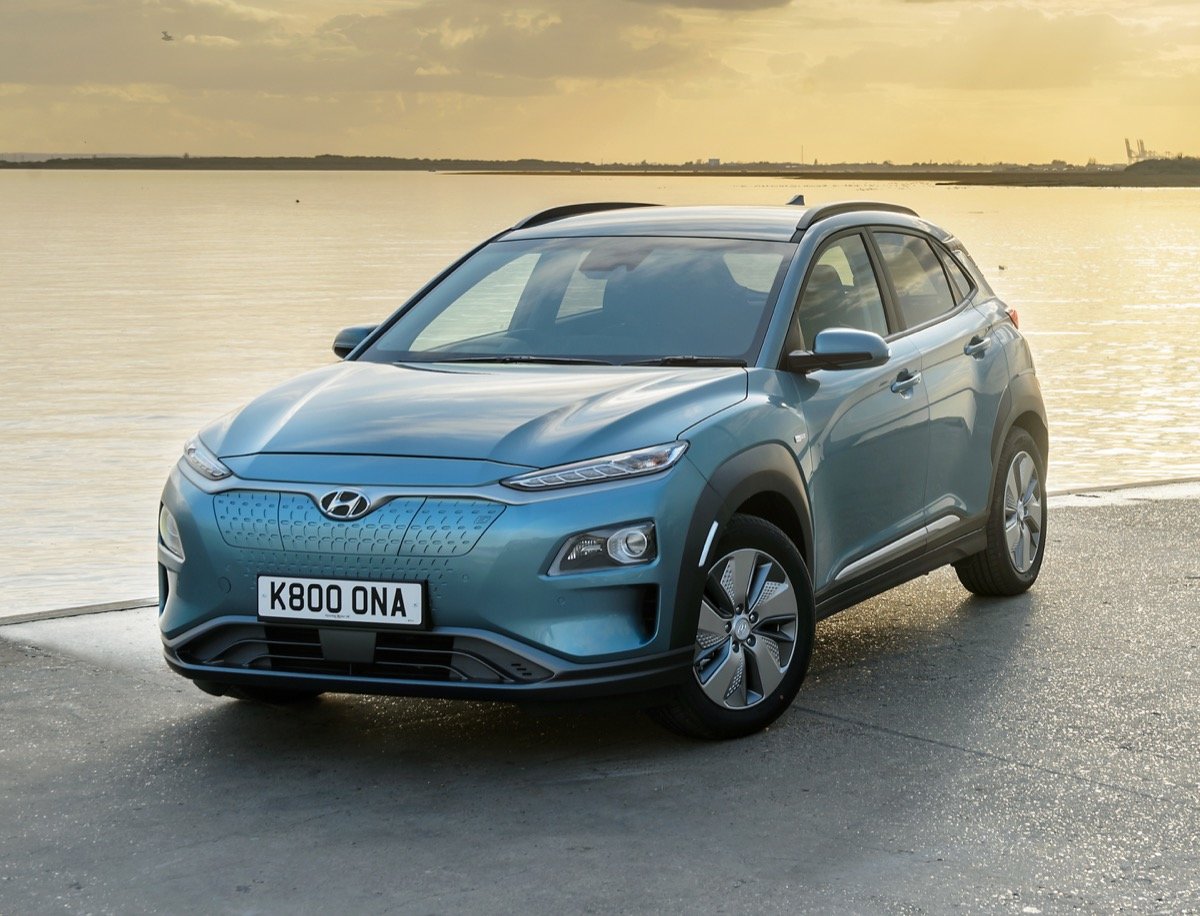
The first-generation Hyundai Kona has slipped into cheap hybrid territory, and stands out thanks to its quirky styling and impressive efficiency. The full hybrid Kona pairs a petrol engine with a battery and electric motor, allowing it to easily return around 50mpg in everyday driving, and even more around town where regenerative braking tops up the battery. It is also backed by a strong reliability record, making it a sensible and dependable choice for the used market.
Inside, the Kona offers a well-laid-out cabin with a clear, intuitive touchscreen infotainment system featuring Apple CarPlay and Android Auto as standard. While the rear seats can feel a bit cramped for taller adults, the boot offers a usable 374 litres of space. Out on the road, it handles tidily and cruises securely on the motorway, offering a smooth and frugal driving experience that perfectly suits daily commuting and family duties alike.
The CarGurus Verdict: "If you don't need the most spacious compact SUV on the market, and you can live with one that isn't quite as sharp to drive as the best, the Kona is a strong contender. It proves that choosing a sensible, dependable small SUV doesn't mean you have to buy a boring one." - Alex Robbins, senior car reviewer
Read our full Hyundai Kona review
CarGurus expert rating: 3 out of 5
CarGurus user rating: 5.0 out of 5
Percentage of good/great deals available on CarGurus: 35.0%
Overall CarGurus rating: 4.3 out of 5
| Pros |
Cons |
| Roomy for passengers |
Small boot on PHEV |
| Low running costs |
Dull to drive |
| PHEV or standard hybrid options |
Lacks polish of e-Niro |
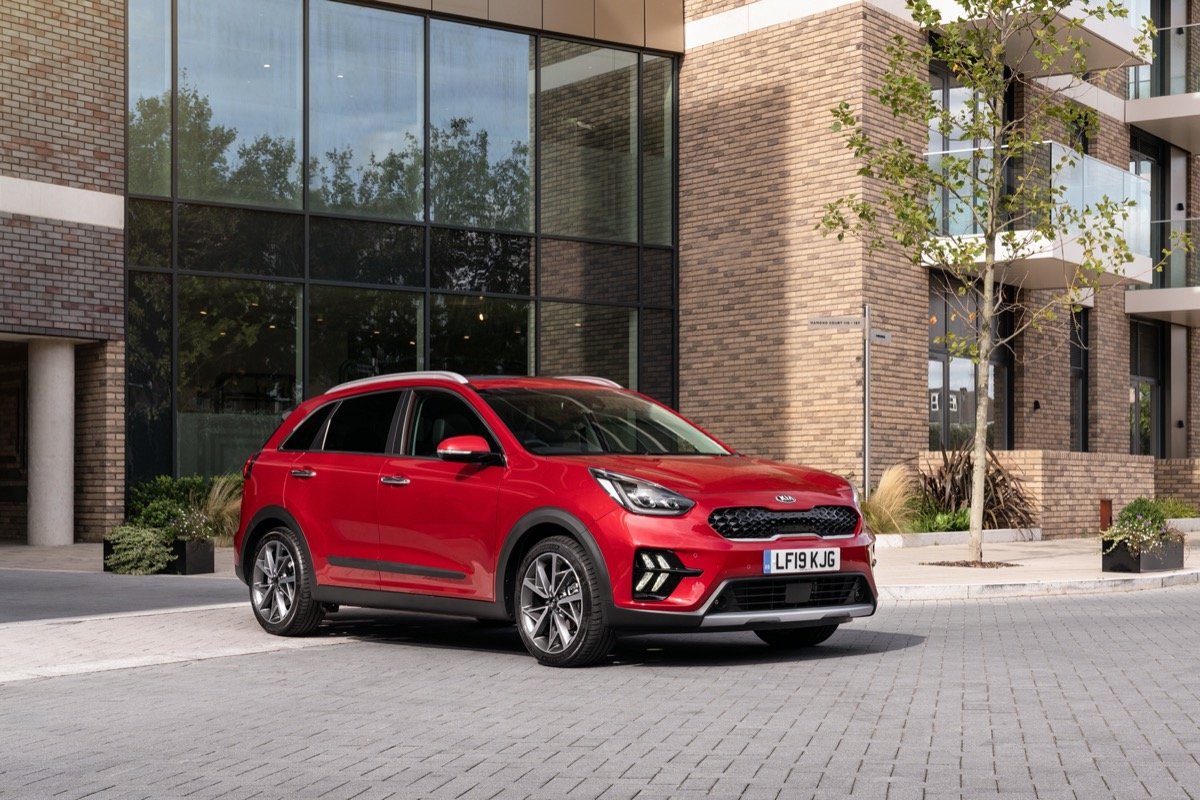
The 2016-2022 Kia Niro is available as a full EV, a plug-in hybrid, or a standard hybrid model. It's the latter we're interested in here, because it's particularly appealing for those who want hassle-free efficiency, returning around 58.9mpg officially and performing well in stop-start town traffic. Inside, the cabin offers reasonable space for four adults, and while the 373-litre boot in the standard hybrid isn't class-leading, it is noticeably more practical than the 324-litre capacity found in the PHEV version, which loses space to its larger battery pack.
On the road, the Niro pairs its electric motor with a petrol engine to produce a combined 139bhp, delivered to the front wheels through a smooth six-speed dual-clutch automatic gearbox rather than the CVT often found in rivals. Performance is perfectly adequate for urban driving, and the light steering makes it easy to manoeuvre around town. Inside, the technology is user-friendly, with a crisp touchscreen that supports Apple CarPlay and Android Auto across the range. Combined with Kia's excellent reputation for reliability and potentially even the remnants of its transferable seven-year warranty (for later models), a used Niro makes for a highly sensible and budget-friendly hybrid choice.
The CarGurus Verdict: "The first Niro released was a 'self-charging' hybrid, which means you don't have to plug it in so, in addition to other SUVs, that meant it also competed with conventional hybrids, such as the Toyota Prius hatchback." - Alex Robbins, senior car reviewer
Read our full Kia Niro review
CarGurus expert rating: 4 out of 5
CarGurus user rating: 4.6 out of 5
Percentage of good/great deals available on CarGurus: 32.2%
Overall CarGurus rating: 4.3 out of 5
| Pros |
Cons |
| Choice of electrified powertrains |
Not much fun to drive |
| Futuristic styling |
Sloping roofline compromises rear headroom |
| Low running costs |
Fidgety ride of EV and PHEV models |
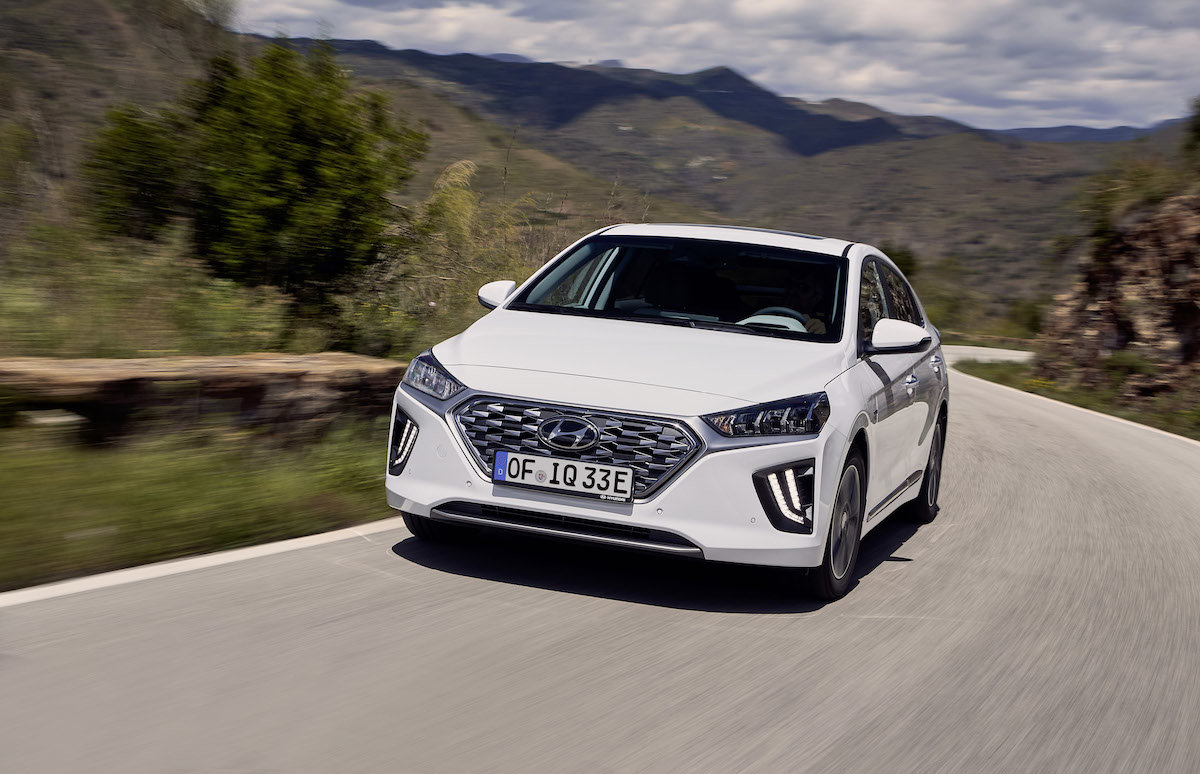
The Ioniq is essentially Hyundai's take on the Toyota Prius, and is available as a standard hybrid, a plug-in hybrid, or a full EV. Its aerodynamic design helps it to deliver exceptional fuel economy that helps keep daily running costs impressively low. The standard hybrid model pairs a 1.6-litre petrol engine with an electric motor to officially return up to 83.1mpg. Inside, the cabin is well-built and spacious, offering a generous 443-litre boot in the self-charging hybrid, which easily accommodates family life (note that the PHEV's battery reduces this to 341 litres).
On the road, the Ioniq delivers a composed and capable driving experience that is perfectly suited to town driving and motorway cruising alike. Rather than a CVT, the hybrid models utilise a dual-clutch gearbox, which helps prevent the engine from sounding strained under acceleration. While it isn't designed to be a thrilling driver's car, the light, accurate steering and well-contained body roll make it incredibly easy to live with.
The CarGurus Verdict: "Its comfortable cabin and decent on-road manners mean that owning an Ioniq should be a pleasing proposition, and that's before we consider the financial savings and reliability." - Ivan Aistrop, senior editor
Read our full Hyundai IONIQ review
CarGurus expert rating: 4 out of 5
CarGurus user rating: 4.7 out of 5
Percentage of good/great deals available on CarGurus: 32.7%
Overall CarGurus rating: 4.3 out of 5
| Pros |
Cons |
| Good to drive, and comfortable too |
Disappointing interior quality |
| Lively 1.4-litre engine |
1.0-litre model is quite slow |
| Lots of space inside |
Vague steering |
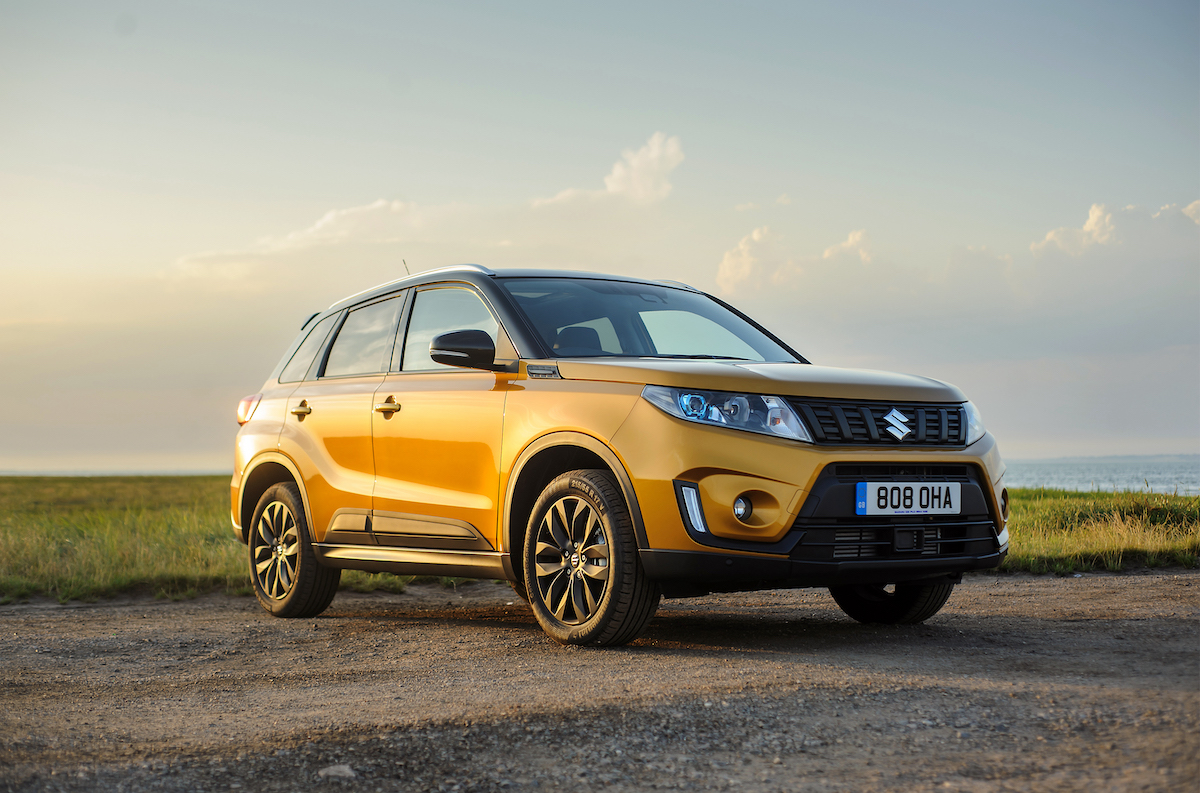
The Suzuki Vitara has long been a staple of the compact SUV class, and is available with a full hybrid powertrain to help keep running costs low. Practicality is a strong point, too, with plenty of headroom and legroom for front and rear passengers. If you opt for the mild hybrid version, you'll get a very usable 362 litres of boot space, though this drops to 289 litres in the full hybrid model to accommodate the battery pack.
Out on the road, the Vitara provides a surprisingly engaging drive with plenty of grip and traction, and the tall body stays upright in corners to give it an agile and alert feel. While the interior plastics might not match the premium feel of some rivals, it makes up for this by being generously equipped across the range, with trims like the SZ-T offering alloy wheels, air-conditioning, and a touchscreen infotainment system as standard. With the rare option of four-wheel drive in this class, the Vitara represents an interesting alternative for those seeking an affordable, electrified family car.
The CarGurus Verdict: "The Suzuki Vitara isn't an obvious choice in the compact SUV market – but it is a great one. With loads of space, a fun driving experience, smart looks, lots of equipment, and an excellent reliability record, the Vitara has lots to offer." - Alex Robbins, senior car reviewer
Read our full Suzuki Vitara review
CarGurus expert rating: 4 out of 5
CarGurus user rating: 4.5 out of 5
Percentage of good/great deals available on CarGurus: 27.6%
Overall CarGurus rating: 4.2 out of 5
| Pros |
Cons |
| Economical around town |
Iffy ride quality |
| Very reliable |
Noisy engine while accelerating hard |
| Spacious and comfortable cabin |
Economy on the motorway is not so impressive |
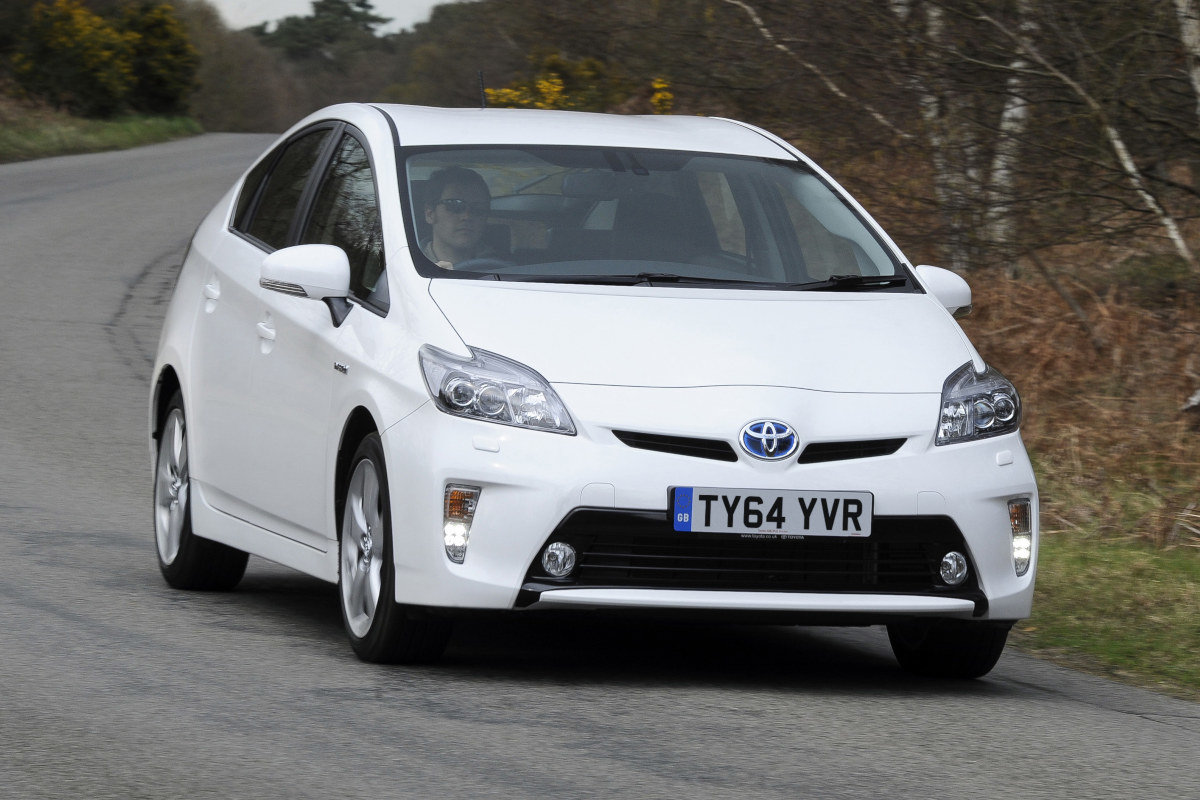
The Toyota Prius is the car that brought hybrid motoring to the masses, and this third-generation model is a fantastic choice for a cheap, dependable used car. Its name is synonymous with low running costs, and for good reason. The combination of a 1.8-litre petrol engine and an electric motor delivers a combined 134bhp, but the real headline is the official 72.4mpg fuel economy figure. Even if you see closer to 60mpg in the real world, that's still impressively frugal. Better yet, thanks to its low CO2 emissions, you won't pay a penny in road tax, making it even cheaper to run day-to-day.
It's not just about saving money, though; the Prius is also a surprisingly practical family car. The five-door hatchback body hides a 445-litre boot, which is more than enough for the weekly shop or a weekend away. Inside, even the entry-level T3 models come with essentials like satellite navigation and air-conditioning, so you don't have to skimp on creature comforts. Add in Toyota's legendary reputation for reliability – a massive plus point when buying used – and you have a spacious, well-equipped, and reassuringly solid hybrid that makes a huge amount of sense.
The CarGurus Verdict: "A used Toyota Prius should offer cost-effective family motoring, especially if most of your driving is around town, and prove dependable, spacious and pretty comfortable. All in all, if it fits into your planned way of using it, the Prius is well worth considering as your next car." - Alex Robbins, senior car reviewer
Read our full Toyota Prius review
CarGurus expert rating: 3 out of 5
CarGurus user rating: 4.6 out of 5
Percentage of good/great deals available on CarGurus: 33.6%
Overall CarGurus rating: 4.1 out of 5
| Pros |
Cons |
| Extremely reliable |
Very boring to drive |
| Comfortable ride |
Rear seat space is only average |
| Touring Sports estate has a big boot |
Boring interior design |
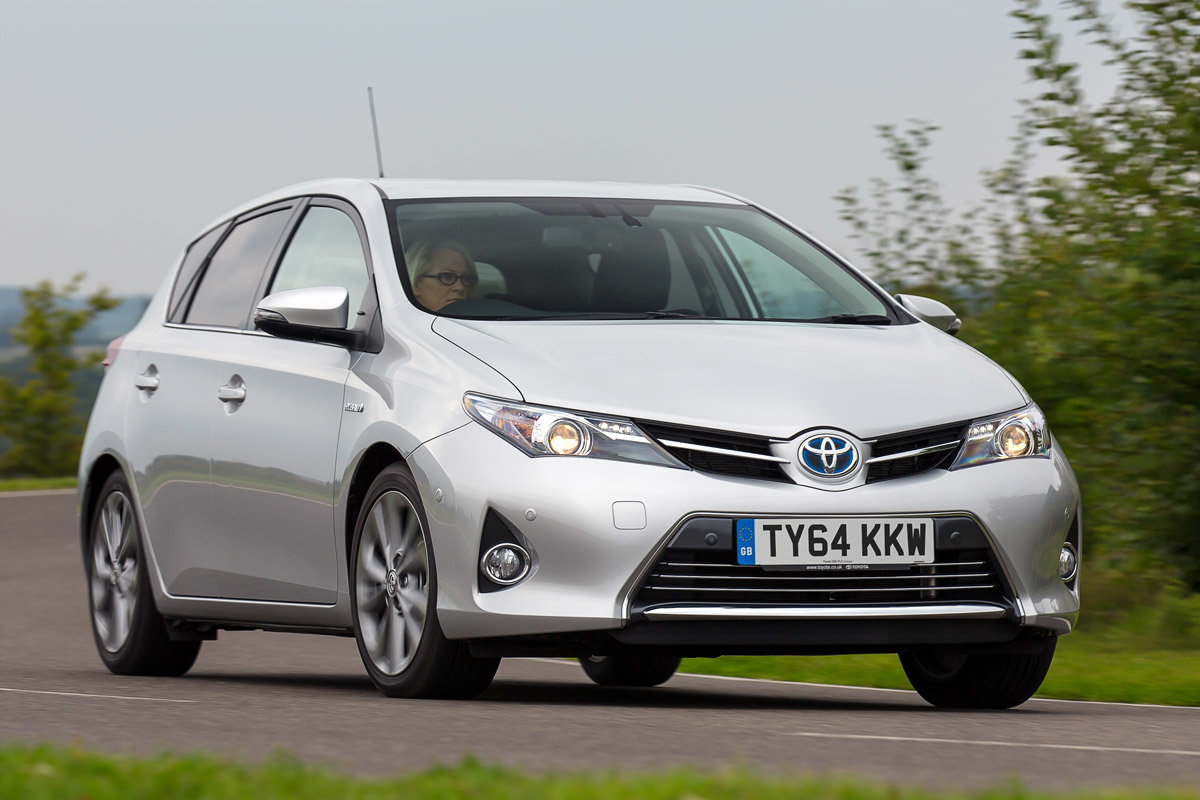
The Toyota Auris has long been a go-to option for those after a dependable and affordable family car, and the hybrid version is a standout choice for keeping running costs to a minimum. While rivals might offer more thrills, the Auris's Hybrid Synergy Drive system is famously reliable and impressively efficient, with owners often seeing around 50mpg in real-world driving. It's the definition of zero-fuss motoring, a car that will simply get on with the job without costing the earth in fuel or maintenance bills.
Practicality is another strong suit, particularly in the Touring Sports estate model. Unlike in many rivals, opting for the hybrid powertrain doesn't eat into boot space, leaving you with a useful 337 litres in the hatchback and a generous 507 litres in the estate. The cabin is well-built and comfortable, and while base models are a bit sparse, Icon trim and above come with welcome features like a touchscreen media system, a rear-view camera, and a DAB radio, making the Auris an easy car to live with day-to-day.
The CarGurus Verdict: "It's easy to dismiss the Auris. After all, many rivals are far sharper, more appealing and more entertaining cars. However, few can touch Toyota's reputation for tremendous reliability." - Lewis Kingston, contributor
Read our full Toyota Auris review

CarGurus expert rating: 3 out of 5
CarGurus user rating: 4.8 out of 5
Percentage of good/great deals available on CarGurus: 36.9%
Overall CarGurus rating: 4.1 out of 5
| Pros |
Cons |
| Pioneering plug-in hybrid promises low running costs for the right buyer |
Dated infotainment and interior finish |
| Only five seats in the hybrid |
Early PHEVs have a smaller battery than post-2019 cars |
| Plenty of room for passengers and their luggage |
Dull to drive |
For a long time, if you wanted a large, affordable plug-in hybrid SUV, the Mitsubishi Outlander PHEV was pretty much your only option. It carved out a unique niche, offering the space and practicality of a big SUV with the low running costs and tax benefits of a plug-in. As a used buy, it's a compelling choice, combining a 2.4-litre petrol engine with an electric motor that gives a real-world electric-only range of around 20-25 miles on post-2019 models. While the batteries do reduce boot space slightly compared to the non-hybrid versions, you still get a very practical 463 litres, which should be plenty for family duties.
The key to the Outlander PHEV's appeal is its potential for rock-bottom running costs, provided your lifestyle fits. If you can plug it in regularly and most of your regular journeys are short, you'll rarely need to visit a petrol station. Even on longer runs, you can expect around 30mpg once the battery is depleted. Unusually for a plug-in hybrid of its era, it also supports rapid charging via a CHAdeMO socket (if you can find one), allowing an 80% top-up in about half an hour, a huge bonus for maximising electric miles. Just remember that the car's fuel-saving benefits diminish big time on a long motorway slog.
The CarGurus Verdict: "The Mitsubishi Outlander is a durable and practical SUV that had a unique selling point in the plug-in hybrid's low running costs. As a used buy it has real merit, and the PHEV still makes a lot of sense." - Vicky Parrott, contributing editor
Read our full Mitsubishi Outlander review
Search for Mitsubishi Outlander
See all
CarGurus expert rating: 4 out of 5
CarGurus user rating: Insufficient user reviews
Percentage of good/great deals available on CarGurus: 0.0%
Overall CarGurus rating: 3.6 out of 5
| Pros |
Cons |
| An absolute hoot to drive |
Not all that fast |
| Surprisingly economical for a sports car |
Hopeless rear seats |
| Good looking |
S-spec cars are very basic |
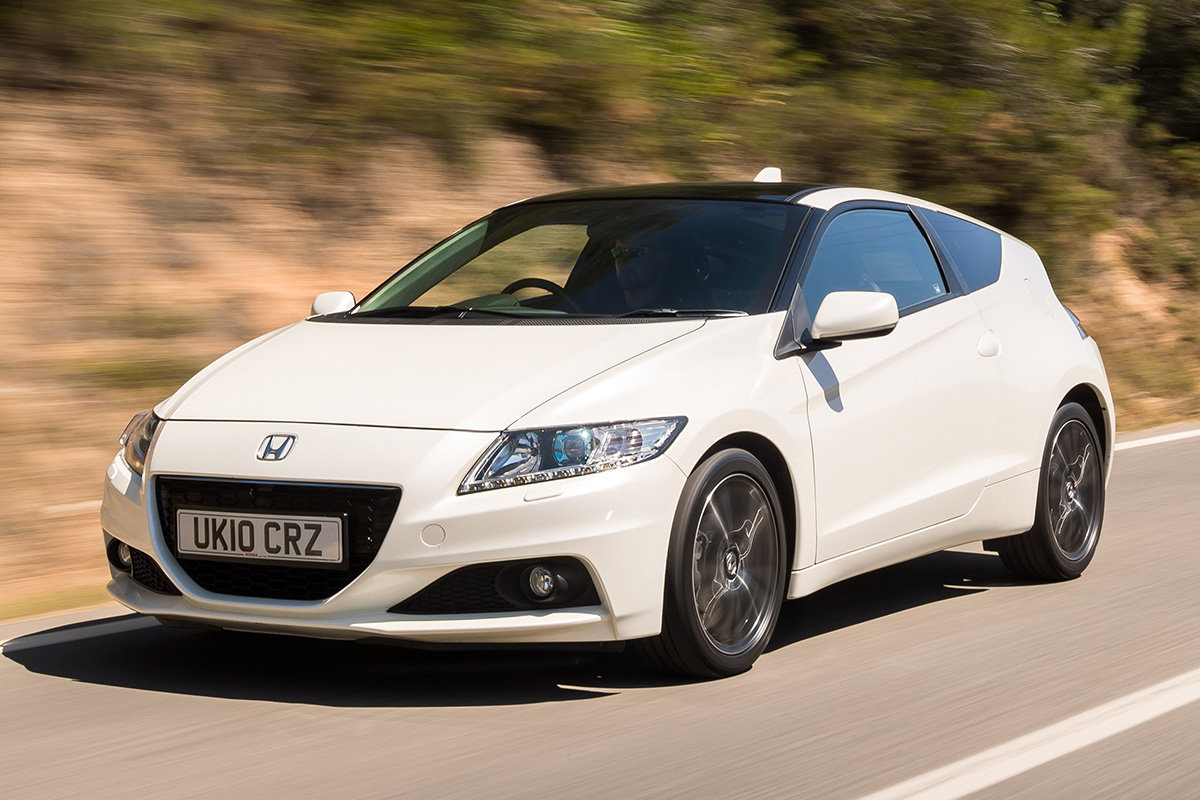
The Honda CR-Z stands out in the used hybrid market for one very unusual reason: it comes with a six-speed manual gearbox. This makes it a rare treat for those who want the fuel-saving benefits of a hybrid without sacrificing driving engagement. Honda's Integrated Motor Assist (IMA) hybrid tech helps the 1.5-litre petrol engine deliver impressive running costs. You can expect to see around 40-45mpg on average, and its low CO2 emissions mean road tax is minimal, making it a genuinely cheap car to run day-to-day.
While it's a sporty-looking coupe, the CR-Z offers a surprising amount of practicality. The boot is a very usable 382 litres – about the same as you'd find in a contemporary Volkswagen Golf – though the tiny rear seats are best reserved for emergencies. The real appeal, however, is how the car drives. The engine, which produces 122bhp (or 135bhp in post-2013 models), gets a useful boost from a 14bhp electric motor, giving you pleasing mid-range punch. Combined with its sweet, responsive handling, the CR-Z is far more exciting than most hybrids, offering a perfect blend of fun and frugality for a cheap used car.
The CarGurus Verdict: "As used cars go, the Honda CR-Z seems to have it all sewn up. It's fun, economical, and reliable, which is pretty much a perfect combination." - Ivan Aistrop, senior editor
Read our full Honda CR-Z review
FAQ
Are used hybrid cars reliable?
Generally speaking, yes. Many of the hybrids on this list – particularly those from Toyota and Honda – have earned outstanding reputations for long-term reliability. Toyota's hybrid system, for example, has been in production for decades and is known for being virtually bulletproof. The key, as with any used car, is to check for a full service history and ensure the hybrid battery is in good health before you buy.
Do hybrid car batteries need replacing, and how much does it cost?
Hybrid batteries are designed to last the lifetime of the car, and most will comfortably exceed 150,000 miles without issue. That said, if a replacement is needed, costs can vary significantly. A new battery for a Toyota Prius, for instance, can cost anywhere from £1,500 to £3,000 depending on whether you opt for a new or refurbished unit. Many manufacturers also offer extended warranties on their hybrid batteries, so it's worth checking what cover remains when buying used.
What's the difference between a hybrid and a plug-in hybrid?
A standard (or self-charging) hybrid uses a small battery that's charged by the petrol engine and regenerative braking: you never need to plug it in. A plug-in hybrid (PHEV), like the Mitsubishi Outlander PHEV, has a much larger battery that can be charged from a wall socket or public charger, giving you a meaningful electric-only range of around 20-30 miles (newer PHEVs offer electric-only ranges of a lot more). PHEVs offer the lowest running costs if you can charge regularly, but a standard hybrid is more convenient if you don't have access to a charger.
Are cheap used hybrids expensive to insure?
Not necessarily. Many of the cars on this list sit in low insurance groups, which helps keep premiums affordable. Superminis like the Toyota Yaris Hybrid and Honda Jazz tend to be particularly cheap to insure thanks to their modest power outputs and reasonable repair bills. As always, it's worth getting a few quotes before you buy, as insurance costs can vary depending on your age, location, and driving history.
Can I drive a used hybrid in a Clean Air Zone for free?
It depends on the car and the zone. Most self-charging hybrids that meet Euro 4 petrol emissions standards (generally cars registered from around 2006 onwards) are exempt from Clean Air Zone charges in cities like Birmingham, Bristol, and Bath. Plug-in hybrids are also typically exempt. However, rules can vary between zones, so it's always worth checking the specific requirements for the area you'll be driving in before you buy.
Is a used hybrid worth it if I mainly drive on the motorway?
Hybrids deliver their best fuel economy in stop-start urban driving, where the electric motor can do the most work. On the motorway, the petrol engine does the heavy lifting, so the fuel-saving advantage is very much less pronounced. That said, you'll still see decent economy from most hybrids on longer runs: a Toyota Prius, for example, can return around 55-60mpg on a steady motorway cruise. If your driving is almost exclusively motorway miles, a diesel will likely be more efficient, but for a mix of town and motorway, a hybrid remains an excellent choice.
What Makes CarGurus Best Cars Guides Different?
Most car buying websites publish lists of the best cars across a variety of categories, with recommendations generally driven by editorial expertise. Here's what makes our best cars guides different: we combine the insights and verdicts of our team of car-testing experts with other factors that we know matter to buyers - real owner experiences and current market value.
To that end, our expert reviewers come from some of the UK's most trusted automotive publications including What Car?, The Telegraph, Auto Trader, Electrifying.com, and Carbuyer. They put each car through real-world testing, and create detailed reviews noting performance in a range of categories, from practicality and driving manners to running costs and reliability.
But we don't stop there when it comes to creating our best cars guides; we also analyse hundreds of thousands of used car listings on CarGurus UK to track which models consistently offer the highest percentage of best deals relative to how many are listed for sale. Then we factor in user reviews and ratings gathered on CarGurus to get feedback from people who actually live with these cars every day. Our best cars algorithm then creates a final Overall CarGurus rating that combines expert ratings, user reviews, and the percentage of listings on CarGurus UK rated as good or great deals. This three-way approach reveals not just which cars excel on paper, but which ones deliver satisfaction and value when you're ready to buy.
The CarGurus UK market data in this guide was last updated in September 2026. Values were accurate at the time of publication and should be used as a guide only.
Related Topics: