The Renaultsport Twingo 133 is a perfect demonstration of the fact that when it comes to hot hatches, power isn't necessarily everything. As such, it makes for a very interesting used buy, and can be a fraction of the price of a larger, more powerful hot hatch such as a Volkswagen Golf GTI.
And with the transition to electric power and increasing pressure on cars to meet ever-more-stringent emissions targets, the idea of a light, naturally aspirated small hot hatch is not one you're likely to see repeated any time soon: they really won't be making them like this anymore.
In this guide we pull apart the Twingo's pros and cons, as well as identify any common faults to be aware of.
Renaultsport Twingo 133 Buying Guide
- Driving a Renaultsport Twingo
- Standard versus Cup
- Renaultsport Twingo vs Suzuki Swift Sport
- What to Look For in a Renaultsport Twingo
- FAST FACTS
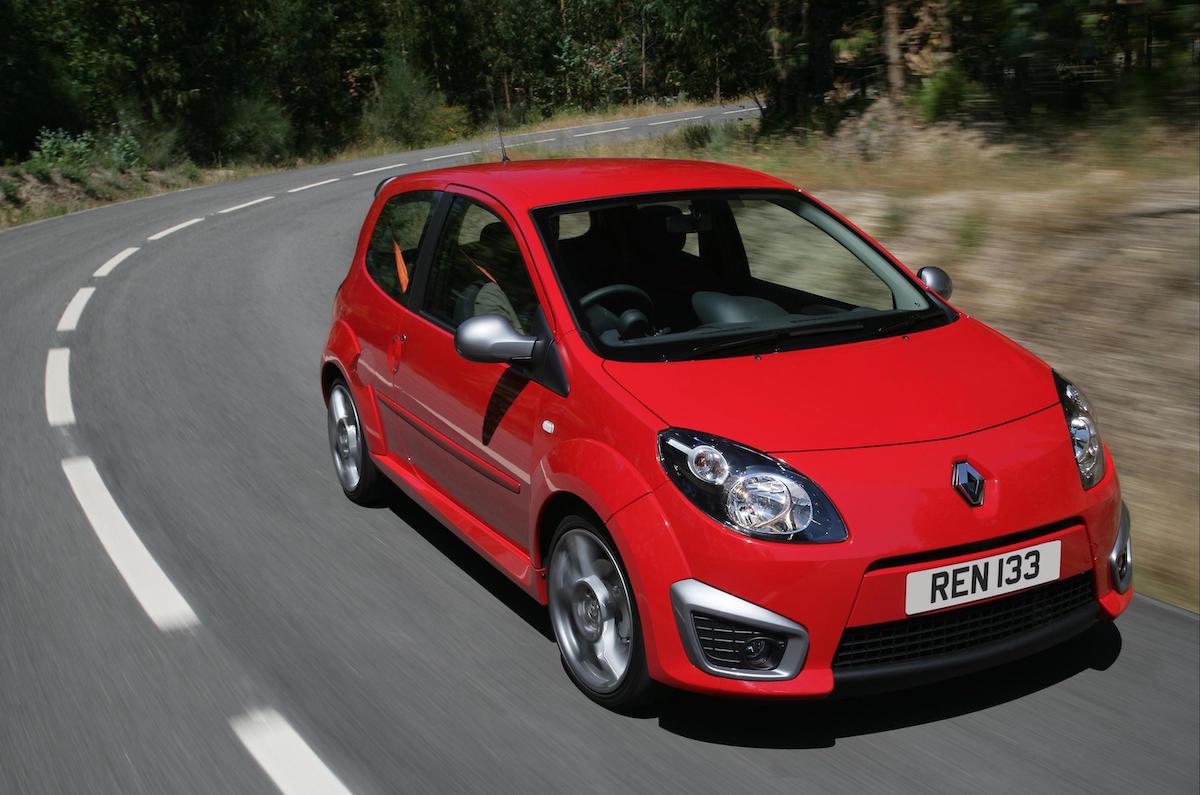
Driving a Renaultsport Twingo
Although the seating position in the RS Twingo is lower than the standard car’s, with thicker seat bolstering, it’s still hard to escape the feeling you're perched up high. The steering could do with a wider range of adjustment, too, but you’ll forgive it these foibles the moment the first corner arrives. Boy, does this car handle well.
That’s particularly the case with the Cup chassis specified, which all but eliminates body lean and offers unbelievable levels of grip for what is basically still a city car. What we have here is one of those rare cars in which it feels like you can turn in at virtually any speed, or plant the throttle at any point in the corner, and it’ll just go wherever the steering wheel is pointing.
The trade-off is that the Cup chassis makes the Twingo ride with all the compliance of a concrete slab. Along a typical B-road, it’s firm and then some, which will no doubt put a lot of people off. If that’s the case, then the standard Renaultsport Twingo 133, on its smaller wheels and more compliant suspension, breathes more easily over bumps and still corners better than most other small cars.
In either instance, the engine is solidly good rather than spectacularly great. It starts to move with intent beyond about 3,000rpm, and then gives a little kick again at 4,500rpm to take it through to its 7,000rpm redline. Given that peak power arrives only just before that point, you need to work the engine to get the best from it, and it’s hard not to think that it’d have benefitted from a gearbox with six speeds rather than the five it has, not to mention a sweeter shift action. However, at this budget, such faults should be easy to overlook.
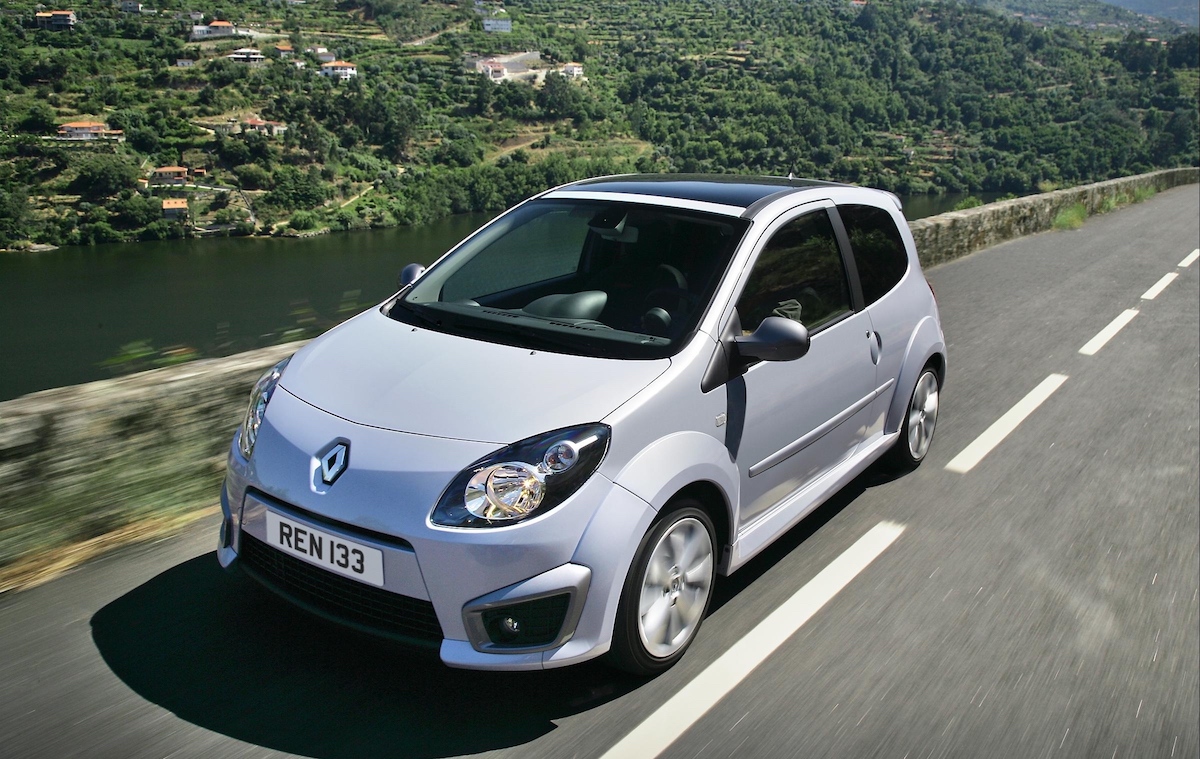
Standard versus Cup
As for the differences between the two main versions of the car, the Cup featured a ride height lowered by 4mm, 17-inch wheels in place of the standard 16-inch rims, and springs and dampers that were 10 per cent stiffer. The two-piece sliding and folding rear seats were also replaced with a one-piece bench to save weight, and the standard car’s air-conditioning and automatic lights and wipers were ditched. If that equipment cull sounds too hardcore but you like the idea of the stiffer suspension, it was possible to specify a standard model with the Cup chassis from new.
Both the standard and Cup models receive thicker anti-roll bars and a wider front and rear track than the standard Twingo, while the engine’s four-into-one manifold gives these little cars a hard-edged growl.

Renaultsport Twingo vs Suzuki Swift Sport
To read the stats associated with the Renaultsport Twingo 133 is to wonder if it might well just be a Suzuki Swift Sport by another name. Both, for example, weigh in at around 1,050kg and both are powered by 1.6-litre engines that produce 118lb ft of torque at an identical 4,400rpm. The Suzuki has three more horsepower, but the Renault edges it in top speed by 4mph. In the 0-62mph sprint, there’s nothing in it, at 8.7 seconds apiece.
The two cars also share the same sense of being the cheeky upstart, with all the flamboyant body styling of a fully fledged hot hatch. In the Twingo’s case, that’s an aggressive front bumper, some swollen wheelarches, a sporty spoiler, a chrome exhaust tip and big wheels. It really looks the part, albeit with less power and at a significantly lower cost than the larger Renault Clio and Megane.
What to Look For in a Renaultsport Twingo
If you’ve got your heart set on a car with the Cup chassis (be it the full Cup model or the more sensibly equipped standard 133 with Cup suspension), be sure to take an extensive test drive to be sure you can live with the hard ride.
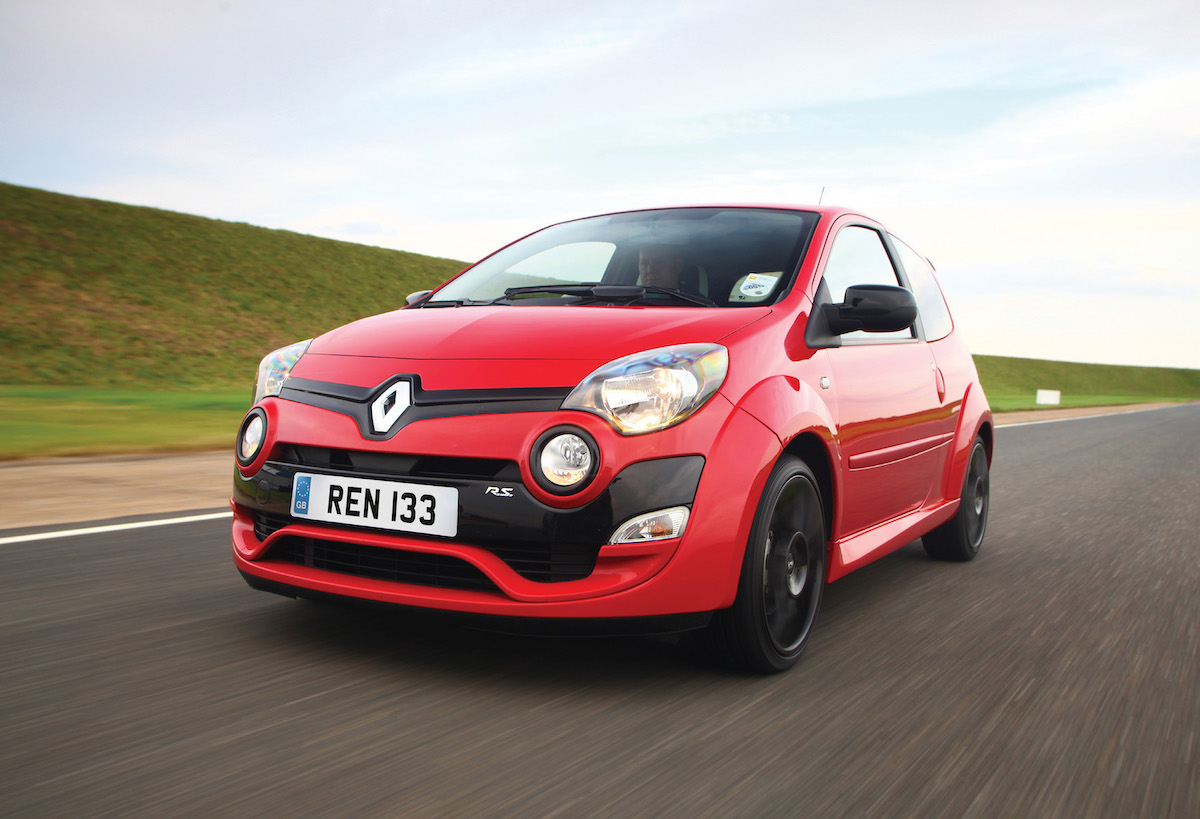
If you’re after a slightly rarer model, look for a car in Gordini or Silverstone trim, which added the likes of leather trim and numbered plaques, or track down a facelifted Twingo 133 from 2012 onwards (pictured above). These are easy to identify on account of their distinctive (or should that be divisive?) headlight arrangement.
Once you’ve found a car that’s to your liking, your first job is to check its MOT history, both for how long is left, for what’s needed to be done, and for what’s been fixed in recent years. A sheet full of advisories from the last test will, at the very least, warrant some haggling. The same goes for service history and maintenance. A vehicle history check is also worthwhile to be fully confident that your candidate is clean and accident-free. Whatever Renault Twingo 133 you choose, you can rest assured you’ll own a proper Renaultsport product from an era when the French company was building some of the best hot hatches around, and all for less than half its original price.
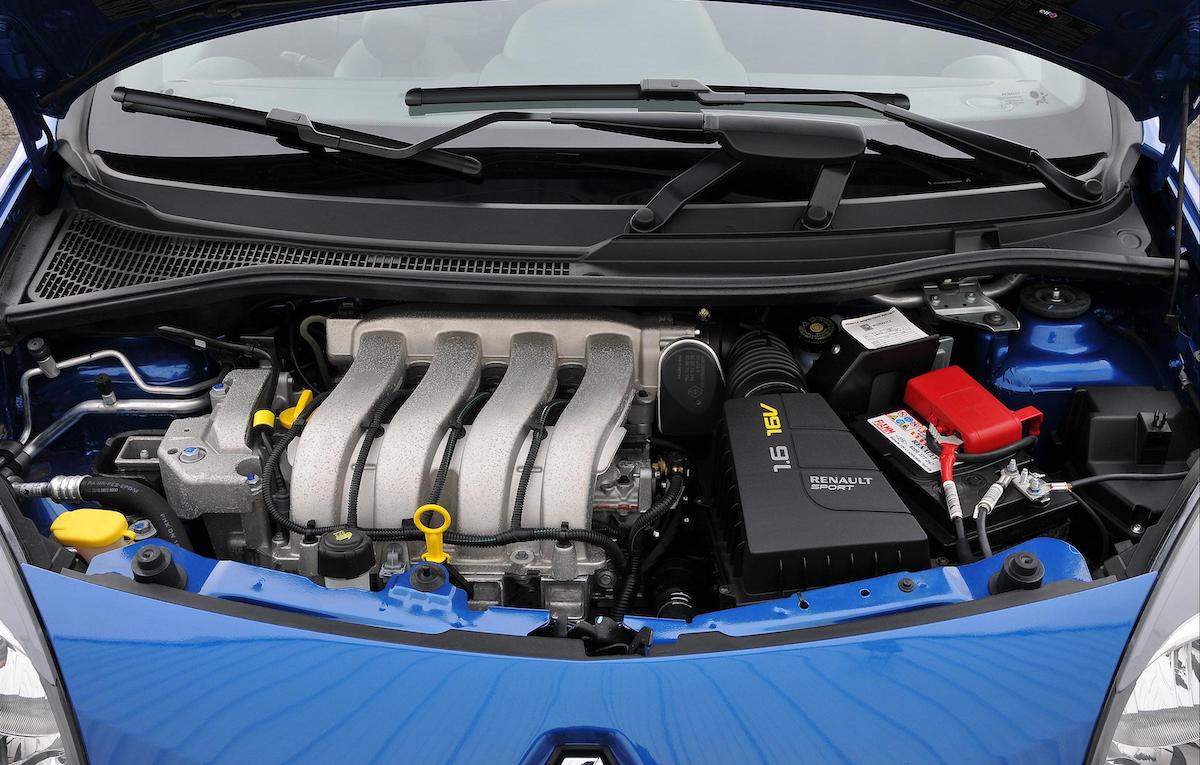
Engine
Listen for any knocks from the front of the car. If they happen when you accelerate, it’s likely to be worn engine mounts. As far as paperwork goes, you’re looking for as much history as possible, with evidence of servicing every year or 12,000 miles. The engine needs a new cambelt at five years or 72,000 miles, but many Twingo owners prefer to do it sooner as a precaution. An engine that isn’t willing to rev could just be in need of a new coil pack, which is a simple DIY job and shouldn’t cost much more than £20 for the part.
Some more adventurous owners have been known to swap in the turbo engine from the Megane RS250, to make a mini hyper hatch out of the plucky Twingo.
Gearbox
A crunching gearbox could spell big bills ahead. Clutches are generally sturdy, with a heavy feel, but check the bite point. As for the shift itself, it’s not a high point but can be tightened by polybushing the mounts. There are also aftermarket shift mechanisms available for even more precision.
Driveline
The Renault Twingo RS is front-wheel drive. Turn the steering all the way left and all the way right, in order to inspect the drive shafts and, more importantly, the rubber boots going to the wheel hub and the gearbox. Tears and leaks here are not good news.
Suspension
Hot hatches such as the Twingo ride hard and have a tough time on rough roads. They’re also driven hard by their enthusiastic owners. Turning left and right will allow you to listen for clunky top mounts, and also listen for knocking from worn ball joints in the lower suspension arms during cornering. In either instance, you’re looking at a couple of hundred pounds to put things right.
Brakes
Be sure to visually inspect the discs, and feel for a lip. Listen for screeching on your test drive and feel for a vibrating steering wheel when braking hard, which could indicate warped discs. As a popular car for track days, upgrades to the brakes, tyres, and suspension are readily available.
Wheels
Inspect the wheels visually for kerbing and buckling, and check the condition of the tyres for tread depth, camber wear, and cracking. A good set of premium-brand tyres all round – Michelin, Pirelli or otherwise – is a good indication that the car has been looked after.
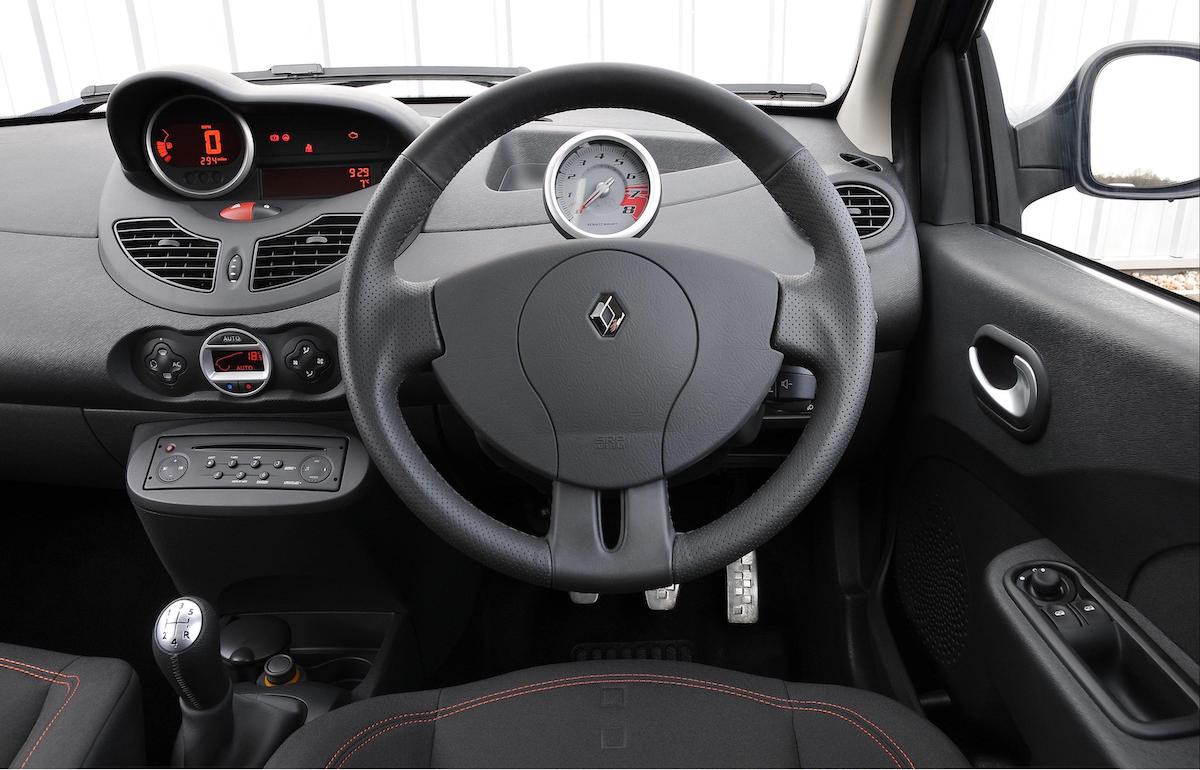
The Twingo’s electronics are worth inspecting, too. Check the carpets are dry and that the LCD speedo display that sits on top of the dashboard is good and bright.
FAST FACTS
RenaultSport Twingo 133 Built 2008-2013 Power 131bhp @ 6,750rpm/118lb ft @ 4,400rpm Acceleration 0-62mph in 8.7 seconds Top speed 125mph


