Honda Civic Review (2016-2021)
Honda Civic cars for sale
4.0
Expert review
Pros
Dependable family transport
The Type R hot hatch is tremendous fun
Choice of frugal engines
Cons
Frustrating infotainment
Interior quality could be better
Regular models are rather ordinary to drive

The CarGurus verdict
The Honda Civic is a worthy and practical family car. It drives well, and has some of the most frugal engines you’ll find in the class, one of the most comprehensive suites of standard driver aids, and a comfortable, roomy cabin.
Its major crime is an infotainment system that is underwhelming at best and sometimes frustrating, and the fit and finish inside can feel a little patchy: certainly, a Volkswagen Golf, a Ford Focus, a Skoda Octavia, a Seat Leon, a Hyundai i30, and a Kia Ceed all have much better infotainment systems and more appealing interiors. In fact, the sheer breadth of competition that the Civic faces is one of its biggest problems. Ultimately this does feel like a car that’s slightly lagging rivals that are a little better to drive, nicer to sit in and offer a better media interface.
Sure, if you go for the 1.0-litre Honda Civic in SR trim or up then you have an affordable, safe, and enjoyable family car with all the comforts you’d expect, and plenty of safety equipment. But the Honda Civic remains a good offering in a class of exceptional contemporaries.

What is the Honda Civic?
The Honda Civic has been around since 1972, so it’s something of a default in the family hatchback class. Civics have existed for longer than the Volkswagen Golf, and far longer than the Ford Focus. If you like your cars, or if you simply want transport from A to B, you’ll have heard of the Honda Civic and its solid reputation for reliability, although this generation has been a little more afflicted by foibles than most (see Reliability section, below).
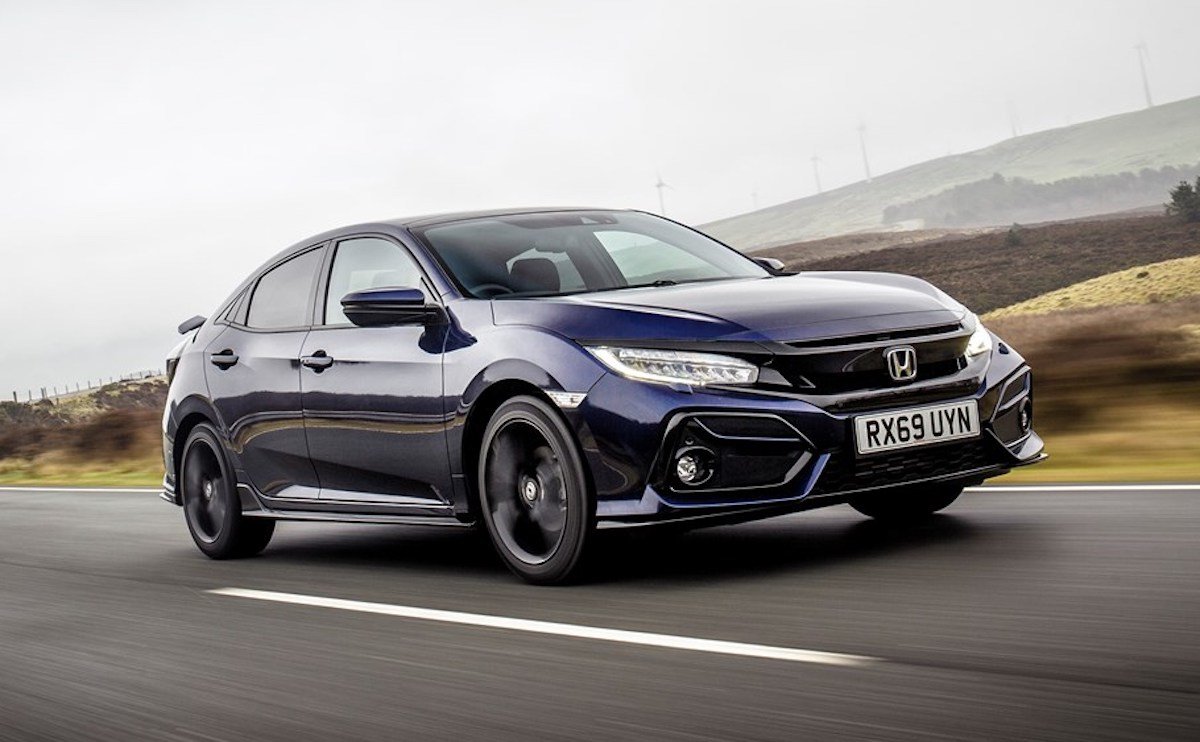
This 10th generation of the Civic was launched in 2016 and flaunts flamboyant if divisive styling, a mainstay Civic feature the since the wildly futuristic-looking eighth-generation car.

How practical is it?
The raked roofline makes the Civic look a little sportier than your average family hatchback, yet it’s only available as a five-door and offers good levels of passenger room. A six-footer might find headroom a little tight in the back, but most adults will be perfectly comfortable, and rear kneeroom is particularly generous.
The 478-litre boot is a really good size, too, with a long boot floor that’s great for lugging buggies and other bulky items. Mind you, there are no fancy sliding rear seats or neat storage solutions, and an equivalent Skoda Octavia is roomier still in terms of its boot and passenger space. The Civic is just about the best-of-the-rest for space, though. A four-door saloon version of the Civic was sold from 2018, which offered toned-down styling, but it wasn’t a big seller. It wasn't as practical, either, because access to the boot space was more limited.
What's it like to drive?
With the option of two petrol engines and one diesel, the Civic’s range is more limited than the broad choices offered by rivals such as the Volkswagen Golf, the Ford Focus, and others. They’re strong units, though, while five trim levels means there is still a Civic to suit most needs, and that’s not including the explosive Civic Type R hot hatch.
On the petrol side, the Civic has a 127bhp 1.0-litre engine or a 180bhp 1.5-litre unit, both of which are turbocharged and can be had with a six-speed manual or a CVT automatic gearbox. Don’t be afraid of the little 1.0-litre; we’d pick it over the peppy 1.5 because it does a fine job of making the Civic feel fast enough, and it’s cheaper to run than the bigger engine.
The 118bhp 1.6-litre diesel is punchy and a great option for high-mileage drivers, but most will be only available with the six-speed manual gearbox. From late 2018, it was offered with a decent nine-speed automatic, but demand was so low that it was removed from sale only a year or so later.
The manual gearbox is a pleasure to use, with a light, snappy shift from a gearstick placed high on the dashboard. In fact, the Civic is very sweet to drive generally. You don’t get the sort of finesse of a higher-spec Ford Focus, but there’s still a happy balance between easy motorway manners, supple ride comfort, and grippy, predictable handling, especially if you avoid bigger wheel choices. EX trim levels and up are fitted with clever adaptive dampers as standard, which you can stiffen or soften yourself, but the firmer settings make the Civic a little jarring over poor surfaces.
If none of that sounds exciting enough, then the Type R is truly brilliant as a usable, unflappable daily driver or a rabid, full-on performance hatch. It’s more visceral and exciting when driven hard than most of its key rivals, including the Ford Focus ST.

Technology, equipment and infotainment
Entry-level SE cars don’t get sat-nav, just a straightforward FM and DAB radio with USB connectivity and a 5.0-inch screen. SR trim levels and up have a 7.0-inch colour touchscreen system with sat-nav, Apple CarPlay and Android Auto, but the system can be slow, and the graphics aren’t as good as those in the contemporary Volkswagen Golf or the Seat Leon. A 2019 facelift added rotary dial control and shortcut switches, which make it easier to use.
SE models come with extensive safety equipment (see below), plus alloy wheels, air-con, and an eight-speaker sound system. SR adds parking sensors, dual-zone climate control, and the aforementioned infotainment system, along with a reversing camera, automatic wipers, a leather steering wheel, electrically adjustable driver’s lumbar support and a rear centre armrest, as well as styling upgrades. We think that's more than enough to justify a circa £2,000 price jump (when it was new, and the gap will have narrowed on the used market) and makes the SR a more useable and comfortable car. It’s our pick of the trim range.

Honda Civic running costs
The Honda Civic promises to be very affordable to run. The diesel is particularly frugal, and owners often report returning over 60mpg without trying very hard. The 1.0-litre can manage 45mpg even with some around town work, and more than 50mpg in motorway use, while cars fitted with the CVT transmission seem to achieve similarly impressive results. The 1.5-litre petrol is a big jump in price, and there are far fewer used examples around, but if you fancy the extra power, it’ll likely do around 40mpg in mixed use, and close to 45mpg on the motorway. Generally, in real-world use, the Civic’s engines were amongst the most frugal in the family hatchback class of this era.
Insurance groups range from 15 to 22 for standard Civics, which is very competitive with rivals. The only area where the Civic may be worse than the obvious alternatives is its depreciation, because it’s likely to lose its value a little faster than many of them, especially desirable alternatives such as the Volkswagen Golf. The flipside, of course, is that today’s used examples are comparatively affordable.
The Honda Civic Type R is a whole other level of cost, and that's because it’s a whole other level of car. That said, the Type R will manage a respectable 30-35 mpg if you drive it moderately. But nothing about it encourages moderate use, and it holds its value very well given its desirability on the used market.

Honda Civic reliability
The Honda Civic has a good reputation for reliability, which it’s earned over many decades. However, this 10th-generation model hasn’t performed quite as well in some surveys of the day.
It came 50th out of 75 cars surveyed in the 2022 Auto Express Driver Power survey, and 22nd out 24 models in the 2021 What Car? Reliability Survey’s family hatchback category.
Some owners complain of interior trim rattles and a few infotainment glitches. As with any diesel, the 1.6-litre unit in the Civic is prone to diesel particulate filter (DPF) issues if the car is driven predominantly around town rather than on the motorway.
Honda offered a three-year, 90,000-mile warranty on this Civic, which is generous from a mileage point of view, but will now have expired on even the youngest used examples. Several rivals offered five- or even seven-year warranties, and these might still have some cover.
- The Honda Civic is front-wheel drive only; there’s no four-wheel drive option, even in the Type R. However, the Civic does have plenty of grip and one of the most comprehensive suites of safety aids of its day. Traffic sign recognition beams the relevant speed limit onto the driver’s readout, plus the car will automatically apply the brakes if it senses an imminent collision. There’s also adaptive cruise control and – if you go for the 2019 facelifted model – full LED headlights.
- As well as those LED headlights and the infotainment upgrades mentioned above, the Honda Civic’s 2019 facelift bought tweaked styling and interior finish, a neater looking grille and a series of different alloy wheel designs.
- Honda was famous for the high-revving, naturally-aspirated engines that characterised its cars – particularly performance models such as the S2000 and, of course, the Civic Type R. Don’t be put off by the fact that the Type R (and all the standard Civics) have turbocharged engines. They’re all great, and the trademark Civic high-set gearshifter helps to make the most of them if you go for a manual.
- The best all-rounder: The 1.0-litre VTEC turbo engine is our pick. It’s a fizzy little three-cylinder unit and, despite its small size, has enough power to make the Civic feel light-footed and responsive. You can also get the petrol with an automatic. Go for the SR trim level
- For higher mileage users: The diesel is the one you want because it gives better fuel economy than the petrol models, especially on long motorway jaunts. Again, go for the SR trim level.
- If you want a potent performance car: The Honda Civic Type R is one of the best front-wheel drive cars on sale, and it won’t disappoint if you’re after a focussed, invigorating hot hatch that’s always ready to thrill. This Type R (known by the code FK8) is more pliant and forgiving than the slightly unhinged FK2 variant that preceded it, but it’s still a completely different animal from standard Civics. You can sometimes forget that a Volkswagen Golf GTI is the performance version of a friendly family hatch, but there’s no danger of that in the Type R. For some, that’ll be exactly why they love it. For others, it’ll be exactly why they don’t.
- If you fancy a sporty Civic without the running costs: Then the Sport Line trim is for you. Complete with contrasting red stitching on the leather seats, 17-inch black alloys, a rear spoiler and diffuser, it has much of the Type R’s striking styling but comes with the 1.0-litre petrol engine to keep your costs down.


