The 2026 Nissan Leaf is a pure electric family hatchback. The original Leaf was the first mainstream electric car - so it’s got heritage that no other EV can compete with. This third generation Nissan Leaf brings a sleek new design, as well as impressive efficiency and tech to this British-built electric car, although it’s still going to have to offer good value if it’s to hold its own against strong competition.
Pros:
- Sharp styling
- Encouraging signs for efficiency
- Clever Google-backed touchscreen system
Cons:
- Not the biggest boot in its class
- Not as much fun to drive as a Cupra Born
- Warranty falls short of the best in class
2026 Nissan Leaf Review
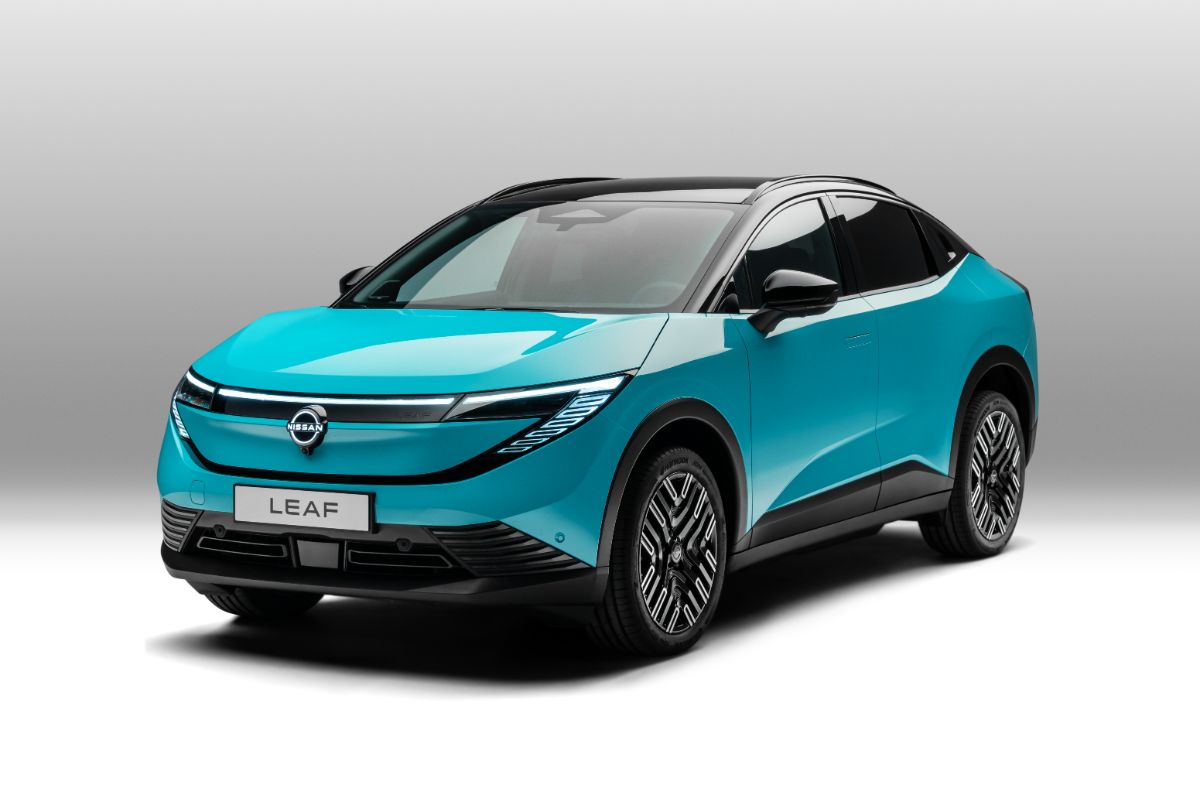
What is the Nissan Leaf?
The Nissan Leaf is the original electric car; the first EV to go mainstream when it was unveiled in 2010. Since then, Nissan has sold more than 650,000 examples of its electric trailblazer, although in Europe its popularity has dwindled in recent years next to newer, longer-range alternatives like the Renault Scenic, Kia Niro EV, Hyundai Kona Electric and Volkswagen ID.3.
Now, the all-new Mk3 Nissan Leaf is here to resurrect this icon of the electric era. It’s built in the UK at Nissan’s Sunderland factory – and even the battery pack and cells will be manufactured at the AESC battery plant, also in Sunderland.
The Nissan Leaf, then, is the only British-built electric car you can buy. For now, at least, until imminent new models including the electric Nissan Juke goes into production there. The Juke and Ariya electric SUVs will sit above the Leaf in the lineup, while the electric Nissan Micra (a re-styled version of the Renault 5) sits below it.
The Leaf will be available with two lithium-ion NMC batteries of 52- or 75kWh, giving a WLTP range of 271- and 375 miles respectively. At 4.35m long it’s a fraction shorter than rivals like the Skoda Elroq and Renault Scenic E-Tech, but is spot on for the Kia EV3, Cupra Born, Volvo EX30 and VW ID.3.
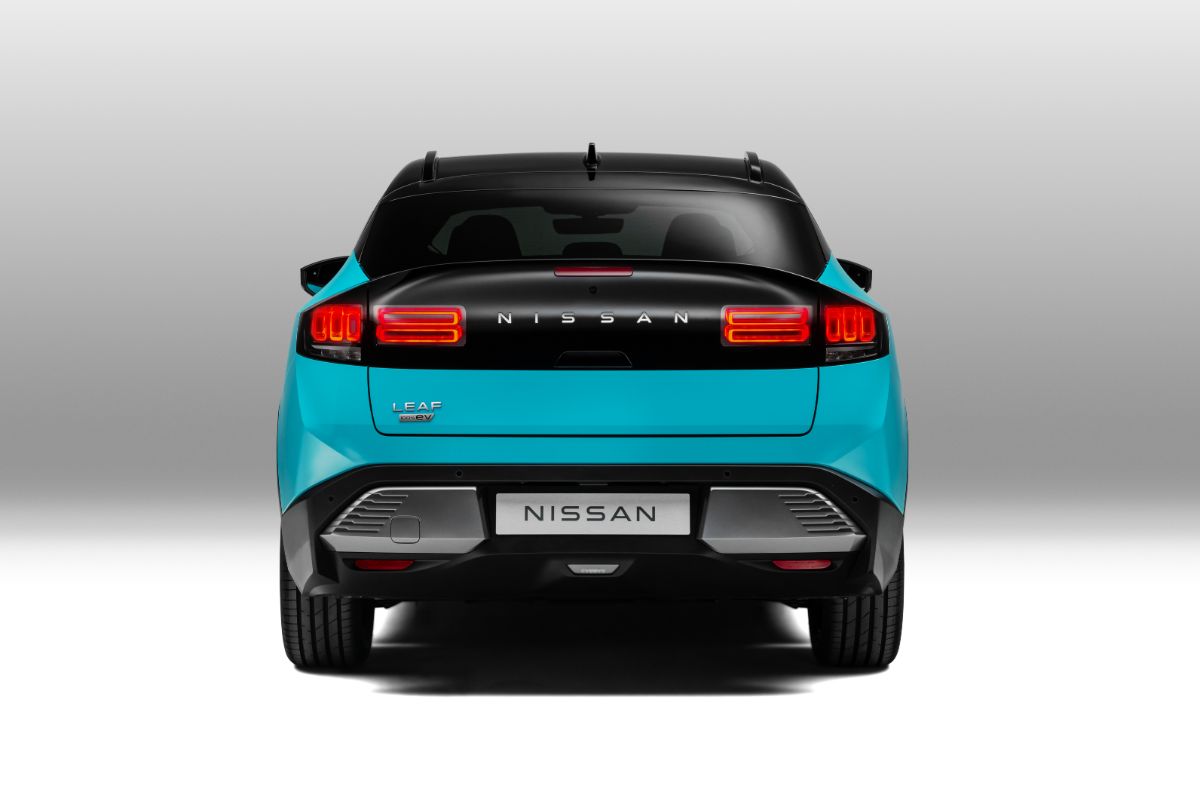
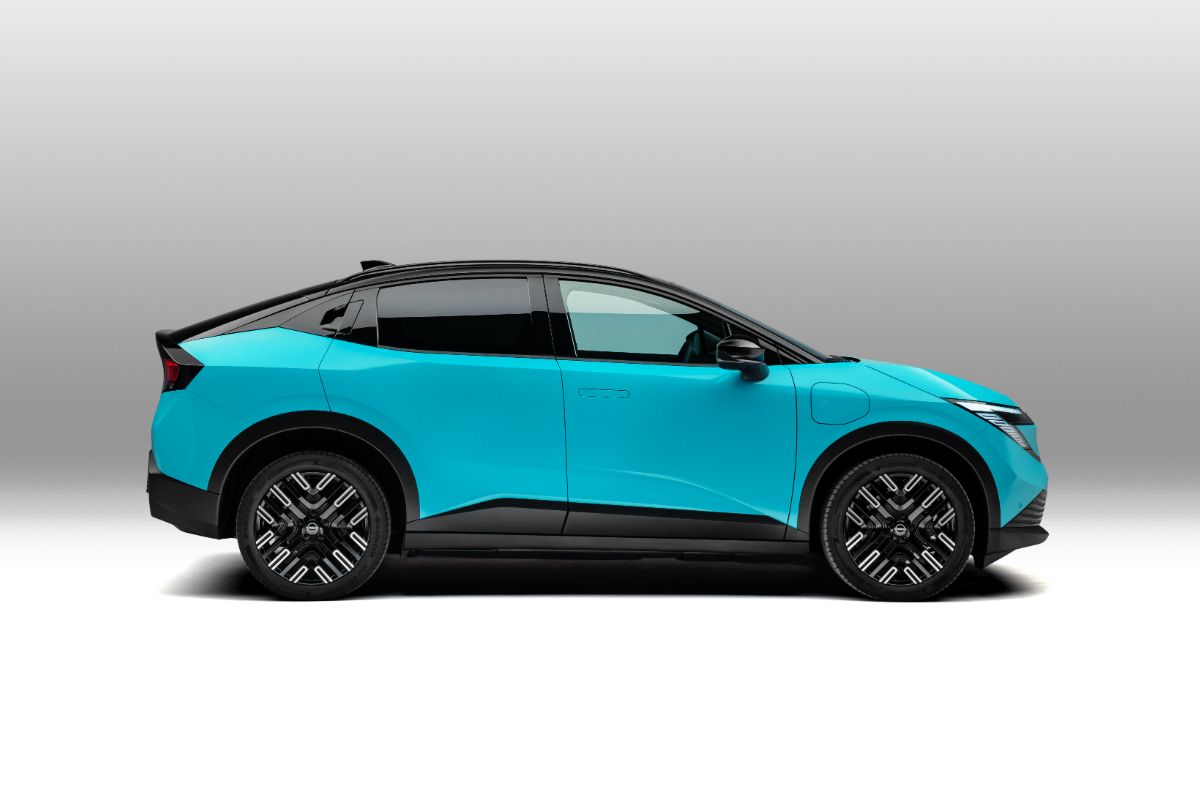
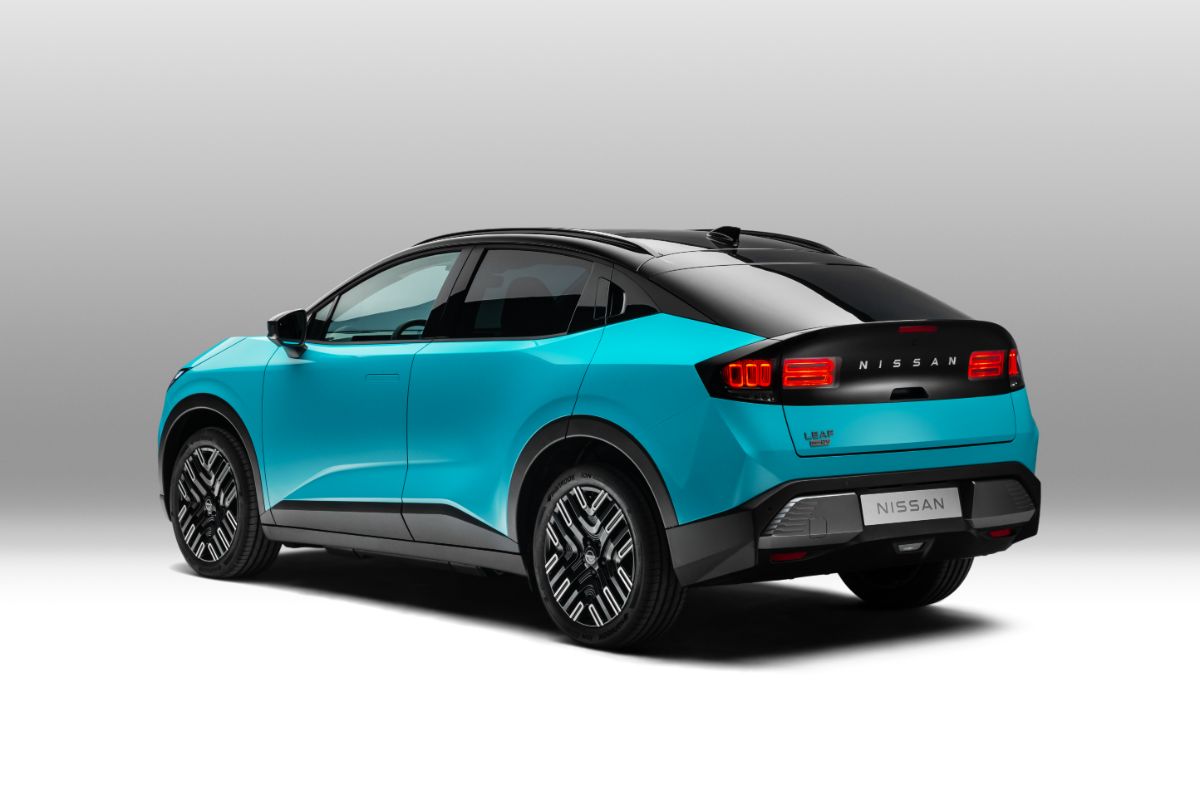
We think the new Leaf looks pretty cool, as well – especially from the back where the contrasting black panel, ducktail spoiler and 3D LED rear lights give it a modern-retro vibe.
The sweeping, almost Toyota Prius-like silhouette of the new Nissan Leaf also contributes to an impressive drag coefficient of 0.25, which means very little to anybody outside of a wind tunnel… I know. Basically, the Leaf slips easily through the air, which makes it very efficient. That’s how it manages the same WLTP range as the big battery Kia EV3, despite the Kia’s 3kWh bigger 78kWh usable battery capacity. The EV3 is hardly an inefficient car, either, but such is the importance of aerodynamics.
How practical is it?
Practicality rating: 4/5 stars
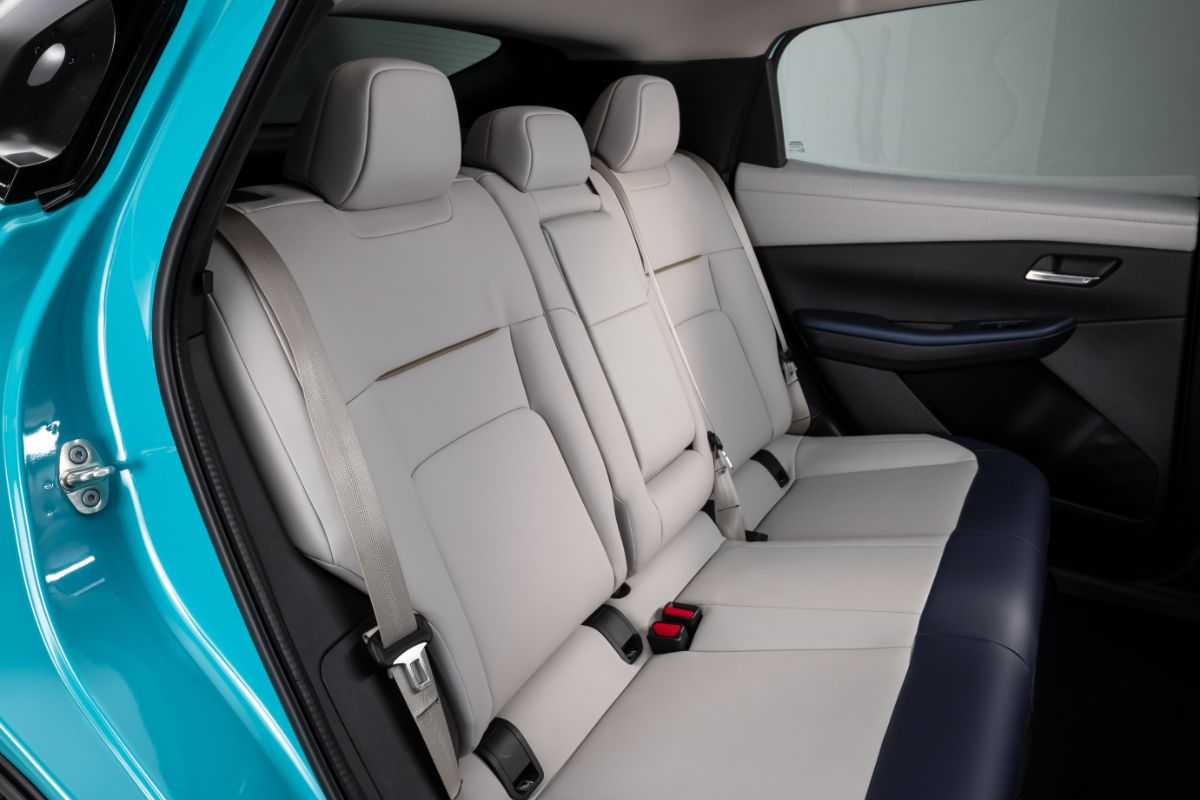
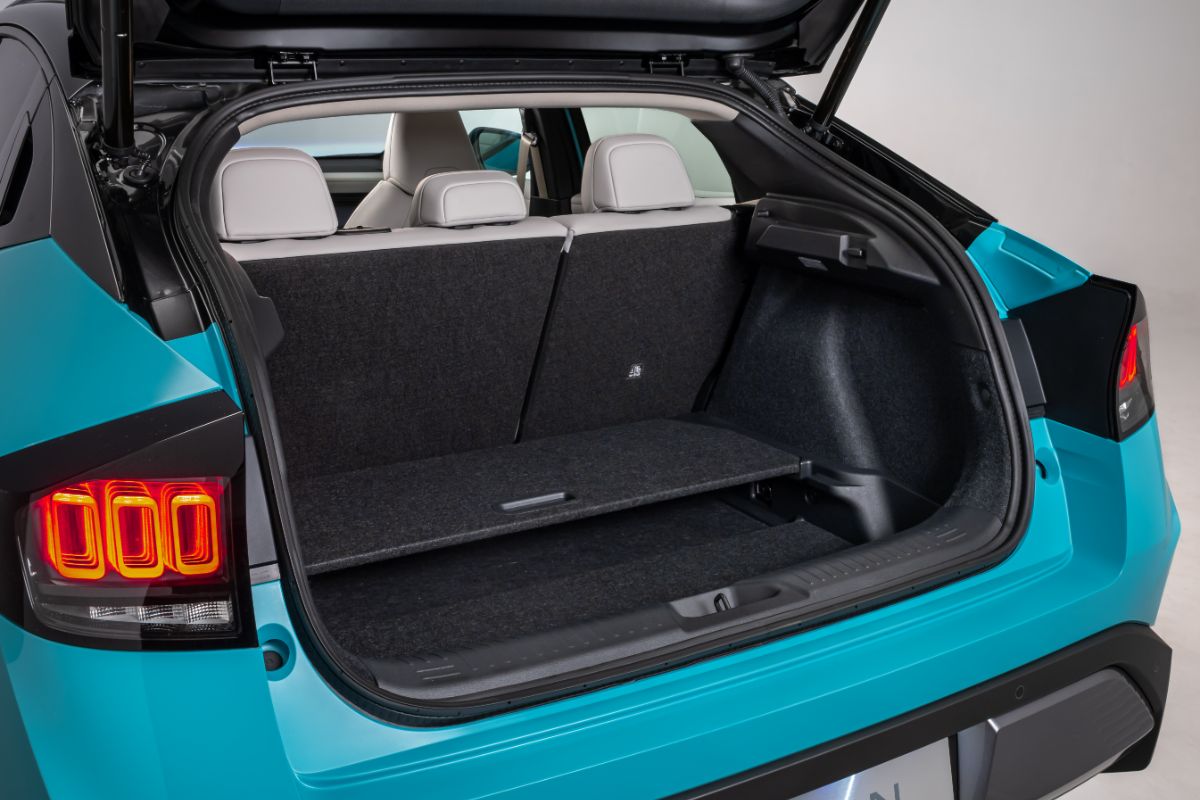
The Nissan Leaf isn’t quite the most spacious option in the class. It gets a 437-litre boot complete with a useful variable height boot floor that can be dropped for a deeper load bay, and also reveals further cable storage under that. You can also use it to divide the boot floor so that your groceries don’t roll around in the boot on the way back from the shops, which is a nice touch. A Renault Scenic or Skoda Elroq have bigger boots, but are also more SUV-ish, which may not be to your taste.
The back seats are very comfy, with long seat squabs, a centre armrest and a couple of USB-C charging ports. There’s enough head- and legroom for a taller adult to sit comfortably, even if you’ve gone for one of the higher-spec cars that gets a fixed panoramic roof with adjustable opacity.
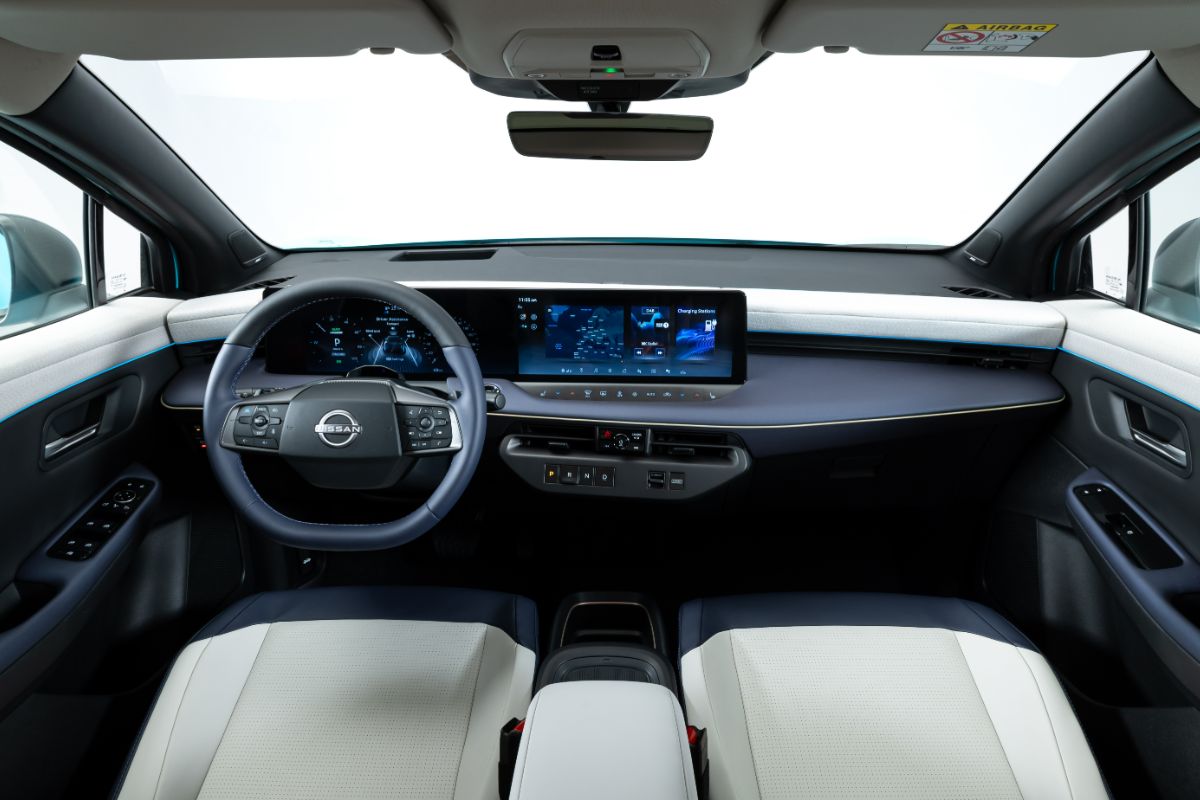
Up front, your attention is drawn to the twin 14.3-inch screens, with the central touchscreen housing in-built Google software so that you benefit from Google Maps and other downloadable Google apps and games. It’s a really smart system that seems to work well and respond quickly, and you can even have a wallpaper that changes throughout the day to reflect whether it’s day or night. Naturally, Apple CarPlay and Android Auto are standard.
Higher-spec Nissan Leaf models also get electric seat adjustment, and there’s even a massage function and a head-up display.
The Leaf charges via a socket on the front wing of the car. Nissan says that this is because its customers prefer to drive into charging bays nose-first. We’ve always found charging ports at the rear of the car to be more practical, but it’s something of a matter of taste.
What’s it like to drive?
Driving rating: TBC
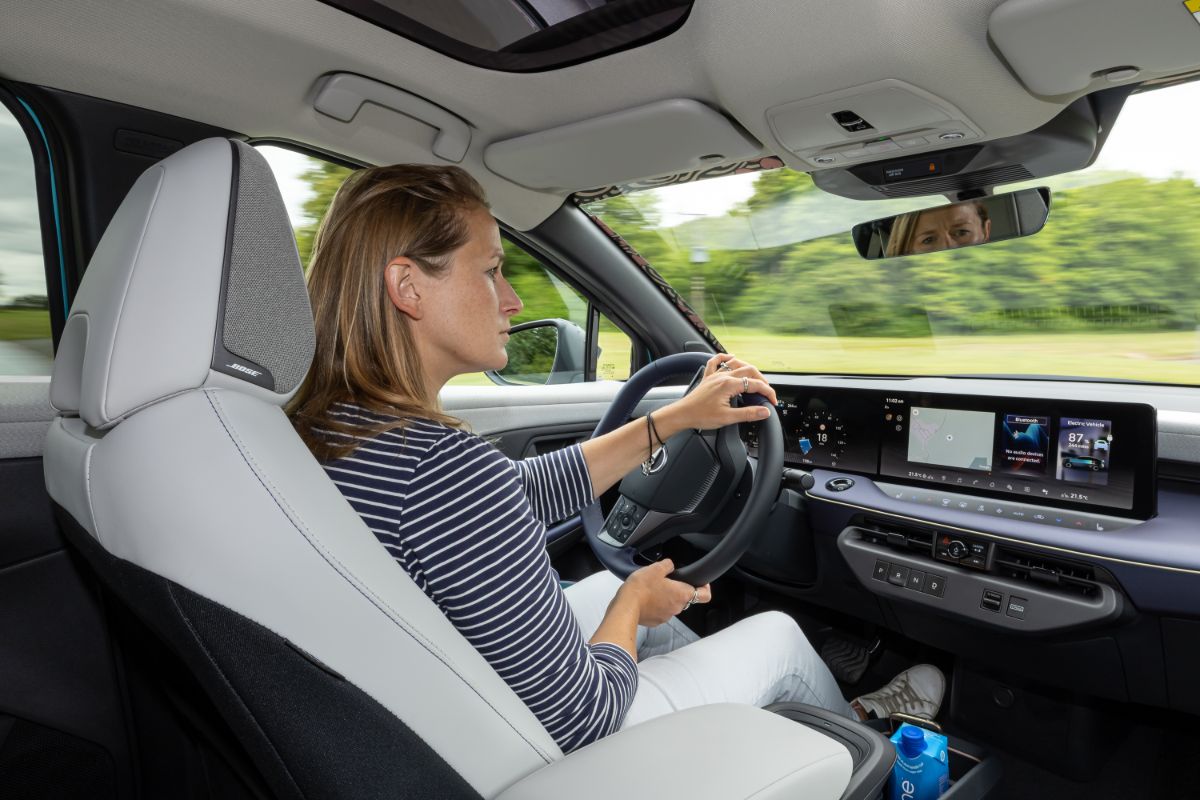
We had an early drive of a prototype Nissan Leaf at a European Car of the Year event, but the modified CMF-EV platform (which is shared with the Nissan Ariya and Renault Scenic) that sits beneath the Leaf was near enough production ready, so it’s great to report that the Leaf is rather peachy to drive. It’s not a very zingy-feeling car; I’ll say that, right now. The Cupra Born or Renault Megane will be more to your taste if you’re after the odd thrill behind the wheel.
But the 75kWh Nissan Leaf that we drove felt composed and unflappable in a satisfying way. It turns into corners tidily thanks to steering that’s light in most modes, or weights up very noticeably in Sport mode, and ride comfort was well controlled and cushy enough to ease over all but the worst potholes and expansion joints.
Brake regen’ is controlled via paddles on the steering wheel and can be set to completely off if you favour freewheeling, or you can step down from mild to heavy settings. Or, a button on the dash activates the Nissan Leaf’s ‘e-Pedal’ which brings adaptive, one-pedal driving. It all works well, too, and even the heavier modes are smooth and easy to predict.
Overall, the Leaf does feel a touch heavier than rivals like the surprisingly nimble Skoda Elroq, but if you’re simply after a really quiet, comfortable family car that feels natural to drive, as well as solid and secure even at higher speeds, the Leaf will be a great option.
Technology, equipment & infotainment
Technology and equipment rating: TBC
Nissan hasn’t confirmed UK specs and pricing for the Leaf yet; expect that to come later this year, ahead of sales beginning in early 2026.
We do know that there will be four trim levels, all of which will get the big twin screen infotainment system with Google Brain and over-the-air software updates. The top two trims will get the panoramic roof as standard, and we expect them to also get electric seat adjustment. The range-topping Leaf will likely get a Bose sound system that includes a headrest speaker that makes it possible for the car to announce nav directions to the driver, without it bothering other passengers or needing to dip the music volume.
The Leaf will get a full suite of driver assistance systems including lane-keep assist, adaptive cruise control and autonomous emergency braking, which can also combine for a semi-autonomous drive mode. The 2026 Nissan Leaf hasn’t been crash tested by Euro NCAP yet, but other cars based on this same CMF-EV platform have fared very well in safety tests.
Three things to know
- There’s no four-wheel drive version of the Nissan Leaf planned, but the CMF-EV platform can take an all-wheel drive-layout and executives told CarGurus that it could be possible in future if the demand is there. Don’t hold your breath though; for now, the Nissan Leaf is front-wheel drive only.
- Charging is up to 105kW in the 52kWh Nissan Leaf, or up to 150kW in the 75kWh. Both can manage a 10-80% rapid charge in around 30 minutes, and both have water-cooled batteries with intelligent thermal management that will pre-heat (or cool) the battery if you plug the charging stop into the nav. You can also activate the battery pre-heating manually, if you prefer.
- The Nissan Leaf can charge at up to 11kW from an AC charger, which will be useful if you use kerbside chargers, or have access to a faster AC charger at the office or in an industrial location, as it’ll deliver a full battery in 6-8 hours. However, most drivers will charge routinely at a 7kW home charger as that’s the most powerful charger that homes in the UK can support. A full battery from a 7kW charger will take around 9-12 hours depending on battery size.
Which one to buy
- If you want the best value: Tricky to say as Nissan hasn’t confirmed UK specs and pricing, yet. Don’t discount the smaller battery car, though, as it’s lighter and still has a really good range, so could be the better option for a lot of drivers.
- If you want the best company car: We’ll have to wait for pricing, but with Benefit-in-Kind company car tax rates still very low on EVs, you’re probably well advised to go for a high spec car. Salary sacrifice drivers, or those who must pay business lease prices, will be better off sticking with a more moderate trim.
- If you want the best high mileage commuter: Go for the 75kWh Nissan Leaf. Nissan has said that the 75kWh Leaf will cover 211 miles when doing a steady 80mph (which is the motorway speed limit in much of Europe) in real world driving, which suggests really good touring efficiency.
- If you want the best family car: One of the higher spec cars with the panoramic glass roof. It’s got ‘LEAF’ mirror-written into the opaque shading that you can use to block the sun from part- or all of the glass area, so that the shadow it casts onto the seat reads ‘LEAF’ correctly. The kids will love it.
Nissan Leaf running costs
Running costs rating: TBC
We just don’t know what the running costs for the new Leaf will be yet, as list prices, monthly finance and all of the relevant numbers are still TBC. We’d expect list prices to start from around £35,000, or the big battery Leaf may well be close to £40,000. That efficiency should keep fuel costs right down, but we’ll have to wait and see how the Leaf does for real-world range, when we’ve spent more time with it.
Nissan Leaf reliability
We can’t give any sort of definitive idea of the Nissan Leaf’s reliability, yet, as it’s too new. However, it comes with a three year, 60,000 mile warranty, while the electric powertrain elements – including the electric motor and invertor – are covered for five years. The high voltage battery is warrantied for eight years and 100,000 miles.
The CarGurus Verdict
Overall rating: TBC
The Nissan Leaf is a really intriguing car. It looks surprisingly cool, especially with that sloped rear window, and the interior feels smart yet practical and comfortable. Perhaps more importantly, the Leaf feels like a ‘proper’ Nissan rather than a rehashed Renault. It’s got lots of clever touches with its tech and efficiency, too, so we’re looking forward to seeing how it does for real-world range and miles/kWh when we’ve spent more time with it.
It will still need to be competitive on monthly finance- and lease prices, of course, but early evidence suggests the new Leaf could do well despite the hordes of rivals it’s up against.
Related Topics:


