In its time the X-Trail has offered front-wheel drive and four-wheel drive options, and petrol or diesel engines. More recently, the X-Trail has embraced electrification, with the current model available with an innovative hybrid system that drives the wheels using purely electric power, and uses its petrol engine only to generate electricity. Previous X-Trail models have also pushed the tech envelope, with safety and convenience features that were cutting-edge for their sector at the time.
Our guide to the Nissan X-Trail looks at the model’s history, covering each of the four generations of the car, and offering advice on which are the best and worst versions you can buy.
Frequently Asked Questions
Which Nissan X-Trail years are the best?
The latest Nissan X-Trail is objectively the best yet, although it’s far from cheap. Both the second-generation and third-generation models are great value, although they aren’t immune to reliability issues.
Which Nissan X-Trail years are the worst?
No X-Trail model has an especially good reliability record, but the first-generation Nissan X-Trail is probably the worst choice if you’re looking for maximum dependability since the oldest versions are now more than twenty years old.
Is a used Nissan X-Trail a good deal?
A used Nissan X-Trail can be a good deal if you’re looking for a no-nonsense, practical family SUV. Every version is good value for money, with the second-generation version an especially appealing choice if you’re looking for a comparatively cheap, functional SUV.
Nissan X-Trail Pros and Cons
Pros:
- Family-friendly; available with seven seats
- Later models have lots of advanced safety features
- Good value for money
Cons:
- Bland interior in second-gen and third-gen models
- Not a great choice of engines available
- Tight third-row space in seven-seaters
Nissan X-Trail Generations
4th Generation (2022-present)
Bodystyles:
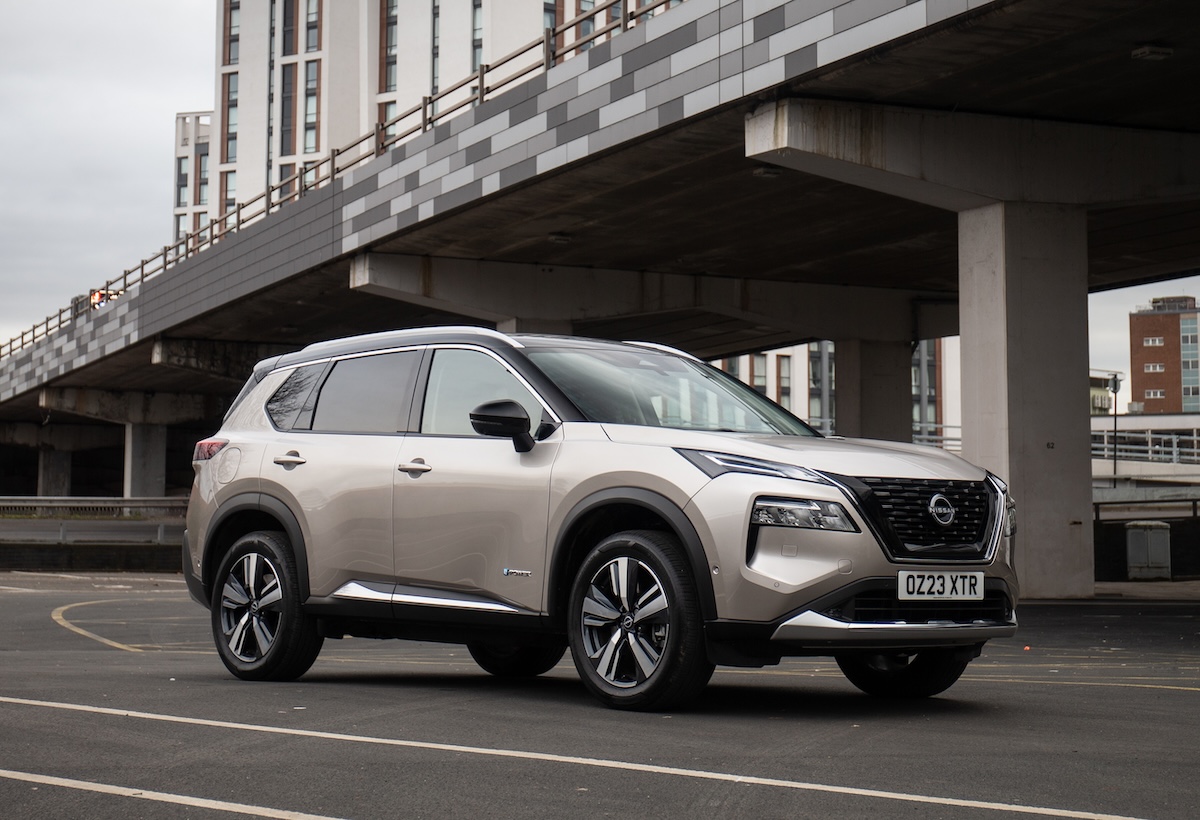
The fourth-generation Nissan X-Trail - introduced in 2022 - is, as you might expect, the biggest and most sophisticated yet. It’s only slightly larger than its predecessor but appears more so thanks to its upright, square-edged exterior design. As with the third-generation car, it’s available with five or seven seats, and headroom and legroom in the third-row seats is fairly tight. Otherwise the interior is comfortable and has more design flair and a higher-quality feel than the previous model’s. As before, the dashboard – and many other parts – are shared with the Nissan Qashqai, but this time round the X-Trail has a more distinct exterior design.
Just two power options are available. The cheaper of the two is labelled VC-Turbo, a three-cylinder 1.5-litre petrol engine with mild hybrid technology and 161bhp. It’s available only with front-wheel drive and a CVT automatic gearbox. The alternative is labelled e-Power. It’s essentially an electric car, because the wheels are driven purely by an electric motor. However, it also has a 1.5-litre petrol engine, used only to charge the battery pack. So the end result is an electric-powered car that you don’t need to (and can’t) plug in to recharge, but that also uses petrol. So it’s a hybrid, of sorts. Official combined fuel economy is mid-high 40s mpg, so despite the electrification, it doesn’t offer much of an advantage in terms of running costs. While the standard version of the e-Power has 201bhp and front-wheel drive, the ‘e-4orce’ model has an extra electric motor powering the rear wheels, for four-wheel drive and a total of 210bhp.
The available trim levels were initially Visia, Acenta Premium, N-Connecta, Tekna and Tekna+. Entry-level Visia trim is far from basic, with LED headlights, electrically folding and heated door mirrors, rear parking sensors and 18-inch alloy wheels as standard. It also includes a wealth of driver assistance features, such as automatic front and rear emergency braking, lane-departure-prevention and blind-spot warning systems, intelligent cruise control, and a rear cross-traffic alert function. Acenta Premium adds a few desirable features for not much extra, including Apple CarPlay and Android Auto integration, a reversing camera, an upgraded audio system and a rear-view camera. The higher-spec trims add lots of luxury features.
In 2024, the Visia trim level was dropped and a new N-Trek trim was added to the lineup. It’s a well-equipped model with some bespoke features that in some ways hark back to the first-generation X-Trail: as well as some tough-looking exterior add-ons, it has water-resistant upholstery, rubber floor mats and a reversible boot-liner for those ‘active lifestyle’ moments.
The third-generation Nissan X-Trail hasn’t been on sale long enough to accurately assess its long-term reliability. In general, Nissan’s record in recent independent reliability and owner satisfaction surveys has been pretty average. Its warranty cover is par-for-the-course, too, with an industry-standard three years or 60,000 miles of cover.
Nissan X-Trail Mk4 review
Search for a Nissan X-Trail on CarGurus
3rd Generation (2014-2022)
Bodystyles:
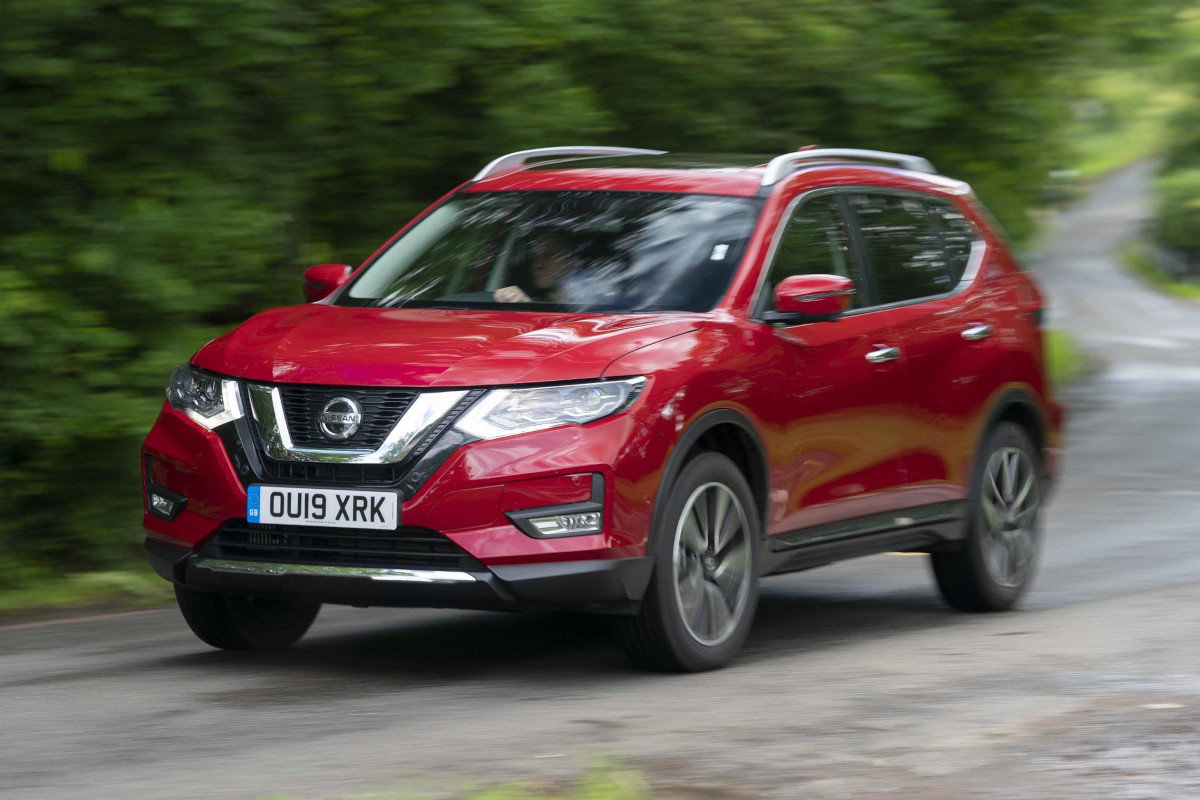
It was all-change for the third-generation Nissan X-Trail that went on sale in 2014. Where the previous model was a boxy-looking five-seater, the X-Trail was now a sleek family ‘crossover’ available with five or seven seats. And if you’re thinking it looks like a slightly longer and lightly restyled version of the second-generation Qashqai, you’d be right, because that’s pretty much what it is. In fact, this X-Trail was a direct replacement for the seven-seat Qashqai+ version of the first-generation Qashqai. While there’s decent space for five, legroom and headroom in the third-row seats is quite tight. The dashboard is all-but-identical to the Qashqai’s, while most of the tech features and engines are shared between the two cars.
The only engine from launch was a 128bhp 1.6-litre diesel engine, while a turbocharged 1.6-litre four-cylinder petrol with 161bhp joined soon afterwards, and a 175bhp 2.0-litre diesel was added in 2016. Transmission options are a six-speed manual or CVT automatic gearbox, with front-wheel drive or four-wheel drive versions available: various combinations are possible, depending on age and engine.
Trim levels from launch are similar to those of the Qashqai, which means that entry-level models miss out on a few desirable features but most versions have plenty of kit. Entry-level Visia, for example, includes cruise control, air conditioning, alloy wheels, Bluetooth and heated door mirrors, but you need to move up to Acenta trim to gain front- and rear parking sensors, automatic lights and wipers, electric-folding mirrors and a panoramic roof. Acenta+ adds extra driver assistance features, a touchscreen infotainment system, DAB radio and a rear-view camera, while N-Tec adds more driver assistance features, keyless entry, a powered tailgate and more. Top-spec Tekna includes LED headlights, a self-parking function, leather upholstery, electric front seat adjustment and even more driver assistance features.
An update in mid-2017 included minor cosmetic changes inside and out, and the addition of a new trim level called N-Connecta. In 2019, an all-new engine lineup was introduced. The petrol option was a 1.3-litre four-cylinder unit with 158bhp, available only with front-wheel drive and a dual-clutch automatic transmission. Alternatively, there’s a 1.7-litre diesel with front-wheel drive or four-wheel drive, and either a six-speed manual gearbox or CVT automatic transmission. At the same time, automatic versions became available with an optional driver assistance feature called ProPilot: this semi-autonomous driving function can help to accelerate, brake and steer the car on the motorway.
The third-generation Nissan X-Trail has a middling reputation for reliability. Diesel versions can suffer from clogged DPFs (and related issues) if they’re only used for short trips, while the most common problems across all versions are warped brakes, premature clutch failure and stalling issues caused by a faulty camshaft sensor.
Nissan X-Trail Mk3 review
Search for a Nissan X-Trail on CarGurus
2nd Generation (2007-2014)
Bodystyles:
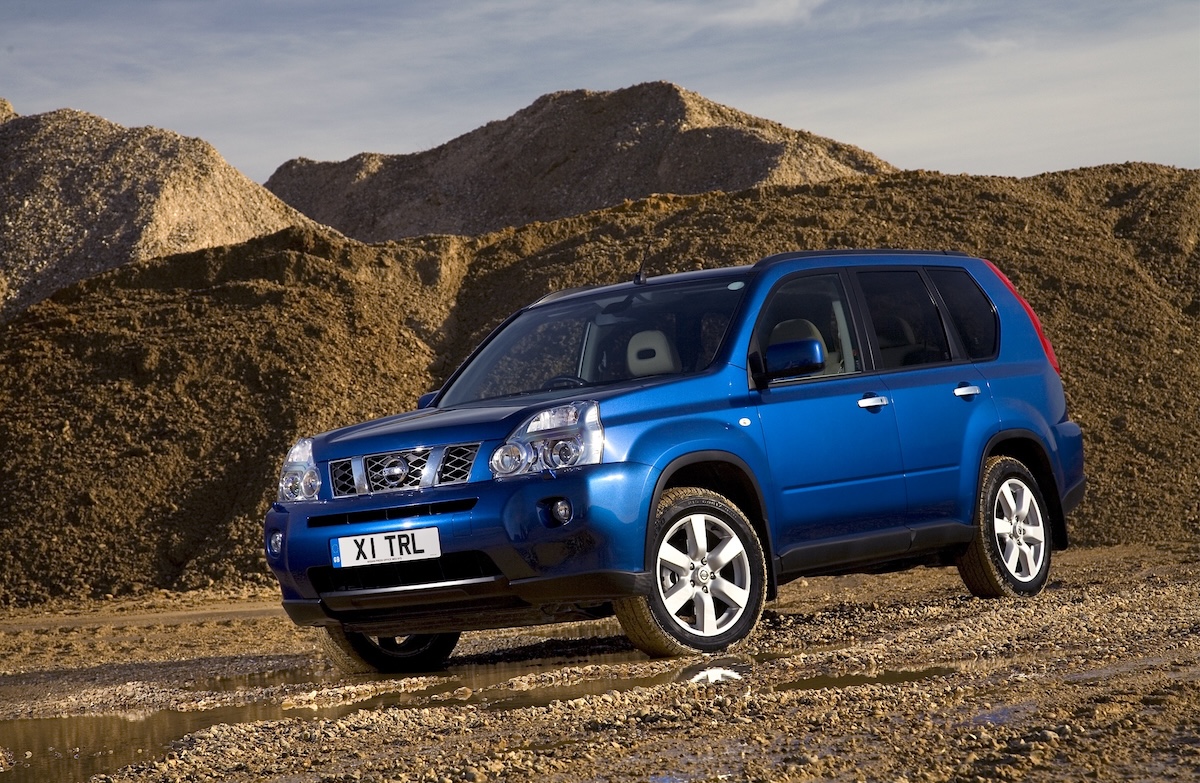
The second-generation X-Trail, introduced in 2007, might look like an updated version of the first one, but it’s actually a totally different model on a then-new platform. A touch larger than before, the second X-Trail’s exterior design evolves the themes of the first one, but adds extra chunkiness to make it look more – not less – like a classic 4x4.
Introduced shortly after the launch of the Qashqai ‘crossover’, the second-generation X-Trail continued as a more conventional SUV to rival the likes of the Honda CR-V and Toyota RAV4. The irony being that these two – as with most similar cars – were becoming less rugged, leaving the X-Trail looking rather dated, even comparatively early on in its life cycle.
The model lineup didn’t really do anything to move the X-Trail forward. As before, there were 2.0-litre or 2.5-litre petrol engines, while the previous 134bhp 2.2-litre diesel engine was replaced by a 2.0-litre unit with either 148bhp or 171bhp. All versions initially had a six-speed manual gearbox as standard, with a CVT automatic an option for the 2.5 and a conventional six-speed automatic an option for the lower-powered diesel. All have four-wheel drive as standard.
Trim levels at launch were Trek, Sport and Aventura. Entry-level Trek includes alloy wheels, climate control and driver-, passenger- and side airbags. Extras for Sport models include a panoramic sunroof, cruise control and automatic headlights and wipers, while Aventura adds features such as leather upholstery, keyless entry and electrically folding door mirrors. In 2009, the lineup was trimmed to just high-value Acenta and Tekna trims, while an update in 2010 included minor exterior design tweaks and redesigned front seats aimed at improving the car’s rather disappointing rear-seat legroom. Later in the model run, the petrol engines were discontinued, while a new N-Tec+ trim level was added to the lineup. It was notable for featuring Nissan’s ‘Around View Monitor 360’ feature, which uses a feed from external cameras to create a 360-degree birds-eye view of the car on the centre display that makes parking in tight spaces easier.
The second-generation Nissan X-Trail has a better reliability record than the first one and is generally dependable. The earliest versions are now getting on in years, however, so wear and tear is inevitable, especially if they’ve been used for towing or off-road adventures. Although the diesel engines aren’t troubled by as many issues as the first-generation model’s, they can suffer from a clogged diesel particulate filter (DPF), a costly problem in itself and with the potential to cause other related maladies.
Search for a Nissan X-Trail on CarGurus
1st generation (2001-2007)
Bodystyles:
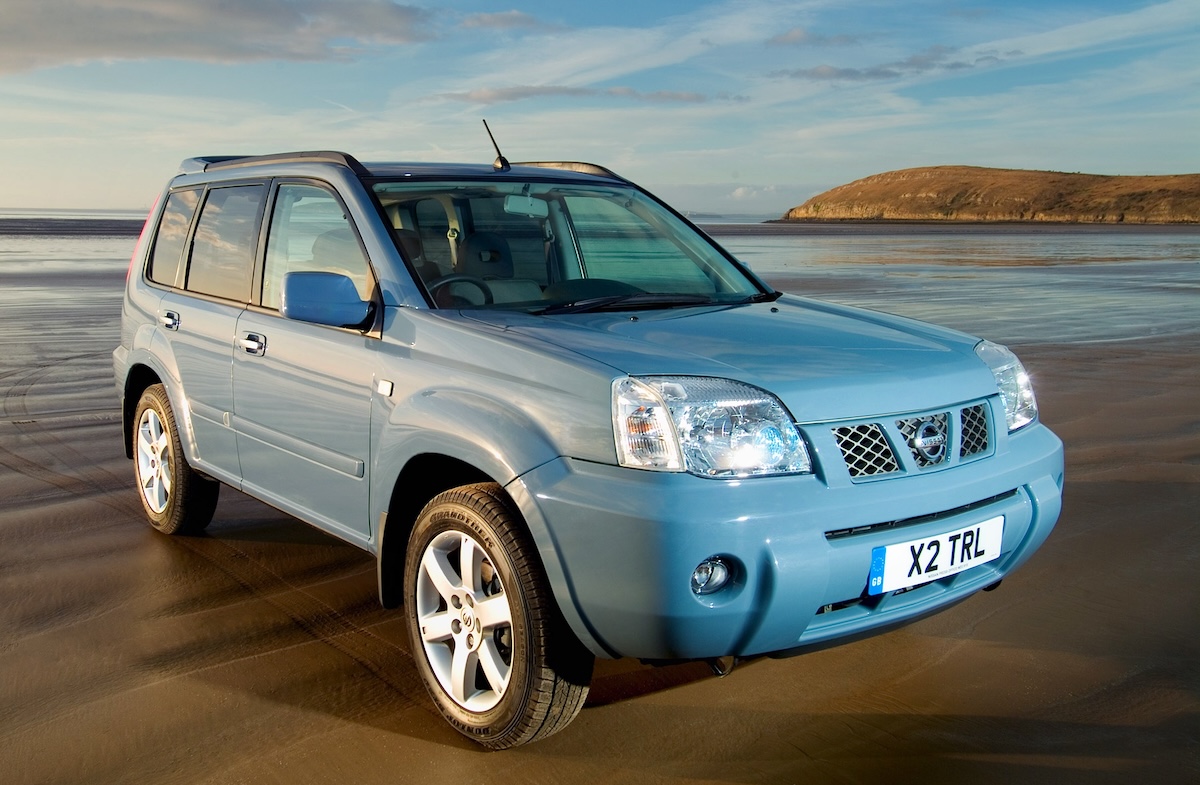
The first-generation Nissan X-Trail was, in some ways, ahead of its time when it was introduced in 2001. Although a similar size and shape to rivals such as the Honda CR-V and Land Rover Freelander, and initially available only with four-wheel drive, it drove more like a conventional hatchback than either of those two rivals. It also had an especially family-friendly interior, with a hatchback-style tailgate rather than the cumbersome side-hinged back door arrangement of the CR-V, Freelander and RAV4. Although not as influential as the Qashqai that followed after it, the X-Trail was a step on the path to the modern ‘crossover’ SUVs that we all love today.
Comparatively generous dimensions help give the first X-Trail a spacious interior, even by today’s standards, while features such as wealth of storage spaces and a large boot with a wipe-clean floor make it very practical. On the outside, the X-Trail blends blocky design cues from Nissan’s larger 4x4 models with proportions more akin to a taller estate car, giving it a look somewhere between old-school 4x4 and modern SUV.
The initial engine choices were a 2.0-litre petrol or a 2.2-litre diesel. Both have a selectable four-wheel drive system that allows you to select front-wheel drive or four-wheel drive, or choose an auto setting where four-wheel drive engages only when the front wheels start to slip. A five-speed manual gearbox is standard for the petrol, with a four-speed automatic an option when new. The diesel has a six-speed manual gearbox. A 2.5-litre, four-cylinder petrol engine joined the range in early 2003, featuring the same four-wheel-drive system as the other models and the choice of a five-speed manual or four-speed automatic gearbox.
Trim levels were initially S, Sport and SE+ and all were well-equipped. Entry-level S trim includes air conditioning, an electric sunroof, four airbags and electrically adjustable door mirrors, for example, while Sport models have alloy wheels and climate control, and SE+ cars have leather upholstery and a CD changer. The 2.5 models introduced a new, luxurious SVE trim level.
A range refresh in late 2003 brought minor exterior changes, an updated dashboard design, and a new, more powerful 2.2-litre diesel engine. Equipment levels were boosted and the trim levels were changed to SE, Sport, T-Spec and SVE. In 2005, Nissan added front-wheel-drive versions of the 2.0 petrol and 2.2 diesel models, while towards the end of the model run, a Fat Face limited-edition was available and the standard trim levels changed to SE, Columbia and Aventura.
The first-generation Nissan X-Trail is now at an age where an individual car’s maintenance and service history are likely to play a larger part in how reliable it is. In general, the petrol engines seem to give less trouble, with the 2.2-litre diesel engines prone to turbo failure and timing chain issues.
Search for a Nissan X-Trail on CarGurus
Related Topics: