One thing to note: you’ll see that there’s no 10th-generation or 11th-generation Corolla listed here. That’s because it was replaced for the UK and other European markets in 2006 by the closely-related Toyota Auris, before returning again from 2019 onwards.
Our guide to the Toyota Corolla covers all of the model generations that have been sold in the UK, offering advice on which Corolla models are available, and the best and worst versions to buy.
Frequently Asked Questions
Which Toyota Corolla years are the best?
The latest Toyota Corolla, which went on sale in 2019, is undeniably the best yet. It’s comparatively expensive to buy new but it has a fuel-efficient hybrid system, comes with the latest tech and upholds the Corolla’s reputation for excellent reliability.
Which Toyota Corolla years are the worst?
In general, the Toyota Corolla is one of the most reliable mid-size cars around. The ninth-generation model (on sale in the UK between 2001 and 2006) can suffer from excessive oil consumption, however, with 2002 cars especially likely to be affected.
Is a used Toyota Corolla a good deal?
A used Toyota Corolla can be an excellent deal if you’re looking for a car that’s easy to drive, easy to live with, and is likely to be very reliable.
Toyota Corolla Pros and Cons
Pros:
- Excellent reputation for reliability
- Most versions have low running costs
- Hybrid versions are smooth and fuel-efficient
Cons:
- Some versions look dull
- Limited range of engines
- Latest hatchback is a bit short on space
Toyota Corolla Generations
12th Generation (2019-present)
Body Styles:
- Five-door hatchback
- Four-door saloon
- Five-door estate
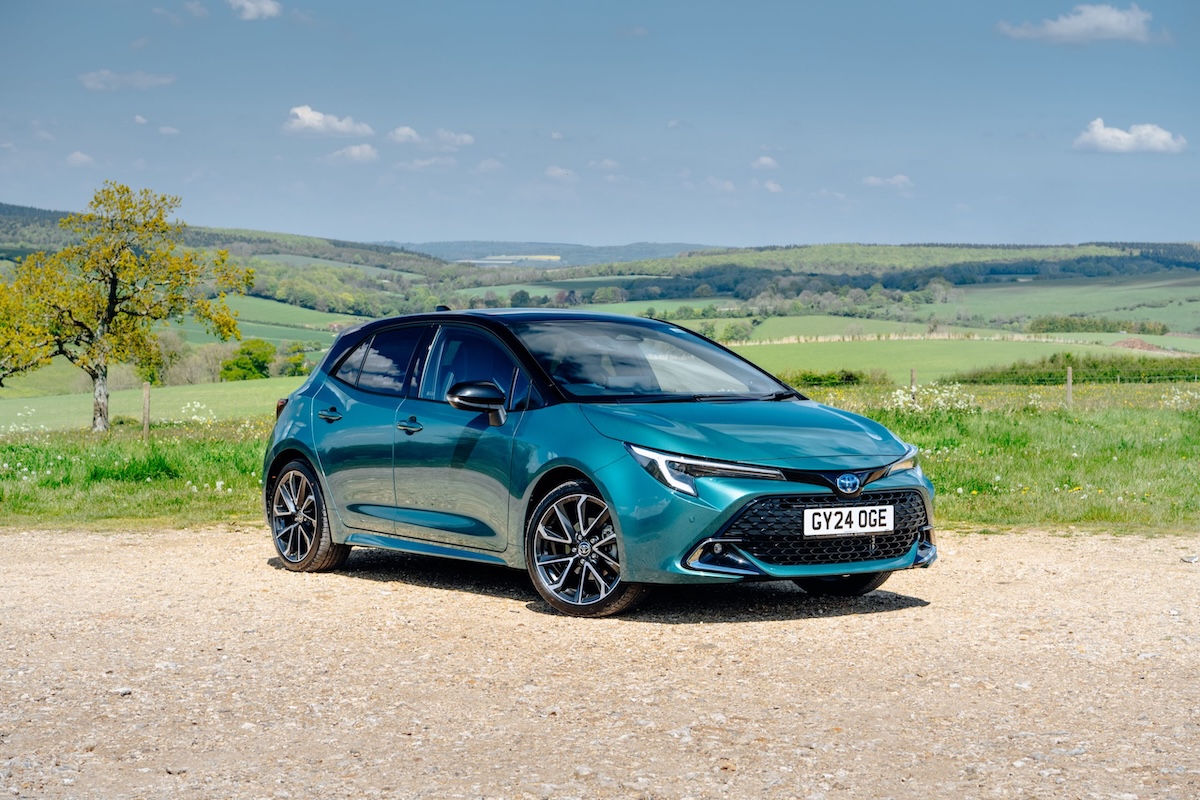
After a 13-year absence, the Toyota Corolla returned to the UK in 2019 in twelfth-generation form. In the intervening years we got the Auris, a car that was closely related to the Corolla and indeed sold as a Corolla in some international markets. Compared with the Auris, the new Corolla was a big step forward in driving experience, style, tech: everything really.
Slightly larger than the Auris, the Corolla is a close match for rivals such as the Ford Focus and Volkswagen Golf in size, although rear-seat space and boot space are a bit below average in the hatchback. The estate, labelled Touring Sports, remedies this thanks to a longer wheelbase and a much larger load space.
A four-door saloon joined the hatchback models in 2019, as did the Corolla Trek, a more rugged-looking version of the Touring Sports with some SUV-style cosmetic additions and a higher ride height. The choice of engines initially consisted of a turbocharged 1.2-litre petrol, and 1.8-litre or 2.0-litre petrol/electric self-charging hybrids, driven through a continuously variable transmission (CVT). These hybrid engines will be familiar to drivers of the previous C-HR and Prius models (the latest Prius is only offered in the UK as a plug-in hybrid). The 1.2 was dropped in early 2020, leaving just the hybrid models.
The trim levels at launch were Icon, Icon Tech, Design and Excel. Very generous equipment levels made up for the fact that prices were on the high side. Equipment was upgraded further in 2021, with the lower-spec trim levels gaining some extra features, while the saloon model was dropped in 2022, leaving only the Corolla hatchback and Corolla Touring Sports. A few months later the Corolla received an extensive mid-life update. While the cosmetic changes are barely noticeable, the hybrid powertrains were updated for more power and smoother responses, and an upgraded interior features a new infotainment system.
These days, the trim levels on offer are Icon, Design GR Sport and Excel. Even entry-level Icon models have alloy wheels, LED headlights with automatic high beam, heated front seats, a reversing camera and dual-zone climate control. The standard roster of safety features includes Toyota Safety Sense, (a suite of driver-assistance features that includes adaptive cruise control), while the standard infotainment spec includes a touchscreen multimedia system with navigation, wireless phone charging, Apple CarPlay and Android Auto.
Design trim adds things like rear privacy glass, rain-sensing wipers, and ambient cabin lighting, while GR Sport trim adds some racy styling bits and part-leather sports seats. Excel tops the range with a JBL premium audio system, head-up display, leather upholstery, a blind spot monitor, and rear cross traffic alert.
The latest Corolla hybrid feels built to last and all the evidence suggests that it will. Toyota’s record in recent reliability and customer satisfaction surveys is top-notch and its hybrid powertrains have proven to be incredibly durable and long-lasting. Just ask any of the multitude of taxi drivers racking up mega-miles in one. If that wasn’t reassurance enough, there’s Toyota’s exceptional warranty cover: new cars are initially covered for three years or 60,000 miles, but if the car is serviced every year at a Toyota dealership, your coverage is extended by another year/10,000 miles, up to a maximum of 10 years or 100,000 miles. The scheme even extends to used cars, starting once they are serviced at an official Toyota dealership and then continuing until the 10-year/10,000-mile limit.
9th Generation (2002-2008)
Body Styles:
- Three-door hatchback
- Five-door hatchback
- Four-door saloon
- Five-door estate
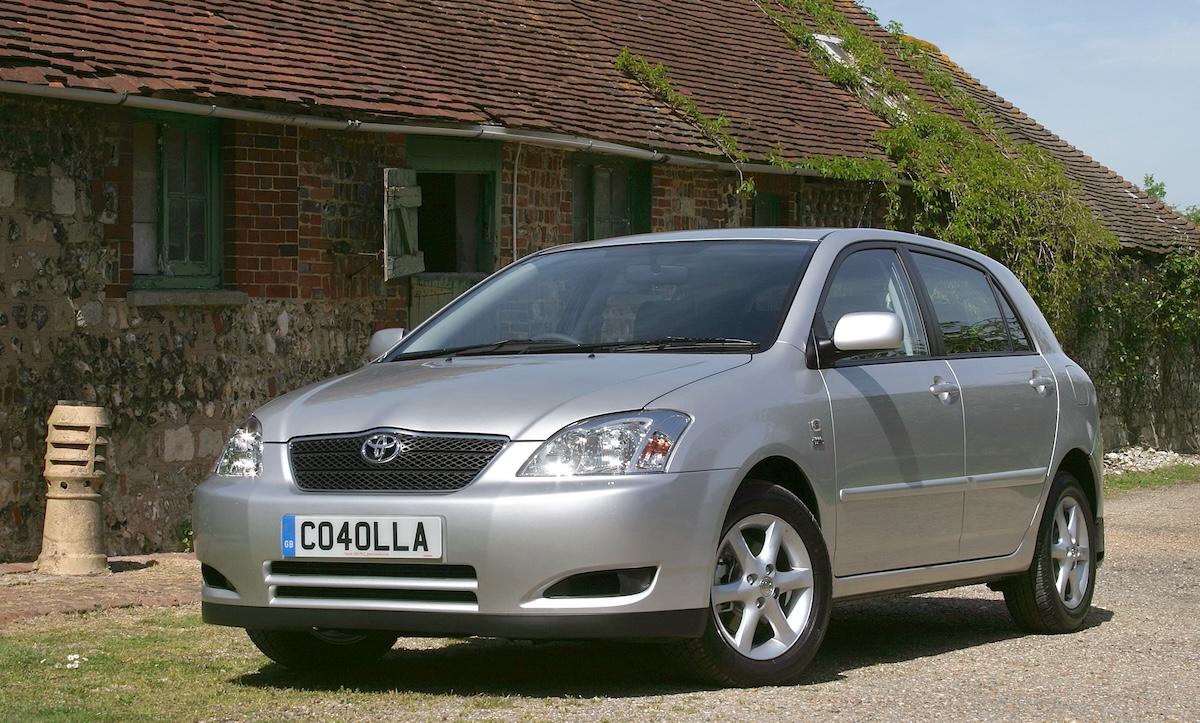
In its ninth-generation form, the Toyota Corolla has more character and spark about it than many of the previous versions. This was the first Corolla to be designed in Europe and developed with European buyers in mind, and it shows. More stylish and more enjoyable to drive, it’s a competitive rival for the Ford Focus and Volkswagen Golf of the time.
The three-door and five-door hatchback models are the lookers of the range (comparatively speaking), with a sharp exterior that has shades of Skoda and Volkswagen about it. Saloon and estate versions have an entirely different (and entirely bland) front end that’s shared with international market versions. All have the same interior, which is smart and easy to use, but not as plush as a concurrent Volkswagen Golf’s.
A range of fuel-efficient engines was available, with 1.4-litre and 1.6-litre petrol units the mainstays. Toyota’s new 2.0-litre ‘D-4D’ diesel engine was available in two different power outputs, although the lower-powered version was later replaced by a 1.4-litre D-4D unit. Sporty T Sport models have a 1.8-litre petrol engine, while there was also a limited-run (250 models only) Corolla Compressor that used a supercharged version of the 1.8 to give a lot more pace, if not a lot more fun.
An update in early 2004, just two years after the car’s introduction, brought mild cosmetic tweaks including new ‘teardrop-shaped’ headlights for hatchback models and a lightly updated interior. Air conditioning also became standard across the range.
Although it’s a comparatively reliable car, the ninth-generation Corolla isn’t the best advert for Toyota’s legendary longevity. Petrol versions produced up to mid-2005 can suffer from excessive oil consumption, while clutch and gearbox issues and peeling paint are more common than you might expect.
8th Generation (1997-2002)
Body Styles:
- Three-door hatchback
- Five-door hatchback
- Four-door saloon
- Five-door estate
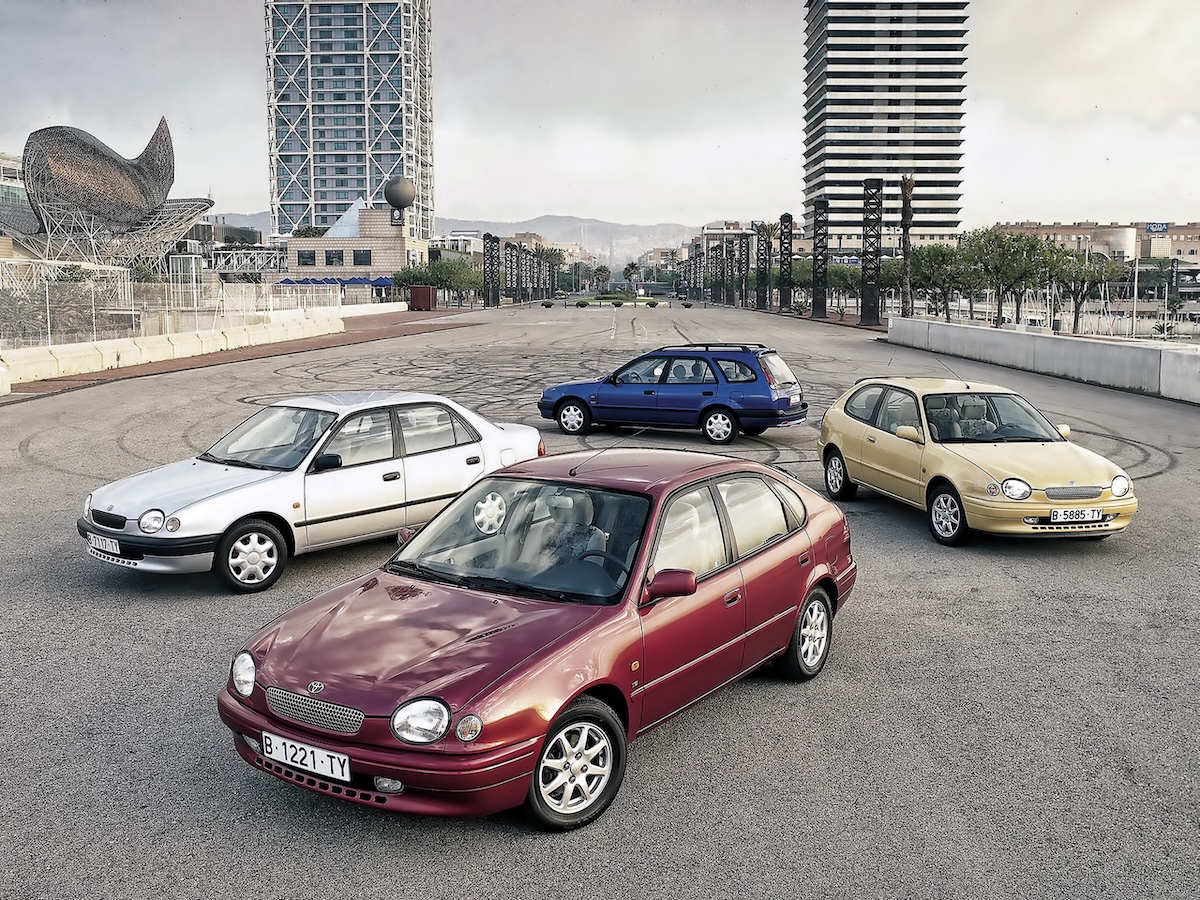
Toyota went a bit off-piste with the eighth-generation Corolla, in design terms at least. While the central section of the car was the same across the globe, European models (including the UK version) had different front and rear styling, with a more rounded look. The most striking aspect was the large circular headlights, alongside round secondary lights in the front wings. It was a major departure for the Corolla, vaguely reminiscent of the Toyota Celica (and Mercedes-Benz E-Class) of the time.
The rest of the car was as expected, with 1.3-litre or 1.6-litre petrol engines, or a 2.0-litre diesel. Most have a five-speed manual gearbox as standard, but both petrol engines were also available with a four-speed automatic. The limited-edition Corolla G6 and Corolla G6R models have a six-speed manual gearbox and a range of sporty cosmetic additions that makes them look a bit more racy, even if they don’t have any more power.
A major update in early 2000 toned down the styling quirkiness: re-shaped front wings, bonnet, headlights, bumper and grille giving a much more conventional look. At the same time, the saloon model was dropped, and new 1.4-litre and 1.6-litre petrol engines replaced the previous 1.3-litre and 1.6-litre units. A 1.9-litre diesel replaced the 2.0 diesel: sourced from Peugeot/Citroen, it met more stringent Euro III emissions standards that Toyota’s own engine couldn’t. Fuel economy was also superior.
The interior was upgraded with more up-to-date tech, while twin front airbags became standard across the range, and all but the entry-level model were fitted with ABS and electronic brake force distribution. Trim levels were re-named S, GS, SR and GLS, while limited-edition Corolla Vida and Corolla Calida models were added towards the end of the car’s life cycle.
7th Generation (1992-1997)
Body Styles:
- Three-door hatchback
- Five-door hatchback
- Four-door saloon
- Five-door estate
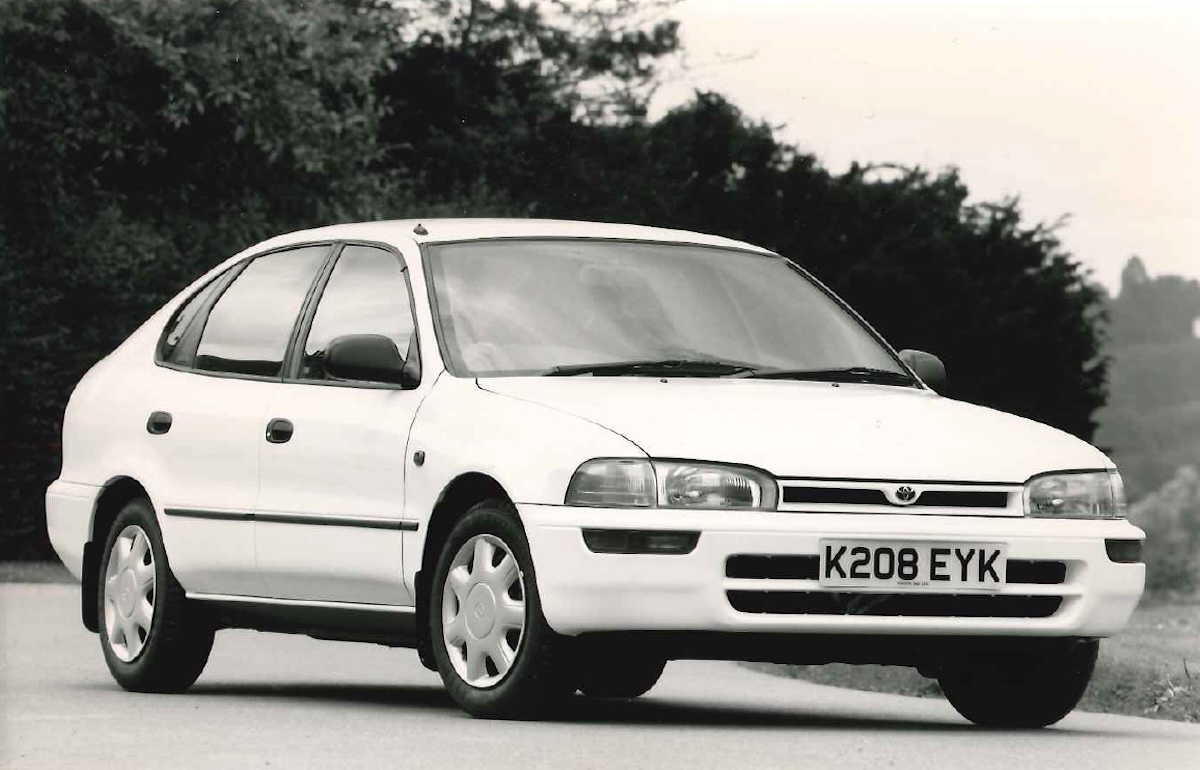
The seventh-generation Toyota Corolla was an extremely common sight in the 1990s, and the fact that you still see some around today is testament to the Corolla’s durability. Introduced to the UK in 1992, it’s slightly larger than its predecessor and has a chunkier, more rounded look inspired in part by the design themes of Lexus, Toyota’s then newly-formed premium brand.
There are no big surprises with this Corolla, with a simple model lineup of hatchback, saloon or estate models and, over the course of the model run, a choice of 1.3-litre, 1.6-litre or 1.8-litre petrol engines, or a 2.0-litre diesel. The available trim levels were initially XLi, GLi, GXi and Executive, but a mildly sporty 1.8 GXi hatchback model was added to the range in 1993. A driver’s airbag became standard across the range in 1994, and in 1995, a range update included upgraded equipment and renamed trim levels of Sportif, GS, CD, Si and CDX.
The 1992-1997 Corolla was an undeniably well-made car and it has even been described as one of the most reliable cars ever. As with any car of this age, though, the dependability of an individual car will largely depend on how well it’s been maintained over the years.
6th Generation (1987-1991)
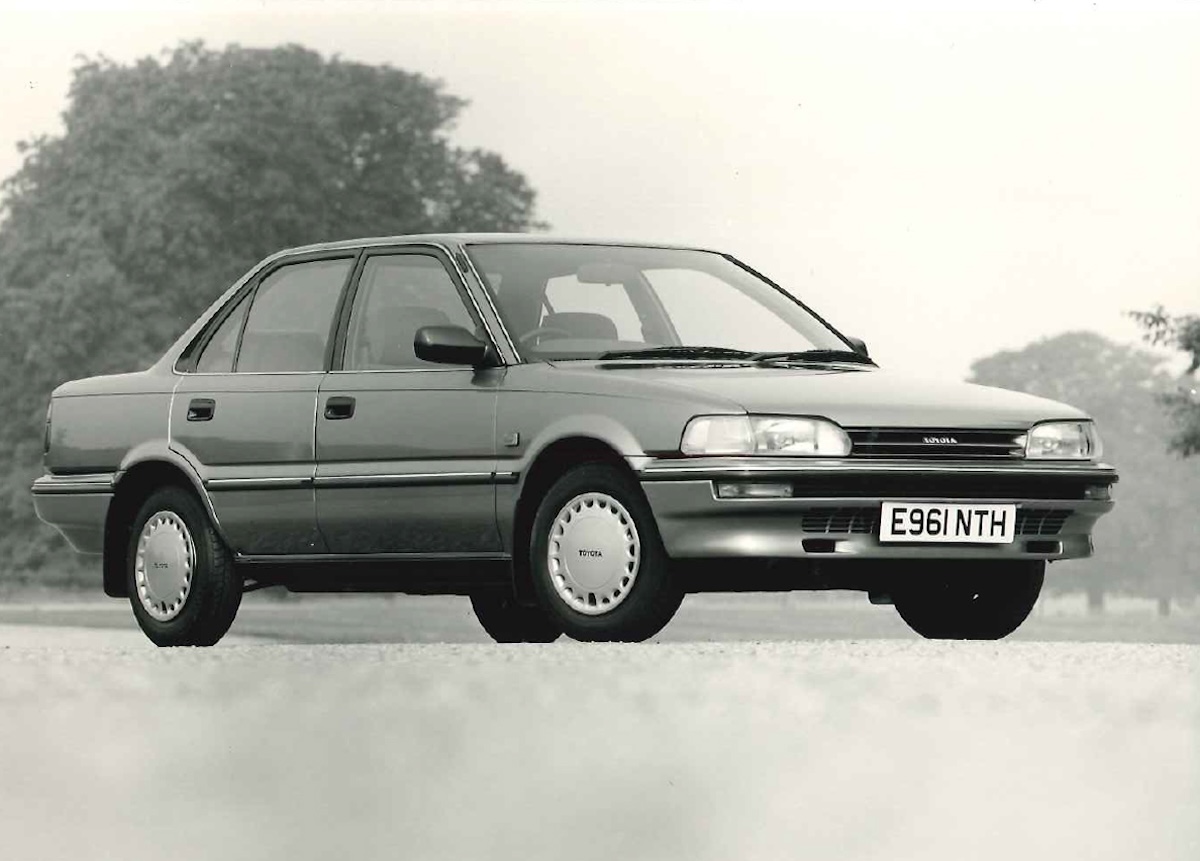
Body Styles:
- Three-door hatchback
- Five-door hatchback
- Four-door saloon
- Five-door estate
The sixth-generation Toyota Corolla, introduced in 1987, was the first one to be sold without rear-wheel drive, with only front-wheel drive or four-wheel drive versions available. There was a slimmed-down model range for the UK but there was still plenty of choice, with three-door and five-door hatchback models, a four-door saloon and a five-door estate. Engine options were 1.3-litre or 1.6-litre petrols, or a 1.8-litre diesel.
Quality and comfort were the focus areas for the Corolla of this era, with extra attention paid to the interior materials and soundproofing measures. There was one sporty model in the range, the Corolla GTi-16, available as a hatchback with a 123bhp 1.6-litre engine.
A handful of Toyota Corollas from this era remain on UK roads. Those that are left are likely to have been well looked after and could give more years of fuss-free service. They’re unlikely to become collectible, however, and finding replacement parts could be a challenge if anything major goes wrong.
5th Generation (1983-1987)
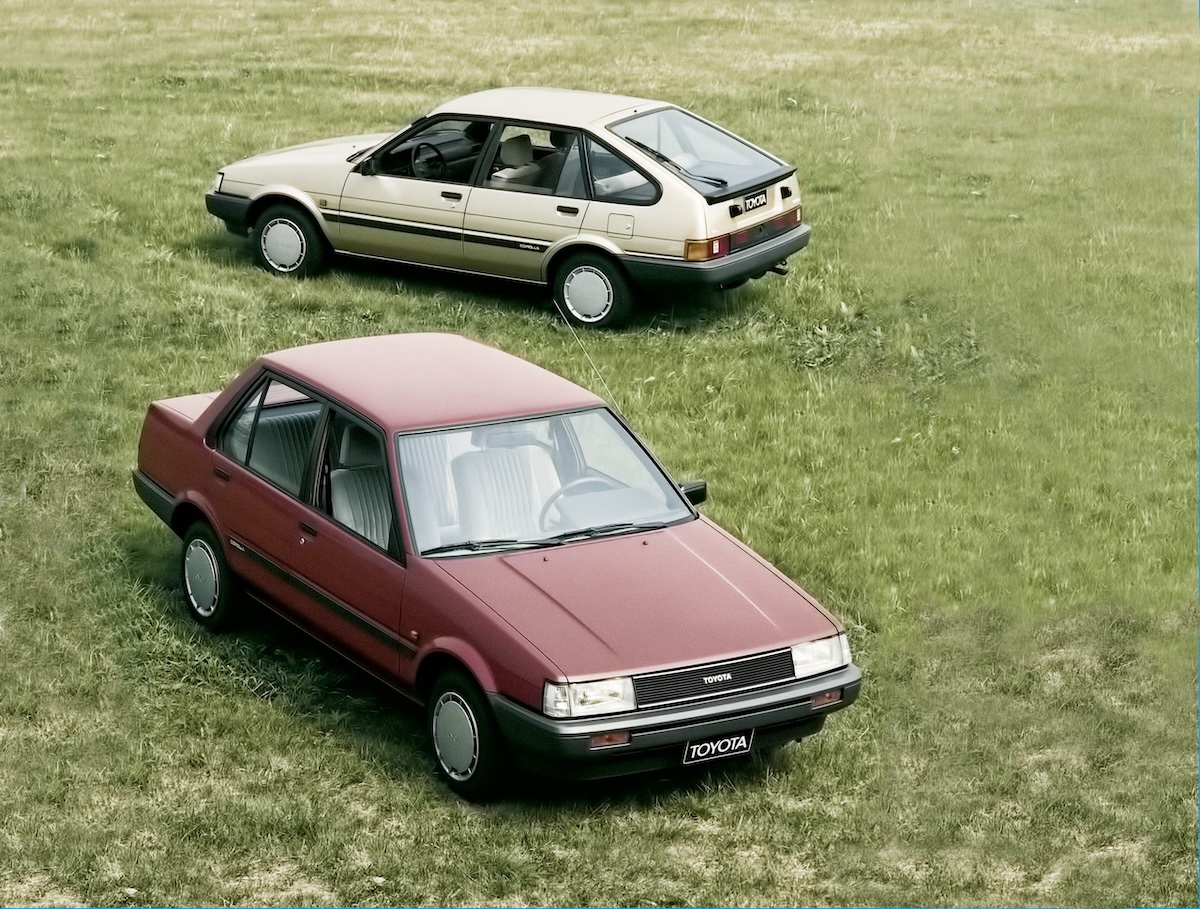
Body Styles:
- Three-door hatchback
- Five-door hatchback
- Four-door saloon
- Three-door coupe
The fifth-generation Toyota Corolla, introduced in 1983, saw the wide model lineup split into two strands: the more prosaic hatchback and saloon models (there was no estate this time round) moved to front-wheel drive, while coupe versions retained rear-wheel drive.
Engine options included 1.3-litre, 1.5-litre and 1.6-litre petrols and a 1.8-litre diesel. Despite being a compact car, the fifth-generation Corolla was the most spacious yet and available features included electric door mirror adjustment, an electric sunroof and central locking.
The GT Coupe version, widely known as the AE86 (its internal Toyota code number), has a cult following for its motorsport prowess, sharp looks and nimble rear-wheel-drive handling. It’s a favourite in the drifting community and is highly collectible.
Although the Toyota Corollas of this era have a good reputation for reliability, there aren’t many left on the road. While they are durable and easy to maintain, any repairs could depend on the availability of replacement parts.
4th Generation (1979-1983)
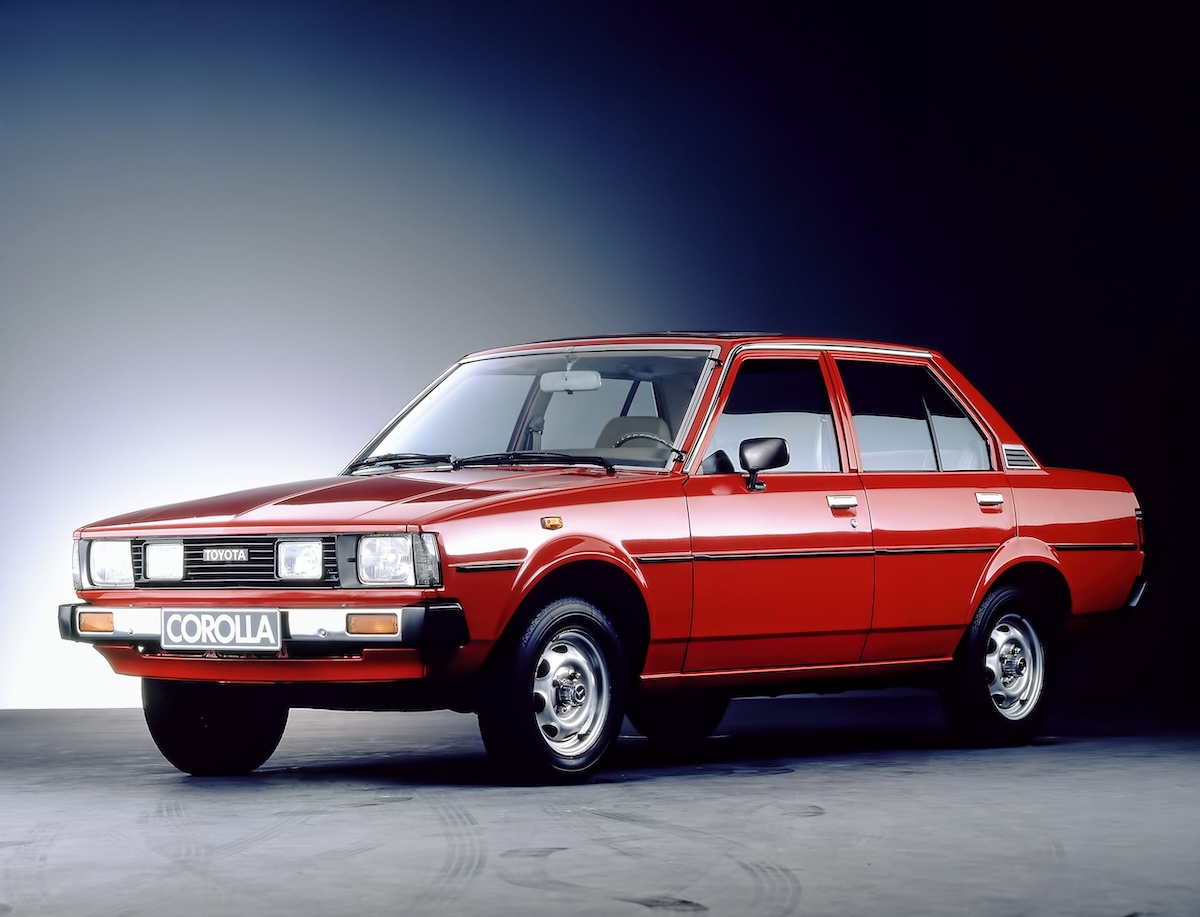
Body Styles:
- Two-door saloon
- Four-door saloon
- Two-door coupe
- Three-door coupe
- Five-door estate
The fourth-generation Toyota Corolla arrived in the UK in 1979 with a similarly broad model lineup to its predecessor. You could have a two-door or four-door saloon, a two-door ‘Hardtop’ coupe, a three-door ‘Fastback’ coupe, a three-door ‘Liftback’ coupe or a five-door estate. All have rear-wheel drive, while the choice of engines included 1.3-litre, 1.6-litre and 1.8-litre petrols. Diesel power was available for the first time, in the shape of a new 1.8-litre engine with 64bhp.
Driving dynamics were improved over the previous Corolla by the switch to a more modern suspension set-up and uprated brakes. The interior was quite innovative for its time, with all the instruments contained in a single display and an angular, rectangle-themed design. Additional features available included electrically adjustable door mirrors and automatic air-conditioning.
Accurate reliability data for Corollas of this age is scarce, although they have a reputation for being robust and easy to maintain. That said, there aren’t many left and any remaining examples – that aren’t basket cases – are now regarded as classics and priced accordingly.
3rd Generation (1974-1979)
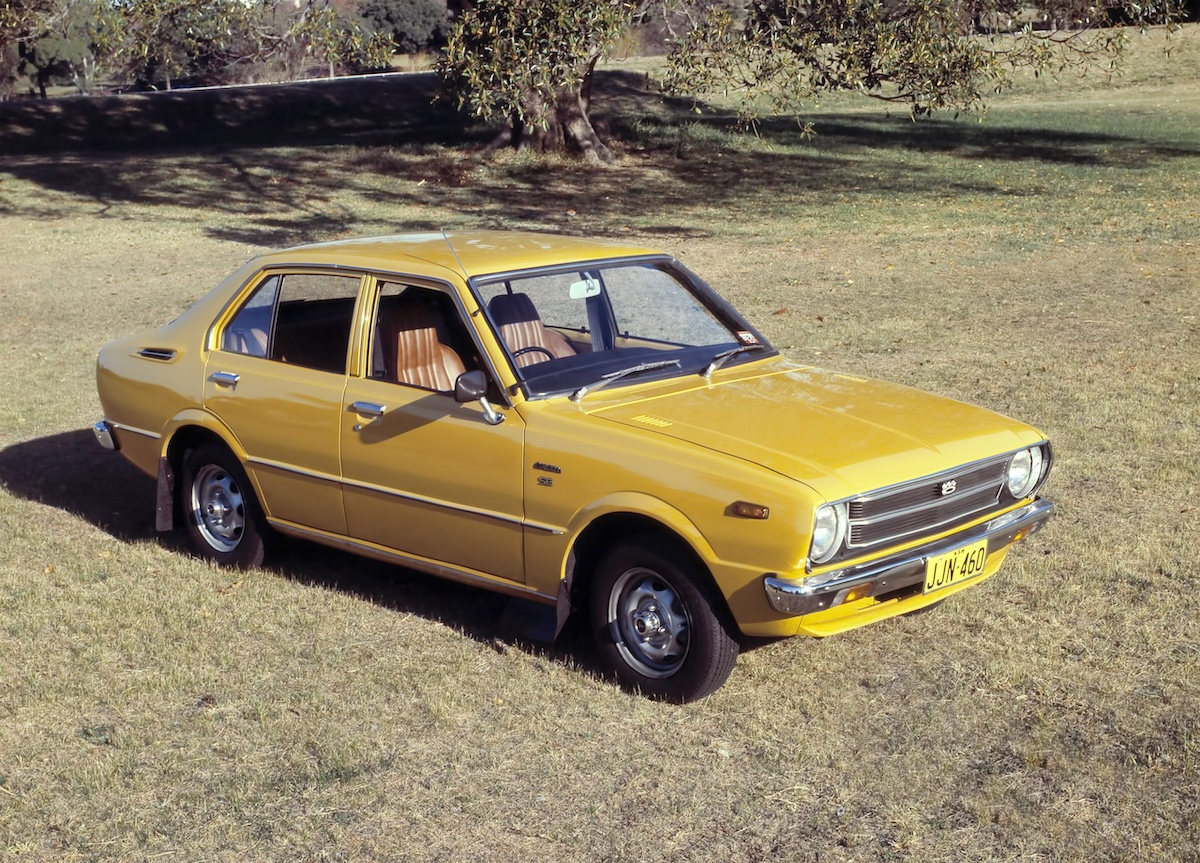
Body Styles:
- Two-door saloon
- Four-door saloon
- Two-door coupe
- Three-door coupe
- Five-door estate
The third-generation Toyota Corolla saw the model grow in size and scope. As well as two-door or four-door sedan and five-door estate versions, you could choose a two-door coupe or a three-door ‘Liftback’ coupe. The Liftback was a stylish detour in the Corolla timeline: a sleek, ‘shooting brake’-style coupe estate.
The four-cylinder engines were either revised or all-new, and were geared towards meeting increasingly strict emissions regulations. Over the model run, 1.2-litre, 1.3-litre, 1.4-litre, 1.6-litre and 2.0-litre petrol engines were available. All versions have rear-wheel drive.
Standard equipment is what you expect of the time, with highlights including intermittent windscreen wipers, ‘knitted vinyl seats’ and, for select versions, a three-spoke woodgrain steering wheel.
Corollas of this era were built to last, but rust, neglect and the hefty cost of maintenance has got the better of most of them. Some of those that remain have been modified for a sportier look and track use, while the rest – if they’re in decent shape – will be marketed as classics.
2nd Generation (1970-1974)
Body Styles:
- Two-door saloon
- Four-door saloon
- Two-door coupe
- Five-door estate
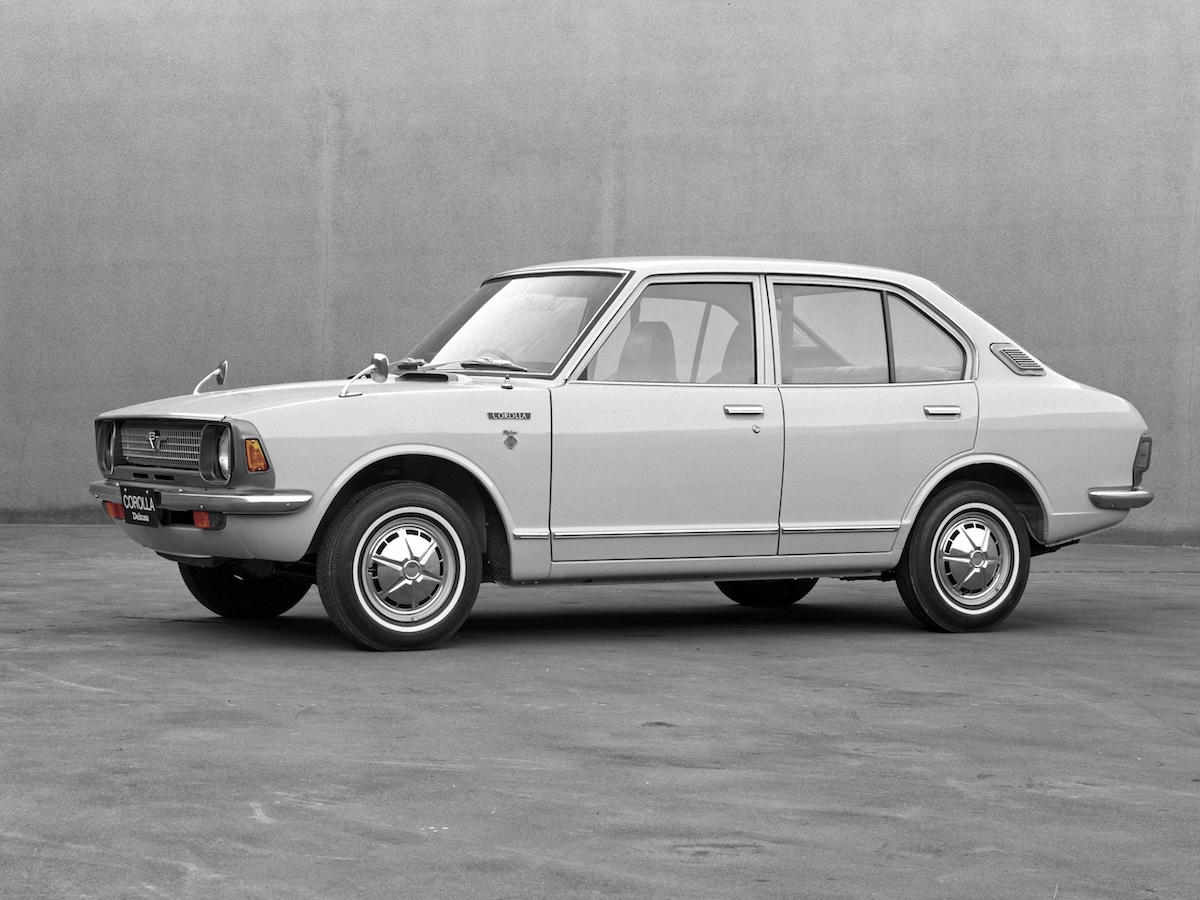
The second-generation Toyota grew in size compared with the first car, although it remains tiny by modern standards. Introduced in 1970, the range expanded during its four-year run to include two-door or four-door saloons, a three-door estate or a new two-door coupe body style. As before, all models had a rear-wheel-drive layout and a four-cylinder engine, but new 1.4-litre and 1.6-litre engines joined the existing 1.2-litre units. Most versions had a four-speed manual or three-speed automatic gearbox. Firsts for the Corolla included an AM/FM radio, air-conditioning and windscreen washers.
While the second-generation Corolla helped to establish the model’s reputation for reliability and build quality, any remaining cars are now at least fifty years old and an individual car’s condition will depend on how it’s been looked after over the years.
1st Generation (1966-1970)
Body Styles:
- Two-door saloon
- Four-door saloon
- Two-door estate
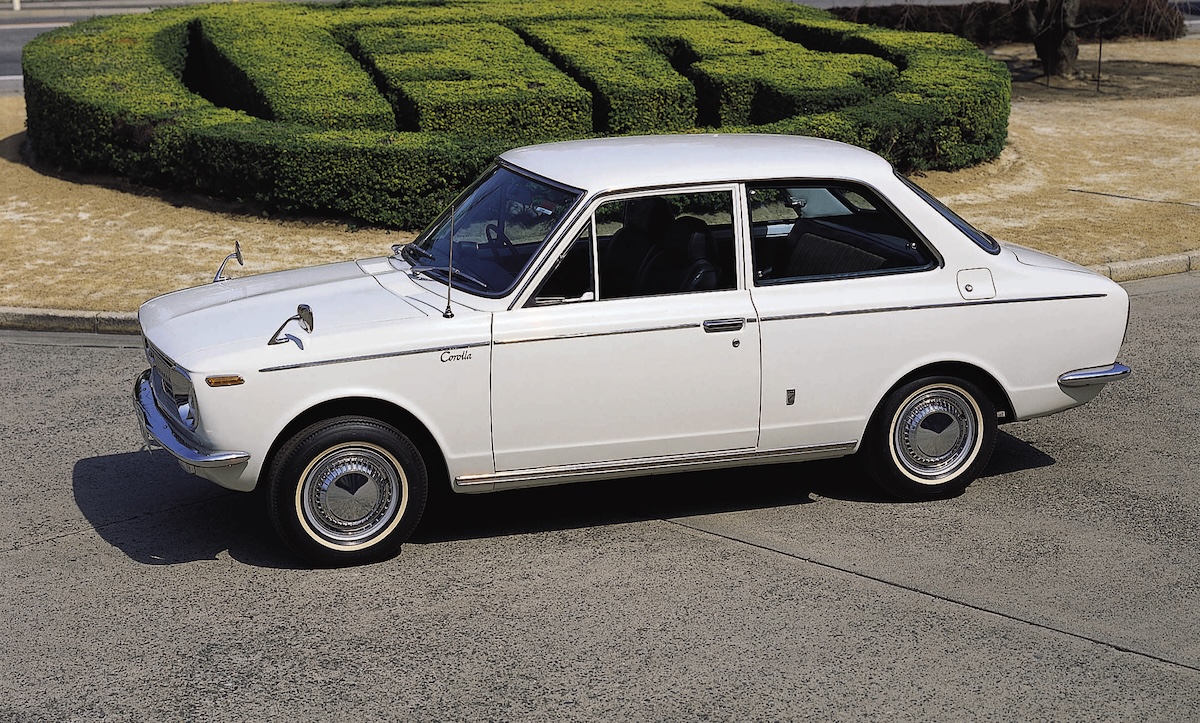
The first-generation Toyota Corolla was the second car Toyota imported to the UK, arriving here in 1966, the same year it was introduced in its home market of Japan. The elements that have made the Corolla a sales phenomenon over the years were present from the start, with the first-generation Corolla having a focus on ease-of-use, reliability and low running costs.
Initially a 1.1-litre four-cylinder petrol engine was the sole option, but this was replaced by a new 1.2-litre engine later in the model run. All models were rear-wheel drive, with a choice of a four-speed manual or two-speed automatic gearbox. Three body styles were available: a two-door or four-door saloon, or a three-door estate. While the interior was basic by modern standards, the first Corolla had sporty ‘bucket’-style front seats and a high roofline to give plenty of headroom.
Any Toyota Corollas of this era that are still roadworthy are likely to have been either lovingly maintained or restored, and are collectible, and therefore likely to cost more than you might think.
Related Topics: