DS 3 2026 review | Stylish and upmarket compact crossover
DS DS 3 cars for sale
2.0
Expert review
Pros
Distinctive styling
Impressive powertrains
Low BIK bills on EV version
Cons
Very limited practicality
Patchy interior quality
Not cheap to buy

The CarGurus verdict
There’s not much fundamentally wrong with the DS 3. It’s interesting to look at, decent to drive, nice to sit in, and comes with a fair amount of luxury kit. However, while it does a passable job in all those areas, it doesn’t particularly dazzle in any of them, certainly not enough to justify the high price tag. Plenty of very talented rivals will cost you less, that’s for sure.
The car’s big Achilles’ heel – limited practicality due to the tight rear-seat space and small boot – also counts against it. That said, if you can look past that particular shortcoming and you’re a company car driver who doesn’t do many miles, we can see plenty of sense in going for the E-Tense electric version, which will cost you a pittance in company car tax.
What is the DS 3?
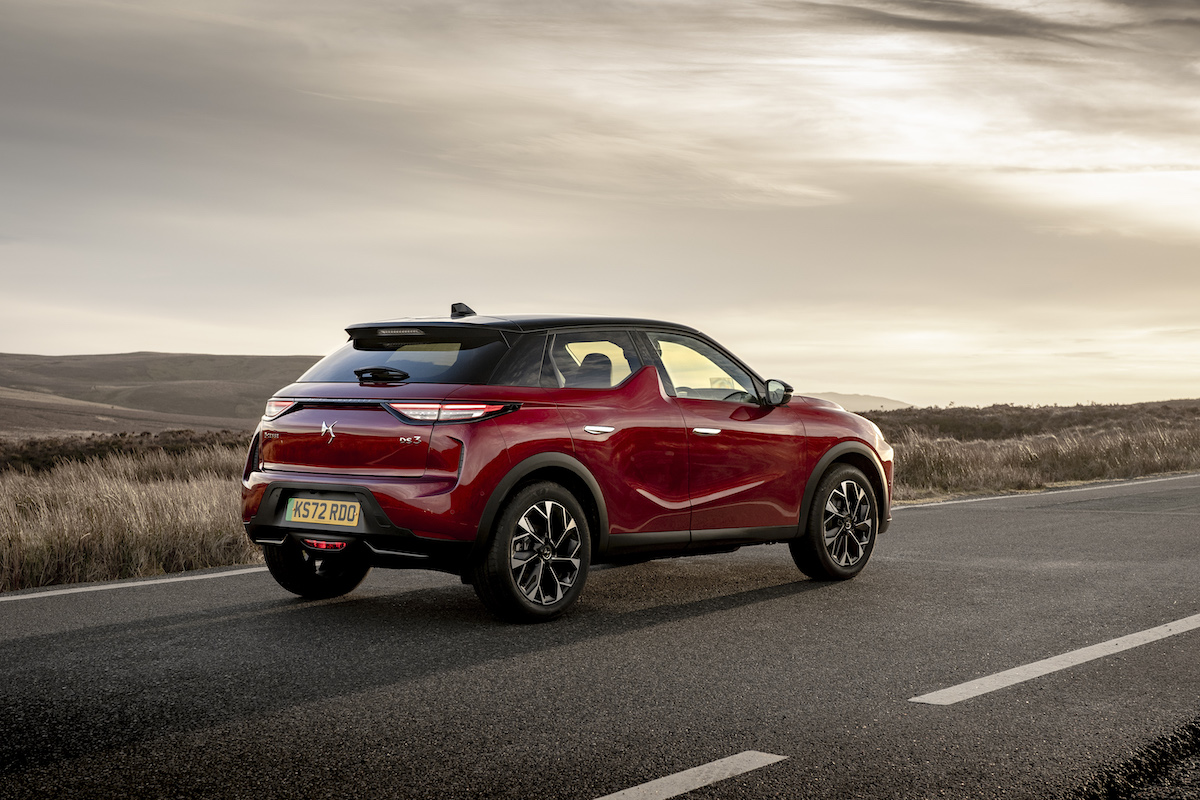
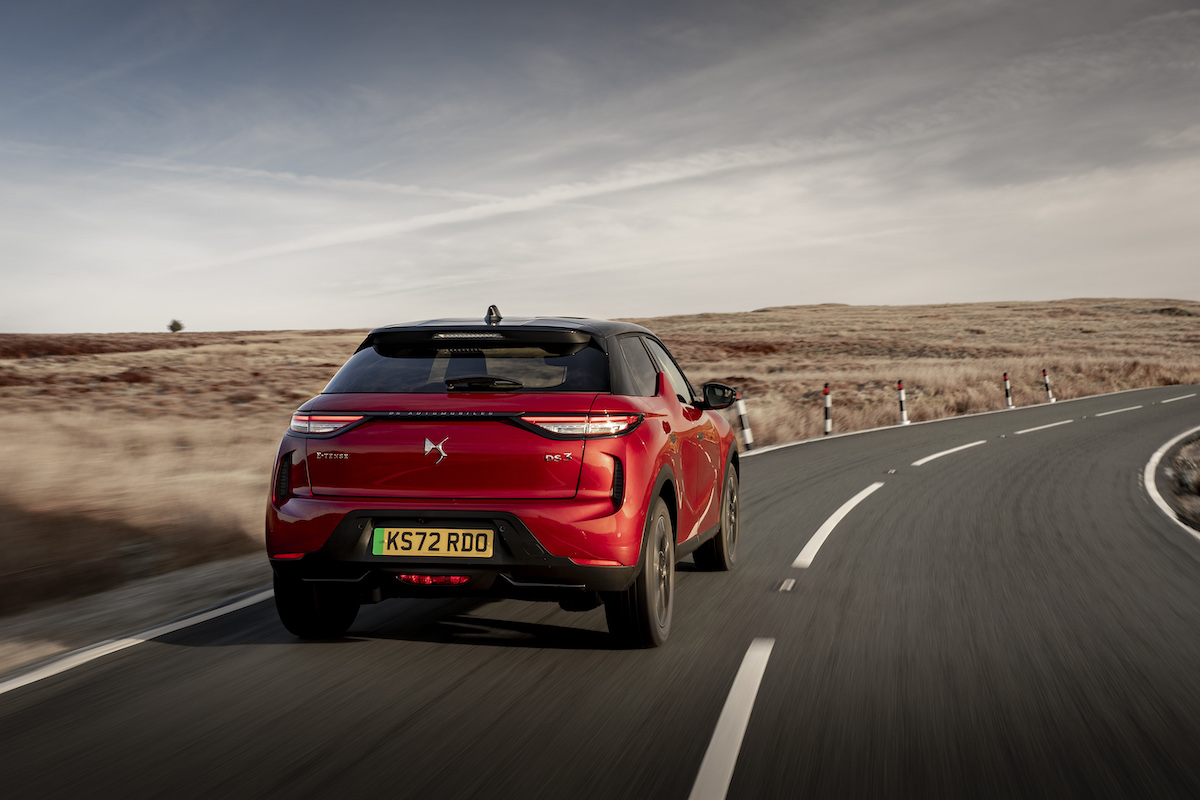
The DS 3 is a small premium crossover designed to offer something a little different from the compact SUV crowd. Once a stylish supermini called the Citroen DS 3, and later known as the DS 3 Crossback, this latest version keeps the name simple but retains the raised ride height and fashion-led styling that set it apart from more conventional rivals.
Positioned as a more design-focused alternative to mainstream small SUVs, the DS 3 aims to combine French luxury flair with everyday usability. Buyers can choose between hybrid or fully electric powertrains, reflecting DS Automobiles’ push towards electrification while still appealing to drivers who are not quite ready to go electric.
Under the skin, the DS 3 shares its platform with cars such as the Peugeot 2008 and Vauxhall Mokka. However, it boasts greater individuality thanks to its standout styling, higher-quality interior materials and a greater focus on comfort. Alternatives to consider include the Jeep Avenger (to which it is also related), Hyundai Kona, Ford Puma and more premium SUVs such as the Audi Q2 and Volvo EX30.
Rather than trying to be the sportiest or most practical option in its class, the DS 3 leans heavily on style, individuality and a boutique premium feel. DS hopes that is exactly what some buyers are looking for.
How practical is it?
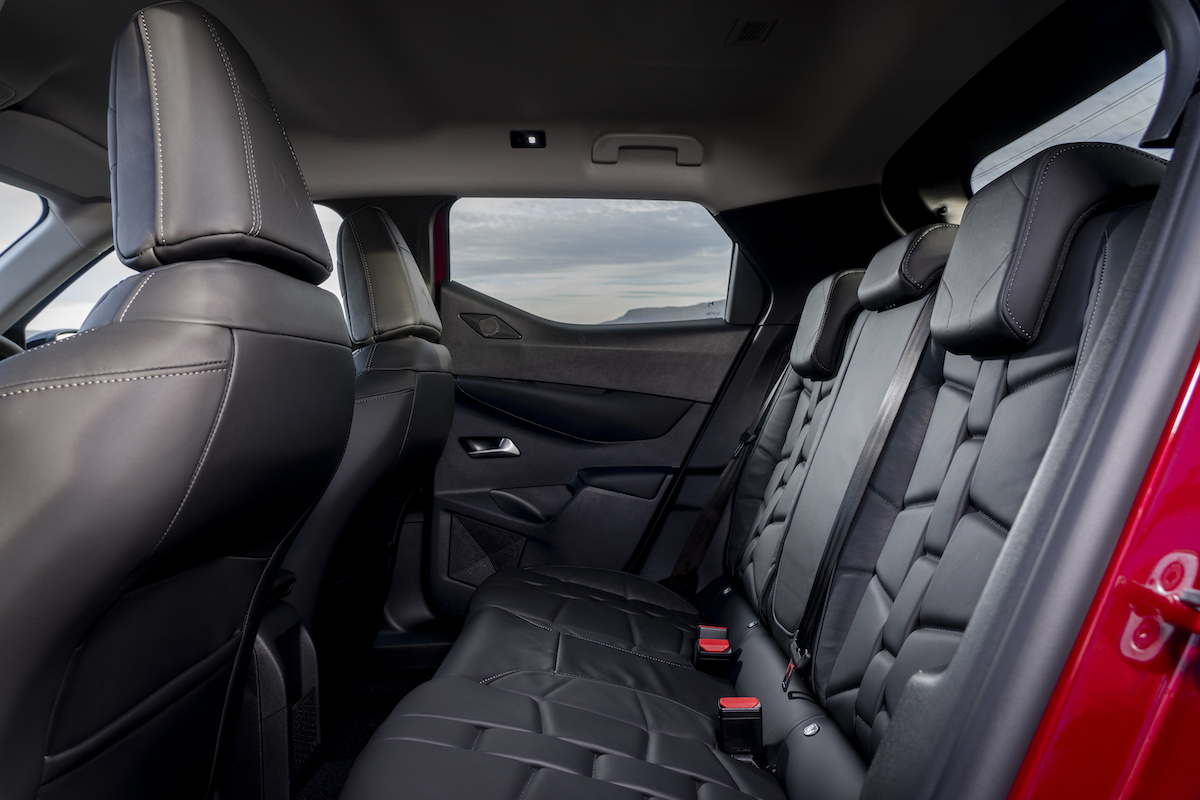
Not very, frankly. There’s enough space up front for tall folk to get comfortable, but the rear seats are very tight for both headroom and legroom, so even kids will struggle to settle in. If your little’uns are still in bulky child seats, you might very well struggle to get those in at all. Don’t even think about trying to squeeze a third person into the back row, either – there simply isn’t the shoulder space.
Things are made to feel all the more claustrophobic for those in the back by the panel that blocks off part of the rear window to form a shark’s fin motif, which has been a trademark piece of design on the DS 3 since the original. To top things off, the rear door openings are small, and you’re further impeded by a piece of bodywork that juts out into the opening. It’s very easy to whack your hip as you climb in.
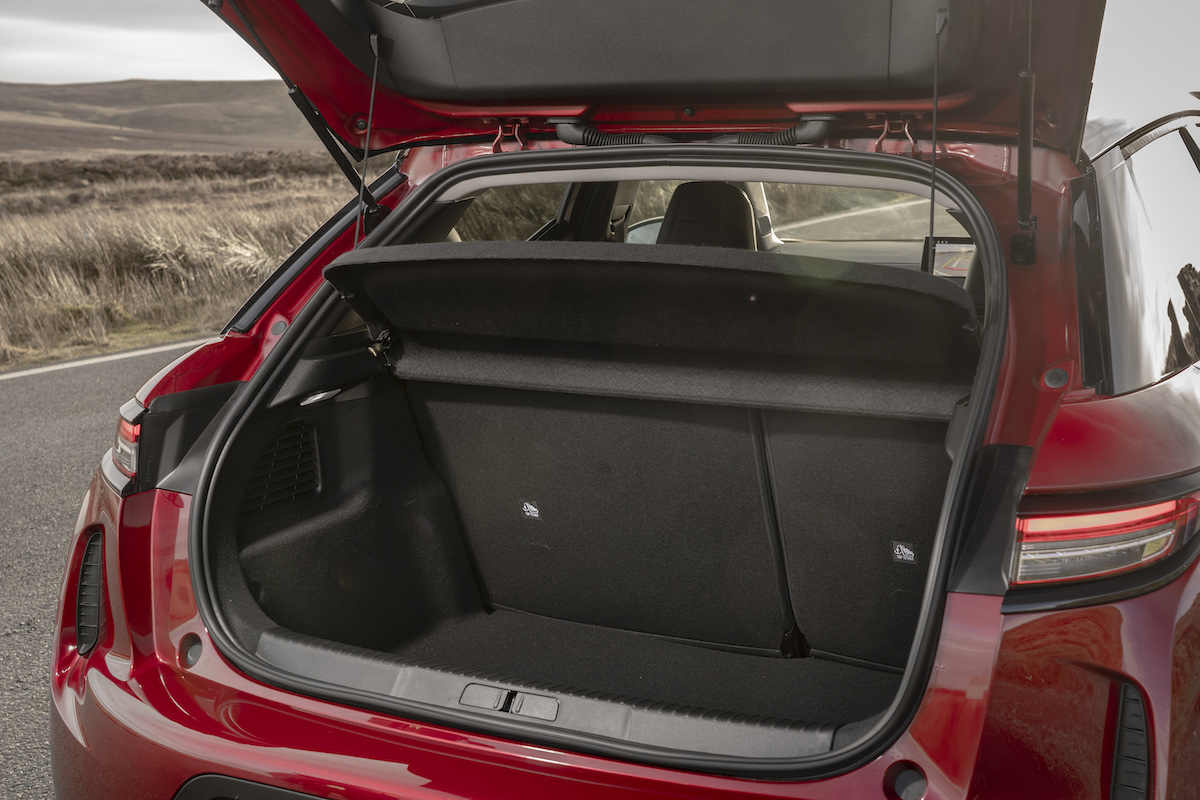
Boot space is also pretty small, at 350 litres, so many rivals do better on that score. What’s more, there’s a high load lip to negotiate, and when you lower the 60:40-split folding rear seats, you’re left with both a step and a slope in the floor. There’s no underfloor cable storage in E-Tense electric versions, either, so the cables have to travel in the main part of the boot, taking up more space. A movable boot floor would solve most of these issues, but isn’t provided.
What’s it like to drive?
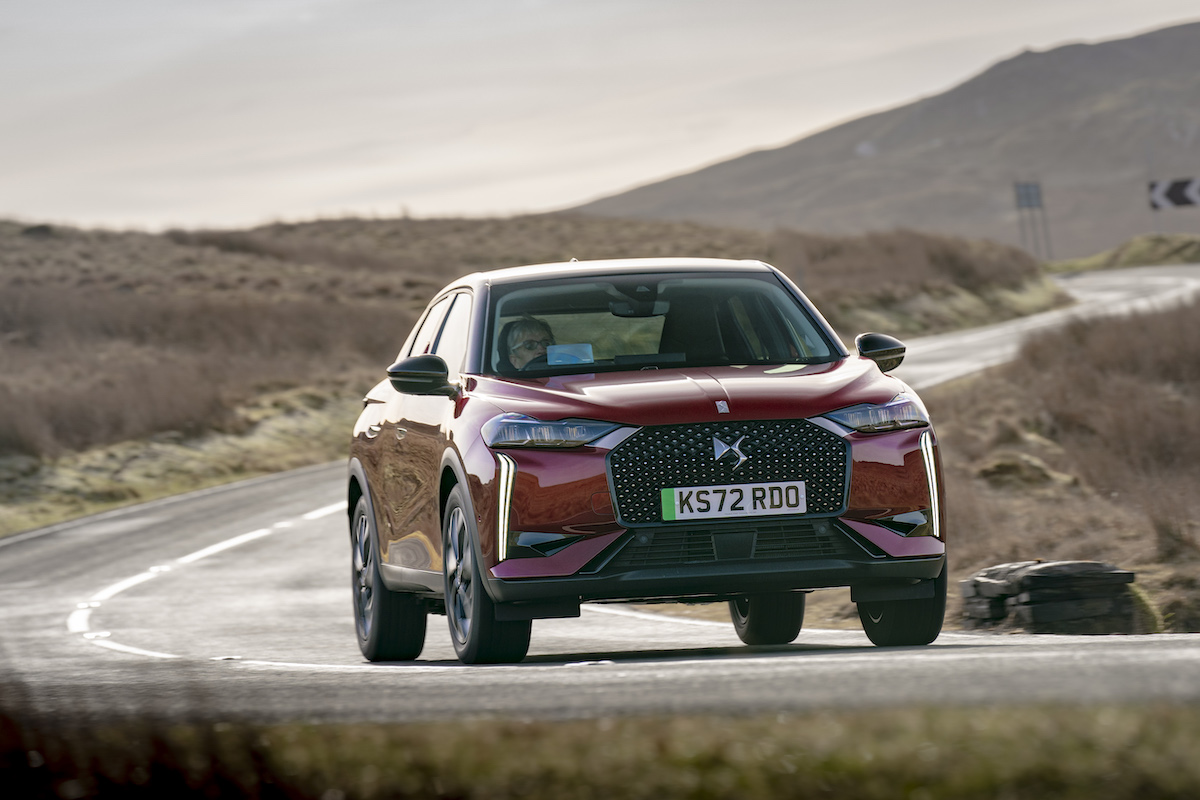
The original DS 3 was intended to be quite a sporty little thing, and as a result had rock-hard suspension that gave it a punishing ride. Thankfully, that is no longer the case. These days, the DS 3 feels more grown-up and comfort-focused, even if you still get a bit of patter over rougher surfaces at low speeds. It’s generally composed and compliant, although you can notice a bit more vertical movement than you might expect over dips and crests, which can make it feel slightly floaty at times and leads to a bit of body lean in bends. It’s not as sharp or agile as a Ford Puma, for instance, but it’s stable and predictable. The steering is also accurate and nicely weighted.
In the current range, the main non-electric option is the Hybrid 145. This pairs a 1.2-litre turbocharged petrol engine with a small electric motor and a dual-clutch automatic transmission, aiming to deliver some EV-style smoothness around town without you ever needing to plug in. In traffic, it can feel pleasantly relaxed, and it’ll often creep along quietly in electric mode at low speeds. But when you ask for a sudden burst of acceleration, you can still feel the drivetrain doing a bit of thinking as it swaps between petrol and electric assistance. Overall, it suits the DS 3’s laid-back character, even if it’s not the last word in sharp responses.
The fully electric E-Tense gets a 54kWh battery (50.8kWh of which is usable) and a 154bhp motor. Official range varies by version, but is 248 miles in Pallas guise, rather than a headline-grabbing 300-mile figure. It doesn’t deliver the aggressive off-the-line shove some electric cars do, choosing instead to build speed in a more measured way, yet it still feels nippy enough for everyday use and has no trouble getting up to motorway speeds. It’s also impressively quiet, and the extra weight of the battery helps it feel slightly more settled than the combustion-engined cars in the way it rides and responds.
Technology, equipment & infotainment
An interesting feature that’s standard across the range are the flush-fitting door handles that pop out automatically when the car unlocks, giving the DS 3 a slightly futuristic feel and delivering some bragging rights at a dinner party.
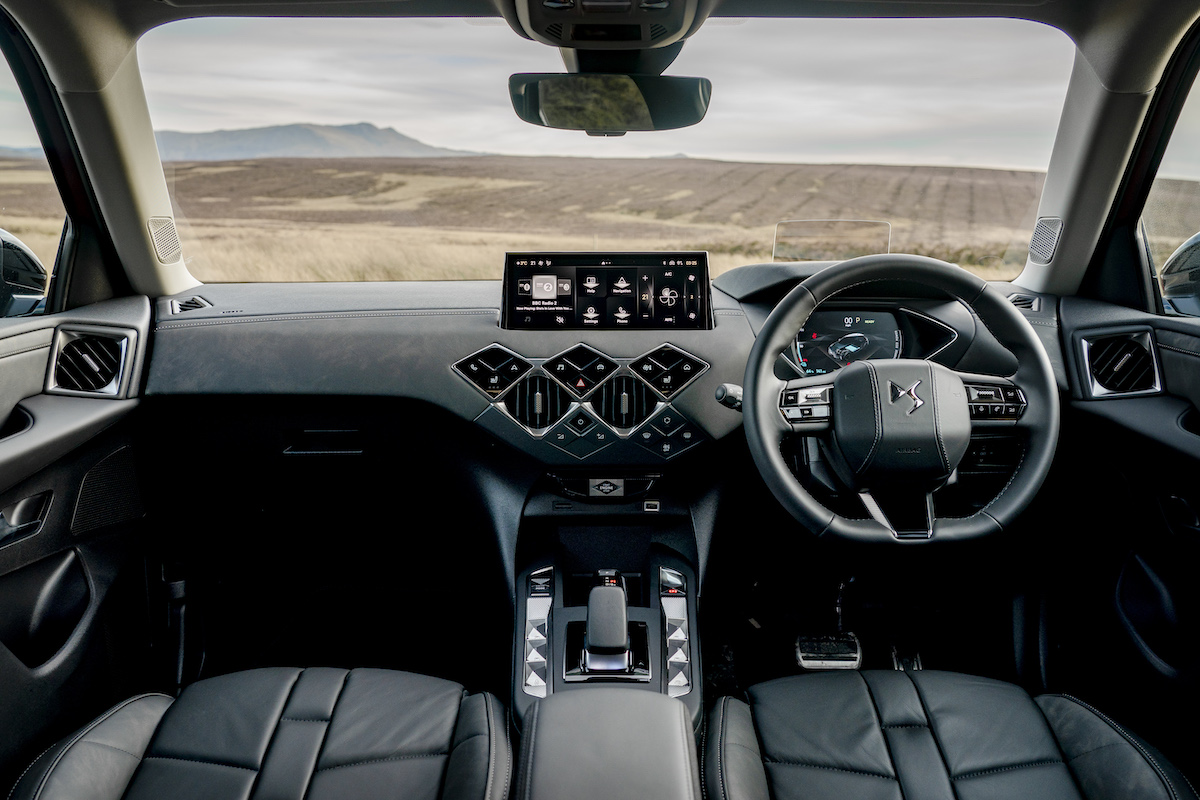
Entry-level versions still come reasonably well equipped. Standard features typically include 17-inch alloy wheels, automatic air conditioning, LED headlights, front and rear parking sensors, cruise control and a 10.3-inch touchscreen infotainment system with wireless Apple CarPlay and Android Auto, Bluetooth connectivity and a DAB radio. The system itself looks sharp and is reasonably intuitive to use once you’ve familiarised yourself with DS’s slightly quirky menu layout.
Moving up the range brings more luxury-focused upgrades, rather than major mechanical changes. Mid-level trims introduce sportier styling touches or upgraded interior materials, along with additional comfort equipment such as heated seats, keyless entry and enhanced ambient lighting depending on specification.
Higher-spec versions add the DS IRIS infotainment system with connected navigation, voice recognition and expanded online functionality. This also enables more advanced connected services and personalisation options, although like many modern touchscreen-based setups it can take a little time to master.
At the top of the range, the DS 3 features the likes of electrically adjustable seats, a head-up display, upgraded audio systems, additional parking aids and expanded driver assistance tech. It’s worth noting that the IRIS infotainment system is now standard across the range if you’re looking at a later car, when the range was simplified to Pallas, Pallas 55 and Etoile.
DS 3 running costs
How you feel about this car’s pricing will depend on how convinced you are by the claim that it’s a premium product. There are plenty of small SUVs that’ll cost you considerably less to buy, and some very good ones at that. Compare the DS 3’s price to that of a genuine premium contender, such as the Audi Q2, and there’s virtually nothing in it, and for some buyers, that’ll be too much to bear. If you’re buying your car brand new, or taking out a PCP or other finance deal, the DS 3’s historically weak resale values compared with some premium rivals will work against you, too. Then again, the same thing will work in your favour if you’re considering the DS 3 as a used car.
We’ve mentioned the significant financial benefits that company car drivers can get if they go for the E-Tense all-electric version, but although recently improved, its sub-250-mile range is still not as good as some rivals. Charging the battery takes seven to eight hours on a 7kW domestic wallbox charger, while rapid DC charging of up to 100kW is supported, so if you can find a powerful enough charging station, you can charge from 10 to 80 percent in just 30 minutes. It’s also quite good that the DS 3 comes with a heat pump as standard, which increases the car’s range in cold weather. Most rival manufacturers charge extra for the same feature.
The Hybrid 145 powertrains are pretty efficient compared with rivals, too, with official WLTP fuel economy figures of around 51mpg to 62mpg depending on specification.
DS 3 reliability
The DS brand hasn’t existed as a standalone operation for very long, and it also doesn’t sell cars in very high numbers, so accurate reliability data is pretty hard to source. DS doesn’t feature in many of the main reliability or customer satisfaction surveys, either.
You can try and get a steer from the performance of its Citroen and Peugeot stablemates, but this also bears mixed results. In the 2025 What Car? Reliability Survey, Citroen placed 10th out of 30 carmakers included, while Peugeot was just a place lower.
New DS 3 models come with a three-year warranty, with unlimited mileage for the first two years and a 60,000-mile limit in year three. That’s the bare minimum you can expect these days, and many other manufacturers are far more generous.
- You might consider the DS Automobiles brand to be a bit of a leftfield choice, and sure enough, its sales figures aren’t sufficient to give the established German brands sleepless nights. Not even close. Still, DS has carved out a niche for itself in Europe, appealing to buyers who want something more distinctive and design-led than the usual premium-badge suspects.
- As soon as you set foot inside the DS 3, you can’t fail to notice the firm’s diamond design motif: it’s absolutely everywhere. The air vents are diamond shaped, so are almost all of the dashboard buttons, and they’re even arranged in diamond-shaped clusters. Happily, that doesn’t lead to too many ergonomic quirks, although it can still be frustrating that some of the switches around the centre console look almost identical and aren’t clearly marked. Like many modern cars, you also need to dive into the touchscreen for ventilation controls, which isn’t ideal on the move.
- One way that the DS 3 aims to mark itself out as a premium product is with the quality on show inside its cabin. It’s partially successful. Many of the textures and materials feel thoughtfully chosen and give a strong first impression, especially in higher-spec versions with the trademark watchstrap-style leather upholstery. However, dig a little deeper and you’ll still find some harder plastics that feel closer to mainstream Stellantis products than to established premium rivals such as Audi or BMW, whose interiors tend to feel more consistently high-end throughout.
- If you’re a company car driver: If you can live with its relatively modest electric range, the E-Tense makes a strong case thanks to extremely low Benefit-in-Kind (BiK) rates. Even though it carries a higher list price than the hybrid versions, monthly tax bills can be dramatically lower, making it a surprisingly sensible choice for business users.
- If you need to keep costs down: The Hybrid 145 is the most accessible way into the DS 3 range and should suit most buyers perfectly well. In Pallas trim it comes well equipped and delivers a good balance between price, performance and efficiency without stretching the budget too far.
- If you want the best all-rounder: The E-Tense is arguably the best DS 3 to drive thanks to its quiet electric powertrain, but if charging isn’t practical then the Hybrid 145 in a higher trim level such as Etoile or Performance Line strikes a nice balance. You get a more premium-feeling cabin with distinctive materials and styling, while retaining the flexibility of petrol power.