DS 4 2022-2025 review | Stylish and comfortable premium hatchback
DS DS 4 cars for sale
3.0
Expert review
Pros
Distinctive, high-quality interior
Comfortable and relaxing on motorways
Good range of petrol, diesel and plug-in hybrid powertrains
Cons
Cramped rear seats
Lifeless steering
Poor residual values

The CarGurus verdict
Its more mainstream rivals tend to be slightly better all-rounders than the DS 4, with more rear-seat space and better driving dynamics. What’s more, the 4 is just a bit too expensive for a flawed and rather leftfield option. It won’t really cost you much less than rivals that offer more power and greater badge prestige.
Having said that, the DS 4 isn’t without its charms. It’s reasonably comfortable, especially on the motorway, and the on-board technology largely works well. It is also an interesting alternative to the more obvious posh hatchbacks, majoring on style and panache. So, if you want an upmarket used car and you don’t want to plump for one of the usual suspects, the DS 4 is still worth a look.

What is the DS 4?
The DS 4 is a premium family hatchback that rivals the likes of the Audi A3, BMW 1 Series and Mercedes A-Class. Rather than majoring on sportiness or badge appeal, it was designed to appeal to buyers who wanted to stand out from the crowd. Comfort, design and interior ambience are prioritised, rather than sharp handling or class-leading practicality.
Launched in 2021, with deliveries starting in 2022, the second-generation DS 4 is closely related to the Peugeot 308 and Vauxhall Astra, but with styling and trim that make it feel more luxurious and upmarket. Highlights include retractable door handles, intricate light signatures and upholstery inspired by luxury watch straps.
When new, the DS 4 was offered with a wide range of powertrains to suit different buyers. These included turbocharged petrol engines, a diesel aimed at high-mileage drivers, and a plug-in hybrid (PHEV) for company car users. All versions came with an automatic transmission, reinforcing the car’s relaxed, comfort-focused vibes.
Now that the DS 4 has been replaced by the DS No4, it exists purely as a used buy. That makes it an interesting proposition for drivers who want a premium hatchback that’s a bit different to the mainstream, often at a lower price than equivalent German rivals.

How practical is it?
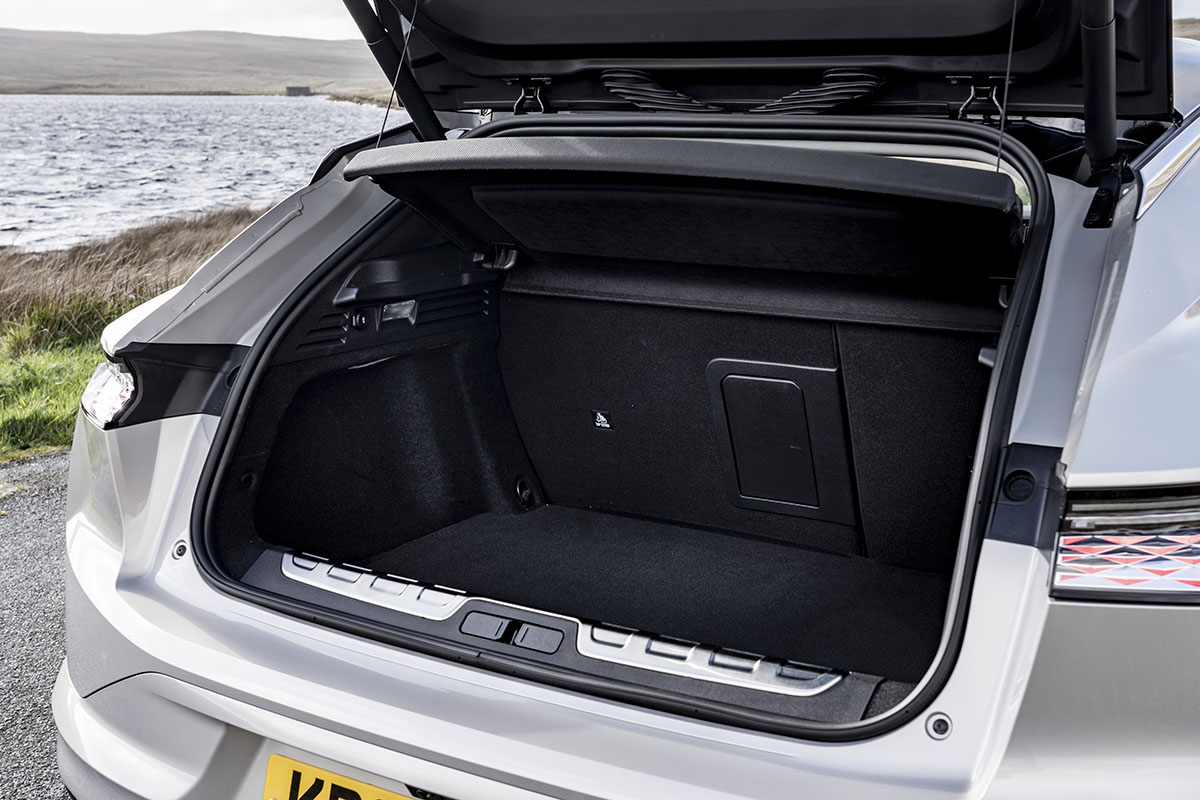
On paper, the DS 4 looks impressively practical for a premium family hatchback. Non-hybrid versions offer a luggage capacity of 430 litres, which is more than you get in an Audi A3 or BMW 1 Series, and even edges out more mainstream alternatives like the Mazda 3 and Volkswagen Golf. The plug-in hybrid version does lose some space to its battery pack, cutting this figure to 390 litres, but that is still competitive for the class.
Where the DS 4 falls down is passenger space, particularly in the back. Its sharply sloping roofline eats into headroom, the rear doors open to reveal thick trim panels that press in on your elbows, and kneeroom is limited if the front seats are set back. Taller adults will feel hemmed in, while even average-height passengers may find longer journeys uncomfortable. The styling may look good from the outside, but your rear-seat passengers won’t appreciate the trade-off.
Up front, the driving position is comfortable, the seats are supportive, and there’s enough adjustment to suit most people. However, the narrow side windows and high waistline mean the cabin still feels snug rather than airy, especially compared with a BMW 1 Series. Storage for odds and ends is reasonable rather than generous, with small door bins and a centre console that prioritises design over usefulness.

What's it like to drive?
There’s a sense here that DS’s engineers have sought comfort over and above driving enjoyment, and for many buyers that’s a good thing. However, the ride is just a shade too taut around town, and there’s a lot of side-to-side movement, which means you really notice it rocking about over bumps and ruts that only affect one side of the car or the other.
For all that, once you get your speed up the DS 4 mellows out considerably. It’s quite a relaxed car on the motorway, an impression aided by impressive damping down of noise from the wind, engine and road.
We’ve spent most of our time in the plug-in hybrid E-Tense version, although petrol and diesel models are widely available on the used market. Plug-in systems like the one fitted to the DS 4 can often feel a little jerky and indecisive when you prod the throttle, but this one is about as slick as they come. It juggles the electric motor and petrol power almost seamlessly – and it feels powerful, too. This adds to a general impression of unflappability.
Mind you, if you enjoy a spirited drive on a back road, you might find the DS 4 isn’t a great companion for such things. There’s lots of grip and the nose follows your steering inputs faithfully, but the complete lack of feedback through the steering wheel or chassis means you never really feel that involved in the process.

Technology, equipment & infotainment
Even early versions of the DS 4 feel modern by premium family hatchback standards, so don’t worry if your budget can’t stretch to a more recent example. All cars come with a 10-inch touchscreen infotainment system, which is paired with a 7.0-inch digital driver display. DS also fitted a secondary 5.0-inch touchscreen on the centre console, known as Smart Touch, which can be configured with shortcuts for commonly used functions. Higher-spec models add a head-up display, while USB ports are provided for both front and rear passengers.
At launch, the range was split across multiple trims and styles, which can make used-car shopping a little confusing. Early cars came in trims such as Bastille+, Trocadero and Rivoli, alongside the sportier-looking Performance Line and Performance Line+ versions, plus the rugged DS 4 Cross. Performance Line models focused on darker exterior detailing and racy interior finishes rather than any increase in performance. The DS 4 Cross added SUV-style cosmetic upgrades such as body cladding and roof bars, but kept the same ride height and mechanicals as the standard car. Both cars were dropped later in the DS 4’s production life.
Equipment levels are mostly generous, particularly when it comes to infotainment and driver assistance, but the specification does vary noticeably by trim and year. Some features that buyers might expect to be standard on a premium hatchback were restricted to higher trim levels on early cars. Heated seats, for example, were not standard across the range at launch and were often bundled into option packs or reserved for high-spec versions. Similarly, adaptive cruise control was initially limited to more expensive models, rather than fitted as standard across the range.
Later cars benefited from a simplified lineup, with Pallas, Pallas 55 and Etoile the key trim levels – the latter also available with a Nappa Leather pack upgrade. Standard kit typically included 19-inch alloy wheels, dual-zone climate control, adaptive cruise control, keyless entry and start, and a reversing camera, although heated seats were still reserved for those who paid more.

DS 4 running costs
The most fuel-efficient version of the DS 4 is the BlueHDi 130 diesel, which is well suited to longer journeys. In everyday use you can expect around 50-55mpg, depending on driving conditions, which comfortably outperforms the equivalent petrol model. For high-mileage drivers, this makes the diesel one of the most cost-effective options in the range, despite the fuel’s waning popularity.
The PureTech petrol engines are reasonably economical, with the 128bhp version typically returning 40-45mpg. The more powerful 178bhp and 224bhp variants see that figure drop to around 35mpg. That’s still competitive for the class, although running costs inevitably rise as performance increases.
The plug-in hybrid DS 4 E-Tense is more complicated. Official WLTP fuel economy figures are best ignored, as they can be wildly misleading. In real-world use, the outcome depends entirely on how often the car is charged. If you regularly plug in and keep your journeys short, fuel consumption can be very low, with many trips completed on electric power alone – 30-35 miles of EV range is realistic in the right conditions. If you’re unable to charge the battery on a regular basis, however, a plug-in hybrid is unlikely to be a good choice.
Beyond fuel, running costs are broadly in line with other premium hatchbacks. Insurance and servicing tend to be pricier than more mainstream alternatives, while depreciation is steeper than most established German rivals. That said, this loss in value can work in the used buyer’s favour, making the DS 4 look relatively good value compared with similarly specified alternatives.
DS 4 reliability
We don’t have any reliability data on the DS 4, as DS Automobiles doesn’t sell enough cars in Britain to create a sufficient sample size for analysis.
What we can do is get a rough idea of the DS 4’s reliability by looking at car manufacturers from the same group, who use the same components in their vehicles – i.e. Peugeot and Citroen.
Citroen came 10th overall in the 2025 What Car? Reliability Survey, while Peugeot finished equal 11th out of the 30 car manufacturers included. Given the number of shared parts, this bodes well for the dependability of the DS 4, especially given that Citroen and Peugeot finished higher than several premium brands.
The DS 4 came with a three-year, 60,000-mile warranty when new, and this is transferable to the next owner. That said, the cover of many used DS 4s will have expired, so you might want to consider an aftermarket warranty.
- Don’t be fooled by the DS 4’s superficial style. Beneath the skin, it’s closely related to the Vauxhall Astra and Peugeot 308. Mind you, while it’s worth being aware that you can find its mechanicals in a cheaper package elsewhere, that shouldn’t be a deal-breaker. After all, the same is true of the Audi A3, based heavily on the Volkswagen Golf, and to a lesser extent the BMW 1 Series, which has plenty in common with the Mini Hatchback. Thankfully, the latest Astra and 308 are pretty good cars.
- One optional extra you can get on the DS 4 (and not its lesser stablemates) is a camera-controlled suspension system, dubbed ‘Active Scan’, which reads the road ahead and adjusts the suspension to suit before you even hit a bump or pothole. The idea is to make road defects appear as though they aren’t there, much like the hydropneumatic suspension of the DS 4’s namesake, the original Citroen DS. The system later became standard across the DS 4 range.
- While the DS 4 was pitched heavily at company car drivers when new, it arguably makes more sense as a used buy. Swift depreciation means prices are often lower than equivalent premium hatchbacks, yet the interior quality, technology and standard equipment still feel upmarket. That makes it an appealing alternative to cars such as the Audi A3 or BMW 1 Series if you want something less common with more exclusivity. Just be aware that resale values aren’t as strong.
- For most used buyers, the sweet spot in the DS 4 range is a mid-spec petrol model, particularly the Bastille+, Trocadero or Pallas. The PureTech 130 engine offers a good balance of performance and running costs, while all versions come with an automatic transmission as standard.
- If comfort and interior quality matter most, higher-spec versions such as Rivoli and Etoile are worth a look. These bring a noticeably more luxurious cabin, larger wheels and more advanced driver assistance systems. The plug-in hybrid is often found in these trims and potentially makes sense if you can charge the battery at home. As a used buy, though, it’s worth checking battery health and real-world electric range before you commit.
- Drivers covering a lot of motorway miles may want to consider the BlueHDi 130 diesel. Despite diesel’s declining popularity and social stigma, this engine is smooth, economical and well suited to long journeys. For the right buyer, a diesel car can still make a great deal of sense – especially given their excellent fuel economy.
- Earlier Performance Line and DS 4 Cross models are largely style-over-substance affairs. Performance Line models don’t offer any extra performance, while the Cross adds tough-looking exterior details without any extra ride height or off-road ability. They can still be worth considering if you like the look and the price is right, but they shouldn’t be chosen on the expectation of different driving characteristics.


