DS 7 2023-2025 review | A stylish and distinctive used SUV
DS DS 7 cars for sale
3.0
Expert review
Pros
Striking design inside and out
Well equipped
Practical compared to other plug-in hybrids
Cons
Flamboyant interior causes ergonomic issues
Patchy interior quality
Many rivals are better to drive

The CarGurus verdict
If you judge the DS 7 purely as a direct alternative to premium SUVs like the Audi Q5, BMW X3 or Mercedes-Benz GLC, it struggles to convince. It doesn’t match those cars for interior quality, overall polish or driver appeal, and ownership of a DS 7 does tend to involve explaining to people what it is and where it comes from. That said, it counters with eye-catching design, strong levels of standard equipment and genuinely impressive space and practicality.
The DS 7 makes more sense viewed through a used-car lens rather than when it was a new-car purchase. Late UK cars came with a simplified engine and trim line-up, and while it doesn’t offer the breadth of choice it once did, the E-Tense 225 plug-in hybrid still delivers useful electric capability without sacrificing boot space. Combined with heavy depreciation from new, that makes the DS 7 a potentially appealing alternative for buyers who value comfort, style and equipment over badge prestige or sporty handling.
What is the DS 7?
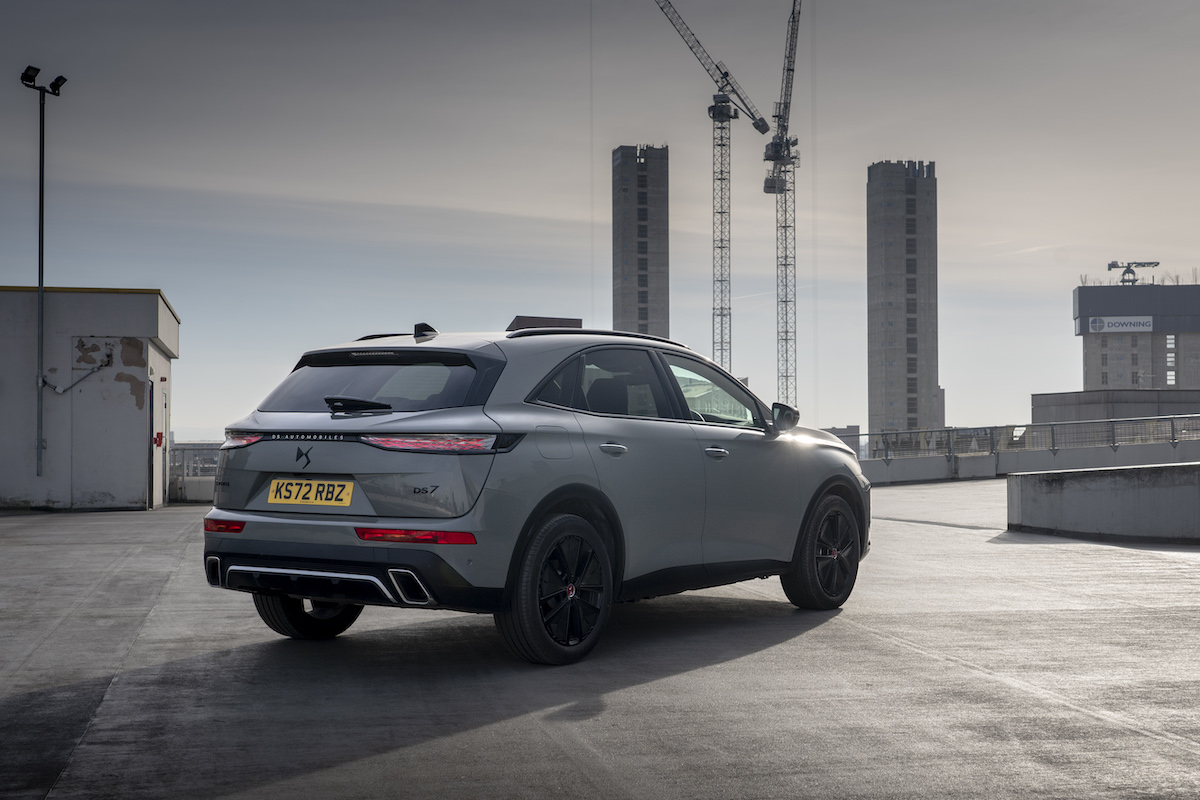
The DS 7 is a mid-size premium SUV that updated the earlier DS 7 Crossback, rather than reinventing it. Launched in 2023, it ushered in a sharper look and updates for the car’s technology and trim levels. While it was sold new in the UK for a few years, the DS 7 has now been withdrawn from the new-car range. That makes it a used choice today, rather than something you’ll order new from a DS Automobiles showroom.
Whatever the badge on the boot, the appeal is much the same: this is a design-led alternative to the usual premium SUVs, with an interior that prioritises comfort and style over sporty intent. There is a strong emphasis on equipment and space for family comfort, all while offering something a bit more distinctive than its mostly German rivals.
For late UK cars in particular, the DS 7 range became simpler. By the end of its run it was sold in Pallas and Etoile trims, with a choice of BlueHDi 130 diesel or E-Tense 225 plug-in hybrid engines. That limited choice is no bad thing for used buyers, making it easier to focus on the version that best fits your needs. For a car that was launched with a bewildering array of trim and engine options, less seems to be more.
There’s plenty to like about the DS 7, but it’s always been a niche choice that appeals to buyers who actively want something different from the mainstream options such as the Audi Q5, BMW X3 and Mercedes-Benz GLC. As a used buy, it can be an appealing leftfield alternative – as long as you go in with clear expectations about what it is (comfort-led) and what it isn’t (a sporty driver’s SUV).
How practical is it?
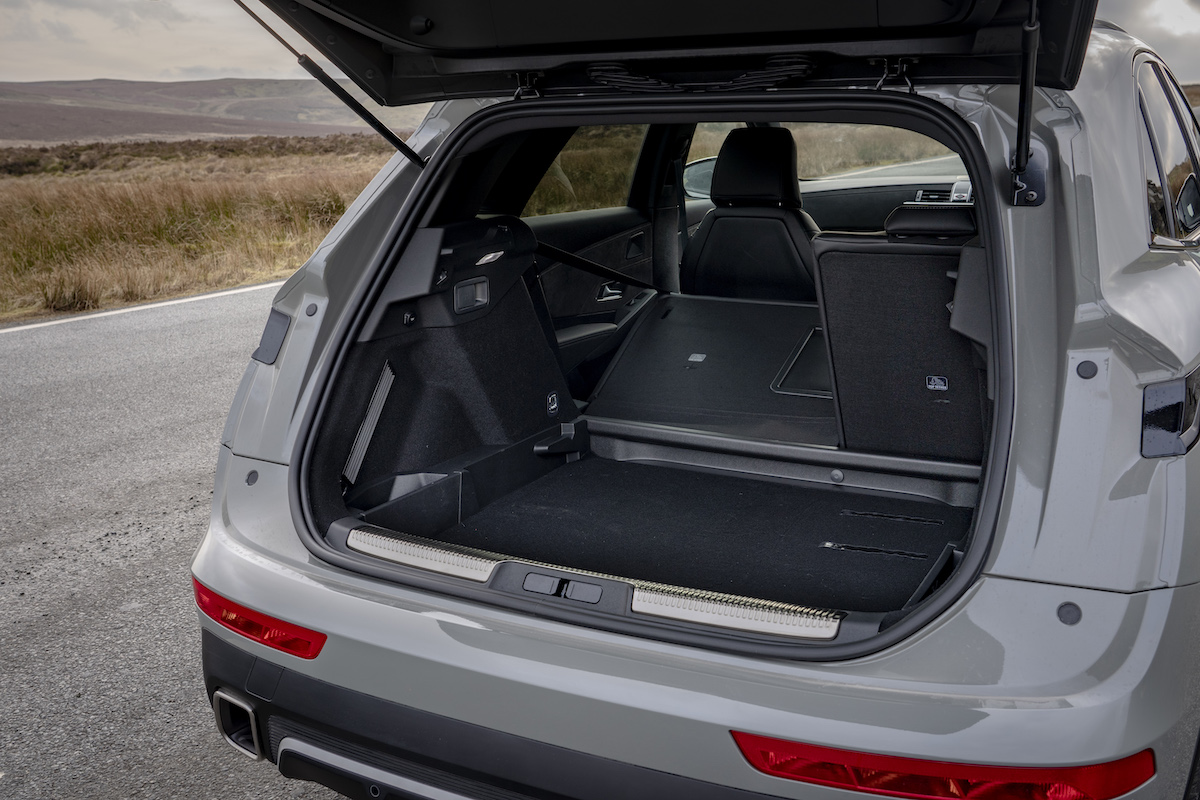
Practicality is an area in which the DS 7 impresses, but it could still do better. Let’s begin in the boot, where the 555-litre loadspace is bang-on with those of class-leading rivals such as the BMW X3 and Audi Q5. That’s not the full story, though, especially for buyers looking for a plug-in hybrid car. Most of these lose a certain amount of boot space compared with combustion-engined versions of the same car because the batteries have to live under the boot floor. Indeed, that’s the case for plug-in hybrid (PHEV) versions of the Audi Q5, BMW X3, Jaguar F-Pace and others. But the DS 7 is different in that it gets the same size boot no matter which powertrain you pick (indeed, most versions at launch were plug-in hybrids). So, when you compare the plug-in DS 7’s loadspace with those of its PHEV rivals, it absolutely dwarfs them – a real trump card.
As we mentioned, it’s not perfect. There’s a large step down from the load lip to the boot floor. And when you fold the rear seats to maximise load-carrying capacity, there’s a similar step up to the backs of the folded seats, which also lie at an awkward angle. There’s no underfloor storage for your charging cables, either, meaning they have to travel in the main part of the boot. Almost all of these shortcomings would be immediately solved by a moveable boot floor, but one isn’t provided.
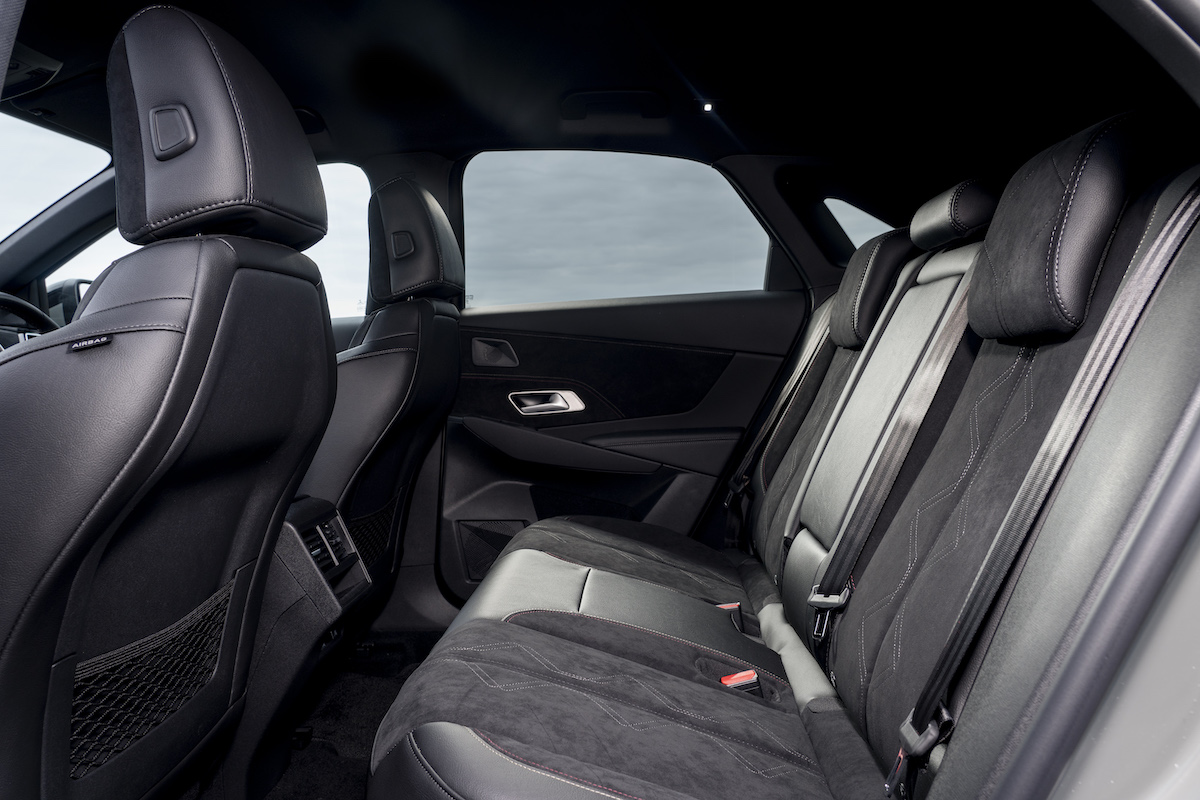
The rear seats are surrounded by plenty of headroom and legroom, so even tall passengers can travel comfortably. A wide middle seat also means that carrying three in the back isn’t out of the question. Even so, the rear seats aren’t as versatile as in some rivals because they don’t slide or recline, plus they are split 60:40 rather than 40:20:40.
When it comes to how appealing its interior is, the DS 7 is something of a mixed bag. The design – with its art deco diamond theme throughout – is certainly different to that of any rival, but whether or not it’s any more likeable is a matter of personal taste. Some will find that the design causes ergonomic issues, with many of the various switches (most notably those for the electric windows) looking identical to others, with only very subtle markings to distinguish them.
Interior quality, again, is a mixed bag. Real thought has been put into the textures and finishes on display, and some of them are truly lovely. The trouble is, all too often, you come across a surface that’s nothing like as plush as most of the others on display, and that undermines the feeling of quality. Compare the DS 7 with models from Audi, BMW and Mercedes-Benz that it competes with, and the quality of fit and finish is a lot less consistent.
What's it like to drive?
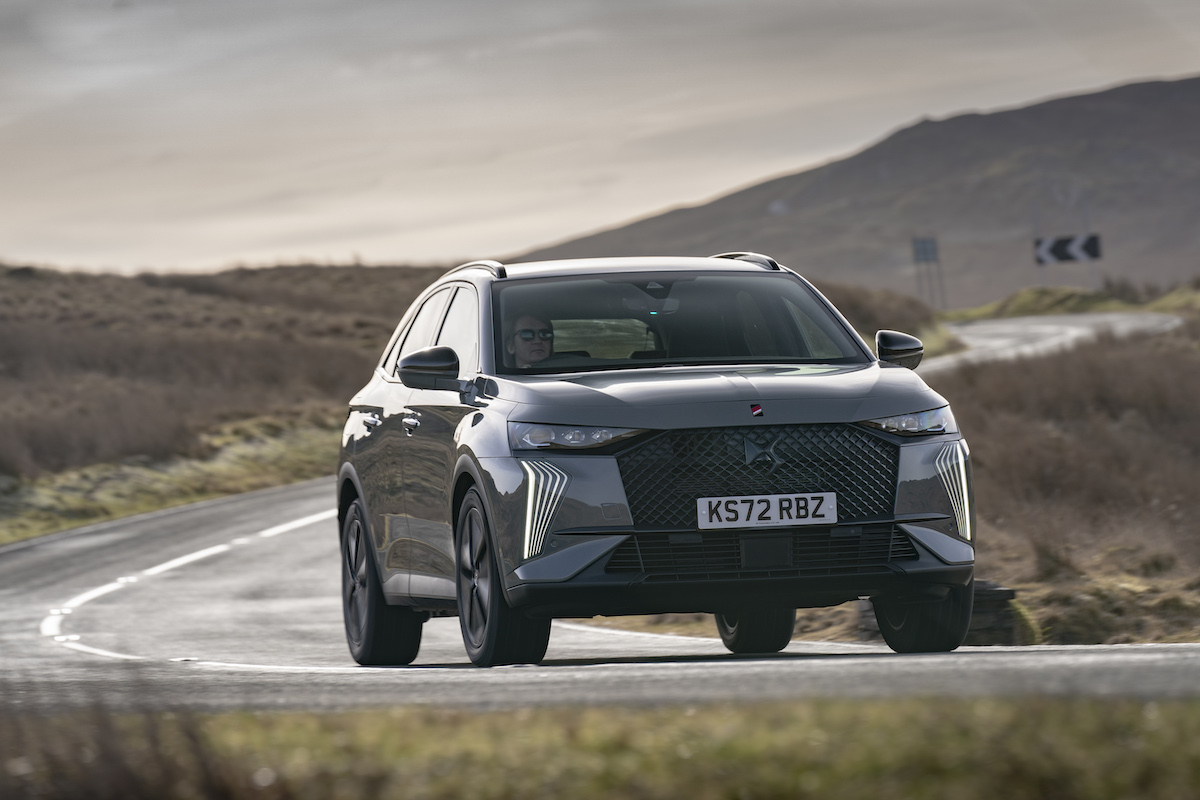
The DS 7 is very much a comfort-led SUV, regardless of which version you choose. Late UK cars were either the BlueHDi 130 diesel or the E-Tense 225 plug-in hybrid, and neither is intended to deliver sporty thrills. Instead, the emphasis is on refinement, relaxed progress and an easygoing driving experience.
Performance is adequate rather than exciting. The diesel is smooth and quiet on motorways, if not especially quick, while the plug-in hybrid offers a stronger initial shove thanks to its electric assistance. In everyday driving, both are perfectly capable of keeping up with traffic, but responses from the eight-speed automatic transmission can feel a little lethargic, particularly when you ask for a sudden burst of acceleration.
Earlier plug-in hybrid models, such as the E-Tense 300 and 360, added four-wheel drive and significantly more power. Even then, the DS 7 never felt especially rapid for its outputs, instead favouring a laid-back character that prioritised smoothness over outright pace.
Ride comfort depends heavily on specification, though. Cars fitted with DS’s Active Scan Suspension – which uses a camera to prepare the suspension for the road ahead – feel plush over larger undulations, but can still fidget over small bumps, especially when fitted with large alloy wheels. Models on smaller wheels tend to deliver a more settled ride, and are generally the better choice if comfort is your priority.
Handling is tidy enough, with plenty of grip, but the steering is light, remote and oddly weighted, offering little in the way of feedback. That means the DS 7 is best enjoyed as a relaxed cruiser rather than something sporty for a B-road.
Technology, equipment & infotainment
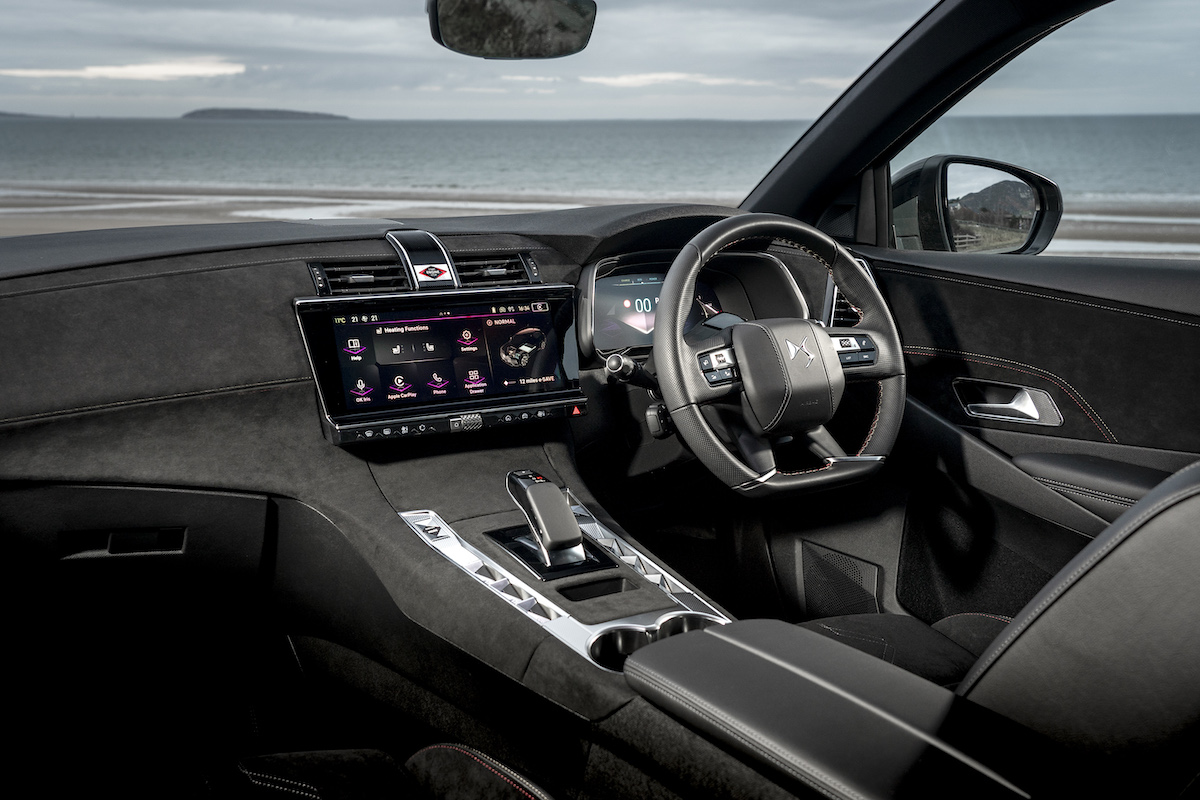
One of the DS 7’s biggest strengths as a used buy is that late UK cars came with a generous level of equipment, thanks to the simplified Pallas/Etoile range. All versions get the DS IRIS infotainment system with a 12-inch touchscreen and a 12.3-inch digital instrument cluster. The system includes connected navigation, voice recognition, Bluetooth and over-the-air updates, plus wireless Apple CarPlay and Android Auto, so you won’t need to plug in your phone to use mirroring.
In terms of trim levels, the Pallas is already well kitted out. Highlights include LED headlights, keyless entry/start, an electric hands-free tailgate, a panoramic sunroof, front and rear parking sensors, and heated and electrically adjustable front seats. Safety kit is also strong for the class and includes autonomous emergency braking, blind-spot monitoring and lane-keeping assistance.
Step up to Etoile and you’ll notice an upshift in luxury, including massaging and ventilated front seats, extra ambient interior lighting options, additional USB-C ports in the front, plus adaptive cruise control.

DS 7 running costs
As a used purchase, the DS 7 can represent good value, particularly compared with the premium SUVs it was designed to rival when new. Depreciation has worked in buyers’ favour, and even high-spec examples can now be bought for far less than their original list prices.
Running costs depend heavily on engine choice. The BlueHDi 130 diesel is the simplest and most predictable option, especially if you cover a lot of motorway miles. It’s capable of respectable real-world fuel economy of mid-40s mpg to mid-50s mpg, and avoids the extra complexity and weight of a plug-in hybrid system.
The E-Tense 225 plug-in hybrid can be very cheap to run if you’re able to charge regularly and keep most journeys short, as many trips can be completed on electric power alone, thanks to an official range of 32-37 miles. However, once the battery is depleted, fuel consumption rises noticeably, particularly on longer journeys, so it’s important to be realistic about how you’ll use the car.
Insurance and servicing costs are broadly in line with other premium mid-size SUVs, although the plug-in hybrids can be more expensive to insure and maintain than the diesel. It’s also worth noting that most DS 7 models are subject to the higher rate of VED (road tax) for cars with a list price of £40,000 or more. Because this is valid for five years from the second year, it’ll apply to most used DS 7s.
DS 7 reliability
DS is still a relatively young premium brand, and it sells in smaller volumes than many of its rivals, which means there is limited model-specific reliability data available for the DS 7. As a result, it doesn’t feature prominently in large owner surveys as more mainstream models do.
Trying to get a steer from the performance of its Citroen and Peugeot stablemates brings mixed results, too. Take a look at the 2025 What Car? Reliability Survey, and Citroen places an impressive 10th out of 30 carmakers included, while Peugeot is only a place lower in 11th. This doesn’t guarantee trouble-free ownership, of course, but it’s reassuring to know that the shared parts and components are well regarded.
Buyers of brand new DS 7s benefitted from a three-year or 60,000-mile warranty. It’s transferable to subsequent owners, so check to see if the used DS 7 you’re looking at is still covered. If not, it might be worth considering an aftermarket warranty. The batteries in plug-in hybrid versions are covered for eight years or 100,000 miles.
- As a brand, DS hasn’t been around all that long, but the name goes all the way back to the 1950s. Citroen launched the original DS back in 1955, a car that is generally accepted as being one of the most revolutionary of all time. The DS name was resurrected in 2010 with the Citroen DS3 hatchback. Then in 2015, DS was separated from Citroen to become the French firm’s luxury brand. These days, both DS Automobiles and Citroen are part of the Stellantis Group, the huge manufacturing powerhouse created when PSA merged with FCA, which also boasts brands such as Vauxhall, Fiat and Alfa Romeo.
- A specially created DS 7 was used to transport French President Emmanuel Macron to his inauguration in 2017. The French Premier still has DS 7s on his fleet today.
- DS is particularly proud of the 7’s snappily named Pixel LED Vision 3.0 headlights, which use no fewer than 84 separate LEDs to light the way. Another lighting feature at the front end is the DS Light Veil, which is essentially a set of striking-looking vertical daytime running lights placed either side of the front grille.
- If you’re a high-mileage driver: The BlueHDi 130 diesel is the sensible choice. While the plug-in hybrid can look appealing on paper, it only delivers strong efficiency if you charge it regularly and keep journeys short. If most of your driving is motorway-based, the diesel is cheaper to buy on the used market, mechanically simpler and far better suited to sustained high-speed cruising.
- If you want a plug-in hybrid: The E-Tense 225 makes most sense if you can charge at home or work and your trips are often short. It offers a useful electric-only range for local driving, while still being capable of longer journeys when needed. Just be realistic about fuel economy once the battery is depleted, especially on longer runs.
- If you want the most luxurious version: Late UK cars came in Pallas and Etoile trims, and both are well-equipped. Pallas already includes a strong mix of comfort and safety kit, but Etoile adds more indulgent features such as ventilated and massaging front seats and enhanced driver assistance systems. As a used buy, Etoile models often represent good value if the price gap isn’t too large.
- If you’re looking at high-performance versions: Earlier used examples of the E-Tense 300 or 360 offer noticeably stronger performance and four-wheel drive, but they’re rarer, more complex and typically more expensive to run. They make sense only if you specifically want the extra power, rather than the DS 7’s usual comfort-led character.


